
society
The Betrayal of a Dream: How Atiku Abubakar Undermined the PDP Legacy

The Betrayal of a Dream: How Atiku Abubakar Undermined the PDP Legacy
By George O. Sylvester (According to Chief Frank Anagu)
Once upon a time in the annals of Nigerian political history, the People’s Democratic Party (PDP) stood tall as the most beautiful bride of the Fourth Republic graceful, purposeful and built on the sacrifice of visionaries who gave their sweat and soul to end military tyranny. Founded in the wake of national despair, the PDP was not just a party it was a mission, a covenant between the people and democracy.
The party’s roots trace back to the courageous G34 group, a coalition of Nigeria’s finest elder statesmen led by the likes of the late Dr. Alex Ekwueme, Chief Olu Falae, Pa Abraham Adesanya and other political patriots. Their singular goal: to oust the dictator Sani Abacha and restore the rule of law in a bleeding nation. It was not a game of power, but a fight for Nigeria’s survival. The People’s Democratic Movement (PDM), originally founded by the late General Shehu Musa Yar’Adua, played a crucial role in that struggle. Upon Yar’Adua’s death, his political heir, Atiku Abubakar, took the reins of PDM and merged it with G34. This union birthed the PDP, a party we all laboured to build.
It is within this historical backdrop that the tragedy of Atiku Abubakar’s political missteps must be critically examined. According to Chief Frank Anagu, a founding member and former Chairman of the PDP South Africa Chapter and former Chairman, Board of Trustees (BoT), the party’s decline is not accidental it is the result of avoidable betrayals, unholy alliances and a chronic lack of discipline and ideological clarity from leaders who should have known better.
When the PDP was being formed, Chief Olusegun Obasanjo was still incarcerated. Upon his release and in a spirit of national healing, the party’s founding fathers approached him to serve as a one-term transitional president. His mission was clear: to rein in the military, professionalize the armed forces and restore Nigeria to democratic sanity. Atiku Abubakar, in what was then considered an act of patriotism, supported Obasanjo’s emergence against the grain of party elders.
But power, as always, reveals the character of men. Once in office, Obasanjo reneged on the gentlemen’s agreement and sought a second term. Rather than defend the original covenant with the party’s founders, Atiku betrayed that agreement and justified it by saying Obasanjo had “knelt down” to beg for his support. At that time, Atiku wielded immense power controlling 28 PDP Governors and could have restored principle over politics. Instead, he enabled the betrayal. That was the first mistake.
On December 14, 2004, during the African National Congress (ANC) Convention in Stellenbosch, South Africa, a defining moment unfolded. Chief Frank Anagu, then PDP Chairman in South Africa, was at the Cape Town International Airport to receive Vice President Atiku Abubakar. With him were Chief Charles Rapuluchukwu Ufochukwu (PDP Chairman, Western Cape) and Dr. Tunji Olagunju (then Nigerian Ambassador to South Africa). But to their astonishment, the first person to step off Atiku’s flight was none other than Bola Ahmed Tinubu accompanied by Bayo Ojo. A chill ran down the spines of those present. This was no ordinary visit; it was a political omen.
Chief Frank Anagu, addressing Atiku, cautioned him strongly: “Be very careful about those who do not want you to be President of Nigeria.” The ambassador himself nodded in agreement and clapped, a silent but firm endorsement of the warning. Yet, Atiku, ever dismissive of internal wisdom, defended his closeness with Tinubu in front of the Nigerian community. Worse still, he uttered the words that would haunt him for years: “I can be President of Nigeria with or without Obasanjo.” That arrogance, that detachment from political reality, marked the beginning of his downfall.
Atiku’s perpetual DECAMPING from PDP to Action Congress (AC), then back to PDP, then to APC and again back to PDP reflects a man not anchored by principle but by political survivalism. Such instability has led to the erosion of the PDP’s ideological identity, resulting in the disillusionment of party faithful across the nation and in the diaspora.
Today, the PDP is a shadow of its former self not because it lacked talent or vision, but because leaders like Atiku failed to embody consistency, discipline and loyalty. Chief Frank Anagu, having served in several capacities within the PDP and having witnessed firsthand the integrity of the party’s formation, laments what the party has become: “This is not the party we fought to build. It was a dream born from sacrifice. Now, it is threatened by selfish ambition.”
The lesson here is simple: no political movement can survive the constant betrayal of its founding ideals. The PDP was never designed to be a one-man show, but a collective platform of patriotic Nigerians committed to unity, equity and justice. Atiku’s political zig-zagging and refusal to reconcile sincerely with key party blocs has cost the PDP dearly.
But all hope is not lost. In the spirit of political redemption, Chief Frank Anagu offers strategic advice: “Now that the Labour Party is in disarray, Atiku must be bold and humble enough to forge an alliance with the Obidient movement of Peter Obi.” This is not about Peter Obi or Atiku alone, it is about rebuilding the foundation of democratic politics in Nigeria. A merger of credible forces is not only strategic, it is necessary for survival.
The 2027 elections present a critical opportunity. Nigeria cannot afford another cycle of recycled confusion. A coalition that unites the PDP’s experience with the energy and idealism of the Obidient movement may very well be the last hope of rescuing Nigeria from the grip of impunity and visionless governance.
Chief Frank Anagu’s reflections must not be dismissed as mere nostalgia. They are a wake-up call. The future of Nigeria’s democracy depends on whether leaders are willing to set aside ego for purpose, ambition for nationhood and manipulation for morality.
Let this serve as a historic record. The PDP was built on blood, sweat and a dream. It must not be allowed to die at the hands of those who benefited most from its birth. Nigeria deserves better. And so does the People’s Democratic Party.





society
Dr. Chris Okafor invokes divine retribution upon individuals blackmailing the Grace Nation church
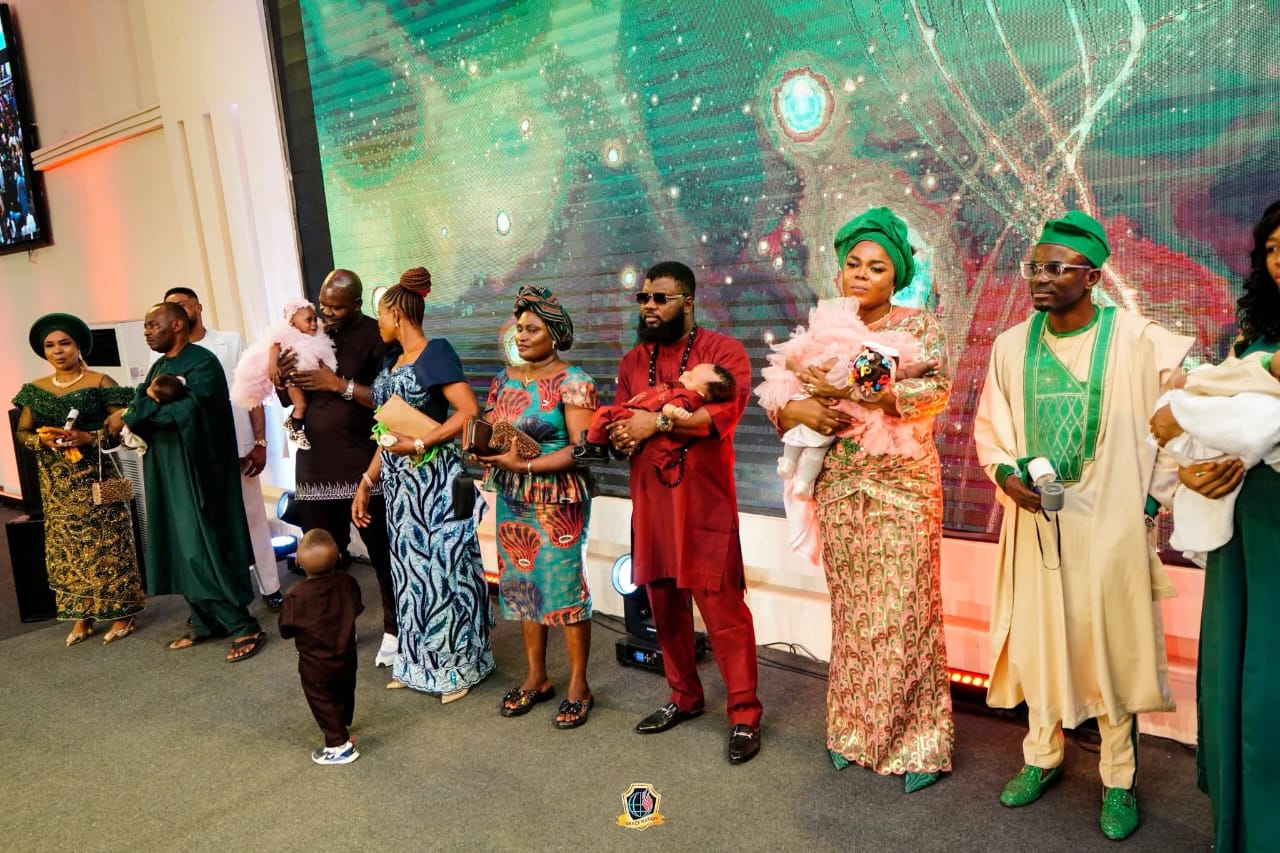
Dr. Chris Okafor invokes divine retribution upon individuals blackmailing the Grace Nation church
… Affirming God’s omnipotence to unveil malicious schemes.
To be frank, the ability of Doris Ogala and her associates to withstand the arduous challenges set by Senior Pastor Dr. Chris Okafor of Grace Nation Global at the culmination of the Harvest of Babies 2026 conference, the church’s flagship event, continues to elude me.
It’s advisable not to offend a powerful spiritual leader like Prophet Chris Okafor to avoid potential consequences, as seen in the situation with Doris Ogala, who was rebuked by the prophet; can she rectify the situation through confession?
Insiders close to the man of God claim that despite relentless online bullying and blackmailing, the Generational Prophet remains resolute, stating that God’s power has been evident throughout the commission’s existence. The reason for this wonderful statement is found in the scriptures, “Upon this rock I shall build my Church, and the gates of hell shall not prevail.” The more falsehoods are spread about the church and its leader, the more God elevates the church and propels him to greater heights, he asserted. He emphasized that blessings and fruitfulness are antidotes to curses, noting that God continues to bestow blessings upon the church, including miracles and the gift of children, which is one reason for the grand finale of the annual family liberation program, The Harvest of Babies.
However, the man of God issued a curse on each person speaking ill of the church, blackmailing, and uttering all sorts of falsehoods against the church, declaring that if they refused to repent within a few days, the earth would swallow them and their family members, stating that they would be of no use to themselves, their families, or society at large.
The spiritual leader cautions his followers to beware of such individuals including Doris Ogala who may taint their faith, and urges them to treat these persons as emissaries of the devil, avoiding them altogether.
Recall that the 2026 harvest of babies concluded with a remarkable birth of a miracle baby boy to a woman on the third day of the conference, accompanied by the dedication of several other miracle babies, all to the glory of God.
Christopher Sunday David writes from
Austria
“Together We Walk, Together We Secure”: Police Launch 2026 Walkathon In Abuja
The Nigeria Police Force has announced plans to host a walkathon in commemoration of the 2026 National Police Day, aimed at promoting unity, peace, and stronger community partnership.
The event is scheduled to take place on Tuesday, March 31, 2026, with participants expected to converge at the Force Headquarters Abuja by 6:00 a.m., where the walk will commence.
According to the organisers, the walkathon is designed to bring together members of the public, stakeholders, and security personnel in a show of solidarity and shared commitment to national security.
With the theme, “Together we walk, together we secure,” the initiative underscores the importance of collaboration between the police and citizens in maintaining peace and safety across the country.
Members of the public have been encouraged to participate in the exercise, which forms part of activities lined up to mark this year’s National Police Day celebration.
It is believed that the walkathon would not only foster closer ties between the police and the communities but also serve as a platform to promote awareness on collective responsibility in ensuring a safer society.


society
Habeeb Okunola Foundation Hosts Visually Impaired Students, Reaffirms Commitment to Educational Development
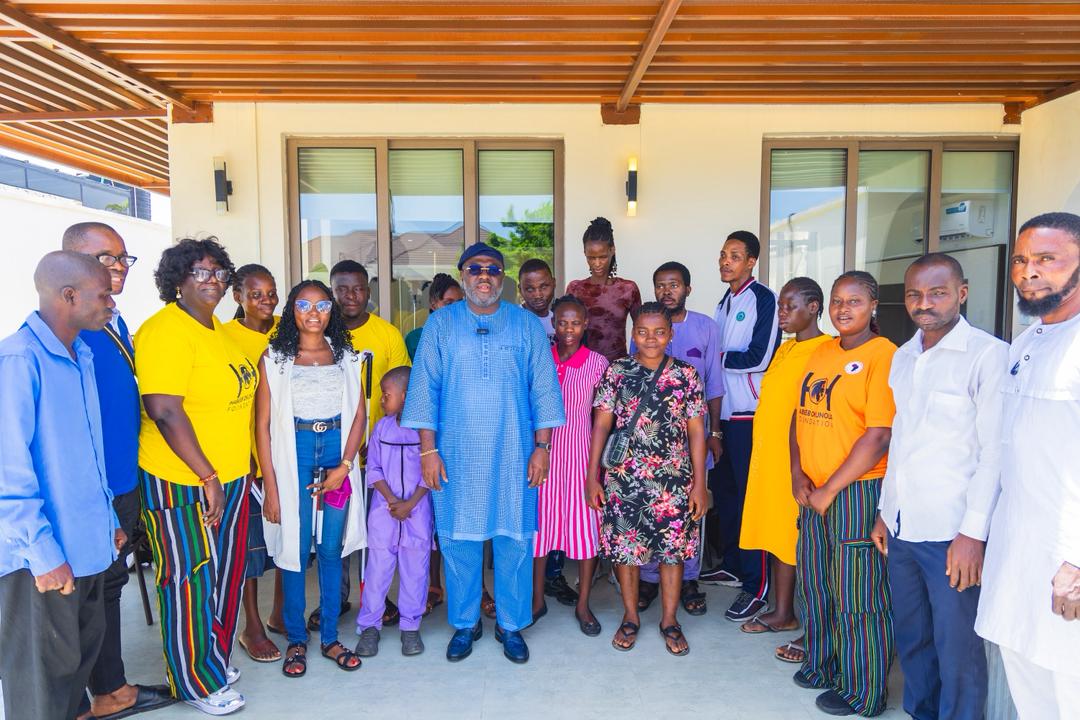
Habeeb Okunola Foundation Hosts Visually Impaired Students, Reaffirms Commitment to Educational Development
The founder of the Habeeb Okunola Foundation, High Chief Dr. Habeeb Olalekan Okunola MON, OFR, has once again demonstrated his dedication to the welfare of the underprivileged. On March 30, 2026, he played host to a group of talented visually impaired students across tertiary institutions in Nigeria whom he is currently covering their tuition fees at the head office of CINI Holdings in Ikoyi, Lagos.
During the gathering, Okunola reaffirmed his commitment to using his God-given resources to uplift humanity through his foundation. According to him, true wealth is proven through empowerment, and supporting the education of visually impaired students ensures that knowledge remains accessible regardless of one’s circumstances.
Addressing the students directly, he said: “I am delighted to host you. I want you to know that my foundation will continue to cover your school fees and provide monthly stipends for your upkeep. Your disability does not diminish your right to education. With your talents, education becomes a platform to showcase your abilities. I am excited that instead of taking to the streets to engage in nefarious activities or begging, you have chosen to do something meaningful and sharpen your talents. Today is not just about support; it is about belief. We see you. We hear you. And we believe in your strength, your talent, and your future. Life may not always be easy. You may face moments where people doubt you or where the path feels difficult. But we want you to remember this: you are not alone. You matter. And you are capable of achieving more than you can even imagine right now.”
He further emphasized that he remains fully committed to consistently covering their tuition fees many of the students are enrolled in various tertiary institutions across the country while also ensuring their overall welfare.
“This support is not just financial,” he added. “It is a promise. A promise that for the rest of this year and beyond, you have the Habeeb Okunola Foundation standing with you, cheering you on, and investing in your journey. Use this opportunity well. Keep learning. Keep pushing. Keep believing in yourself, even on the hard days. One day, when you rise, when you succeed, remember to lift others just as you are being lifted today. We are proud of you. And we are excited to see all that you will become.”
Also present at the event was the founder of the Makemee Elegant Foundation, Mrs. Kehinde Adelaja, who expressed her gratitude to Chief Okunola for covering the students’ school fees and attending to their needs. She noted that if more wealthy individuals took on such responsibilities, Nigeria would be a better place.
“I am excited that you took time to host and dine with them,” she said. “This goes a long way in restoring hope. They did not choose to be in this situation, but seeing someone like you embrace them with love and care is rare. They deeply appreciate your kind gesture.”
During a lunch session held at his office, Chief Okunola further reiterated that philanthropy remains a core part of his lifestyle. He pledged to continue setting aside a portion of his business earnings to impact lives and bring relief to the downtrodden.


-

 society6 months ago
Religion: Africa’s Oldest Weapon of Enslavement and the Forgotten Truth
-

 news4 months ago
WHO REALLY OWNS MONIEPOINT? The $290 Million Deal That Sold Nigeria’s Top Fintech to Foreign Interests
-

 society6 months ago
“You Are Never Without Help” – Pastor Gebhardt Berndt Inspires Hope Through Empower Church (Video)
-

 celebrity radar - gossips2 months ago
Dr. Chris Okafor Returns with Power and Fire of the Spirit -Mounts Grace Nation Altar with Fresh Anointing and Restoration Grace on February 1, 2026