
celebrity radar - gossips
The Dreamers Who Prefer to Smile While Standing in the Ashes


The Dreamers Who Prefer to Smile While Standing in the Ashes.
George Omagbemi Sylvester | Published on saharaweeklyng.com
“We pray for change; then we applaud the status quo.”
The tragedy of Nigeria is not a lack of intelligence, talent or even ambition, it is the absence of collective courage. The average Nigerian dreams of the best, prays for transformation, but trembles at the thought of doing what it takes to make that dream real. He is content to “suffering and smiling” as the late Fela Anikulapo Kuti sang, while waiting for salvation from a system he secretly knows is rotten to the core.
We are a nation of dreamers not doers; believers, not builders. We talk revolution at night and queue for handouts in the morning. Everyone laments corruption, but only a few dare to challenge it. We all desire a better Nigeria, yet most Nigerians fear the discomfort that true change demands.

Our national mindset has been conditioned to equate endurance with virtue. We glorify survival instead of progress. Instead of fighting back, we have learned to adapt to hardship (living without light, without security, without hope) and calling it “God’s will.” This attitude has birthed generations of citizens who prefer endurance to resistance.
The late literary icon Chinua Achebe once declared, “The trouble with Nigeria is simply and squarely a failure of leadership.” Leadership is not born in isolation; it grows from a people willing to demand accountability. The Nigerian tragedy, therefore, is not just in bad governance but in citizen complacency but the silence of millions who prefer to smile in the ashes rather than rebuild from the ruins.
According to the National Bureau of Statistics (NBS), over 133 million Nigerians live in multidimensional poverty; deprived of access to clean water, health care, education or secure income. Yet, the outrage is mild. Instead of mass civic awakening, we see mass migration. The World Bank estimates that more than 1.2 million Nigerian professionals have left the country in the last five years, draining critical sectors such as medicine, engineering and academia.
Dreamers keep leaving; the timid keep surviving.
History offers us instructive contrasts. Some nations reached a breaking point (that sacred threshold where silence was no longer an option) and chose to stand.
South Africa did it in 1994, after decades of apartheid. The courage of Nelson Mandela and countless unnamed revolutionaries changed the course of history. They decided it was “now or never.” For them, freedom was not a prayer point; it was a moral obligation.
Ghana did it in 1957, when Kwame Nkrumah declared independence and rallied his people around self-reliance and dignity. They did not wait for perfect conditions; they created them.

Tunisia did it in 2011, when the self-immolation of Mohamed Bouazizi sparked the Arab Spring, ending decades of dictatorship.
Even Rwanda, ravaged by genocide in 1994, stood up, redefined itself and became one of Africa’s most disciplined societies.
Each of these nations reached a point where fear was no longer an option and they transformed because citizens decided to act.
In contrast, Nigeria (with her unmatched human capital, oil wealth and global influence) still crouches beneath the weight of timidity. We have perfected the art of complaining without confrontation. We hide behind tribalism, religion and pessimism, waiting for messiahs who never come.
Dr. Ngozi Okonjo-Iweala, current Director-General of the World Trade Organization, once said, “Reform is never easy. Those who benefit from the old ways will always resist change.” But Nigerians themselves, too, often resist reform. Why? Because true reform requires short-term pain and we have grown allergic to discomfort.
We want electricity but reject tariff adjustments. We want good governance but sell our votes for ₦5,000. We want leaders with integrity but glorify looters who share food during elections.

This moral inconsistency keeps us trapped in the cycle of stagnation. Economists call it “rational inertia”, the tendency of societies to prefer familiar misery over unfamiliar hope.
When President Bola Tinubu removed fuel subsidy in 2023, the same Nigerians who once criticized Goodluck Jonathan for “cowardice” in 2012 suddenly called the move “heartless.” Yet, every credible economist (from Bismarck Rewane to Dr. Doyin Salami) agrees that subsidy removal was essential to stabilizing Nigeria’s collapsing fiscal structure. But because we have been trained to seek comfort over correction, we sabotage necessary change even when it is for our collective good.
The Spirit of Revolution (Not in Blood, but in Mind.
The revolution Nigeria needs is not a bloody uprising. It is a revolution of responsibility) where citizens decide that enough is enough. The courage to demand transparency, to reject tribal politics, to participate in governance and to hold public officers accountable.
Countries that rose from chaos did not do so because of divine luck; they did so because ordinary men and women refused to surrender. South Africans defied fear to dismantle apartheid. Tunisians risked their lives to end tyranny. Rwandans rebuilt a shattered nation brick by brick.
When will Nigerians stop outsourcing courage to God? When will we realize that God blesses effort, not excuses?
Data Doesn’t Lie, Nigeria’s youth population (over 70% under the age of 35) is its greatest asset, yet also its greatest untapped potential. UNESCO reports that about 10.5 million Nigerian children remain out of school; the highest in the world. The World Bank ranks Nigeria among the top 10 countries with the worst human capital indices in 2024.
We are a nation sitting on a demographic goldmine, but instead of mining it through education, innovation and governance, we are exporting it through migration.
As Professor Wole Soyinka once noted, “The man dies in all who keep silent in the face of tyranny.” That silence, today, has become deafening. We have grown comfortable in fear and fluent in endurance.
To fix Nigeria, we must break this culture of passive optimism. Dreaming is not enough, but doing is the true measure of belief. The young must take ownership of their destiny, not just through hashtags and protests but through political participation, innovation and civic involvement.
Run for office. Build cooperatives. Join reform movements. Start small, but start somewhere.
Nigerians abroad (from Johannesburg to London) must redirect part of their remittances to projects that build, not just sustain, families. Communities must take charge of local schools, hospitals and policing. Accountability begins at the grassroots.
Dr. Akinwumi Adesina, President of the African Development Bank, once said, “Africa does not need pity. It needs fair policies and empowered people.” Empowerment begins when the people stop being spectators.
Every generation faces its defining moment (its “now or never.” For South Africa, it was apartheid. For Ghana, it was independence. For Tunisia, it was dictatorship. For Nigeria, it is moral paralysis) the choice between perpetual complaint and collective courage.
If 220 million Nigerians decide, truly decide, that this is the moment to stand, the story will change. We will no longer be the giant of Africa in name only, but in substance, in vision and in courage.
Closing Reflection.
A chronic disease that has spread to every organ can only be cured by radical treatment. Nigeria’s moral and civic illness demands a similar remedy; one rooted in discipline not denial.
If South Africa could defeat apartheid, if Rwanda could rise from genocide, then Nigeria can surely rise from mediocrity. But only when her dreamers stop standing and smiling; and start marching and building.
The choice is ours: to keep narrating dreams or to start living them.




celebrity radar - gossips
Adron Homes Celebrates Visionary Chairman, Aare Adetola Emmanuel King, at 51
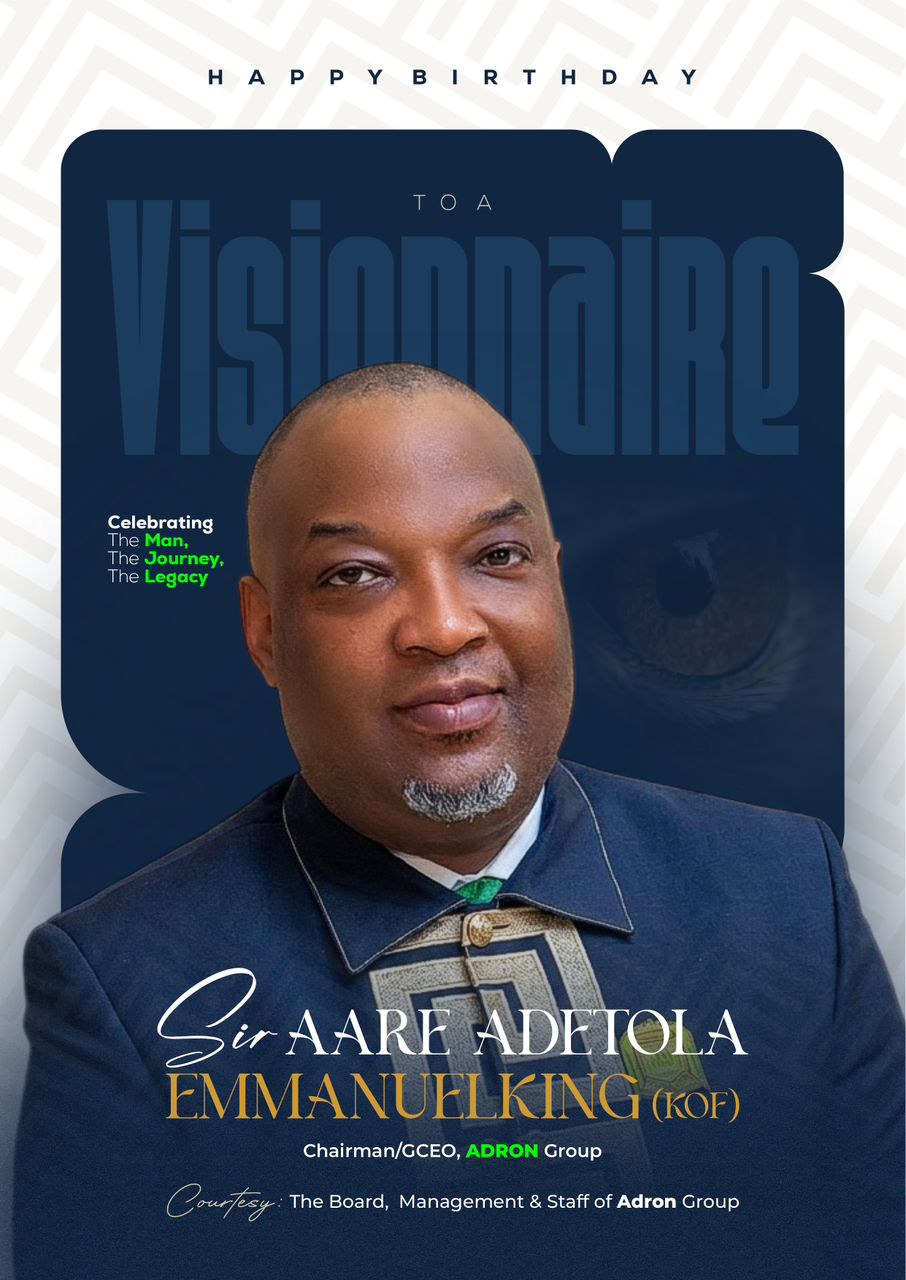
Adron Homes Celebrates Visionary Chairman, Aare Adetola Emmanuel King, at 51
The management and staff of Adron Homes and Properties Limited have joined family, friends, associates, and well-wishers across the globe to celebrate their Chairman and Chief Executive Officer, Aare Adetola EmmanuelKing, as he marks his 51st birthday.

In a statement released by the company, the milestone was described as a celebration of an exceptional leader whose vision, resilience, and entrepreneurial brilliance have not only transformed Adron Homes into a household name in Nigeria’s real estate sector but have also redefined affordable housing across the country.
Under his dynamic leadership, Adron Homes has continued to expand its footprint, delivering value-driven residential solutions while empowering thousands of Nigerians with opportunities for home ownership. His commitment to excellence, innovation, and customer satisfaction has remained the driving force behind the company’s sustained growth and industry leadership.
The statement further highlighted Aare EmmanuelKing’s passion for nation-building and community development, noting his significant contributions to job creation, youth empowerment, and the promotion of socio-economic development through real estate investments.
“As a leader, mentor, and visionary, Aare Adetola EmmanuelKing has consistently inspired a culture of excellence, integrity, and dedication within the organization. His ability to turn bold ideas into reality continues to position Adron Homes as a trailblazer in the industry,” the statement read.
The company expressed profound gratitude for his steadfast leadership and prayed for continued wisdom, strength, and sound health as he embarks on another year of impactful achievements.
As he celebrates his 51st birthday, the entire Adron Homes family proudly honours a man whose legacy continues to shape the future of real estate in Nigeria.
Happy 51st Birthday, Aare Adetola EmmanuelKing!
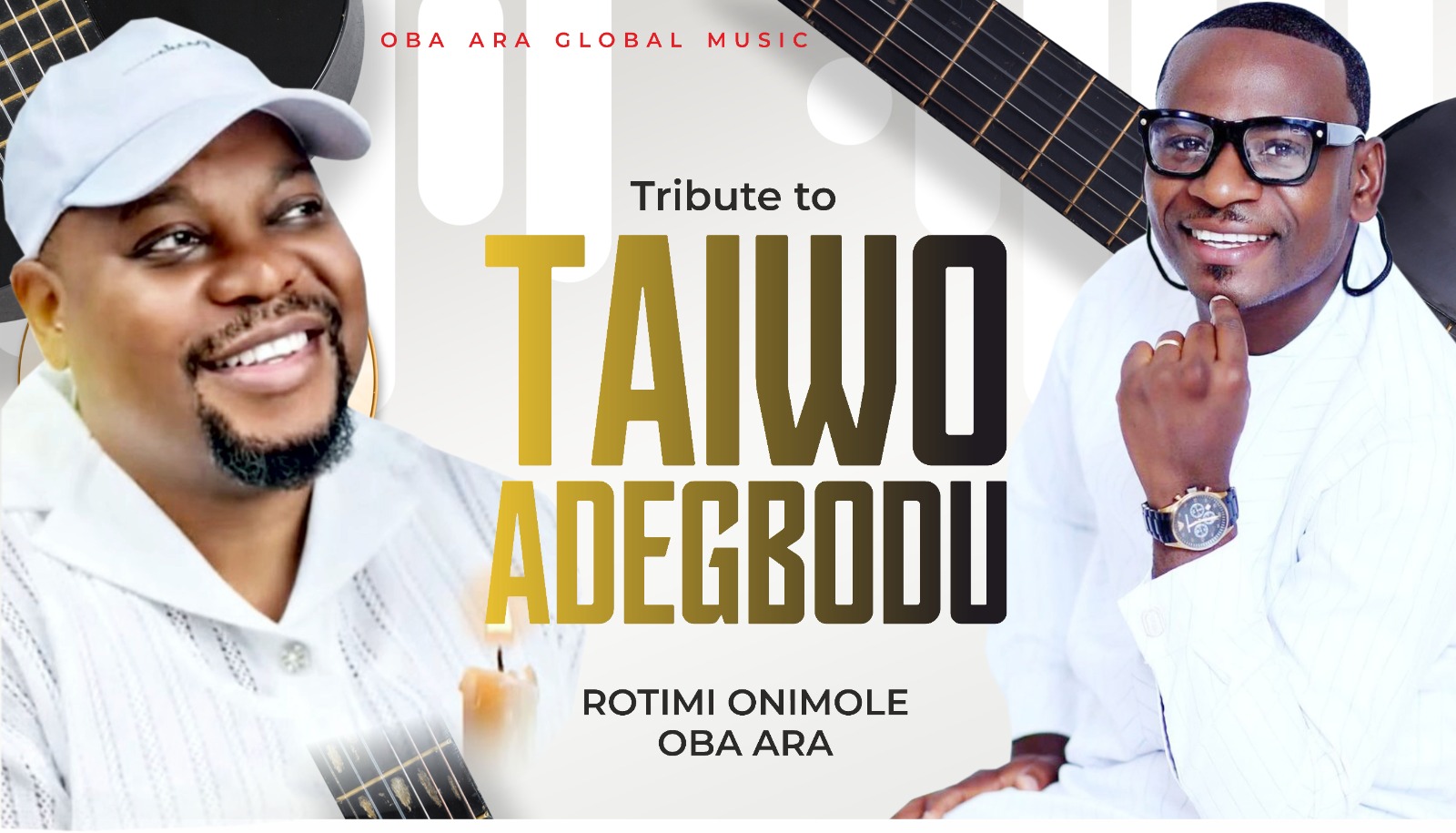
Oba Ara Releases Emotional Tribute to Late Taiwo Adegbodu
Taofik Afolabi
The gospel music community continues to grieve the painful loss of Taiwo Adegbodu, a beloved figure whose sudden departure left a deep void among fans, colleagues, and loved ones. In response to this loss, renowned gospel minister Rotimi Onimole, popularly known as Oba Ara, has released a moving tribute song that captures both the sorrow of the moment and the enduring legacy of the late singer.
Oba Ara, a proud son of Isale Eko, channels raw emotion throughout the song, using heartfelt lyrics and soul-stirring melodies to reflect on his personal connection with Taiwo Adegbodu. In the tribute, he openly expresses how deeply the news of Adegbodu’s passing shook him, describing it as a painful and unexpected loss that is difficult to come to terms with.
The song goes beyond mourning, it celebrates the life, ministry, and impact of Taiwo Adegbodu. Oba Ara highlights the late artist’s dedication to spreading the gospel through music, his inspiring voice, and the spiritual influence he had on many within and beyond Nigeria. Through powerful verses, he paints a picture of a man who lived for God and touched countless lives through his ministry.
Listeners have described the tribute as both comforting and deeply emotional, as it resonates with the collective grief of the gospel music community. It serves as a reminder that although Taiwo Adegbodu is no longer physically present, his music, message, and legacy will continue to live on.
In honoring his late colleague, Oba Ara not only pays his respects but also offers a source of healing for fans and fellow ministers, using music as a tool to process grief and celebrate a life well lived.
celebrity radar - gossips
Buratai, Fagbemi , Shagaya, Olofa, Others Eulogise Olowu Kuta’s Olori On 60th Birthday, Foundation Launch

Buratai, Fagbemi , Shagaya, Olofa, Others Eulogise Olowu Kuta’s Olori On 60th Birthday, Foundation Launch
Eminent personalities across the Nigeria stormed the TFK Event Centre, Bala Mohammed Way, Guzape, Abuja, to celebrate the 60th birthday of Olowu Kuta’s Olori, Queen Jumai Amoke and her Foundation Launch on Saturday 28, March 2026.

From former Chief of Army Staff, Lt Gen TY Buratai rtd, to the Minister of Justice and Attorney-General of the Federation, Prince Lateef Fagbemi; Olofa of Offa, HRM Oba Mufutau Gbadamosi. Even top businesswoman and socialite, Chief (Mrs) Bola Shagaya, was in attendance.


Other dignitaries were newly promoted Deputy Inspector-General of Police and former AIG Zone 2 , Lagos , Adegoke Fayoade, Major General Abdumalik, Major General Samuel Adebayo rtd (Fmr CDI);
Major General Anthony Omozoje rtd (Fmr Copp);
Alhaji Tajudeen Owoyemi (Asiwaju of Offa and CEO Radisson Hotel Nigeria;
Dr Waheed Olagunju, former managing director of Bank of Industry, Oniba of Iba, Lagos State, HRM Oba Dr Suleiman Raji ;
Justice Falola, Olu of Ile-Ogbo , Oba Adetoyese amongst many traditional rulers and captains of industry too numerous to mention.
Speaking at the occasion, the Chief Host, Olowu of Kuta, HRM Oba Dr Adekunle Oyelude Makama, CON , Tegbosun iii, who is also the husband of the celebrant commended Queen Jumai for ‘ her slender arms full of kindness’ to establish such humanitarian Foundation, ‘Amoke Children and mother in Need Foundation’ at a time Nigerians are going through economic crisis occassioned by the global meltdown.
Olowu also commended her steadfastness and love for the less privileged and downtrodden.
The monarch refrenced the task before his wife’s humanitarian gesture said her best is yet to come.
” Olori Amoke Jumai, I celebrate you. You will celebrate 70, 80, 90 and continue to shine as you continue to put a smile on people’s faces. I love you, “Olowu Kuta added.
To Lt Gen Buratai, a former army chief and former Nigerian Ambassador to Benin Republic, the reward of hard work is more work.
Buratai, who also doubles as Balogun Agba of Owu Kuta, a chieftaincy title reserved for a generalismo congratulated Queen Jumai for attaining the age of 60 in good health.
The retired army General said he’s not surprised by the turn out of eminent personalities across the country to celebrate the Olowu Kuta’s Olori because she merited it through her hospitality to all, adding that Allah the most merciful, most beneficial would accept all her act of ibadah.
The minister of Justice, Prince Fagbemi, was full of praises for Queen Jumai for deeming it fit to have a place in her heart to accommodate the needy and less privileged in ‘our society.’
Prince Fagbemi urged the guests to contribute generously to support the Foundation in order to continue to alleviate poverty and put a smile on the faces of the people.
” I congratulate you on your 60th birthday and Foundation Launch. I wish you many happy returns of the day and many more fruitful services to the country and motherland”, Prince Fagbemi added.
The celebrant, Queen Jumai who was grining from ear to ear thankfully said she was excited by the turn out and the response of the people to her foundation.
Queen Jumai, however, promised to continue to use her resources and donations received for the good of the needy and less privileged in the society.
” I want to appreciate my own Kabiesi Olofa of Offa , for his presence and im I’m using him as a point of contact to all other Kabiesis present here, the minister of justice and Attorney-General, you’re welcome, sir; Mrs Bola Shagaya, I salute your enterprise, Lt Gen Buratai, I’m grateful, sir; DIG Fayoade, Justice Falola and other dignitaries too numerous to mention, I thank you, all. To my darling husband, Kabiesi Olowu , I thank you immensely for your support. And to my family and friends, I thank you , all. E se pupo!”, she said.


-

 society6 months ago
Religion: Africa’s Oldest Weapon of Enslavement and the Forgotten Truth
-

 news4 months ago
WHO REALLY OWNS MONIEPOINT? The $290 Million Deal That Sold Nigeria’s Top Fintech to Foreign Interests
-

 society6 months ago
“You Are Never Without Help” – Pastor Gebhardt Berndt Inspires Hope Through Empower Church (Video)
-

 celebrity radar - gossips2 months ago
Dr. Chris Okafor Returns with Power and Fire of the Spirit -Mounts Grace Nation Altar with Fresh Anointing and Restoration Grace on February 1, 2026