
society
The Erosion of Democratic Norms: Allegations Against Seyi Tinubu and the State of Human Rights in Nigeria


The Erosion of Democratic Norms: Allegations Against Seyi Tinubu and the State of Human Rights in Nigeria
By George O. Sylvester
In recent times, Nigeria has been gripped by a series of events that have raised serious concerns about the state of its democracy and the protection of human rights. Central to these concerns are allegations involving Seyi Tinubu, son of President Bola Ahmed Tinubu, which have sparked widespread debate, condemnation and calls for accountability.

Allegations of Coercion, Bribery and Violence
The National Association of Nigerian Students (NANS) has accused Seyi Tinubu of orchestrating a violent disruption of their national convention in Abuja. According to Sahara Reporters, armed thugs were allegedly deployed to the venue, resulting in chaos and the imposition of Comrade Olushola Oladoja as a factional national president of NANS. Observers argue that this was a calculated attempt to hijack the student body for political mobilization in anticipation of President Tinubu’s 2027 re-election campaign. Despite the presence of security operatives, including members of the Department of State Services (DSS), no intervention was made, an omission that suggests silent complicity.
In a particularly disturbing development, the legitimately elected NANS president was reportedly abducted, stripped naked and beaten to stupor by armed assailants suspected to be working under the directive of powerful political interests. Eyewitnesses described the attack as savage and calculated, aimed at forcing the victim into submission and clearing the path for a loyalist to be installed as president. This violent assault not only constitutes a gross violation of human rights but also exposes the depths of impunity that have taken root under the current administration.

In another damning revelation, a factional leader of NANS reportedly refused a bribe of ₦100 million allegedly offered by Seyi Tinubu in a bid to buy loyalty and silence dissent. This act of attempted corruption underscores the desperation and depth of influence-peddling in the corridors of power. Rather than being an isolated incident, it reflects a disturbing pattern of coercion and subversion of independent institutions by the political elite.
Undue Influence and Breach of Protocol
Further compounding public anxiety is the reported undue access granted to Seyi Tinubu in matters of state. President Bola Tinubu himself admitted that unauthorized individuals, including his own son, had attended Federal Executive Council (FEC) meetings, an egregious breach of official protocol. Although the president later issued a directive restricting access to such high-level meetings, the damage had already been done. The admission alone has fueled suspicions about the growing, unchecked influence of unelected individuals in shaping national policy behind closed doors.

Rising Discontent Amid Economic Turmoil
The allegations against Seyi Tinubu come at a time when Nigeria is struggling under the weight of unprecedented economic hardship. The removal of fuel subsidies and the floating of the naira have triggered massive inflation and a steep decline in purchasing power. NANS has publicly called on President Tinubu to address the spiraling cost of living, warning that many students can no longer afford tuition, accommodation or even basic meals.
Public figures are also speaking out; Nollywood actress Mercy Aigbe took to social media to plead with Seyi Tinubu to implore his father to act:
“People are hungry, Nigerians are dying and are going out of their minds.”
These sentiments reflect the anger and despair of millions of Nigerians who feel increasingly betrayed by a government that appears detached from their everyday suffering.
Political Voices of Resistance
Former Vice President Atiku Abubakar has emerged as a leading critic of the Tinubu administration’s treatment of civil liberties.
“The escalating assault on civil society and the media by the Bola Tinubu administration is profoundly disturbing,” he said.
“The level of oppressive control now imposed surpasses even the harshest days of military dictatorship.”
Similarly, human rights activist and presidential candidate Omoyele Sowore has condemned the government’s policies, accusing it of gross mismanagement:
“This is the worst I have seen in my lifetime of record poverty, youth unemployment and a broken system run by cronies and family members.”
International Condemnation: Global Human Rights Perspectives
Global human rights watchdogs have not remained silent. Amnesty International has consistently flagged Nigeria for its deteriorating civil liberties. In a recent report, the organization noted:
“Under President Bola Tinubu’s administration, we are witnessing increased suppression of dissent, clampdowns on peaceful protesters and targeted harassment of activists and journalists. The Nigerian government must end its intolerance of criticism and uphold the constitutional rights of all citizens.”
Human Rights Watch (HRW) echoed these concerns, highlighting impunity at the highest levels. An HRW senior researcher stated:
“The shrinking civic space and widespread abuses of power we’re witnessing in Nigeria today are not only a threat to democracy but a danger to regional stability. The government’s failure to act against politically connected individuals accused of wrongdoing speaks volumes.”
The United Nations Human Rights Office also issued a pointed warning:
“Nigeria, as a signatory to multiple international human rights conventions, must demonstrate a commitment to transparency, justice and rule of law. Allegations involving government-linked actors must be swiftly investigated and prosecuted, irrespective of political affiliations.”
Cultural Resistance: Eedris Abdulkareem Speaks Truth to Power
In a powerful cultural response, veteran Nigerian rapper Eedris Abdulkareem released a series of critical tracks that directly challenge the Tinubu administration. Known for his fearless commentary on corruption and injustice, Abdulkareem called out the growing authoritarianism, nepotism and economic rot consuming the nation. His lyrics, filled with raw truth and poetic rage have become anthems of protest.
In a blistering verse, he raps:
“Tinubu don turn our pikin to president-in-waiting,
Dem no dey vote am, but e dey run everything.”
This cultural resistance reinforces the growing disillusionment with Nigeria’s political leadership and echoes the voices of millions who feel voiceless in their own country.
A Nation at a Crossroads
The allegations against Seyi Tinubu spanning bribery, coercion, violence, undue influence and nepotism which underscore a deeper crisis: the erosion of democratic norms and the suffocation of civil liberties. As the country grapples with record inflation, surging insecurity and a shrinking civic space, the behavior of those in power must be subjected to rigorous scrutiny.
If Nigeria is to salvage its democracy, it must reaffirm its commitment to justice, accountability, and the rule of law. This is not merely a political necessity, it is a moral imperative. The youth, who represent the future of this country, must not be silenced, co-opted, or bribed into complicity. Their voices must be heard, their rights protected and their aspirations nurtured.
Only then can Nigeria hope to reclaim the democratic promise enshrined in its constitution and begin the long, difficult journey toward national renewal.





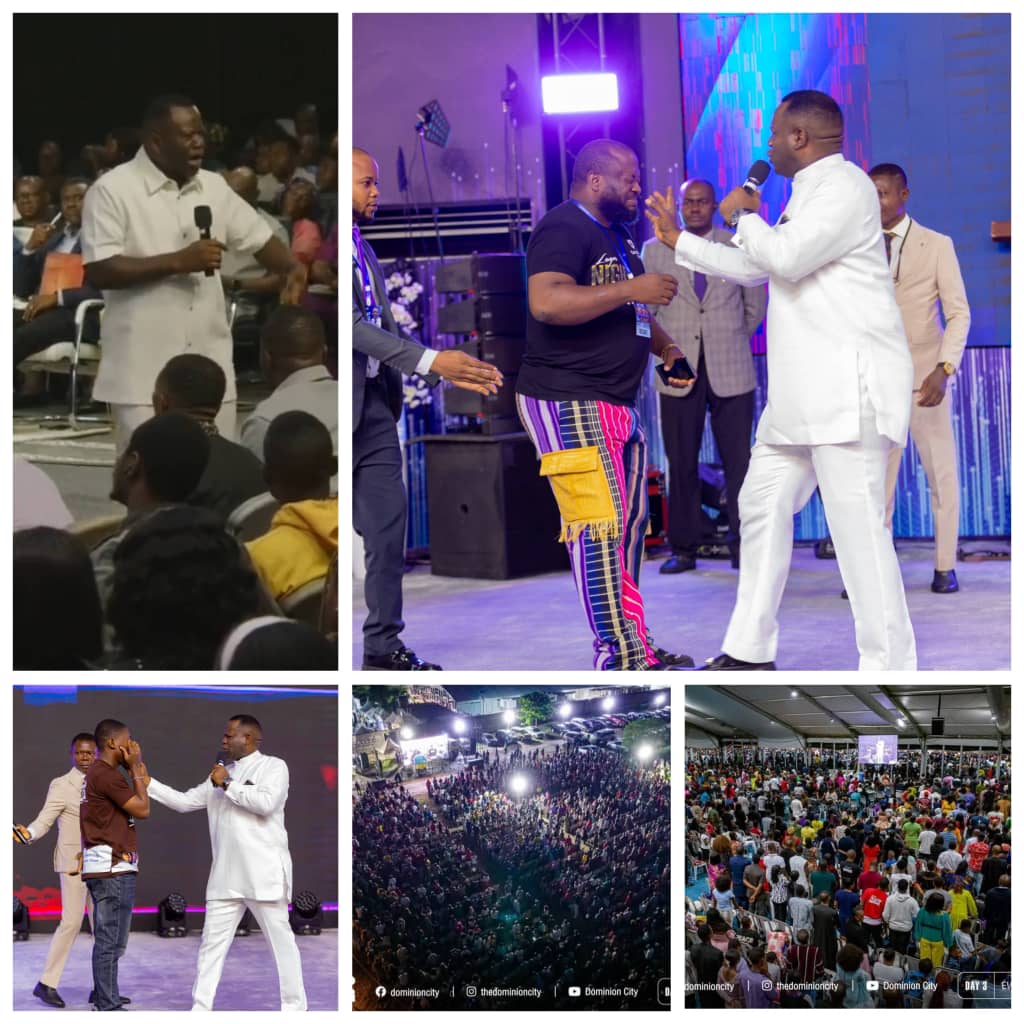
Miracles, Revival Mark Opening of Dominion City’s Night of Glory 2026
Lagos – The atmosphere was charged with faith, worship, and expectancy as Dominion City’s Global Camp Meeting 2026 entered its peak with the first day of the “Night of Glory,” drawing thousands of worshippers to Lagos and Enugu in a powerful display of spiritual revival.
Held at the Golden Heart Place, Ajah, Lagos, the Friday evening gathering marked a significant moment in the ongoing six-day conference themed “Redigging the Wells of Our Fathers.” Participants from across Nigeria and beyond converged both physically and online, united by a shared hunger for divine encounter and transformation.
From the outset, the meeting was characterised by intense worship sessions led by gospel ministers, creating an atmosphere many attendees described as “tangible with God’s presence.” The night quickly transitioned into sessions of fervent prayers, prophetic ministrations, and teachings centred on restoration, healing, and spiritual awakening.
Presiding over the meeting, Dr. David Ogbueli, founder of Dominion City, charged participants to reconnect with foundational truths and spiritual disciplines necessary for personal and societal transformation. He emphasised that the “Night of Glory” was designed as a moment of divine visitation where destinies could be reshaped.
“As we redig the wells of our fathers, we are reconnecting with ancient graces and covenant realities that produce undeniable results,” he declared.
As the night unfolded, several remarkable testimonies were shared, reinforcing the theme of supernatural intervention. Among them was the case of a 14-year-old girl who was reportedly delivered from a seven-year struggle with pornography addiction, an experience that drew emotional reactions from the congregation.
Other testimonies included reported healing from cancer, recovery from a severe skin infection attributed to spiritual affliction, the healing of a heart-related condition, and three years of a non-menstrual period. Attendees also recounted instances of restored hearing and sight, with individuals testifying to improvements from partial deafness and blindness, among others.
Fathers of faith present were Barrister Emeka Nwankpa, Pastor Yemi Ayodele, Rev. Pade Tokun, Apostle Gbenga Adegbenro, Rev. Mike Adegbile, and others. Other Ministers present, including Pastor Dr. Charles Ndifon, Pastor Randy Mitchell, Apostle Ikechukwu Nnajiofor, and others, reinforced messages of faith and the power of God to intervene in human situations. They encouraged worshippers to remain steadfast and receptive, noting that miracles often spring from an atmosphere of unwavering belief.
Beyond the miraculous, the gathering also underscored a broader call to moral and spiritual renewal. Church leaders reiterated the need for believers to embody values that can positively influence society, especially in a time of perceived moral decline.
The “Night of Glory” is part of the larger Global Camp Meeting, which began on April 1 and will run through April 6, featuring daily teachings, leadership sessions, and specialized programmes for youths and families.
Organisers say expectations remain high for the second night, with many believing that the wave of miracles and transformation witnessed on the first night is only the beginning.
For many attendees, however, the message was clear beyond the signs and wonders; the true essence of the gathering lies in a renewed commitment to live transformed lives and impact society. //END.//
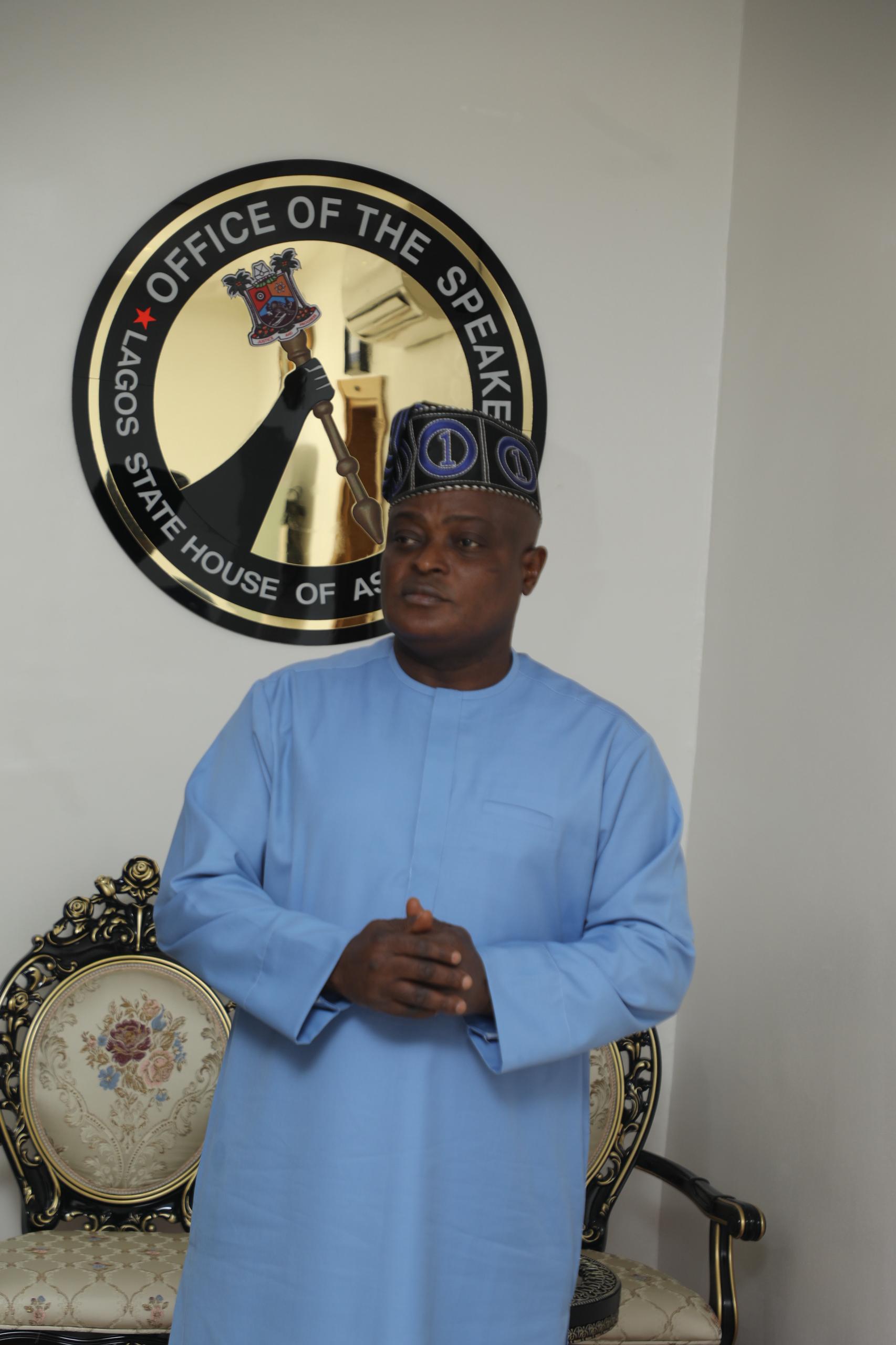
Easter: Obasa Urges Christians To Embrace Hope, Unity, Renewal
The Speaker of the Lagos State House of Assembly, Rt. Hon. Mudashiru Obasa, has congratulated Christian faithful in Lagos and across Nigeria on the celebration of Easter, urging them to draw strength from the lessons of Christ’s resurrection.
In his Easter message, released by his Chief Press Secretary, Mr. Dave Agboola, Obasa described the season as a reminder of victory over despair, renewal after trials, and the triumph of light over darkness. He noted that just as Christ overcame death, Nigeria can overcome its current challenges if citizens remain steadfast, prayerful, and committed to unity.
“Easter is a season of hope and renewal. As a nation, we face economic pressures and security concerns, but the resurrection teaches us that no situation is beyond redemption. Let us roll away the stones of division and despair, and work together for peace, justice, and prosperity,” the Speaker said.
He called on Lagosians to continue to show love and compassion to one another, stressing that collective effort is key to building a stronger Lagos and a better Nigeria.
Obasa prayed that the joy of Easter would fill homes with renewed faith and guide both leaders and citizens toward a brighter future.

*PDP CHIEFTAIN, ONIRETI RESIGNS FROM PARTY, CITES PERSONAL REFLECTION
A former House of Representatives candidate, Olufemi Onireti, has formally resigned his membership of the Peoples Democratic Party (PDP) in Oyo State.
His resignation was conveyed in a letter addressed to the Chairman of PDP Osupa Ward 9, Ogbomoso North Local Government, on Thursday.
Onireti described the decision as a difficult but necessary step after what he termed a period of “deep personal reflection.”
“I hereby formally resign my membership of the Peoples Democratic Party (PDP), effective immediately,” he wrote.
He acknowledged his years of active involvement in the party, including contesting for the House of Representatives in the last general election, noting that the PDP had offered him a platform for political participation, service, and growth.
Despite his exit, Onireti expressed appreciation to party leaders and members for the support he enjoyed over the years.
“I remain grateful for the opportunity to serve and for the relationships and experiences I gained during my time in the party.
I wish the party well in its future endeavours,” he added.
The development is expected to generate discussions within the Ogbomoso North political circle, as observers await his next political move.


-

 society7 months ago
Religion: Africa’s Oldest Weapon of Enslavement and the Forgotten Truth
-

 news4 months ago
WHO REALLY OWNS MONIEPOINT? The $290 Million Deal That Sold Nigeria’s Top Fintech to Foreign Interests
-

 society6 months ago
“You Are Never Without Help” – Pastor Gebhardt Berndt Inspires Hope Through Empower Church (Video)
-

 celebrity radar - gossips2 months ago
Dr. Chris Okafor Returns with Power and Fire of the Spirit -Mounts Grace Nation Altar with Fresh Anointing and Restoration Grace on February 1, 2026