
society
The Frayed Thread: How Geopolitical Strife, Climate Breakdown and Food Insecurity Threaten Our Common Future

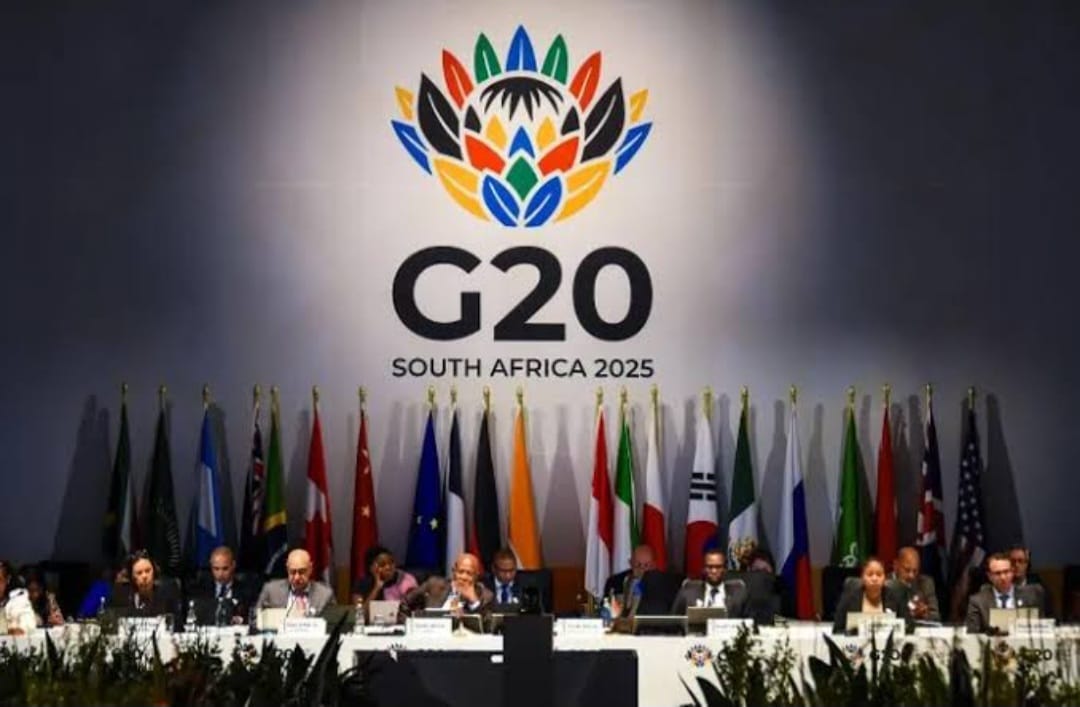
The Frayed Thread: How Geopolitical Strife, Climate Breakdown and Food Insecurity Threaten Our Common Future.
By George Omagbemi Sylvester | Published by saharaweeklyng.com
“A blistering call to concerted action after President Cyril Ramaphosa’s G20 warning — because polite complacency is now a crime against our children.
When President Cyril Ramaphosa stood before the G20 and warned that “the threats facing humanity today; from escalating geopolitical tensions, global warming, pandemics, energy and food insecurity jeopardise our collective future,” he did not offer a polite diplomatic observation: he issued an alarm bell. That sentence is not a speech flourish. It is a diagnosis, a legal brief, and a moral indictment rolled into one. The world is being rent along multiple fault lines at once and those ruptures are interacting in ways that amplify suffering, undermine institutions, and make yesterday’s crises look quaint at the G20.
Let us be clear about what we are confronting. On the food front, the United Nations flagship analysis makes plain that hunger is not a vague, distant problem to be solved by feel-good charity; it is resurging, structural, and measurable. In 2024 some 673 million people (roughly 8 percent of humanity) experienced hunger, and roughly 2.3 billion people were moderately or severely food insecure; hundreds of millions more than before the pandemic. These figures are not abstractions: they map to children stunted by malnutrition, to economies hollowed out by lost productivity, and to political tinderboxes where food scarcity feeds conflict and displacement.
Worse still, acute food crises have ballooned. Independent reporting and the Global Report on Food Crises show that nearly 300 million people faced severe, acute food crises in 2024 — a horrifying figure driven by war, economic collapse, and weather extremes. Humanitarian agencies warn that tens of millions could slide from crisis into outright famine unless funding and ceasefires arrive. This is not a distant news brief; it is a rolling catastrophe unfolding in real time in places such as Sudan, Gaza, parts of the Sahel, Yemen and beyond.
Why should a South African-hosted G20 care? Because geopolitics, climate and food are not separate spheres: they are three cogs of a single machine that, if left unchecked, will grind civilization into anarchy. Geopolitical tensions (rivalries between great powers, regional wars, proxy conflicts and the weaponisation of aid and trade) disrupt supply chains, spike prices and close off humanitarian corridors. When fertilizers, fuel and transport are priced out of reach or blocked by sanctions and conflict, harvests fail, markets panic and millions can’t afford a daily meal. The World Food Programme has repeatedly warned that funding shortfalls compounded by geopolitical choices have placed some 58 million people at the brink of an extreme hunger crisis; a direct consequence of policy choices as much as weather.
Then there is climate, the slow, remorseless amplifier. Climate scientists and planetary-boundary researchers, warning in ever more urgent tones, tell us we are perilously close to tipping points: irreversible shifts like the dieback of the Amazon, the collapse of parts of the Antarctic ice sheet, or a breakdown in major ocean currents that sustain monsoons. Those shifts do not merely raise sea levels; they rewrite the map of agriculture, collapse freshwater systems, and trigger migration on an epic scale. Leading scientists warn that transgressing multiple planetary thresholds will undermine the Earth’s life-support systems — with catastrophic consequences for food production and human security.
Add inequality and economic policy to the mix and you have a perfect storm. Nobel laureate Joseph Stiglitz and other economists have framed the present era as an “INEQUALITY EMERGENCY” a structural fragility that leaves entire populations unable to absorb shocks. Inequality sharpens the effects of famine and heatwaves because poor households cannot diversify livelihoods, access credit, or relocate. It also fuels political polarization; angry, desperate populations are tinder for demagogues and violent actors who exploit scarcity to consolidate power. The G20 itself has been urged to confront inequality as a systemic risk to global stability.
These are not problems that can be outsourced to NGOs. They are governance failures writ large: failures of diplomacy when sanctions and saber-rattling choke trade; failures of climate stewardship when fossil-fuel interests stall transitions; failures of solidarity when humanitarian funding is traded for geopolitical advantage. António Guterres and other global leaders have been blunt: hunger is being weaponized, and climate inaction is an act of intergenerational theft. That language may sting, but it must sting — EUPHEMISMS have had their day.
So what must happen? First: treat these threats as STRATEGIC; not CHARITABLE. Food systems, energy systems and climate resilience belong at the core of national security strategies. That means stockpiles for emergencies, safeguarded humanitarian corridors, and trade instruments designed to keep essential goods moving even in times of diplomatic fracture. It means debt-relief tied to investments in resilient agriculture and social protections so that poor nations aren’t forced to choose between service payments and feeding their children.
Second: elevate CLIMATE ACTION from SLOGAN to STRICT POLICY. The technological breakthroughs in renewables and storage are real; but without large-scale finance, just transition programs for fossil-fuel dependent communities, and rapid removal of market distortions that favour carbon-intensive industries, the window to limit warming to survivable bounds will slam shut. Scientists implore immediate, profound cuts in emissions and an urgent scale-up of carbon removal where necessary; not as an OPTIONAL ADD-ON but as an OBLIGATION.
Third: rebuild international cooperation mechanisms. The G20 has a unique convening power; Ramaphosa’s hosting moment must be used to forge binding, accountable pledges: emergency funding guarantees for food crises, a MULTILATERAL COMPACT to DE-ESCALATE CONFLICTS that IMPEDE food flows, and an international panel on inequality and shared prosperity modeled on proposals backed by leading economists. These are politically hard, but the alternative is to watch fragile states fail and generate waves of displacement and conflict that will ripple back to every G20 capital.
Finally: put justice at the center. Climate and food insecurity are not blind forces; they fall hardest on those who contributed least to the problem. Any credible response must include transfer of FINANCE and TECHNOLOGY to the Global South, fair trade terms for agricultural producers, and mechanisms to protect smallholder farmers from market shocks and climate volatility.
This is not an essay in despair. It is a summons. Diplomacy can quiet guns; investment can rebuild soils and power grids; policy can protect the most vulnerable. But none of that will happen if we muddle along with incrementalism and hollow talk. President Ramaphosa’s line at the G20 is more than a sentence, it is a MANDATE for URGENCY. We have the evidence, the science, and the moral case. What we lack is the political courage to act at the scale required.
If not now, when? If not together, who? The future will not forgive the generation that chose complacency while its children starved and its lands burned. The time for excuses is over; the time for systemic, cooperative action has arrived. The G20, UNICEF, FAO, WFP, scientists and civil society must stop trading EUPHEMISMS for results. We must convert ALARM into ACCOUNTABILITY and PROMISES into IMMEDIATE, MEASURABLE INTERVENTIONS. Anything less will be a betrayal of the most basic compact between governments and the people they are meant to protect.
George Omagbemi Sylvester writes from South Africa. Published by saharaweeklyng.com





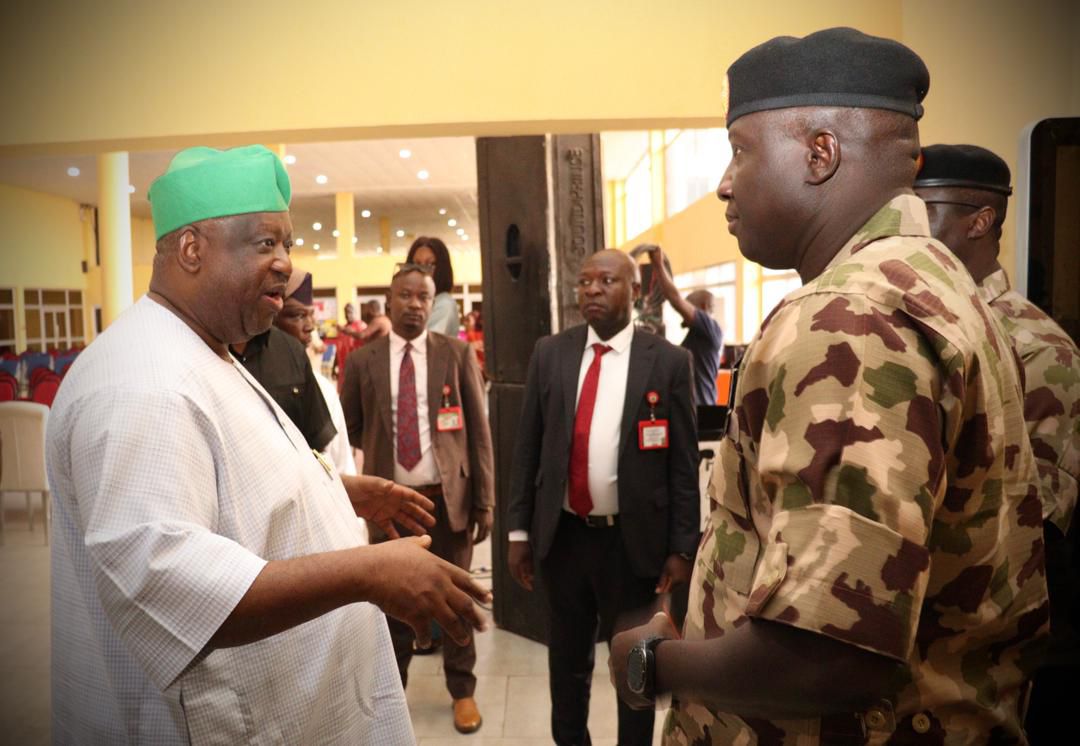
COAS Launches Nationwide Security Renewal Mission in Plateau
The Chief of Army Staff, Lieutenant General Waidi Shaibu, on Thursday led a high-level delegation of security chiefs to Plateau State, flagging off a nationwide security renewal mission aimed at strengthening civil-military cooperation and restoring lasting peace across the country.
The visit to Jos, the Plateau State capital, marks the first phase of a coordinated national effort to address persistent security challenges through joint operations, community engagement, and proactive intelligence gathering.

Governor Caleb Muftwang received the delegation, describing the initiative as a critical step toward stabilizing affected communities and reinforcing public confidence in security institutions.
Civil-Military Synergy Takes Centre Stage
At the heart of the mission is a renewed emphasis on collaboration between the military, civil authorities, and local communities. Speaking during the visit, Lt. Gen. Shaibu stressed that national security must be treated as a collective responsibility.
He urged citizens to support security agencies by remaining vigilant, sharing credible information, and complying with lawful directives, noting that effective security cannot be achieved in isolation.
Community Engagement as Confidence-Building Tool
In a departure from purely operational engagements, the Army Chief held direct consultations with community leaders and residents in Jos, reinforcing the importance of trust and dialogue in conflict resolution.
Lawmakers, including Dachung Bagos and Ladi Dangyok, commended the initiative, stating that visible engagement by top military leadership helps rebuild confidence among citizens and fosters cooperation.

Proactive Security Operations Underway
Operational updates were provided by Major General Folusho Oyinlola, who disclosed that troops under Operation Enduring Peace have intensified surveillance, intelligence-led patrols, and coordinated actions with other security agencies.
According to the Army, the approach is designed to prevent escalation of threats, safeguard lives and property, and stabilize vulnerable communities before crises emerge.
A Shift Toward Sustainable Peace
Military authorities emphasized that the Plateau visit is part of a broader, long-term strategy to transition from reactive responses to sustainable peacebuilding nationwide. The framework includes strengthening local resilience, ensuring justice, and maintaining continuous engagement with stakeholders.
Analysts view the initiative as a significant policy shift, reflecting a more inclusive security architecture that integrates community participation with military operations.
Call for National Unity
The Army leadership concluded with an appeal to Nigerians to reject divisive narratives and support ongoing efforts to promote unity and peace.
“The success of this mission depends not only on the armed forces but on the cooperation of every citizen,” the COAS stated.
The nationwide security renewal campaign is expected to extend to other regions in the coming weeks as authorities seek to consolidate gains and build a safer, more unified Nigeria.


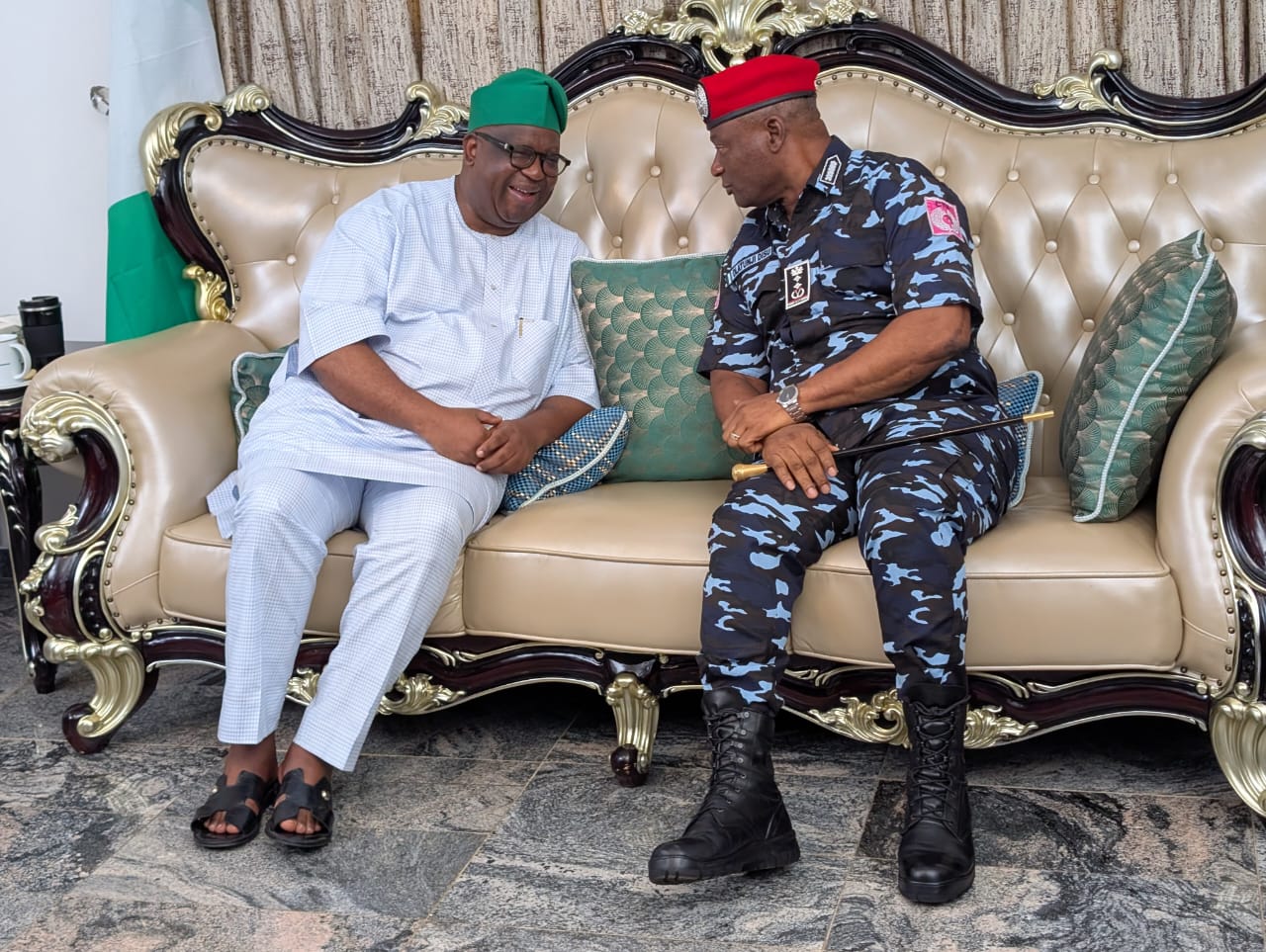
IGP Disu Visits Plateau, Orders Tactical Deployment To Reinforce Security
The Inspector General of Police, Olatunji Disu, on Thursday paid a working visit to Plateau State following recent unrest, holding strategic talks with Governor Caleb Muftwang on measures to strengthen security and prevent further disturbances.
As part of immediate steps to stabilise the situation, the police chief authorised the deployment of specialised tactical units to support officers already on ground across affected areas.
Governor Muftwang commended the swift intervention of the police leadership, praising the dedication and professionalism of security personnel working to restore calm. He also acknowledged the efforts of mobile police officers and lauded the leadership of the state’s Commissioner of Police, Bassey Ewah.
Both the Nigeria Police Force and the Plateau State Government reaffirmed their commitment to safeguarding lives and property, stressing that enhanced collaboration remains key to restoring lasting peace in Plateau State, popularly known as the Home of Peace and Tourism.


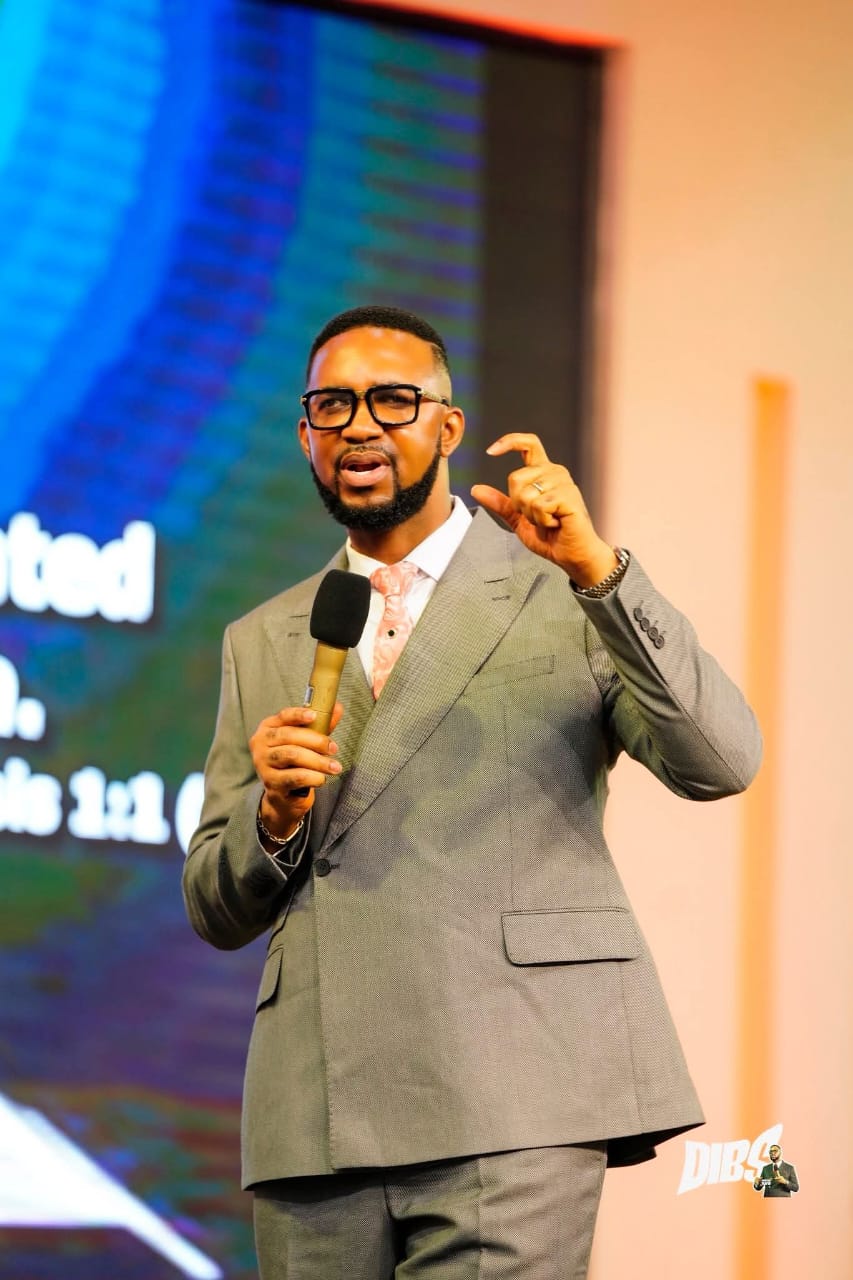
Grace Nation Worldwide: A Living Reality – Dr. Chris Okafor
……“Miracles, Healing, and Deliverance Overflow at Grace Nation Services”
The Grace Nation midweek Prophetic Healing, Deliverance, and Solutions (PHDS) Service on 2nd April 2026 at the international headquarters in Ojodu Berger, Lagos, was a spectacular display of God’s power, marked by miracles, healing, and deliverance.
The God of Grace Nation continues to demonstrate His authority, breaking strongholds, healing the sick, restoring lost glory, and providing solutions to every problem presented at His altar.
Testimonies of God’s Power
One woman, previously diagnosed with a terminal condition and slated for a ₦4.5 million surgery due to inability to excrete, was prayed for by the Generational Prophet, Christopher Okafor, just a week after visiting the church. Declaring healing within 24 hours, she returned to testify to God’s miraculous intervention.
Another pregnant woman, whose baby was bridged and at risk, was located and prayed for. She returned to service with confirmation that her child is now well-positioned for delivery. Similarly, a woman booked for a C-section due to an overdue and poorly positioned pregnancy testified during the service that her baby is now properly positioned, ready for birth.
These testimonies underscore the truth: what God cannot do does not exist. Grace Nation has entered a new level of spiritual authority, and with faith, believers are witnessing the impossible become reality.
God Works by Principle, Not Gossip
In his sermon, Dr. Okafor emphasized that God does not operate on superstition, gossip, or social media pressures. His work is grounded in His Word, and it is through adherence to His principles that Grace Nation continues to flourish.
The Generational Prophet stressed that to enjoy divine blessings and fruitfulness, believers must remain connected to God’s Word, faithfully serve Him, and ignore distractions or side-talks. Focused commitment to God’s service guarantees alignment with His miraculous power.
Join the Movement
Grace Nation Worldwide is open for all who desire a life transformed by divine intervention. Weekly services include:
Sunday Service: 7:00 AM
Grace Nation Island Service (Ogombo): Wednesday, 5:00 PM
Midweek PHDS Service: Thursday, 7:00 AM
Attending these services under the ministry of the Generational Prophet ensures encounters with God’s supernatural power, life-changing miracles, and lasting breakthroughs.
Grace Nation Worldwide is not just a church—it is a reality where faith meets the supernatural.
By Sunday Adeyemi


-

 society7 months ago
Religion: Africa’s Oldest Weapon of Enslavement and the Forgotten Truth
-

 news4 months ago
WHO REALLY OWNS MONIEPOINT? The $290 Million Deal That Sold Nigeria’s Top Fintech to Foreign Interests
-

 society6 months ago
“You Are Never Without Help” – Pastor Gebhardt Berndt Inspires Hope Through Empower Church (Video)
-

 celebrity radar - gossips2 months ago
Dr. Chris Okafor Returns with Power and Fire of the Spirit -Mounts Grace Nation Altar with Fresh Anointing and Restoration Grace on February 1, 2026