
society
THE GREAT OIL STRUGGLE: How the United States Seized Venezuelan Oil, Defied Sanctions and Shook Global Order


THE GREAT OIL STRUGGLE: How the United States Seized Venezuelan Oil, Defied Sanctions and Shook Global Order.
By George Omagbemi Sylvester | Published by saharaweeklyng.com
“Trump’s Venezuela Strategy, Global Oil Politics and the World’s Watchful Silence.”
In a dramatic and unprecedented turn of events that reads like a 21st-century REALPOLITIK THRILLER, the United States under President Donald J. Trump has engineered a sweeping campaign to seize control of Venezuelan oil (the lifeblood of the South American nation) in defiance of longstanding export sanctions, international norms and mounting global unease. What began as a sanctions regime has morphed into a geopolitical juggernaut with oil tankers pursued across oceans, nations blockaded and the very principle of sovereign resource ownership thrown into question.
Sanctions, Sanctions Evaded and Three Oil Tankers Bound for the U.S.
As sanctions tightened on Venezuela’s petroleum industry (once a cornerstone of global crude markets) a new pattern emerged on the high seas. Despite crippling export limitations tied to U.S. financial penalties, Chevron-chartered vessels began moving crude to American refineries, underscoring the complexity and contradictions of U.S. energy policy. On January 8, 2026, three of the 11 Chevron-chartered ships were confirmed transporting Venezuelan oil onward to the United States, even amid “EXPORT SANCTIONS” that were ostensibly still in force.

This logistical twist reflects the convoluted reality: while broad sanctions remain in place, selective waivers and deals have been struck to prioritize oil flows that align with U.S. interests. In effect, sanctions enforcement has become a tool of leverage and not only to punish Maduro but to redirect Venezuela’s oil to American shores under terms set by Washington.
Shadow Fleets and Sinking Sovereignty: The Seizure of Oil Tankers.
The U.S. campaign took an audacious escalation in early January 2026, when government forces seized two oil tankers linked to Venezuelan crude exports and one of which was Russian-flagged and had been chased across the Atlantic for more than two weeks.
The Marinera (formerly Bella 1), flagged under Russia after attempts to evade detection and the M Sophia, intercepted in the Caribbean Sea, were both taken into U.S. custody under sanctions enforcement action. Washington claims these vessels were part of a “SHADOW FLEET” that shipped Venezuelan oil, potentially contravening American sanctions.

These seizures are not isolated incidents. At least four oil tankers have now been intercepted or commandeered by U.S. forces in the last weeks, part of an aggressive maritime campaign aimed at choking off Venezuela’s oil revenues.
Russia has vocally condemned these actions as breaches of international maritime law and “NEO-COLONIAL” overreach. Though the United States insists legal authority lies in its sanctions regime and national security prerogatives.
Military Might and Oil Blockade: Operation Southern Spear.
These maritime subplots occur against the backdrop of Operation Southern Spear, a sweeping U.S. naval and military buildup in the Caribbean since late 2025 that culminated in strikes, interceptor actions and the capture of Venezuelan President Nicolás Maduro himself in early January 2026, an act that stands out as one of the boldest and most controversial in recent U.S. foreign policy.
Initially framed as combating narcotics trafficking and enforcing sanctions, Southern Spear has resulted in:
A naval “blockade” (technically a quarantine of sanctioned tankers) restricting oil exports from Venezuelan ports.

Multiple U.S. military and Coast Guard seizures of oil tankers.
Threats and limited strikes on maritime vessels in the Caribbean and Eastern Pacific.
This buildup represents the largest American military presence in the Caribbean in decades, eclipsing even Cold War deployments and serves the twin purposes of resource control and regime destabilization.
Congressional Pushback and Global Watchers.
In Washington, not all branches of government have stood in unison behind Trump’s bold approach. A bipartisan U.S. Senate resolution was advanced to require congressional approval for further military action in Venezuela, a direct rebuke to unilateral executive maneuvers.
Senator Tim Kaine, a key proponent of the measure, underscored the constitutional imperative of legislative oversight on matters of war and peace. For critics in both the U.S. and abroad, the growing conflation of oil interests with military action recalls historical resource-driven conflicts and raises alarms about executive overreach.
At the United Nations, diplomats and legal experts have flagged legal concerns. Some UN bodies and experts characterize aspects of the blockade and seizures as violations of the UN Charter and customary maritime law, especially given that U.S. sanctions lack Security Council authorization and extend into international waters not under U.S. jurisdiction.
Yet, concrete collective action from the UN remains muted though revealing the limitations of global governance when confronted by a superpower with strategic intent.
Oil, Influence and Economic Leverage.
At the heart of the conflict is Venezuela’s massive crude reserves, among the largest on Earth. Control over these resources is not only an economic windfall but a geopolitical asset in a fractured world order where energy remains central to national power.
Trump’s administration has outlined plans to refine and market up to 50 million barrels of Venezuelan crude, funneling proceeds into U.S. economic channels and leveraging energy dominance for diplomatic influence.
Vice President J.D. Vance, articulating the strategy, stated, “We control the energy resources and we tell the regime, you are allowed to sell the oil so long as you serve America’s national interest” A statement that encapsulates not merely commercial policy but a territorial conception of resource sovereignty.
Global Repercussions and the World’s Gaze.
The world watches while the United States expands its grip on Venezuelan oil and many questions loom:
Legal legitimacy: Maritime law experts and UN legal authorities warn that unilateral blockades and seizures could redefine international norms if left uncontested.
Geopolitical tension: Russia has condemned U.S. actions and China (a major buyer of Venezuelan crude) denounced the seizures as “BULLYING.”
Economic impact: Venezuelan crude exports have plummeted as tanker traffic evaporates amid U.S. pressure.
Humanitarian crisis: With oil at the core of Venezuela’s economy already near collapse, further disruptions risk worsening living conditions for millions.
Critics argue that Washington’s aggressive posture risks turning the Caribbean into a new flashpoint of great-power rivalry, with oil reserves as the coveted prize. Scholar Dr. Felipe Gómez of the Latin American Institute for Geopolitical Studies warns, “Energy dominance pursued through coercion will fracture trust and ignite competition that the global system is ill-prepared to manage.”
Meanwhile, former U.S. Ambassador Anne Peterson comments, “When you conflate security and resource control, you invite conflict. The international community must reaffirm the principles that challenged nations, too, have rights under international law.”
In Retrospect: A New Age of Oil Politics.
The saga of Venezuelan oil and U.S. intervention is not simply about petroleum and sanctions. It is a stark illustration of how energy resources remain central to power, how laws can bend under national interest and how the global order (beset by rivalries and weakening multilateralc institutions) increasingly operates in a realist paradigm.
The world watches as tankers are seized, Congress debates war powers and the United States asserts its will far from its shores. Oil is more than a commodity here; it is the linchpin of political leverage and Venezuela (for all its suffering and turmoil) has become the epicenter of a renewed struggle over who controls energy and, by extension, the fate of nations.
In this unfolding drama, one truth is unmistakable: power flows with oil and those who control the oil may yet control the direction of history itself.






UKA Gears Up for Final ATC Exchangeability Test Run as June Preparations Begin.
May 30, 2026 – As the month of June gathers momentum, the *United Kingdom of Atlantis, UKA*, a sovereign nation has unveiled a series of vital guidelines and preparatory packages to ensure citizens and stakeholders run the *ATC Exchangeability* process effectively.
In an official update, the *President of Atlantic Crown Limited, Empress of Attica Empire UKA*, confirmed that the *Final Test Run of ATC Exchangeability* is scheduled for the month of June 2026. The exercise marks a key phase ahead of the *Official Exchangeability Window, set to run from July 2026 to February 2027*.
### Key Highlights from the Presidential Briefing
1. *Final Test Run – June 2026*
The test run is designed to validate systems, procedures, and user readiness before full activation. Citizens, partners, and designated participants are urged to follow all official advisories released by UKA authorities during this period.
2. *Official Exchangeability Period*
Following the successful completion of the June test run, the Official Exchangeability will commence in july 2026 and we are Expecting Full Exchange ability between July Ending, 2026 to February 2026.
UKA stated that detailed schedules, eligibility requirements, and step-by-step instructions will be communicated progressively through verified UKA channels.
3. *Benefiting Packages for June*
In line with UKA’s commitment to citizen empowerment, the month of June will feature “benefiting packages” aimed at education, preparation, and seamless onboarding. These packages are intended to equip the people of UKA with the knowledge and tools needed for effective participation.
4. *Commitment to Transparency*
Addressing the nation, the Empress of Attica Empire UKA emphasized:
_“Final Test Run of ATC Comes up in The Month of June, As We Prepare For The Official Exchangeability, Between July 2026 To Feb 2027. All Information Will Be Communicated.”_
UKA reaffirmed that only information released through official UKA platforms should be regarded as authoritative.
The United Kingdom of Atlantis is encouraging all citizens, representatives, and interested parties to remain alert to official communications, attend designated orientation sessions, and avoid unofficial sources. UKA’s dedication to order, clarity, and the collective benefit of its people as the nation moves into this significant phase.
For updates, advisories, and participation guidelines, citizens are advised to monitor official UKA communication channels.
United Kingdom of Atlantis, UKA, is a sovereign nation, committed to national development, citizen welfare, and structured economic participation through initiatives such as ATC Exchangeability.
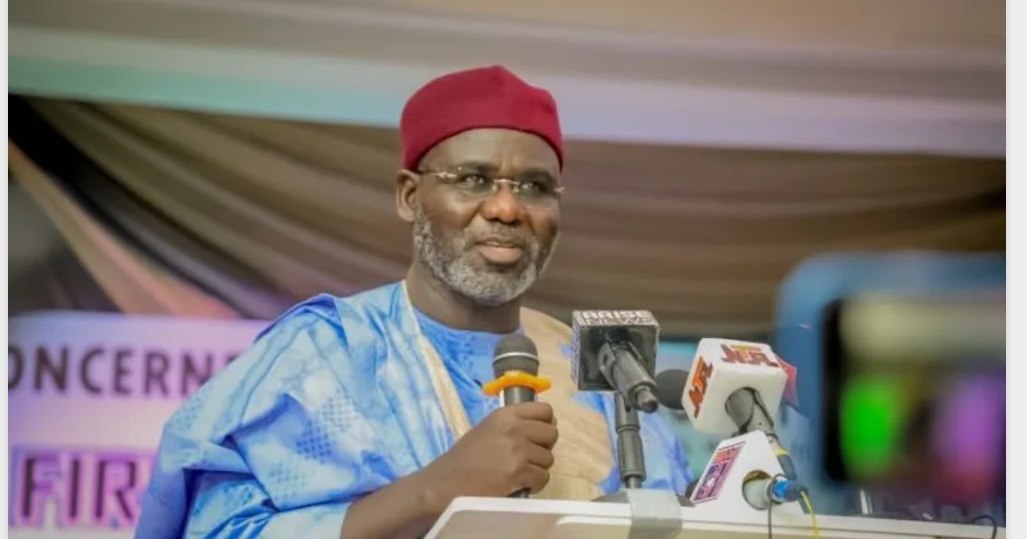
Three Years On, General Buratai Hails Tinubu’s Economic, Security Achievements
Former Chief of Army Staff, Lt. Gen. Tukur Buratai (retd.), has commended President Bola Ahmed Tinubu for what he described as bold economic reforms and improved security efforts as the President marks three years in office.
In a goodwill message on Thursday to commemorate Tinubu’s third anniversary as President and Commander-in-Chief of the Armed Forces, Buratai said the administration had taken courageous decisions that would leave a lasting impact on Nigeria’s development.

According to him, President Tinubu broke a long-standing cycle that had hindered national growth by removing fuel subsidy and implementing foreign exchange reforms aimed at stabilising the naira and strengthening the economy.
He noted that the reforms were beginning to yield positive results, citing the global acceptance of Nigerian debit cards, the gradual revival of local refineries, access to student loans, and ongoing road and infrastructure projects across the country.
“The FCT Administration has also recorded remarkable progress, completing major road projects that remained unfinished for over 16 years,” Buratai stated.
The former army chief also praised the administration’s security efforts, saying renewed military offensives against insurgents, terrorists and bandits had led to notable successes across various parts of the country.
He specifically lauded recent joint operations involving Nigerian and United States forces against Boko Haram and ISWAP in the North-East, as well as intensified counter-banditry operations in the North-West.
“We have seen notorious ISWAP commanders being neutralised. I congratulate the Commander-in-Chief, the Minister of Defence, the Chief of Defence Staff, the Service Chiefs, the Inspector-General of Police and heads of intelligence agencies for their efforts,” he said.
Buratai, however, acknowledged that challenges remained, stressing the need for more aggressive military operations and intelligence-driven strategies in the coming year.
While urging Nigerians to remain hopeful, he said celebrating the President’s achievements did not amount to ignoring the difficulties facing the nation.
“Because you truly care, you have shown the courage to trade short-term comfort for long-term hope. Nigerians need your reassurances, and that is why we remain optimistic and full of confidence,” he added.
The retired military officer reaffirmed his support for the Tinubu administration and expressed confidence that the foundation being laid by the government would deliver a brighter future for the country.
He also prayed for God’s guidance, wisdom, strength and good health for the President as he continues to lead Nigeria.
NUT Raises Alarm Over Continued Captivity of Abducted Oyo Pupils, Teachers
The Nigeria Union of Teachers has expressed deep concern over the continued captivity of pupils and teachers abducted during an attack on schools in the Ahoro-Esinle and Yawota communities in Oriire Local Government Area of Oyo State.
In a statement issued on Saturday, the Oyo State wing of the union described the situation as increasingly distressing, particularly following the emergence of a video allegedly released by the abductors showing the victims pleading for their freedom.
The union said the footage had heightened fears over the welfare of the abducted pupils and teachers, describing their ordeal as heartbreaking and unacceptable.

According to the NUT, no child or teacher deserves to be subjected to such traumatic experiences, adding that the prolonged captivity of the victims has continued to inflict psychological pain on their families, colleagues and the wider education community.
The union called on the Federal Government, Oyo State Government and relevant security agencies to intensify efforts towards securing the immediate and safe release of the victims.
“This is not a moment for hesitation. It is a moment for coordinated, intelligence-driven efforts to ensure the immediate and safe release of all abducted pupils and teachers,” the statement read.
While acknowledging ongoing interventions by security agencies and government authorities, the union stressed that time was of the essence, warning that every additional day in captivity deepens the trauma suffered by the victims.
The NUT urged security operatives to strengthen surveillance, improve community intelligence gathering and deploy all necessary operational and diplomatic measures to facilitate the rescue of the abductees.
It also appealed to traditional rulers, community leaders and residents to support rescue efforts by providing credible information that could assist security agencies.
“The safety of our children and teachers must remain a collective priority,” the union stated.
Reaffirming its support for the families of the victims, the NUT pledged continued solidarity and prayers while advocating safer learning environments across the country.
The statement was jointly signed by the Chairman of the Oyo State NUT, Comrade Hassan Ajibola Fatai, and the Secretary, Comrade Salami Olukayode.


- Afreximbank Deepens Commitment to Economic Progress in The Bahamas June 1, 2026
- African Electric Vehicle (EV) platform Spiro raises $215M in equity to scale electric mobility and energy infrastructure across Africa June 1, 2026
- Africa Centres for Disease Control and Prevention (Africa CDC) Statement on Attacks Against Health Facilities During the Bundibugyo Virus Disease Response in the Democratic Republic of the Congo June 1, 2026
- Putting consumers at the centre of Africa’s dairy transformation June 1, 2026
- International Rescue Committee (IRC) warns Democratic Republic of the Congo (DRC) Ebola outbreak likely far larger than official figures suggest June 1, 2026
- South Africa: Portfolio Committee on Health Marks National Cancer Survivor Day and Reaffirms Importance of Early Detection and Public Awareness June 1, 2026
- Rwanda’s RSSB Tigers Crowned 2026 Basketball Africa League Champions June 1, 2026
- Uganda: Appointments Committee Begins Vetting of Ministerial Nominees June 1, 2026
- Sudan braces for worsening child malnutrition as pre-harvest season starts June 1, 2026
- Etu Energias Strengthens Angolan Footprint, Returns to Angola Oil & Gas (AOG) 2026 as Champion Sponsor June 1, 2026
- Afreximbank Deepens Commitment to Economic Progress in The Bahamas June 1, 2026
- African Electric Vehicle (EV) platform Spiro raises $215M in equity to scale electric mobility and energy infrastructure across Africa June 1, 2026
- Africa Centres for Disease Control and Prevention (Africa CDC) Statement on Attacks Against Health Facilities During the Bundibugyo Virus Disease Response in the Democratic Republic of the Congo June 1, 2026
- Putting consumers at the centre of Africa’s dairy transformation June 1, 2026
- International Rescue Committee (IRC) warns Democratic Republic of the Congo (DRC) Ebola outbreak likely far larger than official figures suggest June 1, 2026
- South Africa: Portfolio Committee on Health Marks National Cancer Survivor Day and Reaffirms Importance of Early Detection and Public Awareness June 1, 2026
- Rwanda’s RSSB Tigers Crowned 2026 Basketball Africa League Champions June 1, 2026
-

 news6 months ago
WHO REALLY OWNS MONIEPOINT? The $290 Million Deal That Sold Nigeria’s Top Fintech to Foreign Interests
-

 society4 weeks ago
SOCIAL MEDIA IS NOT A BATTLEFIELD COMMAND – WHY THE NIGERIAN ARMY’S ACTION AGAINST JUSTICE CRACK IS A NATIONAL SECURITY IMPERATIVE
-

 celebrity radar - gossips4 months ago
Dr. Chris Okafor Returns with Power and Fire of the Spirit -Mounts Grace Nation Altar with Fresh Anointing and Restoration Grace on February 1, 2026
-

 celebrity radar - gossips6 months ago
Prophet Kingsley Aitafo Releases 2026 Prophecy: ‘Nigeria Will Rise, but the World Must Prepare for Turbulence’