
society
The Green Passport and the Price of Poverty: A Nation that Punishes its Own. (How Passport Hikes Privatise Mobility and Punish the Poor)

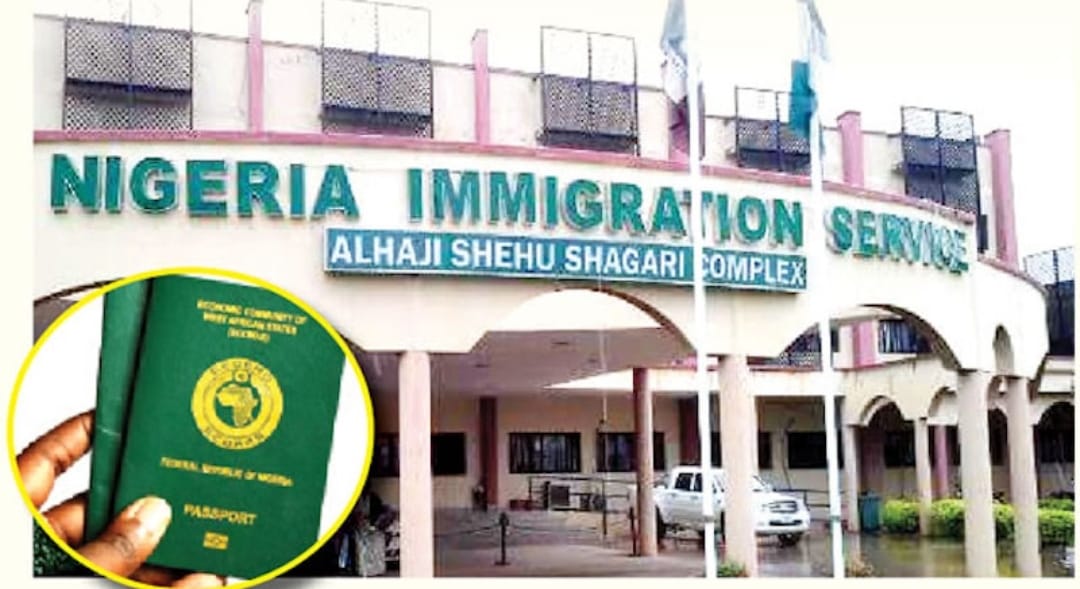
The Green Passport and the Price of Poverty: A Nation that Punishes its Own.
(How Passport Hikes Privatise Mobility and Punish the Poor)
By George Omagbemi Sylvester | published by saharaweeklyng.com
If there is a single, cruel joke the Nigerian state is telling its poorest citizens, it is this: CITIZENSHIP WITHOUT MOBILITY is a MOCKERY. On August 28, 2025, the Nigeria Immigration Service (NIS) quietly approved another staggering upward review of passport fees that takes effect from 1 September 2025. The 32-page standard passport (5 years) now costs ₦100,000; the 64-page booklet (10 years) costs ₦200,000. Less than two years ago these booklets were a fraction of that price. This is not a technical adjustment. It is a social decision with a brutal price tag.

To be clear about what is being sold: Nigeria issues several passport classes. The standard, green passport is what ordinary citizens must buy. There are also Official passports (BLUE) for government functionaries and Diplomatic passports (RED) for accredited diplomats; these latter classes are effectively issued free to their beneficiaries. In short: those who govern or serve diplomatic interests do not pay; those who toil and save for a chance to leave often must. That asymmetry is not incidental, it is symbolic and structural.

Diaspora Exploitation: Nigerians in South Africa Pay Triple.
If Nigerians at home are bleeding, those in the diaspora are haemorrhaging. In South Africa, reports show that Nigerians often pay between R5,000 to R6,500 (about ₦300,000 to ₦400,000) for a standard passport through the Nigerian High Commission in Pretoria or the Consulate in Johannesburg. That is nearly three times the new official rate in Nigeria. Compare this to South Africans themselves: a 10-year passport costs only R600 (about ₦60,000) in their own country.
This disparity is an insult layered upon injury. Diaspora Nigerians are not only ambassadors of culture, trade and remittances, they send home over $20 billion annually in remittances that sustain families and stimulate the economy. Yet they are forced to pay the steepest price for a document that should be their birthright. As one Nigerian student in Cape Town lamented: “By the time I save for the passport, I no longer have money for my study visa. It is like Nigeria itself is blocking me.”

Arithmetic and Politics of Poverty.
The new 32-page fee of ₦100,000 is greater than the legally approved monthly minimum wage of ₦70,000. A single passport now costs more than a month’s legal basic pay for millions of Nigerians. A young student preparing to study abroad, a nurse seeking work to support ageing parents, a trader hustling for better markets all must either delay, borrow or abandon those plans. That is mobility rationed by income. Former presidential candidate Peter Obi summed it up: “In a country where minimum wage is ₦70,000, making a passport cost more than that is a cruel policy that deepens citizens’ hardship.”
The government defends the hike with familiar technocratic language: UPGRADE SYSTEMS, CURB CORRUPTION, IMPROVE QUALITY and INTEGRITY of the PASSPORT. But when process becomes cover for price, citizens have reason to suspect priorities. Every public-sector reform that is funded by charging the many to benefit the few shifts the social contract in the wrong direction. Human-rights groups such as SERAP have rightly called the increase “UNLAWFUL and DISCRIMINATORY”, arguing the move punishes poor Nigerians and restricts fundamental freedoms.
Comedy as Civic Critique.
Across the country, the reaction has been raw: OUTRAGE, SARCASM, BITTER HUMOUR. Comedy (always a pressure valve in Nigerian life) has been doing what journalism sometimes cannot: translate pain into plain, scathing truth. Francis “I Go Dye” Agoda, a comic who doubles as a social crusader, has long used the passport as a punchline for the absurdities of status and access in Nigeria. Gordons too has joked about nearly being stranded because of passport delays, a small anecdote that signals a larger truth: when systems fail, citizens laugh bitterly to mask despair.
As Gordons once quipped on stage: “Na only for Nigeria you go need passport to travel, but na your passport go travel pass you because you never fit afford the money to collect am.” The audience roared; not because it was merely funny, but because it was painfully true.
Comparative Passport Realities in Africa.
Contrast Nigeria’s green passport with others on the continent:
South Africa: 10-year passport — R600 (₦60,000). Citizens enjoy wider visa-free access, including to the EU’s Schengen area.
Kenya: 10-year passport — KSh 7,500 (about ₦45,000). Visa-free to more African countries than Nigeria.

Rwanda: 10-year passport — RWF 75,000 (about ₦45,000). A country with far lower per-capita income makes passports cheaper, ensuring accessibility.
Ghana: 5-year passport — GHS 500 (about ₦50,000). Affordable compared to Nigeria.
Now compare: Nigeria’s ₦200,000 (10 years) stands as one of the highest not only in Africa but in the developing world, yet the Nigerian passport offers far less travel freedom than South Africa’s or even Kenya’s. In the latest Henley Passport Index (2025), Nigeria ranks among the bottom 20 globally, with visa-free access to fewer than 50 countries. What then are Nigerians paying for? A weak travel document sold at premium rates.
Governance Paradox and Moral Failure.
There is also a governance paradox: the classes who receive free or subsidised passports (senior officials, diplomats, political appointees) are the same people making and defending the policy. That reproduces privilege while cutting the poor off. It corrodes legitimacy and strengthens the belief that public policy is a tool of elite convenience rather than public service.
If other democracies cushion fees with low-income waivers, student discounts or staggered payments, why must Nigeria wield only a blunt, punitive instrument?
A Tax on Hope.
When a state makes participation in global life conditional on cash alone, it fails the promise of citizenship. Mobility is a basic ingredient of opportunity in a globalised world. By turning the passport into a luxury item, Nigeria is not reforming, it is gatekeeping. It is taxing aspiration and selling hope to the highest bidder.
And so the jokes multiply because people are hurting. The comedians’ quips are not just humour; they are civic critique in plain language. When I Go Dye or Gordons riff on the passport, they are not simply making people laugh. They are forcing Nigerians to confront the uncomfortable truth: the poor are punished for being poor, while the privileged glide through borders for free.
Finally: Reform or Ruin.
If this policy remains, expect chilling consequences: greater brain drain among those who can pay and deeper exclusion for those who cannot. Expect families to delay education and health travel; expect more irregular migration that is unsafe and unrecorded.
A passport is not just a booklet. It is a social licence to participate in the world economy. Deny it to the poor and you widen the cracks of inequality that already threaten the nation’s stability.
Nigeria must do better. A legitimate state protects its citizens’ rights and enables access, not erects tollgates at every turn. The price of a passport should not be paid in full by those least able to shoulder it. Anything less than fairness, transparency and humanity is not governance; it is exploitation.
Written by George Omagbemi Sylvester. Published by saharaweeklyng.com




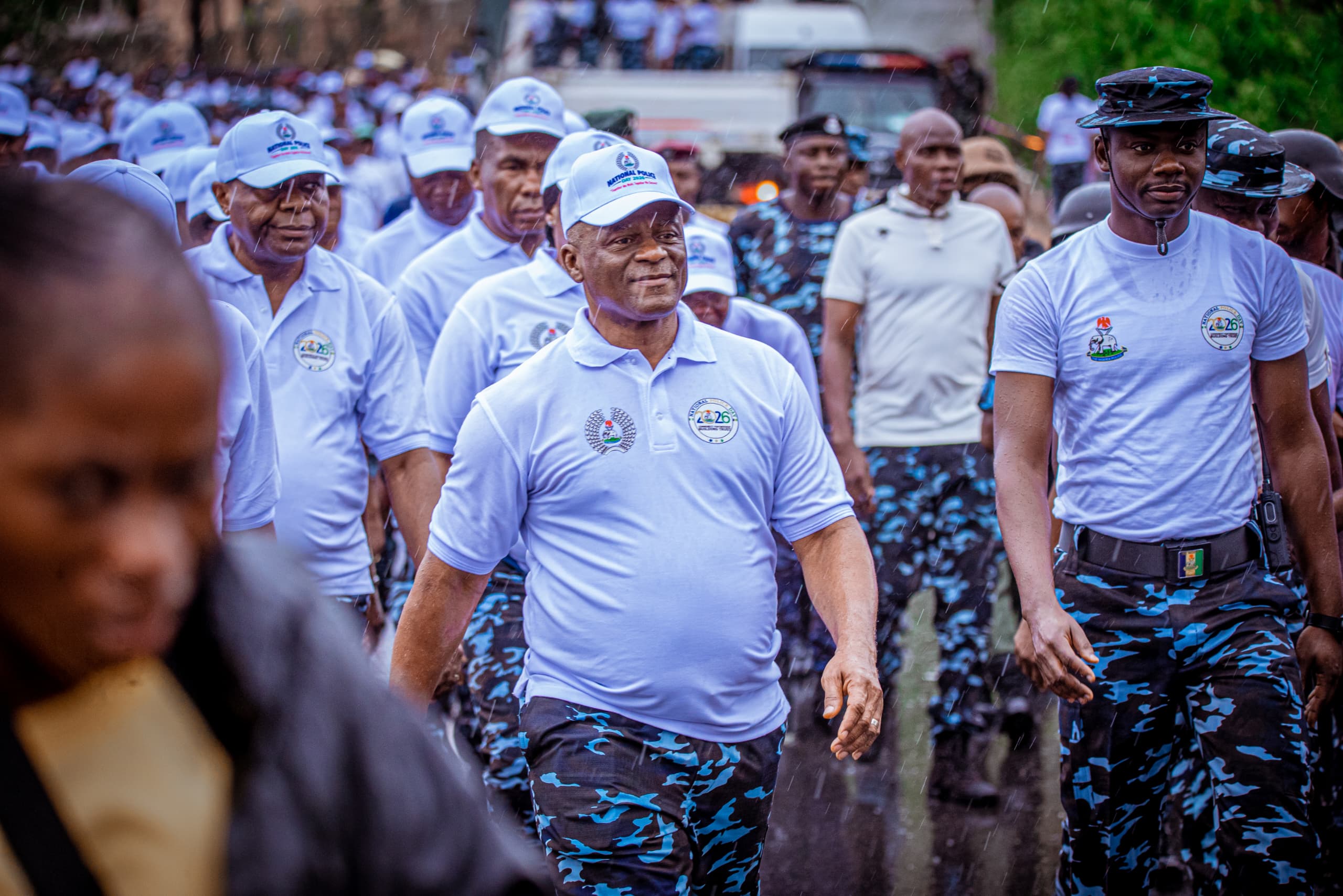
Police Day 2026: IGP Disu Leads Nationwide Walkathon To Strengthen Community Trust
The Inspector-General of Police, Olatunji Disu, on Tuesday led the management team, alongside officers and personnel of the Nigeria Police Force, in a nationwide walkathon to commemorate the 2026 National Police Day.
The event, held across state capitals and the Federal Capital Territory, formed part of activities marking Day Two of the annual celebration, themed “Community Partnership: Building Trust.”
The symbolic exercise, which drew participation from both police personnel and members of the public, was aimed at showcasing unity, discipline, and a renewed commitment to community policing and public safety.
According to the Force leadership, the walkathon underscores the Nigeria Police Force’s resolve to strengthen public trust, deepen engagement with citizens, and enhance collaboration in tackling security challenges across the country.
Participants described the initiative as a practical step toward bridging the gap between law enforcement and the communities they serve, while also promoting physical fitness and mental well-being among officers and civilians alike.
With the theme reflecting a shared responsibility for safety, the Police reiterated that sustainable security can only be achieved through active partnership with the public.
The event concluded with a renewed call for collective action under the banner: “Together We Walk, Together We Secure,” emphasizing unity of purpose in building a safer and more secure society for all Nigerians.


society
Dr. Chris Okafor invokes divine retribution upon individuals blackmailing the Grace Nation church
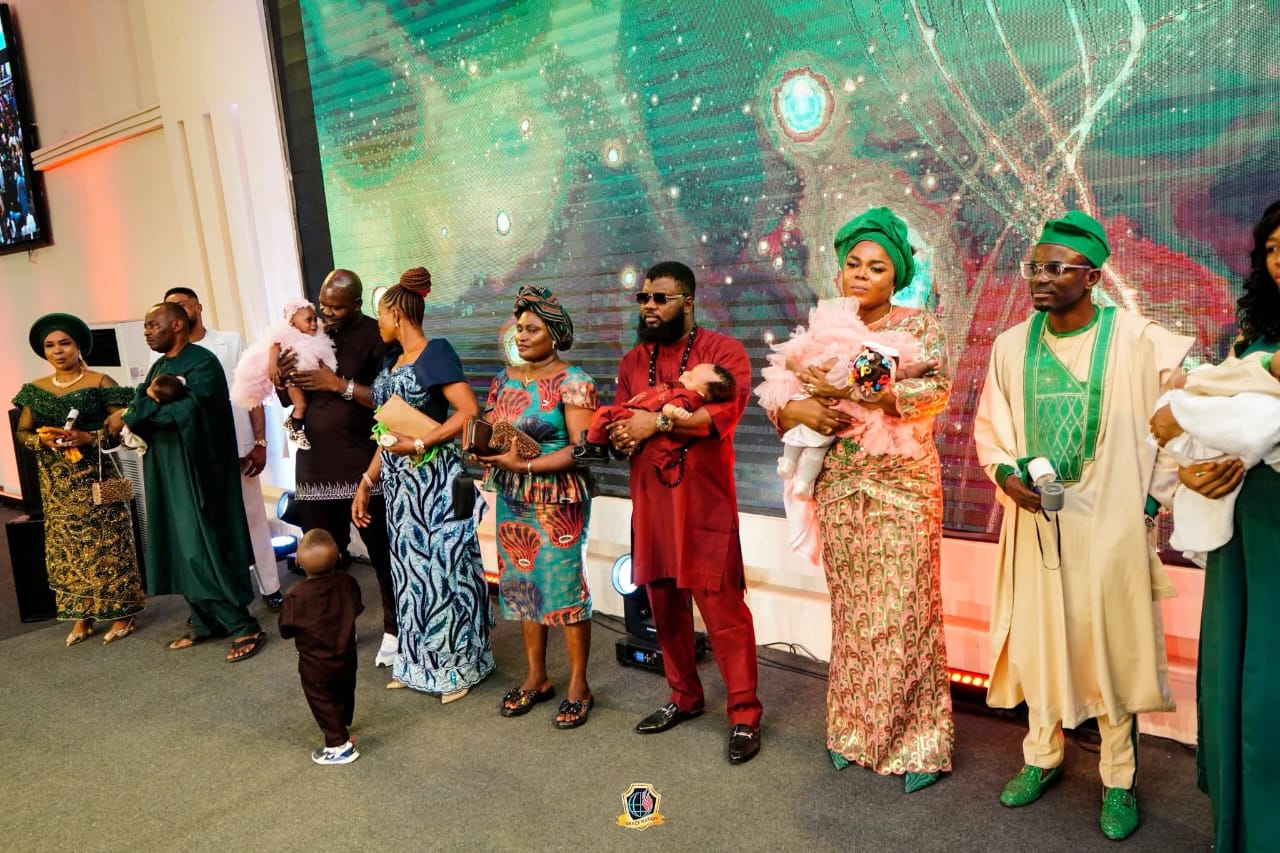
Dr. Chris Okafor invokes divine retribution upon individuals blackmailing the Grace Nation church
… Affirming God’s omnipotence to unveil malicious schemes.
To be frank, the ability of Doris Ogala and her associates to withstand the arduous challenges set by Senior Pastor Dr. Chris Okafor of Grace Nation Global at the culmination of the Harvest of Babies 2026 conference, the church’s flagship event, continues to elude me.
It’s advisable not to offend a powerful spiritual leader like Prophet Chris Okafor to avoid potential consequences, as seen in the situation with Doris Ogala, who was rebuked by the prophet; can she rectify the situation through confession?
Insiders close to the man of God claim that despite relentless online bullying and blackmailing, the Generational Prophet remains resolute, stating that God’s power has been evident throughout the commission’s existence. The reason for this wonderful statement is found in the scriptures, “Upon this rock I shall build my Church, and the gates of hell shall not prevail.” The more falsehoods are spread about the church and its leader, the more God elevates the church and propels him to greater heights, he asserted. He emphasized that blessings and fruitfulness are antidotes to curses, noting that God continues to bestow blessings upon the church, including miracles and the gift of children, which is one reason for the grand finale of the annual family liberation program, The Harvest of Babies.
However, the man of God issued a curse on each person speaking ill of the church, blackmailing, and uttering all sorts of falsehoods against the church, declaring that if they refused to repent within a few days, the earth would swallow them and their family members, stating that they would be of no use to themselves, their families, or society at large.
The spiritual leader cautions his followers to beware of such individuals including Doris Ogala who may taint their faith, and urges them to treat these persons as emissaries of the devil, avoiding them altogether.
Recall that the 2026 harvest of babies concluded with a remarkable birth of a miracle baby boy to a woman on the third day of the conference, accompanied by the dedication of several other miracle babies, all to the glory of God.
Christopher Sunday David writes from
Austria
“Together We Walk, Together We Secure”: Police Launch 2026 Walkathon In Abuja
The Nigeria Police Force has announced plans to host a walkathon in commemoration of the 2026 National Police Day, aimed at promoting unity, peace, and stronger community partnership.
The event is scheduled to take place on Tuesday, March 31, 2026, with participants expected to converge at the Force Headquarters Abuja by 6:00 a.m., where the walk will commence.
According to the organisers, the walkathon is designed to bring together members of the public, stakeholders, and security personnel in a show of solidarity and shared commitment to national security.
With the theme, “Together we walk, together we secure,” the initiative underscores the importance of collaboration between the police and citizens in maintaining peace and safety across the country.
Members of the public have been encouraged to participate in the exercise, which forms part of activities lined up to mark this year’s National Police Day celebration.
It is believed that the walkathon would not only foster closer ties between the police and the communities but also serve as a platform to promote awareness on collective responsibility in ensuring a safer society.


-

 society6 months ago
Religion: Africa’s Oldest Weapon of Enslavement and the Forgotten Truth
-

 news4 months ago
WHO REALLY OWNS MONIEPOINT? The $290 Million Deal That Sold Nigeria’s Top Fintech to Foreign Interests
-

 society6 months ago
“You Are Never Without Help” – Pastor Gebhardt Berndt Inspires Hope Through Empower Church (Video)
-

 celebrity radar - gossips2 months ago
Dr. Chris Okafor Returns with Power and Fire of the Spirit -Mounts Grace Nation Altar with Fresh Anointing and Restoration Grace on February 1, 2026