
society
The Happiness Center commemorates International Day of Happiness, Inducts Happiness Ambassadors


The Happiness Center commemorates International Day of Happiness, Inducts Happiness Ambassadors
The United Nations designated International Day for Happiness March 20, was celebrated in grand style by ‘The Happiness Center’ as the organization inducted its first ever Nigerian Happiness Ambassadors, as part of its activities to commemorate the day. The event which took place at the Lagos head office of the organization on March 20th, 2022, also presented an opportunity to showcase the center’s health packages to all and sundry, including the dignitaries present.
The Happiness Ambassadors inducted on that day were; Her Excellency, Wife of the Governor of Lagos State Dr Ibijoke Sanwoolu; Mr Atunyota Alleluya Akpobome, professionally known as Ali Baba, a Nigerian stand-up comedian, master of ceremonies and actor; The Commissioner for Health, Honourable Akin Abayomi, and Mr Joseph Edgar, an influential writer, author and theatre producer, who maintains a weekly column, Loudwhispers. They were chosen as ambassadors as a result of their remarkable impacts in their chosen career, and how their efforts have contributed to the happiness and well-being of the people.
Located in Lagos, Africa’s holistic health and wellness center, ‘The Happiness Center’, offer services that help bespoke customers unlock their full potentials in life. It is an arm of the International Non-governmental Organization, the Art of Living Foundation, fully equipped with modern and world class infrastructure in a serene and calm environment. The Happiness Center harnesses the power of alternate medicine, herbal remedies, yoga, breath-work and meditation, with the aim of achieving physical, emotional and mental balance for individuals. It provides customized rejuvenating and therapeutic treatments by experienced Ayurveda practitioners and a team of well-trained panchakarma therapists, osteopaths, physiotherapists and Yoga experts, and it encourages a calm, focused, and blissful state of mind along with a healthy body which will help an individual rest, rejuvenate and immerse in the holistic environment of health and wellness, as part of its mission to make the achievement of the United Nations Sustainable Development Goal three (Good Health and Wellbeing) possible in Nigeria.
Speaking at the event, the Managing Director of the Center, Akshay Jain said “We are well aware of the challenges associated with living and doing business in a metropolitan city like Lagos. It comes with health challenges that creep into our lives and reduces our productivity. People often get burnt out as a result of not being happy with many issues about their lives, some within and some beyond their control. We have set up this center to offer a wide range of services to enable people achieve the single most important thing the humans should strive for which is happiness. We are all in pursuit of happiness. We sleep and wake up hoping that each new day is better than the one before it, when this happens, we are happy and when the reverse is the case there is unhappiness. Stress affects the state of mind because when you are angry, you breath faster, and when you are happy, you breath gently. Anger is stress brought about by what happened in the past, while Fear is stress brought about by what will happen in the future. We believe that life should be lived as an expression of happiness, hence we try to offer solution to stress. Through the breathing and meditation exercise, the mind is relaxed”.
“We at the Happiness Center have have decided to select some high profile individuals as ‘Happiness Ambassadors’, because of the smiles they have brought in through the impacts they have recorded in their respective fields. They will be the frontline of happiness and represent our brand on days like this when we have to commemorate the International Happiness Day”, he added .
Corroborating his point, the General Manager of ‘The Happiness Center’ Francisca Ukabiala reiterates, “The Happiness Center is a timely in, and for a city like Lagos. We probably all heard the recent comments by the Governor of Lagos State on the special ticket that people who have lived in Lagos deserve to get to heaven having already lived in what in his opinion is a hellish city. We are saying that happiness is all around, it is in the energy that keeps the city moving and most importantly it is in the haven that we have created to ensure that people have greater bouts of positive energy once they walk in and out of our our doors and experience bespoke wellness services’.
The event was headlined by other dignitaries such as the Minister of Culture and Tourism, Alhaji Lai Mohammed; Professor Pat Utomi, notable political economist; the Chairman, Traditional Medicine Board, Professor Adebukunola Ositelu, while the Trustee of the Art of Living Foundation is expected to showcase the center’s deliberate and well-thought-out efforts to cater to health and wellness of Lagosians through alternative and natural measures with a view to easing stress and its associated challenges.
As an expression of happiness and commendation, the honourable Minister of Information, Alhaji Lai Mohammed, has announced that his Ministry will be partnering with ‘The Happiness Center ‘ to host the World Cultural Day as part of the 40th anniversary of the organization ‘s existence.
The Happiness Center was commissioned in Lagos, Nigeria on November 2021, and since then 90 percent of its customers have been Nigerians, which shows that the center is not just for the expatriates but for all.
To give invitees at the event an opportunity to experience its health package, a raffle draw was conducted in which 3 winners emerged and 5 consolation prizes were won. These prizes includes Reflexology, Malma and other relaxation packages.
The Happiness center is an alternate medicine, herbal remedies, Yoga, breath-work and meditation center with the aim of achieving physical, emotional and mental balance for individuals. The center also hosts a wide range of personal and group programmes including Yoga, Meditation, Ayurveda, Nutrition packages and more; all of which are handled by trained and certified experts who ensure world class standards.

PHOTO: Babajide Benson, CEO CAST PR, Akshay Jain, MD The Happiness Center, Francisca Ukabiala, General Manager The Happiness Center at the 2022 commemoration of the International Day of Happiness

Member of the Board of Trustees, The Happiness Centre, Dinesh Rathi, Customer Engagement Manager, Chisom Onuoha, The Managing Director, The Happiness Centre, Akshay Jain, The General Manager, The Happiness Centre, Francisca Ukabiala, One of the Therapists, Chisom Opoke, at the 2022 International Day of Happiness





“Jesus Christ is the Way, the Truth, and the Life.” — Dr. Chris Okafor
Grace Nation Worldwide marked a special occasion as members gathered at the international headquarters in Lagos, Nigeria, to celebrate the birthday of the Generational Prophet and Senior Pastor, Christopher Okafor, who turned a year older on April 4, 2026.
A Service of Thanksgiving and Celebration
The atmosphere was filled with gratitude as sons and daughters of the ministry came together to appreciate God for the life and impact of their spiritual leader.
The celebration featured a variety of activities, including special musical renditions, Bible recitations, choreography presentations, and a vibrant praise and worship session led by the Liberation Voices.
The highlight of the event was the ceremonial cutting of the birthday cake, followed by joyful celebration and thanksgiving, all dedicated to the glory of God.
Teaching on the Death and Resurrection of Christ ,Earlier in the day, the service also commemorated the resurrection of Jesus Christ, with Dr. Okafor delivering a message on “The Death and Resurrection of Jesus Christ.”
In his teaching, he described the sacrifice of Christ at Calvary as the foundation of the Christian faith.
“The death of Jesus represents the depth of God’s love for humanity,” he said, while emphasizing that the resurrection is the ultimate confirmation and strength of the believer’s faith.
The State of Humanity Before Redemption
Dr. Okafor explained that before the sacrifice of Christ, humanity was bound by sin, subject to judgment, and separated from God. He highlighted the consequences of the fall of man, including spiritual loss and the inevitability of judgment.
The Purpose of Christ’s Sacrifice
According to the cleric, the death and resurrection of Jesus Christ brought restoration and reconciliation between God and humanity.
“When a person is restored to God, life becomes meaningful,” he noted, adding that the sacrifice of Christ signifies the forgiveness of sin and a new beginning for believers.
A Message of Hope
In conclusion, Dr. Okafor stated that the resurrection of Jesus Christ provides believers with the opportunity to live a fruitful and abundant life, anchored in faith and divine purpose.
The combined celebration of his birthday and the message of Easter created a moment of reflection, joy, and renewed commitment among members of Grace Nation Worldwide.


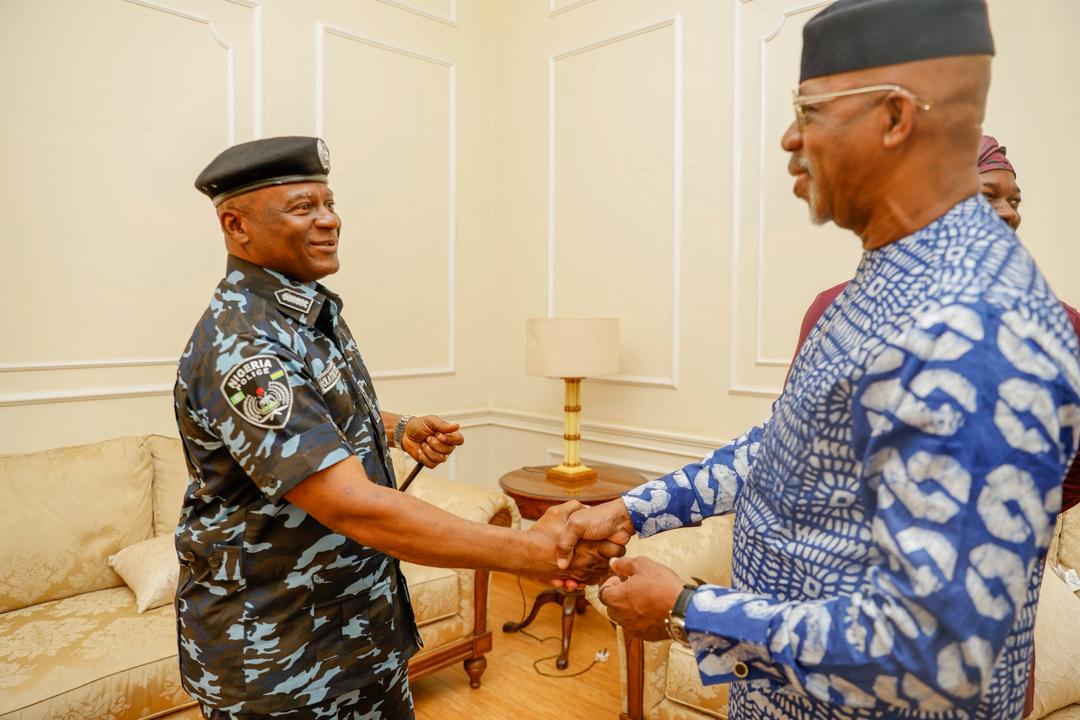
IGP Disu Unveils New Security Vehicles, Bikes In Ogun,
The Inspector-General of Police, Olatunji Rilwan Disu, on Saturday took centre stage at the commissioning of landmark projects in Ogun State, reaffirming the Nigeria Police Force’s commitment to strengthening national security and deepening collaboration with state authorities.
The high-profile event, attended by top government officials and security stakeholders, highlighted the strategic importance of security in driving development. Disu’s presence underscored ongoing efforts by the Police leadership to align operational priorities with infrastructural growth across the country.
A key highlight of the ceremony was the commissioning of new security vehicles and electric motorbikes aimed at boosting the operational capacity of security agencies in the state. The IGP commended the Ogun State Government for what he described as a proactive and forward-thinking approach to security, noting that the newly deployed assets would significantly enhance rapid response and patrol efficiency.
He stressed that effective policing remains central to maintaining peace and order, assuring residents that the Force would continue to evolve strategies to tackle emerging threats. According to him, the Nigeria Police Force is committed to working closely with both the Federal Government and sub-national authorities to ensure the safety of lives and property.
Disu further called on members of the public to support security agencies by providing timely and credible information, describing community cooperation as vital in combating crime and sustaining a secure environment.
The Police leadership also expressed appreciation to the Ogun State Government and other dignitaries for their continued partnership, noting that such collaboration is essential to advancing security initiatives and fostering national development.



*PDP Stalwart, Fagbemi, Resigns From Party in Ogbomoso South*
A former Secretary of Ogbomoso South Local Government, Temidayo Fagbemi, has formally resigned his membership of the Peoples Democratic Party.
Fagbemi, a major financier of the PDP in the area, tendered his resignation in a letter addressed to the Ward Chairman of the party in Ijeru II, Ogbomoso South.
In his letter, Fagbemi stated that leaving the party he had diligently supported, contributing to PDP’s victories at both the state and local government levels for two consecutive terms, was a difficult but necessary decision.
He wrote: “I, Temidayo Fagbemi, hereby submit my resignation as a member of the PDP.”
“My decision to leave the party, which I worked hard to support and helped secure victory at both the state and local levels for two consecutive terms, is not an easy one. However, it has become necessary.”
He thanked party leaders for the years of shared political engagement and wished them success in their forthcoming primaries.
His resignation marks a significant development within the Ogbomoso South PDP, given his influence, contributions, and long-standing role in strengthening the party’s structure.


-

 society7 months ago
Religion: Africa’s Oldest Weapon of Enslavement and the Forgotten Truth
-

 news4 months ago
WHO REALLY OWNS MONIEPOINT? The $290 Million Deal That Sold Nigeria’s Top Fintech to Foreign Interests
-

 society6 months ago
“You Are Never Without Help” – Pastor Gebhardt Berndt Inspires Hope Through Empower Church (Video)
-

 celebrity radar - gossips2 months ago
Dr. Chris Okafor Returns with Power and Fire of the Spirit -Mounts Grace Nation Altar with Fresh Anointing and Restoration Grace on February 1, 2026