
Politics
THE IMPERATIVE OF A POWER SHIFT AND A TINUBU PRESIDENCY AND THE DEGENERATION OF THE PDP

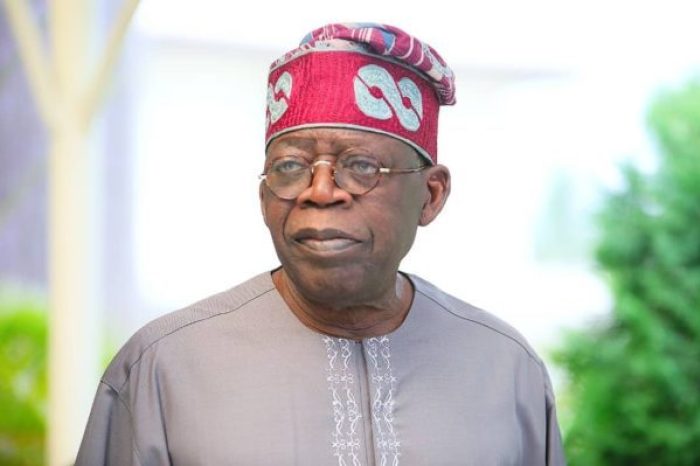
THE IMPERATIVE OF A POWER SHIFT AND A TINUBU PRESIDENCY AND THE DEGENERATION OF THE PDP
by Femi Fani-Kayode

The greatest threat to Nigeria’s national unity is the refusal to shift power to the South next year.
Nothing could be more dangerous to our national cohesion than another 8 years of Fulani rule after President Muhammadu Buhari.
The Northern Governors of the APC themselves made this point and saw this danger and consequently insisted on a power shift to the South.
To my utter surprise and consternation they did not just say no to another Fulani but they went further by saying no to ANY Northerner including those that were not Fulani.
To them it was a matter of honor because this was the commitment that they had made in 2015 when President Buhari came to power.
They said that they would not break their word or renege on that agreement under any circumstances.
That gesture alone is the single greatest act of self-denial and sacrifice that any ethnic or regional group has made in our entire history and we should commend them for it.
A Northerner could have easily emerged as the APC Presidential candidate at our Convention if the Northern Governors had not thrown their collective weight behind a Southerner by the name of Asiwaju Bola Ahmed Tinubu and opted for him.
If they had chosen to support a Northerner the consequence would have been that we would have ended up having to make a choice between two Northern candidates from the two major political parties of APC and PDP in next year’s presidential election.
That way power would have ended up remaining in the North whichever of the two candidates ended up winning.
The Northerners of the APC could have had it in the bag and gone home smiling yet they put the interests of the party, the nation and the South first and said NO!
They insisted that power must shift regardless and they displayed maturity and a very high degree of responsible behaviour even though at the time some of us did not fully appreciate their point. Yet today few would dispute the fact that they have been vindicated.
Simply put, their decision was selfless, historic, honorable and heroic.
Anyone that does not acknowledge or fully appreciate the implications of what they did does not know or understand politics and cannot comprehend the very real dangers that another 8 years of Northern rule would have presented for the unity of our nation.
Yet they were not alone.
A few months before the APC Northern Governors took their stand, the Southern Governors had met in Asaba ACROSS party lines and they ALL agreed that power must shift to the South in 2023.
This was a bold and audacious move which formed part of the basis and an additional reason and incentive for the Northern APC Governors to make their concession and take their noble stand a few months later.
Apart from the earlier stated reasons they also did so out of deferrence and respect to the wishes of their Southern counterparts in the party who, led by Governor Rotimi Akeredolu of Ondo state, continued to insist that the agreement to shift power to the South must not be breached under any circumstances.
Unlike two or three of the Southern Governors in the PDP who sadly broke ranks and dishonored their word by supporting a Northen candidate at their party convention, the APC Northern and Southern Governors never waivered. They stood to the last man, they stood firm and they delivered.
That is how Asiwaju Bola Ahmed Tinubu emerged as the flagbearer of our party and the entire nation should reciprocate and reward their gesture by ensuring that he goes on to win the presidential election next year.
We must stand with him, pray for him, fight for him, mobilise for him and ensure that he wins convincingly and, once victorious, we must be prepared to defend his mandate with all we have got.
There will be no repeat of June 12th under ANY circumstances and contrary to the disinformation being peddled around by our detractors there is no such plan or conspiracy in the offing by those in power today.
We must also be ready to make difficult and uncomfortable sacrifies and live with the hard choices that the candidate has made, knowing that he made them in good faith, in order to win.
The real patriots and party loyalists are those who may have strong reservations about a Muslim/Muslim ticket but who are prepared to overlook that in the interest of a power shift to the South knowing that this will finally put to rest the notion that Southerners are slaves and second class citizens and the erroneous idea that the APC is a party for Northerners only.
This is where yours truly stands together with many others that share my Christian faith. Unlike that of others, our reaction to a Muslim/Muslim ticket is not emotional or hysterical but rather practical, calm, calculating and level headed.
It is clear to me and I can confirm this after a series of meetings with both the candidate and his Vice that it is a position that he has taken as a consequence of political expediency and not out of any misguided or shameless attempt to spite, injure, insult or denigrate the 110 million Christians in our country.
Tinubu’s intention is not to undermine Christians, shame the Church or destroy our faith and neither would he even dare to contemplate or attempt to venture such a reckless undertaking and course knowing that it would would fail woefully with calamitous consequences both for him and for Nigeria.
Such a move would be counter-productive and a dangerous and grave exercise in futility and if that had been his intention I would NOT stand with him but rather oppose him with every fibre of my being.
Those that know me well can attest to the value I place on my faith and will confirm this. Nothing is more important to me than my religious beliefs and I would not in any way compromise those beliefs or my faith for ANYTHING.
To the skeptics and doubters that believe that a Muslim/Muslim ticket is part of a wider plot and plan to Islamise our nation I say, under Tinubu’s watch, this can never happen and neither can it ever be conceived or attempted.
I urge them to consider the following.
Since the Governorship election in Osun state a few weeks ago, every single one of the 17 Governors in Southern Nigeria is a Christian whilst there are 3 Christian Governors in the North.
This means that out of the 36 Governors in Nigeria 20 are Christians and 16 are Muslims.
Can anyone still be talking about Islamisation under such circumstances? I say, FEAR NOT!
Again consider the following.
A Christian/Christian ticket won the Governorship election in Osun state a few weeks back and defeated a Muslim/Christian ticket yet no-one alleged that there was a plot to Christianise the state and neither did the heavens fall or the Muslims of Osun cry foul even though they constitute 50% of the population of the state.
Again I ask, can anyone still be talking about Islamisation under such circumstances?
Again I say, FEAR NOT!
Not only can Nigeria NOT be islamised but under a Tinubu APC Presidency I have no doubt that major concessions will be made in terms of key positions for Christians not just in the executive but also across the three arms of Government in order to make up the balance and assuage the feelings of the many Christians that are concerned, aggrieved and even offended by the prospect and fielding of a Muslim/Muslim ticket.
There are other key positions that can and will be given to Christians in the three arms of Government which are even more powerful and relevant than that of a Vice President which, with all due respect to those that occupy that position today, is essentially nothing but a spare tyre.
Tinubu and his running mate, Senator Kashim Shettima, will ensure that the necessary concessions are made to Christians and that everyone, regardless of their faith, has a fair and full portion in their administration. Of this I have no doubt.
Permit me to end this contribution with a few words about the opposition PDP.
How can anyone take seriously a party that refuses to honor its own constitution by rotating power to the South and that insists on putting us on the edge of a dangerous precipice by attempting to enthrone another Northerner for yet another 8 years?
Can anyone trust a party who has in its ranks two or three Governors from the South South zone who are prepared to betray their own, sabotage the resolve and aspiration of virtually every Southern Nigerian and throw fairness out of the window by joining hands with a bunch of irresponsible and self-serving Northern Governors and leaders in their party to deny the South the Presidency next year?
Even the majority of their own party members and leaders from the South and Middle Belt, led by Nyesom Wike, have kicked against this shameful outrage and rightly so.
If the PDP can break their own party rules by breaching the rules on zoning, cheat their own party members, scam their own party leaders and deny Wike and the South their presidential ticket what won’t they do to Nigeria if they were to ever win power?
Worst still their presidential candidate, the Chairman of their Board of Trustees AND their National Chairman, who despite frantic calls to do so has refused to resign and has said he will stay in office for the next four years, are all from the North!
And so are ALL the spokesmen for their Presidential Campaign Council.
Is this not madness?
Is it not wickedness?
Is this not a formula for disaster and a statement of intent for the perpetual enslavement of the South?
Is this not an insult on the sensibilities and slap on the faces of every Southerner AND Northerner that believes in fairness and decency?
Does this not present a very potent danger and threat to our hopes and aspirations for national unity and stability given all we have witnessed over the last 7 years?
Is this the way to bring us together as one nation and build bridges of peace, unity, love and CONFIDENCE?
I think not.
All this and the PDP still insist on calling themselves a national party and a party that seeks to protect the national interest.
This is a specious and pernicious lie. The truth is that they are a party with a hidden agenda who present a grave danger to our nation.
They are a party of strife and division and as Chief Bode George, a former Deputy National Chairman of the party and a member of the PDP Board of Trustees, eloquently pronounced on Channels Television the other day, they are a party that “have been taken over by the devil”.
It appears to me that, if given power, they would be more interested in protecting a sectional interest for the next eight years rather than the national one.
May God deliver us from their devils, their notorious shenanigans and their divisive agenda.
The good news is that for the first time in our history the majority of Northerners and Southerners across party lines have come together and insisted on a power shift.
Whether they support Bola Tinubu or the rising star Peter Obi, there is a clear national consensus on this issue and it is very promising.
It brings us joy and gives us hope for a better, more peaceful and more united future.
This is a golden opportunity for a genuine and sincere national rebirth and we must not overlook it or take it for granted. It is indeed a massive breakthrough.
Unity and peace can only be rooted and established where there is fairness and equity.
In my view that fairness and equity can be best served by the election of the APC’s Asiwaju Bola Ahmed Tinubu in the 2023 presidential election.
Yet whoever you opt to vote for from the South is a matter of choice.
The point is that, whoever your candidate may be, we must ensure that power comes to the South in order to stop this dangerous cycle of regional and ethnic tension, enhance and entrench national unity and give Nigeria a chance to survive and experience the peace that we seek.
Sadly the PDP and the NNPP, with their insistence on Atiku Abubakar and Rabiu Kwankwaso as their presidential candidates respectively and their desire to prolong and perpetuate Northern rule, offers a very dangerous narrative and volatile cocktail that may ultimately end up leading us down the road to Kigali.
God bless Nigeria.
FFK




Politics
APC Group Endorses Fubara for 2027, Calls on Tinubu and APC to Prioritise Performance Over Politics in Backing Governor’s Second Term Ambition
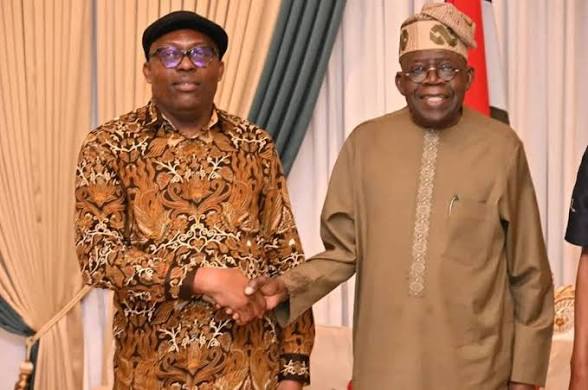
*APC Group Endorses Fubara for 2027, Calls on Tinubu and APC to Prioritise Performance Over Politics in Backing Governor’s Second Term Ambition*
The APC National Vanguard has appealed to President Bola Ahmed Tinubu and the leadership of the All Progressives Congress (APC) to support a second term in office for Siminalayi Fubara, citing what it described as “impressive and verifiable developmental strides” across Rivers State.
In a statement issued on Thursday by its National President, Dr Gbenga Salam (JP), the group said its position followed an extensive assessment tour of key infrastructure and public service projects executed under the Fubara administration.
The APC National Vanguard said the appeal was based strictly on performance, arguing that governance outcomes should outweigh partisan considerations, particularly in a state as economically significant as Rivers.
“We respectfully urge President Bola Ahmed Tinubu and the leadership of the All Progressives Congress to support the continuity of Governor Siminalayi Fubara beyond his current tenure, in recognition of his commitment to development, prudent resource management, and people-focused governance,” the statement read.
According to the group, its delegation visited multiple project sites across the state, observing ongoing and completed works spanning road construction, urban renewal, and public infrastructure upgrades.
It noted that the scale and distribution of these projects reflect a deliberate effort by the state government to extend development beyond traditional urban centres and into underserved communities.
“Our findings from the tour reveal a government that is not only active but intentional in its development agenda. The execution of capital projects across various parts of Rivers State demonstrates a clear understanding of the needs of the people and a commitment to addressing them,” Dr Salam said.
The group particularly commended what it described as prudent financial management by the administration, noting that the projects reviewed showed evidence of careful planning and efficient allocation of resources.
“At a time when economic pressures are evident across the country, it is commendable that the Rivers State government has managed its resources in a way that delivers visible and impactful development without signs of fiscal recklessness,” the statement added.
The APC National Vanguard further observed that despite political tensions in the state, the Fubara administration has maintained focus on governance, ensuring continuity in project execution and service delivery.
The group argued that such stability is critical for sustained development and should be encouraged rather than disrupted.
“Leadership must ultimately be judged by results. In Rivers State, there is clear evidence of progress—projects that are not only announced but executed, and policies that translate into real benefits for citizens,” Dr Salam noted.
The group warned that discontinuity in leadership could stall ongoing projects and reverse gains already recorded, stressing the importance of allowing a performing administration to consolidate its achievements.
“Rivers State is at a pivotal stage where continuity will allow for the completion of ongoing initiatives and the deepening of development gains. Supporting Governor Fubara for a second term is, therefore, a decision in the best interest of the people,” the statement said.
In addition to its call on the APC leadership, the group reaffirmed its support for President Tinubu, expressing confidence in his administration’s broader economic and governance reforms.
The APC group urged Nigerians to remain supportive of efforts aimed at stabilising the economy and strengthening public institutions.
“We reiterate our endorsement of President Bola Ahmed Tinubu for a second term in office, in recognition of his leadership and commitment to national development. With sustained support, the administration can consolidate its reform agenda for the benefit of all Nigerians,” Dr Salam added.
The APC National Vanguard concluded by calling on political actors to prioritise development and public interest over partisan divides, insisting that governance should always be guided by performance and accountability.
“Where leadership demonstrates prudence, delivers development, and remains focused on the welfare of the people, it deserves continuity. This is the position we have reached after a careful and independent assessment of Rivers State,” the statement added.
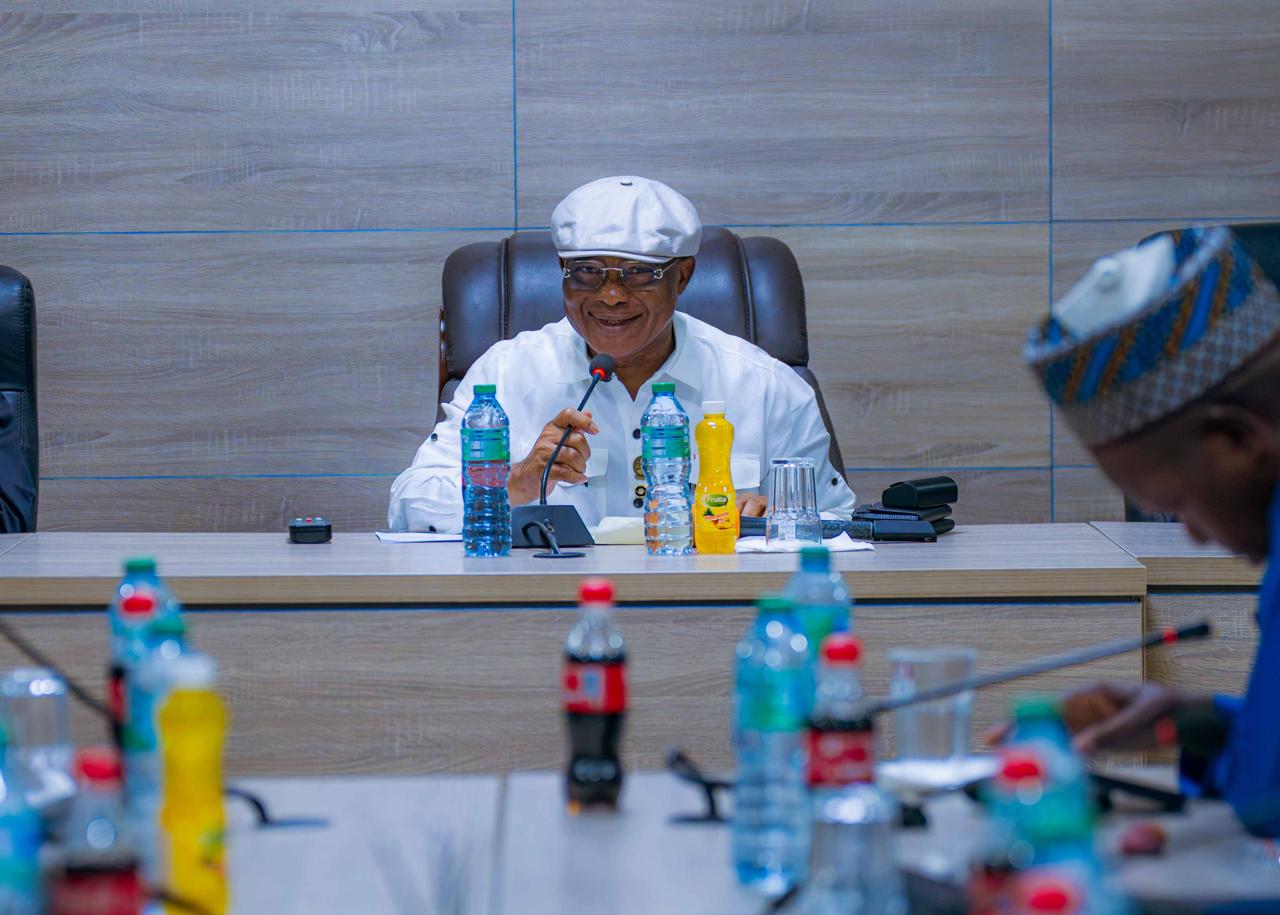
*Renewed Hope Ambassadors Step Into the Next Phase
Fresh from the successful APC 2026 National Convention, the Renewed Hope Ambassadors National, Zonal, and State leadership gathered in Abuja over the weekend, for its fourth strategic meeting, setting the tone for nationwide grassroots activation ahead of 2027.
Chaired by Governor Hope Uzodinma (Imo State) the Director General and National Coordinator of the Renewed Hope Ambassadors, alongside Deputy Director-General, Governor Uba Sani of Kaduna State, and Governor Inuwa Yahaya of Gombe State as Secretary, the session reinforced one clear direction: One Party. One Message. One Mobilization whilst also laying out a strategic roadmap for the activation of the network across all communities in Nigeria.
Backed by the strength of 31 APC-led states, the Renewed Hope Agenda is taking Bola Ahmed Tinubu’s message of progress and reform to every corner of Nigeria.
From bold economic restructuring to initiatives like NELFUND, the increase in the national minimum wage from ₦30,000 to ₦70,000, and strategic investments in critical sectors, including PNiCGI, the mission remains clear: helping Nigerians understand both the purpose and the progress of the Renewed Hope vision.
This is coordination at scale. This is grassroots engagement with purpose. This is the next phase of Renewed Hope with One Party, One Message, and One Mobilisation framework
#RenewedHopeAmbassadors #APC #WeAreAPC


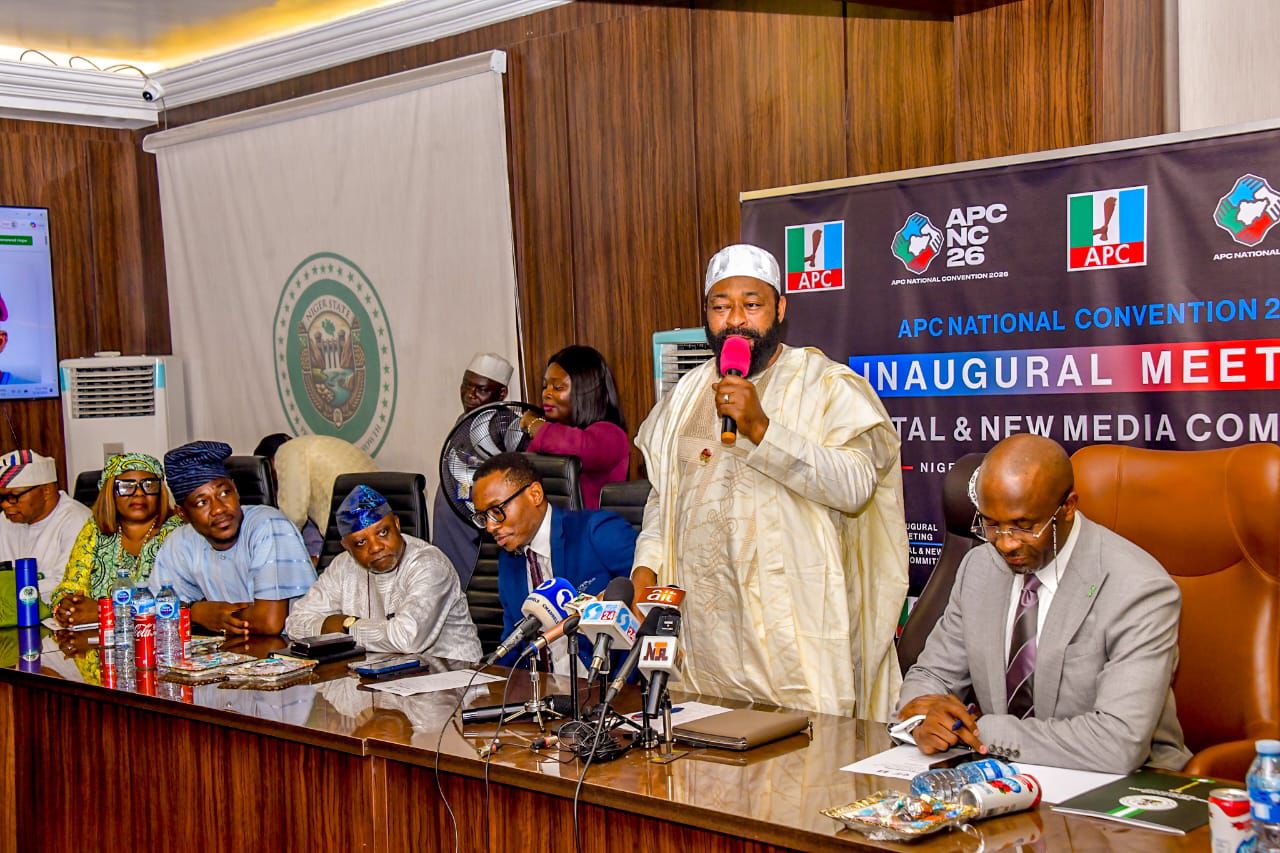
Governor Bago Inaugurates APC Digital Media Sub-Committee Ahead of National Convention.
Governor Umaru Bago has inaugurated the Digital Media Sub-Committee for the forthcoming National Convention of the All Progressives Congress (APC), scheduled to hold on March 27 and 28, 2026 in Abuja.
Chairing the sub-committee, Governor Bago tasked members with the responsibility of effectively communicating the party’s manifesto to the public.
He emphasized the need to leverage social media platforms to highlight the achievements and ongoing efforts of President Bola Ahmed Tinubu, noting that communication gaps have posed challenges that must now be decisively addressed.
The Co-Chair of the sub-committee, Hon. Benjamin Kalu, Deputy Speaker of the House of Representatives, echoed the Governor’s position, urging members to project the activities of both the party and the government to a broader audience.
He called for a deliberate and coordinated effort to showcase the party’s achievements and policy direction, stressing the importance of shaping a compelling and consistent narrative across all digital platforms.
Delivering a presentation to the committee, Otega Ogra, SSA to the President on New Media, who serves as Secretary of the sub-committee, outlined strategic focus areas to guide the team’s operations.
His presentation highlighted communication priorities and actionable steps to achieve the committee’s mandate and strengthen the party’s digital engagement.


-

 society6 months ago
Religion: Africa’s Oldest Weapon of Enslavement and the Forgotten Truth
-

 news4 months ago
WHO REALLY OWNS MONIEPOINT? The $290 Million Deal That Sold Nigeria’s Top Fintech to Foreign Interests
-

 society6 months ago
“You Are Never Without Help” – Pastor Gebhardt Berndt Inspires Hope Through Empower Church (Video)
-

 celebrity radar - gossips2 months ago
Dr. Chris Okafor Returns with Power and Fire of the Spirit -Mounts Grace Nation Altar with Fresh Anointing and Restoration Grace on February 1, 2026