
Politics
The Legacies of Gen Tukur Buratai Nigerians Should Always Remember….Why They Are Scared Of Him

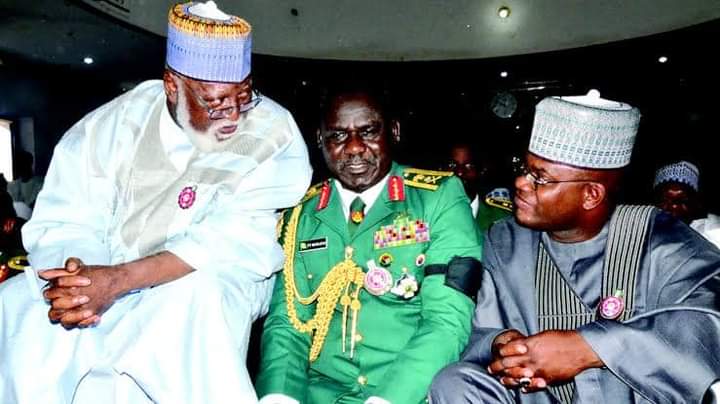
The Legacies of Gen Tukur Buratai Nigerians Should Always Remember….Why They Are Scared Of Him
By Ibrahim Dosara
Sahara Weekly Reports That Lt Gen Amb Tukur Yusuf Buratai (rtd ), the 20th Chief of Army Staff was a Military Commander whose career was full of successful achievements and wonderful experience. Besides his excellent records of achievements and performance during both training and operations, Gen Tukur Buratai led successful operations in both fields and intelligence.

His military career which took him out of the country in training and operations has availed him the wealth of experience and opportunities to acquire and master the needed knowledge, tactics and strategy for military capabilities to intelligently confront and deal with enemies. It was against this background that Buratai became very much successful in all the assignments given to him, despite the sabotage planned and orchestrated against him by some of colleagues who saw him as a big threat to their ambition for amassing wealth from the fight against terrorism.
A cursory of Gen Buratai’s legacies revealed that he left among other achievements, some successful legacies Nigerians should always remember.
These include but not limited to:
1. Security Sector:
A. Conquering the Dreaded Boko Haram Terrorists in the North-Eastern Nigeria.
Before the coming of Gen Tukur Buratai as the Nigeria’s Chief of Army Staff, the North Eastern Region of the county was almost conquered and taken over by the Boko Haram Terrorists. Many local government areas of Borno, Yobe, Taraba and Adamawa states were captured and occupied completely by the terrorists. Their flags were hoisted all over the local government areas they took over.
People were being slaughtered like sacrificial rams. Business activities including farming were halted for fear of unknown. Foreign business partners deserted the region for their lives. The region was nearly out of Nigerian government, as taxes and other administrative structurs were changed to those of the Boko Haram regime.
However, on the assumption in office as the nation’s Chief of Army Staff, Gen Buratai swung into action and quickly adopted measures to deal with the situation. Training, provision of modern Warfare, weaponry, new techniques in intelligence gathering and sharing among the security operatives, integration of general public on information gathering and sharing, Media Operations, provision of welfare to the families of officers and men in the warfront, etc were some of the tactics adopted by the general to rubbish the Boko Haram fighters to gorilla fighters. He restored normalcy in the region and life began to be business as usual.
If not for the sabotage from some of his colleagues, the remnants of the gorilla Boko Haram fighters would have been a history. Lt Gen Buratai should therefore be remembered always in this direction. His strategic master plans are today being used in getting rid of the remnants Boko Haram terrorists.
B. Sahel Sanity Operations.
General Buratai saw the need to focus on the activities of rural banditry in the North West Nigeria where farming activities were stopped due to the activities of bandits terrorising the region.
He strategically planned and prepared a master plan to deal with the bandits and creat environment for farmers to go back to their respective farmlands to cultivate food and cash crops for the region and the rest of the country.
This Sahel Sanity was very successful as farmers were able to go back to their lands and cultivated large volumes of food and cash crops thereafter.
Farmers are still counting the benefits they reaped as a result of the Sahel Sanity Operation organised and executed by Gen Buratai in the North-west and Central Niger states.
C. The South East IPOB Separatists.
Gen Tukur Yusuf Buratai after study and analysis of the security challenges facing the South East Nigeria where IPOB terrorists were killing innocent people and planning cessation against the Nigerian state, considered organising what he called Operation Crocodile Smile to deal with the separatists.
Within no time, Gen Buratai dealt with the situation and restored normalcy in that region.
2. Saving Nigeria’s Democracy.
A. ENDSARS Crisis.
The crisis planned and hatched by some Nigerians leaving in the diaspora with the help of foreign corporate firms, NGOs and individuals nearly consumed Nigeria’s democracy, if not for the timely intervention of the then Chief of Army Staff Lt. Gen Tukur Yusuf Buratai.
The ENDSARS protests provided all the needed environment for the change of government, but gen Buratai who sworn to protect the territorial intergrity of his country swung into action in saving the situation by democratically calming the situation and restored normalcy in all the places the protest took new dimensions and hijacked by hoodlums supported by antti- democracy elements.
B. 2023 Campaign.
Many people are unaware of the vital role Gen Buratai played during the 2023 general elections. It was obvious that the turbulent situation created during the campaign and the general elections for the 2023 was something of grave concern to all Nigerians. The polity was heated to the extent that many Nigerians were even speculating that the elections might not hold.
However, due to the effective and coordination of security concerns by the leader of elections security of the APC, Gen Tukur Buratai ensured smooth and peaceful conduct of bith the campaign and elections throughout the country, not only for the APC, but other political parties. It was Buratai who monitored and assured Nigerian politicians and their supporters the assurance to have peaceful campaigns and elections, as well as handling over power to democratically elected leaders.
Throughout the APC campaigns Gen Tukur Buratai was always with the campaign trail of President Bola Ahmed Tinubu. He gave the needed supports both moral and materials to enaure Tinubu won the 2023 presidential election.
Gen Buratai was successful in the assignment because he knows the security terrain of the country including the architectural design of the National Security of this nation. He knows how to coordinate and sanitize the nation’s security challenges if given the opportunity to do so.
His support and loyalty to the president, as well as his wealth of experience has strategically placed him on top in the scheme of things to handle the nation’s security issues for the administration of President Bola Ahmed Tinubu.
Gen Tukur Buratai will surely be an iconic security adviser capable of handling issues of security concerns for President Bola AhmedTinubu.
Ibrahim Dosara.
Writes from Gusau, Zamfara State.
05/06/2023.




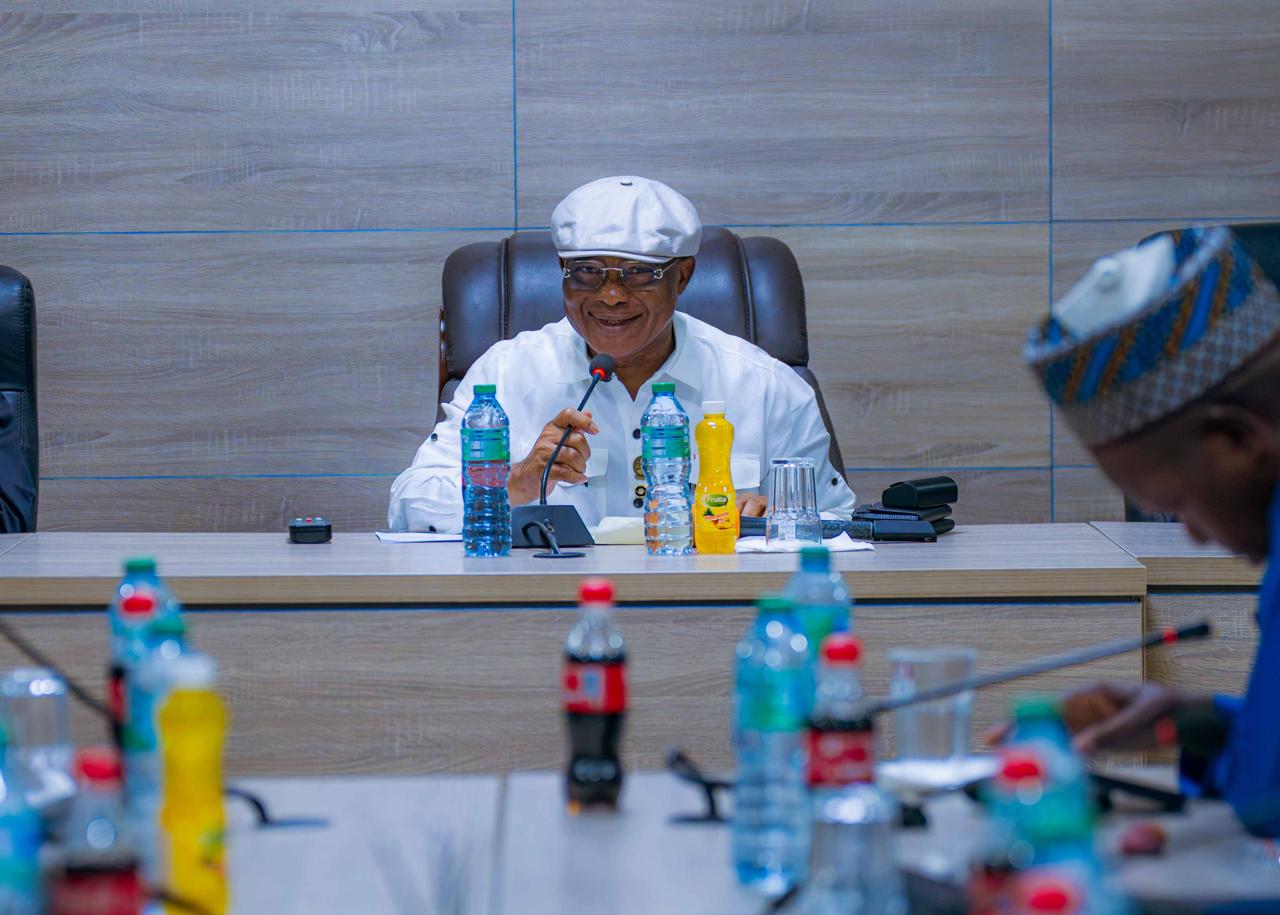
*Renewed Hope Ambassadors Step Into the Next Phase
Fresh from the successful APC 2026 National Convention, the Renewed Hope Ambassadors National, Zonal, and State leadership gathered in Abuja over the weekend, for its fourth strategic meeting, setting the tone for nationwide grassroots activation ahead of 2027.
Chaired by Governor Hope Uzodinma (Imo State) the Director General and National Coordinator of the Renewed Hope Ambassadors, alongside Deputy Director-General, Governor Uba Sani of Kaduna State, and Governor Inuwa Yahaya of Gombe State as Secretary, the session reinforced one clear direction: One Party. One Message. One Mobilization whilst also laying out a strategic roadmap for the activation of the network across all communities in Nigeria.
Backed by the strength of 31 APC-led states, the Renewed Hope Agenda is taking Bola Ahmed Tinubu’s message of progress and reform to every corner of Nigeria.
From bold economic restructuring to initiatives like NELFUND, the increase in the national minimum wage from ₦30,000 to ₦70,000, and strategic investments in critical sectors, including PNiCGI, the mission remains clear: helping Nigerians understand both the purpose and the progress of the Renewed Hope vision.
This is coordination at scale. This is grassroots engagement with purpose. This is the next phase of Renewed Hope with One Party, One Message, and One Mobilisation framework
#RenewedHopeAmbassadors #APC #WeAreAPC


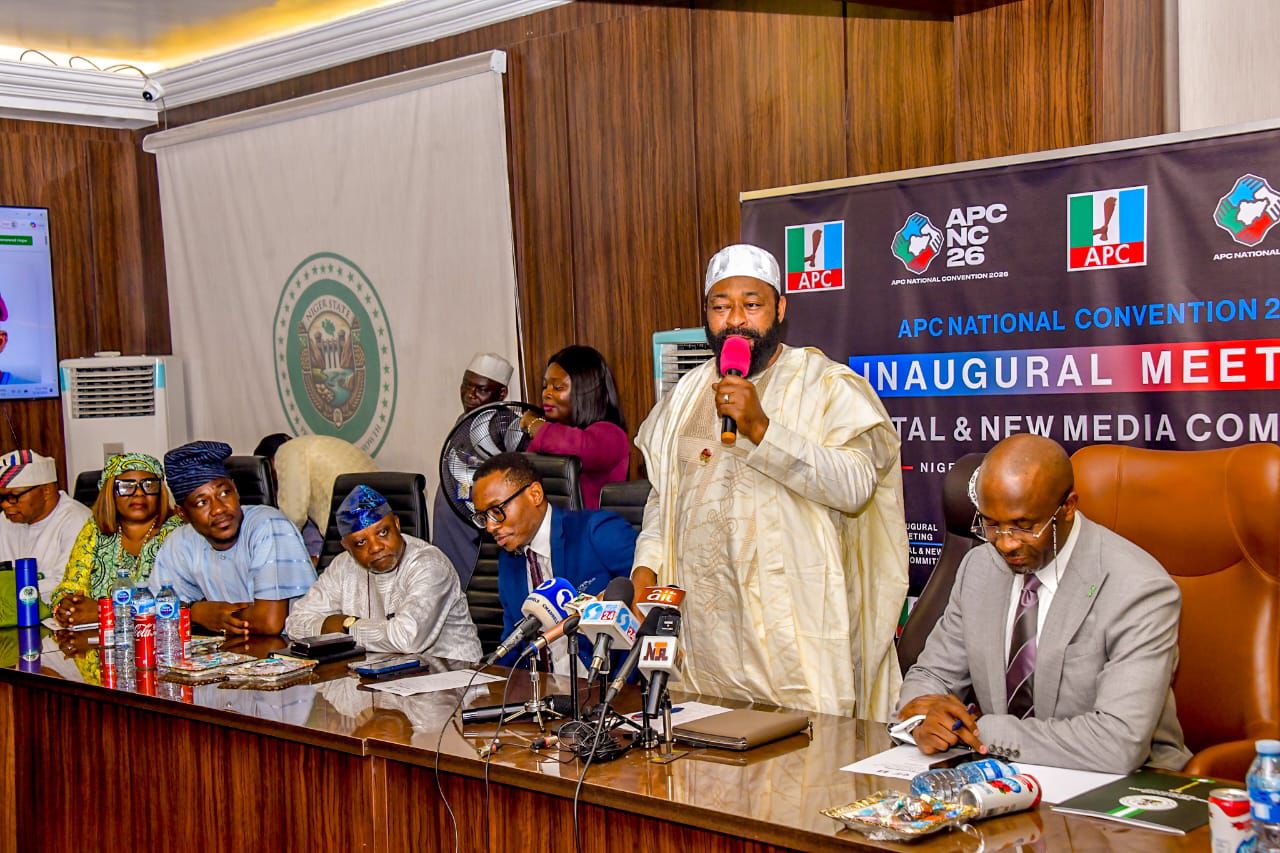
Governor Bago Inaugurates APC Digital Media Sub-Committee Ahead of National Convention.
Governor Umaru Bago has inaugurated the Digital Media Sub-Committee for the forthcoming National Convention of the All Progressives Congress (APC), scheduled to hold on March 27 and 28, 2026 in Abuja.
Chairing the sub-committee, Governor Bago tasked members with the responsibility of effectively communicating the party’s manifesto to the public.
He emphasized the need to leverage social media platforms to highlight the achievements and ongoing efforts of President Bola Ahmed Tinubu, noting that communication gaps have posed challenges that must now be decisively addressed.
The Co-Chair of the sub-committee, Hon. Benjamin Kalu, Deputy Speaker of the House of Representatives, echoed the Governor’s position, urging members to project the activities of both the party and the government to a broader audience.
He called for a deliberate and coordinated effort to showcase the party’s achievements and policy direction, stressing the importance of shaping a compelling and consistent narrative across all digital platforms.
Delivering a presentation to the committee, Otega Ogra, SSA to the President on New Media, who serves as Secretary of the sub-committee, outlined strategic focus areas to guide the team’s operations.
His presentation highlighted communication priorities and actionable steps to achieve the committee’s mandate and strengthen the party’s digital engagement.


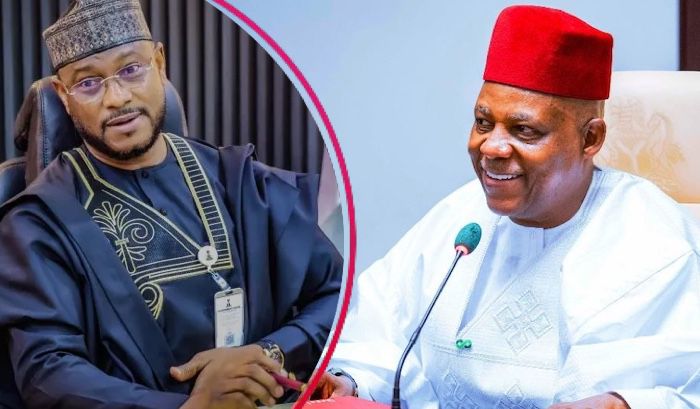
VP Shettima Set to Lead Delegation to Zamfara as Governor Dauda Lawal Formally Joins APC
The Zamfara State chapter of the All Progressives Congress (APC) has finalized plans to receive Vice President Kashim Shettima for the formal defection and reception of Governor Dauda Lawal into the ruling party, scheduled to take place on Tuesday.
State APC Chairman, Tukur Danfulani Maikatako, disclosed this during a high-level stakeholders’ meeting held in Gusau, the state capital. He noted that the Vice President would be joined by the party’s national leadership to mark what he described as a landmark political realignment in the state.
Maikatako expressed the party’s excitement over Governor Lawal’s return, recalling that Zamfara had historically been an APC stronghold and that the Governor was previously a bona fide member of the party before his earlier exit.
“We all know that Zamfara has long been one of the APC’s stronghold states, where the defected Governor was once a bona fide member. Now that he has decided to return home, having been satisfied that the APC remains his second choice after the one he left for obvious reasons,” Maikatako stated.
The Chairman called on all party faithful across the 147 wards in the state’s 14 local government areas to turn out en masse to honour the Vice President’s visit. He emphasized that the event was strategically positioned to bolster the party’s popularity and strengthen its structures ahead of the 2027 general elections.
In a strong appeal for unity, Maikatako urged members to set aside all factional tendencies, stressing that the APC remained one political family with shared goals, particularly the ambition to make Zamfara and Nigeria great again.
Echoing similar sentiments, a former state APC Chairman, Lawal M. Liman, appealed to members to cascade the message to their wards and local government areas. He reinforced the need for cohesion, noting that the party’s collective strength would be critical to achieving success in future elections.

All eyes are now on Gusau as the ruling party prepares for a high-profile political gathering expected to further consolidate its influence in Zamfara State.


-

 society6 months ago
Religion: Africa’s Oldest Weapon of Enslavement and the Forgotten Truth
-

 news4 months ago
WHO REALLY OWNS MONIEPOINT? The $290 Million Deal That Sold Nigeria’s Top Fintech to Foreign Interests
-

 society6 months ago
“You Are Never Without Help” – Pastor Gebhardt Berndt Inspires Hope Through Empower Church (Video)
-

 celebrity radar - gossips2 months ago
Dr. Chris Okafor Returns with Power and Fire of the Spirit -Mounts Grace Nation Altar with Fresh Anointing and Restoration Grace on February 1, 2026