Connect with us

celebrity radar - gossips

The Naja’atu Bala Muhammed We All Know As Director of Civil Society Directorate of APC PCC

Published

on

Tinubu Suspends NPPC GMD, Mele Kyari...Gives Reasons

The Naja’atu Bala Muhammed We All Know As Director of Civil Society Directorate of APC PCC
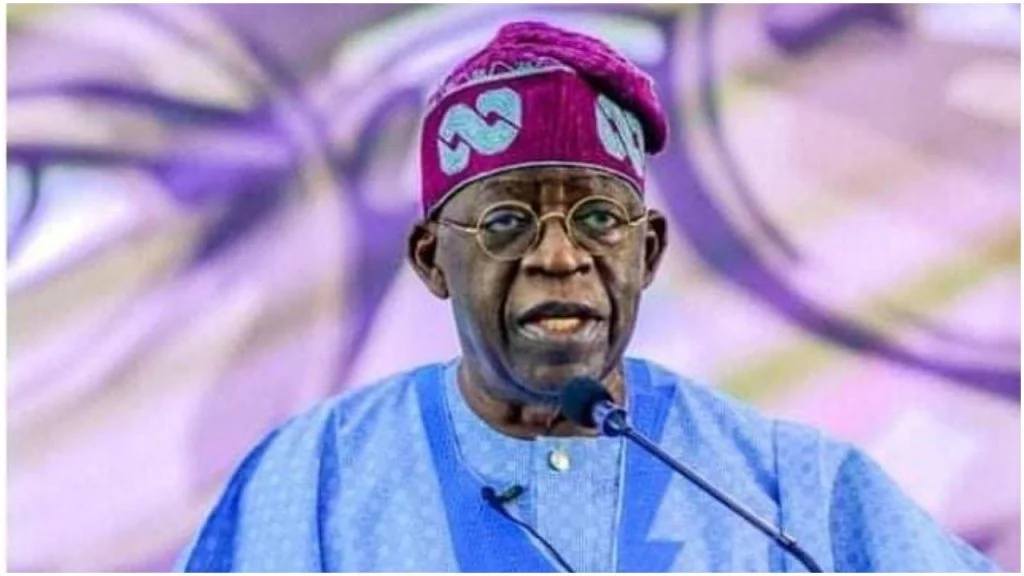
On Saturday 21st January 2023 members of the civil society directorate of the All Progressives Congress (APC) Presidential Campaign Council (PCC) were shocked to read on our WhatsApp platform via publications that our Director Hajia Naja’atu Bala Muhammed had resigned her membership of the directorate and party via a letter dated 19th January 2023.
As is normal in life, one would be jolted by such abrupt decision of termination of membership of a group, more disturbing will it be if it’s coming from the head of the group who is the pilot, so one can imagine what will be the fate of passengers in an aeroplane, ship, bus or train if the head by this one means the pilot, captain or driver in the course of a journey, suddenly throws in the towel, the confusion is better imagined.
While we as members of the civil society directorate of the APC PCC were trying to come to terms with her departure which is within her right and chart the way forward because the directorate is populated with very competent, capable, hardworking, diligent, patriotic men and women of dignity and calibre, we started reading about her tales by moonlight reasons for her resignation which makes it important to expose to the whole world the true colour of this woman for who she really is and what she stands for.
For the records, some of us even as members of the civil society directorate whose appointment were announced in late October 2022, we make bold to state that from our interactions and discussions on the platform where members interfaced, Hajia Naja’atu Bala Muhammed came out as a gold digger, frustrated, Janus faced, incompetent, attention seeker, hustler and irresponsible person who is a disgrace to the true character of motherhood.
From the 20th October 2022 when the names of the leadership and members of the directorate was announced and published till now that she resigned, by her actions, she tried to kill the directorate. She vented her frustrations, anger and tyrannical disposition on the directorate as a whole by ensuring that it didn’t function in fulfilling it’s mandate. Apart from frustrating the inauguration of the committee which she unilaterally delayed for more than a month after other committees had started activities, she ran a one woman show, the only time we had just one meeting after the inaugural meeting was when members forced it upon her and even as that, the meeting was held in Abuja within a short notification of three days to members who were scattered across the country. Notice must be taken that the two meetings ever called by this erstwhile director was conducted in less than one hour. This is to further confirm her non-committal to the cause of the directorate and the party at large. Suggestions to allow for virtual participation at the meetings were ignored by this tyranic demagogue. Subsequently when members suggested the holding of meetings virtually to accommodate those outside of Abuja so as to chart the directorate plan of activities, dictator Naja’atu would have none of it and for four whole months, the civil society directorate held just a meeting apart from the inauguration with majority of members not in attendance because of her evil pre-meditated plan to frustrate the work of the Directorate.
Even on the WhatsApp platform, this Janus faced and incompetent woman never made any contribution on any issue whatsoever which underlines her evil plot against our common responsibility to the party and Nigerians. Even when members were calling for personal donations to kick start the directorate contribution to the campaign, our hustler director would have none of it, her adopted slogan was ‘Asiwaju is rich, he should give us money, am not contributing a dime’.
Save for the personal efforts of members who desirous of contributing their quota to the PCC activities, have been traversing rally grounds, campaigning, holding meetings, writing press statements, articles, appearing on TV and Radio programmes talk shows, etc which they post regularly on the WhatsApp platform to inform that the directorate is active, Hajia Naja’atu would have killed the directorate completely as she exhibited the greatest level of incompetence, lack of respect, insensitivity, disloyalty and irresponsibility to the team she was supposed to lead. Her tyrannical disposition and legendary demagogue status was to the extent of referring to every grown up adult member as sons and daughters who should listen and take all the gibberish she was vomiting.
Hajia Naja’atu Bala Muhammed unknown to a lot of people who are busy swallowing her tissues of lies on why she quit, need to be informed that this woman is a hustler who till date is still very angry that despite how she claimed to have mobilized support for President Muhammadu Buhari in 2015, she was not duly compensated, can you imagine such mindset from a supposed patriot? It was in the course of our interrogating her character to know what manner of person she is in order to understand her weird ways of leadership, that some of us got to know that she was made a member of the Police Service Commission (PSC) in 2018, yet she is angry maybe because she failed to be made the CBN Governor or NNPC Plc MD which are cash cow to satisfy her shameless materialistic appetite.
In her interview, she said she was prevailed upon to take the appointment of head of the civil society directorate because she first rejected it based on the fact that according to her, Tinubu knows her, but did not deem it fit to contact her. What a shame that this attention seeker because of her warped thinking is unaware that the APC Presidential Campaign Council is not about Asiwaju Bola Ahmed Tinubu as a person, but about a Renewed Hope for peace, progress and prosperous Nigeria.
Hajia Naja’atu also claimed in the interview that when she went to meet Asiwaju in London and she asked him to tell her what he has “for us in the North”. What manner of arrogance and effontery of lies on display here. Who is Naja’atu to want to appropriate to herself the right to seek to know the plans of a presidential candidate for a whole region of Nigeria, who is she, where and when did she derive the mandate to represent the North? Honestly, this hustler and attention seeker is a clown, thank God Asiwaju Bola Ahmed Tinubu being a man of immense wisdom, answered her appropriately.
She stated that while in the meeting with Asiwaju Bola Tinubu for about 2 hours he slept for most of the time and goes on to pass a laughable judgement on Asiwaju Tinubu mental and physical health based on a two hour meeting. What a shame that all that Naja’atu has done in this campaign of blackmail and calumny is to regurgitate the swan song of her old but pretending to be new found lovers on Asiwaju health condition even without a medical examination or report. The last time one checked her educational qualification based on her assessment, Naja’atu qualifies to be called a quack medical person.
She also claimed that Asiwaju Bola cannot hold a cup of tea, may we ask Hajia Naja’atu, if a man whom she claimed slept for most part of the meeting should be holding a cup of tea while sleeping? Her fraudulent attempt to save face and cover her shame of nakedness by alluding to the fact that she would have been comfortable with the candidature of Vice President Prof Yemi Osinbajo is a pointer to the character and mental imbalance of this two timing betrayer. When she accepted to serve as Director of the civil society directorate in October 2022, was she told in her dreams that the presidential candidate is Prof Osinbajo, only for her to wake up from her Dreamland in about four months time later in January 2023 and realize that it is not?
The reasons for Hajia Naja’atu Bala Muhammed resignation is not far fetched no matter how hard she tries to clothe it in borrowed robes. While she was in APC, her heart belonged to where her hustler and disdainful appetite for filthy lucre can be satisfied, hence she had to move to her permanent abode, APC was just a transition process for this Janus faced, incompetent, frustrated, attention seeker, hustler and gold digger. Since President Buhari administration didn’t compensate her with her expected juicy choice appointment and Asiwaju Bola Ahmed Tinubu as the last resort to largesse failed to materialize & there was no hope in the horizon for it in the APC PCC, she had to japa back to base which is her natural habitat.
The days ahead promises to reveal more about the character of this incompetent, attention seeker, gold digger, frustrated, hustler and Janus faced former director of the civil society directorate of the APC Presidential Campaign Council (PCC) Hajia Naja’atu Bala Muhammed, but as a directorate, all members are grateful to God for the good riddance to bad rubbish of a traitor director and are more than ever resolved to renew and reinvigorate our activities to ensure that our candidates who are the most competent, capable, courageous and  vision driven in Asiwaju Bola Ahmed Tinubu and Distinguished Senator Kashim Shettima emerge as the winner of the 2023 presidential election to usher in Renewed Hope for a peaceful, progressive and prosperous federal republic of Nigeria.
God bless the Federal Republic of Nigeria.
Thank you.
Yours Sincerely,
Nelson Ekujumi,
A Rights and Good Governance advocate and member of the civil society directorate of the All Progressives Congress (APC) Presidential Campaign Council (PCC).

celebrity radar - gossips

Royal Rivalry Reloaded? Alaafin~Ooni “WAR” Tests History, LAW and Yoruba UNITY

Published

on

Royal Rivalry Reloaded? Alaafin~Ooni “WAR” Tests History, LAW and Yoruba UNITY.

By George Omagbemi Sylvester | SaharaWeeklyNG.com

There is a rumble in Yorubaland again. Headlines scream of a “ROYAL WAR” between two of the most storied thrones in West Africa (the Alaafin of Oyo and the Ooni of Ife) after the Ooni of Ife reportedly conferred the Yoruba-wide chieftaincy title Okanlomo of Yorubaland on an Ibadan industrialist, Chief Dotun Sanusi. In response, the newly crowned Alaafin of Oyo, Oba Abimbola Akeem Owoade I, issued a 48-hour ultimatum demanding the title be revoked, arguing that only the Alaafin can grant distinctions that purport to cover all Yorubaland.

Before we turn emotion into enmity, let’s interrogate facts, history and law.

What actually happened?
Between 18–21 August 2025, multiple reputable outlets reported a sharp exchange. The Alaafin, through his media office, asserted that the Ooni had overstepped his authority and cited a Supreme Court position (which he vowed to publish) as backing for the claim that Yoruba-wide titles fall under the Alaafin’s exclusive remit. The Ooni’s camp has publicly downplayed talk of a supremacy battle, while civic and cultural voices urged calm.

This is not happening in a vacuum. The Alaafin’s stool has only recently stabilized: Oba Owoade received his staff of office in January 2025 and was crowned on April 5, 2025, after a rancorous succession interregnum. The Ooni, Oba Adeyeye Enitan Ogunwusi, Ojaja II, has been on the throne since 2015 and is globally visible as a cultural symbol.

The long shadow of history.
The Ooni of Ife and the Alaafin of Oyo embody two different but intertwined strands of Yoruba civilization:

Ile-Ife is the spiritual cradle; the site of origin in Yoruba cosmogony and the fountain of sacral authority. Historians from Samuel Johnson to modern scholars consistently frame Ife as the primordial center of Yoruba identity. (Johnson’s classic History of the Yorubas remains foundational.)

Oyo, particularly from the 16th to 19th centuries, was the political-military juggernaut of the western Sudan, a cavalry empire studied by historians such as Robin Law. The Alaafin became synonymous with statecraft, external relations and the adjudication of inter-polity protocols.

Those parallel lineages bred periodic rivalry over status and scope, compounded by colonial-era re-engineering of “TRADITIONAL COUNCILS” and post-1991 state creation (when Osun State was carved from Oyo, relocating Ife to a different administrative orbit). The effect: jurisdictional fog where customary breadth meets modern legal borders—exactly the fault line today’s dispute treads.

Unity is not a myth; there was a reset.
It would be historically dishonest to paint the relationship as perpetual warfare. In January 2016, just weeks after his coronation, Ooni Ogunwusi paid a historic visit to the late Alaafin Lamidi Adeyemi III in Oyo (the first by an Ooni since 1937) in what was widely celebrated as the breaking of a “79-year jinx.” The Ooni declared then: “My mission here is to preach peace among nations of Yoruba both home and abroad.” The Alaafin publicly reciprocated, calling for unity. The symbolism was not cheap theatre; it energized a season of rapprochement.

That 2016 reset is a vital baseline: Yoruba unity is possible when egos bow to heritage.

The law: who can bestow “Yorubaland” titles?
The Alaafin’s media office now cites a Supreme Court pronouncement allegedly limiting Yoruba-wide titles to the Oyo monarchy and confining the Ooni’s writ to his local jurisdictions in Osun State. As of press time, independent legal texts and the specific judgment have not been exhibited publicly, though the Alaafin has hinted at publishing the ruling. Conversely, some commentary questions any absolute reading that one throne “EXCLUSIVELY” controls pan-Yoruba dignities. In short: claims exist on both sides; the documentary proof is awaited. Facts (not folklore) must decide.

Royal Rivalry Reloaded? Alaafin~Ooni “WAR” Tests History, LAW and Yoruba UNITY.
By George Omagbemi Sylvester | SaharaWeeklyNG.com

Two things can be true at once:

Customary memory often accords the Alaafin a coordinating role in Yoruba-wide protocols; and

The Ooni’s primacy as Arole Oduduwa (heir and standard-bearer of the progenitor) carries trans-local spiritual cachet that many communities recognize.

Only a clear, cited court judgment or a negotiated inter-throne compact can settle the overlap where sacred preeminence meets political hegemony.

Why this “royal war” framing is dangerous.
The language of “WAR” is gasoline on dry grass. Yorubaland faces REAL-WORLD CHALLENGES, SECURITY DEFICITS, YOUTH UNEMPLOYMENT, CULTURAL EROSION. Turning a title dispute into a civilizational crack-up is elite negligence. As Aare Gani Adams (Aare Ona Kakanfo of Yorubaland) cautioned amid this flare-up, the region “can’t afford to be divided.” Leadership requires de-escalation, not victory laps.

From a governance perspective, supremacy theatre distracts from institution-building: codifying jurisdiction, harmonizing chieftaincy protocols and safeguarding cultural diplomacy that brings investment, tourism and respect. From a historical perspective, it trivializes centuries of statecraft and spirituality by reducing them to soundbites.

The path out: six concrete steps.
Publish the Judgment: If there is a determinative Supreme Court ruling, release it; full text, citation, ratio decidendi. Let lawyers and historians test it in daylight. Ambiguity breeds rumor.

Set Up a Royal Protocols Commission: A joint Alaafin–Ooni panel with eminent historians (e.g., Yoruba studies scholars), jurists and culture custodians; should draft a Memorandum on Pan-Yoruba Titles: definitions, limits, consultative triggers and recognition guidelines.

Adopt Mutual Notification: Any proposed. Yorubaland-wide title by either palace should trigger a formal prior-notice and no-objection window for the other.

Historicize, Don’t Weaponize: Commission a scholarly white paper (drawing on Johnson’s History of the Yorubas and modern research on Oyo/Ifẹ̀) to map ancient precedence to contemporary practice, so that tradition informs law, not vice versa.

Speak Once, Calmly: Designate one spokesperson per palace. Mixed messaging feeds social-media gladiators and lowers the stature of both stools.

Stage a Public Re-Embrace: Replicate 2016; a joint public appearance, a short communique using the Ooni’s own 2016 register of “PEACE” and the late Alaafin’s “UNITY” language. Symbols matter.

Intellectual weight: what the scholars teach.
On Ife’s sacral primacy: Nineteenth-century chronicler Samuel Johnson framed Ile-Ife as the cradle of Yoruba civilization, a point echoed across modern Yoruba studies. This does not mechanically translate into administrative supremacy but explains why Ife’s voice carries across sub-ethnic lines.

On Oyo’s political centrality: Histories of the Oyo Empire emphasize its institutional sophistication (checks on royal power, provincial administration and diplomatic precedence) factors that created expectations of arbiter-like roles for the Alaafin.

Takeaway: Spiritual primacy and political centrality are not mutually exclusive; they are complementary pillars. Mature civilizations build mechanisms to let both breathe.

Fact-check corner (so no stone is left unturned)
Did the Ooni confer a Yoruba-wide title on Chief Dotun Sanusi in August 2025?
Yes—credible outlets reported the Ooni conferred Okanlomo of Yorubaland on Sanusi, prompting the Alaafin’s ultimatum.

Is there a published Supreme Court judgment giving the Alaafin exclusive rights over Yoruba-wide titles?
Not yet publicly exhibited. The Alaafin has referenced such a ruling and indicated an intention to publish it; until it is produced and scrutinized, this remains an assertion rather than a verified legal constraint.

Are the thrones historically locked in permanent enmity?
No. The 2016 reconciliation was a watershed (first Ooni visit since 1937) with explicit peace rhetoric from both sides.

Who occupies the thrones today?
Ooni: Oba Adeyeye Enitan Ogunwusi (since 2015). Alaafin: Oba Abimbola Akeem Owoade I (staff of office January 2025; crowned April 5, 2025).

Yorubaland’s greatness was never built on “WINNER-TAKES-ALL” posturing. It was built on the hard weave of sacred legitimacy and statecraft capacity; Ife and Oyo in dynamic tension, not destructive rivalry. The 2016 embrace proved that dignity does not diminish by sharing space. It expands.

Today, the adult thing (the royal thing) is simple: produce the judgment, codify shared protocols and re-enact that embrace. There is more honor in co-guarding a heritage than in “OWNING” it. Royalty is not a megaphone; it is a mirror. Let it reflect the best of the Yoruba nation.

Royal Rivalry Reloaded? Alaafin~Ooni “WAR” Tests History, LAW and Yoruba UNITY.
By George Omagbemi Sylvester | SaharaWeeklyNG.com

© SaharaWeeklyNG.com. All rights reserved.

Continue Reading

celebrity radar - gossips

Why Babangida’s Hilltop Home Became Nigeria’s Political “Mecca”

Published

on

Why Babangida’s Hilltop Home Became Nigeria’s Political “Mecca”. By George Omagbemi Sylvester | Published by SaharaWeeklyNG.com

Why Babangida’s Hilltop Home Became Nigeria’s Political “Mecca”.

By George Omagbemi Sylvester | Published by SaharaWeeklyNG.com


Former President Goodluck Jonathan’s birthday visit to Gen. Ibrahim Badamasi Babangida (IBB) in Minna (where he hailed the octogenarian as a patriotic leader committed to national unity) was more than a courtesy call. It was a reminder of a peculiar constant in Nigerian politics: the steady pilgrimage of power-seekers, bridge-builders and crisis-managers to the Hilltop mansion. Jonathan’s own words captured it bluntly: IBB’s residence “is like a Mecca of sorts” because of the former military president’s enduring relevance and perceived nation-first posture.

Babangida turned 84 on 17 August 2025. That alone invites reflection on a career that has shaped Nigeria’s political architecture for four decades; admired by some for audacious statecraft, condemned by others for controversies that still shadow the republic. Born on 17 August 1941 in Minna, he ruled as military president from 1985 to 1993, presiding over transformative and turbulent chapters: the relocation of the national capital to Abuja in 1991; the creation of political institutions for a long, complex transition; economic liberalisation that cut both ways; and the fateful annulment of the 12 June 1993 election. Each of these choices helps explain why the Hilltop remains a magnet for Nigerians who need counsel, cover or calibration.


A house built on influence; why the visits never stop.


Let’s start with the obvious: access. Nigeria’s political class prizes proximity to the men and women who can open doors, soften opposition, broker peace and read the hidden currents. In that calculus, IBB’s network is unmatched. He cultivated a reputation for “political engineering,” the reason the press christened him “Maradona” (for deft dribbling through complexity) and “Evil Genius” (for the strategic cunning his critics decried). Whether one embraces or rejects those labels, they reflect a reality: Babangida is still the place where many politicians go to test ideas, seek endorsements or secure introductions. Even the mainstream press has described him as a consultant of sorts to desperate or ambitious politicians, an uncomfortable description that nevertheless underlines his gravitational pull.

Though it isn’t only political tact that draws visitors; it’s statecraft with lasting fingerprints. Moving the seat of government from Lagos to Abuja in December 1991 was not a cosmetic relocation, it re-centred the federation and signaled a symbolic neutrality in a country fractured by regional suspicion. Abuja’s founding logic (GEOGRAPHIC CENTRALITY and ETHNIC NEUTRALITY) continues to stabilise the national imagination. This is part of the reason many leaders, across party lines, still defer to IBB: he didn’t just rule; he rearranged the map of power.


Then there’s the regional dimension. Under his watch, Nigeria led the creation and deployment of ECOMOG in 1990 to staunch Liberia’s bloody civil war, a bold move that announced Abuja as a regional security anchor. The intervention was imperfect, contested and costly, but it helped define West Africa’s collective security posture and Nigeria’s leadership brand. When neighboring states now face crises, the memory of that precedent still echoes in diplomatic corridors and Babangida’s counsel retains currency among those who remember how decisions were made.

Jonathan’s praise and the unity argument.
Jonathan’s tribute (stressing Babangida’s non-sectional outlook and commitment to unity) goes to the heart of the Hilltop mystique. For a multi-ethnic federation straining under distrust, figures who can speak across divides are prized. Jonathan’s point wasn’t nostalgia; it was a live assessment of a man many still call when Nigeria’s seams fray. That’s why the parade to Minna continues: the anxious, the ambitious and the statesmanlike alike seek an elder who can convene rivals and cool temperatures.

The unresolved shadow: June 12 and the ethics of influence.


No honest appraisal can skip the hardest chapter: the annulment of the 12 June 1993 election (judged widely as free and fair) was a rupture that delegitimised the transition and scarred Nigeria’s democratic journey. Political scientist Larry Diamond has repeatedly identified June 12 as a prime example of how authoritarian reversals corrode democratic legitimacy and public trust. His larger warning (“few developments are more destructive to the legitimacy of new democracies than blatant and pervasive political corruption”) captures the moral crater that followed the annulment and the years of drift that ensued. Those wounds are part of the Babangida legacy too and they complicate the reverence that a steady stream of visitors displays.

Max Siollun, a leading historian of Nigeria’s military era, has observed (provocatively) that the military’s “greatest contribution” to democracy may have been to rule “long and badly enough” that Nigerians lost appetite for soldiers in power. It’s a stinging line, yet it helps explain the paradox of IBB’s status: the same system he personified taught Nigeria costly lessons that hardened its democratic reflexes. Today’s generation visits the Hilltop not to revive militarism but to harvest hard-won insights about managing a fragile federation.

What sustains the pilgrimage.
1) Institutional memory: Nigeria’s politics often suffers amnesia. Babangida offers a living archive of security crises navigated, regional diplomacy attempted, volatile markets tempered and power-sharing experiments designed. Whether one applauds or condemns specific choices, the muscle memory of governing a complex federation is rare and urgently sought.

2) Convening power: In a season of polarisation, the ability to sit warring factions in the same room is not small capital. Babangida’s imprimatur remains a safe invitation card few refuse it, fewer ignore it. That convening power explains why movements, parties and would-be presidents keep filing up the long driveway. Recent delegations have explicitly cast their courtesy calls in the language of unity, loyalty and patriotism ahead of pivotal elections.

3) Signals to the base: Visiting Minna telegraphs seriousness to party structures and funders. It says: “I have sought counsel where history meets experience.” In Nigeria’s coded political theatre, that signal still matters. Outlets have reported for years that many aspirants treat the Hilltop as an obligatory stop an unflattering reality, perhaps, but a revealing one.

4) The man and the myth: The mansion itself, with its opulence and aura, has become a set piece in Nigeria’s story of power, admired by some, resented by others, but always discussed. The myth feeds the pilgrimage; the pilgrimage feeds the myth.

The balance sheet at 84.
To treat Babangida solely as a sage is to forget the costs of his era; to treat him only as a villain is to ignore the architecture that still holds parts of Nigeria together. Abuja’s relocation stands as a stabilising bet that paid off. ECOMOG, for all its flaws, seeded a habit of regional responsibility. Conversely, June 12 remains a national cautionary tale about elite manipulation, civilian marginalisation and the brittleness of transitions managed from above. These are not contradictory truths; they are the double helix of Babangida’s place in Nigerian memory.

Jonathan’s homage tried to distill the better angel of IBB’s record: MENTORSHIP, BRIDGE-BUILDING and a POSTURE that (at least in his telling) RESISTS SECTIONAL ISM. “That is why today, his house is like a Mecca of sorts,” he said, praying that the GENERAL continues to “mentor the younger ones.” Whether one agrees with the full sentiment, it accurately describes the lived politics of Nigeria today: Minna remains a checkpoint on the road to relevance.

The scholar’s verdict and a citizen’s challenge.
If Diamond warns about legitimacy and Siollun warns about the perils of soldier-politics, what should Nigerians demand from the Hilltop effect? Three things.

First, use influence to open space, not close it. Counsel should tilt toward rules, institutions and credible elections not kingmaking for its own sake. The lesson of 1993 is that subverting a valid vote haunts a nation for decades.

Second, mentor for unity, but insist on accountability. Unity cannot be a euphemism for silence. A truly patriotic elder statesman sets a high bar for conduct and condemns the shortcuts that tempt new actors in old ways. Diamond’s admonition on corruption is not an abstraction; it’s a roadmap for rebuilding trust.

Third, convert nostalgia into institutional memory. If Babangida’s house is a classroom, then Nigeria should capture, publish and debate its lessons in the open: on peace operations (what worked, what failed), on capital relocation (how to plan at scale), and on transitions (how not to repeat 1993). Only then does the pilgrimage serve the republic rather than personalities.

At 84, Ibrahim Babangida remains a paradox that Nigeria cannot ignore: a man whose legacy straddles NATION-BUILDING and NATION-BRUISING, whose doors remain open to those seeking power and those seeking peace. Jonathan’s visit (and his striking “Mecca” metaphor) reveals a simple, stubborn fact: in a country still searching for steady hands, the Hilltop’s shadow is long. The task before Nigeria is to ensure that the shadow points toward a brighter constitutional daybreak, where influence is finally subordinated to institutions and where mentorship hardens into norms that no single mansion can monopolise. That is the only pilgrimage worth making.


Why Babangida’s Hilltop Home Became Nigeria’s Political “Mecca”.
By George Omagbemi Sylvester | Published by SaharaWeeklyNG.com

Continue Reading

celebrity radar - gossips

Ajadi Celebrates Juju Legend Femolancaster’s 50th Birthday in the UK

Published

on

Ajadi Celebrates Juju Legend Femolancaster’s 50th Birthday in the UK

Ajadi Celebrates Juju Legend Femolancaster’s 50th Birthday in the UK

Nigerian Juju music legend, Otunba Femi Fadipe, popularly known as FemoLancaster, is being celebrated today in London as he clocks 50 years of age.

Ambassador Olufemi Ajadi Oguntoyinbo, a frontline politician and businessman, led tributes to the Ilesa-born maestro, describing him as a timeless cultural icon whose artistry has enriched both Nigeria and the world.

“FemoLancaster is not just a musician, he is a legend,” Ambassador Ajadi said in his birthday message. “For decades, his classical Juju sound has remained a reminder of the beauty of Yoruba heritage. Today, as he turns 50, I celebrate a cultural ambassador whose music bridges generations and continents.”

While FemoLancaster is highly dominant in Oyo State and across the South-West, his craft has also taken him beyond Nigeria’s borders.

FemoLancaster’s illustrious career has seen him thrill audiences across Nigeria and beyond, with performances in the United Kingdom, Canada, United States of America, and other parts of the world. His dedication to Juju music has projected Yoruba traditional sounds to international stages, keeping alive the legacy of icons like King Sunny Ade and Chief Ebenezer Obey while infusing fresh energy for younger audiences
He further stressed the significance of honoring artistes who have remained faithful to indigenous music while taking it global. “In an era where modern sounds often overshadow tradition, FemoLancaster stands as a beacon of continuity and resilience. He has carried Yoruba Juju music into the global space with dignity, passion, and excellence,” he added.

Ajadi Celebrates Juju Legend Femolancaster’s 50th Birthday in the UK
The golden jubilee celebration in London has drawn fans, friends, and colleagues, who all describe FemoLancaster as a gifted artist whose contributions over decades have earned him a revered place in the pantheon of Nigerian music legends.

“As FemoLancaster marks this milestone,” Ajadi concluded, “I wish him many more years of good health, wisdom, and global recognition. May his music continue to echo across generations and continents.”

Continue Reading

Cover Of The Week

Trending