
society
THE PRICE OF FREEDOM: When Governments Talk to Bandits — The Confusing, Dangerous Rescue of 38 Worshippers in Kwara

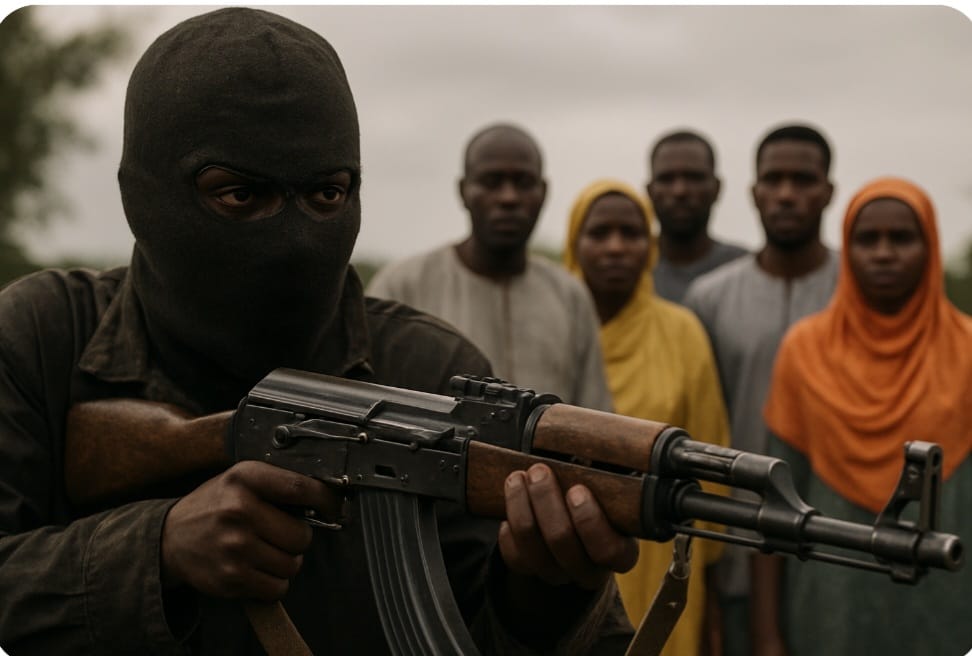
THE PRICE OF FREEDOM: When Governments Talk to Bandits — The Confusing, Dangerous Rescue of 38 Worshippers in Kwara.
By George Omagbemi Sylvester | Published by saharaweeklyng.com
“DSS and the military say they “CONTACTED” kidnappers and secured the release — critics ask whether the state paid a hidden ransom and whether any deal will deepen Nigeria’s kidnapping economy.”
On November 18, 2025, gunmen stormed the Christ Apostolic Church in Eruku, Kwara State, killing two congregants and abducting 38 worshippers. The kidnappers immediately slapped an extraordinary demand (₦100 million per captive) a sum that made headlines and sickened relatives. The nation watched in horror as the familiar script of mass abduction and ransom negotiation ran again across our airwaves.

By November 24 the worshippers were free. But the sequence that led to their release has produced more questions than comfort. The Presidency’s information aide, Bayo Onanuga, told reporters that the Department of State Services (DSS) and the military had “CONTACTED the BANDITS” and, through real-time tracking and pressure, secured the release without paying ransom. “THEY REACHED OUT TO THE KIDNAPPERS AND DEMANDED THE RELEASE OF THE VICTIMS AND THE BANDITS COMPLIED,” Mr. Onanuga said. The Presidency insisted no ransom was paid.
That official narrative (CONTACT, MONITORING, PRESSURE, RELEASE) sounds tidy. It is also deeply unsettling. For decades families, communities and sometimes local governments have paid to get loved ones back. Analysts and international observers have documented millions of dollars exchanged in secret transactions between captors and the captive’s handlers; such payments become part of the criminal ecosystem, emboldening more abductions. “The motivation of these groups appears purely economic,” SBM Intelligence’s head of research once told Sahara when discussing the KIDNAP-FOR-RANSOM boom. History shows payments (whether explicit or concealed) can have perverse consequences.

So which is it in Eruku? The Presidency’s line is that security agencies negotiated and that the bandits, confronted by surveillance and the prospect of force, “COMPLIED.” Critics ask whether the state’s words conceal a quieter transaction: a back-channel transfer of funds, local payments by community leaders, or a tacit bargain that leaves the bandits enriched and empowered. Nigerian reporting after the releases has been mixed: some outlets relay Onanuga’s position that no ransom was paid, while others note continued local reports of community-level payments or murky negotiations.
There are three hard, non-negotiable truths we must hold in mind.

First: in a country where kidnapping for ransom has metastasized into a criminal economy, any release that lacks transparent forensic explanation will breed suspicion. Between 2011 and 2020, some firms estimated that tens of millions were paid to kidnappers across Nigeria (largely by families and intermediaries) a fact that demonstrates both the scale and the secretive cash flows sustaining the crime. When governments insist “NO RANSOM WAS PAID” without opening records or allowing independent verification, cynicism grows.
Second: the ethical and strategic dilemma is real. Security experts, criminologists and ethicists describe an agonizing choice: refuse to negotiate and risk lives, or negotiate/pay and save people now while encouraging more abductions later. A growing body of research argues that ransom payments produce a perverse feedback loop: immediate human relief at the cost of long-term national insecurity. “Paying the ransom may save a life immediately, but it causes more harm in the long run by encouraging further kidnappings,” a recent ethical review summarized. Policymakers must reckon honestly with that calculus.

Third: secrecy is the enemy of accountability. If security agencies can secure releases by non-lethal means (surveillance, pressure, targeted operations) the public should be presented with credible, verifiable steps explaining how danger was neutralized and how captors were prevented from using the same methods again. If, instead, releases depend on opaque deals or payments through intermediaries, then the state is, in effect, subsidizing criminality with impunity.
Voices from the field amplify these concerns. Ikemesit Effiong of SBM Intelligence described the kidnap economy as mostly financially motivated, fed by poverty and the breakdown of social controls; each successful payout is a business case for the next abduction. Academics who study the phenomenon have similarly warned that ransom markets create perverse incentives and institutional corruption that erode state capacity. In other words: when the state or its proxies pay to free today’s victims, it often pays tomorrow, through renewed crime and weakened trust.
This is not an argument for cold-hearted refusal to save lives. It is a demand for honesty and strategy. If the DSS and the military really relied on real-time tracking, coordinated intelligence and pressure to force a surrender without money changing hands, the Presidency should publicize a clear after-action account: what assets were used, what intelligence nodes tracked the gang, whether arrests were made, and what follow-up operations will prevent recurrence. That would be a template for accountability and learning.
If, on the other hand, a payment (direct or indirect) secured the release, Nigerians deserve to know that too. Concealing payments achieves two dangerous ends: it normalizes secret deals between the state and criminals, and it institutionalizes a shadow market where bandits calculate the expected payout for every attack. Either outcome corrodes the rule of law.
There are practical reforms the federal government must pursue, simultaneously and without further delay. First: transparency and publish factual, declassified after-action reports of rescue operations that explain who did what, and how outcomes were achieved. Second: a national policy on ransom negotiations, designed with input from security services, legal scholars, community leaders and international partners, that specifies when and how officials may engage with captors and under what safeguards. Third: invest aggressively in community resilience such as rural patrols, credible policing, emergency funds for forensic investigations, while prosecuting collaborators and vigilantes who profit from abduction markets. Fourth: strengthen prosecutions and asset-forfeiture regimes that clamp down on the financial networks banking ransom payments. Evidence-based suppression of the economics of crime is as crucial as boots on the ground.
Finally, we must have a public conversation about responsibility. Families and communities pay because they lack confidence in their state. Governments that want to break kidnapping’s business model must first restore trust: by showing that the state can protect citizens, secure rescues lawfully, and deny bandits the currency they crave. Anything less is appeasement dressed as rescue.
The Eruku case should be a moment of clarity for Nigeria. If the DSS and military achieved a no-cash rescue through skillful intelligence and pressure, the agencies should make that model public and replicable. If they relied on payments (however camouflaged) the country must confront the cost of that choice and act to end the market those payments prop up. Either way, secrecy benefits only the criminals and deprives Nigerians of the truth.

The 38 worshippers are home and for that we give thanks; but GRATITUDE must not silence ACCOUNTABILITY. The state’s job is not only to recover victims; it is to ensure the recovery does not fuel the next crime. Until the full facts of the Eruku release are laid on the table and scrutinized, the “MIRACLE” of a mass release will always carry the sour aftertaste of suspicion; and Nigeria will remain trapped in a vicious cycle where rescue equals reward and reward equals repeat.




society
Buratai Highlights Leadership, Community Support In Defeating Insurgency As Shettima, Defence Chiefs Rally Support For Counterterrorism Documentation At Book Launch
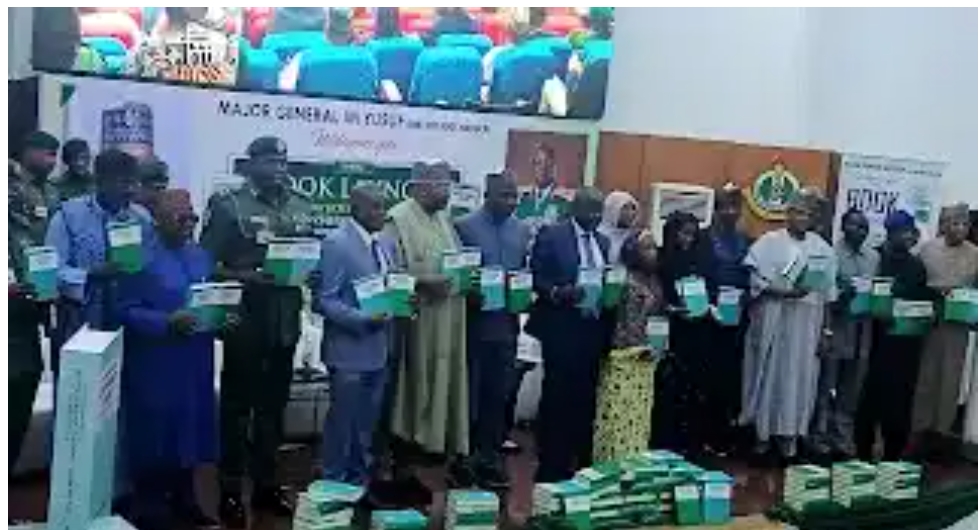
Buratai Highlights Leadership, Community Support In Defeating Insurgency As Shettima, Defence Chiefs Rally Support For Counterterrorism Documentation At Book Launch
Prominent Nigerians including Vice President Kashim Shettima, Defence Minister Christopher Musa, senior military officers, and political leaders on Thursday underscored the importance of documentation, collective national responsibility, and sustained military professionalism in the fight against terrorism during the unveiling of a new book titled “Counterterrorism and Counterinsurgency Operations in North East Nigeria (Volumes 1 & 2)” authored by retired Major-General Ibrahim Yusuf.

Representing Vice President Kashim Shettima, the Special Adviser on General Duties, Dr. Aliyu Modibbo, described the publication as a timely and strategic contribution to Nigeria’s national security discourse.
According to him, Nigeria’s experience with terrorism and insurgency in the North-East reflects not a nation defeated by insecurity, but the resilience and courage of citizens and security forces defending the country’s shared destiny.
He noted that the conflict in the North-East remained a deep human tragedy affecting communities with rich historical and cultural heritage, stressing that terrorism requires sustained vigilance, intelligence gathering, diplomacy, technology, and strong civil-military cooperation.
The Vice President further commended the author for documenting operational experiences and strategic lessons from the theatre of operations, saying such insights would prove invaluable to policymakers, scholars, and future military leaders.
He also reaffirmed the commitment of President Bola Ahmed Tinubu’s administration to strengthening the operational readiness, welfare, and dignity of members of the Armed Forces.
In his goodwill message, the Minister of Defence, Christopher Musa, praised the author as a respected mentor whose professionalism and leadership continued to inspire younger officers even after retirement.
“The lion may be retired, but he is certainly not tired,” he remarked.
Musa described the insurgency in the North-East as one of Nigeria’s most complex security challenges, noting that the asymmetric nature of the conflict means it cannot be won by military force alone.
According to him, victory against terrorism depends on collective national responsibility involving the Armed Forces, civil authorities, and citizens working together to deny insurgents support and legitimacy.
He also urged serving military officers to study the publication carefully, noting that it contains valuable operational lessons from years of counterinsurgency operations.
The Chief of Defence Staff, Olufemi Oluyede, described the two-volume publication as a major intellectual contribution bridging theory and practice in counterterrorism and counterinsurgency operations.
Oluyede commended the author for preserving decades of operational knowledge gained from commanding the 21 Brigade, 7 Division, and the Multinational Joint Task Force.
He stressed that modern security threats demand continuous learning, adaptation, and proper documentation of operational experiences, adding that the publication would serve as a useful resource for military practitioners, researchers, and policymakers.
Former Chief of Army Staff, Lt. Gen. Tukur Buratai, also applauded the author for documenting operational experiences from the counterinsurgency campaign in the North-East.
Buratai stated that operational success in counterinsurgency warfare depends largely on the quality of commanders in the field and the ability of military leaders to adapt to complex realities.
He recalled the significance of operations such as Deep Punch I and Deep Punch II, as well as the critical role played by the Nigerian Air Force in degrading terrorist capabilities between 2015 and 2017.
According to him, resilient leadership and community support remain crucial elements in defeating insurgency.
Earlier, retired Major-General Ibrahim Yusuf said the publication represented the fulfilment of an eight-year intellectual ambition aimed at contributing to military scholarship and national security discourse.
He explained that the book was inspired by a desire to provide younger military officers and policymakers with first-hand insights into the successes and challenges of counterterrorism operations in Nigeria.
The retired general added that the publication drew from over a decade of operational experience in the North-East and the Lake Chad Basin while deliberately avoiding sensitive information capable of compromising ongoing operations.
He also urged retired military officers to document their operational experiences for future generations, stressing that such efforts are essential for institutional memory and national development.
Reviewing the publication, renowned scholar Eghosa Osaghae described the work as a landmark contribution to military scholarship.
Osaghae noted that the two volumes combine academic depth with practical operational experience, offering insights into intelligence-led operations, joint force coordination, psychological warfare, and post-conflict management.
He added that the publication effectively situates Nigeria’s counterinsurgency experience within the broader realities of modern asymmetric warfare and evolving global security threats.
The event attracted senior serving and retired military officers, heads of security agencies, members of the diplomatic corps, academics, and policymakers from across the country.
society
Oduduwa Integrity Association Announces Adoption of Governor Ademola Adeleke as “Performing Governor” in the Southwest*

Oduduwa Integrity Association Announces Adoption of Governor Ademola Adeleke as “Performing Governor” in the Southwest*
*Osun State, Nigeria* – The Oduduwa Integrity Association, one of the prominent socio-cultural and advocacy groups in the Southwest region, has announced its decision to adopt and publicly recognize Governor Ademola Adeleke of Osun State as a performing governor in the Southwest.
According to the Association, the adoption is based on its independent monitoring of governance and project delivery across the region. The group stated that Governor Adeleke’s administration has demonstrated measurable progress in areas including infrastructure, workers’ welfare, education, and youth empowerment, which aligns with the association’s mandate to promote accountability and good governance.
“This adoption is our way of encouraging performance and responsible leadership,” Evang /Hon Omotoso Banji, the President and Founder of Oduduwa Integrity Association said. “We believe that recognizing leaders who are delivering on their mandate helps strengthen democratic values and motivates others to prioritize the people.”
The Association noted that its adoption does not imply political affiliation but is a non-partisan endorsement of what it describes as visible and verifiable governance outcomes within Osun State. It added that the move is part of its broader initiative to highlight and support public officials across the Southwest who meet its standards for transparency, service delivery, and integrity.
Governor Adeleke’s administration has been marked by policy focus on infrastructural renewal, payment of salary arrears, and investment in grassroots development since assuming office. The Oduduwa Integrity Association said it will continue to monitor and document these efforts as part of its civic oversight role.
The formal adoption ceremony and presentation of recognition materials are expected to be announced in the coming weeks.
The Oduduwa Integrity Association is a Southwest-based civil society and advocacy group committed to promoting good governance, transparency, and accountability across Yoruba-speaking states presided by Evang / Hon Omotoso Banji.The Association conducts independent assessments of public service delivery and engages in community enlightenment programs.

AjilalaOso Day 2026: Women Union Make Donations To Hospital
The women wing of the Ede Descendants Union has donated 42 bedsheets and 44 pillow cases to Cottage Hospital, Ede, in Osun State, as part of activities marking preparations for AjilalaOso Day 2026.
The donation was aimed at supporting healthcare services at the hospital while also demonstrating the union’s commitment to community development and humanitarian service.
Members of the union said the gesture formed part of efforts to give back to society and contribute meaningfully to the wellbeing of patients receiving treatment at the health facility.
Speaking during the presentation, the leader of the women wing, Mrs Silifat Shittu, described the initiative as a reflection of the values of compassion, unity and service which AjilalaOso Day represents.
She noted that the annual cultural celebration is not only about showcasing the rich heritage of Ede but also about promoting development-oriented projects capable of impacting lives positively.
The group further urged individuals, organisations and stakeholders in Edeland to continue supporting community-based initiatives aimed at improving the welfare of residents.
Speaking on behalf of the hospital management, the Chief Medical Officer, Dr Isiaka Alade, appreciated the women group for the donation, describing the items as timely and beneficial to patients and the hospital environment.
Chairman of the AjilalaOso Day 2026 Planning Committee, Prince Adewale Laoye while addressing the gathering appealed to other well-meaning individuals and organisations to extend similar gestures to the hospital, noting that some roofing sections of the facility require urgent repairs.
He also commended the women wing of the union for the initiative and support shown to Cottage Hospital.
Prince Laoye, who spoke extensively on the objectives of the AjilalaOso festival, explained that the annual celebration would not only be about funfair and merriment but would also focus on touching the lives of the needy through impactful community projects.
According to him,“We also want associations to have a project executed in Ede every year, such as what the women wing of EDU has done today.”


- Africa’s $65 Billion Fintech Industry Under the Spotlight in Latest Pan African Visions Magazine Special Edition May 21, 2026
- TotalEnergies Expands Angola Offshore Strategy as Martin Deffontaines Returns to Angola Oil & Gas (AOG) 2026 May 21, 2026
- New Africa Centres for Disease Control and Prevention (Africa CDC)–Global Fund Partnership to Strengthen Africa’s Health Systems May 21, 2026
- U.S. International Development Finance Corporation (DFC's) Vibhuti Jain Joins African Mining Week (AMW) as United States (U.S.) Expands Regional Critical Mineral Partnerships May 21, 2026
- PAC Capital Limited Secures Seven Prestigious International Awards, Reinforcing Leadership in Investment Banking and Advisory May 21, 2026
- African Energy Chamber (AEC) Strengthens Strategic Engagement with African Petroleum Producers’ Organization (APPO), Venezuela to Advance Regional Energy Cooperation May 21, 2026
- How the Product Leadership Accelerator (PLA) is Re-Engineering African Enterprises for a Digital-First Economy May 20, 2026
- Congo’s Minister Onanga to Fast-Track Deals, Drive Local Content and Expand Floating Liquefied Natural Gas (FLNG) in New Investment Push May 20, 2026
- PayPal Brings PayPal USD to Users Across 70 Markets Worldwide and Expands Access in Africa May 20, 2026
- Afreximbank Extends USD 15 Million Facility to Ecobank Zimbabwe Limited to Support Small and Medium Enterprises (SME) Participation in Export Value Chains May 20, 2026
- Africa’s $65 Billion Fintech Industry Under the Spotlight in Latest Pan African Visions Magazine Special Edition May 21, 2026
- TotalEnergies Expands Angola Offshore Strategy as Martin Deffontaines Returns to Angola Oil & Gas (AOG) 2026 May 21, 2026
- New Africa Centres for Disease Control and Prevention (Africa CDC)–Global Fund Partnership to Strengthen Africa’s Health Systems May 21, 2026
- U.S. International Development Finance Corporation (DFC's) Vibhuti Jain Joins African Mining Week (AMW) as United States (U.S.) Expands Regional Critical Mineral Partnerships May 21, 2026
- PAC Capital Limited Secures Seven Prestigious International Awards, Reinforcing Leadership in Investment Banking and Advisory May 21, 2026
- African Energy Chamber (AEC) Strengthens Strategic Engagement with African Petroleum Producers’ Organization (APPO), Venezuela to Advance Regional Energy Cooperation May 21, 2026
- How the Product Leadership Accelerator (PLA) is Re-Engineering African Enterprises for a Digital-First Economy May 20, 2026
-

 news5 months ago
WHO REALLY OWNS MONIEPOINT? The $290 Million Deal That Sold Nigeria’s Top Fintech to Foreign Interests
-

 society3 weeks ago
SOCIAL MEDIA IS NOT A BATTLEFIELD COMMAND – WHY THE NIGERIAN ARMY’S ACTION AGAINST JUSTICE CRACK IS A NATIONAL SECURITY IMPERATIVE
-

 celebrity radar - gossips4 months ago
Dr. Chris Okafor Returns with Power and Fire of the Spirit -Mounts Grace Nation Altar with Fresh Anointing and Restoration Grace on February 1, 2026
-

 celebrity radar - gossips5 months ago
Prophet Kingsley Aitafo Releases 2026 Prophecy: ‘Nigeria Will Rise, but the World Must Prepare for Turbulence’