
society
The Price of Mocking Brilliance: A Nation that Rewards Mediocrity

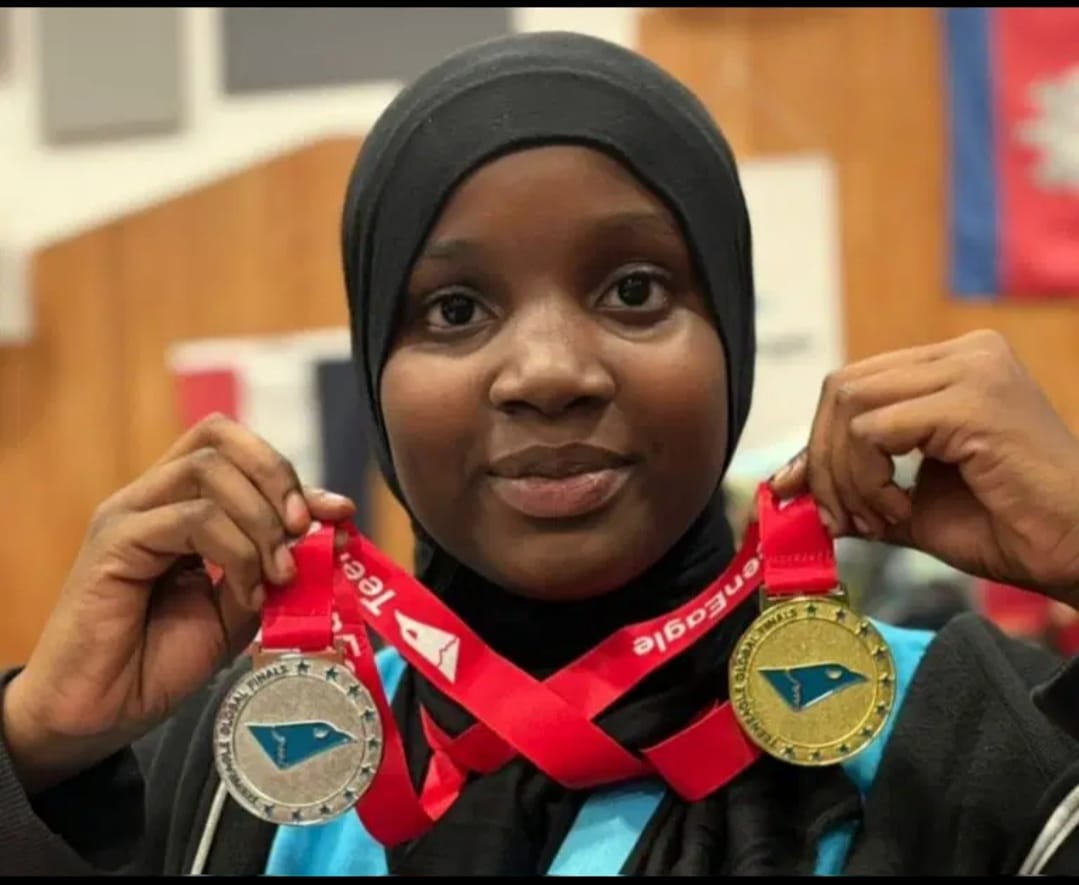
The Price of Mocking Brilliance: A Nation that Rewards Mediocrity.
(The Nafisa Abdullahi Scandal).
By George Omagbemi Sylvester | Published by SaharaWeeklyNG.com
On August 28, 2025, the Federal Government of Nigeria staged what it believed was a moment of national pride: the celebration of a 17-year-old girl, Nafisa Abdullahi from Yobe State, who conquered the globe at the TeenEagle Global English Championship in London. What should have been a defining national moment (a victory of knowledge over adversity) quickly degenerated into a spectacle of ridicule when the government handed her a paltry cash reward of ₦200,000.

Yes, ₦200,000. Not a scholarship. Not a guaranteed pathway to higher education. Not even a well-structured mentorship programme. Just ₦200,000, a sum that evaporates before the ink on a bank teller’s slip dries. This was Nigeria’s GIFT to brilliance.
The Arithmetic of Insult.
To appreciate the depth of this insult, one must juxtapose it with Nigeria’s lavish treatment of sportsmen. Just weeks earlier, victorious athletes returning from global tournaments were rewarded with $100,000 each (over ₦160 million). They were celebrated like royalty, paraded before cameras, and their feats were treated as national salvation. Yet Nafisa, who carried the nation’s banner through intellect, was invited all the way from Damaturu to Abuja only to be mocked with a cheque that barely covered the cost of her journey.

Transportation, accommodation and feeding for such a trip would eat deep into the so-called reward. By the time Nafisa and her parents return to Yobe, what is left of this “NATIONAL HONOUR”? It is not recognition; it is TOKENISM. It is not celebration; it is CONTEMPT.
As Nigerian writer Chinua Achebe once warned, “A man who brings home ant-infested faggots should not complain when visited by lizards.” By offering Nafisa ₦200,000, the government brought home the ant-infested wood of mockery and it should not be surprised that lizards of public outrage came crawling.

Spectacle Over Substance.
This ₦200,000 insult reveals something deeper: a governing philosophy that values spectacle over substance. Sports victories provide cameras, applause and quick political mileage. Intellectual triumphs, by contrast, are quieter, less glamorous and yield no instant political dividends. In the theatre of Nigerian governance, INTELLECT is BORING; MUSCLE is MARKETABLE.
History tells us otherwise. Nations do not rise on the strength of athletes; they rise on the foundation of ideas. Japan rebuilt itself after World War II not by producing football stars but by investing heavily in education and technology. South Korea transformed from poverty to prosperity through engineers, scientists and innovators. Singapore, once dismissed as a swamp, became a global giant by treating education as sacred.
Nigerian leaders know these facts but choose to ignore them. As Nelson Mandela rightly said, “Education is the most powerful weapon which you can use to change the world.” Yet, in Nigeria, education is treated like an unwanted burden and mocked with crumbs, underfunded in the budget and constantly sacrificed on the altar of political expediency.
The Economics of Shame.
What does ₦200,000 mean in real terms? In today’s Nigeria, it cannot pay a semester’s tuition at a modest private university. It cannot buy a decent laptop and guarantee a year of reliable internet access. It cannot sponsor participation in another international competition without the help of benevolent sponsors. Meanwhile, ₦160 million (the amount lavished on athletes) can pay for a PhD at Harvard, buy a home in Abuja, and still fund a scholarship foundation for dozens of students.
This is not a call to envy athletes. Sports INSPIRE and UNITE, their role is vital; but the DISPARITY is OBSCENE. When muscle is worth 800 times more than brain, what message does that send to Nigerian children? That the pursuit of intellect is a fool’s errand? That the path of books leads only to mockery?
One angry father captured the national mood on social media: “MY DAUGHTER ASKED ME, DADDY, IS IT BETTER TO BE A FOOTBALLER THAN TO BE INTELLIGENT? I had no answer.” That is the generational damage inflicted by Nigeria’s warped reward system.
The Global Contrast.
Elsewhere, intellectual triumphs are immortalized. Malala Yousafzai of Pakistan, who championed education against all odds, became a Nobel Laureate and a global ambassador for learning. India celebrates its top students with scholarships and mentorship opportunities. Rwanda invests deliberately in the education of its brightest minds as part of its national development strategy.
Nigeria, by contrast, throws billions at political allowances, lavish banquets and football matches while mocking intellectual heroes with what amounts to spare change. As Professor Wole Soyinka once lamented, “You cannot give what you don’t have. If leaders lack respect for knowledge, they cannot nurture it in society.”
Tokenism as Policy.
The tragedy is not just the ₦200,000 itself. It is the message behind it; that Nigeria does not consider INTELLECTUAL EXCELLENCE WORTHY of INVESTMENT. This tokenism is symptomatic of a broader disease. Education budgets are slashed. Teachers are unpaid for months. Pupils sit on bare floors in leaking classrooms. Millions of children are out of school, yet those who manage to shine are mocked with crumbs.
This is not accidental; it is deliberate. A society that does not value education is easier to CONTROL, easier to MANIPULATE and easier to EXPLOIT. Ignorance becomes a tool of governance. Such a society is also doomed to stagnation, trapped in cycles of poverty and mediocrity.
What Could Have Been.
Imagine if Nafisa’s victory had been rewarded with a full scholarship to one of the world’s leading universities. Imagine if the government had established an “INTELLECTUAL HEROES FUND” to support young Nigerians who excel on the global stage. Imagine if the President himself had hosted her at Aso Rock, telling every Nigerian child watching: See what books can do. This is the path to greatness.
Instead, Nafisa was handed ₦200,000; less than what a minister might spend on lunch. This is how nations kill dreams.
The Path Forward.
Nigeria must decide what it values. If it values fleeting applause, it will continue to reward spectacle while starving substance. If it values true progress, it must place education at the centre of national life. This requires more than rhetoric. It requires a philosophy shift:
Scholarships for Global Champions ~ Every student who lifts Nigeria’s name on the global intellectual stage must be guaranteed full scholarships and mentorship opportunities.
Creation of a National Education Heroes Fund ~ To support young minds beyond tokenism.
Reordering of National Priorities ~ Budgetary allocations must reflect the centrality of education, not the luxury of politicians.
Cultural Reorientation ~ We must teach children that intellect is not only valuable but sacred.
As the late Kofi Annan once said, “Knowledge is power. Information is liberating. Education is the premise of progress, in every society, in every family.” Nigeria cannot afford to trivialize this truth.
Nafisa: A Shining Light Amid Darkness.
Yet, even in the face of national mockery, Nafisa Abdullahi remains a symbol of hope. She has proven that Nigerian children, though raised in broken classrooms and neglected by the state, can still shine before the world. Her story must inspire others to know that brilliance is priceless, regardless of governmental tokenism.
The shame belongs not to her but to Nigeria; a country that rewards genius with peanuts while lavishing fortunes on spectacle. As history has shown, nations that mock education collapse under the weight of ignorance, while those that nurture it rise to greatness.
The Price of Mocking Brilliance.
On August 28, 2025, Nigeria mocked brilliance with ₦200,000. It revealed to the world not only its poverty of vision but also its hostility to intellect. Nafisa Abdullahi’s triumph could have been a national rallying point for millions of children. Instead, it became a metaphor for Nigeria’s misplaced values.
One day, history will remember that Nigeria once mocked genius with ₦200,000. By then, perhaps, the nation will understand the true cost of its shame.





society
GEN CHRISTOPHER GWABIN MUSA SUPPORT INITIATIVE EXTENDS WARM BIRTHDAY FELICITATIONS TO PRESIDENT TINUBU ON 74TH BIRTHDAY
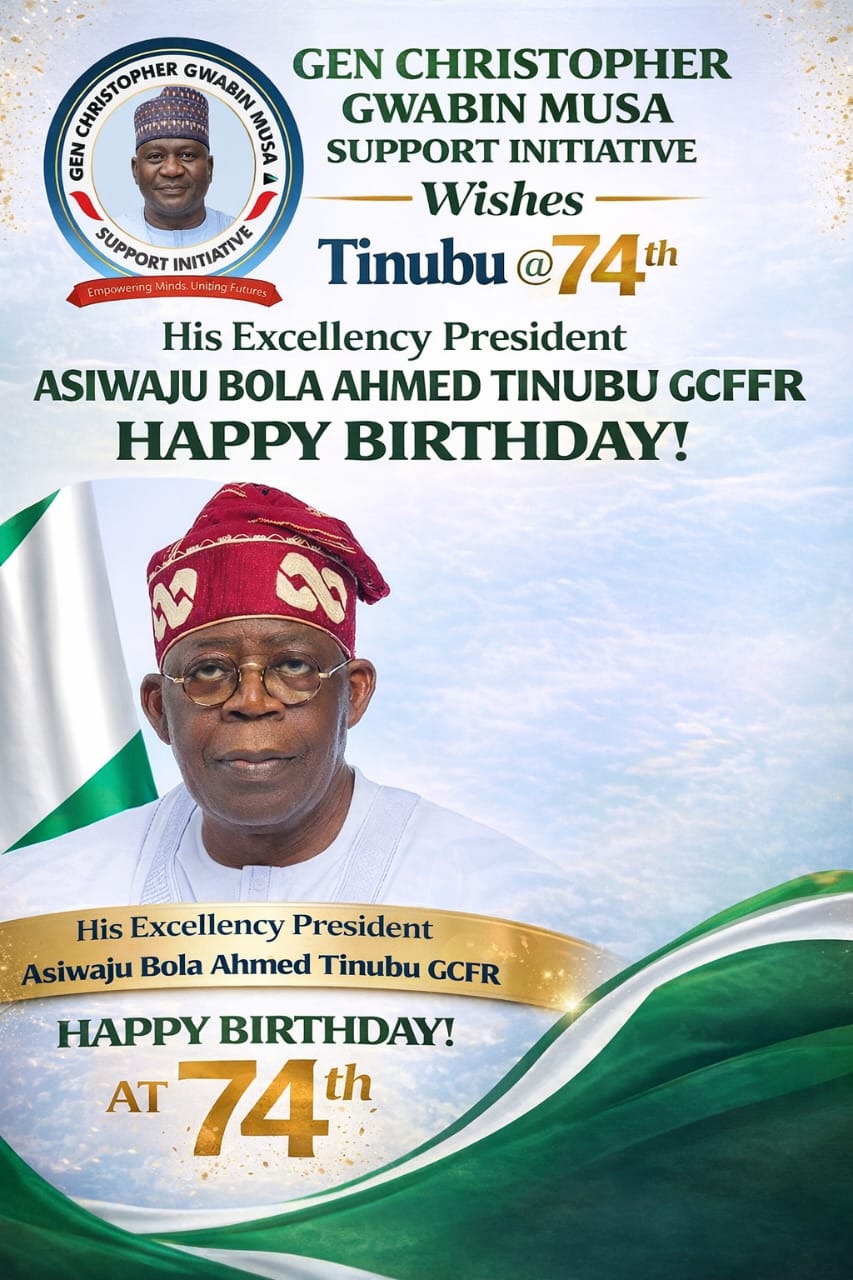
GEN CHRISTOPHER GWABIN MUSA SUPPORT INITIATIVE EXTENDS WARM BIRTHDAY FELICITATIONS TO PRESIDENT TINUBU ON 74TH BIRTHDAY
The Gen Christopher Gwabin Musa Support Initiative has extended heartfelt congratulations to His Excellency President Asiwaju Bola Ahmed Tinubu, GCFR, on the occasion of his 74th birthday.
In a statement released to the press, the Initiative conveyed warm wishes for the President’s personal well-being and for his continued leadership of the nation. The statement, signed by the Convener, Ibrahim Dahiru Danfulani, Sadaukin Garkuwan Keffi/Betara Biu, expressed hope that the coming year would bring the President “renewed strength and more wisdom in guiding the nation.”
The statement further noted that the Grand Patron of the Initiative, His Excellency Gen Christopher Gwabin Musa, OFR, Minister of Defence of the Federal Republic of Nigeria, joined in celebrating the milestone. It added, “Wishing Your Excellency continued good health, vitality, and determination as you lead the country towards greater unity and progress.”
The message underscores support for President Tinubu’s administration and its national objectives, marking the birthday as an occasion to reaffirm commitment to the nation’s unity and advancement under his stewardship.
society
Dominion City to Host Global Camp Meeting, “2 Nights of Glory” 2026 in Lagos, Enugu …Calls for Moral Renewal
*Dominion City to Host Global Camp Meeting, “2 Nights of Glory” 2026 in Lagos, Enugu
…Calls for Moral Renewal
Lagos – Dominion City has announced plans to host its annual Global Camp Meeting alongside a special “2 Nights of Glory” gathering in April 2026, with events scheduled to be held simultaneously in Lagos and Enugu.
The week-long programme is expected to draw tens of thousands of participants onsite and millions of virtual attendees from across the globe.
The Global Camp Meeting will run from Wednesday, April 1 to Monday, April 6, featuring daily sessions at 8:00 a.m. and 5:00 p.m. The “2 Nights of Glory” is slated for Friday, April 3 and Saturday, April 4 at the Golden Heart Place, Km 22 Lekki-Epe Expressway, beside Lagos Business School, Ajah, Lagos.
Organised by Dominion City, a global church focused on raising transformational leaders, the conference will centre on revival, spiritual renewal, and practical teachings. This year’s theme, “Redigging the Wells of Our Fathers,” underscores a call to return to foundational values and principles.
Speaking ahead of the event, Nobbert Onaga, President, Golden Heart Foundation and Senior Pastor, DC Lagos & Europe, emphasised the need for moral reawakening as a pathway to national transformation. He described the Church as “the pillar and foundation of truth,” noting that the conference aims to confront moral decline and restore core values within society.
“We are going back to foundational truths that established the Church. These truths will help repair societal damage and reposition the Church as a source of hope and light,” Onaga said.
Also speaking, Shola Olapade, Senior Pastor of Dominion City Headquarters, highlighted the Church’s role in addressing ethical and cultural challenges, particularly among young people. He added that the programme would go beyond spiritual teachings to include sessions on artificial intelligence, innovation, business, media, arts, and career development.
“We are equipping people not just spiritually, but with relevant 21st-century skills to thrive in today’s world,” Olapade noted.
The conference will feature teachings and ministrations from a lineup of international ministers, including Dr. David Ogbueli, Dr. Charles Ndifon, Andres Bisonni, Pastor Randy Mitchell, Apostle Ikechukwu Peter Nnajiofor, Dr. Ferdinand Nweke, Apostle Ben Hanyani Ndobe, Evangelist Dan Scott, and Dr. Chiefo Ejiofobiri.
Music ministrations will also be led by notable gospel artists such as Grace Idowu, Rhema Onuoha, Once More Six, David Nkennor, Anthony Kani, and GUC.
Organisers disclosed that over 30,000 participants are expected to attend in person, with free transportation provided from designated locations across Lagos to ease access. In addition, free medical services will be offered daily, building on previous outreaches that benefited over 1,700 people.
To ensure safety and order, more than 200 traffic marshals will be deployed in collaboration with relevant authorities.
Beyond its spiritual impact, organisers project that the event will stimulate local economic activity across hospitality, transportation, and retail sectors.
The Global Camp Meeting remains a key platform for spiritual impartation, leadership development, and societal transformation, aligning with Dominion City’s mission to equip believers to influence their communities positively.
Participation is open to the public, with registration available online for both physical and virtual attendance. //END.//
*PHOTO CAPTIONS:*
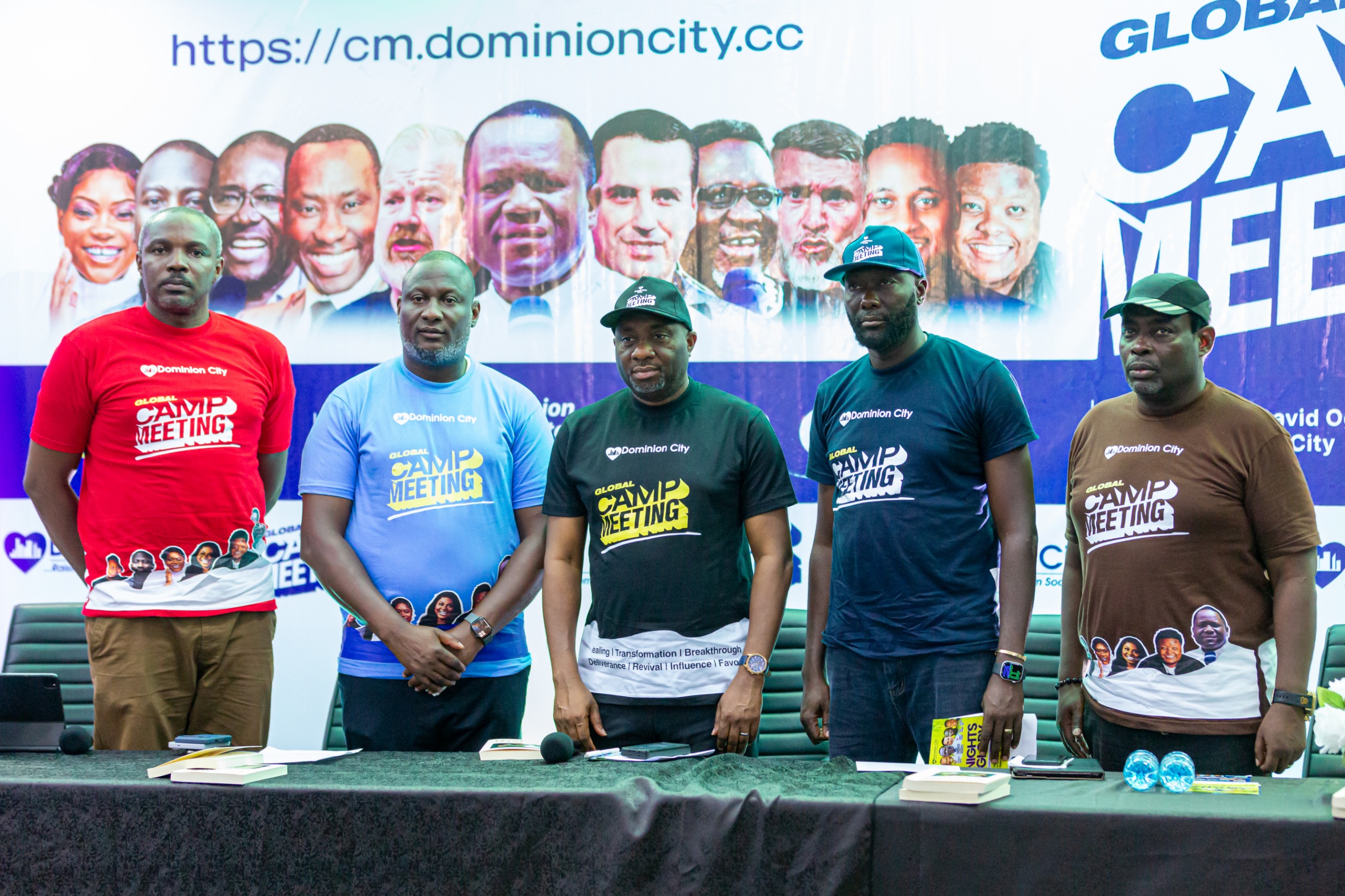
L-R: Dr. Godwin Efobi, Head, Medical Team, Dominion City Headquarters (DCHQ); Pastor Shola Olapade, Senior Pastor, DCHQ; Pastor Nobbert Onaga, President, Golden Heart Foundation and Senior Pastor, DC Lagos & Europe; Pastor Chuks Anochie, Head of Security and Traffic Control, Dominion City Headquarters (DCHQ), Camp Meeting 2026; Pastor Josh Tim Vaduchi, Head of Event & Programmes, DCHQ, during the press briefing of the forthcoming Global Camp Meeting, held the weekend of 2026 at the Dominion City Headquarters (DCHQ), Lagos.
L-R: Pastor Chuks Anochie, Head of Security and Traffic Control, Dominion City Headquarters (DCHQ), Camp Meeting 2026; Pastor Shola Olapade, Senior Pastor, DCHQ; Pastor Nobbert Onaga, President, Golden Heart Foundation and Senior Pastor, DC Lagos & Europe; Dr. Godwin Efobi, Head, Medical Team, DCHQ; and Pastor Josh Tim Vaduchi, Head of Event & Programmes, during the press briefing of the forthcoming Global Camp Meeting, held over the weekend in 2026 at the Dominion City Headquarters (DCHQ), Lagos.
society
Oloworo of Oworosoki Kingdom, Oba Babatunde Saliu, Felicitates President Bola Ahmed Tinubu at 74
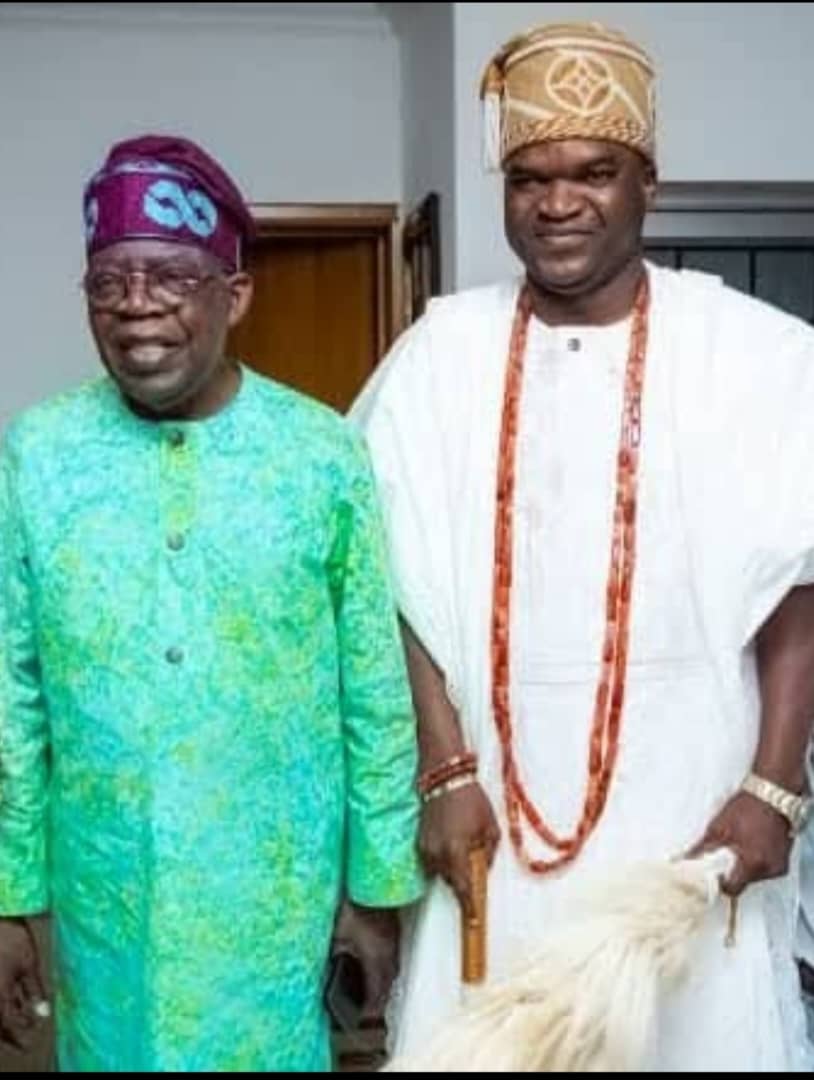
Oloworo of Oworosoki Kingdom, Oba Babatunde Saliu, Felicitates President Bola Ahmed Tinubu at 74
By Adeyemi Obadimu
The Oloworo of Oworosoki Kingdom, His Royal Majesty, Oba Babatunde Saliu, Elebo II, has extended warm felicitations to the President of the Federal Republic of Nigeria, Bola Ahmed Tinubu, GCFR, on the occasion of his 74th birthday.
In a goodwill message issued from his palace, the revered monarch described President Tinubu as a visionary statesman, a courageous reformer, and an indefatigable democrat whose lifelong commitment to nation-building continues to shape Nigeria’s progress.
Oba Babatunde Saliu praised the President’s unwavering dedication to public service, noting that his leadership has ushered in a new phase of economic reform, infrastructural renewal, and institutional strengthening across the country.
According to the monarch, the President’s Renewed Hope Agenda has begun yielding tangible relief and renewed confidence among citizens, reflecting his determination to reposition Nigeria for sustainable growth and prosperity.
“President Bola Ahmed Tinubu has demonstrated exceptional resilience, strategic foresight, and a deep love for Nigeria. His administration’s bold initiatives are laying the foundation for long-term national transformation. At 74, he remains steadfast in his resolve to build a stronger, more united, and economically vibrant nation,” the monarch stated.
Oba Babatunde further commended the President’s legacy of leadership, describing him as a bridge-builder, a mentor to many leaders, and a symbol of democratic stability. He acknowledged the President’s decades of sacrifice and contribution to the advancement of democracy in Nigeria.
On behalf of the Oworosoki Kingdom, the royal father prayed for divine wisdom, sound health, and renewed strength for the President to successfully complete the noble reforms and developmental strides he has embarked upon for the benefit of all Nigerians.
“As Your Excellency marks 74 remarkable years, we pray that Almighty God grants you long life, continued wisdom, and the fortitude to steer our great nation toward greater heights. May your days be filled with strength and grace as you continue to serve Nigeria with distinction,” Oba Babatunde Saliu added.
President Bola Ahmed Tinubu clocks 74 as a leader whose enduring influence, bold reforms, and steadfast patriotism remain central to Nigeria’s ongoing journey of national renewal.


-

 society6 months ago
Religion: Africa’s Oldest Weapon of Enslavement and the Forgotten Truth
-

 news4 months ago
WHO REALLY OWNS MONIEPOINT? The $290 Million Deal That Sold Nigeria’s Top Fintech to Foreign Interests
-

 society6 months ago
“You Are Never Without Help” – Pastor Gebhardt Berndt Inspires Hope Through Empower Church (Video)
-

 celebrity radar - gossips2 months ago
Dr. Chris Okafor Returns with Power and Fire of the Spirit -Mounts Grace Nation Altar with Fresh Anointing and Restoration Grace on February 1, 2026