
society
The Real Terrorists Wear Agbada: Tinubu Doctrine of Economic Terrorism

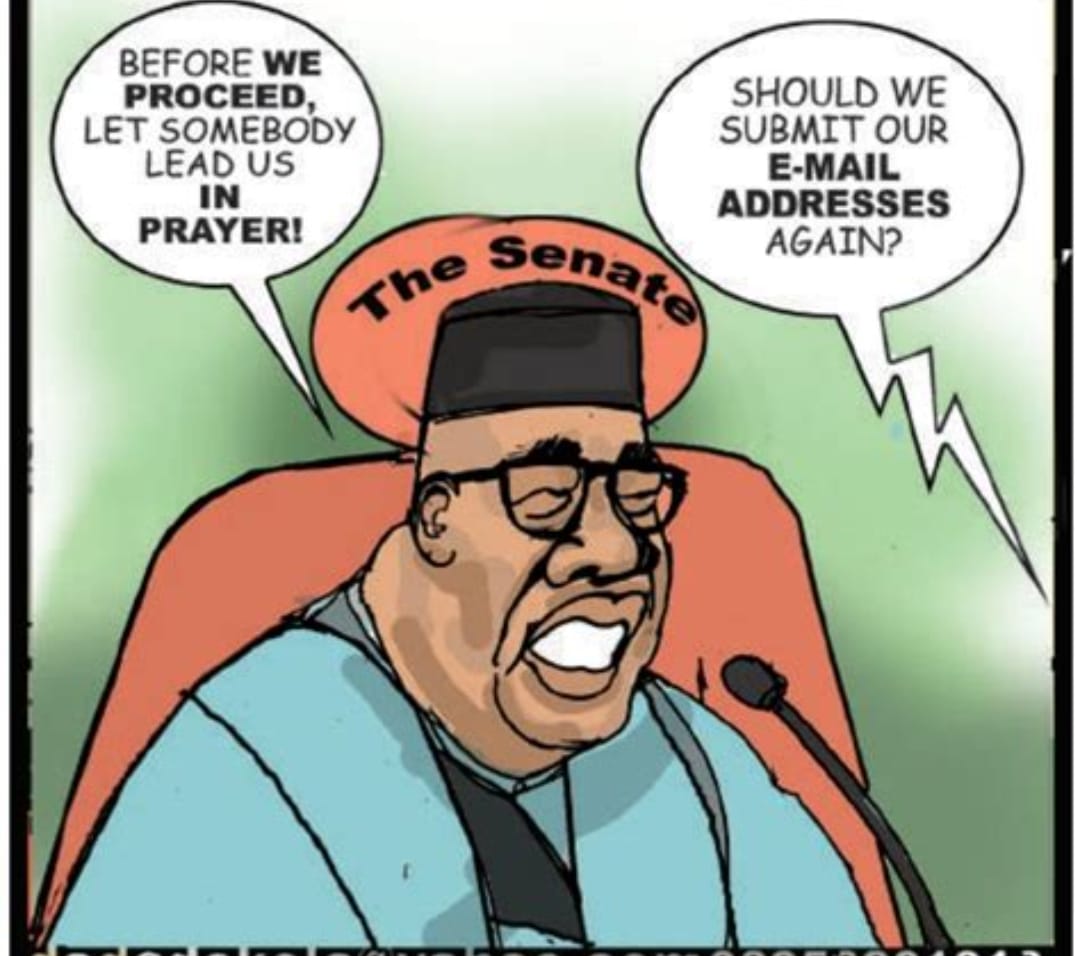
The Real Terrorists Wear Agbada: Tinubu Doctrine of Economic Terrorism
By George Omagbemi Sylvester
In a nation as bruised and battered as Nigeria, silence is complicity. Since 2015, the All Progressives Congress (APC) has orchestrated one of the most disastrous chapters in our democratic history. Under the current leadership of President Bola Ahmed Tinubu, the country is not just experiencing misgovernance, it is under siege by a form of political and economic terrorism perpetrated by those sworn to protect it.

This is not hyperbole. It is a data-backed, morally urgent diagnosis of Nigeria’s grim descent into state-enabled poverty, repression and collapse. The defenders and enablers of this administration, whether in government, media, religious institutions or the business elite are not innocent. They are co-conspirators in the slow suffocation of over 200 million people.
A Nation in Freefall

When the APC assumed power in 2015, Nigerians hoped for a clean break from corruption, economic decay and insecurity. Instead, what they got was worse than a broken promise; they got betrayal on a national scale.
According to the National Bureau of Statistics (NBS), over 133 million Nigerians are now trapped in multidimensional poverty. This staggering figure includes lack of access to education, healthcare, clean water and decent living conditions. In less than a decade, the APC has presided over the largest expansion of poverty in Nigeria’s history.
Inflation is now at 33.69% as of April 2025, while food inflation soars at over 40%, making even basic meals unaffordable for the average family. The naira has crumbled to ₦1,500 to the dollar, leaving importers, businesses and households in economic quicksand. Meanwhile, the federal government continues to spend lavishly ₦10 billion on solar panels for the presidential villa, ₦15 billion to renovate the vice president’s residence and millions on globe-trotting trips while citizens sleep hungry.
If this is not a coordinated attack on the livelihood and dignity of Nigerians, what is?
Political Terrorism by Other Means
Terrorism is often defined as the use of violence and coercion for political purposes. But what do you call it when government policies systematically impoverish citizens, suppress dissent, rig elections, ignore rule of law and promote a culture of impunity?
Welcome to Nigeria under APC rule.
From the reckless removal of fuel subsidies without a safety net to the bungled naira redesign policy that froze the informal economy, every major policy has left behind a trail of economic destruction. These actions are not mistakes and they are calculated and the impact is nothing short of terroristic in scope and effect.
The late Dr. Obadiah Mailafia, former Deputy Governor of the Central Bank of Nigeria, said it best:
“What is happening in Nigeria is not normal governance. It is a form of political and economic warfare against the Nigerian people.”
This war is being waged through budgets, policies/silence and it is killing more dreams than bullets ever could.
Tinubu’s Regime: A Travesty of Leadership
President Tinubu’s emergence in the 2023 election remains deeply controversial. His victory was marred by irregularities, voter suppression and delayed results. Former U.S. Ambassador to Nigeria, John Campbell, noted that the elections were “deeply flawed” and did not meet the expectations of democratic transparency.
Since taking office, Tinubu has failed to provide a coherent plan to rescue the nation. Instead, his administration has prioritized cosmetic reforms, excessive foreign trips and elite comfort. The gap between presidential promises and lived realities has widened into an abyss.
Worse still, the president’s known past remains a source of global embarrassment. In 2024, a U.S. District Court ordered the release of FBI and DEA files linked to alleged drug trafficking associations from Tinubu’s Chicago days. These revelations further erode Nigeria’s image on the global stage and deepen the moral crisis at the heart of our democracy.
Defenders of Tyranny: Collaborators in Oppression
Those who continue to defend this administration, despite overwhelming evidence of failure are not neutral. They are enablers of oppression, cheerleaders of chaos and prophets of poverty. Whether they wear agbadas in parliament, cassocks in churches, or camouflage in barracks, their silence or worse, their praise is a betrayal of the Nigerian people.
As Prof. Chidi Odinkalu, former Chairman of the National Human Rights Commission, once said:
“The worst form of oppression is when the oppressed become defenders of their oppressors.”
This psychological capture is perhaps the most dangerous legacy of the APC regime. They’ve normalized suffering, glamorized theft and demonized dissent.
Corruption as Policy, Poverty as Tool
The Auditor-General’s reports between 2015 and 2023 exposed over ₦20 trillion in unaccounted government expenditure. Yet no high-profile prosecutions or convictions followed. The Tinubu government continues to reward failure with appointments and punishes accountability with persecution.
Security agencies have been weaponized. The EFCC and DSS are used not to fight corruption, but to silence whistleblowers and opposition figures. Journalists are harassed, civic spaces are shrinking, and protests are brutally suppressed. This is not governance. It is dictatorship by stealth.
The Diaspora Question: Are We Not Nigerians?
Here lies an even deeper insult: If this government can allocate ₦10 billion for solar panels and billions more for luxury projects, why can’t they pass a bill to allow diaspora voting? Why must nearly 20 million Nigerians in the diaspora doctors, engineers, scholars, entrepreneurs remain disenfranchised?
Are we not Nigerians? Do we not send home over $23 billion annually in remittances? Don’t we have the same constitutional rights as those forced to vote under duress and propaganda?
Our exclusion is deliberate. It is political. It is unjust.
It is easier for the APC to manipulate domestic voting populations than to engage a diaspora community that is educated, exposed and uncompromising. By shutting us out, they silence voices that cannot be bought or bullied.
This is not democracy. It is strategic disenfranchisement.
A Global Embarrassment
Under the APC, Nigeria’s stature has plummeted globally. Once the “Giant of Africa,” Nigeria is now mocked for its leadership dysfunction. In 2024, Transparency International ranked Nigeria 150th out of 180 countries in its Corruption Perceptions Index. The World Bank’s Human Capital Index shows Nigeria near the bottom, as children suffer malnutrition and graduates flee the country in droves.
Meanwhile, the brain drain continues. Doctors, engineers, academics and everyone with a shred of hope is finding the exit door. The APC is not just losing the future, it is chasing it away.
As Prof. P.L.O. Lumumba warned:
“Any nation that entrusts criminals with leadership must prepare for the funeral of its democracy.”
A Call to Conscience
This is no longer a partisan issue. It is a humanitarian emergency. We are not dealing with bad governance; we are facing organized political and economic terrorism. And those who defend this administration are accomplices in a grand national tragedy.
They are not just misguided, they are dangerous.
If Nigeria must rise again, then this regime and its supporters must be held to account. There must be an end to this impunity. There must be a reckoning.
Let the world know: Nigerians are not silent because we agree. We are silent because we are bleeding.
And when a people bleed for too long, history teaches us that something eventually breaks.
We have reached that moment. Enough is enough.
Byline: George Omagbemi Sylvester is a political commentator, diaspora advocate and writer based in South Africa. He writes extensively on democracy, leadership and African development.





society
Liberian Leaders, Citizens Bear Witness as Apostle Suleman Hosts Two-Day Power-Packed Crusade
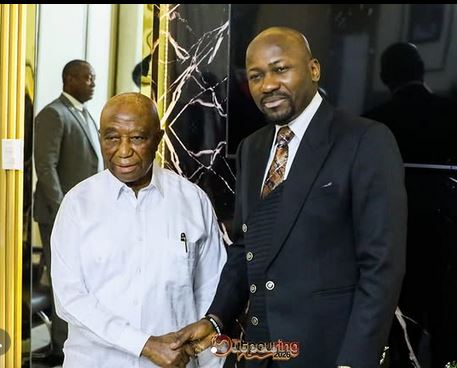
Liberian Leaders, Citizens Bear Witness as Apostle Suleman Hosts Two-Day Power-Packed Crusade
It was testimonies galore on Tuesday, March 31, the first day of the famous servant of God and founder of the Omega Fire Ministries (OFM) worldwide, Apostle Johnson Suleman’s power-packed two-day crusade. The event documented impactful moments with the Gospel and miracles, emphasizing the power of faith and the tangible confirmation of God’s Word through signs and wonders. It was equally an atmosphere of miraculous healing, restoration of lives, and the strengthening of faith.
At the crusade, which was held at the SKD Sports Stadium in Paynesville City, and themed, “Liberia Outpouring Crusade” witnessed testimonies of impact and miracles with participants experiencing instant healing of various kinds of challenges.
Apostle Suleman’s first port of call was Paynesville, the office of Liberian government’s president, Mr. Joseph Nyuma Boakai, who received him in an audience with his junior ministers. Apostle Suleman, who also met with the vice-president, Mr. Jeremiah Kpan Koung, was welcomed by the Liberian leader’s office as part of the president’s ongoing engagements with religious leaders aimed at fostering spiritual support for national development.
The president expressed profound appreciation to Apostle Suleman for the visit and continued prayers and intercessions by men and women of God on behalf of Liberia, emphasizing his firm belief that sustained spiritual guidance and prayer remain vital to the transformation and progress of the nation.
During the visit, Apostle Suleman offered prayers for President Boakai, his cabinet and the Liberian nation, invoking divine alignment, wisdom, and insight in Liberia’s path toward growth and stability. He prayed that the Almighty God would position Liberia for relevance and fulfillment of its national destiny.
Apostle Johnson Suleman, an evangelist who knows no bounds of where preaching the gospel comes to a stop, visited Liberia prepared with the message, compelling power of the Gospel and the work of the Holy Spirit, and bringing people to a point of decision where they surrendered their lives to Christ.
Aside from being prophetic and timely, OFM sources disclosed that the servant of God’s visit underscores the importance of faith-based partnerships in supporting governance and national renewal efforts.
society
Middle Belt Forum Hails Tinubu’s Jos Visit, Calls for United Civil-Military Effort to Restore Lasting Peace
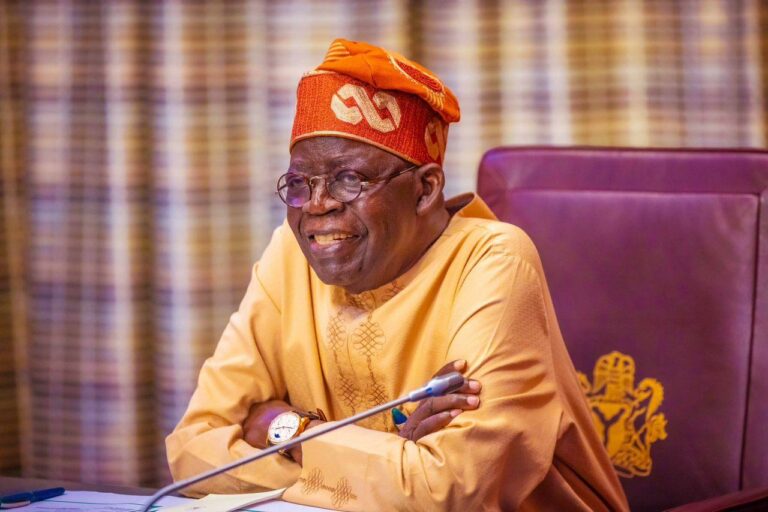
*Middle Belt Forum Hails Tinubu’s Jos Visit, Calls for United Civil-Military Effort to Restore Lasting Peace
The Middle Belt Peace Forum (MBPF) has commended President Bola Ahmed Tinubu for his profound demonstration of empathy and responsive leadership following his decision to postpone an official engagement in Iperu in order to visit victims of the recent attacks in Jos.
In a statement signed by its National Coordinator, Pastor Bulus Garba, in Jos on Friday, the Forum said the President’s decision to personally identify with grieving communities sends a powerful message of solidarity and reinforces public confidence in the commitment of the Federal Government to the protection of lives and property.
“The Middle Belt Peace Forum warmly commends President Bola Ahmed Tinubu for prioritising compassion over ceremony. At a time of deep sorrow for the people of Plateau State, his decision to visit Jos stands as a mark of true leadership—one that listens, responds, and stands with the people in their moment of pain,” the statement read.
The Forum described the perpetrators of the recent attacks as “cowards who prey on innocent and defenceless citizens,” stressing that such acts of violence are not only inhumane but also a direct assault on the unity and peace of the nation.
“We condemn in the strongest terms the actions of these cowardly attackers whose only aim is to instil fear and destabilise peaceful communities. Their actions must be met with firm and decisive resistance from all arms of the state,” Pastor Garba said.
The MBPF further used the opportunity to salute the courage, gallantry, and sacrifices of the Armed Forces of Nigeria under the leadership of the Chief of Defence Staff, General Olufemi Oluyede, noting that their continued efforts remain central to restoring stability across troubled parts of the country.
According to the Forum, the Armed Forces have demonstrated resilience and professionalism in the face of complex security challenges, often operating under difficult conditions to safeguard communities and defend Nigeria’s territorial integrity.
“We salute the Armed Forces of Nigeria for their unwavering commitment and sacrifices. Their gallantry in confronting criminal elements and reclaiming territories is a testament to their dedication to national service. We recognise that the path to peace is demanding, and we honour those who stand daily in defence of our nation,” the statement added.
The Forum pledged its full support to ongoing military operations and called for strengthened collaboration between security agencies and local communities as a critical factor in achieving lasting peace.
It also urged citizens across the Middle Belt to cooperate with security forces by providing timely information and fostering unity within their communities.
The MBPF, however, expressed concern over the need for greater synergy among security agencies, particularly the role of the Nigeria Police in consolidating gains made by the military.
“We call on the Nigeria Police Force to rise fully to its constitutional responsibility by effectively supporting the Armed Forces in stabilising and securing areas that have been cleared of criminal elements. Holding and policing such territories is essential to preventing a resurgence of violence,” Pastor Garba stated.
The Forum emphasised that sustainable peace requires a coordinated approach in which the military clears and secures areas, while the police maintain law and order to enable displaced communities to return and rebuild their lives.
The MBPF concluded by reiterating its commitment to peacebuilding efforts across the Middle Belt and expressed optimism that with sustained leadership, coordinated security efforts, and active citizen participation, lasting peace can be achieved.
“Together, through unity, vigilance, and collective resolve, we can overcome these challenges and build a safer and more peaceful Middle Belt,” the statement added.
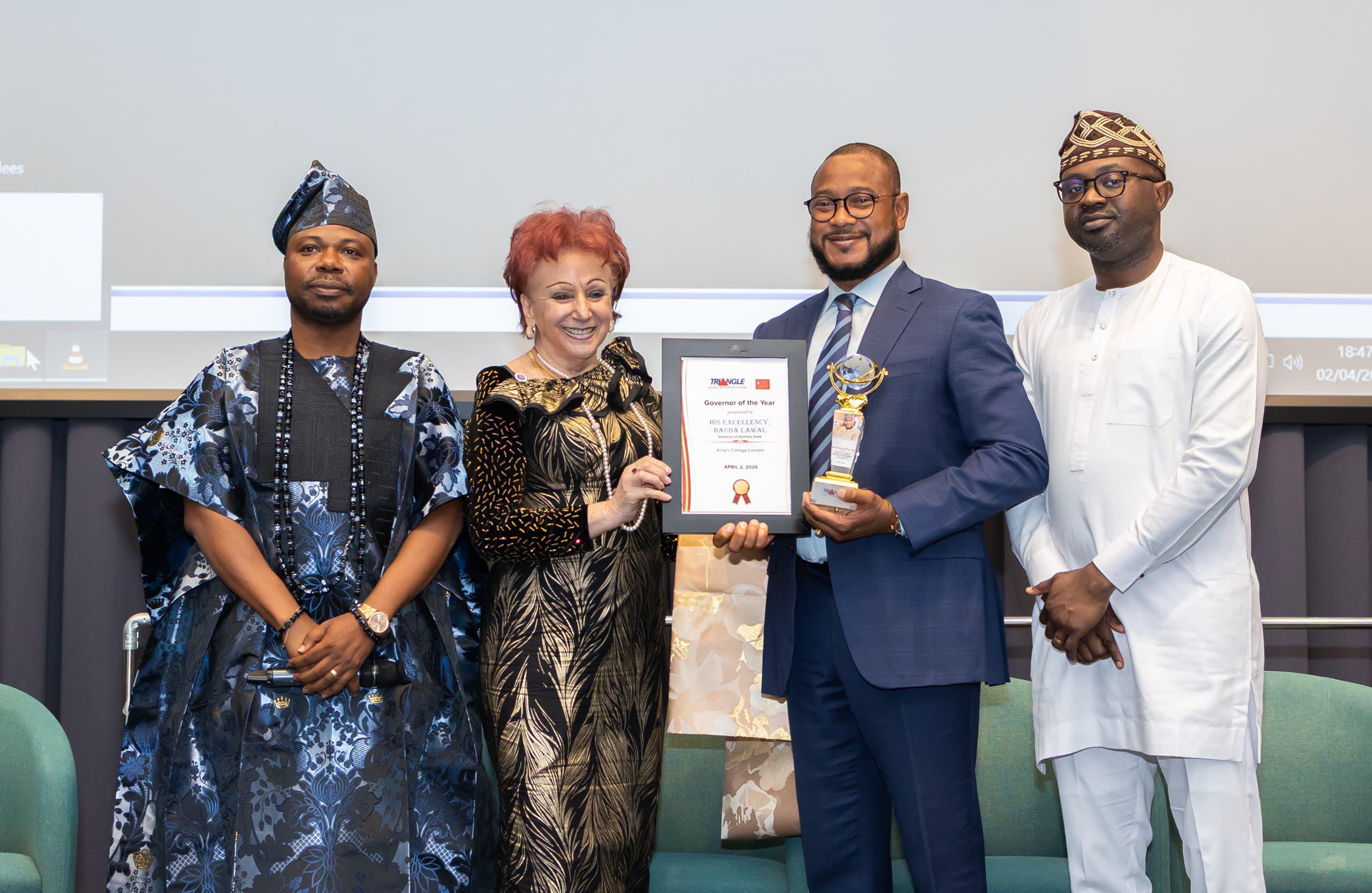
Governor Dauda Lawal Wins Face of Africa Governor of the Year Award in London
Governor Dauda Lawal has been honored with the Outstanding Governor of the Year award by Triangle Media International Magazine.
The award was presented during the magazine’s 10th annual lecture and award ceremony, held on Thursday at the Grand Hall of King’s College, London, United Kingdom.
According to a statement by the governor’s spokesperson, Sulaiman Bala Idris, the awards recognize public and private sector leaders whose leadership positively impacts governance and service delivery.
He added that the lecture, themed “Harnessing the Roles of Nigerians in Diaspora for National Development,” brought together stakeholders from both the public and private sectors.
The statement read in part: “Yesterday, in London, Governor Dauda Lawal received the 2026 Face of Africa Leadership Award for Outstanding Governor of the Year.
“The 2026 edition coincides with the 10th anniversary of Triangle International Magazine, which has over the years celebrated notable Africans across diverse fields.
“The award recognizes the Zamfara State Government under Governor Lawal’s leadership for achieving remarkable milestones in service delivery since his inauguration on 29 May 2023.
“The board of Triangle International noted that, despite inheriting an empty treasury, Governor Dauda Lawal has remained true to the Rescue Agenda’s campaign promise: to rescue and rebuild Zamfara.
“The award also reflects the state government’s innovative approach to indirectly curbing insecurity through educational advancement, demonstrated by the declaration of a state of emergency in the education sector.
“This includes the state government’s swift payment of the outstanding N3.4 billion for WAEC and NECO examinations, as well as the reconstruction and rehabilitation of schools across all 14 Local Government Areas of Zamfara State.
“The international magazine finds these initiatives to be strategic interventions toward long-term efforts to make Zamfara State better.”
The colourful event was attended by the Minister of Interior, Olubunmi Tunji-Ojo, and Sahara Group’s Group Managing Director, Kola Adesina, among others.


-

 society7 months ago
Religion: Africa’s Oldest Weapon of Enslavement and the Forgotten Truth
-

 news4 months ago
WHO REALLY OWNS MONIEPOINT? The $290 Million Deal That Sold Nigeria’s Top Fintech to Foreign Interests
-

 society6 months ago
“You Are Never Without Help” – Pastor Gebhardt Berndt Inspires Hope Through Empower Church (Video)
-

 celebrity radar - gossips2 months ago
Dr. Chris Okafor Returns with Power and Fire of the Spirit -Mounts Grace Nation Altar with Fresh Anointing and Restoration Grace on February 1, 2026