
news
The Redeemed Christian Church of God in crisis over new auditorium land


In a bid to build the largest church auditorium in the world, The Redeemed Christian Church of God may be heading towards serious dispute with nine villages that have written petitions to international organisations, media houses, corporate organisations and the court in Nigeria over the seizure of their land by the church.
 |
| The new auditorium under-construction |
Over 300 families living at Agunfoye, Ososanya, Isaga Kekere, Isaga Nla, Ebute Agbara, Pagbo, Igbonla Adeleye, Igbonla Akinremi and Olaparun villages in Makun area of Sagamu Local Government Area of Ogun State made this known in a statement signed by various representatives of the communities.
In the statement, Oladele Benjamin Adisa, speaking on behalf of the villages, said: “The affected families are the 3rd, 4th and 5th generations of the earliest settlers in the nine villages over 200 years ago on the vast land purportedly acquired by the church, which owned by Otetumo Agbabo Shoole Agufon and Ososanya families of Itunmeko area in Ikorodu, Lagos State, with Pastor Amos Oshin and Chief Sikiru Ososanya as the heads of the two families respectively.”
“People representing the Redeemed Christian Church of God recklessly demolished and destroyed markets and stalls in front of the Local Government School Agunfoye–Remo. The old and new buildings at Zion African Church, Agunfoye set up in 1925 by the earliest settlers, cemeteries and all graves in the nine villages were also demolished.”
He noted that they could not take pictures of the demolition because policemen and security operatives that accompanied the church were shooting into the air to scare the villagers.

Adisa explained further that in a suit filed in Court 3 Sagamu HCS/105/14 by the said land owners against the church, it noted that the church have exceeded the acquisition of 1,900 acres sold to them. “It was however noticed that the church has already exceeded the boundaries sold to them to almost 4,000 acres. Immediately this was noticed, the church went in for the kill the next day, demolishing properties, cash and food crops which are the principal source of income for the villagers.”
According to Adisa, “we lost everything. We just want them to stick to the initial 1,900 acres. Now, come to think of it, the only public primary school in the community, known as Local Government Primary School Agunfoye Remo was demolished, thus denying the children in the nine villages the opportunity to attend school for the 2014/15 academic year. This unfortunate situation was reported to the Ogun State Governor, Commissioner for Education and State Primary Education Board in Abeokuta.
“It is illegal for a church to displace the nine villages in a reckless manner. The only road that links the nine villages with Simawa-Sagamu has been blocked. The blockage has entrapped the entire village,” he noted, adding that, “they started constructing a road that leads to the auditorium and erected a signboard at the entrance of the road on which a bold inscription, ‘PRIVATE ROAD, NO TRESPASS’, was written showing that the villagers have no free access to their various houses.”

When P.M. NEWS visited the communities, there was no access road to the villages. You have to find your way through the construction site to get to most of the villages.
Adisa, while conducting journalists round the villages, affirmed that “the electric cables, poles and transformers that supplied electricity to the nine villages were dismantled and taken away, leaving the area in darkness.
Confirming the destruction of their cultural antiquities, Adisa said: “Traditional shrines in the nine villages namely Igboro known as Igboti; Ogun Ajobo known as Ijasi Ilu, Oju Iroko, Oju Oluweri, Irele Awopa, Igbodu Ifa and Kuso known as Igunnuba were demolished amidst gun-wielding policemen and touts from the church.”
Affected villagers such as Soyinka Albert Ola, Ajibode Oluniyi, Taiwo Alan Ogunleye, Ayinde Kamorudeen, Wasiu Ogunleye, Ganiyu Karimu, Adekunle Akibu and Adekunle Adegbola, said they had been living peacefully before the annexation of their communities.
They said since June this year, 16 of the villagers have died due to starvation since their principal source of income had been ruined while many are sick due to hunger and starvation as they cannot get out of the village.
According to one of the villagers, “it should interest you to know that since the last six months, agents and representatives of the church have been coming to the nine villages with police officers in mulfti carrying guns and using vehicles without plate numbers to terrorise the villagers to vacate the land, promising to expel everyone the next time they come here. And we are not sure what will happen to the rest of us. We are appealing to everyone to come to our aid and ask the church to stick to their 1,900 acres.”
All efforts to speak to the church leadership failed at the time of filing this report.
PM News correspondent was barred from accessing the leadership of RCCG by the Security Commander of the church who stated that the case was already in court.




news
Ex-APC Deputy Guber flag bearer, Joshua MacIver backs Tinubu, express fears over implosion in Bayelsa APC
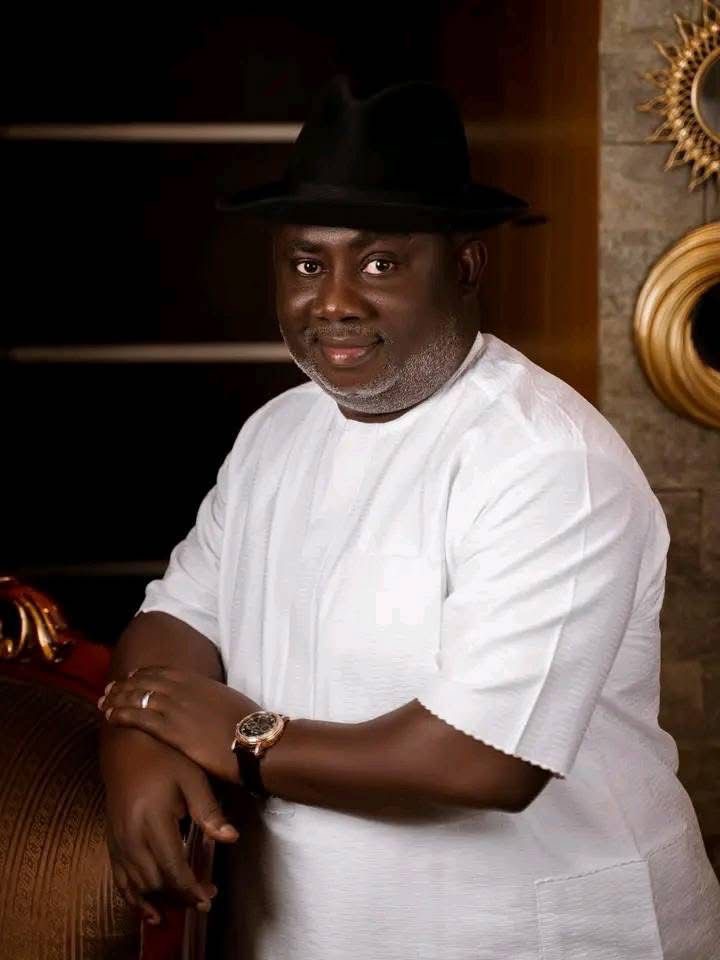
….congratulates new State Party Chairman, Warman Ogoriba
APC Deputy Governorship Candidate in the 2023 general elections in Bayelsa State, Great Joshua MacIver has declared his total commitment to the re-election of President Bola Tinubu come 2027, declaring that the Tinubu re-election project is non-negotiable.
Great Joshua MacIver, in his statement titled ” BAYELSA APC CONGRESSES: GOING FORWARD, A CALL TO LOOK INWARDS” and made available to newsmen in Yenagoa, warned APC leaders in the state to look Inward and take note of certain factors which may hinder or cut short our victory.
According to Great Joshua MacIver, such noticeable pitfalls include the imbalance in the united front being put up by the State Governor,Senator Douye Diri among various political blocs in the state.
In the statement issued at the weekend. Great Joshua MacIver stated that “First, before His Excellency, Senator Douye Diri, joined the APC in the state, there were clearly two political blocs that made up the party, with the approximate population ratios of the blocs standing at 95% to 5%.”
“After the entrance of His Excellency, Senator Douye Diri, ONLY THE SMALLER BLOC IS BEING CARRIED ALONG IN THE AFFAIRS OF THE PARTY, leaving the greater percentage to their fate, and this situation has the potential to build anger and dissatisfaction in our dear party.”
” The consequence of this has been the high level defection we have witnessed in the party recently and we believe more may likely follow, if we do not put our house in order.”
” If we do not pull together as a party, we may witness a situation where we will lose key stakeholders, especially after the State and National Assembly Primaries as well the Gubernatorial Primaries.”
“Finally, while it is very clear that we are the party to beat in the 2027 elections and that our loyalty to Mr. President IS NON-NEGOTIABLE, we must make haste to say that we cannot afford to create situations or loopholes in our unity which will be exploited by other political interests in the state. We cannot afford to under-rate anyone.”
“Our core interest remains the re-election of Mr. President, a project to which we have committed our all. We also pledge our total loyalty to the party as we have no alternative to the APC. However, our concern is that we must, as a party, look inwards and ensure that we do not create loopholes that can impede our common goal.”
Great Joshua MacIver, however congratulated the newly elected State Executives of the APC in Bayelsà State led by Hon. Warman Ogoriba, saying their emergence is welcomed at this critical time in our national history.
At least 23 people were killed in a series of suspected suicide bombings, police in Nigeria’s northeastern city of Maiduguri said on Tuesday.

https://www.stanbicibtcbank.com/nigeriabank/personal/products-and-services/all-loans/stanbic-ibtc-mreif-home-loans
More than 100 other people were injured in the blasts that took place on Monday evening in the capital of Nigeria’s restive Borno state.
No group has claimed responsibility for the suspected attacks.
The deadly blasts come after a military post was attacked overnight Sunday to Monday, which authorities blamed on suspected Islamist militants.
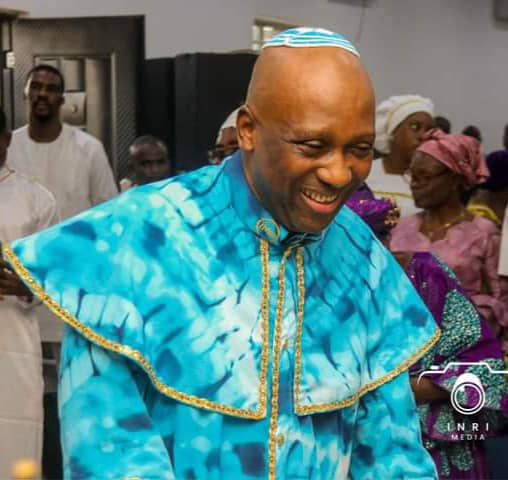
This sad incident is coming barely two weeks after Primate Elijah Ayodele, the Leader of INRI Evangelical Spiritual Church specifically warned against attacks in some states. He mentioned these states while calling on security operatives to pay close attention to them.
These were his words:
“Another attack is coming up in these following states where the military must watch carefully and intelligently; Kano, Kaduna, Zamfara, Kebbi, Niger, Borno, Kwara and Kogi state. They want to do a deadly attack, it’s preventable but it depends on how they will handle it. I have told you about the danger coming up.”
@primateayodele
Unfortunately, some of our military agencies don’t believe spiritual intelligence can save the country from so much danger hence, their neglect of this prophetic warning but now, it has been fulfilled with the miliary losing credibility by the day while Primate Ayodele continues to gain momentum.
Likewise, At least 26 passengers and crew sustained varying degrees of injuries on Monday following an accident involving the Kaduna–Abuja train, according to the Nigerian Railway Corporation (NRC).
Opeifa explained that the train departed Rigasa in Kaduna at 7:15 a.m. and was approaching Asham station around 9:16 a.m. when a loud bang was heard after the power car and trailing locomotive collided with one of the passenger coaches.
In July 2025, Primate Ayodele asked nigerians to pray not to see train mishap on the Kaduna-Abuja route.
@primateayodele #nigeriantiktok🇳🇬 #fulfillment #train #abuja #primateayodele
“Let’s pray not to see train mishap in Abuja-Kaduna, Kaduna-Abuja route.”
This has also been fulfilled.
The project ends decades search for investors, boosts Nigeria’s blue economy
By Prince Adeyemi Shonibare
Nigeria’s maritime sector is set for a major transformation following a landmark agreement involving the world’s largest container shipping company, Mediterranean Shipping Company (MSC), which has secured a 45-year concession to build, manage and operate a modern container terminal at Snake Island Port in Lagos.
The project, to be developed in partnership with Nigerdock, marks one of the most significant private sector investments in Nigeria’s port infrastructure in recent decades and is expected to strengthen the country’s role as a major maritime gateway in West and Central Africa.
For Nigeria, the agreement brings to close decades of efforts to attract large-scale investors to develop Snake Island Port, a strategically located maritime asset in Lagos.
Long-standing concession history
Snake Island’s maritime facilities date back several decades. In 1992, the Federal Government granted a 99-year concession for the island’s port and industrial facilities to Nigerdock, a major maritime engineering and logistics company.
Nigerdock was later privatised and is currently operated by the Jagal Group owned by Nigerian industrialist Maher Jarmakani.
Over the years, the Island Container Terminal fell into disrepair, requiring major rehabilitation and modernization to meet modern global shipping standards.
The new partnership with MSC is expected to transform the port into a state-of-the-art container handling facility capable of attracting larger vessels and increasing Nigeria’s cargo throughput capacity.
Buhari administration approved the project.
The investment framework for the Snake Island development was approved in May 2023 by the Federal Executive Council under then President Muhammadu Buhari.
The approval authorised total private investment of approximately $974.1 million for the project under a Public-Private Partnership structure, including the 45-year concession period.
At the same time, the Federal Government also approved two other major maritime infrastructure projects:
• Development of the Ondo Multipurpose Port in Ilaje, Ondo State, with $1.48 billion in private investment and a 50-year concession.
• Expansion and development of the Burutu Sea Port in Delta State, involving $1.2 billion in private investment and a 40-year concession.
These projects form part of Nigeria’s broader effort to develop its blue economy and expand maritime trade capacity.
Construction partners
Engineering and construction of the Snake Island container terminal will be handled by:
• ITB Nigeria Limited
• DEME Group
ITB Nigeria Limited is part of the Chagoury Group and owned by the Chagoury family, while DEME Group is a globally recognised Belgian marine engineering and dredging company with extensive experience in port construction.
MSC profile
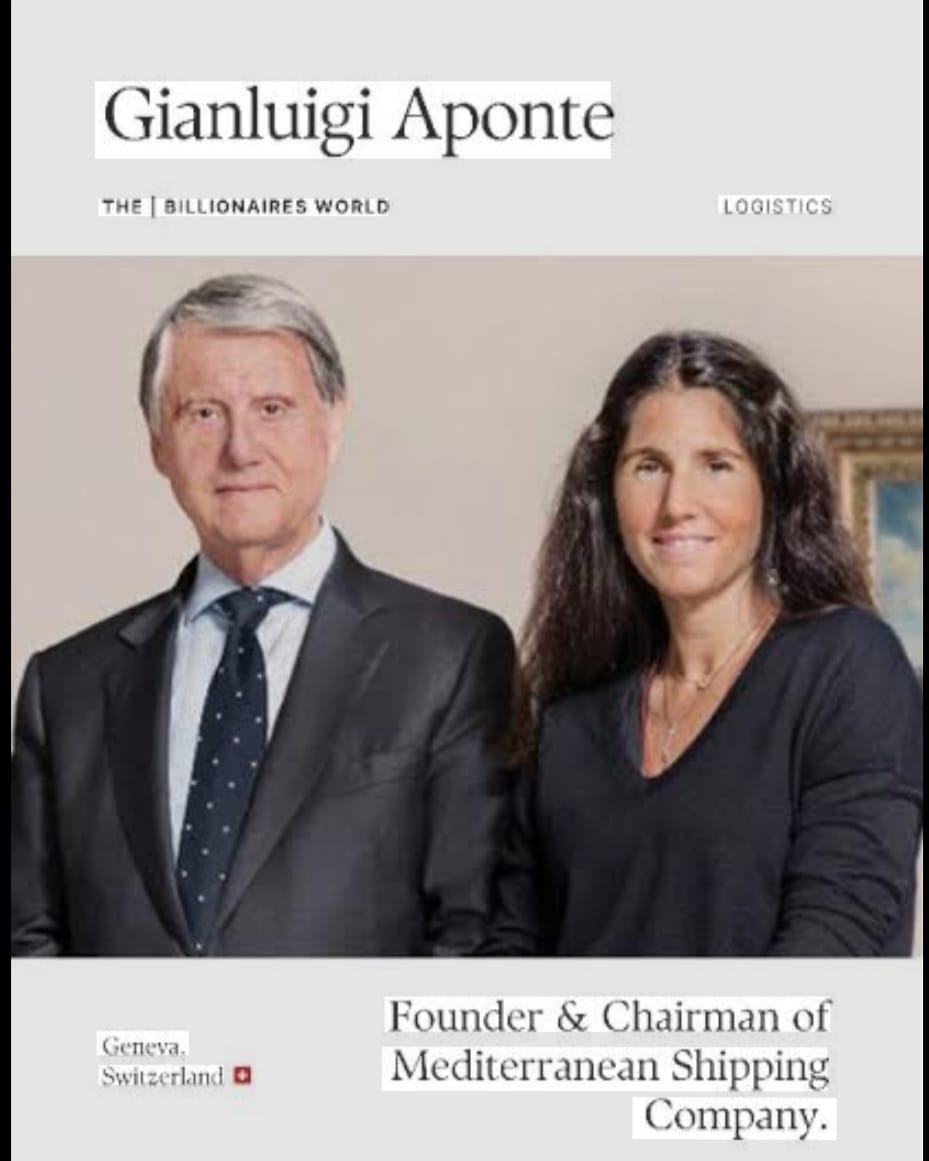
Founded in 1970 by Italian shipping entrepreneur Gianluigi Aponte and his wife Rafaela Aponte-Diamant, MSC has grown from a single cargo vessel into the largest container shipping company in the world.
Headquartered in Geneva, Switzerland, the company operates in more than 155 countries and serves over 500 ports worldwide, with a fleet of roughly 900 container ships and over 200,000 employees globally.
The MSC Group also operates major logistics and maritime businesses including inland logistics through Medlog, cruise tourism through MSC Cruises, and port terminal operations across several continents.
According to Forbes, the estimated net worth of MSC founder Gianluigi Aponte is about $43.9 billion as of February 2026, placing him among the world’s richest shipping magnates. The company remains privately owned by the Aponte family, with both founders holding equal ownership stakes.
Management comments
Speaking on the development, MSC Group President Diego Aponte said the company is committed to strengthening its operations in Nigeria and across Africa.
“We are proud to expand our presence in Nigeria through this important infrastructure project. The Snake Island terminal will enhance service delivery and improve port efficiency for our customers and partners in the region,”
Chief Executive Officer of Nigerdock, Maher Jarmakani, described the agreement as a major milestone for the Nigerian maritime sector.
“We are delighted to partner with MSC in developing a world-class container terminal that will enhance Nigeria’s logistics capabilities and support economic growth,” he said.
Economic impact
Industry analysts say the project could significantly strengthen Nigeria’s maritime economy by expanding cargo handling capacity, reducing congestion at Lagos ports and attracting additional international shipping traffic.
The development is also expected to create thousands of direct and indirect jobs across maritime operations, logistics, transport services and port-related commercial activities.
Infrastructure expansion
Beyond the port development, plans are also underway for Nigeria’s first underwater tunnel, linking Ahmadu Bello Way in Victoria Island through Snake Island and connecting the Lagos-Calabar Coastal Highway with the Sokoto-Badagry Superhighway corridor through Badagry.
The tunnel project is expected to significantly improve freight movement and road connectivity between Lagos ports and national transport networks.
Strategic milestone
With the entry of MSC into the Snake Island development, industry observers say Nigeria is taking a significant step toward modernizing its maritime infrastructure and positioning itself as a regional hub for global shipping and trade.
For a project that has waited for decades for major international investors, the Snake Island concession represents a turning point in Nigeria’s port development strategy and a strong signal of global confidence in the country’s maritime future.
By Prince Adeyemi Shonibare


-

 society6 months ago
Religion: Africa’s Oldest Weapon of Enslavement and the Forgotten Truth
-

 news3 months ago
WHO REALLY OWNS MONIEPOINT? The $290 Million Deal That Sold Nigeria’s Top Fintech to Foreign Interests
-

 society6 months ago
“You Are Never Without Help” – Pastor Gebhardt Berndt Inspires Hope Through Empower Church (Video)
-

 celebrity radar - gossips2 months ago
Dr. Chris Okafor Returns with Power and Fire of the Spirit -Mounts Grace Nation Altar with Fresh Anointing and Restoration Grace on February 1, 2026
You must be logged in to post a comment Login
You must log in to post a comment.