
Business
The Second Coming of Goodluck Jonathan By Dele Momodu


Fellow Nigerians, before I get into my main gist of today, let me quickly apologise for my inability to write this column last week. Truth is I had a mental block, pure and simple. Contrary to speculations that I couldn’t write because my great heroine, Hillary Clinton, lost her election, I was just so physically and mentally fatigued because this is one year that I’ve worked so hard on every project at hand. There was no doubt that I was solely disappointed that Donald Trump won the American presidential election but I was able to adjust quickly. My darling mum had taught me about the wisdom of the ancient. You can put your all into any project but the results ultimately remain the exclusive preserve of God. Only God determines the winner or the outcome.
There is so much to learn from the political trajectory of Nigeria. What happened in America had happened repeatedly in our dear beloved country. I will explain in a jiffy. Who would have expected Alhaji Shehu Usman Shagari to defeat a political colossus like Chief Obafemi Awolowo? Who would have expected a Shagari to beat a political philosopher like Dr Nnamdi Azikiwe so black and blue? Who would have expected a stupendously wealthy man like Chief Moshood Kashimawo Olawale Abiola, without any political experience to take on the likes of Baba Gana Kingibe and Alhaji Atiku Abubakar and come out victorious?
What Abiola did in Jos at the National Convention of the Social Democratic Party in 1993, when he mesmerised and hypnotised the party chieftains was what Donald Trump did recently in the United States of America when he razzle-dazzled the Republicans and virtually hijacked their party.
Trump was lucky that he and Abiola belonged in different realms and climes. Abiola was not able to realise his dreams of running government like a business but Trump is set to take power and display the wizardry he flaunted endlessly before the elections. The world is waiting to see if Trump would plunge America into the abyss or perform the miracle of turning water into wine.
The main reason many of us non-Americans opposed Trump so vehemently was because of his supposed bigotry and divisive rhetoric on all fronts. But on a personal note, I’m not too bothered. I have learnt my lessons. Politicians can tell any ignominious lie just to grab power. Voters can believe obvious scams and vote for artful pretenders out of foolish emotions and live to regret it. There is nothing we have not seen before. It is very obvious even this early that the millions of Americans who voted for Trump may never get a quarter of what he promised. Every man has the right to change his mind or beliefs and no one can hang him for it. Trump obviously knew what the Americans wanted to hear and knew how to sell a dead horse at a premium. That is politics. His message resonated with his core base no matter how retrogressive it sounded. As a matter of fact, it became even more attractive the crazier it sounded. Politics and religion are quite similar in that they thrive on pure faith.
The same Trump that appeared a rabid hater of President Barack Obama has since visited his “sworn enemy” in the White House. You would have expected both former warriors to exchange some terrible blows but far from it; they came out behaving like two newly joined love birds. Trump now says Obama is actually a nice guy. Obama also reassures a jittery nation and a confused global community that Trump would actually behave decently and that their allies have nothing to fear.
The two opponents must have known that it was all a game all along while their followers actually believed and embraced the charade. One of the things I love about America is the ability of its leaders to rise above pettiness. Every leader comes in after a bitterest electioneering campaign to embrace the one who lost. I do not hear sing-songs of wasting too much energy on the past. Who would have thought Obama and Bush would become as close as they are now? American leaders are wise enough to know that we are all actors and must quit the stage after playing our assigned roles. We may have sharp differences but we must be able to calculate the cost of war-war against the price of jaw-jaw.
When tomorrow comes, I’m sure Donald Trump would have calmed down and welcome everyone in the true tradition and character of America. No American leader can ever be allowed to transfigure into an Adolf Hitler or a Benito Mussolini. Americans collectively are stronger than their leaders. This is one of the major reasons I’m not worried about Donald Trump and his tantrums. If he returns to the giddiness of his pre-election period, Americans across party lines would know what to do. That is the power of their democracy.
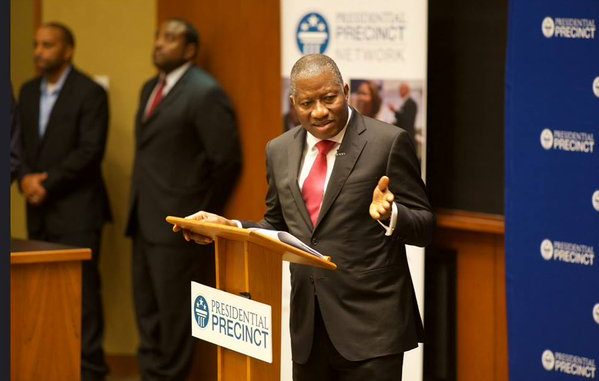
This now brings me back home. I have been reading about the rising profile of our former President, Dr Goodluck Ebele Jonathan, and wish to state without equivocation that no one should rule him out of the 2019 presidential race. I first hinted this possibility about two months ago and wish to reiterate that Nigerians should prepare for the shock that awaits us. The story of Donald Trump should bring us back to our senses. Nothing is impossible. The second coming of Goodluck Jonathan may be so far-fetched or even belong in those categories of impossibilities but I wish to plead with our government and my fellow citizens not to rule it out. As one of those who made our modest and humble contributions to the coming of this Buhari government, I’m pleading with trepidation.
Jonathan’s popularity is rising not because of anything he has done to atone the sins that must have led to his waterloo but as a result of what our change government has failed or refused to do. The obsession of our government with going all out after Jonathan is the main reason the Otuoke man is beginning to smell like roses after the odoriferous position he landed himself last week. Only if our government had succeeded in maintaining the economy it met, Nigerians would have been ready to enter fire with Buhari. But there are just too many unresolved problems and challenges. The excuses that Jonathan and company left this peculiar mess behind has refused to fly. The groans might not be loud enough to reverberate all the way to the Aso Rock Presidential Villa, as of now, but trust me it may become deafening, sooner than later. I do not care if men and women of power dismiss my submission with a wave of the hand but they should mark my word, there is a thickening conspiracy in the clouds. It would be a shame if we inadvertently play into the hands of those hovering and ready to pounce on Buhari.
I read about “persecution complex” long ago and I understand how it works. If you beat your own child so ruthlessly as if you want to kill him, the tilt of public opinion would always go against you. Many would wonder why you want to kill your own child. In our anger, let us pick our fights. There is too much tension in the land. I would be delighted if anyone could educate and convince me that Nigeria has gained much more than we’ve lost to this war of attrition. If we haven’t, we may need to retrace our steps urgently.
The BBC reported on Friday how Jonathan caused a stir in Sokoto State during his visit to the state to pay his respects to Ibrahim Dasuki, the late former Sultan of Sokoto. According to the report, Jonathan was received by a large crowd of admirers, some holding banners bearing the words “Come Back Baba Jonathan”. The same voices that chanted “Sai Baba” and “Jonathan Must Go” are now fiddling with the tunes of the possibility of a Jonathan to stage a comeback. Here lies the irony of political triumph and the paradox of high expectations.
The euphoria and momentum that saw the exit of Jonathan and the emergence of the Buhari change administration has since begun to wane following the inability of the new government to hit the ground running with the tenacity of a government in a hurry!
There are many who believe that the poor management of the ensuing economic recession didn’t help matters. Suddenly, Nigerians who had high hopes and voted massively for change are now caught in a limbo between confusion and uncertainty. As it stands today, the average Nigerian is confronted with the reality of an economic recession they never planned for; a situation they did not experience under the Jonathan administration and under previous governments.
Many of President Buhari’s supporters are worried that the humongous goodwill that engineered the Buhari change mantra is now being frittered away at the speed of light. The unfolding plot has now thrown up former President Jonathan as a new protagonist in Nigeria’s theatre of the absurd. For many of us who are ardent students of history, we have since learnt that nothing is impossible in the game called politics. Will history repeat itself again? Time is pregnant with answers!





Fidelity Bank grows gross earnings by 38% to N434.95b in Q1
Fidelity Bank Plc recorded 37.9 per cent growth in gross earnings to N434.95 billion in first quarter 2026 as the international commercial bank continued to expand its core banking market share.
Interim report and accounts of Fidelity Bank for the three months ended March 31, 2026 released at the Nigerian Exchange (NGX) showed that gross earnings rose from N315.42 billion in first quarter 20025 to N434.95 billion in first quarter 2026, representing an increase of 37.9 per cent.
The top-line performance was driven by impressive growth in the bank’s core business operations with interest incomes rising by 22.8 per cent to N314.48 billion in first quarter 2026 as against N256.10 billion in first quarter 2025.
With net interest income at N180.97 billion, the bank closed the period with profit before tax of N92.48 billion. After taxes, net profit stood at N74.47 billion for the three-month period. Earnings per share remained high at N5.69, underlining the capacity of the bank to reward its shareholders.
The balance sheet of the bank also emerged stronger. Total assets crossed the N11 trillion mark to N11.35 trillion by March 2026 compared with N10.46 trillion recorded in December 2025. Customers’ deposits increased from N6.89 trillion to N7.38 trillion. Total equity rode on the back of earnings growth to a 27.5 per cent increase from N1.09 trillion in December 2025 to N1.39 trillion by March 2026.
The first quarter 2026 results further consolidated the strong earnings outlook of the bank, which had successfully completed its recapitalisation amidst impressive earnings performance in 2025.
Fidelity Bank had recorded double-digit growths in interest and non-interest incomes as well as key balance sheet items during the year ended December 31, 2025.
The audited report showed that gross earnings rose from N1.04 trillion in 2024 to N1.52 trillion in 2025, an increase of 45.6 per cent. Interest and similar incomes had grown by 38.7 per cent from N803.1 billion in 2024 to N1.11 trillion in 2025. Fees and commission incomes also rose by 44.7 per cent from N78.4 billion to N113.4 billion. The bank recorded net profit after tax of N242.4 billion in 2025.
The bank’s balance sheet emerged stronger with total assets rising by 18.6 per cent to N10.46 trillion in 2025 as against N8.82 trillion in 2024. Customer deposits increased by 16.1 per cent from N5.94 trillion to N6.89 trillion, reflecting continued franchise strength and an improved funding profile. Net loans and advances meanwhile declined by 2.4 per cent to N4.28 trillion in 2025 as against N4.39 trillion in 2024, attributable to customers paying down on their mature obligations.
The bank had in 2025 strengthened its capital position, with eligible capital rising to N561 billion, above the regulatory minimum of N500 billion for banks with international authorisation. In addition, capital adequacy had remained robust, with Capital Adequacy Ratio of 30.94 per cent by December 2025 as against 23.47 per cent by December 2024.
Managing Director, Fidelity Bank Plc, Dr. Nneka Onyeali-Ikpe, said the first quarter 2026 results reinforced the bank’s strong and resilient business model.
She noted that with the remarkable success of its recapitalisation programme and continuing expansion, Fidelity Bank has entered a new era of growth and impressive returns.
“We are on a stronger footing and confident that we will set new growth records that are reflective of our legacy and the future we are working on,” Onyeali-Ikpe said.
Business
Dangote Refinery Ends Nigeria’s Era of Fuel Import Dependence, Boosts GDP, FX Earnings — EIU
Dangote Refinery Ends Nigeria’s Era of Fuel Import Dependence, Boosts GDP, FX Earnings — EIU
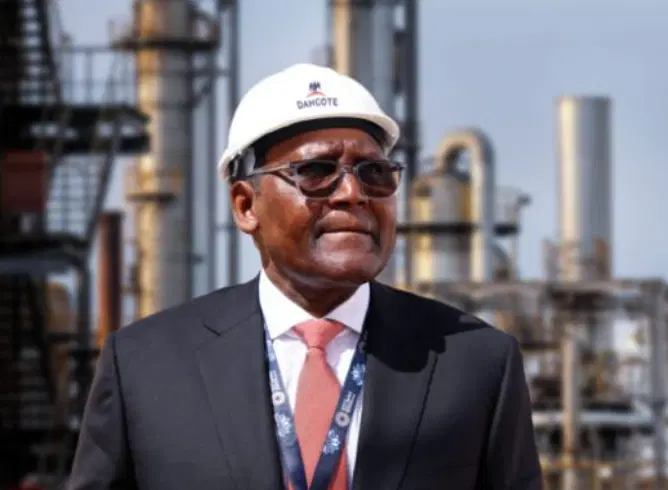
The operational ramp up of the 650,000 barrels per day Dangote Petroleum Refinery & Petrochemicals is fundamentally reshaping Nigeria’s downstream oil sector, significantly reducing the country’s dependence on imported refined petroleum products and strengthening its external position, according to the Economist Intelligence Unit (EIU).
In its latest assessment on Nigeria’s fuel market and regulatory environment, the EIU said the refinery has already transformed a sector that was previously characterised by heavy reliance on imported fuel despite Nigeria being Africa’s largest crude oil producer. The report noted that the refinery met nearly 80 per cent of domestic petrol demand in April and produced enough volumes to satisfy local consumption requirements as operations approached full capacity.
The EIU described Nigeria’s downstream petroleum sector before the refinery as “long dysfunctional”, noting that the country had remained almost entirely dependent on costly imported fuel while producing nearly 1.5 million barrels of crude oil daily.
According to the report, the emergence of the refinery has reduced import dependence, improved domestic fuel availability and strengthened Nigeria’s balance of payments position through lower import demand and rising exports of refined petroleum products.
“The gradual ramp up of the 650,000 barrel/day Dangote refinery since May 2023 has transformed Nigeria’s long dysfunctional downstream sector,” the report stated. “The country’s main refineries, all state owned, had been inoperative for years and Nigeria was almost entirely reliant on costly imported fuel.”
The research and analysis division of The Economist Group, London added that the refinery’s attainment of full operational capacity and its planned expansion would further support Nigeria’s economic growth and foreign exchange earnings over the medium term.
“Meanwhile, the attainment of full capacity at, and an increase in exports from, the Dangote refinery will support real GDP growth and foreign exchange earnings in 2026 and 2027 and beyond, as a planned doubling of the plant’s output comes on stream around the end of the decade,” it added.
Industry analysts said the refinery is increasingly positioning Nigeria as an emerging refining and export hub, altering energy trade flows across Africa and reducing the vulnerability associated with fuel import dependence.
The EIU noted that the refinery’s expansion has coincided with major reforms in Nigeria’s downstream sector, including the removal of fuel subsidies and the introduction of market driven pricing mechanisms.
The report, however, said the transition from a state dominated fuel import structure to large scale domestic refining has triggered resistance from interests linked to the old import regime.
The latest tensions emerged following the decision by the Nigerian Midstream and Downstream Petroleum Regulatory Authority to relax restrictions on petrol imports despite the refinery’s growing capacity to meet domestic demand.
Dangote Industries subsequently initiated legal action, arguing that continued import approvals undermine domestic refining investments and conflict with the objectives of the Petroleum Industry Act, which seeks to encourage local refining capacity and reduce import dependence.
Analysts noted that the availability of large-scale domestic refining capacity has improved Nigeria’s energy security and reduced exposure to external supply shocks and foreign exchange volatility.
The Centre for the Promotion of Private Enterprise also cautioned against unrestrained importation of petroleum products, warning that such a policy could weaken Nigeria’s industrialisation drive and discourage investments in domestic refining.
Chief Executive Officer of CPPE, Muda Yusuf, said continued dependence on imported fuel had historically contributed to pressure on foreign reserves, exchange rate instability and fiscal leakages.
The refinery’s growing impact is also being reflected in Nigeria’s broader macroeconomic indicators. Earlier this month, S&P Global Ratings cited increased domestic refining capacity and rising hydrocarbon exports among the major factors supporting Nigeria’s sovereign credit rating upgrade – the first in 14 years.
Beyond Nigeria, analysts said the refinery is increasingly being viewed as a strategic industrial asset for Africa, where many countries remain heavily dependent on imported fuel despite rising demand for transportation, manufacturing, and power generation.
Business
BREAKING: Court Dismisses $19.6 Million Claim Against NNPCL — Rules Contract Scope Cannot Be Changed Orally

BREAKING: Court Dismisses $19.6 Million Claim Against NNPCL — Rules Contract Scope Cannot Be Changed Orally
In a landmark ruling on Friday, May 22, 2026, the Federal Capital Territory High Court in Abuja threw out a $19.6 million lawsuit filed by Alternate Dimensions Ventures Ltd against the Nigerian National Petroleum Company Limited (NNPCL), affirming a key legal principle: a written contract cannot be expanded through oral agreements or conduct.
Alternate Dimensions had sought $19,600,000 in professional fees, claiming the scope of its Direct Sale, Direct Purchase (DSDP e-pro) contract with NNPCL was orally expanded. Represented by counsel Patrick Peter, the firm argued it was entitled to the revised sum for services rendered under the alleged new terms.
But NNPCL, through its lawyer Ituah Imhanze of KENNA LP, pushed back sharply, arguing that parties are bound exclusively by the clear terms of their written agreement. Imhanze contended that without any written amendment, the claim was legally unsound, and the court agreed.
Delivering judgment, Justice Hamza Mu’azu upheld NNPCL’s defense, stating that the contract was unambiguous and that no evidence was adduced during the trial, which supported the alleged scope expansion. The court further found that NNPCL fully complied with all contractual terms and committed no breach.
Dismissing the suit as meritless, Justice Mu’azu reinforced the doctrine of sanctity of contract: any amendment to a written agreement must be express, unequivocal, and documented, not implied or verbal.
The ruling spares NNPCL from the S19.6 million claim and also a floodgate of similar potential liabilities.


- Deputy (Dep.) Finance Minister Courts Investors to Transform Ghana’s rice Economy June 4, 2026
- Mobile health services in Kenya reduce the risk of stillbirths June 4, 2026
- JustMarkets Research Highlights Global Growth Divergence as a Key Market Driver June 4, 2026
- African Development Bank Group approves $125 million investment in African Trade and Investment Development Insurance (ATIDI) to expand risk insurance capacity in Africa June 4, 2026
- Congo Energy & Investment Forum 2027 to Position Brazzaville as a Hub for Global Energy Deal-Making June 4, 2026
- Africa Skills Hub (ASH) Transitions to ASH Africa as it Marks 10 Years of Impact June 4, 2026
- When women farm better, Eswatini eats better June 3, 2026
- Togo Hosts the 8th Annual Forum of National Volunteer Agencies in the Economic Community of West African States (ECOWAS) Region June 3, 2026
- Indigenous Peoples gravely vulnerable to Ebola epidemic, warn United Nations (UN) independent experts June 3, 2026
- Meeting between Parliamentary Vice-Minister ONISHI and His Excellency (H.E.) Mr. Cosgrow, Principal Minister and Minister for Agriculture, Fisheries and Blue Economy of Seychelles June 3, 2026
- Deputy (Dep.) Finance Minister Courts Investors to Transform Ghana’s rice Economy June 4, 2026
- Mobile health services in Kenya reduce the risk of stillbirths June 4, 2026
- JustMarkets Research Highlights Global Growth Divergence as a Key Market Driver June 4, 2026
- African Development Bank Group approves $125 million investment in African Trade and Investment Development Insurance (ATIDI) to expand risk insurance capacity in Africa June 4, 2026
- Congo Energy & Investment Forum 2027 to Position Brazzaville as a Hub for Global Energy Deal-Making June 4, 2026
- Africa Skills Hub (ASH) Transitions to ASH Africa as it Marks 10 Years of Impact June 4, 2026
- When women farm better, Eswatini eats better June 3, 2026
-

 news6 months ago
WHO REALLY OWNS MONIEPOINT? The $290 Million Deal That Sold Nigeria’s Top Fintech to Foreign Interests
-

 society1 month ago
SOCIAL MEDIA IS NOT A BATTLEFIELD COMMAND – WHY THE NIGERIAN ARMY’S ACTION AGAINST JUSTICE CRACK IS A NATIONAL SECURITY IMPERATIVE
-

 celebrity radar - gossips4 months ago
Dr. Chris Okafor Returns with Power and Fire of the Spirit -Mounts Grace Nation Altar with Fresh Anointing and Restoration Grace on February 1, 2026
-

 celebrity radar - gossips6 months ago
Prophet Kingsley Aitafo Releases 2026 Prophecy: ‘Nigeria Will Rise, but the World Must Prepare for Turbulence’
You must be logged in to post a comment Login
You must log in to post a comment.