
celebrity radar - gossips
The True Story Of My Arrest By EFCC- Abubakar Usman



Journalist Abubakar ‘Abusidiq’ Usman has released what he said is the true story behind his EFCC detention.
Read what he wrote below.
Shortly after the Economic and Financial Crimes Commission (EFCC) released me from detention last week Tuesday, I said I was going to tell the story of my arrest especially against the backdrop of the claim by the anti-graft agency that I was arrested on ‘’offences bordering on cyber stalking.’’ Today, I am keeping to that pledge and stating details of all that transpired from my arrest, detention, eventual release and what lies ahead.
How It All Began
At about 7.30am on Monday, 8th August, 2016 I heard a knock on the door of my residence in Kubwa, Abuja. I was actually still in bed at the time, so my wife had to attend to the door. Moments later, she came to the bedroom to tell me that there are two men at the front door asking to see me. She also stated that she was unsettled by their disposition. As my wife and two children were in the house, I had no other option than to go to the door and see what the men wanted.
Initially, I moved to the Living Room, and attempted to speak to them through the window closest to the door. “Who are you?” and “What can I do for you?” I asked. The men responded saying that they wanted to see the documents for the Toyota Corrolla car that was parked outside my house. They claimed that there were issues with the car. At this point, I noticed that one of the men had crept to the back of the house – seemingly to ensure that I did not escape. This immediately led me to believe that this unwelcome visitation had nothing to do with the car.
Thinking about my next steps, I went back into the room, asked my wife to get the car documents, then I called my next-door neighbour to inform him of the development and the presence of the at-the-time yet-to-be identified men that were in front of my house. I asked him to please come and serve as a witness, as I did not believe their story. Unbeknownst to me, he was already observing the events, as he had noticed the men creeping around the house for quite some time. My neighbour then came out of the house, which made me feel safe enough to do the same.
It was at this point that the men revealed their identities as police officers on the trail of a stolen Toyota Corrolla car. They said a man had claimed ownership of the car, and they wanted to verify his claim. We were in the middle of this discussion when a Toyota Hilux truck with Police numbering and carrying two heavily armed policemen drove into the compound.
When my wife came out of the house with the original car papers, one of the police officers flipped through the pages, stepped aside to place a phone call to a person that he claimed was his ‘Oga’, then came back into the compound to tell me that the car owner was on his way with his own original documents. We all agreed to wait to verify which of the ‘original’ documents were in fact ‘original’.
A few minutes later, a white Bus with two armed policemen and two men in casual dressing drove into the premises and told the other officers that they could now start their work. While we were still at this, one of my neighbours informed me that there was another armed officer stationed outside the compound. It was also at this point that I got to know that some of the men present were in fact EFCC operatives who had passed the night in a nearby estate – simply to ensure that they kept a close tab on my activities. Another of the men had earlier revealed to me that they had been on my trail describing the car I drove, the clothes that I wore and the places I visited three days preceding my arrest. They actually stalked me for several days prior to my arrest.
At this point, I requested that the men formally identify themselves, and one of them told me that he was an EFCC operative with a search warrant to look around my house. He also added that I was under arrest. A basic perusal of the warrant showed that I was being arrested for ‘Offensive Publications’ against the EFCC and its staff.
Before I allowed the men to execute the search warrant, I demand that the three operatives that were elected to conduct the search were first searched – in order to ensure that they did not plan any incriminating evidence in my home.
During the search, the men turned my entire house upside down and searched every nook and cranny. All this happened in the presence of the neighbour, whom I had requested to be present. While this search was going on, the armed policemen who accompanied the EFCC operatives positioned themselves at every corner outside my house and within the premises, leaving my neighbours wondering what could have been my offence.
At the end of the search, the operatives confiscated my two phones, my laptop, my mobile internet device (mifi), the complimentary cards in my possession, and other items that were clearly unrelated to the spurious offence that they were charging me with. The operatives then took a record of all the items that they had confiscated, hauled me into the Toyota bus, and took me to the EFCC Headquarters in Wuse 2, Abuja.
My Alleged Offence
When the men first came to knock on my door, they alleged that the Toyota Corrola car which belongs to my wife was a stolen car. This changed to what they called ‘offensive publication’ as indicated in the search warrant they produced, but when they eventually released a press statement on the same day of my arrest, they said I was being held for ‘Cyber Stalking.’
It is important to note that in all these, the EFCC failed to specify who or what I was ‘stalking.’ They didn’t even explain to me the details of the ‘cyber stalking’ allegation and what the specific crimes were and till this day, nobody has said anything to me in clear terms what my offence is. It was only at the moment they showed me the search warrant that I was able to deduce that my arrest was in regards to some publications that I had made on my blog abusidiqu.com particularly about the head of the anti-graft commission. The search warrant said ‘offensive publications against EFCC and its staff, but this is clearly not true. They were Ibrahim Lamorde and Ibrahim Magu who incidentally headed or heads the EFCC.
Since 2015, long before the current chairman, Ibrahim Magu was appointed to head the commission in acting capacity, abusidiqu.com published several articles bordering on alleged corruption and complaints by EFCC staff amongst many others. This information were very much in the public space and was not peculiar to abusidiqu.com alone. The searchlight beamed on Lamorde was also beamed on Magu and according to the persons who authored the publications, they saw the need to inform the public of what was happening under the Magu-led leadership of the commission. Contrary to the erroneous impression they may have tried to create, the publications were never about EFCC as an institution neither were they against the staff of the commission. They were about Lamorde and Magu in their individual capacity as heads of the commission.
What is even of more concern is that the EFCC knows that I did not author these publications. They know and have sufficient proofs of who the authors were. I only provided them the platform as a blogger to enable them air their concerns, the same way I have done to so many others including those who have written positively about Lamorde, Magu and the EFCC. Thankfully, one of the authors has come out boldly to say that she authored the articles.
I have asked times without number why Magu feels he should be a judge in his own case by using the EFCC to want to intimidate and harass people because he heads the commission. What has the EFCC got to do with publications that is about him as an individual? At best, the EFCC’s involvement should simply have been to investigate the issues raised by the authors in the articles that I published. If the organization is supposed to be acting on information provided by whistle blowers, is this not a perfect opportunity for the EFCC to investigate Magu, not minding that he is the head the commission? If these publications were to be about a junior staff of EFCC for example, will the commission also be the one to effect arrest on behalf the junior officer? For me, this is just a clear case of using privileged position for the purpose of harassment and intimidation.
My Stay In EFCC Detention
I spent about 36 hours in the custody of the EFCC. The better part of this time was spent during interrogation. They were practically asking me questions they already have answers to. They asked to know if the publications mostly dating back to 2015 were published on abusidiqu.com. They also showed me print outs of the emails which contained the information the authors of the publications sent to me requesting for publishing space. If they already know all this, then what was my arrest for? Perhaps, they wanted something more, reason why they are still keeping all the items they confiscated from my house. As I write this, the EFCC is still holding onto my phones, laptops, internet device and other unrelated documents. They told me clearly that they are going to subject them to forensic analysis which I believe is in breach of my privacy.
What Next
From the above narration, it is clear to me that Magu’s EFCC is in clear violation of the law. Aside granting me bail, they refused to say anything else and have continued to keep possession of my properties many of which contains my private information. So I proceeded to the court for the enforcement of my Fundamental Rights which the EFCC is in clear breach of. My lawyers have informed me that the commission has been duly served and we are now awaiting the court to commence the case.




celebrity radar - gossips
SHOCKER IN ENTERTAINMENT INDUSTRY: Jaiye Kuti & Pasuma Take Love to the Next Level

SHOCKER IN ENTERTAINMENT INDUSTRY: Jaiye Kuti & Pasuma Take Love to the Next Level
What started as mere whispers in entertainment circles has now exploded into a full-blown headline story shaking both Nollywood and the Fuji music scene!
After weeks of speculation, multiple insider sources have finally confirmed that veteran actress Jaiye Kuti and Fuji icon Wasiu Alabi Pasuma are set to take their relationship to the next level — MARRIAGE!
The duo, who have long been linked in what many dismissed as mere friendship or industry camaraderie, are now reportedly preparing for a private but glamorous wedding ceremony that promises to be one of the most talked-about celebrity unions of the year.
For months, social media has buzzed with sightings, subtle hints, and cryptic posts suggesting a deeper bond between the two stars. While both camps maintained silence, insiders now reveal that the relationship has been years in the making — far from the sudden development many assumed.
As expected, the news has sparked mixed reactions across Nigeria’s entertainment landscape:
Some fans are thrilled, calling it a “perfect blend of class and culture.”
Others remain skeptical, questioning whether this is love or a strategic publicity move.
A section of observers insist, “In Nigeria’s entertainment industry, anything is possible!”
If confirmed officially, this union could mark the coming together of two powerful brands:
A respected Nollywood figure known for her elegance and strong screen presence
A Fuji legend with decades of musical dominance and loyal fan base
Together, they could redefine celebrity partnerships in Nigeria.
Will there be an official announcement?
Are wedding preparations already underway?
Or is there more to this story than meets the eye?
One thing is certain — all eyes are now on Jaiye Kuti and Wasiu Alabi Pasuma.
Stay tuned… because this story is far from over!
celebrity radar - gossips
Opposition Smearing INEC Chairman Out of Desperation — Ajulo Declares Tinubu’s Victory Inevitable
Opposition Smearing INEC Chairman Out of Desperation — Ajulo Declares Tinubu’s Victory Inevitable
ABUJA — The Ondo State Attorney-General and Commissioner for Justice, Kayode Ajulo (SAN), has accused opposition elements of orchestrating a calculated smear campaign against the Chairman of the Independent National Electoral Commission (INEC), Joash Amupitan (SAN), insisting that such actions stem from their acceptance of imminent electoral defeat.
In a strongly worded press statement issued on Sunday, Ajulo argued that the opposition has abandoned genuine political engagement and has instead resorted to “the politics of discredit,” targeting the electoral umpire in a bid to undermine public confidence.
According to him, the attacks on the INEC chairman are deliberate attempts to weaken the credibility of the electoral process ahead of the next presidential election, which he claimed has already been “decisively won” by President Bola Ahmed Tinubu.
“The opposition knows the battle is lost. What they now implement is not resistance, but the politics of discredit,” Ajulo stated.
He described Prof. Amupitan as a “steadfast guardian of Nigeria’s democratic process,” warning that efforts to discredit him would ultimately fail as Nigerians “see through the smoke.”
Ajulo further anchored his argument on Nigeria’s political history, recalling a period when the Peoples Democratic Party (PDP) dominated the political landscape with a majority of state governors, while Tinubu, then leading the Alliance for Democracy (AD), controlled only Lagos State.
He said the political evolution that led to the rise of the All Progressives Congress (APC) and its current dominance across many states reflects what he described as “a profound feat of strategy, resilience, and leadership.”
The attorney-general also noted that, unlike previous political realignments, the APC under Tinubu has not experienced defections of governors, but has instead attracted members from opposition parties.
He maintained that the current wave of criticism against INEC leadership is rooted in fear of electoral loss rather than legitimate concerns about the commission’s integrity.
Ajulo concluded by urging Nigerians to remain vigilant and resist attempts to erode trust in democratic institutions, emphasizing that “the mandate of the people will stand.”
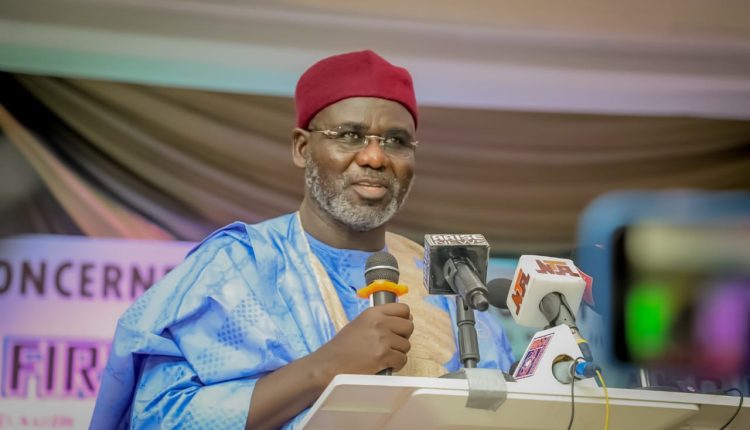
BURATAI URGES ECOWAS UNITY, CALLS FOR RETURN OF SAHEL STATES AT VON FORUM
ABUJA – In a powerful appeal for regional stability, former Chief of Army Staff, Lt. Gen. TY Buratai (rtd), has called on ECOWAS and the African Union (AU) to prioritize the return of the Association of Sahel States (AES) to ensure the survival of West African integration.
Speaking Thursday at the Voice of Nigeria (VON) Forum 2026 in Abuja, Buratai warned that the region’s progress could become a “mirage” without the inclusion of Mali, Burkina Faso, and Niger Republic.
A Legacy of Sacrifice

Buratai highlighted Nigeria’s historic role as the “unshakable anchor” of the sub-region. He pointed to Nigeria’s decades of leadership in ECOMOG missions across Liberia, Sierra Leone, The Gambia, and Guinea-Bissau as evidence of the nation’s commitment.
”Nigeria has sacrificed and invested in blood, treasure, and diplomacy to defend democracy,” Buratai stated. “Our stability is inseparable from the security of our neighbours.”
The Path to Unity
The General urged ECOWAS to deepen its engagement with the African Union to bridge the current diplomatic rift with the AES nations. He emphasized that the collective security of West Africa depends on a unified front, noting that democracy and regional safety are “two sides of the same coin.”
”The unity of ECOWAS cannot be complete without Mali, Burkina Faso, and Niger Republic. Without unity, progress in the region may be a mirage,” Buratai cautioned.
Celebrating 51 Years of VON
The forum also served as a celebration of Voice of Nigeria’s 51st anniversary. Buratai lauded the broadcaster as a “Nigerian voice with an African heart,” praising its professionalism and pan-African vision.
He paid tribute to veteran journalists, including the late Mohammed Okorejor and retired director Ben Shamang, while commending the current Director General for revitalizing the agency.
The retired General concluded his message with a call to strengthen regional institutions, urging leaders to honor the legacy of ECOWAS through renewed cooperation and institutional integrity.


- Seychelles: 9th Indian Ocean Conference – Minister Barry Faure conducts bilateral meetings on the margins of the Indian Ocean Conference April 13, 2026
- Complete Professional Fighters League (PFL) Africa: Pretoria Results and Photos - Nkosi Ndebele defeats Michele Clemente in a bantamweight classic shootout in the main event April 12, 2026
- Seychelles Backs United Arab Emirates (UAE) Statement, Calls for De-escalation and Respect for International Law April 11, 2026
- TotalEnergies’ Africa Senior Vice President (SVP) Mike Sangster to Spotlight Expanding Project Pipeline at Paris Forum April 11, 2026
- Ascott expands in Nairobi with new Citadines signing, reinforcing the city’s position as a regional hub April 11, 2026
- Century Group Joins African Energy Week (AEW) 2026 as Floating Production Storage and Offloading (FPSO) Partner, Showcasing Regional Offshore Expansion April 10, 2026
- Climate Litigation Surge Reshapes Energy Policy as Africa Seeks Stronger Legal Voice April 10, 2026
- ES-KO Secures Five-Year Catering & Facilities Management Contract Renewal with TotalEnergies EP Congo April 10, 2026
- Beyond the Court: The Kalahari Conference Solidifies its Status as Africa’s Premier Sports & Lifestyle Destination April 10, 2026
- Africa Sports Unified Launches Pan-African Sports Deals Tracker to Improve Market Visibility and Decision-Making April 10, 2026
- Seychelles: 9th Indian Ocean Conference – Minister Barry Faure conducts bilateral meetings on the margins of the Indian Ocean Conference April 13, 2026
- Complete Professional Fighters League (PFL) Africa: Pretoria Results and Photos - Nkosi Ndebele defeats Michele Clemente in a bantamweight classic shootout in the main event April 12, 2026
- Seychelles Backs United Arab Emirates (UAE) Statement, Calls for De-escalation and Respect for International Law April 11, 2026
- TotalEnergies’ Africa Senior Vice President (SVP) Mike Sangster to Spotlight Expanding Project Pipeline at Paris Forum April 11, 2026
- Ascott expands in Nairobi with new Citadines signing, reinforcing the city’s position as a regional hub April 11, 2026
- Century Group Joins African Energy Week (AEW) 2026 as Floating Production Storage and Offloading (FPSO) Partner, Showcasing Regional Offshore Expansion April 10, 2026
- Climate Litigation Surge Reshapes Energy Policy as Africa Seeks Stronger Legal Voice April 10, 2026
-

 news4 months ago
WHO REALLY OWNS MONIEPOINT? The $290 Million Deal That Sold Nigeria’s Top Fintech to Foreign Interests
-

 celebrity radar - gossips3 months ago
Dr. Chris Okafor Returns with Power and Fire of the Spirit -Mounts Grace Nation Altar with Fresh Anointing and Restoration Grace on February 1, 2026
-

 celebrity radar - gossips4 months ago
Prophet Kingsley Aitafo Releases 2026 Prophecy: ‘Nigeria Will Rise, but the World Must Prepare for Turbulence’
-

 celebrity radar - gossips6 months ago
End of an Era: Nigeria Mourns Evangelist Dr. Uma Ukpai, 80
You must be logged in to post a comment Login
You must log in to post a comment.