
Sports
The winner of the 61st FirstBank Lagos Amateur Open Golf Championship gets listed in The World Amateur Golf Rankings (WAGR)

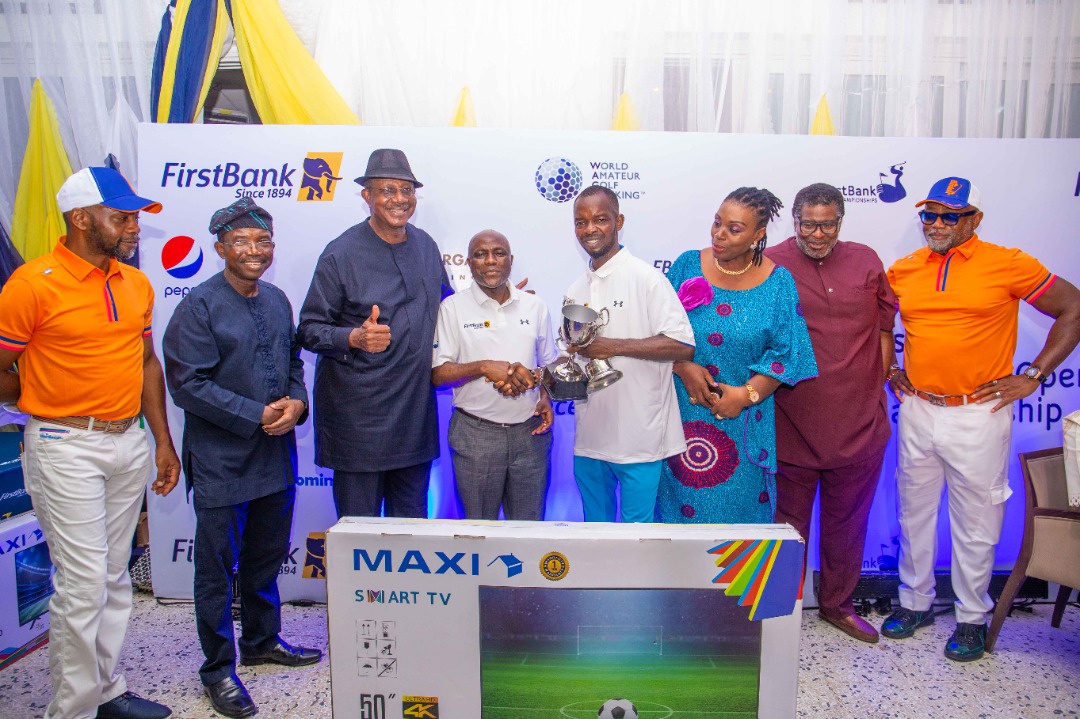
The winner of the 61st FirstBank Lagos Amateur Open Golf Championship gets listed in The World Amateur Golf Rankings (WAGR)
Emmanuel Ojeabulu, winner of the 61st FirstBank Lagos Open Golf Championship has been listed in the WAGR.

The premier golf championship which was held from 18 – 20 November at the golf section of Ikoyi Club 1938 was keenly contested by over 190 low handicap players from several golf clubs in the country. Benin based Emmanuel Ojeabulu won the 3-day championship.
Playing three-shots off the pace going into the last 18-holes, Ojeabulu played one of the best golf of his life, maintaining steady pars for a closing 74, 3-over the course par to win the World Amateur Golf Ranking recognized event by two shots.
Ojeabulu started his game with an opening 75, a second day score of 78 and a closing 74 to replace Ilorin based Aminu Kadir, the tournament defending champion on the winners list.
Overnight leader, 20-year-old product of David Mark Golf Academy, George Paul who was tipped to win the tournament collapsed under pressure closing with an unimpressive 79 to lose by two-shots.
In the third position is Muyideen Olaitan, three-time winner of the coveted FirstBank Lagos Open trophy while Iyare Osaze was further down on the winners chart by one-shot, leaving perennial contender, Olajide Owolabi, who shot tournaments best score of 72 on day two of the competition in the fifth position.
First Bank of Nigeria Limited, sponsors of the annual Lagos Amateur Open Golf Championship haspledged its commitment to the continuous sponsorship of the tournament which is one of the longest running golf tournaments in Nigeria.
Speaking at the closing ceremony of the 61st edition of the tournament in Lagos on Sunday, the Chief Executive Officer of FirstBank, Dr. Adesola Adeduntan who was represented by Executive Director, Chief Risk Officer of FirstBank of Nigeria Limited Mr. Olusegun Alebiosu said “This year made it 61 years of our undiluted commitment to this cause, and we are absolutely delighted with the amazing support and partnership we have enjoyed from Ikoyi Club 1938 thus contributing to building a legacy not only for golf and golfers, but sports in its entirety.
To all the amateur golfers produced at this year’s championship, these champions are an inspiration and testament that you can do the impossible and I look forward to celebrating you as winners in future championships. Remember that in the words of Ben Hogan, “The most important shot in Golf is the next one”, he added.
Satisfied with the turnout of the participants, Golf Captain, Tony Oboh thanked the sponsors for keeping the tournament going, saying FirstBank commitment should be emulated.
“It is not easy to keep a tournament like this going, I therefore congratulate FirstBank for their commitment”, Oboh said.
Since its debut, FirstBank Lagos Amateur Open Golf Championship has been the most consistent and premier amateur golf event in West Africa and has produced great champions most of who are competing in the elite professional golf cadre. Last year, the Championship threw up Ilorin based Aminu Kadir who won the landmark edition. It is expected that this year’s edition will produce another great winner.
Other FirstBank-sponsored sporting events include the Georgian Cup of Kaduna Polo Tournament, sponsored for 102 years; the Dala Tennis Hard Court in Kano Club for over 30 years; the Obasanjo Pro-Amateur Golf tournament of Abeokuta Club now in its 6th year. The Bank’s influence in the development of sport in Nigeria is under its First@Sport initiative.




Sports
FirstBank Sponsors Samuel Okwaraji U-16 Football Championship 2026, Promotes Education Through School Sports
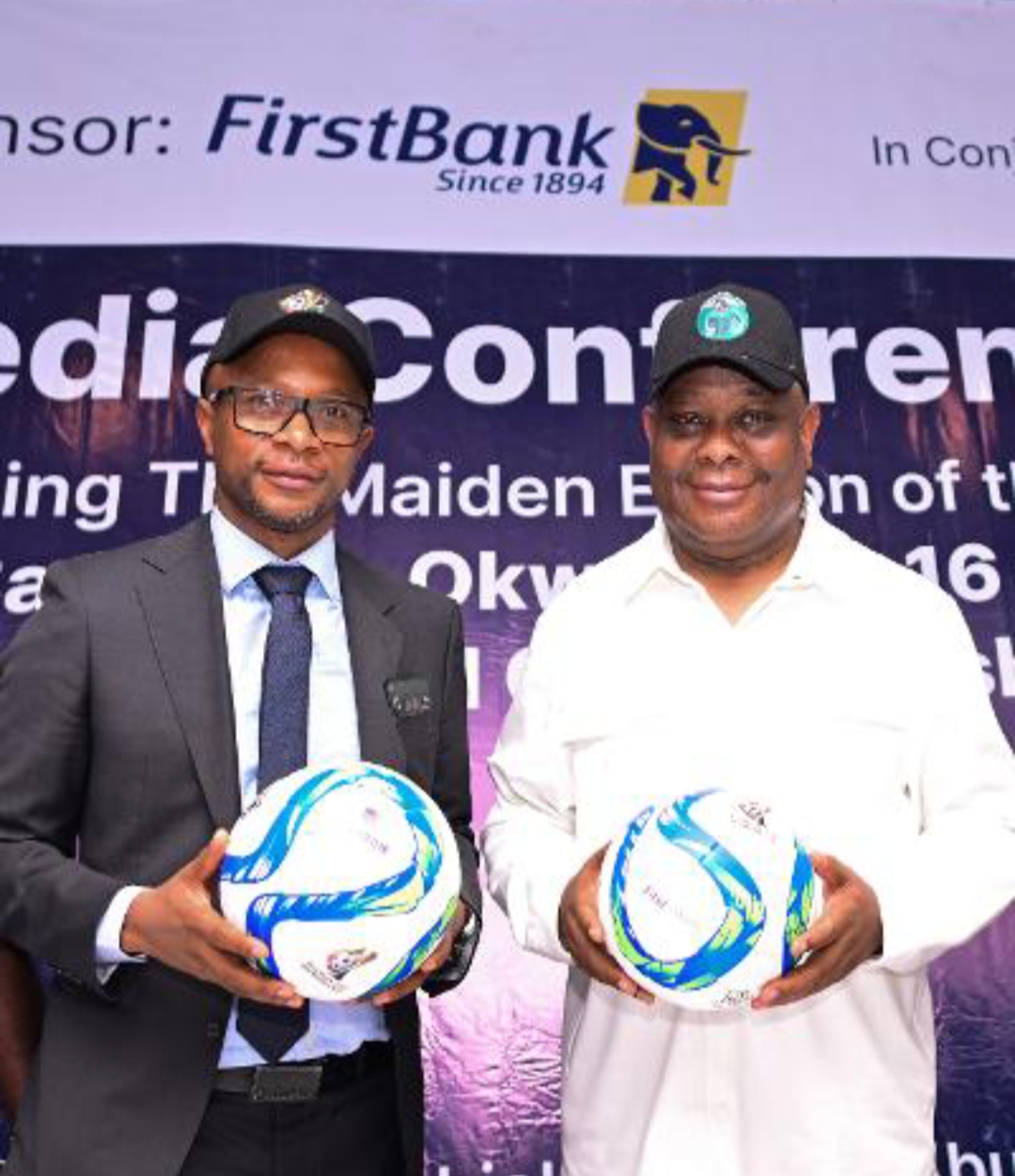
FirstBank Sponsors Samuel Okwaraji U-16 Football Championship 2026, Promotes Education Through School Sports
Lagos, 31 March 2026 – FirstBank, the premier bank in West Africa and a leading financial inclusion service provider, is thrilled to announce its sponsorship of the maiden edition of the Samuel Okwaraji Under 16 Football Championship, a nationwide youth football tournament organised to honour the late Samuel Okwaraji, one of Nigeria’s most celebrated football legends renowned for his patriotism, discipline, and commitment to national service.
The tournament will engage secondary schools from all 36 states and the FCT, in a two-stage competition. The first stage will feature zonal eliminations across the six geopolitical zones, followed by a national final in Abuja featuring the top 12 qualifying teams. The event will also include cultural displays, memorial lectures, and talent scouting opportunities by national team coaches, ensuring a blend of sporting excellence and social impact.
Speaking on the sponsorship, Managing Director and Chief Executive Officer of FirstBank, Olusegun Alebiosu, said: “Football is the strongest unifier of Nigerians. It brings communities together, inspires discipline, and nurtures talents across the country. FirstBank is making a deliberate incursion into grassroots football development with this sponsorship, creating an enabling environment for the next generation of Samuel Okwarajis to discover, refine, and maximise their potential, thereby shaping the future of Nigerian football.”
In his remarks, Senator Osita Izunaso, the Chairman of the Championship Organising Committee commended FirstBank for throwing its weight around the championship. He said “FirstBank’s legacy predates modern Nigerian football. The bank has once again shown that true corporate leadership lies in nation building. We thank FirstBank for their participation in this championship and we hope that other corporates will take a leaf and provide an enabling environment for young ones to thrive in education through sports.”
Through its First@Sports initiative, FirstBank has sustained an unbroken role in promoting the development of football and sports across Nigeria. The Bank is invested in nurturing talent through its ownership of the Elephant Boys Football Team currently competing in the Nigerian National League. The FirstBank Basketball Club popular known as the “Elephant Girls” is also owned by the Bank.
The Bank has supported youth-oriented and sporting initiatives including the National Sports Festival, South-West Youth Games, the Dala Hard Court Tennis Championship for 35 years, Lagos Amateur Golf Open Championship for 65 years, and the Georgian Polo Cup for 105 years.


The Bank’s sponsorship of the Samuel Okwaraji U-16 Tournament underscores its commitment to national unity, empowering communities, and fostering youth development.
Sports
Adeniyi Urges Customs Officers to Stay Fit, Commissions Sports Arena at Western Marine Command
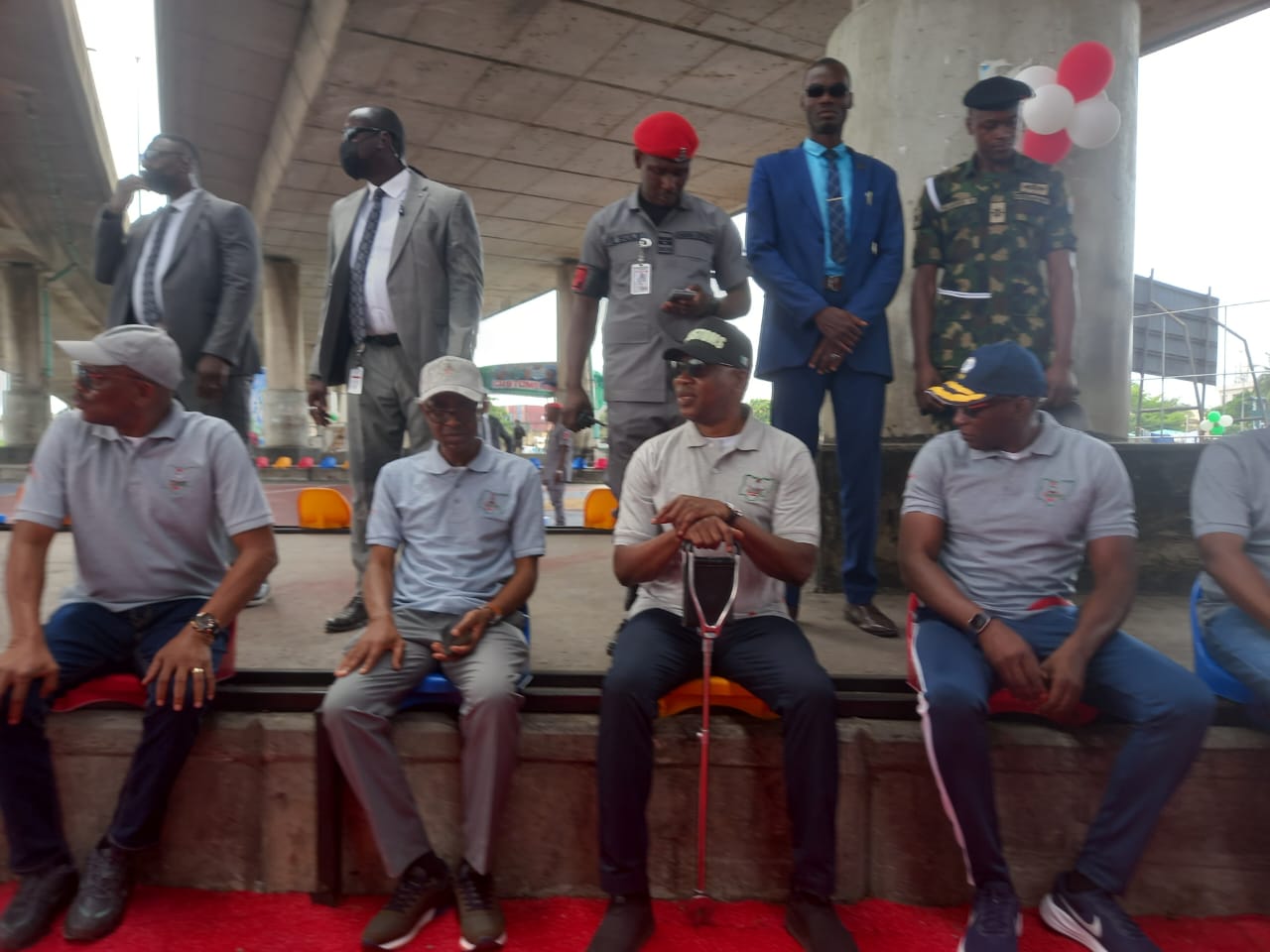
Adeniyi Urges Customs Officers to Stay Fit, Commissions Sports Arena at Western Marine Command
By Ifeoma Ikem


Sports
Fans Mock Pinnick’s ‘Morocco-Level’ Pitch Claim as Credibility Debate Returns to Nigerian Football
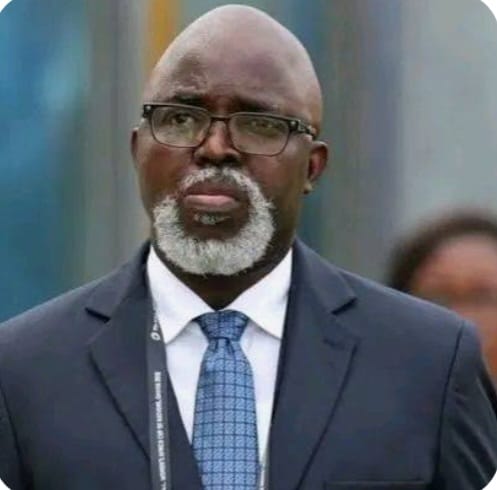
Fans Mock Pinnick’s ‘Morocco-Level’ Pitch Claim as Credibility Debate Returns to Nigerian Football
By George Omagbemi Sylvester | Published by SaharaWeeklyNG
“Former NFF boss promises five world-class surfaces in 18 months, but supporters question record and reality.”
A fresh controversy has erupted in Nigerian football after former Nigeria Football Federation (NFF) president and FIFA Council member Amaju Melvin Pinnick declared that Nigeria would soon have football pitches comparable to those used at major tournaments in Morocco. The statement, intended to signal a new phase of infrastructure upgrades, instead triggered widespread skepticism among fans.
The backlash followed Pinnick’s remarks in early February 2026, when he said Nigeria would have at least five pitches matching Moroccan standards within 18 months. According to him, the team responsible for Morocco’s acclaimed stadium surfaces had already arrived in Nigeria to begin the upgrades. He identified the targeted venues as Warri City Stadium, two stadiums in Bayelsa State, Teslim Balogun Stadium in Lagos, and the Moshood Abiola National Stadium in Abuja.

Rather than inspiring confidence, the announcement was met with sarcasm and disbelief across social media. Many supporters dismissed the claim as unrealistic, pointing to the current state of numerous Nigerian pitches, several of which have failed to meet international standards in recent years. Some fans described the promise as something to “believe at your own risk,” reflecting deep mistrust toward football administrators.
The reaction comes against the backdrop of long-standing infrastructure problems in Nigerian football. For years, the country has struggled to maintain stadiums to the standards required by FIFA and the Confederation of African Football (CAF). On multiple occasions, national-team matches have been moved or played in alternative venues because approved facilities were unavailable.
Pinnick himself has previously acknowledged the depth of the problem. In earlier interviews, he admitted that many Nigerian stadiums lack basic amenities and cannot meet international requirements, noting that the country is currently unable to host major FIFA competitions because of substandard facilities. He also contrasted Nigeria’s situation with Morocco’s, describing the North African country as having a “plug-and-play” football infrastructure capable of hosting major tournaments at short notice.
Morocco’s progress has been widely praised by football authorities. The country has invested heavily in modern stadiums, training facilities, and pitch technology, positioning itself as one of Africa’s leading hosts for international competitions. Its infrastructure upgrades have played a major role in securing hosting rights for major tournaments, including the Africa Cup of Nations.
Nigeria’s situation has followed a different trajectory. Many stadiums built or renovated at significant cost have deteriorated within a few years, often due to poor maintenance, irregular funding, and administrative disputes. Sports policy experts argue that the core problem is not simply the construction of facilities but the absence of sustainable management structures.
Global sports business scholar Professor Simon Chadwick has argued that infrastructure projects must be backed by sound governance. “Facilities are only as effective as the systems that sustain them,” he notes. “Without management discipline, even the best stadiums deteriorate quickly.”
Economist Andrew Zimbalist, a leading authority on sports infrastructure, has also warned that stadium promises often fail without transparent planning and long-term operational strategies. His research shows that politically driven projects frequently fall short of expectations when maintenance and funding models are unclear.
These broader concerns help explain the intensity of the reaction to Pinnick’s latest claim. Many supporters remember his eight-year tenure as NFF president from 2014 to 2022, a period that produced mixed results. While the national team qualified for major tournaments and maintained administrative stability, the infrastructure question remained largely unresolved.
Beyond public debate, the issue carries practical consequences. Stadium quality directly affects Nigeria’s ability to host international matches. When facilities fail to meet required standards, national teams are forced to play “home” fixtures in foreign countries, increasing costs and weakening home advantage.
The impact is also felt at the grassroots level. Without quality pitches, young players are forced to train in poor conditions that do not match international standards, creating long-term developmental disadvantages.
Supporters of Pinnick argue that the new plan could mark a genuine effort to address these long-standing problems. They note that the proposal involves collaboration with international pitch experts and focuses on specific stadiums rather than vague nationwide promises.
Critics, however, insist that credibility will depend entirely on execution. They argue that Nigerian football has heard similar assurances for decades, with little to show in terms of sustained improvement.
For now, the 18-month timeline has set a clear benchmark. If the promised upgrades materialize and the selected stadiums meet international standards, the initiative could help restore public confidence. Though if the deadline passes without visible results, the skepticism surrounding the announcement is likely to deepen.

In a football-obsessed nation, infrastructure promises are no longer judged by speeches or press statements. They are judged by results and by the condition of the pitch on match day.


-

 society7 months ago
Religion: Africa’s Oldest Weapon of Enslavement and the Forgotten Truth
-

 news4 months ago
WHO REALLY OWNS MONIEPOINT? The $290 Million Deal That Sold Nigeria’s Top Fintech to Foreign Interests
-

 society6 months ago
“You Are Never Without Help” – Pastor Gebhardt Berndt Inspires Hope Through Empower Church (Video)
-

 celebrity radar - gossips2 months ago
Dr. Chris Okafor Returns with Power and Fire of the Spirit -Mounts Grace Nation Altar with Fresh Anointing and Restoration Grace on February 1, 2026