
Business
‘There is no white cow in covenant University, my adopted son was sent off for one year’ – Bishop Oyedepo

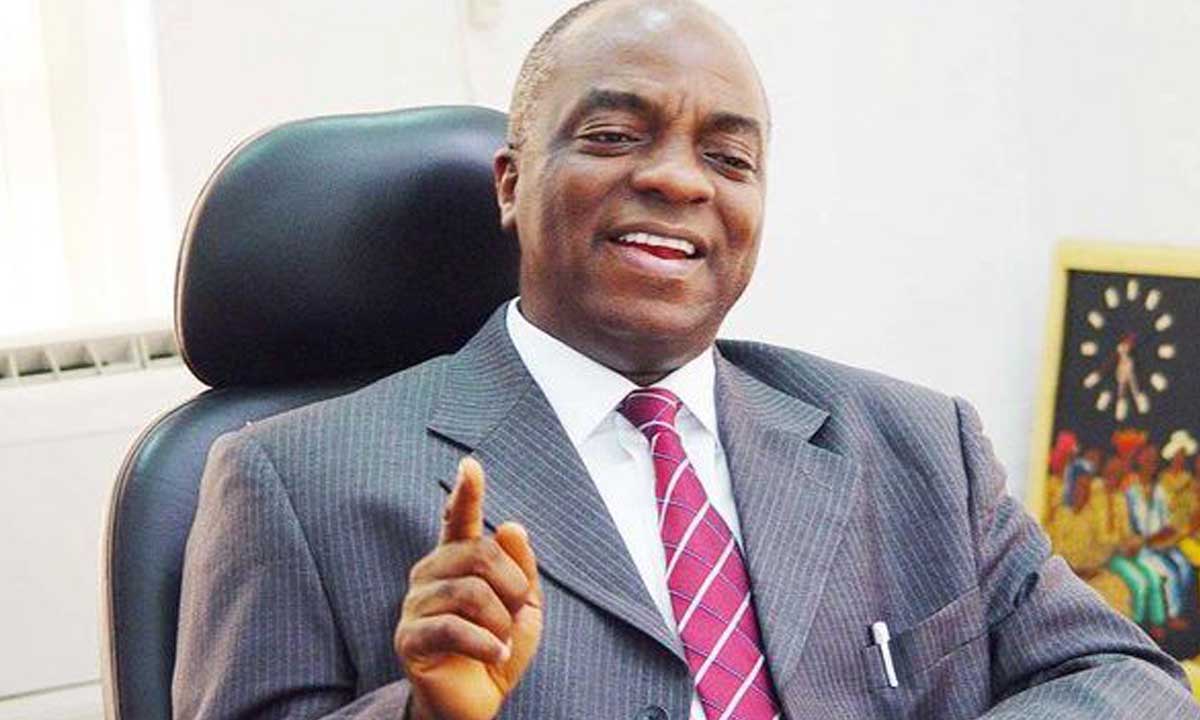

The heartbeat of the Chancellor, Landmark University, Dr David Oyedepo, for exhibiting excellence in human endeavors is palpable. His well-articulated ideas towards achieving the excellent feat are golden and as convinc- ing as ever, notable of his erudite mien. Unmistaken is his passion for the transformation of humanity in alignment with the precept of God.
He is frantic in his commit- ment towards creating platforms for generating solutions that are requisite for improving the educa- tional landscape of Nigeria and the continent of Africa. His quest for redeeming the image of the black race via development of leadership capacity and spearhead- ing of an agricultural revolution led to the establishment of Landmark University with a highly competi- tive learning environment for all students, who are groomed through the custom built programmes such as Total Man Concept, Towards a Total Graduate and Agripreneur- ship packages, the unique sell- ing points of the University.
Dr Oyedepo’s huge investments and impacts in this regard have offered students and Faculty ample access to the top-notch teaching and re- search facilities in the University that keeps receiving great acco- lades in her drive for a world class status. In this interview, the Chan- cellor bears his mind on why the Core Values of the University have essentially remained a remarkable force to be reckoned with globally and the undying quest for the reali- zation of the University’s agrarian mandate.
Excerpts: 1.
Interviewer: The seven Core Values of Spirituality, Possibility Mental- ity, Capacity Building, Integrity, Responsibility, Diligence and Sacrifice have remained major at- traction to the parents who have willingly sent their children and wards to the University. How do you plan to sustain these values in a changing environment that uni- versity education is facing with strong regulatory environment under which universities operate?
Chancellor: The Core Values were drawn from the background of the need to raise changed people who will change their world. We are poised to bring back to the fore the character di- mension of learning at the Univer- sity level, like we usually say they are found worthy in character and learning. There has been zero at- tention to character when we came onboard, so we needed to create a platform that helps enhance the character aspect of learning and it is showing today.
For instance, the Nigerian graduate report publica- tion ranked Covenant University Number One in the list of Nigerian Universities with the most employ- able graduates having 90% employ- ability rate. That is the effect of the Core Values, it helps to equip our students on the pathways of life so that they can be relevant to the so- ciety and I think we are achieving that.
There is a university in America where they have 16 of our gradu- ates undertaking postgraduate stud- ies and when Professor Okebukola went there on official functions, they said we have 16 Nigerians here and they are unique, their packaging, commitment and intel- ligence is unique, they said they are from one Covenant University, he said oh I am not surprised I am part of that University too. He was very proud of those children.
He gath- ered them together and had a chat with them because of the quality of training. The whole essence of what we are doing is to raise world changers who will first need to ex- perience the changes themselves. Leave God behind, you are empty, throw integrity to the trashcan, you are finished, lack sacrifice, you can- not be a successful leader; a sacri- fice gives his best and beyond his best to lead a cause in which he believes.
All those things are there to help equip the student to be relevant because relevance is key. You cannot be relevant and not be significant. What we are trying to do is to ensure that platform is cre- ated overtime and the same thing is taking place in here, Landmark University. Most institutions to- day now have Core Values.
They did not have any before, you just live anyhow and finish anyhow, if you finish, that is what we do with the Core Values. Examina- tion malpractice culminates in summary dismissal from our sys- tem, we cannot be raising people who will deal with corruption and are corrupt themselves.
Examina- tion malpractice at 500 level, no mercy! We are convinced that he has been doing it since 100 lev- el otherwise there would not be need to do it at 500 level, and we have a psychological basis for that.
There is no way you will go for ex- amination malpractice at 500 level in Engineering, if you have been passing your exams since 100 level. So we are also out to sanitize the intellectual platform of our na- tion.
I must say this; Governors have come to pick their children from our campus. The daughter of our first Vice-Chancellor was rus- ticated from the University for one year, my adopted son was thrown out for one year at Covenant, so there is no white cow in the system and that makes everybody shake and fear.
If I must mention it, one of our for- mer Presidents had a relation that had a son rusticated and called me, I said I am sorry, I do not get involved, please talk to the Vice- Chancellor. He said can I have his number, I said no and we are still friends. Because the moment you make rules and you abide by the rules yourself, everybody is forced to follow, and that is what we are trying to do.
We are in dire need of leaders in our country and we will be wishing till death until we start raising the kind of leaders we want by taking them through the princi- ple of this kind of training so that they can be there to effect changes.
Interviewer: A major indicator of success in the University administration is the degree to which it can at- tract and retain high quality Fac- ulty. What plans are on the way to achieve this feat in Landmark University?
Chancellor: The plans are obvious, let us maintain conducive atmosphere for learning and research.
Let us generate good comfort for faculty and staff. There is no system that does not have staff turnover; the rate may differ from one place to the other.
We are sensitive to the need of faculty and staff, so when they bring forth their needs we see which one can be addressed per time. We are committed to excellence; if you know how much your univer- sity spends on power, then you will know we are doing our best to keep life comfortable. We believe in re- taining faculty and staff because it empowers continuity and helps to encourage those who are com- ing behind that there is something good in the land that they can be partakers of.
Interviewer: We appreciate your commit- ment to the provision of first-class infrastructure in Landmark Uni- versity. Considering the mainte- nance culture in Nigeria, what strategies are in place for the sus- tainable maintenance of these in- frastructures?
Chancellor: We are not new as an organization to infrastructural development. One of the comments that NUC made in Lagos when they came for the verification visit for Covenant University was that they have been around for a week and they cannot pick a piece of paper on the floor, can this be Nigeria? We were in the slum as it were in Alimosho Area, Raji Oba.
I used the public toilet that they use there when I am hav- ing a programme, you find it intact. We are committed to continuous first-class maintenance of our in- frastructure.
At Covenant, we just invested about #380 million renovating staff housing that was completed last year. We are known for quality maintenance culture, you can be in Nigeria and not of Nigeria.
If you come to Faith Tabernacle on Sunday by 5pm you will not know anybody came there for worship with that multitude because the sanctuary keepers have invaded the whole place and tidy up every- thing, it looks like nobody has ever used the place.
We are very used to it and we want to continue to improve on it particularly on the approach. Poor workmanship is a major problem in our country and when the workmanship is poor, it tells on the maintenance.





Fidelity Bank grows gross earnings by 38% to N434.95b in Q1
Fidelity Bank Plc recorded 37.9 per cent growth in gross earnings to N434.95 billion in first quarter 2026 as the international commercial bank continued to expand its core banking market share.
Interim report and accounts of Fidelity Bank for the three months ended March 31, 2026 released at the Nigerian Exchange (NGX) showed that gross earnings rose from N315.42 billion in first quarter 20025 to N434.95 billion in first quarter 2026, representing an increase of 37.9 per cent.
The top-line performance was driven by impressive growth in the bank’s core business operations with interest incomes rising by 22.8 per cent to N314.48 billion in first quarter 2026 as against N256.10 billion in first quarter 2025.
With net interest income at N180.97 billion, the bank closed the period with profit before tax of N92.48 billion. After taxes, net profit stood at N74.47 billion for the three-month period. Earnings per share remained high at N5.69, underlining the capacity of the bank to reward its shareholders.
The balance sheet of the bank also emerged stronger. Total assets crossed the N11 trillion mark to N11.35 trillion by March 2026 compared with N10.46 trillion recorded in December 2025. Customers’ deposits increased from N6.89 trillion to N7.38 trillion. Total equity rode on the back of earnings growth to a 27.5 per cent increase from N1.09 trillion in December 2025 to N1.39 trillion by March 2026.
The first quarter 2026 results further consolidated the strong earnings outlook of the bank, which had successfully completed its recapitalisation amidst impressive earnings performance in 2025.
Fidelity Bank had recorded double-digit growths in interest and non-interest incomes as well as key balance sheet items during the year ended December 31, 2025.
The audited report showed that gross earnings rose from N1.04 trillion in 2024 to N1.52 trillion in 2025, an increase of 45.6 per cent. Interest and similar incomes had grown by 38.7 per cent from N803.1 billion in 2024 to N1.11 trillion in 2025. Fees and commission incomes also rose by 44.7 per cent from N78.4 billion to N113.4 billion. The bank recorded net profit after tax of N242.4 billion in 2025.
The bank’s balance sheet emerged stronger with total assets rising by 18.6 per cent to N10.46 trillion in 2025 as against N8.82 trillion in 2024. Customer deposits increased by 16.1 per cent from N5.94 trillion to N6.89 trillion, reflecting continued franchise strength and an improved funding profile. Net loans and advances meanwhile declined by 2.4 per cent to N4.28 trillion in 2025 as against N4.39 trillion in 2024, attributable to customers paying down on their mature obligations.
The bank had in 2025 strengthened its capital position, with eligible capital rising to N561 billion, above the regulatory minimum of N500 billion for banks with international authorisation. In addition, capital adequacy had remained robust, with Capital Adequacy Ratio of 30.94 per cent by December 2025 as against 23.47 per cent by December 2024.
Managing Director, Fidelity Bank Plc, Dr. Nneka Onyeali-Ikpe, said the first quarter 2026 results reinforced the bank’s strong and resilient business model.
She noted that with the remarkable success of its recapitalisation programme and continuing expansion, Fidelity Bank has entered a new era of growth and impressive returns.
“We are on a stronger footing and confident that we will set new growth records that are reflective of our legacy and the future we are working on,” Onyeali-Ikpe said.
Business
Dangote Refinery Ends Nigeria’s Era of Fuel Import Dependence, Boosts GDP, FX Earnings — EIU
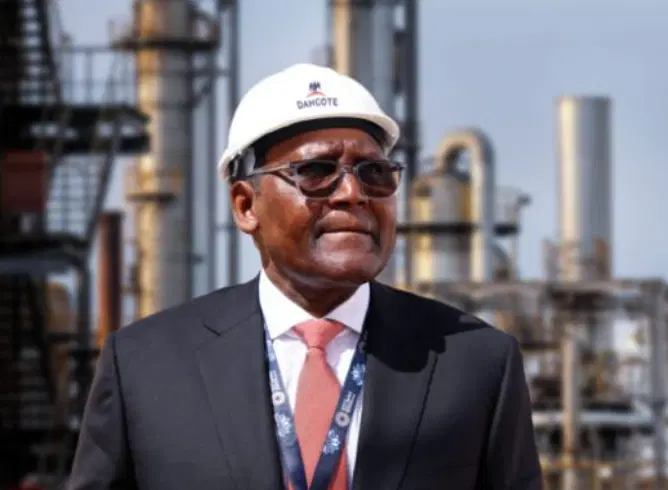
Dangote Refinery Ends Nigeria’s Era of Fuel Import Dependence, Boosts GDP, FX Earnings — EIU
The operational ramp up of the 650,000 barrels per day Dangote Petroleum Refinery & Petrochemicals is fundamentally reshaping Nigeria’s downstream oil sector, significantly reducing the country’s dependence on imported refined petroleum products and strengthening its external position, according to the Economist Intelligence Unit (EIU).
In its latest assessment on Nigeria’s fuel market and regulatory environment, the EIU said the refinery has already transformed a sector that was previously characterised by heavy reliance on imported fuel despite Nigeria being Africa’s largest crude oil producer. The report noted that the refinery met nearly 80 per cent of domestic petrol demand in April and produced enough volumes to satisfy local consumption requirements as operations approached full capacity.
The EIU described Nigeria’s downstream petroleum sector before the refinery as “long dysfunctional”, noting that the country had remained almost entirely dependent on costly imported fuel while producing nearly 1.5 million barrels of crude oil daily.
According to the report, the emergence of the refinery has reduced import dependence, improved domestic fuel availability and strengthened Nigeria’s balance of payments position through lower import demand and rising exports of refined petroleum products.
“The gradual ramp up of the 650,000 barrel/day Dangote refinery since May 2023 has transformed Nigeria’s long dysfunctional downstream sector,” the report stated. “The country’s main refineries, all state owned, had been inoperative for years and Nigeria was almost entirely reliant on costly imported fuel.”
The research and analysis division of The Economist Group, London added that the refinery’s attainment of full operational capacity and its planned expansion would further support Nigeria’s economic growth and foreign exchange earnings over the medium term.
“Meanwhile, the attainment of full capacity at, and an increase in exports from, the Dangote refinery will support real GDP growth and foreign exchange earnings in 2026 and 2027 and beyond, as a planned doubling of the plant’s output comes on stream around the end of the decade,” it added.
Industry analysts said the refinery is increasingly positioning Nigeria as an emerging refining and export hub, altering energy trade flows across Africa and reducing the vulnerability associated with fuel import dependence.
The EIU noted that the refinery’s expansion has coincided with major reforms in Nigeria’s downstream sector, including the removal of fuel subsidies and the introduction of market driven pricing mechanisms.
The report, however, said the transition from a state dominated fuel import structure to large scale domestic refining has triggered resistance from interests linked to the old import regime.
The latest tensions emerged following the decision by the Nigerian Midstream and Downstream Petroleum Regulatory Authority to relax restrictions on petrol imports despite the refinery’s growing capacity to meet domestic demand.
Dangote Industries subsequently initiated legal action, arguing that continued import approvals undermine domestic refining investments and conflict with the objectives of the Petroleum Industry Act, which seeks to encourage local refining capacity and reduce import dependence.
Analysts noted that the availability of large-scale domestic refining capacity has improved Nigeria’s energy security and reduced exposure to external supply shocks and foreign exchange volatility.
The Centre for the Promotion of Private Enterprise also cautioned against unrestrained importation of petroleum products, warning that such a policy could weaken Nigeria’s industrialisation drive and discourage investments in domestic refining.
Chief Executive Officer of CPPE, Muda Yusuf, said continued dependence on imported fuel had historically contributed to pressure on foreign reserves, exchange rate instability and fiscal leakages.
The refinery’s growing impact is also being reflected in Nigeria’s broader macroeconomic indicators. Earlier this month, S&P Global Ratings cited increased domestic refining capacity and rising hydrocarbon exports among the major factors supporting Nigeria’s sovereign credit rating upgrade – the first in 14 years.
Beyond Nigeria, analysts said the refinery is increasingly being viewed as a strategic industrial asset for Africa, where many countries remain heavily dependent on imported fuel despite rising demand for transportation, manufacturing, and power generation.
Business
BREAKING: Court Dismisses $19.6 Million Claim Against NNPCL — Rules Contract Scope Cannot Be Changed Orally

BREAKING: Court Dismisses $19.6 Million Claim Against NNPCL — Rules Contract Scope Cannot Be Changed Orally
In a landmark ruling on Friday, May 22, 2026, the Federal Capital Territory High Court in Abuja threw out a $19.6 million lawsuit filed by Alternate Dimensions Ventures Ltd against the Nigerian National Petroleum Company Limited (NNPCL), affirming a key legal principle: a written contract cannot be expanded through oral agreements or conduct.
Alternate Dimensions had sought $19,600,000 in professional fees, claiming the scope of its Direct Sale, Direct Purchase (DSDP e-pro) contract with NNPCL was orally expanded. Represented by counsel Patrick Peter, the firm argued it was entitled to the revised sum for services rendered under the alleged new terms.
But NNPCL, through its lawyer Ituah Imhanze of KENNA LP, pushed back sharply, arguing that parties are bound exclusively by the clear terms of their written agreement. Imhanze contended that without any written amendment, the claim was legally unsound, and the court agreed.
Delivering judgment, Justice Hamza Mu’azu upheld NNPCL’s defense, stating that the contract was unambiguous and that no evidence was adduced during the trial, which supported the alleged scope expansion. The court further found that NNPCL fully complied with all contractual terms and committed no breach.
Dismissing the suit as meritless, Justice Mu’azu reinforced the doctrine of sanctity of contract: any amendment to a written agreement must be express, unequivocal, and documented, not implied or verbal.
The ruling spares NNPCL from the S19.6 million claim and also a floodgate of similar potential liabilities.


- Uganda: Parliament concludes vetting of ministers June 2, 2026
- Fund for Export Development in Africa (FEDA) Board Appoints Mr. Emmanuel Assiak as Chief Executive Officer June 2, 2026
- Ecobank Group Launches World First Nature Bond Mobilising Global Capital to Protect Africa’s Natural Ecosystems June 2, 2026
- Merck Foundation Chief Executive Officer (CEO) Dr. Rasha Kelej together with Kenya First Lady support the education of 47 Kenyan Schoolgirls by providing Annual Scholarships till they Graduate June 2, 2026
- Annual Meetings 2026: Governors Back the Bank’s Platform Solutions to Transform Aviation and Health Systems in Africa June 2, 2026
- ThinkMarkets launches ChelseaAI, bringing live CFD trading into Artificial Intelligence (AI) assistants June 2, 2026
- Afreximbank Invites Rugby Africa President Herbert Mensah to Address the 33rd Annual Meetings on a Panel Exploring Sport as a Driver of African Industrialisation June 2, 2026
- Afreximbank Deepens Commitment to Economic Progress in The Bahamas June 1, 2026
- African Electric Vehicle (EV) platform Spiro raises $215M in equity to scale electric mobility and energy infrastructure across Africa June 1, 2026
- Africa Centres for Disease Control and Prevention (Africa CDC) Statement on Attacks Against Health Facilities During the Bundibugyo Virus Disease Response in the Democratic Republic of the Congo June 1, 2026
- Uganda: Parliament concludes vetting of ministers June 2, 2026
- Fund for Export Development in Africa (FEDA) Board Appoints Mr. Emmanuel Assiak as Chief Executive Officer June 2, 2026
- Ecobank Group Launches World First Nature Bond Mobilising Global Capital to Protect Africa’s Natural Ecosystems June 2, 2026
- Merck Foundation Chief Executive Officer (CEO) Dr. Rasha Kelej together with Kenya First Lady support the education of 47 Kenyan Schoolgirls by providing Annual Scholarships till they Graduate June 2, 2026
- Annual Meetings 2026: Governors Back the Bank’s Platform Solutions to Transform Aviation and Health Systems in Africa June 2, 2026
- ThinkMarkets launches ChelseaAI, bringing live CFD trading into Artificial Intelligence (AI) assistants June 2, 2026
- Afreximbank Invites Rugby Africa President Herbert Mensah to Address the 33rd Annual Meetings on a Panel Exploring Sport as a Driver of African Industrialisation June 2, 2026
-

 news6 months ago
WHO REALLY OWNS MONIEPOINT? The $290 Million Deal That Sold Nigeria’s Top Fintech to Foreign Interests
-

 society4 weeks ago
SOCIAL MEDIA IS NOT A BATTLEFIELD COMMAND – WHY THE NIGERIAN ARMY’S ACTION AGAINST JUSTICE CRACK IS A NATIONAL SECURITY IMPERATIVE
-

 celebrity radar - gossips4 months ago
Dr. Chris Okafor Returns with Power and Fire of the Spirit -Mounts Grace Nation Altar with Fresh Anointing and Restoration Grace on February 1, 2026
-

 celebrity radar - gossips6 months ago
Prophet Kingsley Aitafo Releases 2026 Prophecy: ‘Nigeria Will Rise, but the World Must Prepare for Turbulence’
You must be logged in to post a comment Login
You must log in to post a comment.