
society
Tinubu at the Crossroads: The 2027 Calculus, Religious Balance and the Possible Exit of Shettima

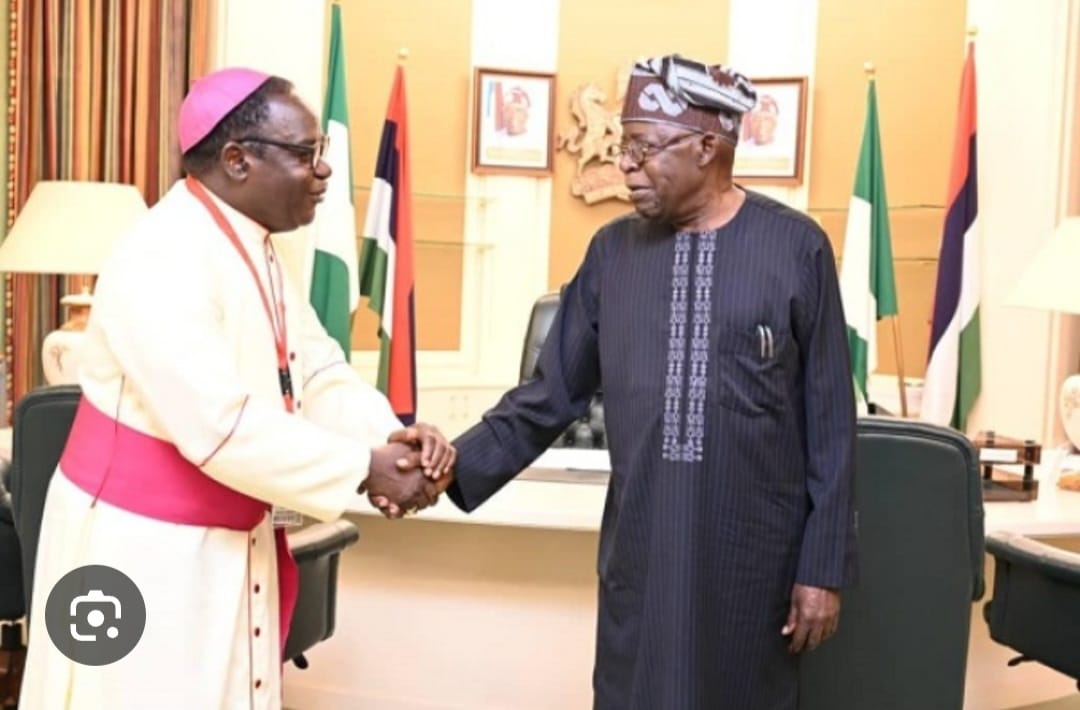
Tinubu at the Crossroads: The 2027 Calculus, Religious Balance and the Possible Exit of Shettima.
By George Omagbemi Sylvester
“A Presidency Tested by Power, Perception and Nigeria’s Fragile Unity.”
As Nigeria inches toward the 2027 general elections, President Bola Ahmed Tinubu stands before one of the most consequential political decisions of his presidency: whether to retain Vice President Kashim Shettima or recalibrate his re-election ticket by choosing a Christian running mate. What initially appeared as insider speculation has now evolved into a serious national conversation touching on RELIGION, POWER, ELECTORAL SURVIVAL and the LONG-TERM cohesion of Africa’s most populous democracy.

Reports suggesting that Tinubu may drop Shettima have generated intense debate across political, religious and diplomatic circles. While the presidency has neither confirmed nor denied such intentions, the mere plausibility of the move speaks volumes about the unresolved tensions created by the Muslim-Muslim ticket that brought the All Progressives Congress (APC) to power in 2023. That ticket, though electorally successful, left deep emotional and symbolic scars in a country where religion remains a defining marker of identity, belonging and political legitimacy.
Tinubu’s defenders have long argued that competence should trump identity. Yet politics is not practiced in abstraction. Nigeria’s history shows that perception often matters as much as policy and symbolism can be as powerful as legislation. The 2023 election may have proven that a Muslim-Muslim ticket could win, but it did not prove that it could unite.

Across Nigeria’s Christian communities (particularly in the Middle Belt and parts of the South) there remains a lingering sense of exclusion. This sentiment has been amplified by persistent insecurity, the targeting of Christian villages by armed groups and a widespread belief that the federal government has not demonstrated sufficient urgency or empathy. In this context, the discussion about Tinubu’s 2027 ticket is not merely about Shettima as an individual, but about what the presidency represents and whose voices are visibly acknowledged at the highest level of power.
It is therefore significant that calls for a Christian running mate are not coming only from southern Christian leaders. Influential northern groups, including inter-ethnic and inter-faith coalitions, have publicly urged the president to consider religious balance in 2027. Their argument is not rooted in hostility toward Shettima, but in political realism. Nigeria, they insist, cannot afford to normalize exclusion in a nation already stretched by ethno-religious fault lines.
Political analysts note that the APC’s internal dynamics further complicate the matter. Kashim Shettima represents continuity, loyalty and northern political strength. Removing him risks alienating a key bloc that remains critical to Tinubu’s electoral math. Northern Nigeria, despite economic hardship and security crises, continues to command decisive voting power. Any perception that the vice president was sacrificed to appease international opinion or southern Christian pressure could provoke backlash within the party and beyond it.
Yet retaining Shettima carries its own risks. The 2027 election will not be fought under the same conditions as 2023. Tinubu now campaigns not as an insurgent political strategist but as an incumbent president whose record will be scrutinized domestically and internationally. Economic reforms, subsidy removal, inflation, currency instability and widespread hardship have reshaped voter expectations. In such an environment, symbolism regains importance. A re-election ticket that appears insensitive to diversity could prove costly, particularly among swing voters and younger Nigerians who increasingly frame politics through inclusion and justice rather than tradition.
International perception also plays a subtle but undeniable role. Nigeria’s strategic partners in the West have grown more vocal about religious freedom, minority protection and inclusive governance. While there is no publicly documented evidence of direct foreign pressure on Tinubu to change his ticket, diplomatic conversations around security and human rights inevitably shape elite political thinking. In a global era where democratic credentials influence investment, security cooperation and diplomatic leverage, Nigeria’s internal political signals matter far beyond its borders.
Scholars have long warned that when democratic systems fail to reflect pluralism, legitimacy erodes. Professor Jibrin Ibrahim, a respected political scientist, has argued that “Nigeria’s stability depends not only on elections, but on the perception that power rotates fairly across identities.” Similarly, Professor Amina Mama, writing on governance in divided societies, has emphasized that “symbolic inclusion is not cosmetic; it is foundational to democratic trust.”
Critics of the proposed change counter that competence and loyalty should outweigh religious arithmetic. They warn that dropping Shettima could fracture the APC and create an image of a president who discards allies when convenient. Some religious leaders have even cautioned that such a move could be interpreted as weakness or betrayal, particularly in a political culture that prizes loyalty. From this perspective, Tinubu’s silence on the matter is itself strategic, allowing speculation to circulate without committing to a course of action too early.
What is often missing from the debate, however, is a deeper reflection on Nigeria’s democratic maturity. The recurring obsession with religious balancing on tickets is itself a symptom of unresolved nation-building. In stable democracies, leadership choices rarely provoke existential anxiety about identity. In Nigeria, they do not just because the state has historically failed to guarantee equal protection, opportunity and justice to all citizens. Until those structural issues are addressed, symbolism will continue to carry disproportionate weight.
The question, therefore, is not simply whether Tinubu will drop Shettima, but what such a decision would signal. Retaining him could be framed as consistency and confidence. Replacing him with a Christian running mate could be framed as reconciliation and responsiveness. Either choice will reshape the political narrative of 2027 and define Tinubu’s legacy as either a consolidator of power or a bridge-builder in a fractured republic.
For Vice President Shettima himself, the speculation is a reminder of the precarious nature of power in Nigerian politics. Vice presidents, historically, have often been expendable pieces on the chessboard of ambition. From Alex Ekwueme to Atiku Abubakar to Yemi Osinbajo, the office has rarely guaranteed political security. The current moment fits that pattern, underscoring how institutions remain weaker than personalities.
As Nigeria approaches another electoral crossroads, the stakes could not be higher. The 2027 election will test not only the APC’s internal coherence but Nigeria’s capacity to learn from its own tensions. A country battling insecurity, poverty and declining trust in public institutions cannot afford leadership decisions that deepen alienation.
In the final analysis, Tinubu’s dilemma reflects Nigeria’s unfinished project. Democracy here is still negotiating its relationship with identity, equity and power. Whether he chooses continuity or recalibration, the decision must rise above short-term electoral calculation and speak to a broader vision of national healing.
History will judge this moment not by political cleverness alone, but by whether leadership choices helped steady a fragile nation or further polarized it. In that sense, the 2027 ticket is not just a campaign tool; it is a statement about the kind of Nigeria its leaders believe is possible; and worth fighting for.





FOPCHEN Seeks Wider Engagement As Court Defers Hearing
OTA, OGUN STATE — The High Court of Ogun State, Ota Division, on Thursday resumed hearing in the ongoing matter involving cultural and societal concerns, before adjourning proceedings till Thursday, July 2, 2026, for continuation of hearing.
At the resumed sitting on May 28, 2026, counsel representing the various parties revisited key issues in the case and made further submissions before the court.
The matter, which has continued to generate public interest across different sectors, again drew attention from legal observers and stakeholders who described the case as one with significant implications for societal values, cultural identity and constitutional interpretation.
Speaking after the proceedings, the Foundation for the Protection of Cultural Heritage in Nigeria, popularly known as FOPCHEN, renewed its appeal for dialogue and constructive engagement among Nigerians, stressing that sensitive cultural and moral issues should not be left entirely within the confines of the courtroom.
According to the group, broader conversations involving traditional institutions, civil society organisations, religious leaders and policy stakeholders remain necessary in addressing issues relating to national values and social responsibility.
Legal analysts at the court premises noted that arguments being canvassed by parties in the suit could shape future legal interpretations surrounding cultural and moral questions in the country.
Following submissions by counsel, the presiding judge adjourned the matter till Thursday, July 2, 2026, to enable parties further prepare and respond to issues raised during the hearing.
The development has continued to spark reactions among observers, with many Nigerians closely monitoring the proceedings ahead of the next hearing date.

US-Based Society Lady, Fehintola-Brat Extends Eid-El-Kabir Greetings To Muslims
United States based fahionista of class, Chief (Mrs) Ayoola Fehintola-Brat has extended a warm greetings to Muslim faithful all over the world on the occasion of the 2026 Eid-El-Kabir celebration.
Fehintola-Brat who is the Balogun Egbe Obaneye Obinrin Akile Ijebu, and the Yeye Asofin of Idenaland in her message to Journalists urged Muslim to continually uphold the enduring values of sacrifice, obedience, faith, and compassion, which are central to the significance of Eid-El-Kabir festival.
A quiet philantropist whose humanitarian services has won her several laurels urged Muslims to use the spiritual occasion to pray for the peace co-existence of Nigerians regardless of religious, social and political leanings stressing that the oneness of the country should not be underplay.
In a related development, she expressed her felicitations to all sons and daughters of Ijebuland on the forthcoming Ojude Oba 2026 celebration, tasking age-groups otherwise known as Regbregbe to be more proactive in giving back to their immediate communities.
According to her, the beauty of the age-groups in Ijebuland is the need to contribute immensely to the development of the land in no small means. “This we will continue to achieve with God on our side”, she concluded.
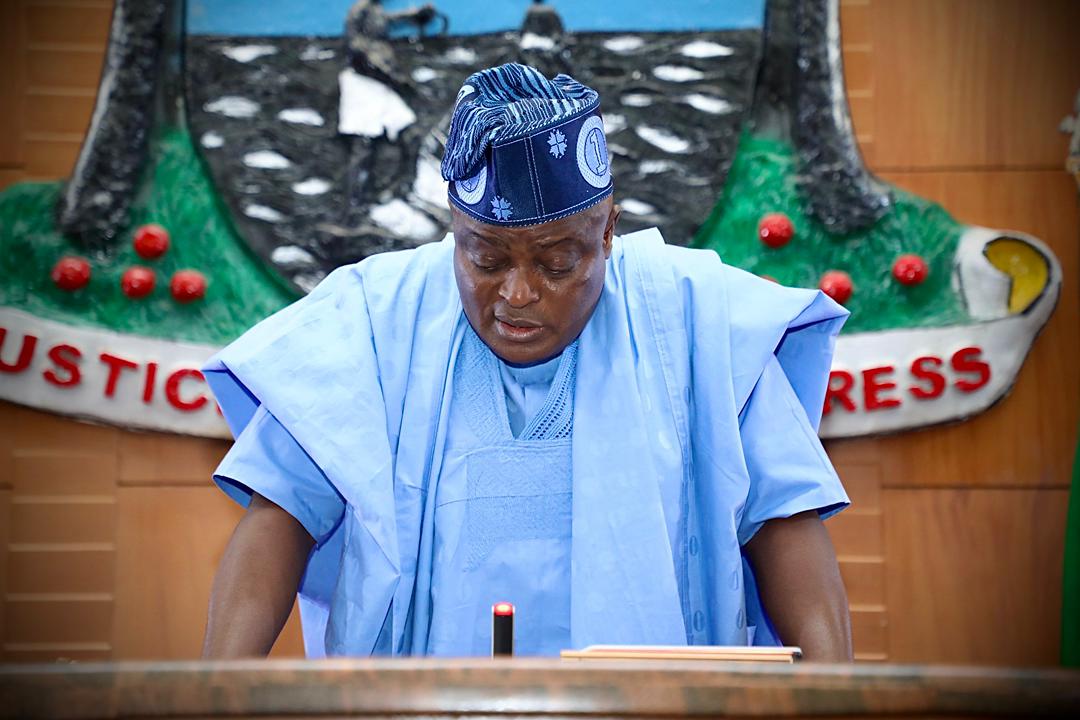
Sallah: Obasa Felicitates Muslim Ummah, Commends Nigerians for APC Primaries Turnout
The Speaker of the Lagos State House of Assembly, Rt. Hon. Mudashiru Obasa has extended warm felicitations to Muslims in Lagos State and across Nigeria on the occasion of Eid al-Adha.
In a statement released by his Chief Press Secretary, Mr. Dave Agboola, Obasa described the festival as a season of sacrifice, reflection, and gratitude, urging the faithful to continue to uphold the values of peace, unity, and love that strengthen the nation.
He noted that the celebration of Eid al-Adha is not only a spiritual milestone but also a reminder of the importance of togetherness and collective responsibility in building a stronger society.
He, likewise, emphasized that the festival provides an opportunity for Nigerians to renew their commitment to national progress and to support leadership that prioritizes development and prosperity.
Obasa, however, commended Nigerians, particularly members of the All Progressives Congress (APC), for their massive turnout during the recently concluded party primaries. He described the participation as a clear demonstration of the people’s confidence in the government of President Bola Ahmed Tinubu and their belief in the administration’s vision for a greater Nigeria.
“The APC primaries have shown the resilience of our democracy and the confidence Nigerians have in the leadership of President Bola Ahmed Tinubu and the Renewed Hope Agenda. This is a strong message that our people are ready to continue supporting policies that will drive growth and prosperity,” Obasa stated.
The Speaker further encouraged Muslims to celebrate responsibly, stressing that the joy of Eid should be accompanied by prayers for the continued peace and progress of Lagos State and Nigeria.
“As you celebrate with family and loved ones, may this season bring joy, peace, and prosperity to your homes. Let us remain united in our resolve to build a stronger nation,” he added.
On behalf of the Lagos State House of Assembly, Obasa wished all Muslims a happy and fulfilling Eid al-Adha celebration.


- Société Nationale des Pétroles du Congo (SNPC) Chief Ominga to Speak at African Energy Week (AEW) 2026 as Congo Accelerates Gas Expansion May 29, 2026
- South Africa: Deputy President Mashatile arrives in India for a Working Visit May 29, 2026
- Seychelles: President Visits Key Development Sites on Coetivy Island May 29, 2026
- Accelerating regional action to advance mental health care in Africa May 29, 2026
- President of the Republic of Seychelles Meets Young La Digue Talent Ahead of London Showcase May 29, 2026
- United Nations Economic Commission for Africa (ECA) launches regional initiative to accelerate women’s digital entrepreneurship across four African countries May 29, 2026
- Ethiopia: International community must act to safeguard press freedom ahead of national election May 29, 2026
- CORRECTION: Annual Meetings 2026 (AM2026): African Development Bank (AfDB) 2025 Trade Finance Report Highlights Resilience of African Financial Institutions After Covid-19 May 29, 2026
- Why Big Tech Could Become Nigeria’s New Gas Partner May 29, 2026
- African Energy Chamber (AEC)-Venezuela Alliance Accelerates Pathways into South-South Energy Expansion May 29, 2026
- Société Nationale des Pétroles du Congo (SNPC) Chief Ominga to Speak at African Energy Week (AEW) 2026 as Congo Accelerates Gas Expansion May 29, 2026
- South Africa: Deputy President Mashatile arrives in India for a Working Visit May 29, 2026
- Seychelles: President Visits Key Development Sites on Coetivy Island May 29, 2026
- Accelerating regional action to advance mental health care in Africa May 29, 2026
- President of the Republic of Seychelles Meets Young La Digue Talent Ahead of London Showcase May 29, 2026
- United Nations Economic Commission for Africa (ECA) launches regional initiative to accelerate women’s digital entrepreneurship across four African countries May 29, 2026
- Ethiopia: International community must act to safeguard press freedom ahead of national election May 29, 2026
-

 news6 months ago
WHO REALLY OWNS MONIEPOINT? The $290 Million Deal That Sold Nigeria’s Top Fintech to Foreign Interests
-

 society4 weeks ago
SOCIAL MEDIA IS NOT A BATTLEFIELD COMMAND – WHY THE NIGERIAN ARMY’S ACTION AGAINST JUSTICE CRACK IS A NATIONAL SECURITY IMPERATIVE
-

 celebrity radar - gossips4 months ago
Dr. Chris Okafor Returns with Power and Fire of the Spirit -Mounts Grace Nation Altar with Fresh Anointing and Restoration Grace on February 1, 2026
-

 celebrity radar - gossips6 months ago
Prophet Kingsley Aitafo Releases 2026 Prophecy: ‘Nigeria Will Rise, but the World Must Prepare for Turbulence’