
society
TINUBU’S RENEWED HOPE AND CIVIL AVIATION TRANSFORMATIONAL FOOTPRINTS

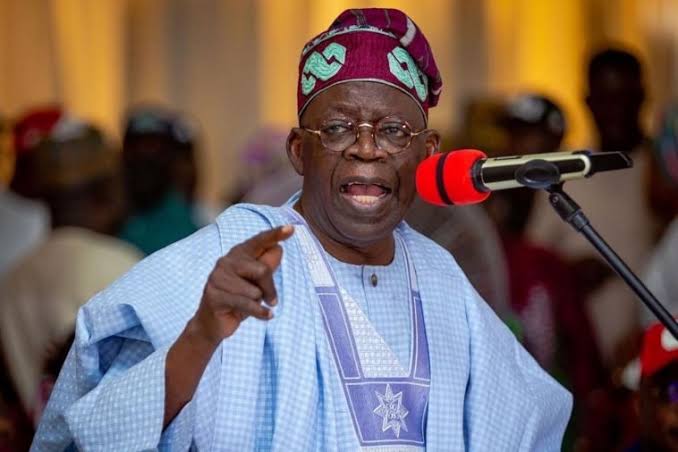
*TINUBU’S RENEWED HOPE AND CIVIL AVIATION TRANSFORMATIONAL FOOTPRINTS*
By Michael Ado
To still state that President Tinubu’s reform programs are working in all sectors is overemphasizing realities.
To add that they are positively impacting the everyday life of the citizens and residents of the country is an understatement.
Truth is, however, that there is need for sectoral analysis for a point-by-point understanding of the impact of the Renewed Hope initiatives. Through that, citizens and even the international community can better appreciate what is happening in Nigeria, and the point-men who are making those things happen.
The Nigerian civil aviation corridor has suffered years of neglect, leading to a comatose state.
The long-standing infrastructural decay and systemic neglect, occasioned by endemic and widespread corruption and abuse, rendered the civil aviation compliant to numerous sectoral dysfunctions.
Some of the identified challenges, which otherwise negatively impacted the growth of the sector, limiting safety and its overall efficiency, prompting calls for reforms and increased investment, include aging airport infrastructure and inadequate facilities, safety issues like bird strikes, runway skids, and ageing aircraft fleets, coupled with high operational costs, foreign exchange scarcity, and blocked funds for foreign airlines.
There were also challenges of inconsistent regulatory policies and lack of effective oversight, with acute manpower shortage and grossly inadequate trained professionals, caused by several years of neglect and airlines failing to invest in training programs.
Militating against the sector also was the challenge of inconsistent and unreliable foreign exchange, which was equally scarce and inaccessible to foreign airlines, resulting in flight suspensions and increased fares.
While associated with the challenge was high cost of operation due to rising cost of jet fuel prices and other operational costs, contributing to increased air ticket prices. And because of limited space and various role conflicts, there were constant rivalries between government agencies, such as FAAN and NCAA, hindering effective collaboration and oversight with incessant noncompliance issues, especially from some private jet operators operating chartered services without proper licenses, and rendering consumers liable to several abuses, poor treatment, including flight delays, cancellations, and lack of transparency in pricing, without any form of established protection.
However, with the assumption of Captain Chris Najomo as the Acting Director General of the Nigerian Civil Aviation Authority (NCAA), all these have changed.
A man determined, like William Blake, not to resolve all contradictions but to live with them and rise above them, Captain Chris came with the Midas touch of positive solutions.
Mindful of the challenges, Capt. Najomo set out first to address the lingering infrastructural deficit, thereby upgrading the Federal Airports Authority of Nigeria (FAAN) through the installation of airfield lighting systems at Murtala Muhammed Airport’s Runway 18R, reducing flight delays by 25%, coupled with the completion and commissioning of long-abandoned projects, such as the NCAA Regional Office in Port Harcourt and the Kano Regional Office, enhancing the NCAA’s operational capabilities.
The introduction of airport concessions in 2025, which saw the private sector into full participation in the modernization of the airport infrastructure, became the icebreaker leading to the rapid boost and enhancing operational efficiency, attracting significant investment, improving consumer experience.
It is noteworthy that Capt. Chris also implemented various measures aimed at instilling probity, accountability, and transparency into the regulatory dynamics of the Nigerian Civil Aviation Authority (NCAA), including the establishment of a Consumer Protection Directorate to address issues like flight delays and cancellations, and the Consumer Protection Portal to address passenger complaints and improve service quality, showcasing his commitment to consumer welfare, and expanding access and availability through the development of new airports, such as the Ogun Gateway Airport, which has since commenced commercial operations, marking a significant milestone in Nigeria’s aviation industry.
Another novel masterpiece is the implementation of various initiatives to enhance safety in Nigerian aviation, such as the establishment of the Flight Data Analysis Centre (FDAC) to detect anomalies and prevent safety challenges, as well as the prompt implementation of aircraft entry policy to allow smaller airlines to operate with fewer aircraft, fostering competition and growth.
A forward-thinking administrator, Captain Najomo also recertified two notable international airports, namely the Murtala Muhammed International Airport (MMIA) and Nnamdi Azikiwe International Airport (NAIA), thereby bringing to an end over 160 compliance issues, and demonstrating Nigeria’s capacity, leadership, and commitment to global safety standards.
These reforms, and the filling in of infrastructural gaps, have not just greatly added value to the sector but have become a springboard of attraction, building confidence, ensuring reliability, and bringing in many foreign direct investments, including public-private partnerships (PPPs), which are presently relentlessly driving inclusivity and growth in the aviation sector.
The various citizen-centred concessional arrangements include terminal concessions at major airports and Build-Operate-Transfer (BOT) models and arrangements for cargo terminals and maintenance hangars.
While improving the overall efficiency, safety, and competitiveness of Nigeria’s aviation sector, the various reforms also aim at repositioning the sector for formidable growth and development, enabling it to contribute not less than 2.5% to Nigeria’s GDP by the end of this year and supporting the employment of over 200,000 youths, while also stabilizing the finances of the sector through the “no pay, no service” policy, compelling airlines to settle their debts to the NCAA, significantly improving the agency’s financial health, and establishing a culture of collaboration and understanding between management and workers, leading to increased productivity and efficiency in the aviation sector.
Through the superlative resounding performance of Captain Chris Najomo, through sound and articulate demonstration of leadership and dedication, he has made positive impact on the Nigerian aviation sector, prioritizing safety, consumer protection, and regulatory excellence, thereby justifying the trust of Mr. President, and proving once again Mr. President’s efficiency and capacity for placing a square peg in a square hole, and getting the right people for the job, not necessarily out of sentiments but based on merits, innovation, and results.
There is no doubt that the NCAA is getting it right. More than right in Captain Chris Najomo’s agency, demonstrating team spirit, cohesion, unity of purpose, appreciation, and assimilation of the leadership of their MD, while positively aligning with the Renewed Hope Mandate of the Civil Aviation Sector for the overall growth of the economy and national development sustainability.
*Ado writes from Lugbe, Abuja.




NIGERIA’S EDUCATION STRIDES, GLOBAL ACKNOWLEDGMENT: When Evidence Travels from Jigawa
…as President Tinubu set to commission Africa’s largest schools complex in Lagos
By O’tega Ogra
There is a quiet shift happening in Nigeria’s education system. You will not find it in speeches neither will you find it in long policy documents. But if you look closely, you will see it in something far more difficult to dismiss. Evidence.
Last week in San Francisco, at the Comparative and International Education Society (CIES) conference, data from classrooms in Jigawa State was presented before a global audience. Not projections. Not estimates. A record of what is happening inside a public system in Nigeria. 
That distinction matters. For years, much of what the world has understood about education in countries like ours has been assembled from a distance. National averages. Modelled estimates and reports written long after the fact. What was presented this time came from within. Attendance tracked daily. Teachers reassigned based on need. Classrooms observed as they function. All under a digitalised ecosystem.
In Jigawa, under the JigawaUNITE foundational learning digital programme, the numbers tell a simple story. Within roughly 150 days of implementation which commenced at the end of 2024, 95 previously understaffed schools were fully staffed. Pupil teacher ratio moved from 114:1 to 70:1. Daily attendance rose from 39 per cent to 77 per cent. This remarkable improvement was not achieved by expanding the workforce. It came from reorganising what already existed under a digital umbrella.
There is something instructive in that. Nigeria has never lacked policy. What we have often lacked is the discipline of execution. The ability to take what already exists and make it work as intended. That is where the real shift is beginning to show.
But it would be too convenient to reduce this to one programme.
At the federal level, the direction has also been adjusting. The Minister of Education, Dr. Maruf Tunji Alausa, has placed measurable outcomes, foundational learning, and teacher quality back at the centre of policy. UBEC, the Federal Government’s Universal Basic Education body, continues to drive national interventions around school improvement and teacher development, even as it insists that reform must remain system-led and not fragmented.
The First Lady’s education interventions, through the Renewed Hope Initiative, have reinforced education as a national priority, particularly around access, learning materials, and inclusion. These are different levers, but they are part of the same ecosystem.
And then there is the fiscal reality.
Recent reforms under President Bola Ahmed Tinubu have increased allocations to subnational governments, creating more room for states to act. In a federation like Nigeria, that matters. Because education is not delivered from Abuja. It is delivered in states. In schools. In classrooms.
What Jigawa has done is to use that room and the Executive Governor of the state, the State Universal Basic Education Board, and their partners on the JigawaUNITE project, New Globe, must be given kudos.
However, Jigawa is not alone in this journey.
In Kwara, efforts to align teaching with actual learning levels are beginning to correct a structural mismatch in classrooms. In Lagos and Edo, structured pedagogy and closer monitoring are improving consistency in teaching. Across the entire ecosystem, state governments, federal institutions like UBEC, and delivery partners like NewGlobe are pushing at the same question from different angles.
How do children actually learn better?
In a prior reflection, Ifeyinwa Ugochukwu, VP at NewGlobe, captured the urgency clearly. With the right tools, training, and use of data, foundational learning outcomes can improve at scale. The real risk, she noted, is delay, allowing learning gaps to become permanent.
That warning should not be ignored because the context remains difficult. Nigeria still carries one of the largest out of school populations in the world. Learning gaps remain. Progress in one state does not resolve a national challenge, but it does something else.
It proves that movement is possible.
What was presented in Washington did not claim success. It demonstrated function. It showed that a Nigerian sub-national can generate evidence that holds up in a global room. That reform does not always require something new. Sometimes it requires using what already exists more honestly and more efficiently.
The real question now is whether this remains an exception.
Or whether it becomes a pattern.
Because reform at scale is never built on isolated wins. It is built on systems that can reproduce them.
And perhaps that is why the timing matters.
This week, another subnational, Lagos State, is expected to commission the Tolu Schools Complex in Ajegunle, a sprawling 36-school integrated facility spread across 11.7 hectares, designed to serve over 20,000 students, and described as the largest school community in Africa. 
There is a connection here that should not be missed.
On one hand, a classroom system in Jigawa is learning how to organise itself better. On the other, a state like Lagos is building the physical scale required to carry thousands of learners at once.
One is structure. The other is capacity.
Real progress sits where both meet because education reform is not only about what we build, it is about how well what we build actually works.
For once, the data was not explaining Nigeria from the outside.
It was coming from within.
And it carried weight.
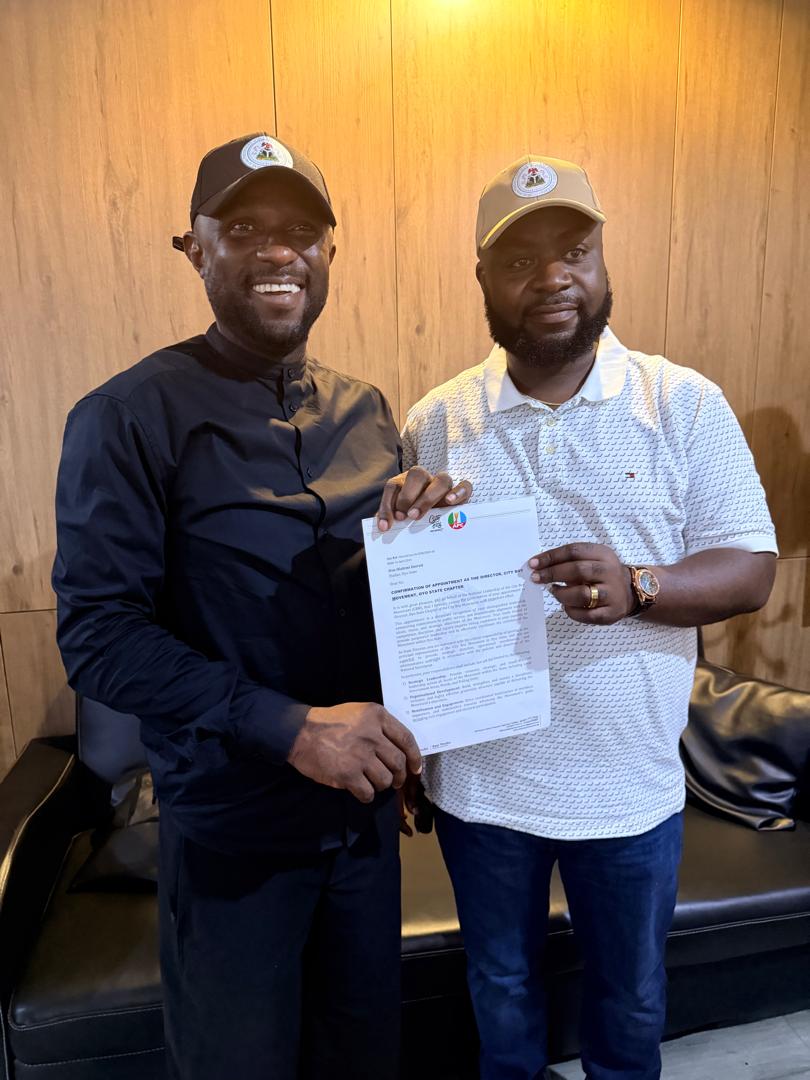
*BREAKING: Onireti Appointed Director-General of City Boy Movement in Oyo State*
The political atmosphere in Oyo State recorded a major development on Monday with the appointment of Hon. Olufemi Onireti as the new Director-General of the City Boy Movement, the grassroots mobilisation structure championing support for President Bola Ahmed Tinubu across the country.
The appointment was announced by the movement’s Director-General, Mr Francis Shoga, in Abuja on Tuesday during the handover of the appointment letter to Onireti.
This is coming days after his resignation from the Peoples Democratic Party (PDP), where he had been an active figure and former House of Representatives candidate.
His new role is expected to reposition the group’s activities and strengthen its outreach ahead of future political engagements in Oyo State.
According to the movement’s leadership, Onireti was chosen based on his “wide political network, proven organisational capacity and strong presence among the youth and grassroots stakeholders.”
Speaking with newsmen, Onireti expressed gratitude for the confidence reposed in him and pledged to deploy his experience to advance the objectives of the City Boy Movement across the state.
Onireti said his decision to join the ruling party was a personal conviction shaped by ongoing political realignments and his commitment to supporting a broader progressive coalition at both state and national levels.
Hon. Onireti added that his appointment followed extensive consultations and harmonisation with his followers.
He assured supporters that his leadership would prioritise inclusiveness, strategic mobilisation and effective communication.
“I am committed to galvanising our structures and ensuring that Oyo State remains a stronghold for the ideals we stand for,” he said.
Political observers note that his appointment may shift the dynamics of political mobilisation in Oyo State, given his influence and recent political moves.
The City Boy Movement is expected to unveil its new operational roadmap in the coming days.
The movement, a prominent youth-driven support platform advancing President Tinubu’s Renewed Hope agenda, positions Onireti to lead its grassroots mobilisation efforts in Oyo as part of its national structure ahead of the 2027 elections.
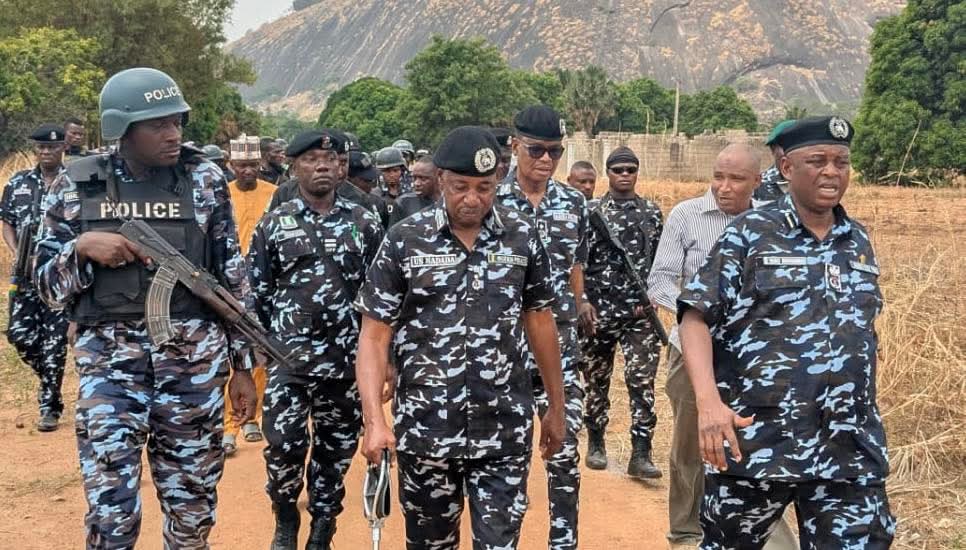
Ariko Church Attack: IGP Disu Deploys DIG As Police Rescue Seven Kidnap Victims
The Inspector-General of Police, Olatunji Rilwan Disu, has ordered the immediate deployment of the Deputy Inspector-General of Police in charge of Operations, Shehu Umar Nadada, to Kaduna State following a deadly bandit attack on Ariko Village near Gurara Dam.
The assault, which occurred on April 5, 2026, targeted worshippers at ECWA and Catholic churches in the community, with gunmen opening fire indiscriminately. Five persons were confirmed dead, while no fewer than fourteen others were abducted during the coordinated হাম.
In a swift operational response, the police high command mandated a high-level intervention, tasking DIG Nadada with leading on-the-ground coordination of security efforts aimed at stabilising the area and facilitating the safe recovery of the victims.
Security operations conducted in collaboration with the Nigerian Army and the Department of State Services (DSS) have already yielded results, with seven of the abducted persons rescued. The victims were evacuated to Katari Hospital for urgent medical attention and are reported to be in stable condition, awaiting reunification with their families.
Police authorities disclosed that tactical operations remain ongoing to secure the release of the remaining captives and apprehend those responsible for the ആക്രമം, underscoring a renewed push to degrade criminal networks operating within the axis.
Reaffirming the Force’s commitment to public safety, the IGP called on residents to remain vigilant and support ongoing operations by providing credible and actionable intelligence to security agencies.


- Seychelles Strengthens Human Rights Reporting through National Workshop April 8, 2026
- ABB’s Application Configurator brings speed and precision to grid-feeding protection system design April 7, 2026
- Can Equatorial Guinea Reposition as West Africa’s Gas Hub? April 7, 2026
- Afreximbank Partners with African Energy Week 2026 to Drive Africa-Led Energy Deals April 7, 2026
- Merck Foundation Marks ‘World Health Day’ 2026 – Transforming Patient Care in Africa and Beyond through 2600+ Scholarships for Healthcare Providers From 52 Countries April 7, 2026
- Morocco Gas Plan Reset Could Open Door to New Investment Models April 7, 2026
- African Petroleum Producers Organization (APPO) Secretary General Joins Angola Oil & Gas (AOG) 2026 as African Energy Bank Eyes June 2026 Debut April 7, 2026
- Ghanaian Biomedical Specialist Receives International Award April 7, 2026
- Grey Connects the Africa-Canada Money Corridor With Instant Transfers via Interac April 7, 2026
- Nigeria’s Oil Revival in Focus as Petroleum Minister Lokpobiri Joins Paris Energy Forum April 7, 2026
- Seychelles Strengthens Human Rights Reporting through National Workshop April 8, 2026
- ABB’s Application Configurator brings speed and precision to grid-feeding protection system design April 7, 2026
- Can Equatorial Guinea Reposition as West Africa’s Gas Hub? April 7, 2026
- Afreximbank Partners with African Energy Week 2026 to Drive Africa-Led Energy Deals April 7, 2026
- Merck Foundation Marks ‘World Health Day’ 2026 – Transforming Patient Care in Africa and Beyond through 2600+ Scholarships for Healthcare Providers From 52 Countries April 7, 2026
- Morocco Gas Plan Reset Could Open Door to New Investment Models April 7, 2026
- African Petroleum Producers Organization (APPO) Secretary General Joins Angola Oil & Gas (AOG) 2026 as African Energy Bank Eyes June 2026 Debut April 7, 2026
-

 news4 months ago
WHO REALLY OWNS MONIEPOINT? The $290 Million Deal That Sold Nigeria’s Top Fintech to Foreign Interests
-

 society7 months ago
“You Are Never Without Help” – Pastor Gebhardt Berndt Inspires Hope Through Empower Church (Video)
-

 celebrity radar - gossips2 months ago
Dr. Chris Okafor Returns with Power and Fire of the Spirit -Mounts Grace Nation Altar with Fresh Anointing and Restoration Grace on February 1, 2026
-

 celebrity radar - gossips4 months ago
Prophet Kingsley Aitafo Releases 2026 Prophecy: ‘Nigeria Will Rise, but the World Must Prepare for Turbulence’