
celebrity radar - gossips
Top Moments From Grammys 2021 Big Night

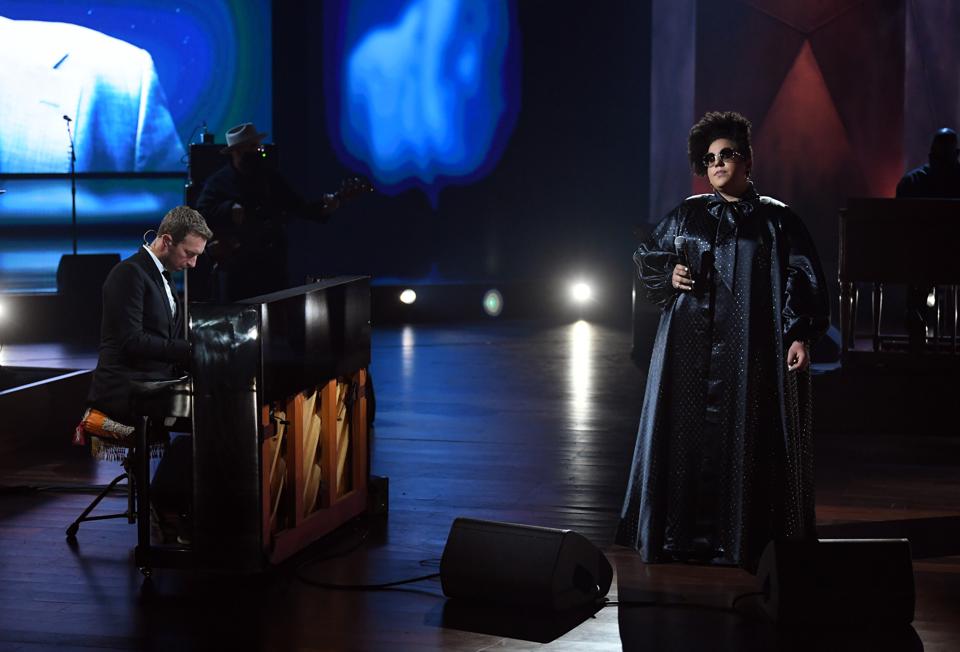
Of a truth, the 2021 Grammy Awards night was quite memorable.

The Grammy Awards adapted to the realities of the coronavirus pandemic Sunday, staging a socially distant ceremony from downtown Los Angeles. The 63rd annual ceremony, hosted by Trevor Noah of “The Daily Show,” featured performances from Billie Eilish, Dua Lipa, Megan Thee Stallion, Harry Styles and other chart-topping artists.
The winners in the “big four” categories were Taylor Swift (album of the year), Billie Eilish (record of the year), H.E.R. (song of the year) and Megan Thee Stallion (best new artist). Plus: Beyoncé made Grammys history, becoming the winningest woman, with her 28th trophy.
Here’s a look at some of the most memorable moments from the show.
Trevor Noah’s monologue
The comedian, introducing the ceremony in an open-air tent outside the Los Angeles Convention Center, nodded to the difficulties of the pandemic and riffed on other current events.
“We’re still broadcasting to you from the heart of downtown Los Angeles,” Noah said. “This is not a Zoom background, all right? This is real. My uncle isn’t going to walk behind me naked even though I told him I was having an important meeting.”
“Tonight is going to be the biggest outdoor event this year besides the storming of the Capitol,” Noah said in front of a small crowd of masked attendees seated at cocktail-style tables.
He later acknowledged the drama engulfing the British royal family: “There’s more tension in that tent than at a family reunion at Buckingham Palace.”
Billie Eilish, Harry Styles kick things off
The singer-songwriter Eilish and the pop star Styles provided the first performances of the night from a largely audience-free room inside the Los Angeles Convention Center.
Styles, clad in a black leather coat and a feather boa, sang “Watermelon Sugar,” a track off his sophomore studio album, “Fine Line.” He later won the best solo pop performance prize for “Watermelon Sugar.”
Eilish and her brother, Finneas, followed with a rendition of “Everything I Wanted.” She performed atop a car designed to look like it was partly submerged under the floorboards — a nod to the music video for “Everything I Wanted,” which features the pair cruising in a Dodge Challenger.
Megan Thee Stallion wins best new artist
The rapper Megan Thee Stallion received the first award presented during the live telecast: best new artist. (She won the prize for best rap performance during a preshow that did not air on CBS.)
“I don’t want to cry,” she said, visibly teary-eyed, at the beginning of a brief acceptance speech.
he became just the fifth rapper to win the trophy and the first female rapper to triumph in the category since Lauryn Hill in 1999.
In the third hour of the show, Megan Thee Stallion appeared alongside Cardi B to perform a slightly sanitized version of their hit “WAP” on a set designed to look like an enormous bed.
Megan Thee Stallion also won the prizes for best rap song (an award she accepted alongside her collaborator, Beyoncé) and best rap performance.
Taylor Swift performs medley
The pop singer treated viewers to a medley of songs from her albums “Evermore” and “Folklore” on a set straight out of a fairy tale: rustic cabin, mossy hillside, towering forest trees.
Swift sang “Cardigan,” “August” and “Willow.” She was joined for the second half of the performance by her collaborators Jack Antonoff and Aaron Dessner of the band The National.
“Folklore,” which debuted in July, delivered five of Swift’s six nominations Sunday. The sixth nod was for “Beautiful Ghosts,” which was written for the movie musical “Cats.”
H.E.R. wins song of the year
The singer-songwriter H.E.R. won song of the year — one of the big four awards — for the song “I Can’t Breathe,” which was inspired by the movement for Black lives.
She shared the trophy with co-writers Dernst Emile II and Tiare Thomas.
“I’ve never been so proud to be an artist,” H.E.R. said in her acceptance speech. “We wrote this song over FaceTime, and I didn’t imagine that my fear and my pain would turn into impact and it would possibly turn into change.”
She also called on people to continue the activism that surged last summer after the death of George Floyd in police custody.
Beyoncé breaks a Grammys record
“Queen Bey” won her 28th Grammy on Sunday, passing the bluegrass musician Alison Krauss to become the most honored woman in the history of the awards.
The win that put her over the top was for best R&B performance for “Black Parade,” a single released on Juneteenth last year. The song drew wide acclaim for its powerful lyrics laced with allusions to Black history and activism.
“I’ve been working my whole life, since 9 years old,” said Beyoncé, who came into the night with a leading nine nominations. “I can’t believe this happened. It’s such a magical night.”
Swift, Eilish win marquee awards
Swift won album of the year for “Folklore,” a surprise release that debuted in July. The album, developed during the pandemic, was defined by low-key romantic ballads and a storybook aesthetic.
She is the first female artist to win the award three times, having previously taken home trophies for “Fearless” and “1989.”
In the show’s final minutes, Eilish won record of the year for “Everything I Wanted.” Eilish dedicated the award to Megan Thee Stallion.
“You deserved this,” Eilish said to her fellow nominee, who was seated in the crowd. “You had a year that I think is unstoppable. You are a queen. I want to cry thinking about how much I love you.





celebrity radar - gossips
Adron Homes Celebrates Visionary Chairman, Aare Adetola Emmanuel King, at 51
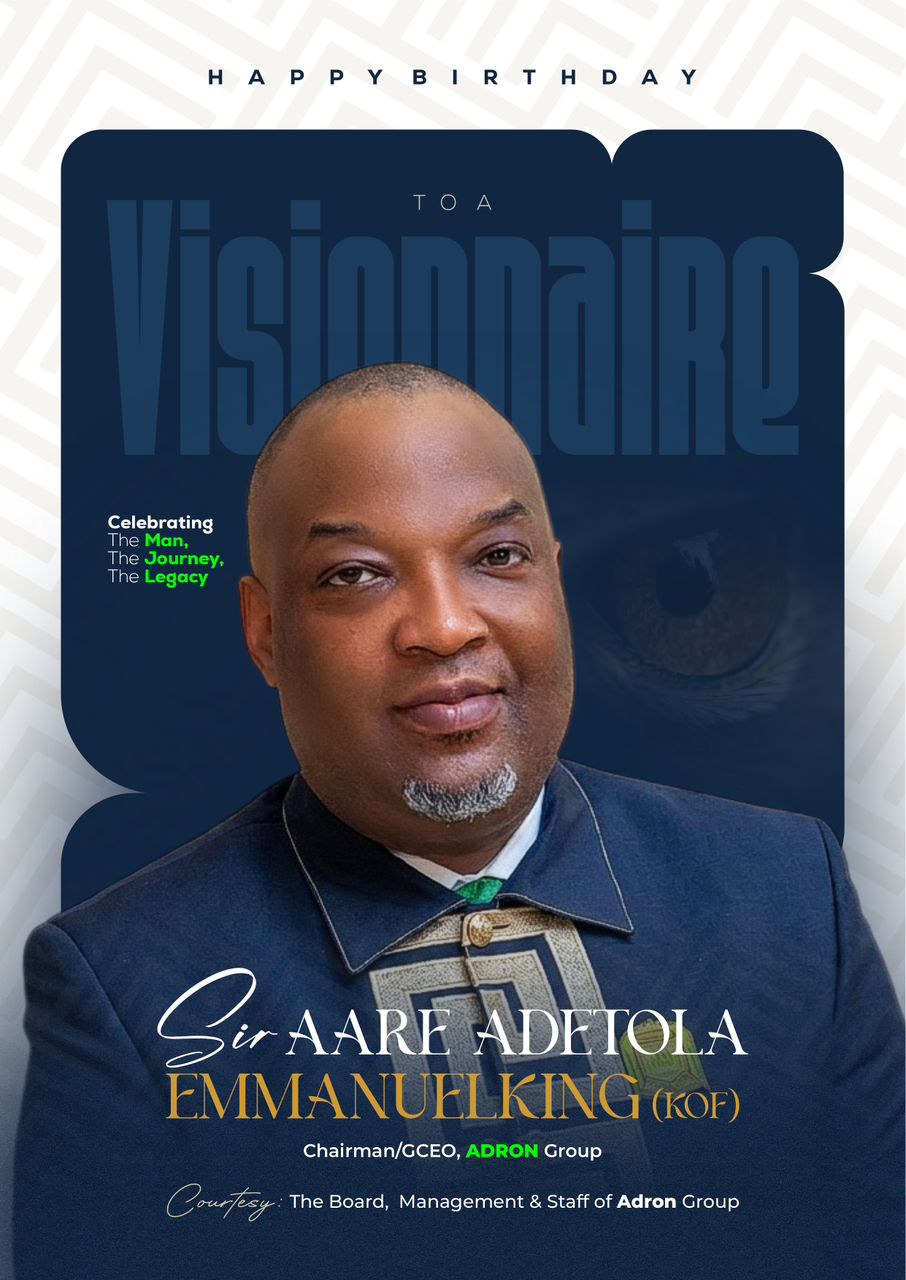
Adron Homes Celebrates Visionary Chairman, Aare Adetola Emmanuel King, at 51
The management and staff of Adron Homes and Properties Limited have joined family, friends, associates, and well-wishers across the globe to celebrate their Chairman and Chief Executive Officer, Aare Adetola EmmanuelKing, as he marks his 51st birthday.

In a statement released by the company, the milestone was described as a celebration of an exceptional leader whose vision, resilience, and entrepreneurial brilliance have not only transformed Adron Homes into a household name in Nigeria’s real estate sector but have also redefined affordable housing across the country.
Under his dynamic leadership, Adron Homes has continued to expand its footprint, delivering value-driven residential solutions while empowering thousands of Nigerians with opportunities for home ownership. His commitment to excellence, innovation, and customer satisfaction has remained the driving force behind the company’s sustained growth and industry leadership.
The statement further highlighted Aare EmmanuelKing’s passion for nation-building and community development, noting his significant contributions to job creation, youth empowerment, and the promotion of socio-economic development through real estate investments.
“As a leader, mentor, and visionary, Aare Adetola EmmanuelKing has consistently inspired a culture of excellence, integrity, and dedication within the organization. His ability to turn bold ideas into reality continues to position Adron Homes as a trailblazer in the industry,” the statement read.
The company expressed profound gratitude for his steadfast leadership and prayed for continued wisdom, strength, and sound health as he embarks on another year of impactful achievements.
As he celebrates his 51st birthday, the entire Adron Homes family proudly honours a man whose legacy continues to shape the future of real estate in Nigeria.
Happy 51st Birthday, Aare Adetola EmmanuelKing!
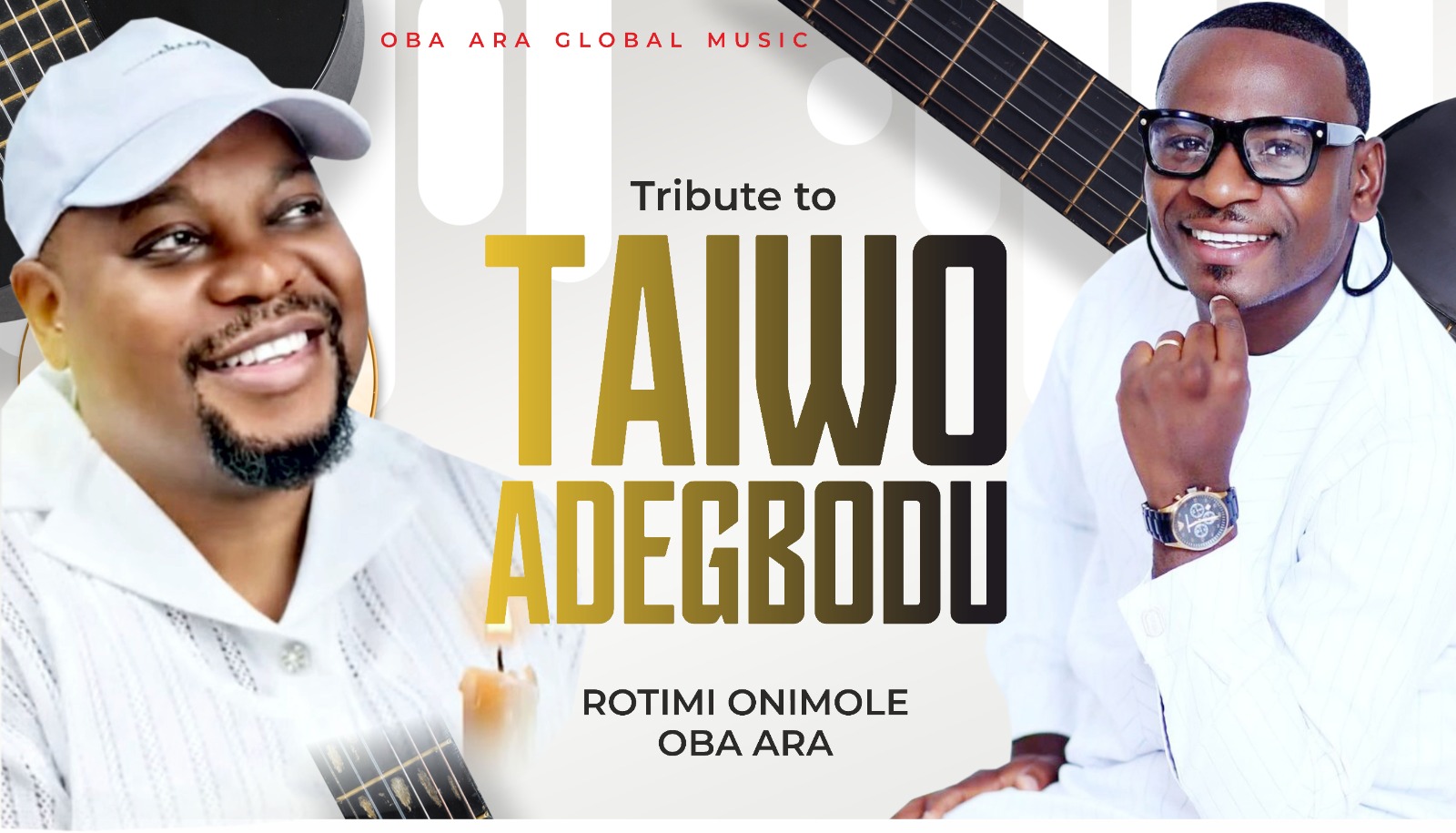
Oba Ara Releases Emotional Tribute to Late Taiwo Adegbodu
Taofik Afolabi
The gospel music community continues to grieve the painful loss of Taiwo Adegbodu, a beloved figure whose sudden departure left a deep void among fans, colleagues, and loved ones. In response to this loss, renowned gospel minister Rotimi Onimole, popularly known as Oba Ara, has released a moving tribute song that captures both the sorrow of the moment and the enduring legacy of the late singer.
Oba Ara, a proud son of Isale Eko, channels raw emotion throughout the song, using heartfelt lyrics and soul-stirring melodies to reflect on his personal connection with Taiwo Adegbodu. In the tribute, he openly expresses how deeply the news of Adegbodu’s passing shook him, describing it as a painful and unexpected loss that is difficult to come to terms with.
The song goes beyond mourning, it celebrates the life, ministry, and impact of Taiwo Adegbodu. Oba Ara highlights the late artist’s dedication to spreading the gospel through music, his inspiring voice, and the spiritual influence he had on many within and beyond Nigeria. Through powerful verses, he paints a picture of a man who lived for God and touched countless lives through his ministry.
Listeners have described the tribute as both comforting and deeply emotional, as it resonates with the collective grief of the gospel music community. It serves as a reminder that although Taiwo Adegbodu is no longer physically present, his music, message, and legacy will continue to live on.
In honoring his late colleague, Oba Ara not only pays his respects but also offers a source of healing for fans and fellow ministers, using music as a tool to process grief and celebrate a life well lived.
celebrity radar - gossips
Buratai, Fagbemi , Shagaya, Olofa, Others Eulogise Olowu Kuta’s Olori On 60th Birthday, Foundation Launch
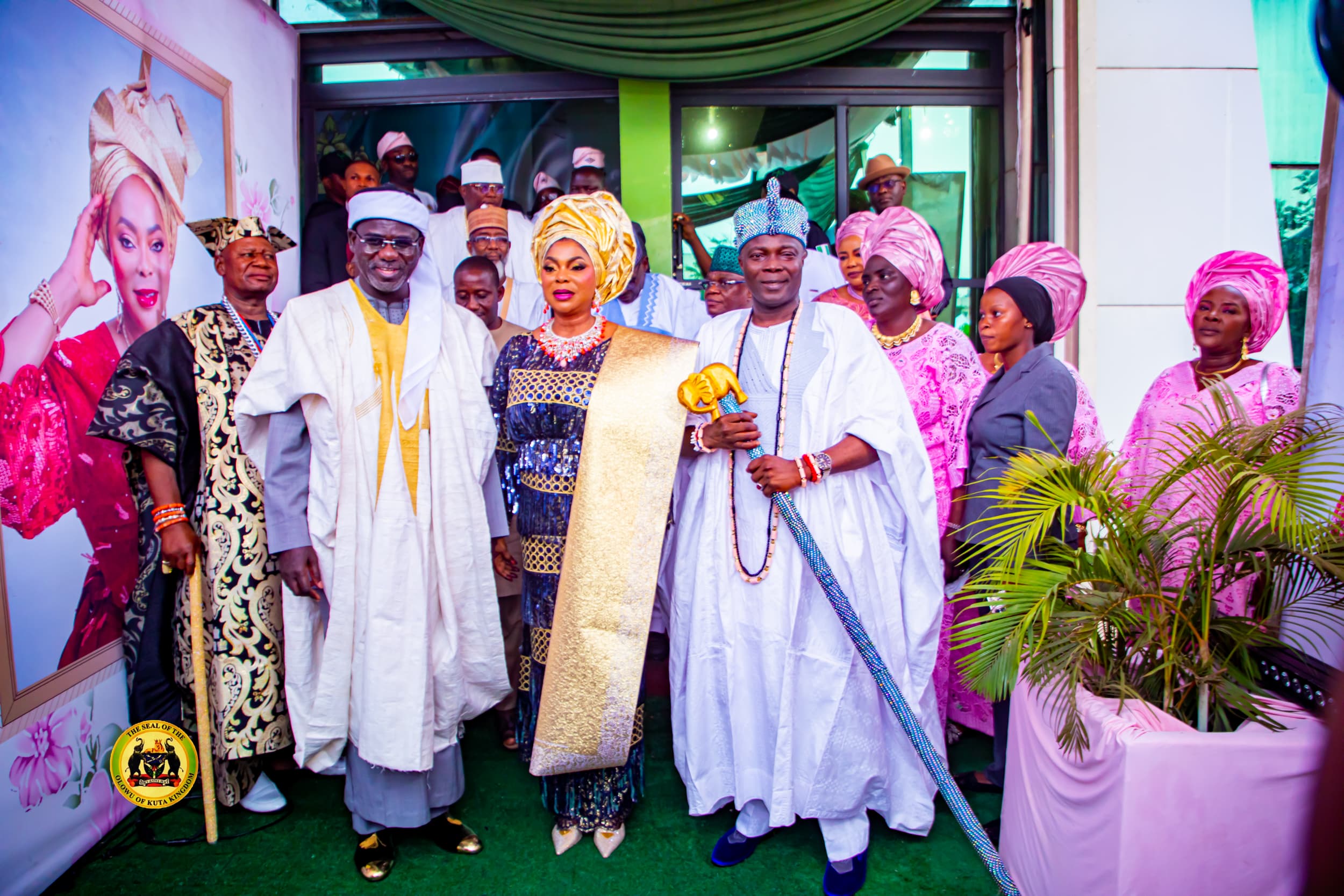
Buratai, Fagbemi , Shagaya, Olofa, Others Eulogise Olowu Kuta’s Olori On 60th Birthday, Foundation Launch
Eminent personalities across the Nigeria stormed the TFK Event Centre, Bala Mohammed Way, Guzape, Abuja, to celebrate the 60th birthday of Olowu Kuta’s Olori, Queen Jumai Amoke and her Foundation Launch on Saturday 28, March 2026.

From former Chief of Army Staff, Lt Gen TY Buratai rtd, to the Minister of Justice and Attorney-General of the Federation, Prince Lateef Fagbemi; Olofa of Offa, HRM Oba Mufutau Gbadamosi. Even top businesswoman and socialite, Chief (Mrs) Bola Shagaya, was in attendance.


Other dignitaries were newly promoted Deputy Inspector-General of Police and former AIG Zone 2 , Lagos , Adegoke Fayoade, Major General Abdumalik, Major General Samuel Adebayo rtd (Fmr CDI);
Major General Anthony Omozoje rtd (Fmr Copp);
Alhaji Tajudeen Owoyemi (Asiwaju of Offa and CEO Radisson Hotel Nigeria;
Dr Waheed Olagunju, former managing director of Bank of Industry, Oniba of Iba, Lagos State, HRM Oba Dr Suleiman Raji ;
Justice Falola, Olu of Ile-Ogbo , Oba Adetoyese amongst many traditional rulers and captains of industry too numerous to mention.
Speaking at the occasion, the Chief Host, Olowu of Kuta, HRM Oba Dr Adekunle Oyelude Makama, CON , Tegbosun iii, who is also the husband of the celebrant commended Queen Jumai for ‘ her slender arms full of kindness’ to establish such humanitarian Foundation, ‘Amoke Children and mother in Need Foundation’ at a time Nigerians are going through economic crisis occassioned by the global meltdown.
Olowu also commended her steadfastness and love for the less privileged and downtrodden.
The monarch refrenced the task before his wife’s humanitarian gesture said her best is yet to come.
” Olori Amoke Jumai, I celebrate you. You will celebrate 70, 80, 90 and continue to shine as you continue to put a smile on people’s faces. I love you, “Olowu Kuta added.
To Lt Gen Buratai, a former army chief and former Nigerian Ambassador to Benin Republic, the reward of hard work is more work.
Buratai, who also doubles as Balogun Agba of Owu Kuta, a chieftaincy title reserved for a generalismo congratulated Queen Jumai for attaining the age of 60 in good health.
The retired army General said he’s not surprised by the turn out of eminent personalities across the country to celebrate the Olowu Kuta’s Olori because she merited it through her hospitality to all, adding that Allah the most merciful, most beneficial would accept all her act of ibadah.
The minister of Justice, Prince Fagbemi, was full of praises for Queen Jumai for deeming it fit to have a place in her heart to accommodate the needy and less privileged in ‘our society.’
Prince Fagbemi urged the guests to contribute generously to support the Foundation in order to continue to alleviate poverty and put a smile on the faces of the people.
” I congratulate you on your 60th birthday and Foundation Launch. I wish you many happy returns of the day and many more fruitful services to the country and motherland”, Prince Fagbemi added.
The celebrant, Queen Jumai who was grining from ear to ear thankfully said she was excited by the turn out and the response of the people to her foundation.
Queen Jumai, however, promised to continue to use her resources and donations received for the good of the needy and less privileged in the society.
” I want to appreciate my own Kabiesi Olofa of Offa , for his presence and im I’m using him as a point of contact to all other Kabiesis present here, the minister of justice and Attorney-General, you’re welcome, sir; Mrs Bola Shagaya, I salute your enterprise, Lt Gen Buratai, I’m grateful, sir; DIG Fayoade, Justice Falola and other dignitaries too numerous to mention, I thank you, all. To my darling husband, Kabiesi Olowu , I thank you immensely for your support. And to my family and friends, I thank you , all. E se pupo!”, she said.


-

 society7 months ago
Religion: Africa’s Oldest Weapon of Enslavement and the Forgotten Truth
-

 news4 months ago
WHO REALLY OWNS MONIEPOINT? The $290 Million Deal That Sold Nigeria’s Top Fintech to Foreign Interests
-

 society6 months ago
“You Are Never Without Help” – Pastor Gebhardt Berndt Inspires Hope Through Empower Church (Video)
-

 celebrity radar - gossips2 months ago
Dr. Chris Okafor Returns with Power and Fire of the Spirit -Mounts Grace Nation Altar with Fresh Anointing and Restoration Grace on February 1, 2026