
society
Transcorp Group delivers impressive Q1 2024 performance; sustains revenue growth of 173% and PBT of N45 billion


Transcorp Group delivers impressive Q1 2024 performance; sustains revenue growth of 173% and PBT of N45 billion
Transnational Corporation Plc (“Transcorp” or the “Group”), Nigeria’s leading, listed conglomerate with investment in the Power, Hospitality, and Energy sectors, has announced impressive Q1 financial results for the period ended March 31, 2024.

In its Q1 2024 unaudited results, Transcorp reported significant year-on-year growth, with revenue rising to N88.6 billion from N32.4 billion in 2023, representing a 173% increase.
The impressive results are largely driven by a remarkable 209% year-on-year revenue growth within the power business, highlighting significant strategic progress as part of Transcorp Group’s implementation of its integrated power strategy.
The hospitality business recorded a 68% year-on-year growth in revenue, driven by an increase in occupancy rate from 75% to 82% compared to the previous year.
The results show substantial growth across all financial indicators, reinforcing its market leadership and strategic positioning.
Highlight of Transcorp Group Results:
- Q1 2024 Revenue was N88.6 billion, a significant increase of 173%, compared to Q1 2023.
- Operating income increased by 479%, from N8.5 billion in Q1 2023 to N49.1 billion in Q1 2024.
- Operating expenses saw an increase of 40% year on year to N8.2 billion in Q1 2024, reflecting the impact of inflation and cost of operations.
- Net finance cost increased by 14% to N3.7 billion in 2024 from N3.2 billion in 2023 due to a slightly higher interest rate review in line with MPR.
- Profit before tax from ordinary business of the Group surged by 1110%, amounting to N34.7 billion in Q1 2024, compared to N2.9 billion in Q1 2023 in the same period last year.
- Profit before tax inclusive of extra ordinary income was N45.7 billion in 2024 compared to N2.9 billion in 2023.
- The Group recorded extra ordinary income of N11 billion during the period from the realised gain from the sale of shares.
- Profit after Tax including the extra ordinary income improved 1832% year-on-year to N35.9 billion in Q1 2024, compared to N1.9 billion in Q1 2023 in the same period last year.
- Earnings per share of the Group was N61.12k in Q1 2024, compared to N2.58k in Q1 2023.
- On the balance sheet, total assets grew by 8.3%, from N530 billion in December 2023 to N574 billion in Q1 2024 due to the increase in operational activities.
- Shareholders’ funds increased by 20% from N187billion in December 2023 to N224 billion at the end of Q1 2024 due to profit accreted to retained earnings.
In response to the results, Dr. Owen D. Omogiafo, President/Group Chief Executive Officer of Transcorp, commented, “Our Q1 2024 results demonstrates Transcorp Group’s resilience and commitment to excellence. Despite the challenges, we achieved growth across all major indices, focusing on operational efficiency at both our power plants, and maximising opportunities within our hospitality business, showing our ability to adapt and succeed in changing markets. We will continue to deliver sustainable growth, operational efficiency, and value for our shareholders.”
This robust achievement is a further demonstration of the Group’s strategic focus and effective execution. Transcorp is dedicated to its transformation agenda, emphasising sustained growth and a relentless pursuit of long-term value for shareholders.
About Transnational Corporation Plc (Transcorp Plc)
Transnational Corporation Plc (Transcorp Group) is a leading, listed African conglomerate, with strategic investments in the power, hospitality, and energy sectors. Driven by its mission to improve lives and transform Africa, Transcorp has built a longstanding reputation for sector transformation, operational excellence, and exceptional financial performance, delivering value to its shareholders.
In the power sector, Transcorp’s businesses – Transcorp Power Plc and Transafam Power – provide over 16% of Nigeria’s installed power capacity. Through its investments in the energy sector including OPL287, Transcorp is developing Nigeria’s domestic energy value chain. The Group’s listed hospitality business, Transcorp Hotels Plc, owns the iconic Transcorp Hilton Abuja, Nigeria’s flagship hospitality destination, and Aura by Transcorp Hotels, a digital hospitality platform enabling travellers to book accommodation across Africa.




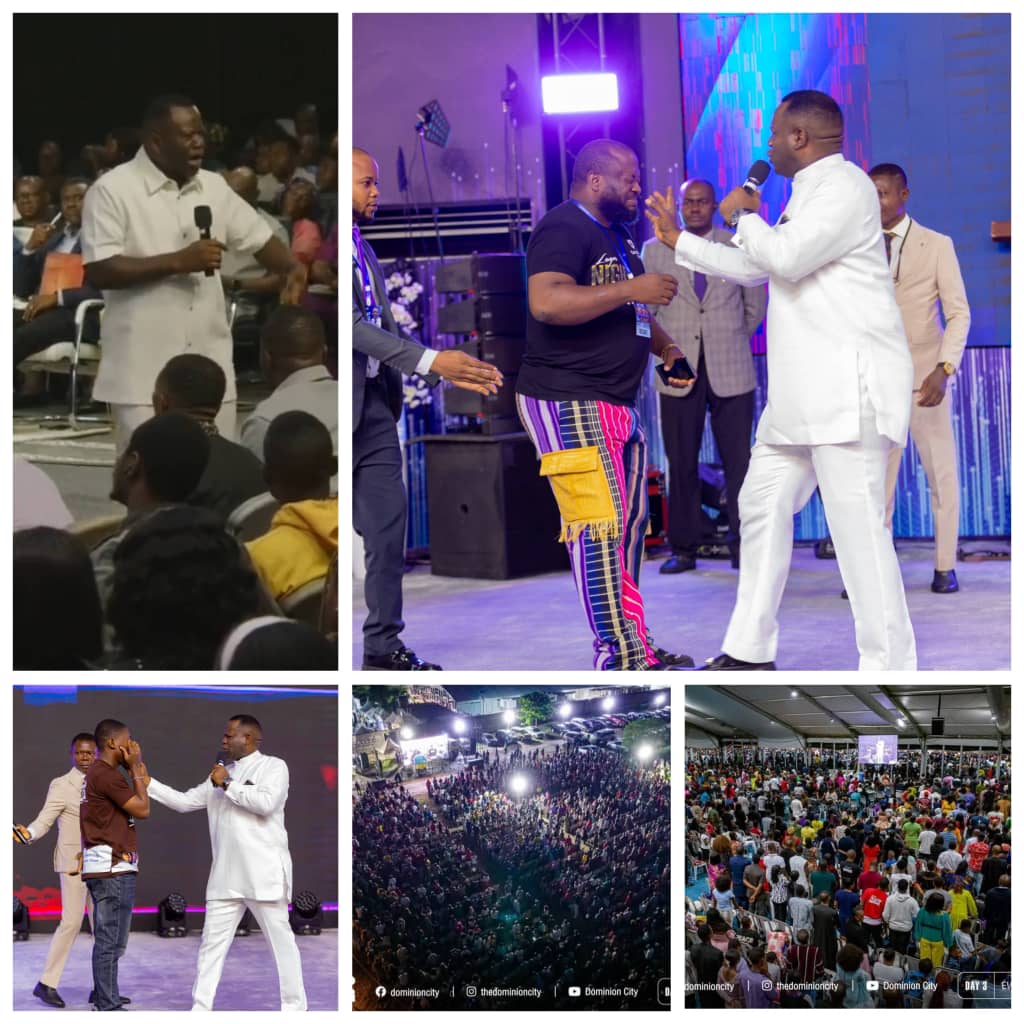
Miracles, Revival Mark Opening of Dominion City’s Night of Glory 2026
Lagos – The atmosphere was charged with faith, worship, and expectancy as Dominion City’s Global Camp Meeting 2026 entered its peak with the first day of the “Night of Glory,” drawing thousands of worshippers to Lagos and Enugu in a powerful display of spiritual revival.
Held at the Golden Heart Place, Ajah, Lagos, the Friday evening gathering marked a significant moment in the ongoing six-day conference themed “Redigging the Wells of Our Fathers.” Participants from across Nigeria and beyond converged both physically and online, united by a shared hunger for divine encounter and transformation.
From the outset, the meeting was characterised by intense worship sessions led by gospel ministers, creating an atmosphere many attendees described as “tangible with God’s presence.” The night quickly transitioned into sessions of fervent prayers, prophetic ministrations, and teachings centred on restoration, healing, and spiritual awakening.
Presiding over the meeting, Dr. David Ogbueli, founder of Dominion City, charged participants to reconnect with foundational truths and spiritual disciplines necessary for personal and societal transformation. He emphasised that the “Night of Glory” was designed as a moment of divine visitation where destinies could be reshaped.
“As we redig the wells of our fathers, we are reconnecting with ancient graces and covenant realities that produce undeniable results,” he declared.
As the night unfolded, several remarkable testimonies were shared, reinforcing the theme of supernatural intervention. Among them was the case of a 14-year-old girl who was reportedly delivered from a seven-year struggle with pornography addiction, an experience that drew emotional reactions from the congregation.
Other testimonies included reported healing from cancer, recovery from a severe skin infection attributed to spiritual affliction, the healing of a heart-related condition, and three years of a non-menstrual period. Attendees also recounted instances of restored hearing and sight, with individuals testifying to improvements from partial deafness and blindness, among others.
Fathers of faith present were Barrister Emeka Nwankpa, Pastor Yemi Ayodele, Rev. Pade Tokun, Apostle Gbenga Adegbenro, Rev. Mike Adegbile, and others. Other Ministers present, including Pastor Dr. Charles Ndifon, Pastor Randy Mitchell, Apostle Ikechukwu Nnajiofor, and others, reinforced messages of faith and the power of God to intervene in human situations. They encouraged worshippers to remain steadfast and receptive, noting that miracles often spring from an atmosphere of unwavering belief.
Beyond the miraculous, the gathering also underscored a broader call to moral and spiritual renewal. Church leaders reiterated the need for believers to embody values that can positively influence society, especially in a time of perceived moral decline.
The “Night of Glory” is part of the larger Global Camp Meeting, which began on April 1 and will run through April 6, featuring daily teachings, leadership sessions, and specialized programmes for youths and families.
Organisers say expectations remain high for the second night, with many believing that the wave of miracles and transformation witnessed on the first night is only the beginning.
For many attendees, however, the message was clear beyond the signs and wonders; the true essence of the gathering lies in a renewed commitment to live transformed lives and impact society. //END.//
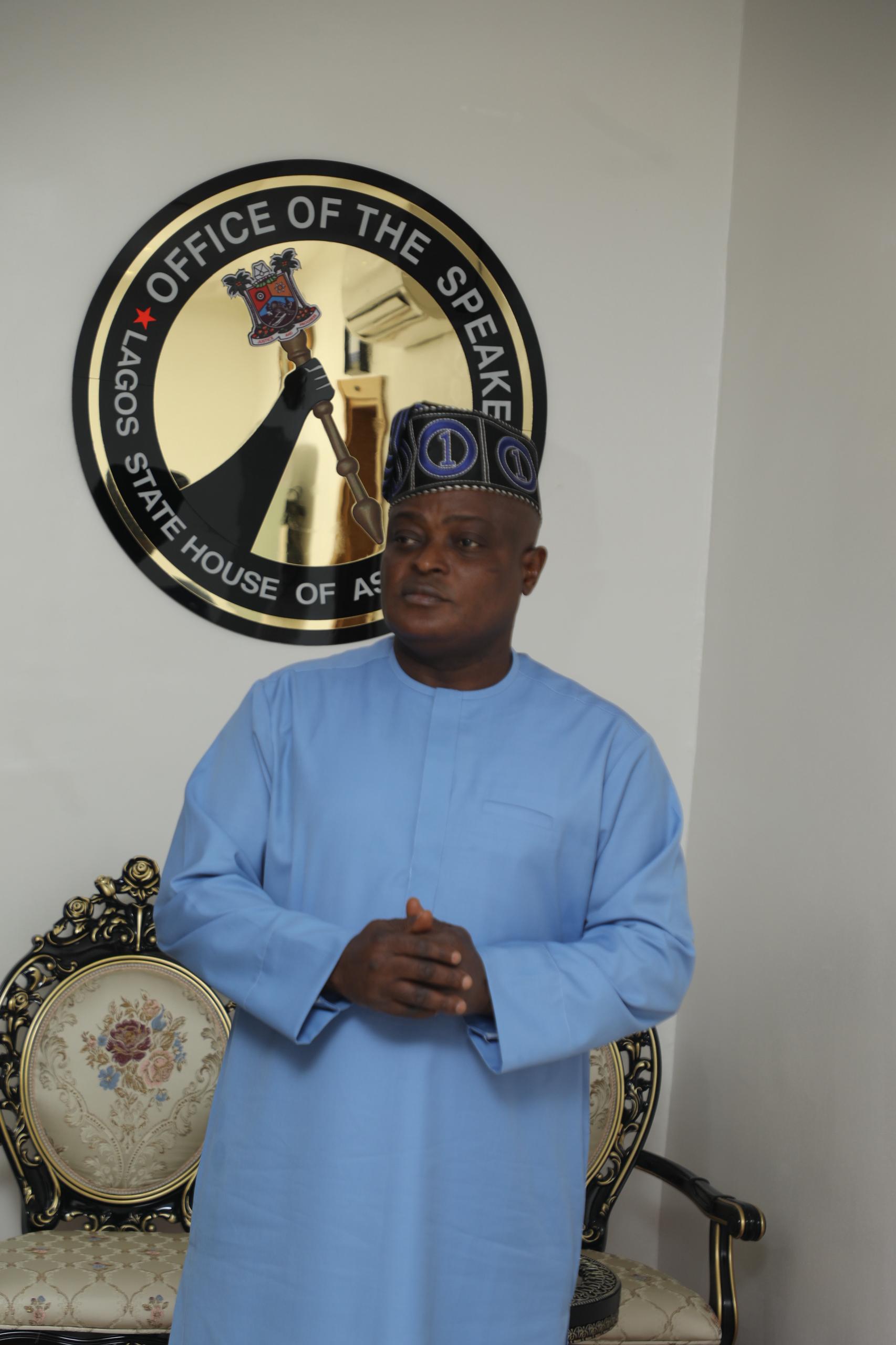
Easter: Obasa Urges Christians To Embrace Hope, Unity, Renewal
The Speaker of the Lagos State House of Assembly, Rt. Hon. Mudashiru Obasa, has congratulated Christian faithful in Lagos and across Nigeria on the celebration of Easter, urging them to draw strength from the lessons of Christ’s resurrection.
In his Easter message, released by his Chief Press Secretary, Mr. Dave Agboola, Obasa described the season as a reminder of victory over despair, renewal after trials, and the triumph of light over darkness. He noted that just as Christ overcame death, Nigeria can overcome its current challenges if citizens remain steadfast, prayerful, and committed to unity.
“Easter is a season of hope and renewal. As a nation, we face economic pressures and security concerns, but the resurrection teaches us that no situation is beyond redemption. Let us roll away the stones of division and despair, and work together for peace, justice, and prosperity,” the Speaker said.
He called on Lagosians to continue to show love and compassion to one another, stressing that collective effort is key to building a stronger Lagos and a better Nigeria.
Obasa prayed that the joy of Easter would fill homes with renewed faith and guide both leaders and citizens toward a brighter future.

*PDP CHIEFTAIN, ONIRETI RESIGNS FROM PARTY, CITES PERSONAL REFLECTION
A former House of Representatives candidate, Olufemi Onireti, has formally resigned his membership of the Peoples Democratic Party (PDP) in Oyo State.
His resignation was conveyed in a letter addressed to the Chairman of PDP Osupa Ward 9, Ogbomoso North Local Government, on Thursday.
Onireti described the decision as a difficult but necessary step after what he termed a period of “deep personal reflection.”
“I hereby formally resign my membership of the Peoples Democratic Party (PDP), effective immediately,” he wrote.
He acknowledged his years of active involvement in the party, including contesting for the House of Representatives in the last general election, noting that the PDP had offered him a platform for political participation, service, and growth.
Despite his exit, Onireti expressed appreciation to party leaders and members for the support he enjoyed over the years.
“I remain grateful for the opportunity to serve and for the relationships and experiences I gained during my time in the party.
I wish the party well in its future endeavours,” he added.
The development is expected to generate discussions within the Ogbomoso North political circle, as observers await his next political move.


-

 society7 months ago
Religion: Africa’s Oldest Weapon of Enslavement and the Forgotten Truth
-

 news4 months ago
WHO REALLY OWNS MONIEPOINT? The $290 Million Deal That Sold Nigeria’s Top Fintech to Foreign Interests
-

 society6 months ago
“You Are Never Without Help” – Pastor Gebhardt Berndt Inspires Hope Through Empower Church (Video)
-

 celebrity radar - gossips2 months ago
Dr. Chris Okafor Returns with Power and Fire of the Spirit -Mounts Grace Nation Altar with Fresh Anointing and Restoration Grace on February 1, 2026