
society
Trapped Between Nigeria’s Failure and South Africa’s Xenophobic Violence

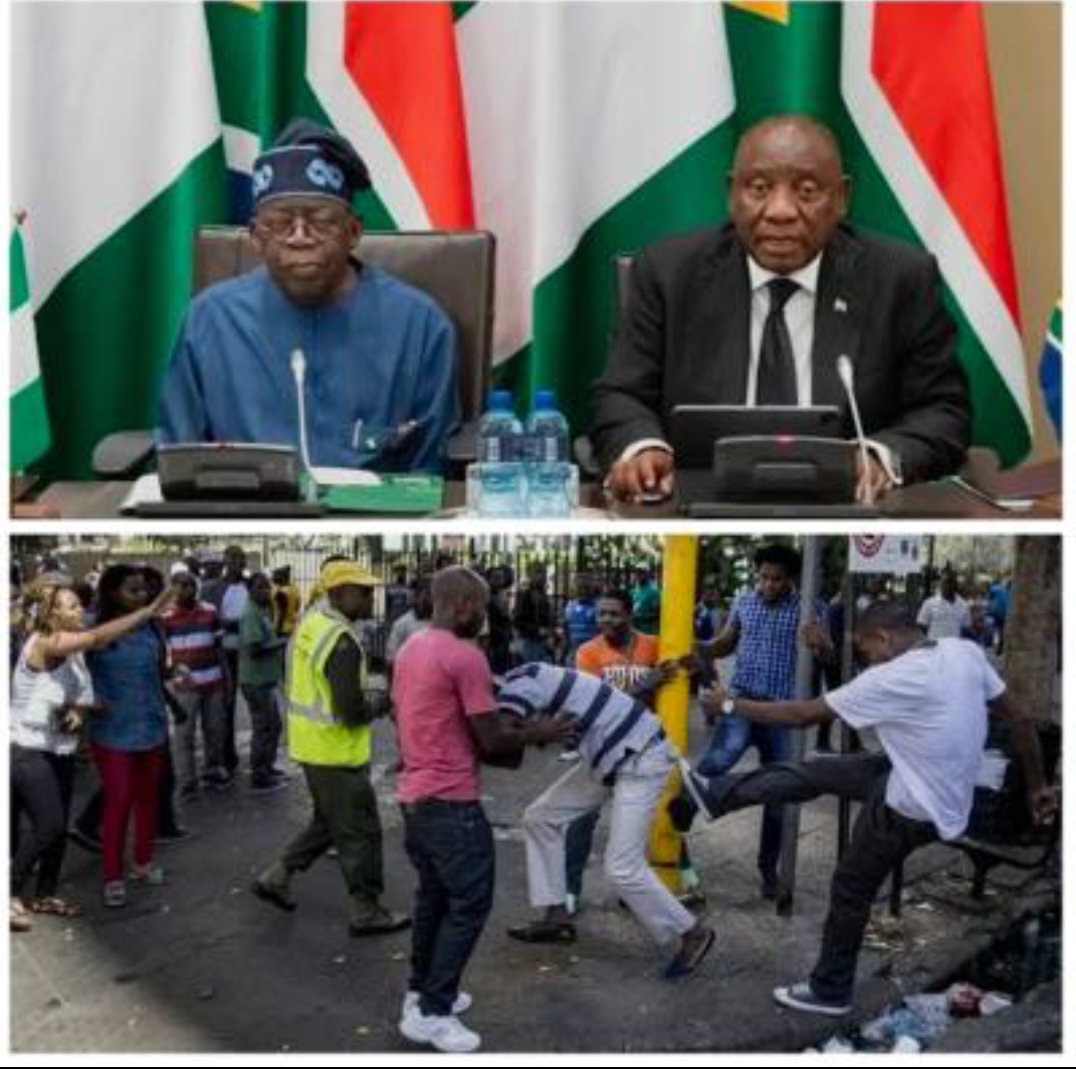
Trapped Between Nigeria’s Failure and South Africa’s Xenophobic Violence
BY BLAISE UDUNZE
When the word “xenophobic” is talked about, most affected African countries tend to focus on the pains being experienced by their citizens in South Africa. For a moment, it calls for Nigeria and the rest of the African continent to pause and ask, how did we get here?
The recent happenings across the streets of Johannesburg, Pretoria, and Durban, a painful pattern continues to unfold with frightening and fearful regularity, as Nigerian-owned businesses are looted, migrants hunted, families displaced, and African nationals reduced to targets of rage. If asked, the majority would chorus that the recurring images of xenophobic violence in South Africa are disturbing enough, and no doubt, yes, but the deeper tragedy is beyond the flames and bloodshed. It lies in the silent failures back home that forced many Nigerians into vulnerable exile in the first place.
The reality, as a matter of fact, is that to understand the suffering of Nigerians in South Africa, one must first confront the uncomfortable truth that xenophobia is not merely a South African problem. It is also a Nigerian governance problem exported abroad.
Nigeria, often celebrated as the “Giant of Africa,” has now become the “Mama Africa” who has failed to nurture her many children, with the fact that behind every Nigerian fleeing hardship for survival, known as the “japa” syndrome, in another African country is a story shaped by economic frustration, failed institutions, poor leadership, unemployment, and a financial system disconnected from the realities of ordinary citizens.
One apt way to confirm these inimical factors, the South African president, Cyril Ramaphosa, recently acknowledged this uncomfortable reality when he urged African leaders to address the domestic failures driving mass migration across the continent. Speaking amid renewed anti-foreigner tensions, Ramaphosa identified “misgovernance” as one of the factors forcing Africans to seek refuge in countries like South Africa. Of a truth, his comments may have generated debate, and some “patriotic Nigerians” may also want to prove him wrong, but they reflected a painful reality many African governments would rather avoid.
Nigeria, despite its vast human and natural resources, has increasingly become a country where millions no longer see a future at home. This is a critical irony and the height of it all because a nation blessed with oil wealth and entrepreneurial energy and one of the youngest populations in the world is yet burdened by systemic corruption, policy inconsistency, infrastructural collapse, and a leadership class that has often prioritised politics over productivity, especially with the imminence of an election.
It is so detestable and at the same time fearful that the result is a generation of young Nigerians trapped between hopelessness and migration.
One regrettable experience that has continued to haunt the country for decades, is that successive governments have squandered opportunities that could have transformed Nigeria into an industrial and economic powerhouse. Public resources that should have been invested in power, roads, healthcare, manufacturing, education and enterprise development have either disappeared into private pockets or become trapped in wasteful bureaucratic structures.
Reports indicating that over $214 billion in public funds may have been lost, diverted, or trapped in opaque fiscal systems over the last decade capture the scale of Nigeria’s accountability crisis. Whether exact or conservative, such figures reveal a country losing resources or funds rapidly from severe bleeding that could have changed millions of lives.
Looking intently at these developments, one would know that the tragedy is not merely corruption itself but the opportunities corruption destroyed.
Come to think of this fact that with proper governance and strategic economic planning, Nigeria could have developed a thriving SME ecosystem capable of employing millions of citizens. Instead, unemployment and underemployment have become defining realities of national life. The World Economic Forum recently identified unemployment and lack of economic opportunity as Nigeria’s greatest economic threat, yet the country continues to struggle with coherent employment data and long-term economic direction.
This economic suffocation explains why migration has become less of a choice and more of a survival strategy for many Nigerians.
At the centre of this crisis is another troubling contradiction, which is that Nigeria’s banking sector appears increasingly profitable while the real economy continues to deteriorate.
Ordinarily, banks in developing economies are expected to function as engines of growth by financing productive sectors, supporting innovation, and empowering small businesses. Across the world, SMEs are recognised as the backbone of grassroots economic development, and the tangible result is that they create jobs, stimulate local production, and expand economic participation.
In Nigeria, SMEs account for over 70 per cent of registered businesses, contribute nearly half of the country’s GDP and generate between 84 to 90 per cent of employment. Yet, despite their enormous economic importance, SMEs receive barely between 0.5 per cent and one per cent of total commercial bank lending.
This is not just a policy failure; it is an economic tragedy. Rather than financing entrepreneurs and productive enterprises, Nigerian banks have increasingly found comfort in investing heavily in government treasury securities. In 2025 alone, major Nigerian banks reportedly generated N6.68 trillion from total investment securities and treasury bills, benefiting from high-yield government debt instruments instead of supporting businesses capable of creating jobs.
The banking sector’s recapitalisation exercise, which successfully raised N4.56 trillion, was celebrated as a regulatory achievement. But the critical question remains. The recapitalisation is for what purpose?
If stronger banks continue to avoid the productive economy while SMEs remain starved of affordable credit, recapitalisation merely strengthens financial institutions without strengthening national development.
Today, private sector credit in Nigeria remains significantly low compared to many African economies. High interest rates, excessive collateral demands, weak credit infrastructure and risk-averse banking practices have created an environment where small businesses struggle to survive, and these implications are devastating.
Every denied SME loan is a denied employment opportunity. Every failed business is another frustrated entrepreneur. Every frustrated entrepreneur is another Nigerian considering migration.
This is how economic dysfunction transforms into human displacement. In a situation like this, it is noteworthy to state that South Africa naturally becomes an attractive destination because of its relatively advanced infrastructure and larger economy. Today, this has informed Nigerians and other African countries alike to migrate there, not because they hate their country but because they are searching for dignity through work and enterprise.
Yet, in a cruel twist, many become targets of xenophobic violence. Foreign nationals are accused of “taking jobs,” dominating businesses, and contributing to crime. Shops are attacked. Businesses are burned. Lives are lost.
It is not a surprise anymore that the disturbing rhetoric surrounding xenophobia has become increasingly normalised and perceived as fighting against saboteurs. Another major concern is that social media posts celebrating violence against Nigerians reveal a frightening and fearful dehumanisation of fellow Africans. This has continued to be heralded unaddressed, as some extremist anti-migrant groups now openly mobilise hostility against foreign nationals under the guise of economic nationalism.
Yet, as opposition leader Julius Malema rightly asked during one of the recent xenophobic debates. “After attacking foreigners and shutting down their businesses, how many jobs have actually been created?” If you are smart enough to know, it is glaring that this is a question that cuts through the emotional manipulation surrounding xenophobia, which also reflects the fact that destroying a Nigerian-owned shop does not solve unemployment, nor does killing migrants create prosperity. Violence against fellow Africans does not fix structural inequality.
Malema’s argument was blunt but accurate in revealing that xenophobia is not an economic strategy. It must be perceived with the right perspective as the symptom of deeper failures, poverty, inequality, weak governance, and political frustration.
Historically, just like other colonised African countries, South Africa itself carries deep old wounds. The legacy of apartheid left enduring economic inequalities, spatial segregation, unemployment, and psychological scars, but this should not continue to shape social tensions today. What is of concern is that the same people, like other African countries, experienced, were expected to remain forward-looking and forge ahead rather than dwell in the past.
It is even more pathetic that decades after the fall of apartheid, millions of Black South Africans remain trapped in poverty and exclusion; perhaps they are not to be blamed for their failures as they claimed, but the foreigners who didn’t stop them from exerting their skills become the scapegoats.
That frustration often seeks an outlet, and immigrants become easy scapegoats. This, however, does not excuse the brutality.
The stories emerging from xenophobic attacks are horrifying and very dastardly and humiliating, as African migrants have reportedly been beaten, burned alive, stoned, and hunted in communities where they once sought refuge, as two Nigerian citizens were said to have been beaten and burnt to death. To say the least, the pain becomes even more ironic when viewed against history.
Because Nigeria played a major role in supporting South Africa’s anti-apartheid struggle, ranging from financial assistance to diplomatic pressure, scholarships, activism, and cultural solidarity, Nigerians stood firmly with Black South Africans during some of apartheid’s darkest years, which was enough to prevent such ugly events. Nigeria did so much to the point that Nigerian students contributed financially to anti-apartheid campaigns. Nigerian musicians used music to mobilise continental resistance. Successive governments invested enormous diplomatic and material resources into the liberation struggle.
The children and grandchildren of those who made such sacrifices are now among those facing hostility in South Africa today.
History makes the tragedy even heavier. Yet, Nigeria must also confront its own failures honestly. The truth is, if Nigeria had invested half the energy it spent supporting external liberation struggles into building a functional domestic economy, perhaps millions of Nigerians would not be fleeing abroad in search of economic survival today.
The painful reality is that many Nigerians abroad are not economic adventurers; they are economic exiles.
The ugliest side of it all is that they are exiled by unemployment, exiled by corruption, and exiled by policy failures. Again, they are exiled by a system that has repeatedly failed to convert national wealth into shared prosperity but into embezzlement that still finds its resting place in a foreign account.
This is why solving xenophobia requires more than diplomatic protests or emotional outrage as exuded in the National Assembly by some members like Adams Oshiomhole and others. This calls for the political actors and those in the financial space to fix the conditions that force Nigerians into vulnerable migration in the first place.
One undeniable fact is that, as a country, Nigeria must fundamentally rethink governance and economic management as it takes into consideration the following solutions.
First, public accountability must become non-negotiable and should not be compromised anywhere. Corruption and resource mismanagement are critical and have robbed generations of opportunities, and these are the major traits fueling the exile. Infrastructure, industrial development, education, and healthcare must become genuine priorities rather than campaign slogans, as all these must become a reality, not a feeble promise.
Second, the banking sector must reconnect with the real economy. Financial institutions cannot continue generating enormous profits from government securities while productive sectors collapse. The government should hold a roundtable discussion with banks, which must be incentivized and, where necessary, compelled to increase lending to SMEs and productive industries capable of generating employment.
Third, there must be deliberate and conscious investment in skills, innovation, and entrepreneurship. Young Nigerians should not have to leave their homeland merely to survive because it is an aberration for a country that is enormously rich but still has some of its best hands eloping from the country.
Finally, African governments must reject the politics of division and scapegoating. This contradiction is at its height because Africa cannot claim to pursue continental unity while Africans are hunted in other African countries.
In all of the deliberation, the truth remains the same, in the sense that the story of Nigerians suffering xenophobic violence in South Africa is ultimately a story about failed systems on both sides, one on the side of economic failures pushing migrants out and the social failures turning migrants into enemies.
Until these structural realities are confronted with honesty and urgency, the cycle will continue. More young Nigerians will leave. More migrants will become vulnerable. More African societies will turn inward against each other.
But this trajectory is not irreversible. One gift that can’t be taken away from Nigerians is that Nigeria still possesses the talent, entrepreneurial energy, and human capital necessary to build a prosperous economy that gives its citizens reasons to stay rather than flee. The truth is that what has been lacking is not potential but responsible leadership and economic vision.
The true solution to xenophobia may therefore begin far away from the streets of Johannesburg or Durban. It may begin in Abuja, with governance that works, institutions that serve, banks that invest in people, and leadership that finally understands that national dignity is measured not by speeches but by whether citizens can build meaningful lives at home.
Until then, the “japa” flag will keep flying, as many Nigerians will remain exiled, not merely by borders, but by the failures of the country they still desperately want to believe in.
Blaise, a journalist and PR professional, writes from Lagos and can be reached via: [email protected]





UKA Gears Up for Final ATC Exchangeability Test Run as June Preparations Begin.
May 30, 2026 – As the month of June gathers momentum, the *United Kingdom of Atlantis, UKA*, a sovereign nation has unveiled a series of vital guidelines and preparatory packages to ensure citizens and stakeholders run the *ATC Exchangeability* process effectively.
In an official update, the *President of Atlantic Crown Limited, Empress of Attica Empire UKA*, confirmed that the *Final Test Run of ATC Exchangeability* is scheduled for the month of June 2026. The exercise marks a key phase ahead of the *Official Exchangeability Window, set to run from July 2026 to February 2027*.
### Key Highlights from the Presidential Briefing
1. *Final Test Run – June 2026*
The test run is designed to validate systems, procedures, and user readiness before full activation. Citizens, partners, and designated participants are urged to follow all official advisories released by UKA authorities during this period.
2. *Official Exchangeability Period*
Following the successful completion of the June test run, the Official Exchangeability will commence in july 2026 and we are Expecting Full Exchange ability between July Ending, 2026 to February 2026.
UKA stated that detailed schedules, eligibility requirements, and step-by-step instructions will be communicated progressively through verified UKA channels.
3. *Benefiting Packages for June*
In line with UKA’s commitment to citizen empowerment, the month of June will feature “benefiting packages” aimed at education, preparation, and seamless onboarding. These packages are intended to equip the people of UKA with the knowledge and tools needed for effective participation.
4. *Commitment to Transparency*
Addressing the nation, the Empress of Attica Empire UKA emphasized:
_“Final Test Run of ATC Comes up in The Month of June, As We Prepare For The Official Exchangeability, Between July 2026 To Feb 2027. All Information Will Be Communicated.”_
UKA reaffirmed that only information released through official UKA platforms should be regarded as authoritative.
The United Kingdom of Atlantis is encouraging all citizens, representatives, and interested parties to remain alert to official communications, attend designated orientation sessions, and avoid unofficial sources. UKA’s dedication to order, clarity, and the collective benefit of its people as the nation moves into this significant phase.
For updates, advisories, and participation guidelines, citizens are advised to monitor official UKA communication channels.
United Kingdom of Atlantis, UKA, is a sovereign nation, committed to national development, citizen welfare, and structured economic participation through initiatives such as ATC Exchangeability.
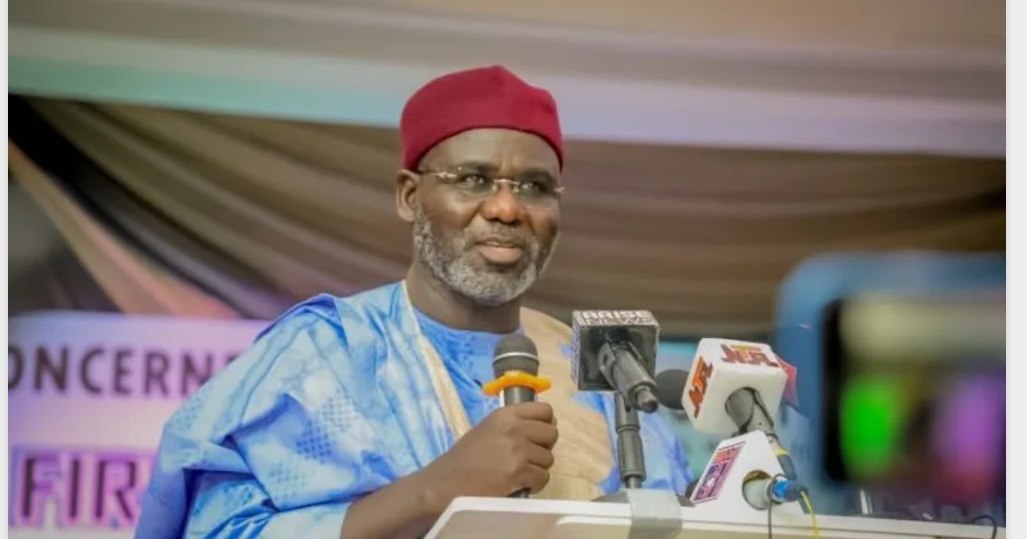
Three Years On, General Buratai Hails Tinubu’s Economic, Security Achievements
Former Chief of Army Staff, Lt. Gen. Tukur Buratai (retd.), has commended President Bola Ahmed Tinubu for what he described as bold economic reforms and improved security efforts as the President marks three years in office.
In a goodwill message on Thursday to commemorate Tinubu’s third anniversary as President and Commander-in-Chief of the Armed Forces, Buratai said the administration had taken courageous decisions that would leave a lasting impact on Nigeria’s development.

According to him, President Tinubu broke a long-standing cycle that had hindered national growth by removing fuel subsidy and implementing foreign exchange reforms aimed at stabilising the naira and strengthening the economy.
He noted that the reforms were beginning to yield positive results, citing the global acceptance of Nigerian debit cards, the gradual revival of local refineries, access to student loans, and ongoing road and infrastructure projects across the country.
“The FCT Administration has also recorded remarkable progress, completing major road projects that remained unfinished for over 16 years,” Buratai stated.
The former army chief also praised the administration’s security efforts, saying renewed military offensives against insurgents, terrorists and bandits had led to notable successes across various parts of the country.
He specifically lauded recent joint operations involving Nigerian and United States forces against Boko Haram and ISWAP in the North-East, as well as intensified counter-banditry operations in the North-West.
“We have seen notorious ISWAP commanders being neutralised. I congratulate the Commander-in-Chief, the Minister of Defence, the Chief of Defence Staff, the Service Chiefs, the Inspector-General of Police and heads of intelligence agencies for their efforts,” he said.
Buratai, however, acknowledged that challenges remained, stressing the need for more aggressive military operations and intelligence-driven strategies in the coming year.
While urging Nigerians to remain hopeful, he said celebrating the President’s achievements did not amount to ignoring the difficulties facing the nation.
“Because you truly care, you have shown the courage to trade short-term comfort for long-term hope. Nigerians need your reassurances, and that is why we remain optimistic and full of confidence,” he added.
The retired military officer reaffirmed his support for the Tinubu administration and expressed confidence that the foundation being laid by the government would deliver a brighter future for the country.
He also prayed for God’s guidance, wisdom, strength and good health for the President as he continues to lead Nigeria.

NUT Raises Alarm Over Continued Captivity of Abducted Oyo Pupils, Teachers
The Nigeria Union of Teachers has expressed deep concern over the continued captivity of pupils and teachers abducted during an attack on schools in the Ahoro-Esinle and Yawota communities in Oriire Local Government Area of Oyo State.
In a statement issued on Saturday, the Oyo State wing of the union described the situation as increasingly distressing, particularly following the emergence of a video allegedly released by the abductors showing the victims pleading for their freedom.
The union said the footage had heightened fears over the welfare of the abducted pupils and teachers, describing their ordeal as heartbreaking and unacceptable.

According to the NUT, no child or teacher deserves to be subjected to such traumatic experiences, adding that the prolonged captivity of the victims has continued to inflict psychological pain on their families, colleagues and the wider education community.
The union called on the Federal Government, Oyo State Government and relevant security agencies to intensify efforts towards securing the immediate and safe release of the victims.
“This is not a moment for hesitation. It is a moment for coordinated, intelligence-driven efforts to ensure the immediate and safe release of all abducted pupils and teachers,” the statement read.
While acknowledging ongoing interventions by security agencies and government authorities, the union stressed that time was of the essence, warning that every additional day in captivity deepens the trauma suffered by the victims.
The NUT urged security operatives to strengthen surveillance, improve community intelligence gathering and deploy all necessary operational and diplomatic measures to facilitate the rescue of the abductees.
It also appealed to traditional rulers, community leaders and residents to support rescue efforts by providing credible information that could assist security agencies.
“The safety of our children and teachers must remain a collective priority,” the union stated.
Reaffirming its support for the families of the victims, the NUT pledged continued solidarity and prayers while advocating safer learning environments across the country.
The statement was jointly signed by the Chairman of the Oyo State NUT, Comrade Hassan Ajibola Fatai, and the Secretary, Comrade Salami Olukayode.


- Africa Centres for Disease Control and Prevention (Africa CDC) Statement on Attacks Against Health Facilities During the Bundibugyo Virus Disease Response in the Democratic Republic of the Congo June 1, 2026
- Putting consumers at the centre of Africa’s dairy transformation June 1, 2026
- International Rescue Committee (IRC) warns Democratic Republic of the Congo (DRC) Ebola outbreak likely far larger than official figures suggest June 1, 2026
- South Africa: Portfolio Committee on Health Marks National Cancer Survivor Day and Reaffirms Importance of Early Detection and Public Awareness June 1, 2026
- Rwanda’s RSSB Tigers Crowned 2026 Basketball Africa League Champions June 1, 2026
- Uganda: Appointments Committee Begins Vetting of Ministerial Nominees June 1, 2026
- Sudan braces for worsening child malnutrition as pre-harvest season starts June 1, 2026
- Etu Energias Strengthens Angolan Footprint, Returns to Angola Oil & Gas (AOG) 2026 as Champion Sponsor June 1, 2026
- PayAngel Expands Global Payout Capabilities Through Collaboration with Visa and Currencycloud June 1, 2026
- From Commitment to Classrooms: Advancing Refugee Education through the United Nations High Commissioner for Refugees (UNHCR)–TECNO’s Global Partnership June 1, 2026
- Africa Centres for Disease Control and Prevention (Africa CDC) Statement on Attacks Against Health Facilities During the Bundibugyo Virus Disease Response in the Democratic Republic of the Congo June 1, 2026
- Putting consumers at the centre of Africa’s dairy transformation June 1, 2026
- International Rescue Committee (IRC) warns Democratic Republic of the Congo (DRC) Ebola outbreak likely far larger than official figures suggest June 1, 2026
- South Africa: Portfolio Committee on Health Marks National Cancer Survivor Day and Reaffirms Importance of Early Detection and Public Awareness June 1, 2026
- Rwanda’s RSSB Tigers Crowned 2026 Basketball Africa League Champions June 1, 2026
- Uganda: Appointments Committee Begins Vetting of Ministerial Nominees June 1, 2026
- Sudan braces for worsening child malnutrition as pre-harvest season starts June 1, 2026
-

 news6 months ago
WHO REALLY OWNS MONIEPOINT? The $290 Million Deal That Sold Nigeria’s Top Fintech to Foreign Interests
-

 society4 weeks ago
SOCIAL MEDIA IS NOT A BATTLEFIELD COMMAND – WHY THE NIGERIAN ARMY’S ACTION AGAINST JUSTICE CRACK IS A NATIONAL SECURITY IMPERATIVE
-

 celebrity radar - gossips4 months ago
Dr. Chris Okafor Returns with Power and Fire of the Spirit -Mounts Grace Nation Altar with Fresh Anointing and Restoration Grace on February 1, 2026
-

 celebrity radar - gossips6 months ago
Prophet Kingsley Aitafo Releases 2026 Prophecy: ‘Nigeria Will Rise, but the World Must Prepare for Turbulence’