
Uncategorized
Tukur Yusufu Buratai: Still in the Service of Fatherland

Tukur Yusufu Buratai: Still in the Service of Fatherland
Sahara Weekly Reports That Though not seen on the front pages of any Nigerian newspaper yet, there is a photograph of president-elect Bola Ahmed Tinubu of the All Progressives Congress standing with erstwhile Chief of Army Staff General Yusufu Tukur Buratai somewhere in the Federal Capital Territory. Both men are in traditional outfits, the sunniness of Tinubu’s recent electoral victory apparent from his white brocade. A head taller, Buratai is wearing an ash-coloured kaftan. Both of them are smiling, the sort of smile you glimpse on the faces of those who have gone to battle and come out victorious.

Both men have every reason to smile. For close to six years he was COAS, Buratai had to contend with the menace of Boko Haram insurgents who had most of the north east by the jugular. It was as if nothing could dislodge them, not even the formidable Nigeria Military. But then, with the full support of President Muhammadu Buhari who appointed Buratai as COAS in January 2015, along with other service chiefs, the frightening spectre of Boka Haram became history.
Today, Nigeria’s COAS from 2015 – 2021 can chest-thump anywhere about his achievements in decimating the ranks and file of the religious sect. It was during his time as COAS that the mouthy and cocky former head of Boko Haram Abubakar Shekau was annihilated, counting many of the senior commanders of the insurgents.
Though under intense pressure to relieve his service chiefs for underwhelming performance in the face of the worsening security situation in Nigeria at some crucial point, PMB refused to bow under. He knew for certain they were right on track in containing the scourge of Boko Haram however much the general public may think differently. And true to his belief and trust in them, the service chiefs had done some appreciable job in wiping out whatever was remaining of the terrorist organisation in Nigeria.
Of course, for a job well done, PMB rewarded Buratai with an ambassadorial posting to the Republic of Benin, a position he occupies to this day. It is a record in the history of Nigeria for a retired service chief to be thus rewarded by the Commander-in-Chief. Some of those who came before him were either disgraced out of office or simply went into oblivion. Nothing much was heard of them post-military career.
It is not hard to see why. They either performed below par or didn’t meet the expectations required of them while in office. For Buratai, it was the exact opposite. Making him the public face of Nigeria’s image in a neighbouring West African country says much for the trust and confidence reposed in him by PMB. So far, Buratai has not disappointed in his mission – another reason, perhaps, for the straight-from-the-gut smile with the president-elect in a photo-op taken about three weeks ago just on the cusp of Tinubu’s electoral victory in the February 25 presidential polls.
As for Tinubu himself, his smiling visage in the picture was just so apt considering the numerous obstacles he has had to overcome on his road to the presidency. Prior to the election last February, Tinubu was fair game for all manner of jibes and put-downs more than any of his political opponents. Critics, especially from the opposition parties, took him to the cleaners serially, asterisking everything from his provenance to his educational qualification and health. Some called him a drug dealer who, at one time, had a case to answer with the American Drug Enforcement Agency. Others carped that he’s had the state he once ruled as governor smack in his pocket for years, starting from 1999.
Tinubu’s traducers grew as the election got closer and they found more ammunition to lob at him following his now famous Emi ‘lokan declaration in Abeokuta last June. What insouciance! What arrogance! And how dare he?
For some time in both the mainstream and social media, Emi ‘lokan became the subject of discussion everywhere in the country. Having made the emergence of PMB possible in 2015, Tinubu had let on that it was his turn to rule Nigeria, and then explained it was his lifelong ambition to become that.
To most critics, nothing smacks of hubris more than that statement, something close to saying Nigeria belongs to a certain class of people of which Tinubu himself is one and now it was his turn to become president. From then on, it seemed all was lost for the man who would be the number one citizen in the country. Though he won his party’s primaries handily, the bigger battle was expected in the presidential election.
With the rising profile and popularity of a previously unknown Peter Obi of the Labour Party, a battle-scarred political gladiator in the person of Atiku Abubakar of Peoples Democratic Party, it was sure to be a keenly contested election with no chances of success for a candidate from the ruling party with a rap sheet hanging on its neck. Nearly everyone – including members of the party – blamed APC for everything from a spiraling economy to unemployment, insecurity and much else.
“Never again,” they swore, often thumbing their noses at the party leadership. “It was this same man who got us into this mess with that unholy alliance in 2015,” others charged, vowing to take their pound of flesh in the forthcoming election. It never got to be.
Instead, the Jagaban of Borgu also known by several aliases won, defeating his opponents by nearly two million votes. Why wouldn’t that victory, against all possible odds, elicit the sweet smile of success you see on his face with the former COAS?
But beyond the smile is Buratai’s unflinching support for the new president-elect, which explains the photo-op. Those in the know say the former COAS had always given a nod to a Tinubu presidency. For instance, when some prominent Nigerians, among them former president Olusegun Obasanjo, faulted the credibility of the polls that brought Tinubu to power, Buratai quickly stepped forward to defend democracy. He didn’t stop there; he was one of the first Nigerians to congratulate the president-elect.
“Let me begin by congratulating Nigerian voters who turned out on the 25th of February 2023 to exercise their civic duty and voted en-masse Asiwaju Bola Tinubu of the APC as our President-Elect,” Buratai said, insisting “It is a clear reflection of the will of the people.”
Continuing, the former COAS declared: “At this juncture, I say with all sense of responsibility that our collective future is assured under the renewed hope vision and mission of Asiwaju Bola Tinubu. I believe the President-elect is a man of capacity, empathy, vision, and all that it takes to lead Nigeria to the Promised Land.”
With Tinubu’s emergence, the general went on, “continuity has been achieved at the Federal level with the emergence of Asiwaju Bola Ahmed Tinubu as the President-Elect from the APC.”
To be sure, it is a good thing the former COAS is still lending his voice to matters of national concern. On retirement, some generals in the Nigeria Army, especially those from the northern part of the country, turn their attention to what they’ve always done side by side their military career: farming. Some others are content with being traditional rulers of their natal communities, an emirate council, say, or some such important positions bestowed on them in appreciation of services rendered to the communities.
True, Buratai has his farm to look after post-COAS even while he’s engaged as an ambassador of the Federal Republic. But if you looked at his itinerary in last couple of weeks, the man has been up about, stopping over at communities just on a whim to feel the pulse of the villagers and how they are doing generally.
At the peak of his power in the Abbasid Dynasty in 8th century Baghdad, fifth caliph Haroun Al Rachid used to surprise his subjects with unannounced nocturnal visits thus getting to know them closely. Buratai is not a traditional ruler anywhere in the north. Still, acquainting himself with the wellbeing or otherwise of those in some communities is something that has driven him.
In one such community in Gombe state last week, the former COAS is seen in a one-on-one with the senior citizens of that settlement. With one voice and later speaking for the rest, the oldest among them thanked Buratai for his accomplishment in curtailing and even stopping the Boko Haram insurgents dead on their tracks in the north east then made some comparisons to late Abubakar Tafawa Balewa and Sardauna of Sokoto, Sir Ahmadu Bello for their developmental efforts in the region.
When the guest humbly asked if they meant what they said, they acquiesced by nodding their heads in the affirmative. Smack in the centre of the community with the traditional ruler himself speaking, anyone can be forgiven for mistaking the parley between them and Buratai for a politician on the stump. He wasn’t and neither was the community hamming it the way they welcome those seeking for office prior to elections.
Now that he is a private citizen, farmer, statesman and APC stakeholder, the retired general visited some previously war-ravaged settlements in the north east. He has also visited his own natal Biu where he recently received locals during a visit to his farm. It is typical of a gentleman and an officer who has never lacked the common touch.
One distinctive quality of outstanding leaders everywhere is that, regardless of whether they hold an official position, people just accept their authority and submit to them as a result of their charisma and influence. Even though Buratai has already retired from the army since 2021, Nigerians still regard him as the epitome of the army and turn to him for leadership. Buratai is viewed by Nigerians as someone who can take huge risks to protect them, and I believe that over time, people have come to agree that he represents security and protection.
Only a few years ago as COAS, Nigerians frequently saw Buratai in army fatigues exercising with soldiers under him – effortless push-ups, sit-ups, road work and suchlike workouts to keep body and mind in shape. Now out of service, it is impossible to imagine the erstwhile COAS forgetting his routine morning drills – whether in a private or public gym.
What has also been part of his regular schedule is his active involvement in politics. A high-ranking member of the APC, his early congratulatory message to and support for the president-elect is not for nothing, say political analysts. Will the retired general make a stab at political office in the future?
It is not an unlikely prospect. Today, Air Vice Marshal Siddique Abubakar Chief of Air Staff appointed at the same time with Buratai in 2015 is angling to be governor of Bauchi state under the APC. Given the active participation and involvement of former military brass in Nigeria’s political space, nothing suggests Buratai will not take his turn when that plum opportunity presents itself.
After putting an end to the scourge of Boko Haram, and then served meritoriously as Nigeria’s ambassador to the republic of Benin, pursuing a political career will be a continuation of Buratai’s service to fatherland.





FOPCHEN Calls for Dialogue as Court Fixes May 28 for Continuation
OTA, OGUN STATE — Proceedings in a widely followed legal case resumed on March 24, 2026, at the High Court of Ogun State, Ota Division, ending with a fresh adjournment as the court fixed May 28, 2026, for continuation.
During the session, legal representatives for all parties restated their positions and addressed preliminary matters, laying the groundwork for more substantive arguments at the next hearing. Observers noted that the case continues to attract significant public attention due to its perceived implications for law, culture, and societal values.
The Foundation for the Protection of Cultural Heritage in Nigeria (FOPCHEN) used the occasion to reiterate its call for constructive national dialogue. The group emphasized that while the judicial process must be respected, broader societal engagement remains essential.
According to the organization, issues relating to values, responsibility, and cultural identity should not be confined solely to courtroom deliberations but should involve active participation from various sectors of society.
Legal analysts present at the proceedings described the matter as one with far-reaching implications, noting that arguments advanced in court could shape future interpretations surrounding sensitive cultural and moral questions.
The presiding judge subsequently adjourned the case to May 28, granting all parties time to refine their submissions and respond to issues raised during the hearing.
As anticipation builds ahead of the next court date, Nigerians across different sectors continue to monitor developments closely, keen to see how the judiciary navigates the delicate balance between constitutional rights and cultural expectations.
Uncategorized
CRG: Politicians Must Stop Witch-Hunting, Focus on Nation Building — Says NYSC Cleared Deputy Speaker Since 2023
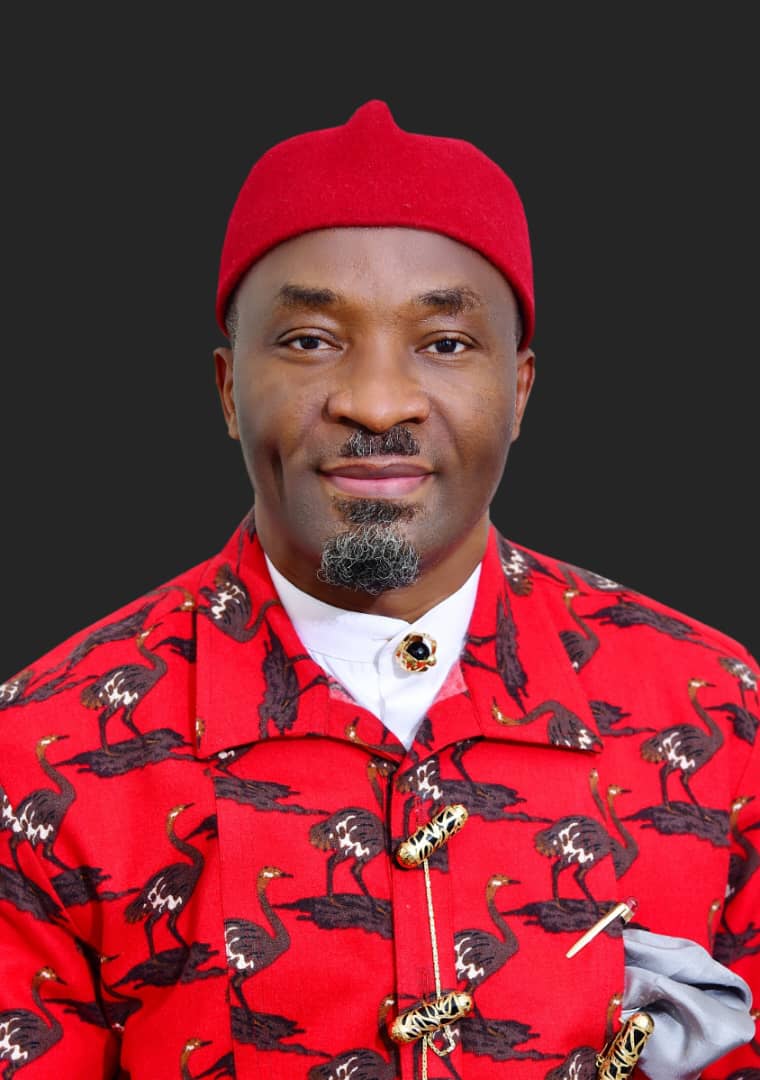
CRG: Politicians Must Stop Witch-Hunting, Focus on Nation Building — Says NYSC Cleared Deputy Speaker Since 2023
By: Boye Ola
The Centre for Responsible Governance (CRG) has called on political actors and interest groups to desist from what it described as needless witch-hunting of the Deputy Speaker of the House of Representatives, Benjamin Okezie Kalu, following renewed controversies surrounding his National Youth Service Corps records.
The organisation noted that the clarification by the National Youth Service Corps (NYSC) regarding the matter is not a recent development, as a formal verification letter had already been issued as far back as May 23, 2023.
The letter, referenced NYSC/CCD/VER/10/5.1/VOL1/02, had already addressed and cleared the questions surrounding the Deputy Speaker’s NYSC records.
Reacting to the renewed debate, the spokesman of the Centre,
Obande George, said it was troubling that issues which had already been clarified by a competent national institution were being resurrected for political purposes.
According to him, the time has come for political actors to move away from destructive engagements and concentrate on building the nation.
“It is important to note that the NYSC had already issued a verification letter dated May 23, 2023 addressing the matter.
Reopening issues that have already been clarified by a competent authority suggests that some individuals are more interested in political witch-hunting than in national progress,” George said.
The CRG stressed that democracy thrives when institutions are respected and their determinations are accepted in good faith rather than constantly questioned for political advantage.

George also commended the Deputy Speaker for demonstrating maturity and composure throughout the controversy, despite what he described as sustained provocations.
“Honourable Benjamin Kalu has shown remarkable calm and maturity in the face of intense public scrutiny and political provocation.
Instead of engaging in unnecessary public confrontation, he allowed institutions to speak through their records.”
The Centre warned that Nigeria’s political culture must evolve beyond constant character attacks and sensational allegations, which often distract public officials from their responsibilities.
According to the organisation, the country’s development requires constructive engagement among political actors rather than continuous attempts to discredit opponents.
“Nigeria cannot move forward if political energy is constantly spent on digging up allegations and amplifying rumours. Our leaders and political actors must redirect their focus to governance, policy and nation building.”
CRG therefore urged Nigerians to rely on verified information from credible institutions and avoid spreading speculative claims that could damage reputations or destabilise public discourse.
The organisation reiterated that respect for due process and institutional integrity remains essential for strengthening Nigeria’s democracy.

@The Centre for Responsible Governance, Email: [email protected], Instagram: crgngo6, Twitter: crgng06, Threads: crgngo6
Uncategorized
IWD 2026: Ajadi Celebrates Women, Urges Them To Seek More Elective Positions In Future Elections

IWD 2026: Ajadi Celebrates Women, Urges Them To Seek More Elective Positions In Future Elections
A Leading People’s Democratic Party, (PDP) Governorship Aspirant in Oyo State, Ambassador Olufemi Ajadi Oguntoyinbo has felicitates with women in the country on the occasion of this year’s International Women’s Day.
The international Women’s Day is celebrated on 8 March, commemorating women’s fight for equality and liberation along with the women right’s movement. It gives focus to issues such as gender equality and reproductive rights. International Women’s Day originated from labour movements in Europe and North America during the early 20th century.
In a statement issued on Sunday to commemorate this year’s edition of the International Women’s Day, Ajadi said the role of the women in nation building cannot be over emphasised.
He recalled the role played by prominent Nigerian women like Mrs Funmilayo Ransome- Kuti, Margaret Ekpo and Wuraola Esan towards the liberalization and the growth of the country and urges women to follow their footsteps by not only participate in the political process but seek more elective positions.
He urges the political leaders to encourage and give more chances to women for them to contest and occupy elective positions in the country.
Ajadi also called for more respect for women, saying they are definitely behind whatever success recorded by the menfolk.
He said domestic violence against women should be stopped, saying they deserves respect for their role in moulding the future leaders.
According to the statement, “I celebrate and congratulate our women on this year’s occasion of International Women’s Day. We cannot underestimate the role played by our women both at home, in the social circle and in politics. They deserve more respect.
“I equally called on them not only to be a passive participants in politics but to determine to seek more elected positions in future elections. They should aspire more from the position of dancing and singing at campaigns to seek more elective positions. The ratio of men to women in elective positions in the country is embarrassing. Women should stand up and fight for more elective positions.
“I also use the occasion of this year’s Women’s Day to appeal to Nigerians to stop domestic violence against the women. If we treat our women well, our country will witness unprecedented developments”.


-

 society6 months ago
Religion: Africa’s Oldest Weapon of Enslavement and the Forgotten Truth
-

 news4 months ago
WHO REALLY OWNS MONIEPOINT? The $290 Million Deal That Sold Nigeria’s Top Fintech to Foreign Interests
-

 society6 months ago
“You Are Never Without Help” – Pastor Gebhardt Berndt Inspires Hope Through Empower Church (Video)
-

 celebrity radar - gossips2 months ago
Dr. Chris Okafor Returns with Power and Fire of the Spirit -Mounts Grace Nation Altar with Fresh Anointing and Restoration Grace on February 1, 2026