
society
U.S. Visa Policy Overhaul 2026: Africa’s Travelers Confront Stricter Entry Rules, Costly Processes and Heightened Surveillance.

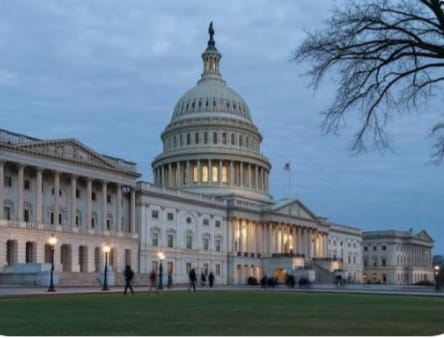
U.S. Visa Policy Overhaul 2026: Africa’s Travelers Confront Stricter Entry Rules, Costly Processes and Heightened Surveillance.
By George Omagbemi Sylvester | Published by saharaweeklyng.com
“Why Egyptians, South Africans, Nigerians, Ghanaians, Moroccans, Zimbabweans, and Others Must Brace for a More Challenging U.S. Visa Landscape.”
In 2026, a sweeping transformation of United States visa policy is reshaping how Africans (particularly Egyptians, South Africans, Nigerians, Ghanaians, Moroccans and Zimbabweans) must prepare for travel to the United States. What was once a predictable application process has evolved into a highly digital, more intrusive, costlier, and slower vetting system. These changes, driven by U.S. national security priorities and immigration control objectives, leave no stone unturned: from financial burdens and biometric surveillance to mandatory digital footprint disclosures and intensified scrutiny of personal ties to one’s home country.

This detailed analysis unpacks the full scope of these policies, offers context from official sources, and provides expert perspectives on the broader implications for African travelers and global mobility.
A Paradigm Shift in U.S. Visa Screening.
Beginning late 2025 and rolling into 2026, the U.S. government has implemented a comprehensive set of policies aimed at enhancing security and reducing illegal immigration. Central to these reforms are expanded digital vetting requirements and enhanced biometric data collection.
Expanded Digital Footprint Requirements. Visa applicants (across almost all nonimmigrant categories) are now required to disclose extensive digital histories, including:
Social media accounts and activities covering the past five years, requiring applicants to provide all usernames and handles used during that period.
Email addresses used in the last 10 years, and detailed contact information.
Telephones, IP address metadata and other digital identifiers as part of the new vetting rules.
These requirements are not theoretical, they form part of the mandatory information fields on visa application forms and are enforced with unprecedented rigor.

According to U.S. Customs and Border Protection (CBP) proposals, these expanded disclosures will also extend to visa-exempt visitors under the Electronic System for Travel Authorization (ESTA). That means even tourists who previously avoided the standard visa process may soon be subject to the same intrusive data demands.
As Sophia Cope, senior staff attorney at the Electronic Frontier Foundation, cautions, “Efforts to use social media surveillance against non-citizens have chilled free speech and invaded the privacy of innocent travelers” a perspective echoed by digital rights defenders worldwide.
New Financial Burdens: Integrity Fees and Hidden Costs. Another pivotal change is the imposition of a $250 Visa Integrity Fee on nonimmigrant visa applicants from many African countries. This fee is charged in addition to the standard visa application costs (e.g., the $185 base fee for many tourist and business visas), dramatically raising the total expense of a U.S. visa.
For many Africans seeking to travel for tourism, business, education, or family reasons, this is a significant financial barrier. Experts argue that this policy goes beyond standard administrative costs and it constitutes an economic burden that disproportionately affects lower-income applicants and families.
Biometrics and Selfies: Surveillance Goes Mainstream
Beyond digital footprints, biometric data collection has become central:
Real-time biometric selfies submitted via mobile apps.
Facial recognition at departure and arrival points, expanding the scope of surveillance at U.S. borders.
Mandatory fingerprint, facial, and other biometric checks even for travelers entering and exiting the U.S.
These tools are designed to confirm identity and prevent document fraud. However, privacy advocates warn that they raise serious concerns about biometric data security, racial bias in facial recognition systems and state overreach.

Slower Processing and Administrative Delays. One of the most disruptive outcomes of these policies is the lengthening of visa processing times. Travel and visa appointment backlogs have surged as consular officers across U.S. embassies and consulates worldwide take time to sift through larger digital dossiers.
In India alone, thousands of visa interviews were cancelled or rescheduled into 2026 following the rollout of these measures which means a sign of the logistical strain these rules are placing on diplomatic missions.
For Africans, this means that interview appointments (particularly for work, study and family visas) may be delayed, rescheduled, or subject to extended administrative processing (often marked by the opaque “221(g)” status). These delays can derail travel plans, educational pursuits, and economic opportunities.
Country-Specific Realities: Facing the New Normal.
Egypt: Digital Complexity and Costs. Egyptian nationals now face a digitized and documentation-heavy visa process. From higher application costs to compulsory social media and email disclosures, travelers must navigate a complex digital minefield that increases the likelihood of processing delays and administrative holds.
Nigeria: Rigorous Scrutiny Amid Partial Entry Restrictions. Nigeria has faced some of the toughest vetting measures in the 2026 policy shift. Persistent concerns over visa overstays have led to partial entry restrictions in certain categories, tighter scrutiny of applications and even occasional requests for DNA verification in family-based cases and a clear escalation of enforcement stringency.
South Africa: Higher Costs, Longer Waits. South Africans remain outside the Visa Waiver Program, meaning they must pay the new Integrity Fee and undergo all updated digital and biometric vetting. Travelers report longer processing times and increased uncertainty when traveling for work or business.
Morocco & Ghana: Enhanced Verification. Moroccan travelers are subject to live GPS-linked biometric selfies and detailed family data collection, while Ghanaian applicants face increased professional and financial scrutiny, this including checks against online professional profiles.
Zimbabwe: Restricted Services. Routine visa services in Harare have been scaled back for non-emergency applicants, pushing many to navigate extra biometric requirements and face processing delays.
What Experts Are Saying:
Dr. Elena Moreno, a leading immigration policy analyst at the Global Mobility Institute, argues:
“These reforms represent a tectonic shift in how the U.S. calculates risk. It is no longer solely about legality of intent or demonstrable ties to home countries, but it is about digital and biometric footprints. Applicants from countries with significant diaspora presence in the U.S. now find their every online expression on record.”
Likewise, Professor Kwame Mensah, an African migration scholar, asserts:
“These policies disproportionately affect Africans whose online presence is increasingly global. What used to be private social engagement now determines access to opportunity.”
These expert views capture both the rational security objectives behind the reforms and the social costs they carry for millions of prospective travelers.
The Road Ahead: Navigating the New Visa Landscape. To mitigate setbacks and disruptions, travelers are advised to:
Prepare digital histories meticulously, including compiling lists of past social media accounts and email identifiers.
Plan for longer timelines by applying as early as possible.
Monitor embassy and CBP announcements for procedural updates.
Consult immigration professionals when in doubt.
Above all, travelers should understand that these are structural changes, not temporary measures.
Final Thoughts: In 2026, the U.S. has ushered in a new era of visa administration and one grounded in data, surveillance and heightened caution. While framed as national security and illegal immigration control imperatives, these policies carry substantial implications for privacy, global mobility, and the freedom of movement for millions of Africans.
For Egyptians, South Africans, Nigerians, Ghanaians, Moroccans, and Zimbabweans, this represents a fundamental recalibration of what it means to seek entry to the United States, a journey that is now digital, costly, intrusive and unpredictable.
The challenge for African governments, civil society, and international stakeholders will be ensuring that these measures do not undermine the very global cooperation and exchange they purport to secure.






UKA Gears Up for Final ATC Exchangeability Test Run as June Preparations Begin.
May 30, 2026 – As the month of June gathers momentum, the *United Kingdom of Atlantis, UKA*, a sovereign nation has unveiled a series of vital guidelines and preparatory packages to ensure citizens and stakeholders run the *ATC Exchangeability* process effectively.
In an official update, the *President of Atlantic Crown Limited, Empress of Attica Empire UKA*, confirmed that the *Final Test Run of ATC Exchangeability* is scheduled for the month of June 2026. The exercise marks a key phase ahead of the *Official Exchangeability Window, set to run from July 2026 to February 2027*.
### Key Highlights from the Presidential Briefing
1. *Final Test Run – June 2026*
The test run is designed to validate systems, procedures, and user readiness before full activation. Citizens, partners, and designated participants are urged to follow all official advisories released by UKA authorities during this period.
2. *Official Exchangeability Period*
Following the successful completion of the June test run, the Official Exchangeability will commence in july 2026 and we are Expecting Full Exchange ability between July Ending, 2026 to February 2026.
UKA stated that detailed schedules, eligibility requirements, and step-by-step instructions will be communicated progressively through verified UKA channels.
3. *Benefiting Packages for June*
In line with UKA’s commitment to citizen empowerment, the month of June will feature “benefiting packages” aimed at education, preparation, and seamless onboarding. These packages are intended to equip the people of UKA with the knowledge and tools needed for effective participation.
4. *Commitment to Transparency*
Addressing the nation, the Empress of Attica Empire UKA emphasized:
_“Final Test Run of ATC Comes up in The Month of June, As We Prepare For The Official Exchangeability, Between July 2026 To Feb 2027. All Information Will Be Communicated.”_
UKA reaffirmed that only information released through official UKA platforms should be regarded as authoritative.
The United Kingdom of Atlantis is encouraging all citizens, representatives, and interested parties to remain alert to official communications, attend designated orientation sessions, and avoid unofficial sources. UKA’s dedication to order, clarity, and the collective benefit of its people as the nation moves into this significant phase.
For updates, advisories, and participation guidelines, citizens are advised to monitor official UKA communication channels.
United Kingdom of Atlantis, UKA, is a sovereign nation, committed to national development, citizen welfare, and structured economic participation through initiatives such as ATC Exchangeability.

Three Years On, General Buratai Hails Tinubu’s Economic, Security Achievements
Former Chief of Army Staff, Lt. Gen. Tukur Buratai (retd.), has commended President Bola Ahmed Tinubu for what he described as bold economic reforms and improved security efforts as the President marks three years in office.
In a goodwill message on Thursday to commemorate Tinubu’s third anniversary as President and Commander-in-Chief of the Armed Forces, Buratai said the administration had taken courageous decisions that would leave a lasting impact on Nigeria’s development.

According to him, President Tinubu broke a long-standing cycle that had hindered national growth by removing fuel subsidy and implementing foreign exchange reforms aimed at stabilising the naira and strengthening the economy.
He noted that the reforms were beginning to yield positive results, citing the global acceptance of Nigerian debit cards, the gradual revival of local refineries, access to student loans, and ongoing road and infrastructure projects across the country.
“The FCT Administration has also recorded remarkable progress, completing major road projects that remained unfinished for over 16 years,” Buratai stated.
The former army chief also praised the administration’s security efforts, saying renewed military offensives against insurgents, terrorists and bandits had led to notable successes across various parts of the country.
He specifically lauded recent joint operations involving Nigerian and United States forces against Boko Haram and ISWAP in the North-East, as well as intensified counter-banditry operations in the North-West.
“We have seen notorious ISWAP commanders being neutralised. I congratulate the Commander-in-Chief, the Minister of Defence, the Chief of Defence Staff, the Service Chiefs, the Inspector-General of Police and heads of intelligence agencies for their efforts,” he said.
Buratai, however, acknowledged that challenges remained, stressing the need for more aggressive military operations and intelligence-driven strategies in the coming year.
While urging Nigerians to remain hopeful, he said celebrating the President’s achievements did not amount to ignoring the difficulties facing the nation.
“Because you truly care, you have shown the courage to trade short-term comfort for long-term hope. Nigerians need your reassurances, and that is why we remain optimistic and full of confidence,” he added.
The retired military officer reaffirmed his support for the Tinubu administration and expressed confidence that the foundation being laid by the government would deliver a brighter future for the country.
He also prayed for God’s guidance, wisdom, strength and good health for the President as he continues to lead Nigeria.

NUT Raises Alarm Over Continued Captivity of Abducted Oyo Pupils, Teachers
The Nigeria Union of Teachers has expressed deep concern over the continued captivity of pupils and teachers abducted during an attack on schools in the Ahoro-Esinle and Yawota communities in Oriire Local Government Area of Oyo State.
In a statement issued on Saturday, the Oyo State wing of the union described the situation as increasingly distressing, particularly following the emergence of a video allegedly released by the abductors showing the victims pleading for their freedom.
The union said the footage had heightened fears over the welfare of the abducted pupils and teachers, describing their ordeal as heartbreaking and unacceptable.

According to the NUT, no child or teacher deserves to be subjected to such traumatic experiences, adding that the prolonged captivity of the victims has continued to inflict psychological pain on their families, colleagues and the wider education community.
The union called on the Federal Government, Oyo State Government and relevant security agencies to intensify efforts towards securing the immediate and safe release of the victims.
“This is not a moment for hesitation. It is a moment for coordinated, intelligence-driven efforts to ensure the immediate and safe release of all abducted pupils and teachers,” the statement read.
While acknowledging ongoing interventions by security agencies and government authorities, the union stressed that time was of the essence, warning that every additional day in captivity deepens the trauma suffered by the victims.
The NUT urged security operatives to strengthen surveillance, improve community intelligence gathering and deploy all necessary operational and diplomatic measures to facilitate the rescue of the abductees.
It also appealed to traditional rulers, community leaders and residents to support rescue efforts by providing credible information that could assist security agencies.
“The safety of our children and teachers must remain a collective priority,” the union stated.
Reaffirming its support for the families of the victims, the NUT pledged continued solidarity and prayers while advocating safer learning environments across the country.
The statement was jointly signed by the Chairman of the Oyo State NUT, Comrade Hassan Ajibola Fatai, and the Secretary, Comrade Salami Olukayode.


- Pitcher Awards Announces 2026 Winners, Marking a Landmark Year for Pan‑African Creativity May 30, 2026
- Ghana Commemorates 78th International Day of United Nations Peacekeepers May 30, 2026
- South Africa: President Ramaphosa receives second interim report of Madlanga Commission May 30, 2026
- Asmara Marathon 2026 to be held May 30, 2026
- Powerful call for dialogue and compromise to secure peace in South Sudan issued on International Peacekeepers Day May 30, 2026
- Over 1,000 Participants Join Rwenzori Marathon Activation Run in Mombasa May 30, 2026
- World Health Organization (WHO) actively participated in the 2nd Summit on Healthcare Integration in Portuguese-speaking countries May 30, 2026
- Annual Meetings (AM) 2026: “Africa has what It takes” - Experts call for stronger financial systems to help Africa mobilise capital at scale May 30, 2026
- Eritrea Participates at Organization of African, Caribbean and Pacific States Meetings May 30, 2026
- Annual Meetings 2026 (AM2026): African Development Bank Group’s 2025 Annual Report Highlights Strong Results and a New Chapter for Africa’s Transformation May 29, 2026
- Pitcher Awards Announces 2026 Winners, Marking a Landmark Year for Pan‑African Creativity May 30, 2026
- Ghana Commemorates 78th International Day of United Nations Peacekeepers May 30, 2026
- South Africa: President Ramaphosa receives second interim report of Madlanga Commission May 30, 2026
- Asmara Marathon 2026 to be held May 30, 2026
- Powerful call for dialogue and compromise to secure peace in South Sudan issued on International Peacekeepers Day May 30, 2026
- Over 1,000 Participants Join Rwenzori Marathon Activation Run in Mombasa May 30, 2026
- World Health Organization (WHO) actively participated in the 2nd Summit on Healthcare Integration in Portuguese-speaking countries May 30, 2026
-

 news6 months ago
WHO REALLY OWNS MONIEPOINT? The $290 Million Deal That Sold Nigeria’s Top Fintech to Foreign Interests
-

 society4 weeks ago
SOCIAL MEDIA IS NOT A BATTLEFIELD COMMAND – WHY THE NIGERIAN ARMY’S ACTION AGAINST JUSTICE CRACK IS A NATIONAL SECURITY IMPERATIVE
-

 celebrity radar - gossips4 months ago
Dr. Chris Okafor Returns with Power and Fire of the Spirit -Mounts Grace Nation Altar with Fresh Anointing and Restoration Grace on February 1, 2026
-

 celebrity radar - gossips6 months ago
Prophet Kingsley Aitafo Releases 2026 Prophecy: ‘Nigeria Will Rise, but the World Must Prepare for Turbulence’