
society
UNCOMMON RECOGNITION: Ogun Governor Dapo Abiodun Gifts Car, House to Nigeria’s Best Teacher

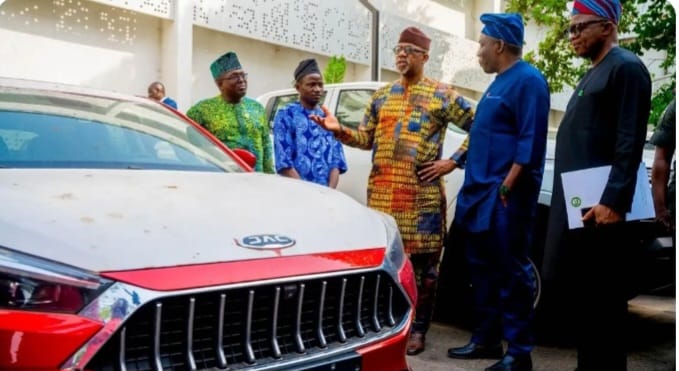
UNCOMMON RECOGNITION: Ogun Governor Dapo Abiodun Gifts Car, House to Nigeria’s Best Teacher
By George Omagbemi Sylvester
“State and federal authorities jointly honour Solanke Francis Taiwo in Abeokuta, underscoring the strategic role of teacher motivation and education reform in Nigeria’s human capital development agenda.”
In a move that has sharply refocused national attention on education excellence, Dapo Abiodun has formally rewarded Mr. Solanke Francis Taiwo, a primary school teacher from Ansa-Ur-Deen Main School I, Kemta Lawa, Abeokuta, with a brand-new car and a two-bedroom house following his emergence as Nigeria’s Overall Best Primary School Teacher for the 2025/2026 academic session. The presentation occurred at the Governor’s Office in Oke-Mosan, Abeokuta on 20 February 2026, witnessed by the Commissioner for Education, Science and Technology and senior ministry officials.
Mr. Solanke’s achievement was first nationally recognised earlier this year at the National Teachers’ Summit in Abuja, where he received a ₦50 million cash award for his outstanding dedication and measurable impact in the classroom.
Governor Abiodun clarified that while the bungalow is being provided under the Ogun State Housing Scheme, the car gift was donated by the Federal Government as part of its broader national recognition of exceptional educators. The governor used the occasion not just to celebrate Solanke’s personal excellence, but to showcase what he described as the tangible outcomes of focused policy and sustained investment in education.
Speaking on the reforms driving this achievement, Prof. Abayomi Arigbagbu, the state’s Education Commissioner, tied the success to the Ogun State Education Revitalisation Agenda; a multi-pillar programme that prioritises curriculum enhancement, improved school management, teacher welfare, infrastructure upgrades, digital learning and professional development. “When you implement policies consistently and efficiently, you will continue to record results,” Arigbagbu said, pointing to back-to-back national accolades for Ogun teachers as evidence of meaningful sector transformation.
Experts in education policy have long emphasised the strategic importance of recognition and reward in strengthening teacher motivation and retention. As educational researcher Dr. Linda Darling-Hammond noted, “Sustained improvements in learning outcomes require environments where teachers are both valued and empowered.” While Nigeria grapples with challenges in schooling quality and teacher support, recognitions of this nature symbolise a positive paradigm shift when carefully institutionalised.
Critically, this development also underscores the often-neglected intersection between governance and human capital development; where targeted incentives can elevate the profession’s status and potentially improve learner outcomes. State authorities in Ogun have argued that such incentives are part of a broader ecosystem approach to education reform.
Mr. Solanke, in his remarks, urged fellow educators to view his recognition as a call to persist in uplifting teaching standards. “I promise to continue giving my best to make Ogun State proud,” he said, reflecting a deep professional commitment that goes beyond personal accolades.
In a climate where education systems across Africa seek scalable models of reform, the province’s spotlight on teacher excellence resonates beyond Ogun’s borders, offering a compelling case study of policy, performance and public affirmation converging for societal benefit.





*PDP CHIEFTAIN, ONIRETI RESIGNS FROM PARTY, CITES PERSONAL REFLECTION
A former House of Representatives candidate, Olufemi Onireti, has formally resigned his membership of the Peoples Democratic Party (PDP) in Oyo State.
His resignation was conveyed in a letter addressed to the Chairman of PDP Osupa Ward 9, Ogbomoso North Local Government, on Thursday.
Onireti described the decision as a difficult but necessary step after what he termed a period of “deep personal reflection.”
“I hereby formally resign my membership of the Peoples Democratic Party (PDP), effective immediately,” he wrote.
He acknowledged his years of active involvement in the party, including contesting for the House of Representatives in the last general election, noting that the PDP had offered him a platform for political participation, service, and growth.
Despite his exit, Onireti expressed appreciation to party leaders and members for the support he enjoyed over the years.
“I remain grateful for the opportunity to serve and for the relationships and experiences I gained during my time in the party.
I wish the party well in its future endeavours,” he added.
The development is expected to generate discussions within the Ogbomoso North political circle, as observers await his next political move.
society
Harmony Garden Boss, Mr Ibile Celebrates Mogaji Wole Arisekola, Hails Legacy of Leadership and Excellence
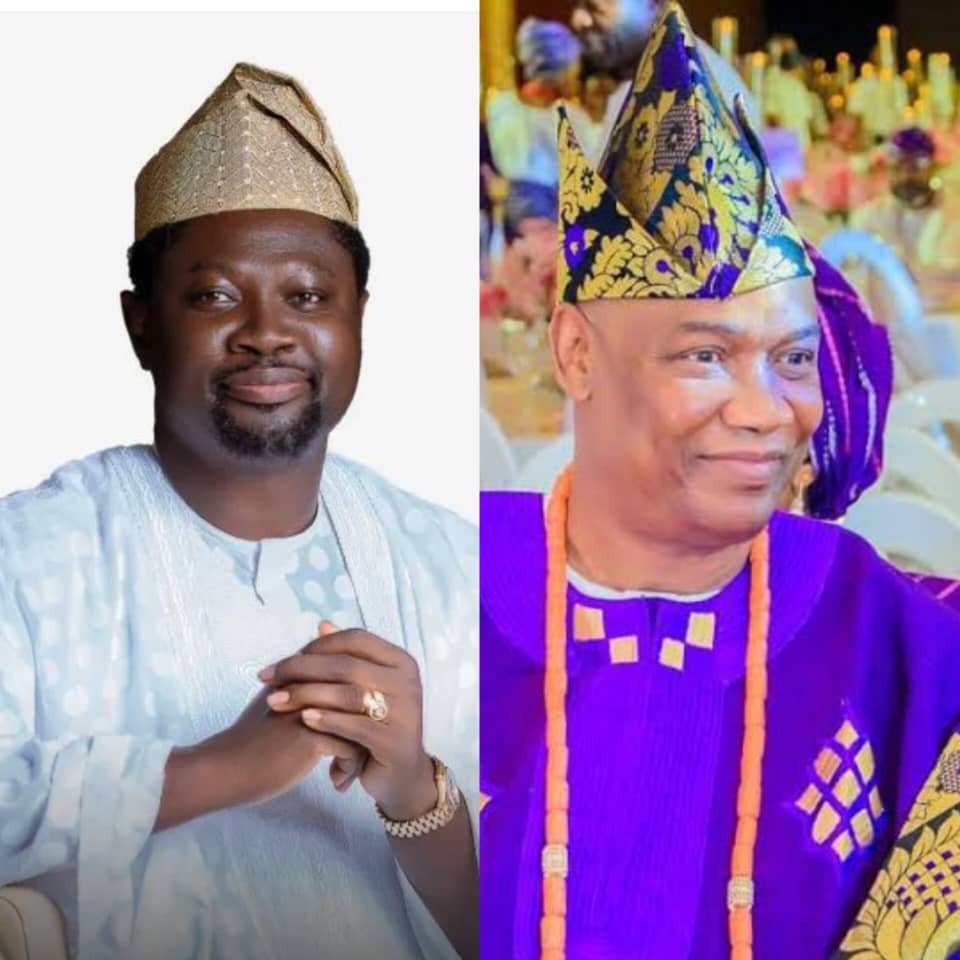
Harmony Garden Boss, Mr Ibile Celebrates Mogaji Wole Arisekola, Hails Legacy of Leadership and Excellence
Renowned real estate entrepreneur and Chief Executive Officer of Harmony Garden & Estate Development Limited, Hon. Dr. Saheed Audullahi Mosadoluwa aka Mr Ibile, has paid glowing tribute to elder statesman, Mogaji Wole Arisekola, in a heartfelt birthday message that has drawn admiration across social circles.
In a message shared on his official platform, Dr. Saheed described the celebrant as “a remarkable man, a pillar of strength, wisdom, and legacy,” highlighting his enduring influence on family, community, and leadership circles. The tribute, written on behalf of himself and his children, praised Arisekola’s life as one that continues to inspire greatness and unwavering commitment to service.
“Iba Eni for Agba Imole,” he wrote, emphasizing deep respect and reverence for the celebrant’s impactful life. According to him, Arisekola’s voice remains respected, while his legacy is firmly rooted in honor and excellence, qualities that have defined his journey over the years.
Offering prayers for continued good health, long life, and greater accomplishments, Mosadoluwa concluded by wishing the elder statesman a peaceful and joyful new year, filled with divine blessings. The message has since resonated with admirers, further reinforcing the strong bond between the two figures and celebrating a legacy of influence and integrity.
celebrity radar - gossips
Accolades to Empress Genevieve Wining as she Celebrate birthday in Grand style

Accolades to Empress Genevieve Wining as she Celebrate birthday in Grand style
Emmanuel Clement
Vilnius, Lithuania – The Grand Hotel Vilnius will host a grand birthday celebration in honor of Her Majesty The Empress Genevieve Wining of the United Kingdom of Atlantis (UKA) on April 4th, 2026.
The four-day event promises to be an extravagant affair, marking the special birthday of Empress Genevieve Wining. The celebration will take place at the prestigious Grand Hotel Vilnius, Lithuania, renowned for its luxurious ambiance and exceptional service.

According to the event flyer, the birthday celebration will be a spectacular occasion, fitting for an empress. Guests can expect an elegant setting adorned with golden accents, sparkling champagne, and festive decorations, creating a regal atmosphere befitting the occasion.
The Empress Genevieve Wining of UKA is expected to grace the event, which will include various festivities and celebrations in her honor. The occasion aims to bring together dignitaries, followers, and guests to commemorate the empress’s birthday with grandeur and joy.
For media inquiries, accreditation, or further information about the birthday celebration of The Empress Genevieve Wining of UKA, please contact the event organizers.
Courtesy of His Excellency Emperor Prof. Solomon Wining. UKA


-

 society7 months ago
Religion: Africa’s Oldest Weapon of Enslavement and the Forgotten Truth
-

 news4 months ago
WHO REALLY OWNS MONIEPOINT? The $290 Million Deal That Sold Nigeria’s Top Fintech to Foreign Interests
-

 society6 months ago
“You Are Never Without Help” – Pastor Gebhardt Berndt Inspires Hope Through Empower Church (Video)
-

 celebrity radar - gossips2 months ago
Dr. Chris Okafor Returns with Power and Fire of the Spirit -Mounts Grace Nation Altar with Fresh Anointing and Restoration Grace on February 1, 2026