
celebrity radar - gossips
“I Used To Steal & Pick The Pockets At The Age Of 7 & 8” Evangelist Mike Bamiloye reveals on life @58



The president of the Mount Zion Drama Ministry, Evangelist mike bamiloye celebrated his birthday on April 13th and in his birthday message, the christian drama veteran wrote on how he as delivered by God as a thief when he was growing up after losing his mum at a very tender age.
According to him, the absence of a mother in his life led to his wayward lifestyle that he became a terror to everyone in the area.
He wrote:
“HIS GRACE HAS KEPT ME” – My Testimony
1 Samuel 2:6-8 KJV
[6] The Lord killeth, and maketh alive: he bringeth down to the grave, and bringeth up. [7] The Lord maketh poor, and maketh rich: he bringeth low, and lifteth up. [8] He raiseth up the poor out of the dust, and lifteth up the beggar from the dunghill, to set them among princes, and to make them inherit the throne of glory: for the pillars of the earth are the Lord’s , and he hath set the world upon them.I am a solid testimony of Grace. Everything about me is about the authenticity of Grace. It was Grace of God that brought me thus far. And it is His Grace that will take me all the way to where He is taking me.
Whatever the LORD IS DOING PRESENTLY in my life, is as a result of His love and mercy and Grace. He just chose to use me. He just decided to pick me and make SOMETHING out of this NOTHINGNESS. That is why I am grateful to Him that His Grace has not been in vain over my life or rather, I am trying by His power not to let His grace be in vain over my life.
David was no body in the house of Jesse, but the Grace of God made him Something. Gideon was the least in his father’s house, which was the least in the House of Israel, but the Grace made him a Force to reckon with in his father’s house. I ought not to be this, But His Grace made me What I Am and will make me what He wants me to be.
The earliest time I could recollect of my life was several years back to the earliest moment of my life I could recollect. Beyond that time, I could not recollect anything about my earliest moment. I can still remember I was on the back of a woman, who had carried me and was heading to the market. May be I was two years old or three, I can now not tell.
And who the woman was, I can now not tell. Next earliest moment of my life I can still recollect was when I was sitting on the bare floor in the passage of our house, eating pieces of boiled yam, while I saw a lot of people walking in and passing me to the back of the house where a lot of people were gathering. People were coming in and going out. What they were doing at the back of the house.
Why they were coming in and going out, I did not know. But I thought I was in the age range of three or four years old.
Later, I got to understand, probably, that was the day my mother died, and while people were either coming inside the house for condolence visit and going out, I was kept busy on the floor of the passage of the house with eating pieces of boiled yam. I knew nothing.
I was told my mother died while I was four years old. I was told my mother was terribly sick the moment she was carrying me in her womb. I was told the devil became angry with her throughout her pregnancy and kept me in her womb far longer than the normal nine months. I was told I was in her womb while she did not know I was there, and she thought she had swollen belly.
I was told she went to hospital several times and they did not discover the pregnancy, all what the doctors were seen was that her belly was swollen with what they could not discern. It was far later, a white doctor checked my mother again and told her, she was carrying a baby and the baby would be a great man.
So, I was told that my mother was sick throughout the pregnancy that stayed longer than normal time. I was told that after I was eventually delivered, the sickness lingered in her for another four years before she passed on.
THE DEVIL WAS MAD AT MY COMING AND STILL VERY MAD UP TILL NOW.
He afflicted my mother for carrying me in her womb.
So, I had to live with different relatives at my up growing, because my father had many wives, though my mother was the first wife. She gave birth to just two of us, while my father had many other children.Usually, in a polygamous house, “everyone wife to herself and every child to her mother”. Therefore, I became the responsibility of my Elder Sister who was a student at the time. Because she could not sit down with me yet, she placed me with different relatives while she was struggling to find her footings.
Therefore, my beginning was a very bad one. My growing up was a very rough one. I schooled in many schools, depending upon where my Elder Sister felt I would fare better. I had my Primary 1 and 2 in Ilesha, I read my Primary 3 at St Murumba Lagere IeIfe; and 4 in Awe, Oyo where she was teaching; I had my Primary 5 at Methodist Primary, Oyo, living with a male teacher friend of hers when she was transferred to another far place.
And I had my Primary 6 in Agege, Lagos, living with a family relative. My Form 1 and 2 was with another close relation in Mushin, Lagos and my Form 3 was in the city of Ile-ife, when she brought me closer to her after she had gotten married. So, I completed my secondary education in Ile-Ife.
Because of the circumstances of my growing up, I can recollect that I was very bad right from the age of 7, while I was in Primary 1. I was living with an old woman who was a close relation at the time. My Primary 1 and 2 at the age of seven and eight was a very bad one. I walked about the streets uncontrolled.
I used to leave the house and follow masquerades for two or three days without anyone in particular searching for me. I used to hawk things sold by the old woman. I used to search all the loads in the house for things that was not lost. I used to steal and pick the pockets at the age of 7 and 8. I ought to have been poisoned or killed because I was a very very very bad boy. BUT HIS MERCY AND GRACE KEPT ME.
It was at the age of 15, I came to know the Lord while in Secondary School Form 4. I grew up in the Lord very fast and by age 16 I was already preaching in the school Chapel. Towards the end of my secondary school days, I was already leading an Evangelism Team to various villages and we were missing classes. It was in the end of the Year Variety Activities, while I was in Form 5, that I had my first presentation of Christian drama.
My life got stabilized after I gave my life to Jesus Christ while in school. Every evil occurrence that grew up with me ceased.
My annual terrible sickness every month of April ceased. In the Teachers’ College, I had my first experience of what drama ministry was.I saw altar calls through presentation of evangelical drama. I saw miracles performed by drama ministers. We stopped rain because we wanted to have our drama night, and we released the rain in the midnight after we were sure every student had got back into their hostel. But it was in the College of Education I was introduced into the ministry of Drama Evangelism. It was there, I knew that was where the Lord had called me to serve Him.
Today is April 13, 2018. I am a year older today. Last year I was 57. Today, I am 58 by His Marvelous Grace. Several people the Lord used to bring me to this point of my life. Both family relations and ministry members and friends.
Do you now see what the Grace of God has done to me. He preserved my live and soul.
The Grace of God shows me Mercy and Favor.
https://m.facebook.com/story.php?story_fbid=10155178822391831&id=701031830




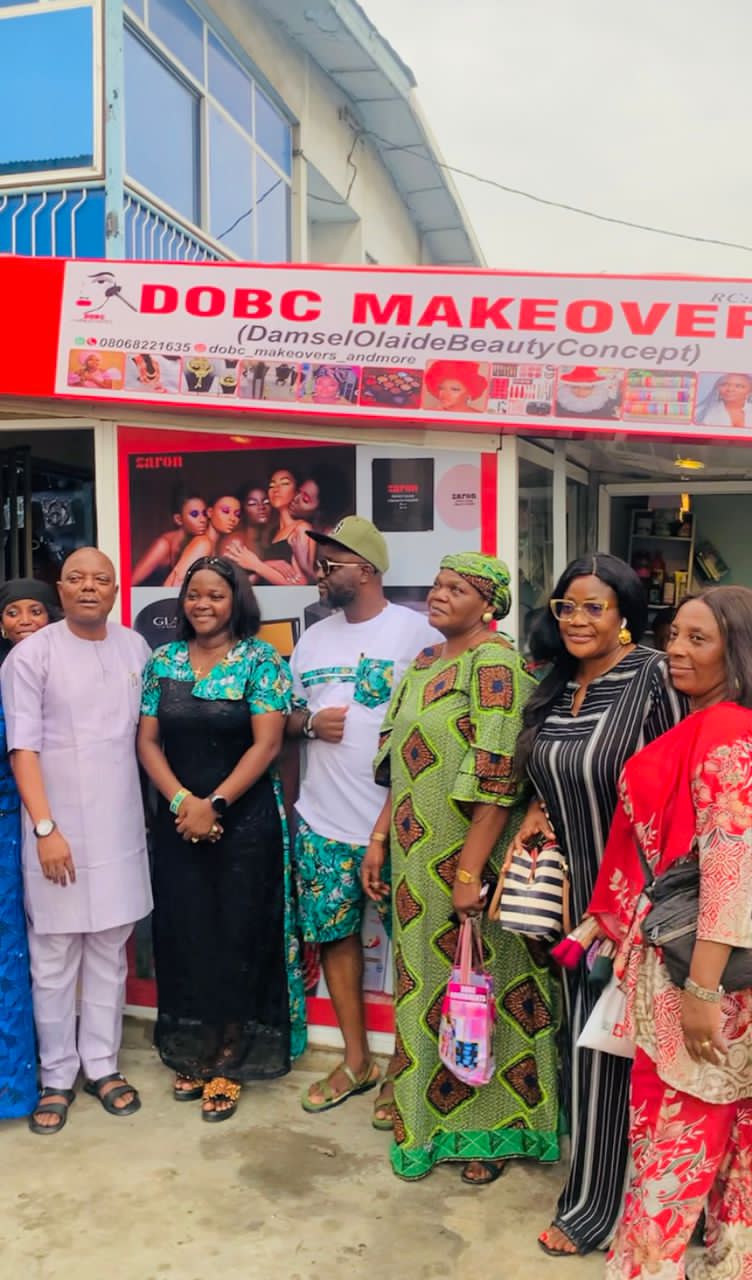
Beauty Meets Glamour as Olaide Ogunyemi Opens New Studio in Mushin
Popular Nollywood actress and professional makeup artiste, Olaide Ogunyemi Oluwayemisi aka Damilola, has expanded her footprint in the beauty industry with the grand opening of her new makeup studio in Lagos.
The talented thespian, who is also the Chief Executive Officer of @Dobc_makeovers_andmore, officially unveiled the ultra-modern beauty space last Thursday, April 2, 2026, in a colourful ceremony filled with glamour, fashion, and pageantry.
Strategically located at 101 Palm Avenue, right beside FitPlus and Sparklight Hospital in Mushin area of Lagos, the new studio is designed to offer top-notch beauty services, reflecting Ogunyemi’s commitment to excellence and professionalism in the ever-growing makeup industry.
The opening ceremony attracted friends, colleagues from the Nollywood industry, beauty enthusiasts, and well-wishers who came out in large numbers to celebrate the entrepreneur’s latest milestone. Guests were treated to a vibrant atmosphere that showcased creativity, style, and the evolving standards of the beauty business in Lagos.
Speaking at the event, Ogunyemi expressed her excitement and gratitude, noting that the new studio represents years of hard work, dedication, and passion for her craft. She reaffirmed her commitment to delivering premium beauty services while empowering aspiring makeup artistes.
The launch of the studio further cements her reputation as a dynamic force, successfully blending her career in Nollywood with a thriving beauty brand.
With this latest development, Olaide Damilola Ogunyemi continues to inspire many young entrepreneurs, proving that talent, consistency, and vision remain key drivers of success in Nigeria’s creative and business landscape.


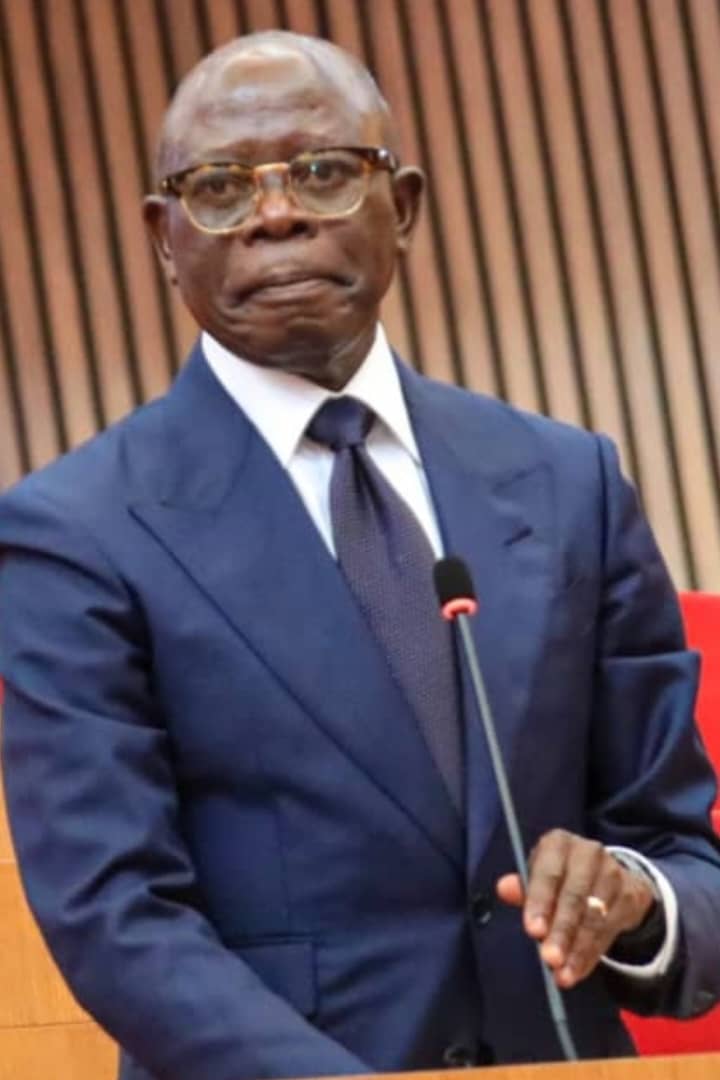
Daniel Eromosele Eulogize Adams Oshiomole as he turns 74 years
Today, I celebrate an exceptional leader, a fearless voice for the people, and a man whose life has remained a symbol of courage, sacrifice, and unwavering commitment to justice—Distinguished Comrade Senator Adams Aliu Oshiomhole.

Your journey has been nothing short of inspiring. From your days as a vibrant labour leader to your impactful tenure as the Executive Governor of Edo State, and now as a respected Senator of the Federal Republic, you have consistently demonstrated what it means to serve with integrity, strength, and purpose. Your contributions to the growth of our nation and the development of Edo State remain indelible and deeply appreciated.
You have not only built structures and institutions but have also built people. I am personally a beneficiary of your leadership, your guidance, and your belief in empowering others. Your influence in my life has been profound, and I remain grateful for the opportunities and inspiration you have given me.
On this special day, I celebrate not just your achievements, but the man you are—resilient, principled, and ever committed to the progress of Nigeria and her people.

May this new year bring you renewed strength, greater wisdom, good health, and more remarkable accomplishments. May your legacy continue to shine brighter with each passing year.
Happy Birthday, sir. Wishing you many more fruitful and impactful years ahead.
celebrity radar - gossips
Accolades to Empress Genevieve Wining as she Celebrate birthday in Grand style

Accolades to Empress Genevieve Wining as she Celebrate birthday in Grand style
Emmanuel Clement
Vilnius, Lithuania – The Grand Hotel Vilnius will host a grand birthday celebration in honor of Her Majesty The Empress Genevieve Wining of the United Kingdom of Atlantis (UKA) on April 4th, 2026.
The four-day event promises to be an extravagant affair, marking the special birthday of Empress Genevieve Wining. The celebration will take place at the prestigious Grand Hotel Vilnius, Lithuania, renowned for its luxurious ambiance and exceptional service.

According to the event flyer, the birthday celebration will be a spectacular occasion, fitting for an empress. Guests can expect an elegant setting adorned with golden accents, sparkling champagne, and festive decorations, creating a regal atmosphere befitting the occasion.
The Empress Genevieve Wining of UKA is expected to grace the event, which will include various festivities and celebrations in her honor. The occasion aims to bring together dignitaries, followers, and guests to commemorate the empress’s birthday with grandeur and joy.
For media inquiries, accreditation, or further information about the birthday celebration of The Empress Genevieve Wining of UKA, please contact the event organizers.
Courtesy of His Excellency Emperor Prof. Solomon Wining. UKA


- Seychelles Strengthens Human Rights Reporting through National Workshop April 8, 2026
- ABB’s Application Configurator brings speed and precision to grid-feeding protection system design April 7, 2026
- Can Equatorial Guinea Reposition as West Africa’s Gas Hub? April 7, 2026
- Afreximbank Partners with African Energy Week 2026 to Drive Africa-Led Energy Deals April 7, 2026
- Merck Foundation Marks ‘World Health Day’ 2026 – Transforming Patient Care in Africa and Beyond through 2600+ Scholarships for Healthcare Providers From 52 Countries April 7, 2026
- Morocco Gas Plan Reset Could Open Door to New Investment Models April 7, 2026
- African Petroleum Producers Organization (APPO) Secretary General Joins Angola Oil & Gas (AOG) 2026 as African Energy Bank Eyes June 2026 Debut April 7, 2026
- Ghanaian Biomedical Specialist Receives International Award April 7, 2026
- Grey Connects the Africa-Canada Money Corridor With Instant Transfers via Interac April 7, 2026
- Nigeria’s Oil Revival in Focus as Petroleum Minister Lokpobiri Joins Paris Energy Forum April 7, 2026
- Seychelles Strengthens Human Rights Reporting through National Workshop April 8, 2026
- ABB’s Application Configurator brings speed and precision to grid-feeding protection system design April 7, 2026
- Can Equatorial Guinea Reposition as West Africa’s Gas Hub? April 7, 2026
- Afreximbank Partners with African Energy Week 2026 to Drive Africa-Led Energy Deals April 7, 2026
- Merck Foundation Marks ‘World Health Day’ 2026 – Transforming Patient Care in Africa and Beyond through 2600+ Scholarships for Healthcare Providers From 52 Countries April 7, 2026
- Morocco Gas Plan Reset Could Open Door to New Investment Models April 7, 2026
- African Petroleum Producers Organization (APPO) Secretary General Joins Angola Oil & Gas (AOG) 2026 as African Energy Bank Eyes June 2026 Debut April 7, 2026
-

 news4 months ago
WHO REALLY OWNS MONIEPOINT? The $290 Million Deal That Sold Nigeria’s Top Fintech to Foreign Interests
-

 society7 months ago
“You Are Never Without Help” – Pastor Gebhardt Berndt Inspires Hope Through Empower Church (Video)
-

 celebrity radar - gossips2 months ago
Dr. Chris Okafor Returns with Power and Fire of the Spirit -Mounts Grace Nation Altar with Fresh Anointing and Restoration Grace on February 1, 2026
-

 celebrity radar - gossips4 months ago
Prophet Kingsley Aitafo Releases 2026 Prophecy: ‘Nigeria Will Rise, but the World Must Prepare for Turbulence’
You must be logged in to post a comment Login
You must log in to post a comment.