
celebrity radar - gossips
View point: Emefiele And The Not So Exclusive Audio Tapes

View point: Emefiele And The Not So Exclusive Audio Tapes
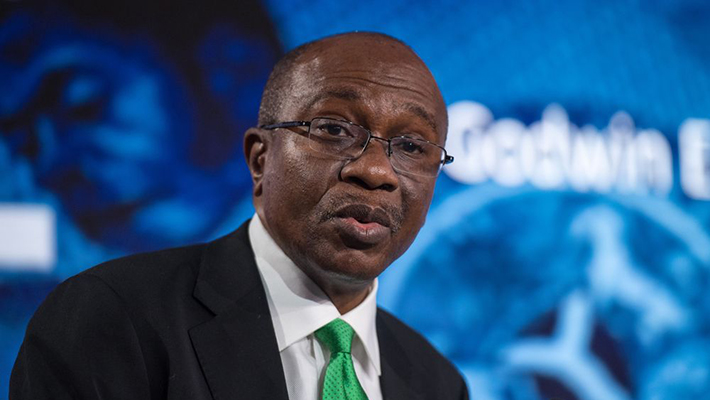
Nigeria, must we always kill our illustrious sons? It is a question that several persons of repute, including activist, had asked in the past and the question again took on relevance in recent days as the hyenas hemmed in what they thought was their prey and tried to snuff life out of his career. The intended dinner of the human hyenas was the Governor of the Central Bank, Mr Godwin Emefiele.

The hunting ground of choice was the web pages of Sahara Reporters, which went to town with the screamer, “CAUGHT ON TAPE: How Central Bank Governor Emefiele, Deputy Adamu And Top Officials Discussed How To Cover-Up N500bn Which They Stole From The CBN”. But it turned out the hyenas were not meant to have Emefiele for dinner, they went hungry. Contrary to the envisaged endgame, President Muhammadu Buhari handed him another five years in office. And who would not, considering the superlative outing he had in his first term? It must be this performance that made his confirmation by the Senate to be as fast as lightning.
Beyond being re-appointed and being expeditiously confirmed to continue leading Nigeria’s apex bank, it turned out that the report carried by Sahara Reporters was the usual hatchet job. The best the report was able to do was to twist a routine telephone conversation out of context to allege a theft that never took place while further exposing the shallowness of the folks behind the news blog and those who contracted them to do the hit job.
The story they put out has been spectacularly rubbished by the statement issued by Mr. Isaac Okoroafor, CBN’s Director of Corporate Communications. There is no need to rehash the explanation offered in that statement but suffice to say the statement exposed the lack of understanding on the part of those who thought they had caught Mr Emefiele in a compromised position worthy of breaking news and embarrassing enough to the government to not reappoint him. The reality, however, is that they only succeeded in convincing the rest of us how ignorant they are about the way reserve banks work.
There is the outside chance that these hyenas are not so ignorant; they know there is no substance in their claim but they were deluded to expect that Nigerians and their leaders are naïve to the point where they will rush to crucify Emefiele without first weighing the substance of the supposed allegations implied by leaking the tape.
Three things stand out in this ugly saga of a failed blackmail attempt. The first is that the recording points to the existence of deeply political operatives in all branches and agencies of government. Those who made the audio went to great length to procure their tainted produce
Whether they bugged or hacked the telephone sets in the CBN Governor’s office, compromise the internal switch at the apex bank, or deployed eavesdropping technology to intercept the calls, this is a red flag that public officials are now persistently under threat from political operatives that are out to garner information for their own end.
To the extent that Mr Emefiele’s telephone conversation was in pursuit of legitimate duty, as we now know, the perpetrators of this act have breached several of the laws of the land and their action can be likened to an attack on the country.
A second observation is that the kind of concern one can surmise from the CBN Governor’s discomfort and expressions in the course of the call showed a man that is passionate about getting his country out of an economic mess that took long in making. That people connected with the making of the mess are the ones now trying to make its resolution appear like a crime in progress is the height of travesty.
Mr Emefiele could have simply act indifferently and cited the approvals from the Ministry of Finance as a basis to be unconcerned. But true to his credential as a man that has done much to reduce and now on the verge of eradicating the famed black hole that swallows national resources at the CBN, the audio depicted him as greatly agitated about recovery of the funds that were released to bail out states that failed to be fiscally prudent to the point of becoming insolvent.
A note must be made of the fact that the irresponsible behaviour on the part of state governors, which led to this situation, was the hallmark of the governments that preceded that of President Buhari. State governors of now, even those that do not belong to the ruling party at the centre, have learned that there is no longer room for kleptocratic frivolity.
Furthermore, it is one thing to criminally breach the security of an institution as pivotal as the CBN, publishing the proceeds of that crime amounts to daring the state. It is like someone stealing clothes from a neighbourhood and then parading the streets dressed in the stolen items. Such arrogance comes from the erroneous impression that the state is incapable of visiting the requisite sanction on the offenders or that the criminal in this instance is above the law.
With these observations come the steps that must be taken to prevent blackmailers and criminals from arrogating legitimacy to themselves should they wrongly surmise that society condones their wrong-doings. It is, therefore, necessary to clearly define what constitutes desirable whistleblowing and what amounts to espionage against the interests of the Nigerian state.
A situation where Chief Executives of government agencies and other government functionaries are illegitimately wiretapped cannot be allowed to continue unabated. Today, it is Emefiele, what happens when these criminally minded people turn to bug the Inspector General of Police and his key staff while making the recordings available to bandits and kidnappers? Or how much of this wiretapping have been deployed for insider trading or machination towards the collapse of the banks regulated by the CBN?
Also, the government must make it a priority to get to the bottom of this breach at the CBN. The breach and other actions carried out in its aftermath should be subjected to review by the office of the Attorney General of the Federation such that those found culpable – individual or corporate – would be made to face the law, of which there are adequate provisions.
This piece will conclude on the note of urging Mr Emefiele not to be daunted by the antics of those that feel pained that the CBN is no longer the ATM pool for corruption because of the reforms he has instituted there. Nigerians, who are his actual employers, are happy with his work, which made them greet his re-appointment with accolades. It’s the views of these employers that matter and not the perverted indulgence of a criminal few.




celebrity radar - gossips
Buratai, Fagbemi , Shagaya, Olofa, Others Eulogise Olowu Kuta’s Olori On 60th Birthday, Foundation Launch
Buratai, Fagbemi , Shagaya, Olofa, Others Eulogise Olowu Kuta’s Olori On 60th Birthday, Foundation Launch
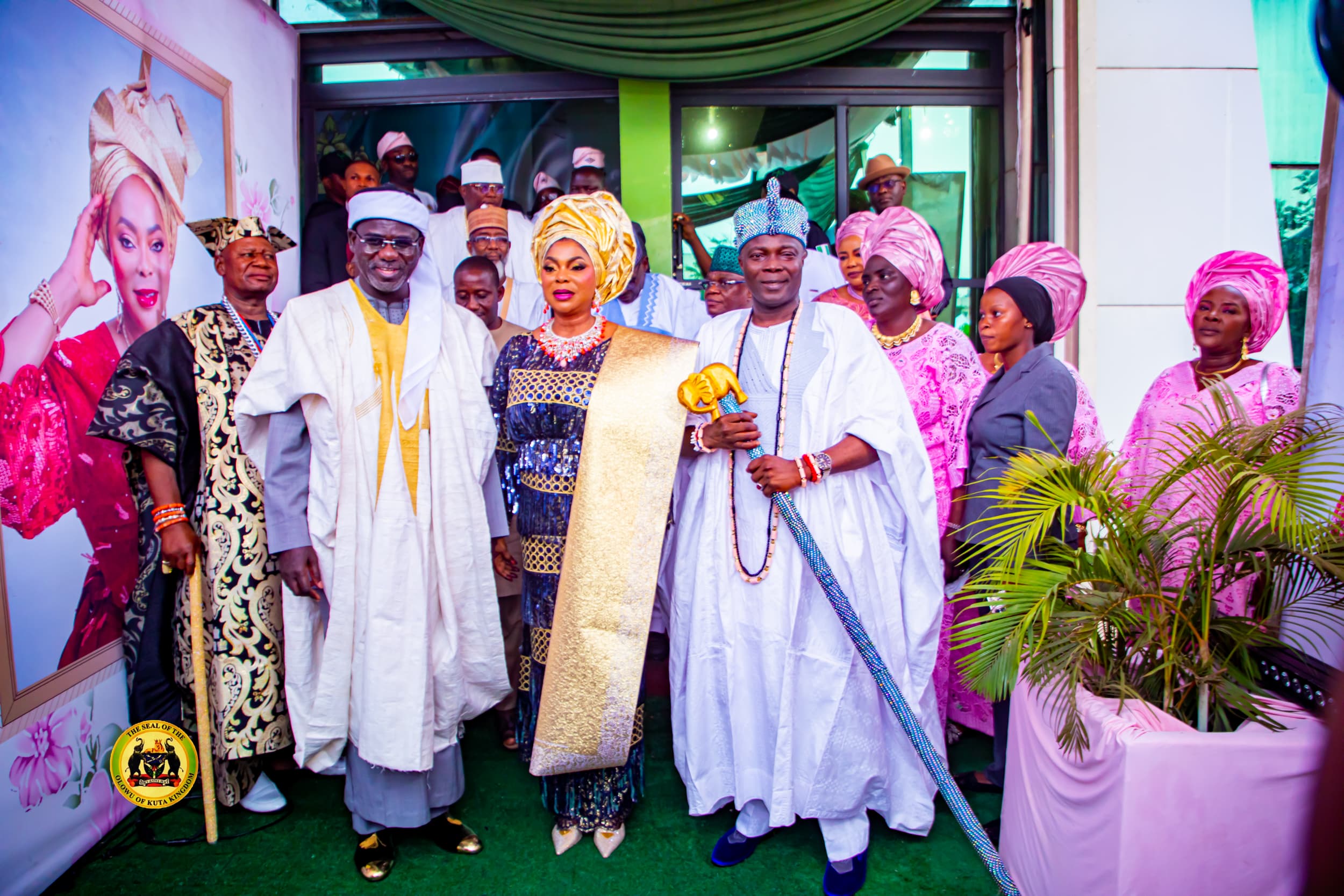
Eminent personalities across the Nigeria stormed the TFK Event Centre, Bala Mohammed Way, Guzape, Abuja, to celebrate the 60th birthday of Olowu Kuta’s Olori, Queen Jumai Amoke and her Foundation Launch on Saturday 28, March 2026.
From former Chief of Army Staff, Lt Gen TY Buratai rtd, to the Minister of Justice and Attorney-General of the Federation, Prince Lateef Fagbemi; Olofa of Offa, HRM Oba Mufutau Gbadamosi. Even top businesswoman and socialite, Chief (Mrs) Bola Shagaya, was in attendance.


Other dignitaries were newly promoted Deputy Inspector-General of Police and former AIG Zone 2 , Lagos , Adegoke Fayoade, Major General Abdumalik, Major General Samuel Adebayo rtd (Fmr CDI);
Major General Anthony Omozoje rtd (Fmr Copp);
Alhaji Tajudeen Owoyemi (Asiwaju of Offa and CEO Radisson Hotel Nigeria;
Dr Waheed Olagunju, former managing director of Bank of Industry, Oniba of Iba, Lagos State, HRM Oba Dr Suleiman Raji ;
Justice Falola, Olu of Ile-Ogbo , Oba Adetoyese amongst many traditional rulers and captains of industry too numerous to mention.
Speaking at the occasion, the Chief Host, Olowu of Kuta, HRM Oba Dr Adekunle Oyelude Makama, CON , Tegbosun iii, who is also the husband of the celebrant commended Queen Jumai for ‘ her slender arms full of kindness’ to establish such humanitarian Foundation, ‘Amoke Children and mother in Need Foundation’ at a time Nigerians are going through economic crisis occassioned by the global meltdown.
Olowu also commended her steadfastness and love for the less privileged and downtrodden.
The monarch refrenced the task before his wife’s humanitarian gesture said her best is yet to come.
” Olori Amoke Jumai, I celebrate you. You will celebrate 70, 80, 90 and continue to shine as you continue to put a smile on people’s faces. I love you, “Olowu Kuta added.
To Lt Gen Buratai, a former army chief and former Nigerian Ambassador to Benin Republic, the reward of hard work is more work.
Buratai, who also doubles as Balogun Agba of Owu Kuta, a chieftaincy title reserved for a generalismo congratulated Queen Jumai for attaining the age of 60 in good health.
The retired army General said he’s not surprised by the turn out of eminent personalities across the country to celebrate the Olowu Kuta’s Olori because she merited it through her hospitality to all, adding that Allah the most merciful, most beneficial would accept all her act of ibadah.
The minister of Justice, Prince Fagbemi, was full of praises for Queen Jumai for deeming it fit to have a place in her heart to accommodate the needy and less privileged in ‘our society.’
Prince Fagbemi urged the guests to contribute generously to support the Foundation in order to continue to alleviate poverty and put a smile on the faces of the people.
” I congratulate you on your 60th birthday and Foundation Launch. I wish you many happy returns of the day and many more fruitful services to the country and motherland”, Prince Fagbemi added.
The celebrant, Queen Jumai who was grining from ear to ear thankfully said she was excited by the turn out and the response of the people to her foundation.
Queen Jumai, however, promised to continue to use her resources and donations received for the good of the needy and less privileged in the society.
” I want to appreciate my own Kabiesi Olofa of Offa , for his presence and im I’m using him as a point of contact to all other Kabiesis present here, the minister of justice and Attorney-General, you’re welcome, sir; Mrs Bola Shagaya, I salute your enterprise, Lt Gen Buratai, I’m grateful, sir; DIG Fayoade, Justice Falola and other dignitaries too numerous to mention, I thank you, all. To my darling husband, Kabiesi Olowu , I thank you immensely for your support. And to my family and friends, I thank you , all. E se pupo!”, she said.
celebrity radar - gossips
Adron Homes Elevates Cultural Pride as Dignitaries Grace 39th Lisabi Festival in Abeokuta
Adron Homes Elevates Cultural Pride as Dignitaries Grace 39th Lisabi Festival in Abeokuta
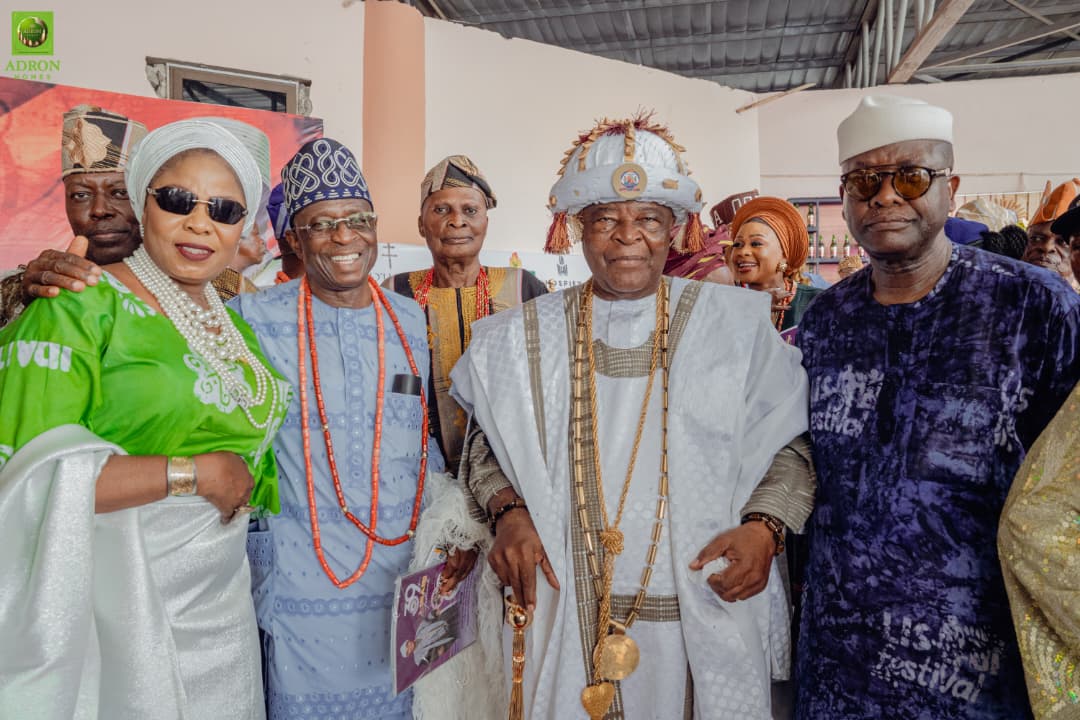
The ancient city of Abeokuta came alive in a grand display of culture, history, and unity as dignitaries from across Nigeria converged at the iconic Ake Palace Ground for the 39th edition of the Lisabi Festival, an annual celebration deeply rooted in the Egba people’s heritage.
The event, proudly supported by Adron Homes and Properties Limited, witnessed an impressive parade of distinguished personalities, traditional rulers, government officials, business leaders, and cultural enthusiasts, all captured in vibrant pictures that tell the story of a people united by history and pride.
From richly adorned monarchs in regal attire to elegantly dressed guests reflecting the depth of Yoruba tradition, the images from the festival encapsulate moments of honour, reverence, and celebration. Each photograph portrays not just faces, but influence, leaders, and stakeholders who continue to shape cultural preservation and community development.
At the heart of the celebration was the revered Oba Adedotun Aremu Gbadebo, whose presence underscored the festival’s significance as a symbol of Egba resilience and identity. Surrounding him were eminent dignitaries whose attendance further amplified the prestige of the event.
Adron Homes and Properties Limited stood out prominently, not only as a sponsor but as a key driver of cultural sustainability. Through its strategic support, the company reinforced its commitment to preserving indigenous heritage while fostering community engagement. The brand’s visibility across the venue and within the pictorial highlights reflects a deliberate alignment with culture, tradition, and people-centered development.
Beyond real estate, Adron Homes has continued to position itself as a cultural partner, investing in platforms that celebrate history and strengthen communal bonds. Its involvement in the Lisabi Festival is a testament to its broader vision of building not just homes, but legacies rooted in identity and pride.
The 39th Lisabi Festival, as captured through the lens of dignitaries in attendance, is more than an event, it is a narrative of continuity. And through its unwavering support, Adron Homes has once again set the pace, demonstrating that corporate institutions can play a vital role in sustaining the cultural heartbeat of a people.
As the echoes of drums fade and the colours of the festival linger in memory, one thing remains clear: the story told through these images is one of unity, heritage, and the enduring partnership between tradition and progress.


celebrity radar - gossips
Obasa Felicitates President Tinubu @ 74, says Renewed Hope Agenda is steering Nigeria toward stability and prosperity
Obasa Felicitates President Tinubu @ 74, says Renewed Hope Agenda is steering Nigeria toward stability and prosperity
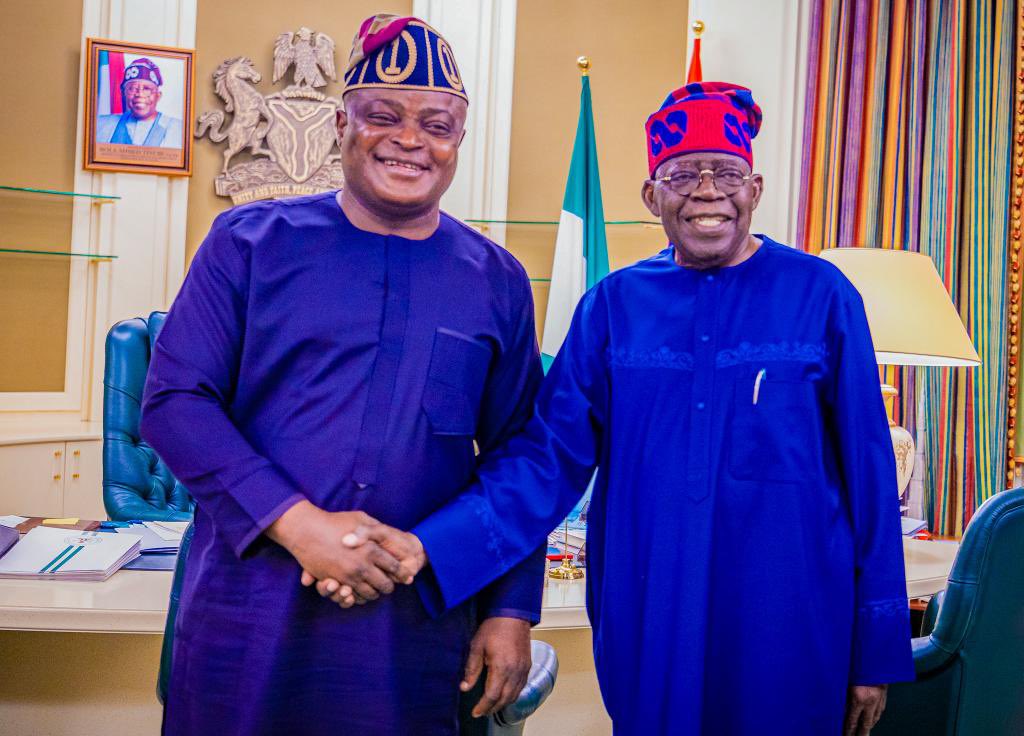
The Speaker of the Lagos State House of Assembly, Rt. Hon. (Dr.) Mudashiru Obasa has congratulated President Bola Ahmed Tinubu on his 74th birthday, commending him for fulfilling his Renewed Hope Agenda promises to Nigerians.
Speaker Obasa’s birthday message is contained in a statement signed by Adeshina Oyetayo, his Special Adviser on Research, Media, and Documentation.
Speaker Obasa described the President as a purposeful and pragmatic leader whose commitment to enthroning a peaceful and prosperous Nigeria should be appreciated by all
“Mr. President, today should be a national day of celebration honouring your selfless and visionary leadership.
“I commend your courage and conviction to initiate and implement necessary economic reforms that have pulled Nigeria out of the doldrums, stabilized the nation, and set it on the path of prosperity.”
Speaker Obasa said that those otherwise painful reforms are now being hailed as ingenious and effective worldwide, citing a January 2026 article in the influential The Economist magazine titled “Nigeria’s economy may be back from the brink.”
The article acknowledged that President Tinubu’s reforms are beginning to yield bountiful returns as evidenced in the easing of headline inflation for the 11th consecutive month, unification of the foreign exchange market, and foreign reserves rising to $46billion.
Notably, the article also referenced the International Monetary Fund (IMF)’s upgraded 4.4% GDP growth forecast for 2026 despite global headwinds, while stating unequivocally that Nigeria’s golden years will return under President Tinubu.
Speaker Obasa said that this submission by an international journal signifies that Nigeria is in safe hands under President Tinubu. He, therefore, urged Nigerians to rally round him and support his re-election bid, promising that the gains of the Renewed Hope agenda will reach every household.
“Our prayer is that the Almighty will grant our dear President long life in robust health and the strength and wisdom to help him achieve the Nigeria of our collective dreams,” Speaker Obasa concluded.


-

 society6 months ago
Religion: Africa’s Oldest Weapon of Enslavement and the Forgotten Truth
-

 news4 months ago
WHO REALLY OWNS MONIEPOINT? The $290 Million Deal That Sold Nigeria’s Top Fintech to Foreign Interests
-

 society6 months ago
“You Are Never Without Help” – Pastor Gebhardt Berndt Inspires Hope Through Empower Church (Video)
-

 celebrity radar - gossips2 months ago
Dr. Chris Okafor Returns with Power and Fire of the Spirit -Mounts Grace Nation Altar with Fresh Anointing and Restoration Grace on February 1, 2026