
society
Wars Without End: Who Profits from Global Chaos from Africa to the Middle East and Europe?

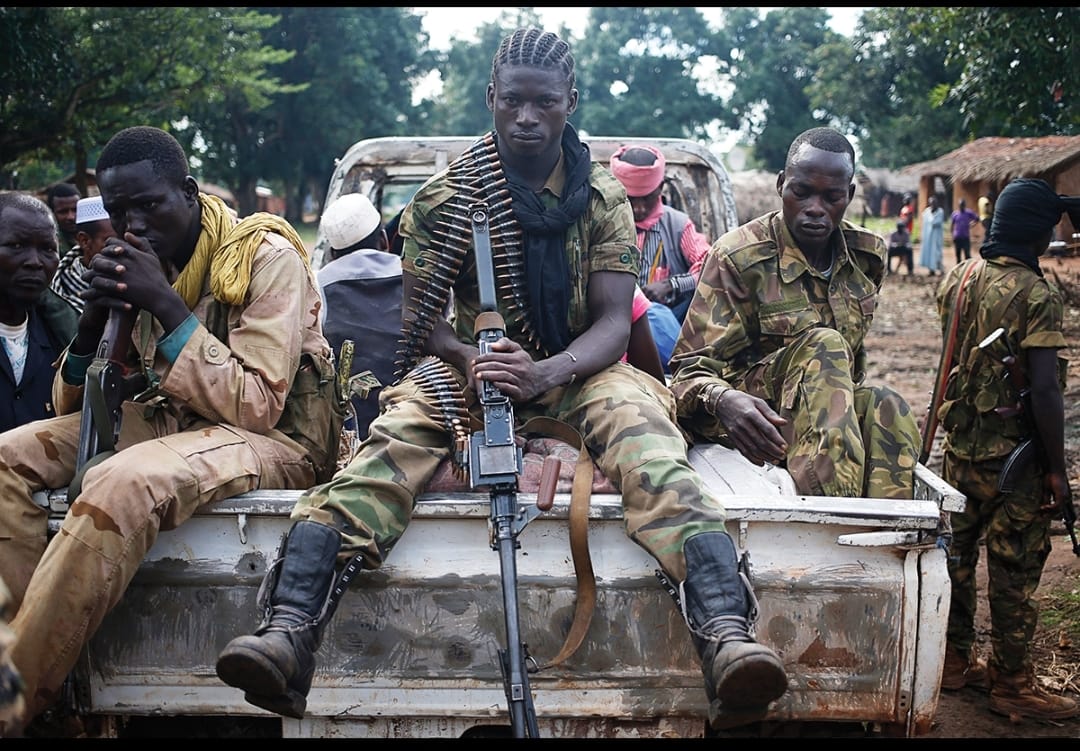
Wars Without End: Who Profits from Global Chaos from Africa to the Middle East and Europe?
Written by George Omagbemi Sylvester | Published by SaharaWeeklyNG.com
From the burning deserts of Sudan to the blood-soaked streets of Gaza, from the trenches of Ukraine to the haunted refugee trails across the Sahel and Mediterranean, war has become a permanent fixture of our global landscape. The world, it seems, is no longer moving towards peace but deeper into conflict. The pertinent questions now are: What is this war about? Will there ever be peace? And who benefits from all this destruction?
To answer these questions, we must leave behind the tired clichés and dive deep into the uncomfortable truths of geopolitics, proxy wars, arms economies, foreign manipulation, internal corruption and the cold-blooded calculations of global power blocs. This is not just about tanks and missiles; it is about economics, imperialism, ego and empire.
Africa: War as a Tool for Exploitation. Africa, though rich in natural resources, remains the most conflict-ridden continent in the world. From the DRC, where multinational corporations fund armed groups to maintain access to coltan and cobalt, to the genocidal power struggles in Sudan and Ethiopia, war has become a tool for external exploitation and internal division.
According to a 2023 African Union report, over 70% of African armed conflicts in the last decade were fueled by competition over natural resources, often with the silent backing of foreign governments and corporations. France for example, maintained neocolonial military influence in the Sahel under the guise of fighting terrorism, but Niger’s recent ousting of French forces exposed how these interventions were more about uranium contracts than African stability.
Prof. Patrick Lumumba of Kenya once stated, “Africa is at war with itself because it has failed to identify its real enemies and foreign interests masked as friends.” This truth is exemplified by the fact that while Africans die in conflicts, European, Chinese and American companies thrive on the continent’s minerals.
The result? Displacement, poverty and brain drain. Meanwhile, foreign weapons manufacturers record record profits.
The Middle East: A Playground for Proxy Powers. The Middle East has become the globe’s most militarized arena and a chessboard for proxy wars between regional powers like Iran and Saudi Arabia and global titans like the U.S., Russia and China.
The Israeli-Palestinian conflict has spanned over seven decades, with the 2023–2025 Gaza War being one of the deadliest in recent memory. Over 40,000 civilians were killed in less than a year, mostly Palestinians and the world watched with either indifference or hypocrisy.
Behind every bomb dropped is a profit ledger. The U.S. military-industrial complex, backed by companies like Lockheed Martin, Raytheon and Northrop Grumman, has continued to profit from military sales to Israel, Saudi Arabia and others. In 2024 alone, the U.S. approved $19 billion in arms sales to the region.
The Yemen war, rarely covered by mainstream Western media, is a humanitarian catastrophe manufactured by power rivalries between Iran and Saudi Arabia with weapons from the West. UN Secretary-General António Guterres described it as “the world’s worst humanitarian crisis.” Who benefits? Arms dealers, geopolitical manipulators and oil giants.
Europe: Between Nationalism and NATO. While Europe has long projected itself as a bastion of peace and civilization, its hands are stained with the blood of fresh war, namely the Russian invasion of Ukraine, which began in 2022 and has since escalated into a full-blown continental crisis.
The war in Ukraine is not simply about territory; it is about NATO’s eastward expansion, Russia’s imperial insecurity and the competition for energy routes and ideological dominance. President Emmanuel Macron warned in 2023, “Europe is sleepwalking into a wider war it does not understand,” but the warning came too late.
While Ukrainians bury their dead and millions flee into exile, U.S and European arms manufacturers are raking in billions. Germany, the U.K. and France all increased their military budgets to record levels in 2024 and arms contracts with Ukraine skyrocketed. A Lockheed Martin executive famously (and shamelessly) said: “This conflict is good for business.”
LET THAT SINK IN.
The Common Denominator: The Military-Industrial Complex. From Africa to Europe and the Middle East, there’s a hidden architecture of profit that connects all these wars: the global military-industrial complex. This unholy alliance of arms manufacturers, lobbyists, war hawks, and corrupt politicians thrives on conflict. Peace is bad for their business model.
This was best explained by the late U.S. President Dwight D. Eisenhower, who warned in 1961:
“In the councils of government, we must guard against the acquisition of unwarranted influence by the military-industrial complex.”
Today, that COMPLEX runs UNCHECKED. It is the SOLE BENEFACTOR of WAR.
Weapons are sold to both sides of conflicts. Nations are destabilized under the pretext of democracy promotion. African leaders buy tanks while their citizens go hungry. Middle Eastern regimes bomb each other with Western tech. European powers, once proud peacekeepers now fund their own war economies. War has become the engine of capitalism, the fuel for national budgets and a distraction from domestic failures.
Will There Ever Be Peace? The hope for peace seems more distant than ever. The UN is increasingly toothless, manipulated by veto powers. The AU and Arab League remain politically weak and financially dependent. Global peace talks have become public-relations exercises not sincere efforts.
Peace is not impossible; it begins when the people of AFRICA, the MIDDLE EAST and EUROPE realize the common enemy is not each other, but the systems that profit from their division. As long as we fight among ourselves, the real benefactors remain untouched.
Nelson Mandela once declared, “It is so easy to break down and destroy. The heroes are those who make peace and build.” Today, we have too MANY DESTROYERS and too FEW BUILDERS.
The Way Forward: Truth, Unity, Resistance. Peace cannot come from silence. We must expose the profiteers, name the lobbyists, shame the war merchants. African intellectuals, European activists and Middle Eastern reformists must unite in a new global coalition against endless war.
WE MUST DEMAND:
Accountability for war crimes, whether by rebel groups or state actors.
Transparency in arms deals, especially in conflict zones.
Investment in peace economies & education, healthcare and sustainable development.
Media honesty to report truth not propaganda.
Continental unity, especially in Africa, where Pan-Africanism must rise again.
In the words of Thomas Sankara,
“He who feeds you, controls you.” In today’s context: He who arms you, owns your soul.
Call to Conscience. The world today is not at war because of divine fate or ancient hatred. it is at war because someone, somewhere, is making obscene profits from it. Until we confront this reality, until we stop dancing to the drums of war sounded by others, peace will remain an illusion.
Let us reject being pawns in their deadly game. From Juba to Jenin, from Kyiv to Kinshasa, from Tripoli to Tel Aviv. We must SHOUT LOUD ENOUGH for the profiteers of war to hear: We choose PEACE. Not because we are WEAK, but because we are finally wise.


Written by George Omagbemi Sylvester
Published by SaharaWeeklyNG.com




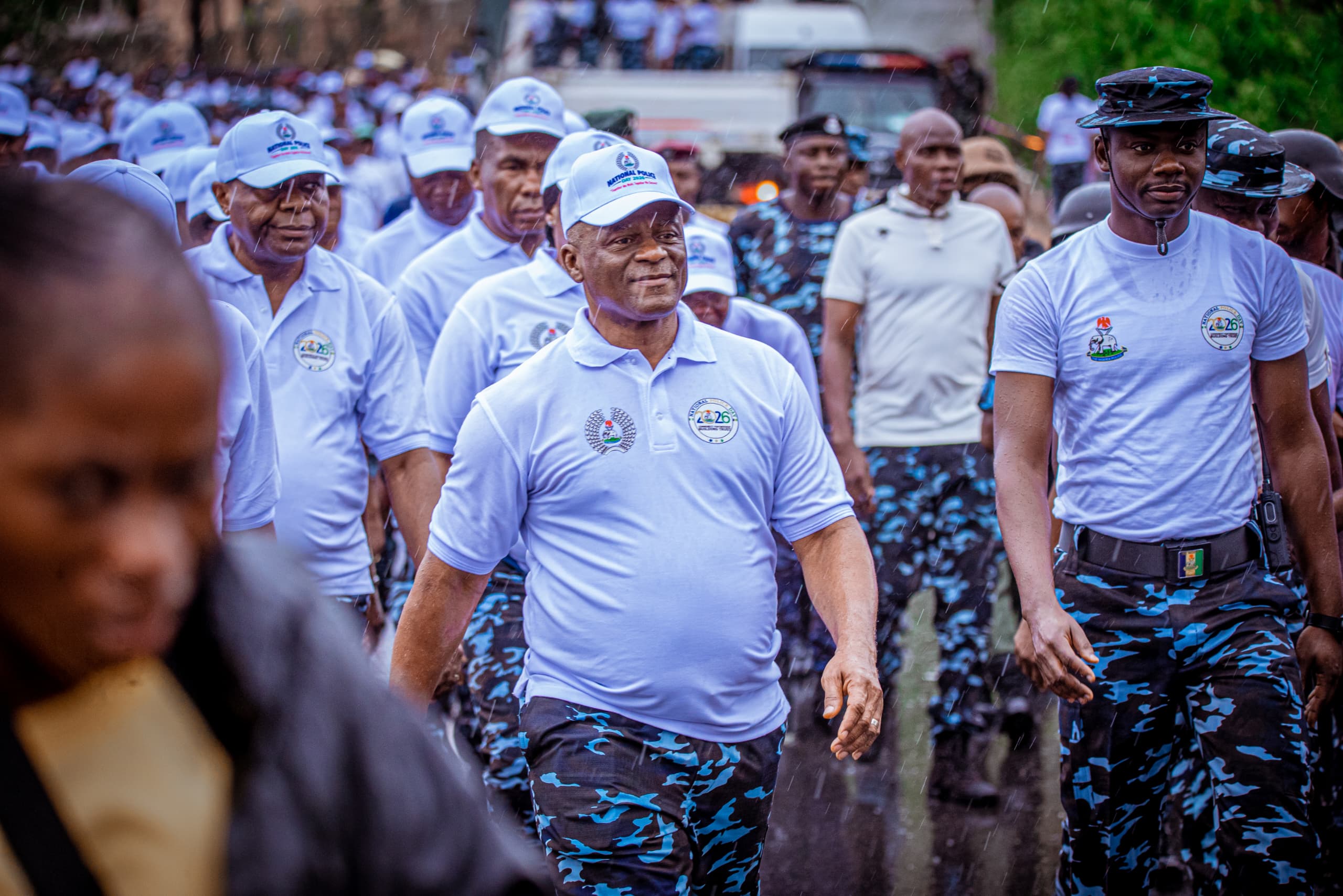
Police Day 2026: IGP Disu Leads Nationwide Walkathon To Strengthen Community Trust
The Inspector-General of Police, Olatunji Disu, on Tuesday led the management team, alongside officers and personnel of the Nigeria Police Force, in a nationwide walkathon to commemorate the 2026 National Police Day.
The event, held across state capitals and the Federal Capital Territory, formed part of activities marking Day Two of the annual celebration, themed “Community Partnership: Building Trust.”
The symbolic exercise, which drew participation from both police personnel and members of the public, was aimed at showcasing unity, discipline, and a renewed commitment to community policing and public safety.
According to the Force leadership, the walkathon underscores the Nigeria Police Force’s resolve to strengthen public trust, deepen engagement with citizens, and enhance collaboration in tackling security challenges across the country.
Participants described the initiative as a practical step toward bridging the gap between law enforcement and the communities they serve, while also promoting physical fitness and mental well-being among officers and civilians alike.
With the theme reflecting a shared responsibility for safety, the Police reiterated that sustainable security can only be achieved through active partnership with the public.
The event concluded with a renewed call for collective action under the banner: “Together We Walk, Together We Secure,” emphasizing unity of purpose in building a safer and more secure society for all Nigerians.


society
Dr. Chris Okafor invokes divine retribution upon individuals blackmailing the Grace Nation church
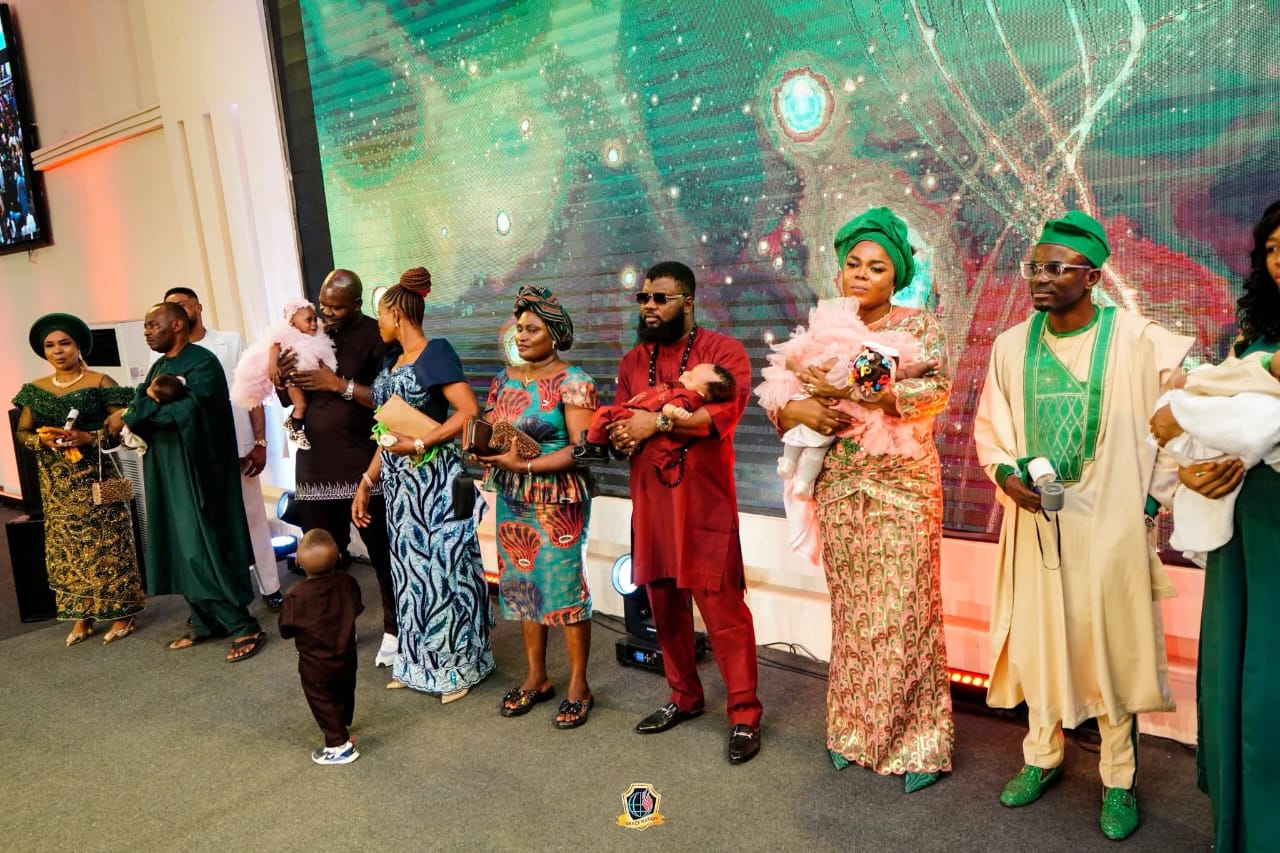
Dr. Chris Okafor invokes divine retribution upon individuals blackmailing the Grace Nation church
… Affirming God’s omnipotence to unveil malicious schemes.
To be frank, the ability of Doris Ogala and her associates to withstand the arduous challenges set by Senior Pastor Dr. Chris Okafor of Grace Nation Global at the culmination of the Harvest of Babies 2026 conference, the church’s flagship event, continues to elude me.
It’s advisable not to offend a powerful spiritual leader like Prophet Chris Okafor to avoid potential consequences, as seen in the situation with Doris Ogala, who was rebuked by the prophet; can she rectify the situation through confession?
Insiders close to the man of God claim that despite relentless online bullying and blackmailing, the Generational Prophet remains resolute, stating that God’s power has been evident throughout the commission’s existence. The reason for this wonderful statement is found in the scriptures, “Upon this rock I shall build my Church, and the gates of hell shall not prevail.” The more falsehoods are spread about the church and its leader, the more God elevates the church and propels him to greater heights, he asserted. He emphasized that blessings and fruitfulness are antidotes to curses, noting that God continues to bestow blessings upon the church, including miracles and the gift of children, which is one reason for the grand finale of the annual family liberation program, The Harvest of Babies.
However, the man of God issued a curse on each person speaking ill of the church, blackmailing, and uttering all sorts of falsehoods against the church, declaring that if they refused to repent within a few days, the earth would swallow them and their family members, stating that they would be of no use to themselves, their families, or society at large.
The spiritual leader cautions his followers to beware of such individuals including Doris Ogala who may taint their faith, and urges them to treat these persons as emissaries of the devil, avoiding them altogether.
Recall that the 2026 harvest of babies concluded with a remarkable birth of a miracle baby boy to a woman on the third day of the conference, accompanied by the dedication of several other miracle babies, all to the glory of God.
Christopher Sunday David writes from
Austria
“Together We Walk, Together We Secure”: Police Launch 2026 Walkathon In Abuja
The Nigeria Police Force has announced plans to host a walkathon in commemoration of the 2026 National Police Day, aimed at promoting unity, peace, and stronger community partnership.
The event is scheduled to take place on Tuesday, March 31, 2026, with participants expected to converge at the Force Headquarters Abuja by 6:00 a.m., where the walk will commence.
According to the organisers, the walkathon is designed to bring together members of the public, stakeholders, and security personnel in a show of solidarity and shared commitment to national security.
With the theme, “Together we walk, together we secure,” the initiative underscores the importance of collaboration between the police and citizens in maintaining peace and safety across the country.
Members of the public have been encouraged to participate in the exercise, which forms part of activities lined up to mark this year’s National Police Day celebration.
It is believed that the walkathon would not only foster closer ties between the police and the communities but also serve as a platform to promote awareness on collective responsibility in ensuring a safer society.


-

 society6 months ago
Religion: Africa’s Oldest Weapon of Enslavement and the Forgotten Truth
-

 news4 months ago
WHO REALLY OWNS MONIEPOINT? The $290 Million Deal That Sold Nigeria’s Top Fintech to Foreign Interests
-

 society6 months ago
“You Are Never Without Help” – Pastor Gebhardt Berndt Inspires Hope Through Empower Church (Video)
-

 celebrity radar - gossips2 months ago
Dr. Chris Okafor Returns with Power and Fire of the Spirit -Mounts Grace Nation Altar with Fresh Anointing and Restoration Grace on February 1, 2026