
celebrity radar - gossips
We are going to fix the Agbero situation in Lagos,” Gbadebo Rhodes-Vivour on #WithChude


We are going to fix the Agbero situation in Lagos,” Gbadebo Rhodes-Vivour on #WithChude
Labour Party’s Governorship Candidate, Gbadebo Rhodes-Vivour sits with ChudeJideonwo, host of #WithChude to discuss his ‘cross carpeting’ to Labour Party, and his plans when he becomes governor.

Gbadebo Rhodes-Vivour shared his intentions for ‘a new order’ in Lagos. “a new order is good quality of life; a new order is when you are driving on the road, you are not stuck in traffic, and area boys are not knocking on your door, trying to rob you because you are driving through Apapa. A new order is quality education that can be applied to make life better and increase earning potentials,” he explained.
“When I become governor, we are going to deliver 4 rail lines in 4 years. The plan is that we need 160 kilometres of rails to make Lagos State work, and we are going to invest heavily in water transportation and make Lagos State, a truly intermodal city in terms of transportation. Once that happens, Lagos starts to open up because development becomes decentralized. It is now feasible to build housing in Ikorodu, Badagry, Ajeromi/ifelodun, and open Lagos up. So, everything is not coming to the center, and we now have self-sustaining cities across the state.”
“And then, we are going to fix the Agbero situation across the state. This has become a real issue; we need Lagos to become a twenty-four-hour city and security is essential to make that happen. We are going to work with them as stakeholders, because we need to look at this thing holistically, and equip them with alternative means of living. And because we are not a government that needs people to suppress and intimidate people not to vote, we are going to tell them that that job description is no longer available. So, we are going to put them in skills, and programs that allow that to happen.
On choosing to join the opposition parties (KOWA, PDP, Labour Party) to run for office in Lagos, instead of the ruling party, GRV shared, ‘It is a reflection of who you are and where you want to go. It is always easier to take the easy way out and join the big boys that are making things happen. But then, what is your desire, what is the impact you want to make? If I join the ruling party, especially in Lagos, the revolution, change and kind of impact I want to make on society in Lagos State, I will not have the free hand to do it. So, it defeats the purpose for me to join the APC. I was coming fresh from activism, so KOWA party was the perfect launch path to be able to handle my conscience, my ideas about Nigeria, and really understand Nigeria for who she is”.
He also addressed the opposition party claim that the development in Lagos state was their track record, “the state of Lagos that Bola Tinubu met was a state that already had all the embassies, all the banks, the ports, an international airport; everything that’s required for a city to work was already in place. The Third Mainland Bridge had already been built, imagine APC trying to a bridge a Third Mainland Bridge when it’s taken over 16 years to build over 16 kilometers of rail. So, there was a lot of infrastructure is already built that he met. What he now created was the infrastructure to collect money. Now the conversation is, all the money that he collected does not translate to infrastructural development that we see in the state”.
Watch the excerpts from the interview here:
#WithChude is a network of media products across TV, Film and podcasts telling stories that enable and strengthen the mind, the heart, and the spirit. The weekly interviews are widely syndicated across terrestrial television and social media platforms reaching an average of 8 million people weekly – positioning it as the most watched and most syndicated weekly talk show (digital + traditional) in the region. It has become a safe space for guests to talk about things publicly for the first time. Actor Joke Silva revealed that her husband Olu Jacobs was dealing with dementia with Lewy body for the first time on the show, and producer Kemi Afolabi opened up about her experience dealing with Lupus on #WithChude. That month, Lupus and Kemi Afolabi were among the top Google Nigeria searches. The interviews have been featured everywhere, from the BBC to the New York Times. The documentary and travelogue series #ChudeExplains has tackled issues from criminal justice reform to Gen Z coming of age. The show launches the #WithChude Global series in 2023.
All past and new episodes of #WithChude can be watched at watch.withchude.com. You can also watch the premiere of new episodes every Saturday on Channels TV at 1 pm, with reruns every Sunday on Wazobia TV Channel 98 at 5 pm, and every Tuesday on Rave Tv at 5 pm.
An extended play podcast is up on listen.withchude.com, as well as on Apple Premium.
Everyone can join the conversation.




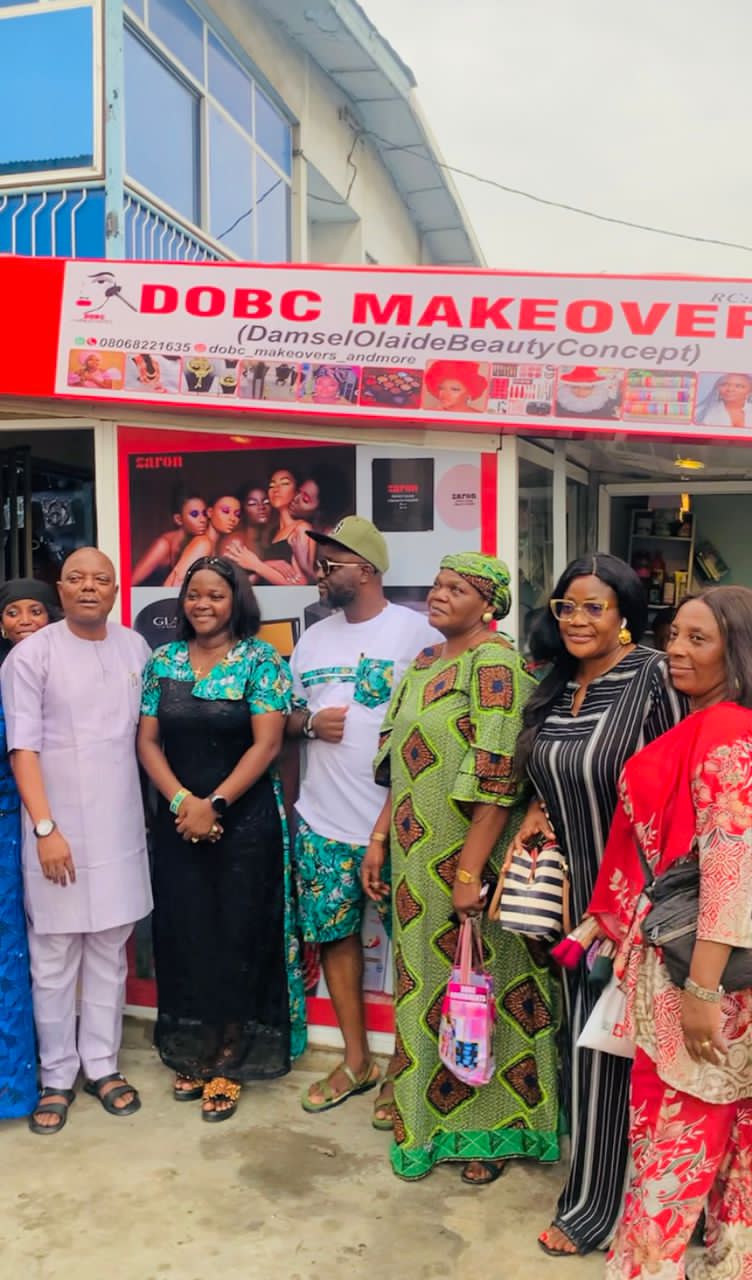
Beauty Meets Glamour as Olaide Ogunyemi Opens New Studio in Mushin
Popular Nollywood actress and professional makeup artiste, Olaide Ogunyemi Oluwayemisi aka Damilola, has expanded her footprint in the beauty industry with the grand opening of her new makeup studio in Lagos.
The talented thespian, who is also the Chief Executive Officer of @Dobc_makeovers_andmore, officially unveiled the ultra-modern beauty space last Thursday, April 2, 2026, in a colourful ceremony filled with glamour, fashion, and pageantry.
Strategically located at 101 Palm Avenue, right beside FitPlus and Sparklight Hospital in Mushin area of Lagos, the new studio is designed to offer top-notch beauty services, reflecting Ogunyemi’s commitment to excellence and professionalism in the ever-growing makeup industry.
The opening ceremony attracted friends, colleagues from the Nollywood industry, beauty enthusiasts, and well-wishers who came out in large numbers to celebrate the entrepreneur’s latest milestone. Guests were treated to a vibrant atmosphere that showcased creativity, style, and the evolving standards of the beauty business in Lagos.
Speaking at the event, Ogunyemi expressed her excitement and gratitude, noting that the new studio represents years of hard work, dedication, and passion for her craft. She reaffirmed her commitment to delivering premium beauty services while empowering aspiring makeup artistes.
The launch of the studio further cements her reputation as a dynamic force, successfully blending her career in Nollywood with a thriving beauty brand.
With this latest development, Olaide Damilola Ogunyemi continues to inspire many young entrepreneurs, proving that talent, consistency, and vision remain key drivers of success in Nigeria’s creative and business landscape.


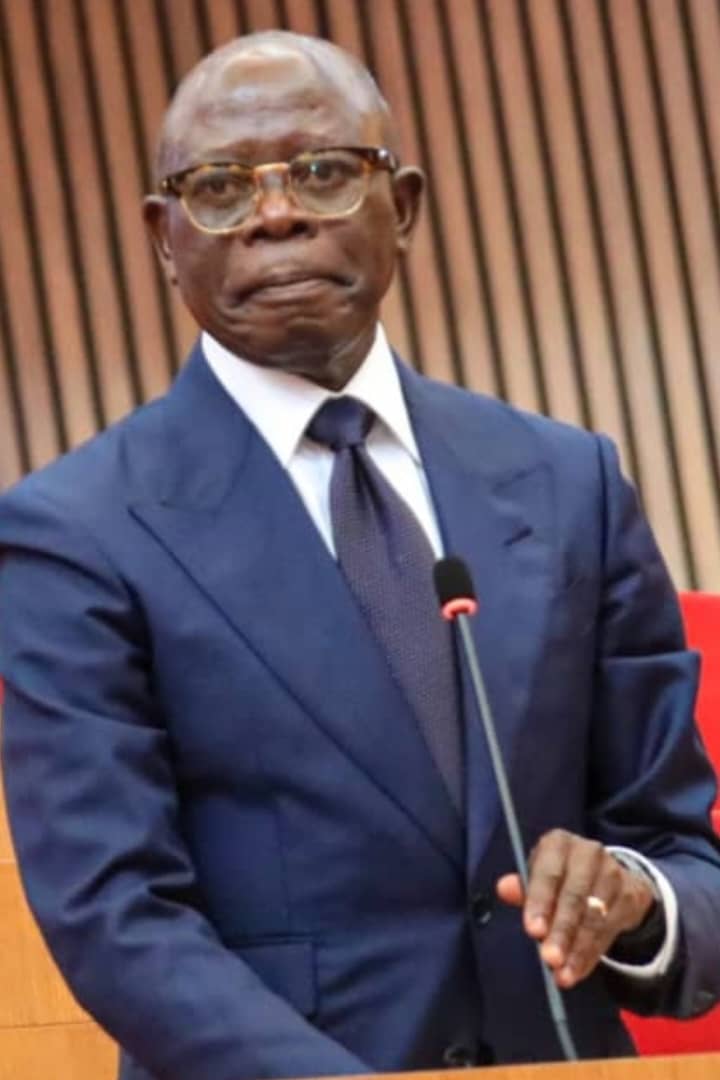
Daniel Eromosele Eulogize Adams Oshiomole as he turns 74 years
Today, I celebrate an exceptional leader, a fearless voice for the people, and a man whose life has remained a symbol of courage, sacrifice, and unwavering commitment to justice—Distinguished Comrade Senator Adams Aliu Oshiomhole.

Your journey has been nothing short of inspiring. From your days as a vibrant labour leader to your impactful tenure as the Executive Governor of Edo State, and now as a respected Senator of the Federal Republic, you have consistently demonstrated what it means to serve with integrity, strength, and purpose. Your contributions to the growth of our nation and the development of Edo State remain indelible and deeply appreciated.
You have not only built structures and institutions but have also built people. I am personally a beneficiary of your leadership, your guidance, and your belief in empowering others. Your influence in my life has been profound, and I remain grateful for the opportunities and inspiration you have given me.
On this special day, I celebrate not just your achievements, but the man you are—resilient, principled, and ever committed to the progress of Nigeria and her people.

May this new year bring you renewed strength, greater wisdom, good health, and more remarkable accomplishments. May your legacy continue to shine brighter with each passing year.
Happy Birthday, sir. Wishing you many more fruitful and impactful years ahead.
celebrity radar - gossips
Accolades to Empress Genevieve Wining as she Celebrate birthday in Grand style

Accolades to Empress Genevieve Wining as she Celebrate birthday in Grand style
Emmanuel Clement
Vilnius, Lithuania – The Grand Hotel Vilnius will host a grand birthday celebration in honor of Her Majesty The Empress Genevieve Wining of the United Kingdom of Atlantis (UKA) on April 4th, 2026.
The four-day event promises to be an extravagant affair, marking the special birthday of Empress Genevieve Wining. The celebration will take place at the prestigious Grand Hotel Vilnius, Lithuania, renowned for its luxurious ambiance and exceptional service.

According to the event flyer, the birthday celebration will be a spectacular occasion, fitting for an empress. Guests can expect an elegant setting adorned with golden accents, sparkling champagne, and festive decorations, creating a regal atmosphere befitting the occasion.
The Empress Genevieve Wining of UKA is expected to grace the event, which will include various festivities and celebrations in her honor. The occasion aims to bring together dignitaries, followers, and guests to commemorate the empress’s birthday with grandeur and joy.
For media inquiries, accreditation, or further information about the birthday celebration of The Empress Genevieve Wining of UKA, please contact the event organizers.
Courtesy of His Excellency Emperor Prof. Solomon Wining. UKA


- Seychelles Strengthens Human Rights Reporting through National Workshop April 8, 2026
- ABB’s Application Configurator brings speed and precision to grid-feeding protection system design April 7, 2026
- Can Equatorial Guinea Reposition as West Africa’s Gas Hub? April 7, 2026
- Afreximbank Partners with African Energy Week 2026 to Drive Africa-Led Energy Deals April 7, 2026
- Merck Foundation Marks ‘World Health Day’ 2026 – Transforming Patient Care in Africa and Beyond through 2600+ Scholarships for Healthcare Providers From 52 Countries April 7, 2026
- Morocco Gas Plan Reset Could Open Door to New Investment Models April 7, 2026
- African Petroleum Producers Organization (APPO) Secretary General Joins Angola Oil & Gas (AOG) 2026 as African Energy Bank Eyes June 2026 Debut April 7, 2026
- Ghanaian Biomedical Specialist Receives International Award April 7, 2026
- Grey Connects the Africa-Canada Money Corridor With Instant Transfers via Interac April 7, 2026
- Nigeria’s Oil Revival in Focus as Petroleum Minister Lokpobiri Joins Paris Energy Forum April 7, 2026
- Seychelles Strengthens Human Rights Reporting through National Workshop April 8, 2026
- ABB’s Application Configurator brings speed and precision to grid-feeding protection system design April 7, 2026
- Can Equatorial Guinea Reposition as West Africa’s Gas Hub? April 7, 2026
- Afreximbank Partners with African Energy Week 2026 to Drive Africa-Led Energy Deals April 7, 2026
- Merck Foundation Marks ‘World Health Day’ 2026 – Transforming Patient Care in Africa and Beyond through 2600+ Scholarships for Healthcare Providers From 52 Countries April 7, 2026
- Morocco Gas Plan Reset Could Open Door to New Investment Models April 7, 2026
- African Petroleum Producers Organization (APPO) Secretary General Joins Angola Oil & Gas (AOG) 2026 as African Energy Bank Eyes June 2026 Debut April 7, 2026
-

 news4 months ago
WHO REALLY OWNS MONIEPOINT? The $290 Million Deal That Sold Nigeria’s Top Fintech to Foreign Interests
-

 society7 months ago
“You Are Never Without Help” – Pastor Gebhardt Berndt Inspires Hope Through Empower Church (Video)
-

 celebrity radar - gossips2 months ago
Dr. Chris Okafor Returns with Power and Fire of the Spirit -Mounts Grace Nation Altar with Fresh Anointing and Restoration Grace on February 1, 2026
-

 celebrity radar - gossips4 months ago
Prophet Kingsley Aitafo Releases 2026 Prophecy: ‘Nigeria Will Rise, but the World Must Prepare for Turbulence’