
Business
“We are ready to die to wrestle the Olympic Gold’’ – Nigeria Dream Team VI boasts



Nigerians appear to pin hopes in Dream Team VI, going by steady manner that the team has been inching toward the medal zone in the ongoing Rio Olympic Games’ soccer event. Even though the team had been dogged by a myriad of problems, thrown at them by the haphazard manner of preparation for big events including the ongoing Olympics, the team has hardly let that come in between them and victory when it mattered most.
Captain Mikel “We are ready to die to wrestle the Olympic Gold,’’ members of the Dream team have resolved shortly after they overcame the Danish team to win the ticket to meet the Germans in one of the semi-finals of the soccer event of the Games. Chelsea star player, John Obi Mike, captain of the team and one of the three overage players, said he did not want to return to Chelsea, his club, without an Olympic Games gold medal.
He vowed to delay his return to his English Premier League side after helping Nigeria to reach men’s football semi-final against Germany in Sao Paulo on Wednesday. He added that he was determined to have the Games gold to declare in his luggage. “I hope to go back to Chelsea as the Olympic champion. That is my aim,’’ vowed the 29-year-old Obi, who scored the opener in the 2-0 quarterfinal win over Denmark in Salvador on Aug. 13. “I came out here to do my best to help the team with the gold medal. “That has always been my objective. It’s my aim and the players all want the same. When you have a group of players all wanting to achieve the same thing, hopefully it will go well at the end. “Hopefully, the semi-final will go well on Wednesday and then we will be in the final and win the gold medal’’. An ex-Eagles’ goalkeeper, South Africa-based Idah Peterside, said the team could defeat Germany when they clash in the semi-final. Peterside said from Johannesburg, that the match would be tough. “ The semi-final against Germany will be tough. We can win the match. We all have to pray for them and wish them well’’. He said the presence of striker Etebo Oghenekaro in the match can boost the country’s chances because he has potential to score goals. “ Etebo`s presence will be a great boost to the team. I hope he is okay and fit for that match,” he said. He noted that the Dream team has recorded great results in the course of the games. “All that matters now is the Gold. I am optimistic that this result is achievable’’. The team will be certain to have the backing of many lovers of Nigerian brand of soccer because many Brazilians have not forgotten the raw deal they had at the 1996 Atlanta Games, when the original Dream team beat them to gold.
The venue of the match, Sao Paulo, will offer a good setting, if the boys can reproduce the sparkle that they have shown since the start of the completion right from the tight and strangulating circumstance that dogged their path to Manaus for the opening match. In spite of late arrival at the venue of the first match in Manaus, they hit Japan 5-4 to set the tone for a challenging event. They also defeated Sweden, 1-0 but gave a second string side the opportunity to concede 0-2 to Colombia. The result did not upset the balance as the two previous victories were enough to see the team through quarters. With a huge number of Nigerians in Sao Paulo and environs, the National team would not lack vital support to forge ahead. Although the team did not impress during the last group match against Denmark, losing 0-2 but many said they had since put that behind them since it did not affect the team’s progress to the crucial quarters. Mike Adjuya, a Brazil-based Nigerian soccer agent, said: “I have since forgotten about the loss. Many other Nigerians will be there at the Arena Corinthian to show solidarity to the team.’’ “The team needs us now. We shall be more organised in providing the vital support. The team will make history. I will be happy to be part of it, ‘’ noted Chinedu Nwosu, a Nigerian and Sao Paulo businessman. “I am confident the Dream Team will prevail. They have Olympic Games’ soccer pedigree. That is what has seen them through to this stage. “I have seen that Nigerian spirit of rising to occasion when a challenge presents itself, especially the many obstacles that have dogged their getting to this stage. They are fired up now. They have a way of dismantling big soccer nations. “I see a Nigeria-Brazil finals and it will be a good advertisement for World football,’’ noted George Aluo, the Sports Editor of the Sun Newspaper, in Brazil covering the Games.
Coach Samson Siasia said he was confident that his boys would deliver. “The dream is a gold medal. This vital possession I want. I know all my boys want this as well.’’ Mikel reckons that his team has already defied the odds in reaching the last four. “It was a bit frustrating coming down here, but while we were in Atlanta we knew that we had a good shot at getting to the final or winning the tournament.’’ “With the problems we have had getting to this stage, it is just absolutely amazing and we just have to keep going.’’




Business
Alpha Morgan Bank Reinforces Commitment to Education at Redeemer’s University Business School Commissioning
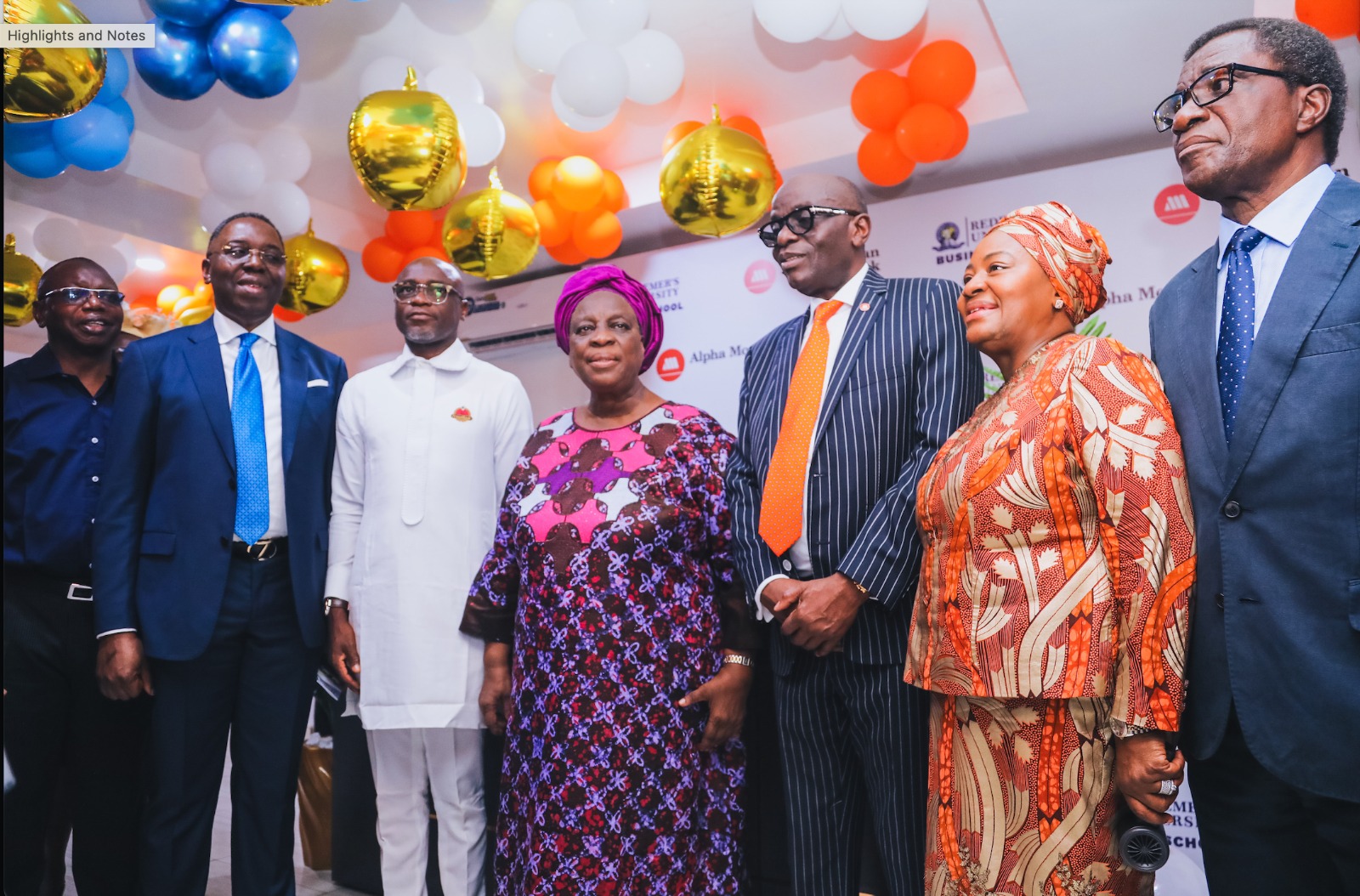
Alpha Morgan Bank Reinforces Commitment to Education at Redeemer’s University Business School Commissioning
Alpha Morgan Bank has reaffirmed its commitment to education and institutional development through its support for the commissioning of the Redeemer’s University Business School.
The Business School was officially inaugurated by Pastor (Mrs.) Folu Adeboye, at the commissioning ceremony attended by distinguished guests including Her Excellency, Mrs. Bola Obasanjo; the Pro-Chancellor and Chairman, Governing Council of Redeemers University, Professor Oluwatoyin Ogundipe; the Vice Chancellor, Professor Shadrach Olufemi Akindele; and other notable dignitaries.
Speaking at the event, the Managing Director of Alpha Morgan Bank reiterated the Bank’s commitment to supporting institutions that drive intellectual growth and national development.
As part of its broader focus on knowledge sharing and thought leadership, Alpha Morgan Bank will host its Economic Review Webinar in May 2026, bringing together experts to share insights on key economic trends and opportunities.
The Bank’s involvement reflects its continued dedication to empowering institutions and shaping the future of business and leadership in Nigeria.
Read more about Alpha Morgan Bank on www.alphamorganbank.com
PHOTO
L-R: Prof. Shadrach Olufemi Akindele, Vice Chancellor, Redeemers University, Engr. Eloka Eje, Dr Perez Araka, Pastor (Mrs) Folu Adeboye, Mother-In-Israel, The Redeemed Christian Church of God, Mr Ade Buraimo, MD/CEO Alpha Morgan Bank, Dr (Mrs) Oluwatomi Somefun, Dr. Simeon Ifere, at the inauguration of the Redeemer’s University Business School, Redemption City, Ogun State on Thursday 2nd April, 2026
Tinubu Aide Rebuts Rufai Oseni Over ₦3.3tn Power Debt Deal
Business
Aare Adetola Emmanuelking Welcomes President Tinubu to Gateway International Airport Commissioning in Iperu-Remo
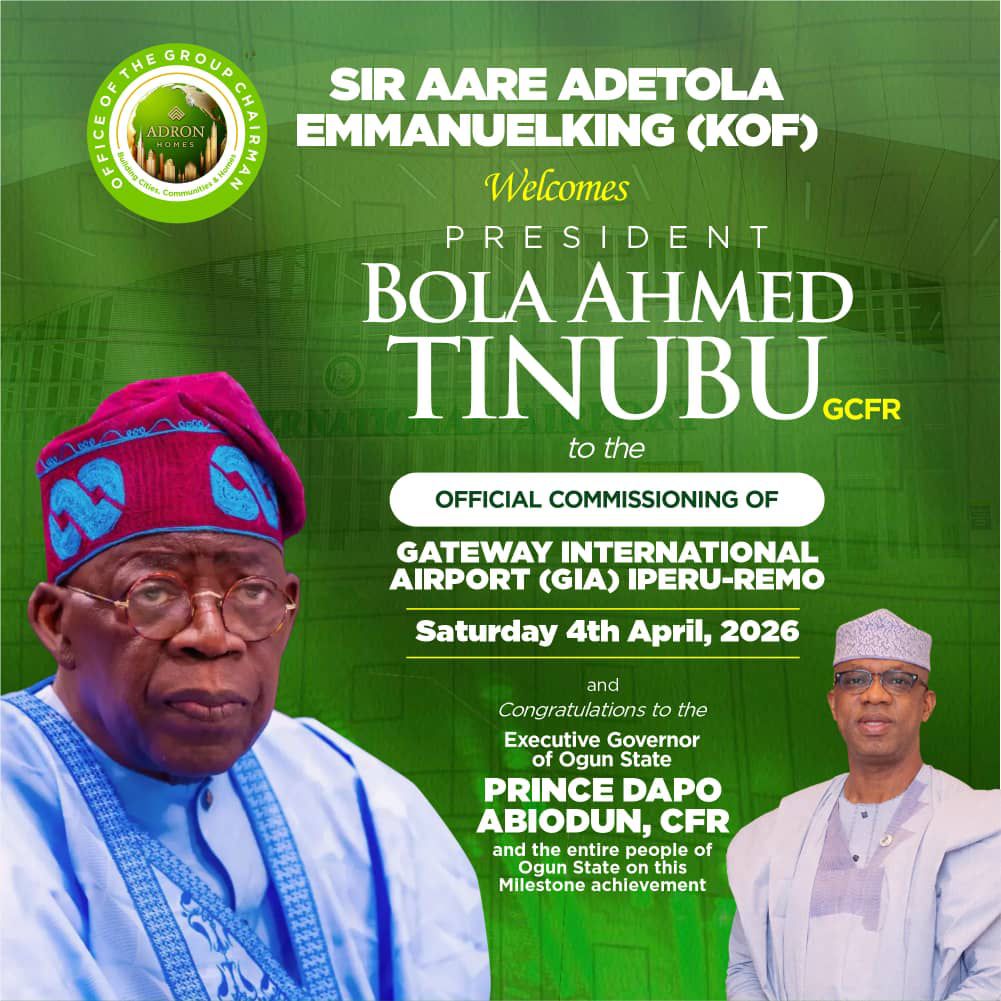
Aare Adetola Emmanuelking Welcomes President Tinubu to Gateway International Airport Commissioning in Iperu-Remo
In a momentous occasion that underscores the rapid infrastructural advancement of Ogun State, renowned real estate mogul and philanthropist, Aare Adetola Emmanuelking, warmly received the President of the Federal Republic of Nigeria, Bola Ahmed Tinubu, at the official commissioning of the Gateway International Airport, located in Iperu-Remo.
The landmark event, held under the visionary leadership of the Ogun State Governor, Dapo Abiodun, marks a significant stride in the state’s economic transformation agenda, positioning Ogun as a key hub for aviation, commerce, and investment in Nigeria.
Aare Emmanuelking, who is also the Chairman/CEO of Adron Homes and Properties, commended the Ogun State Government for its foresight and commitment to infrastructural excellence. He described the airport project as a “game-changer” that will not only boost connectivity but also stimulate real estate growth, tourism, and industrial expansion across the region.
Speaking during the commissioning, President Tinubu lauded Governor Abiodun’s administration for delivering a world-class facility that aligns with the Federal Government’s Renewed Hope Agenda, emphasizing the importance of strategic infrastructure in driving national development.
The Gateway International Airport is expected to serve as a critical gateway for investors and travelers, further enhancing Ogun State’s reputation as one of Nigeria’s most business-friendly environments.
The presence of top dignitaries, industry leaders, and stakeholders at the event underscores the project’s significance and its anticipated impact on the state’s socio-economic landscape and beyond.


- Seychelles Strengthens Human Rights Reporting through National Workshop April 8, 2026
- ABB’s Application Configurator brings speed and precision to grid-feeding protection system design April 7, 2026
- Can Equatorial Guinea Reposition as West Africa’s Gas Hub? April 7, 2026
- Afreximbank Partners with African Energy Week 2026 to Drive Africa-Led Energy Deals April 7, 2026
- Merck Foundation Marks ‘World Health Day’ 2026 – Transforming Patient Care in Africa and Beyond through 2600+ Scholarships for Healthcare Providers From 52 Countries April 7, 2026
- Morocco Gas Plan Reset Could Open Door to New Investment Models April 7, 2026
- African Petroleum Producers Organization (APPO) Secretary General Joins Angola Oil & Gas (AOG) 2026 as African Energy Bank Eyes June 2026 Debut April 7, 2026
- Ghanaian Biomedical Specialist Receives International Award April 7, 2026
- Grey Connects the Africa-Canada Money Corridor With Instant Transfers via Interac April 7, 2026
- Nigeria’s Oil Revival in Focus as Petroleum Minister Lokpobiri Joins Paris Energy Forum April 7, 2026
- Seychelles Strengthens Human Rights Reporting through National Workshop April 8, 2026
- ABB’s Application Configurator brings speed and precision to grid-feeding protection system design April 7, 2026
- Can Equatorial Guinea Reposition as West Africa’s Gas Hub? April 7, 2026
- Afreximbank Partners with African Energy Week 2026 to Drive Africa-Led Energy Deals April 7, 2026
- Merck Foundation Marks ‘World Health Day’ 2026 – Transforming Patient Care in Africa and Beyond through 2600+ Scholarships for Healthcare Providers From 52 Countries April 7, 2026
- Morocco Gas Plan Reset Could Open Door to New Investment Models April 7, 2026
- African Petroleum Producers Organization (APPO) Secretary General Joins Angola Oil & Gas (AOG) 2026 as African Energy Bank Eyes June 2026 Debut April 7, 2026
-

 news4 months ago
WHO REALLY OWNS MONIEPOINT? The $290 Million Deal That Sold Nigeria’s Top Fintech to Foreign Interests
-

 society7 months ago
“You Are Never Without Help” – Pastor Gebhardt Berndt Inspires Hope Through Empower Church (Video)
-

 celebrity radar - gossips2 months ago
Dr. Chris Okafor Returns with Power and Fire of the Spirit -Mounts Grace Nation Altar with Fresh Anointing and Restoration Grace on February 1, 2026
-

 celebrity radar - gossips4 months ago
Prophet Kingsley Aitafo Releases 2026 Prophecy: ‘Nigeria Will Rise, but the World Must Prepare for Turbulence’
You must be logged in to post a comment Login
You must log in to post a comment.