
celebrity radar - gossips
WE DID NOT ORDER LEKKI SHOOTING – SANWO-OLU

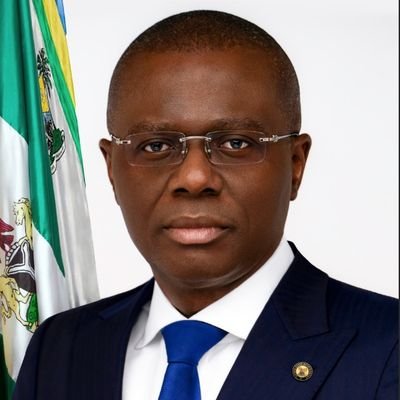
…Governor: “No CCTV Camera Removed From Lekki Tollgate Before Incident’
Lagos State Governor, Mr. Babajide Sanwo-Olu, has, again, spoken on the ugly incident that happened at the Lekki Toll Plaza on Tuesday evening, in which military personnel used live ammunition to disperse EndSARS protesters who camped at the tollgate to demand for the end to police brutality.
Sanwo-Olu maintained that the State Government did not order the military shooting, which left about 11 of the youths severely injured. The Governor also sustained his earlier assertion that, no protester died in the incident, stressing that he and officials of the State Government had gone round private and public health facilities across the State without being able to identify bodies of those allegedly killed in the incident except one that died from blunt force trauma and another corpse that was recovered by the police in the Victoria Island area with bullet wounds.
The Governor appeared on The Morning Show programme aired live on Arise News, said the State was already investigating whether the deceased was a protester.
Sanwo-Olu asked members of the public with credible information on anyone or group of persons killed in the incident to come forward with the claim. He said the social media overblew the proportion of the incident with what he described as “false information” being shared by those who were not at the scene of the incident.
He said: “There have been several false information that we have seen over the incident and we will appeal to people to show more restraint in posting information that cannot be verified.”
The Governor spoke on the alleged removal of Close-Circuit Television (CCTV) security cameras at the Toll Plaza before the shooting started, debunking the claims that he ordered the action. Sanwo-Olu said the cameras that were removed were not security cameras but laser cameras meant to capture vehicles’ electronic tags and number plates. He said the removal of the laser cameras was a decision taken by Lekki Concession Company (LCC) that owns the facility.
He said: “When I spoke to the Managing Director of LCC over the matter, he told me the company took the decision to remove installations critical to their service when the curfew was announced. Those cameras that were displayed in the viral pictures were not security or motion cameras. They are laser cameras for vehicles, specifically designed to pick electronic tags and number plates on cars. Security cameras installed at the Toll Plaza are still there as I speak and the footages from them are the ones that we will be using in probing the Lekki incident. Since Tuesday, the security cameras at the Toll Plaza are still there and nobody can touch them.”
Sanwo-Olu said multi-agency investigation into Lekki incident may begin next Monday when order would have been fully restored across the State, pointing out that the recordings of the CCTV security cameras at the Toll Plaza would be useful in unraveling the circumstance that surrounded the incident.
Members of the public, the Governor said, will be part of the investigation for transparency. He added that security experts would be involved to analyse the recordings of the CCTV security cameras to ensured the footages captured since the time the protesters started camping at the tollgate were not tampered with.
On the allegation that he influenced the switching off of the billboard that illuminated the Toll Plaza area at night, Sanwo-Olu said the concessionaire that operates the billboard took the decision independently after the curfew order was announced.
Speaking on the aftermath of the organised attacks on government properties, iconic buildings and private assets, Sanwo-Olu said the nature of the destruction indicated an attempt by the arsonists to keep the State in limbo. He said the attacks were specifically targeted at emergency response infrastructure of the State to weaken its response in the case of large-scale violence.
The Governor disclosed that the arsonists, in the organised destruction, razed four State-owned fire stations and five fire trucks. He said the reconstruction of the damaged assets would cost billions, but said the State would bounce back after the devastation.
Sanwo-Olu said it would be insensitive for him to buttress the narrative linking the arsonist attacks on public buildings to sectarian elements, saying his immediate priority was to salvage the damaged assets and prevent further attacks. He, however, said all materials suggesting the arson may have been organised by secessionists would be left for security agencies for proper analysis.
Clarifying his statement that forces beyond him were behind the deployment of troops to Lekki axis, the Governor said: “The hierarchy and chains of command in the military are not within my purview. This is not something I have responsibility for. I do not have such power to control or activate the military. That essentially is what I was trying to say in that particular phrase.”
He also explained that he reached out to President Muhammadu Buhari on two occasions to seek for more help as public assets in the State were being destroyed. He said the President responded, directing the Chief of Defence Staff to liaise with him.
He said: “I made phone calls to speak to the President twice yesterday (Wednesday). The first time, he (president) hadn’t come to the office. The second time, he was at the Federal Executive Council (FEC) meeting. Indeed, I haven’t spoken to him directly. He was actually the one who directed the Chief of Defence Staff to call me and I feel that it was when he got my message. Because, when the Chief of Defence Staff called me, he said to me it was the President that asked him to call. But, I haven’t spoken to the President directly; maybe later today, that might happen.”
Aftermath of the destruction, Sanwo-Olu urged the residents of Lagos to come together and heal the wounds inflicted on the State by the arsonists. He said the ugly incident put citizens’ patriotism to test, urging them to unite and re-build the State from the ruins left by the attacks.
He said: “We are at a point where all of us as a people living in the State must come together more than ever before. Our patriotism has been put to test and we need to re-engage ourselves and heal the several wounds that have been inflicted on us. We do not have any other country; this is our country.
“In Lagos, we cannot afford to put to waste what our forefathers and the generation of leaders before us have put in place. We need to preserve our heritage and we need to know that indeed we can build a future for our children. We need to put an end to any form of anger, protest, confrontation and bleeding. Let us come together and start a real healing process.”




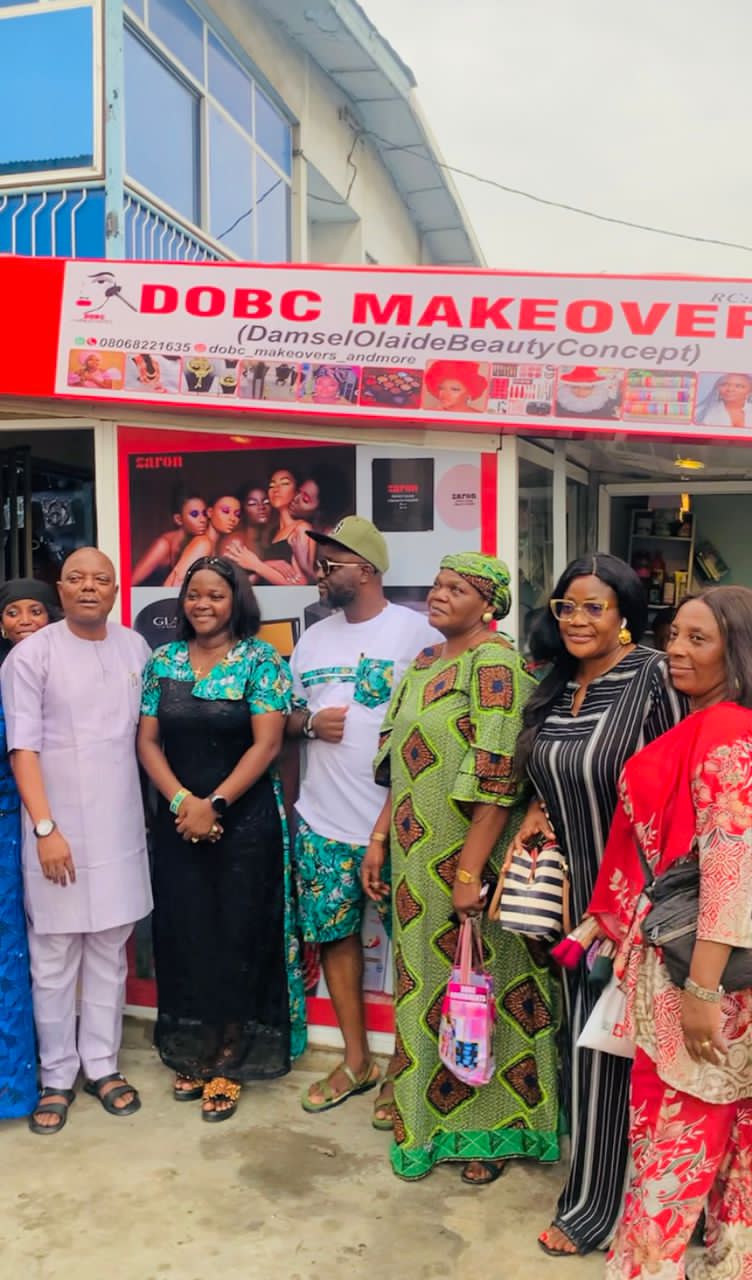
Beauty Meets Glamour as Olaide Ogunyemi Opens New Studio in Mushin
Popular Nollywood actress and professional makeup artiste, Olaide Ogunyemi Oluwayemisi aka Damilola, has expanded her footprint in the beauty industry with the grand opening of her new makeup studio in Lagos.
The talented thespian, who is also the Chief Executive Officer of @Dobc_makeovers_andmore, officially unveiled the ultra-modern beauty space last Thursday, April 2, 2026, in a colourful ceremony filled with glamour, fashion, and pageantry.
Strategically located at 101 Palm Avenue, right beside FitPlus and Sparklight Hospital in Mushin area of Lagos, the new studio is designed to offer top-notch beauty services, reflecting Ogunyemi’s commitment to excellence and professionalism in the ever-growing makeup industry.
The opening ceremony attracted friends, colleagues from the Nollywood industry, beauty enthusiasts, and well-wishers who came out in large numbers to celebrate the entrepreneur’s latest milestone. Guests were treated to a vibrant atmosphere that showcased creativity, style, and the evolving standards of the beauty business in Lagos.
Speaking at the event, Ogunyemi expressed her excitement and gratitude, noting that the new studio represents years of hard work, dedication, and passion for her craft. She reaffirmed her commitment to delivering premium beauty services while empowering aspiring makeup artistes.
The launch of the studio further cements her reputation as a dynamic force, successfully blending her career in Nollywood with a thriving beauty brand.
With this latest development, Olaide Damilola Ogunyemi continues to inspire many young entrepreneurs, proving that talent, consistency, and vision remain key drivers of success in Nigeria’s creative and business landscape.


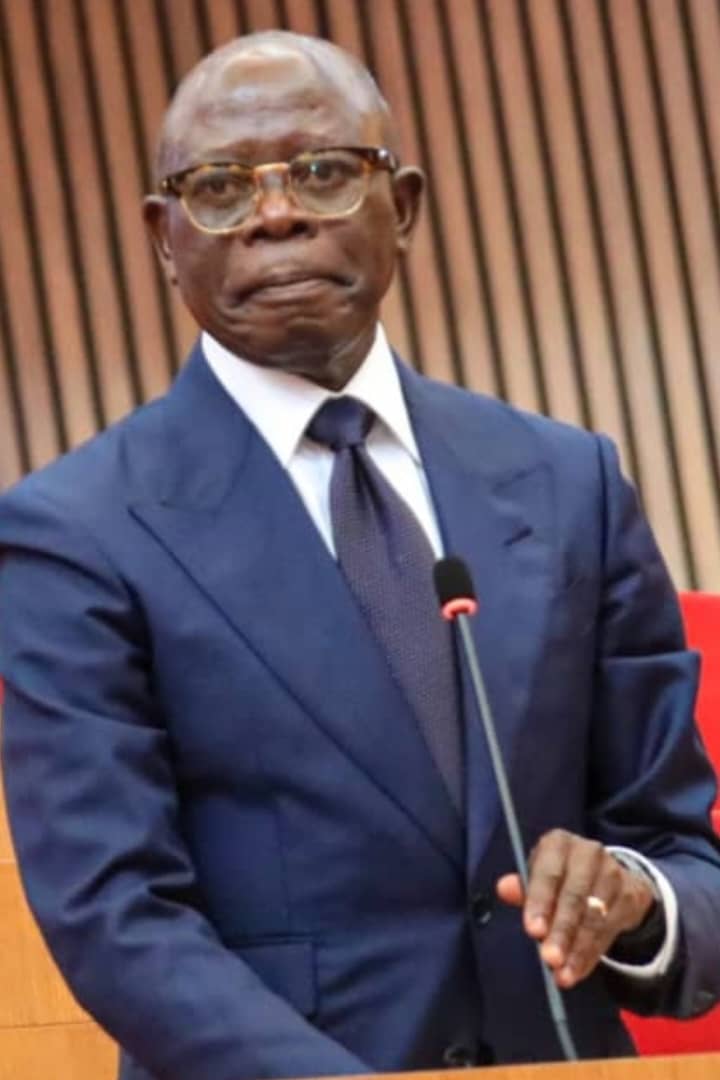
Daniel Eromosele Eulogize Adams Oshiomole as he turns 74 years
Today, I celebrate an exceptional leader, a fearless voice for the people, and a man whose life has remained a symbol of courage, sacrifice, and unwavering commitment to justice—Distinguished Comrade Senator Adams Aliu Oshiomhole.

Your journey has been nothing short of inspiring. From your days as a vibrant labour leader to your impactful tenure as the Executive Governor of Edo State, and now as a respected Senator of the Federal Republic, you have consistently demonstrated what it means to serve with integrity, strength, and purpose. Your contributions to the growth of our nation and the development of Edo State remain indelible and deeply appreciated.
You have not only built structures and institutions but have also built people. I am personally a beneficiary of your leadership, your guidance, and your belief in empowering others. Your influence in my life has been profound, and I remain grateful for the opportunities and inspiration you have given me.
On this special day, I celebrate not just your achievements, but the man you are—resilient, principled, and ever committed to the progress of Nigeria and her people.

May this new year bring you renewed strength, greater wisdom, good health, and more remarkable accomplishments. May your legacy continue to shine brighter with each passing year.
Happy Birthday, sir. Wishing you many more fruitful and impactful years ahead.
celebrity radar - gossips
Accolades to Empress Genevieve Wining as she Celebrate birthday in Grand style

Accolades to Empress Genevieve Wining as she Celebrate birthday in Grand style
Emmanuel Clement
Vilnius, Lithuania – The Grand Hotel Vilnius will host a grand birthday celebration in honor of Her Majesty The Empress Genevieve Wining of the United Kingdom of Atlantis (UKA) on April 4th, 2026.
The four-day event promises to be an extravagant affair, marking the special birthday of Empress Genevieve Wining. The celebration will take place at the prestigious Grand Hotel Vilnius, Lithuania, renowned for its luxurious ambiance and exceptional service.

According to the event flyer, the birthday celebration will be a spectacular occasion, fitting for an empress. Guests can expect an elegant setting adorned with golden accents, sparkling champagne, and festive decorations, creating a regal atmosphere befitting the occasion.
The Empress Genevieve Wining of UKA is expected to grace the event, which will include various festivities and celebrations in her honor. The occasion aims to bring together dignitaries, followers, and guests to commemorate the empress’s birthday with grandeur and joy.
For media inquiries, accreditation, or further information about the birthday celebration of The Empress Genevieve Wining of UKA, please contact the event organizers.
Courtesy of His Excellency Emperor Prof. Solomon Wining. UKA


- United States (U.S.) and Mozambique Advance Cooperation on Emergency Response and Safety April 6, 2026
- The Impacts of the Middle East Conflict on Africa April 6, 2026
- Ghana: President Mahama announces a high-level panel of the Accra Reset April 6, 2026
- Ghana: President Mahama reiterates his determination to build more businesses April 6, 2026
- Mauritius accelerates energy transition with renewable projects of 405 MW April 6, 2026
- Africa Centres for Disease Control and Prevention (Africa CDC) Appoints His Excellency Prof. Yemi Osinbajo as Senior Strategic Advisor to the Director General April 6, 2026
- 2026 Easter Message by the President of the Catholic Bishops’ Conference of Nigeria (CBCN): The Dawn is Coming, Don’t Let Go Now, Hold on to Hope! April 5, 2026
- "A Time to Pause and Begin Again”: President Dr Patrick Herminie reflects in Easter message April 5, 2026
- President Dr. Patrick Herminie Pays Tribute to the Late Seychellois Artist David Philoe April 5, 2026
- Ghana identifies priority areas to strengthen cholera prevention and control April 5, 2026
- United States (U.S.) and Mozambique Advance Cooperation on Emergency Response and Safety April 6, 2026
- The Impacts of the Middle East Conflict on Africa April 6, 2026
- Ghana: President Mahama announces a high-level panel of the Accra Reset April 6, 2026
- Ghana: President Mahama reiterates his determination to build more businesses April 6, 2026
- Mauritius accelerates energy transition with renewable projects of 405 MW April 6, 2026
- Africa Centres for Disease Control and Prevention (Africa CDC) Appoints His Excellency Prof. Yemi Osinbajo as Senior Strategic Advisor to the Director General April 6, 2026
- 2026 Easter Message by the President of the Catholic Bishops’ Conference of Nigeria (CBCN): The Dawn is Coming, Don’t Let Go Now, Hold on to Hope! April 5, 2026
-

 society7 months ago
Religion: Africa’s Oldest Weapon of Enslavement and the Forgotten Truth
-

 news4 months ago
WHO REALLY OWNS MONIEPOINT? The $290 Million Deal That Sold Nigeria’s Top Fintech to Foreign Interests
-

 society6 months ago
“You Are Never Without Help” – Pastor Gebhardt Berndt Inspires Hope Through Empower Church (Video)
-

 celebrity radar - gossips2 months ago
Dr. Chris Okafor Returns with Power and Fire of the Spirit -Mounts Grace Nation Altar with Fresh Anointing and Restoration Grace on February 1, 2026