
society
We Keep Calling on God While We Do Nothing: Prayer Without Pausing for Action Is a Kind of Cowardice

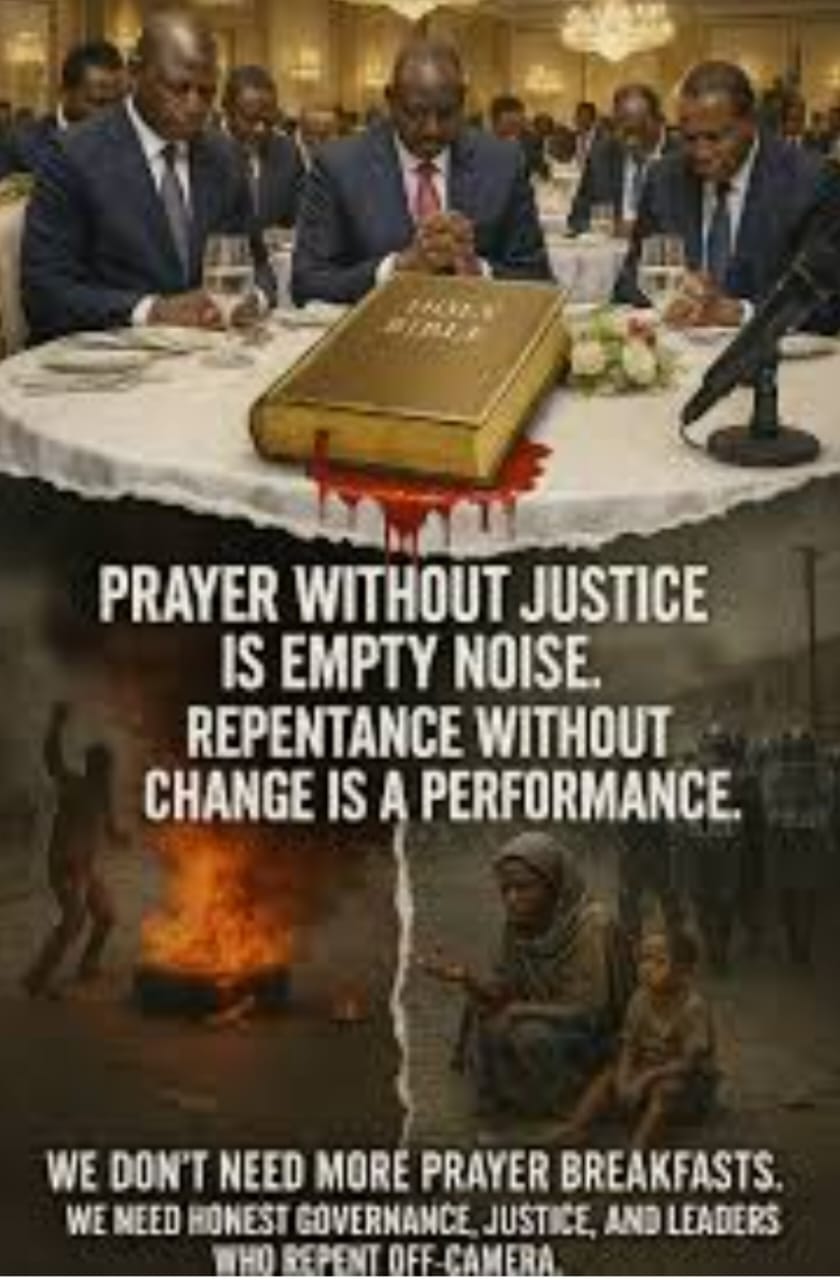
We Keep Calling on God While We Do Nothing: Prayer Without Pausing for Action Is a Kind of Cowardice.
By George Omagbemi Sylvester | Published by saharaweeklyng.com
“The tragic cost of outsourcing national duty to heaven while corruption destroys institutions on earth.”
For too long Nigerians have been trapped in a pious loop: Pray, Petition, Post a prayer request, then return to business as usual. Prayer is not the enemy (it has comforted and sustained millions through grief and crisis) but when prayer becomes the substitute for responsibility, it is not FAITH, it is ABDICATION. A nation that kneels every morning yet allows its hospitals to run out of basic supplies, its youths to sit idle, its farmlands to be washed away by floods or seized by violence, cannot plausibly claim divine protection while it reflexively refuses the hard, mundane labour that secures the common good. Faith without works is hollow; petitions without policy are theater; supplication without sacrifice is moral window-dressing.
The facts that confront Nigeria demand more than incense and hashtags. Since 2018–19 an estimated tens of millions more Nigerians have been pushed into extreme poverty; recent World Bank analyses show the share of Nigerians in extreme poverty increased substantially in the aftermath of multiple shocks (economic, climate and security) reversing prior gains and leaving nearly half of Nigerians living at or below poverty lines in the most recent assessments. This is a national emergency that cannot be excused by piety.
Consider the everyday metrics of national life. Official labour surveys and analyses reveal a labour market riddled with underemployment and precarious work even when headline unemployment figures appear low or inconsistent due to methodological changes. In 2024 the National labour survey recorded unemployment upticks and youth joblessness that mask a deeper reality: millions eke out an existence on tiny, irregular incomes in the informal economy, with very few pathways to dignified, stable employment. When citizens face chronic insecurity, inflationary shocks and mass displacement, the impulse to pray is understandable, but the cure is not a prayer meeting, it is organized civic effort, systemic reform and sustained public pressure.
Security and displacement expose how prayer without practical response becomes a moral sleight of hand. In 2024 Nigeria hosted millions of internally displaced people fleeing insurgency, banditry and communal violence; families were uprooted, entire communities rendered vulnerable and dependent on intermittent humanitarian relief. Meanwhile, climate shocks (catastrophic floods in recent seasons) destroyed crops and livelihoods for millions more. These are problems that require government planning, investment in resilient infrastructure, accountable security policy and an energized citizenry that demands these things and not just petitions. When citizens believe their role is only to pray, they allow corruption, negligence and incompetence to calcify into institutions.
Corruption and impunity are not neutral bystanders; they are active enablers of national decline. Nigeria’s position in global indices of public-sector integrity remains troubling: persistent low scores and middling ranks in anti-corruption indexes reflect weak institutions and a culture of impunity that feeds mismanagement and theft of public resources. The moral language of prayer becomes particularly hollow when public funds meant for schools, hospitals and roads are diverted or squandered and yet too often the response from ordinary citizens is another round of spiritual ritual, not a mobilized demand for transparency, accountability and justice.
To be clear: THIS IS NOT AN ATTACK ON FAITH. It is a call to reconcile belief with belonging. The great Nigerian voices of conscience have long insisted that silence is not innocence. Wole Soyinka warned that “the man dies in all who keep silent in the face of tyranny” a line that speaks directly to our time: a nation that shrinks from collective action is a nation that dies a little each day. Chimamanda Ngozi Adichie reminds us that “people make culture,” which means the ideas and habits that have allowed our civic life to atrophy are changeable, but only if we stop excusing inaction with devotion and start building new habits of responsibility and protest.
What does responsible citizenship look like in practice? It begins with the mundane but essential acts that sustain civic life: registering to vote and voting smartly; holding elected officials to account through sustained oversight and constituency pressure; joining or founding community organizations that repair roads, mentor youth and deliver local health and education services when the state fails; supporting independent media that uncovers mismanagement; and refusing to normalise impunity by demanding transparent procurement, audits and prosecutions when corruption is exposed. It is not about abandoning spiritual life, it is about demanding that our faith translate into ethical behaviour, public service and sacrifice. When congregations demand improved local schools or insist a community health clinic be properly staffed, that is devotion translated into duty.
Leadership matters; and leadership can be exercised without waiting for official sanction. Across Nigeria’s history, ordinary citizens have risen to extraordinary challenges by organizing cooperatives, vigilante groups (subject to rule of law), community security watches and grassroots advocacy movements. But those efforts must be anchored to law and human rights, not to vigilantism or sectarian reprisals. A Christian, Muslim, or traditional leader who prays on Sunday or Friday and on Monday tolerates vote-buying, contractor fraud, or the denial of basic services is not virtuous, they are complicit. Faith communities should be incubators for civic courage: places where moral conviction is channeled into civic projects, electoral integrity campaigns and social accountability.
Practical reform requires three simultaneous strands: INSTITUTIONAL REFORM, SOCIAL MOBILISATION and ETHICAL RENEWAL. Institutionally, Nigerians require robust public financial management, independent anti-corruption agencies with real teeth, reliable social safety nets, and a justice system that functions impartially. Social mobilisation requires sustained civic education, professionalized civil society and cross-cutting coalitions that put pressure on elites. Ethical renewal (the most intimate and hardest) calls for a cultural shift where excuses like “WE PRAYED ABOUT IT” are recognised for what they are: a way to avoid the costs of change. Scholarly and policy voices across Nigeria and the world have shown that poverty, insecurity and poor governance are solvable when there is political will, coherent policy and an organised public that refuses complacency.
Finally, let us be blunt: God does not answer for our laziness. Many clergy and faith teachers affirm that prayer is strengthened, not replaced, by action. Prayer without effort is not piety; it is a convenience that comforts those unwilling to risk for the common good. We cannot pray our way out of BROKEN SYSTEMS if we will not also build the ladders of reform, accountability and civic solidarity that allow others to climb. The test of our faith will not be how fervently we pray when the lights go out; the test will be whether we volunteer at the nearest clinic, stand up for a neighbour who was cheated by a contractor, attend a town-hall meeting, vote with conscience, or help a displaced family replant their crops.
Nigeria’s future will be forged by citizens who combine prayer with persistence, lament with labor and devotion with duty. If we continue to outsource our responsibilities to the heavens while allowing our public institutions to wither, we will deserve whatever fate befalls us. But if we recover the courage to act (to ORGANIZE, DEMAND, REFORM and SERVE) then our prayers will be accompanied by the kind of work that makes blessings plausible. As Wole Soyinka and a long lineage of Nigerian thinkers insist: silence in the face of tyranny is death. Let us stop dying on our knees and start living in the daring posture of responsible citizenship.





society
GEN CHRISTOPHER GWABIN MUSA SUPPORT INITIATIVE EXTENDS WARM BIRTHDAY FELICITATIONS TO PRESIDENT TINUBU ON 74TH BIRTHDAY
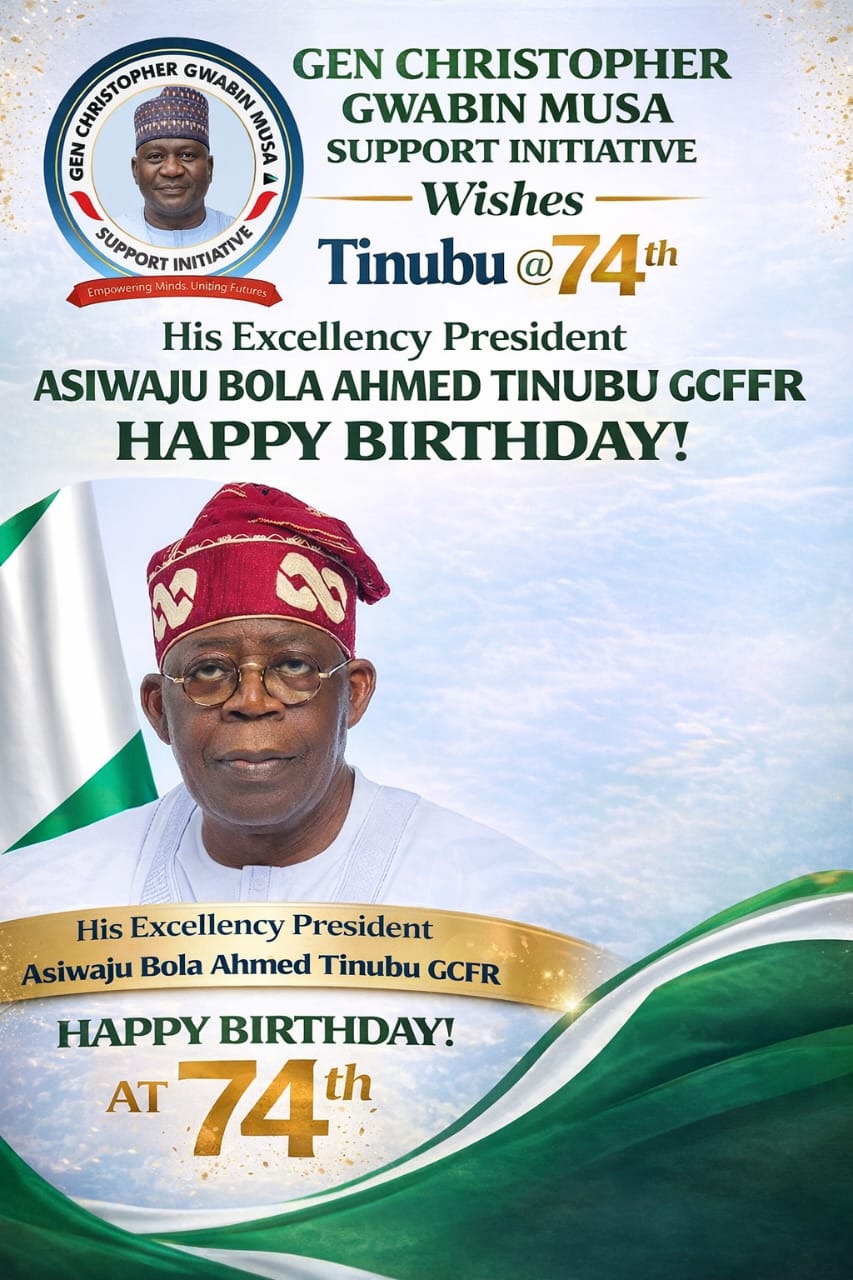
GEN CHRISTOPHER GWABIN MUSA SUPPORT INITIATIVE EXTENDS WARM BIRTHDAY FELICITATIONS TO PRESIDENT TINUBU ON 74TH BIRTHDAY
The Gen Christopher Gwabin Musa Support Initiative has extended heartfelt congratulations to His Excellency President Asiwaju Bola Ahmed Tinubu, GCFR, on the occasion of his 74th birthday.
In a statement released to the press, the Initiative conveyed warm wishes for the President’s personal well-being and for his continued leadership of the nation. The statement, signed by the Convener, Ibrahim Dahiru Danfulani, Sadaukin Garkuwan Keffi/Betara Biu, expressed hope that the coming year would bring the President “renewed strength and more wisdom in guiding the nation.”
The statement further noted that the Grand Patron of the Initiative, His Excellency Gen Christopher Gwabin Musa, OFR, Minister of Defence of the Federal Republic of Nigeria, joined in celebrating the milestone. It added, “Wishing Your Excellency continued good health, vitality, and determination as you lead the country towards greater unity and progress.”
The message underscores support for President Tinubu’s administration and its national objectives, marking the birthday as an occasion to reaffirm commitment to the nation’s unity and advancement under his stewardship.
society
Dominion City to Host Global Camp Meeting, “2 Nights of Glory” 2026 in Lagos, Enugu …Calls for Moral Renewal
*Dominion City to Host Global Camp Meeting, “2 Nights of Glory” 2026 in Lagos, Enugu
…Calls for Moral Renewal
Lagos – Dominion City has announced plans to host its annual Global Camp Meeting alongside a special “2 Nights of Glory” gathering in April 2026, with events scheduled to be held simultaneously in Lagos and Enugu.
The week-long programme is expected to draw tens of thousands of participants onsite and millions of virtual attendees from across the globe.
The Global Camp Meeting will run from Wednesday, April 1 to Monday, April 6, featuring daily sessions at 8:00 a.m. and 5:00 p.m. The “2 Nights of Glory” is slated for Friday, April 3 and Saturday, April 4 at the Golden Heart Place, Km 22 Lekki-Epe Expressway, beside Lagos Business School, Ajah, Lagos.
Organised by Dominion City, a global church focused on raising transformational leaders, the conference will centre on revival, spiritual renewal, and practical teachings. This year’s theme, “Redigging the Wells of Our Fathers,” underscores a call to return to foundational values and principles.
Speaking ahead of the event, Nobbert Onaga, President, Golden Heart Foundation and Senior Pastor, DC Lagos & Europe, emphasised the need for moral reawakening as a pathway to national transformation. He described the Church as “the pillar and foundation of truth,” noting that the conference aims to confront moral decline and restore core values within society.
“We are going back to foundational truths that established the Church. These truths will help repair societal damage and reposition the Church as a source of hope and light,” Onaga said.
Also speaking, Shola Olapade, Senior Pastor of Dominion City Headquarters, highlighted the Church’s role in addressing ethical and cultural challenges, particularly among young people. He added that the programme would go beyond spiritual teachings to include sessions on artificial intelligence, innovation, business, media, arts, and career development.
“We are equipping people not just spiritually, but with relevant 21st-century skills to thrive in today’s world,” Olapade noted.
The conference will feature teachings and ministrations from a lineup of international ministers, including Dr. David Ogbueli, Dr. Charles Ndifon, Andres Bisonni, Pastor Randy Mitchell, Apostle Ikechukwu Peter Nnajiofor, Dr. Ferdinand Nweke, Apostle Ben Hanyani Ndobe, Evangelist Dan Scott, and Dr. Chiefo Ejiofobiri.
Music ministrations will also be led by notable gospel artists such as Grace Idowu, Rhema Onuoha, Once More Six, David Nkennor, Anthony Kani, and GUC.
Organisers disclosed that over 30,000 participants are expected to attend in person, with free transportation provided from designated locations across Lagos to ease access. In addition, free medical services will be offered daily, building on previous outreaches that benefited over 1,700 people.
To ensure safety and order, more than 200 traffic marshals will be deployed in collaboration with relevant authorities.
Beyond its spiritual impact, organisers project that the event will stimulate local economic activity across hospitality, transportation, and retail sectors.
The Global Camp Meeting remains a key platform for spiritual impartation, leadership development, and societal transformation, aligning with Dominion City’s mission to equip believers to influence their communities positively.
Participation is open to the public, with registration available online for both physical and virtual attendance. //END.//
*PHOTO CAPTIONS:*
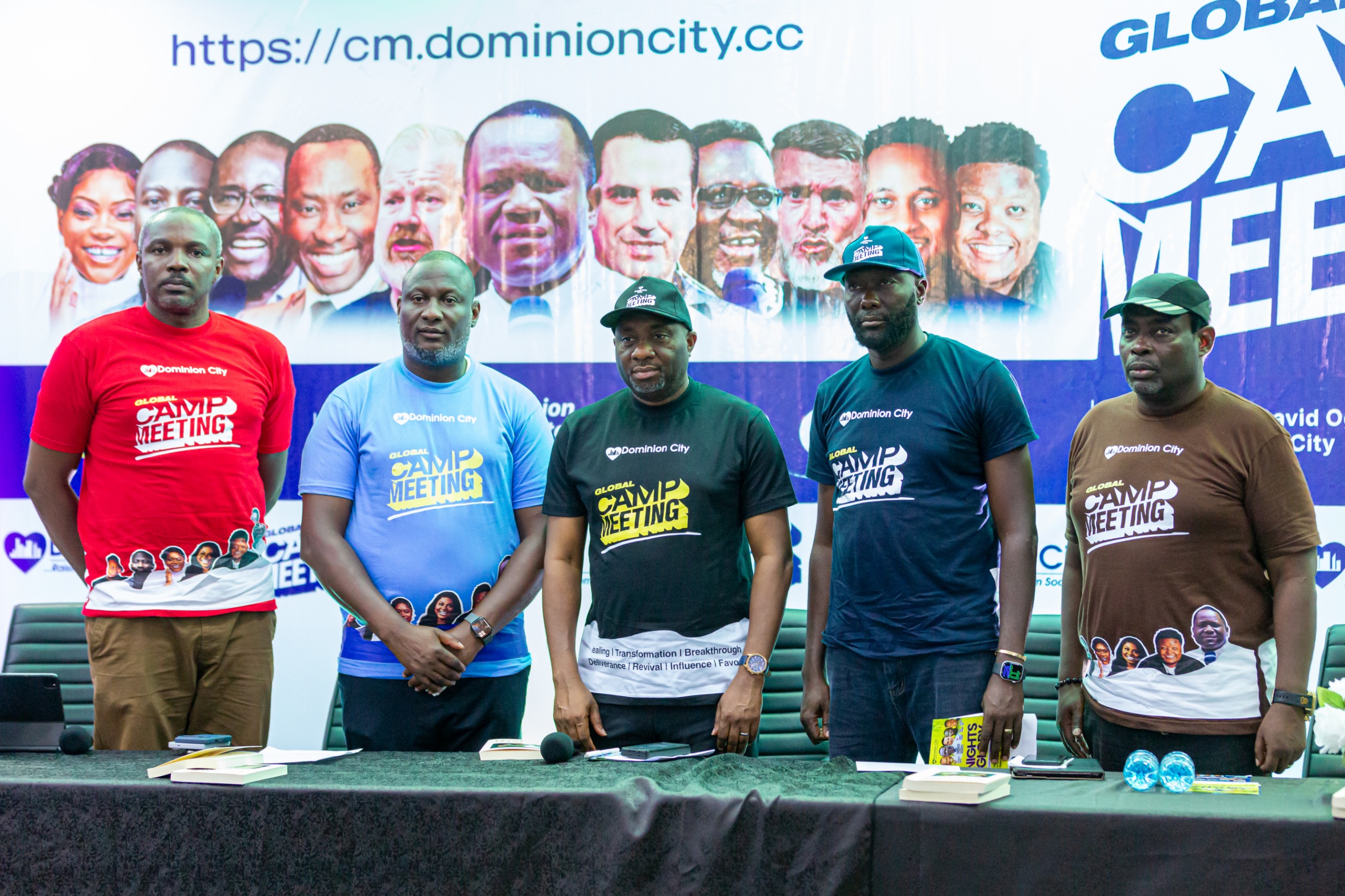
L-R: Dr. Godwin Efobi, Head, Medical Team, Dominion City Headquarters (DCHQ); Pastor Shola Olapade, Senior Pastor, DCHQ; Pastor Nobbert Onaga, President, Golden Heart Foundation and Senior Pastor, DC Lagos & Europe; Pastor Chuks Anochie, Head of Security and Traffic Control, Dominion City Headquarters (DCHQ), Camp Meeting 2026; Pastor Josh Tim Vaduchi, Head of Event & Programmes, DCHQ, during the press briefing of the forthcoming Global Camp Meeting, held the weekend of 2026 at the Dominion City Headquarters (DCHQ), Lagos.
L-R: Pastor Chuks Anochie, Head of Security and Traffic Control, Dominion City Headquarters (DCHQ), Camp Meeting 2026; Pastor Shola Olapade, Senior Pastor, DCHQ; Pastor Nobbert Onaga, President, Golden Heart Foundation and Senior Pastor, DC Lagos & Europe; Dr. Godwin Efobi, Head, Medical Team, DCHQ; and Pastor Josh Tim Vaduchi, Head of Event & Programmes, during the press briefing of the forthcoming Global Camp Meeting, held over the weekend in 2026 at the Dominion City Headquarters (DCHQ), Lagos.
society
Oloworo of Oworosoki Kingdom, Oba Babatunde Saliu, Felicitates President Bola Ahmed Tinubu at 74
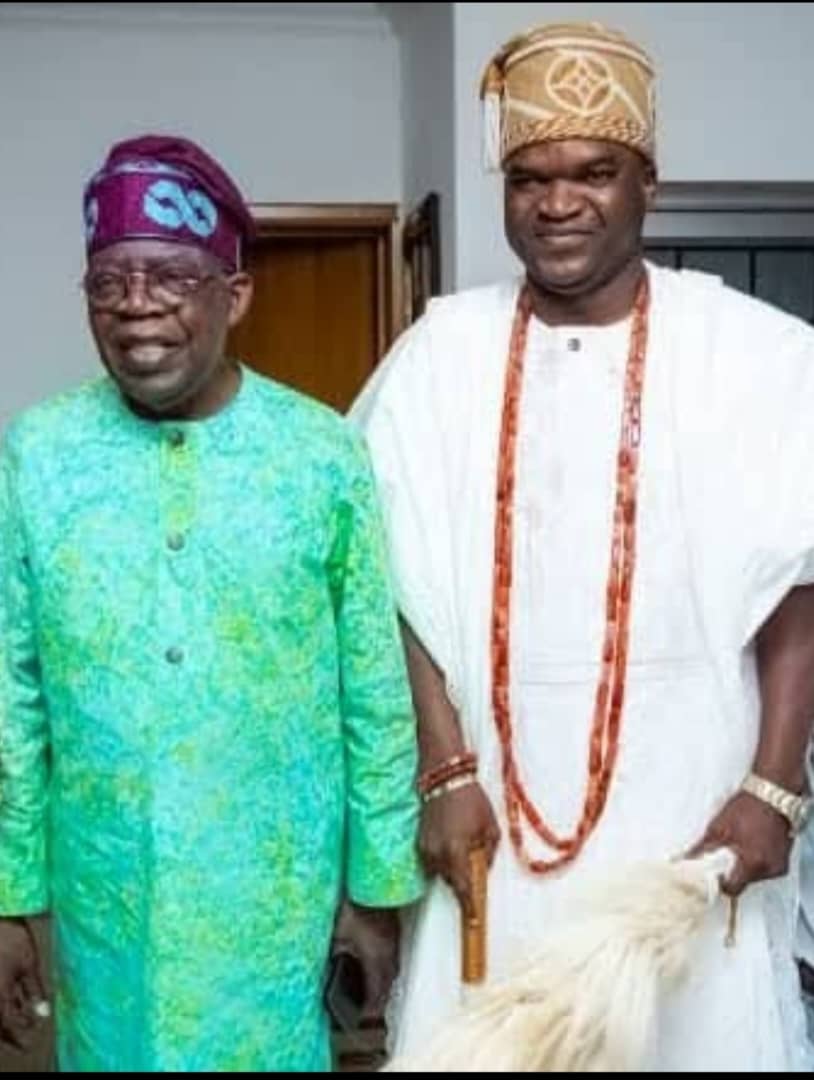
Oloworo of Oworosoki Kingdom, Oba Babatunde Saliu, Felicitates President Bola Ahmed Tinubu at 74
By Adeyemi Obadimu
The Oloworo of Oworosoki Kingdom, His Royal Majesty, Oba Babatunde Saliu, Elebo II, has extended warm felicitations to the President of the Federal Republic of Nigeria, Bola Ahmed Tinubu, GCFR, on the occasion of his 74th birthday.
In a goodwill message issued from his palace, the revered monarch described President Tinubu as a visionary statesman, a courageous reformer, and an indefatigable democrat whose lifelong commitment to nation-building continues to shape Nigeria’s progress.
Oba Babatunde Saliu praised the President’s unwavering dedication to public service, noting that his leadership has ushered in a new phase of economic reform, infrastructural renewal, and institutional strengthening across the country.
According to the monarch, the President’s Renewed Hope Agenda has begun yielding tangible relief and renewed confidence among citizens, reflecting his determination to reposition Nigeria for sustainable growth and prosperity.
“President Bola Ahmed Tinubu has demonstrated exceptional resilience, strategic foresight, and a deep love for Nigeria. His administration’s bold initiatives are laying the foundation for long-term national transformation. At 74, he remains steadfast in his resolve to build a stronger, more united, and economically vibrant nation,” the monarch stated.
Oba Babatunde further commended the President’s legacy of leadership, describing him as a bridge-builder, a mentor to many leaders, and a symbol of democratic stability. He acknowledged the President’s decades of sacrifice and contribution to the advancement of democracy in Nigeria.
On behalf of the Oworosoki Kingdom, the royal father prayed for divine wisdom, sound health, and renewed strength for the President to successfully complete the noble reforms and developmental strides he has embarked upon for the benefit of all Nigerians.
“As Your Excellency marks 74 remarkable years, we pray that Almighty God grants you long life, continued wisdom, and the fortitude to steer our great nation toward greater heights. May your days be filled with strength and grace as you continue to serve Nigeria with distinction,” Oba Babatunde Saliu added.
President Bola Ahmed Tinubu clocks 74 as a leader whose enduring influence, bold reforms, and steadfast patriotism remain central to Nigeria’s ongoing journey of national renewal.


-

 society6 months ago
Religion: Africa’s Oldest Weapon of Enslavement and the Forgotten Truth
-

 news4 months ago
WHO REALLY OWNS MONIEPOINT? The $290 Million Deal That Sold Nigeria’s Top Fintech to Foreign Interests
-

 society6 months ago
“You Are Never Without Help” – Pastor Gebhardt Berndt Inspires Hope Through Empower Church (Video)
-

 celebrity radar - gossips2 months ago
Dr. Chris Okafor Returns with Power and Fire of the Spirit -Mounts Grace Nation Altar with Fresh Anointing and Restoration Grace on February 1, 2026