
Business
‘We will embarrass old Politicians in 2019’ – Nigerian Youths rage

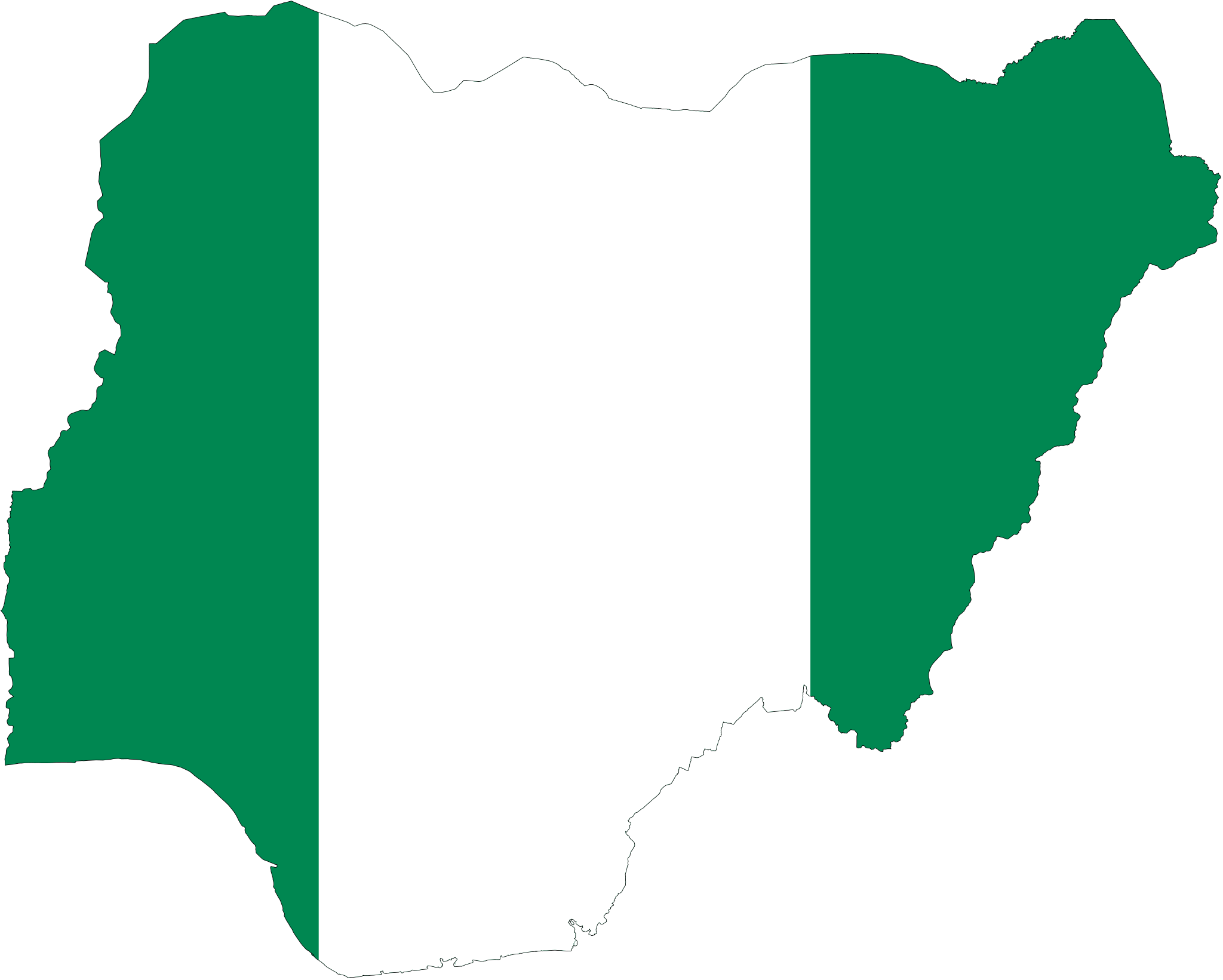

As the 2019 elections approach, various youth groups in the country have expressed readiness to effect generational power shift, sending a signal to old politicians that they would be disgraced in the forthcoming elections.
Latching on to former President, Chief Olusegun Obasanjo’s call last week on youths to democratically wrest power from old politicians, they said older generation of politicians should give them a chance or the youths would utilize their numerical straight to vote them out of office. Arewa Youths Leader, Yerima Shetima, said: “Come 2019, they would be disgraced if they participate in politics.
We constitute 65 or 70 per cent of votes in the country and we will ensure that our votes go to ensure that we have order in this country.
We will disgrace them in 2019. We will make sure they are massively embarrassed.“ Obasanjo, at the Youth Governance Dialogue in Abeokuta, Ogun State, last week, said since the old guards are unwilling to quit the stage and would not give leadership positions to the youths on a platter of gold, it was high time the youths picked the gauntlet.
”Nobody will choose you; you have to choose yourself. Why can’t you become president at the age 40? Why can’t you become president at the age of 35?
Why can’t you become president at the age of 30? General Gowon became Head of State at 33. I became Head of State at 39. And it is because of my track record. But how are you prepared? Are you really prepared?” he challenged the youths.
Expressing youths’ readiness for the challenge, Yerima said, “The likes of Obasanjo should go back to their homes and relax and be ready to offer useful advice when necessary to younger generation of leaders, on technical matters on governance. We will learn some lessons from their history, but we would not work in line with what they did during their tenure.”
Ohanaeze Youth Leader, Chukwuma Okparaezeukwu, in a similarly vein, said the youths feel greatly challenged by the call. “We are not only challenged, but highly encouraged, motivated and feel reawakened.
It is a call for a positive, diplomatic and sustainable revolution. It must not be the regular revolution that comes by force or bloodshed, but one that comes with strategy, raising youth’s consciousness and participation.
“However, as much as we feel highly motivated by former President Obasanjo’s statement, we the youths must wake up and embrace our responsibility because this is our time.
Otherwise, the next generation will vilify us the way we do the older generation today.
“You see, for now, some of the youths have allowed themselves to be used by the current crop of politicians to dish out hate speeches which polarise the youth groups across the country. But we will narrow this gap in the current reawakening towards the current move in order to work strategically and work in unity towards the goal.”
Also, Protem National Chairman, Alliance for New Nigeria, (ANN) a political association seeking Independent National Electoral Commission’s registration, Dr. Jay Osi Samuels, said, “The statement is not only appropriate but timely, because we, the youths, can no longer wait for them to give power to us, rather we are stepping out to grab it from them.”
He said the declaration was in tandem with the “objectives for the ANN, “because we are creating a credible platform apart from all the other platforms that are being managed by the older politicians.
That platform is what we will use to actualize our goals of grabbing power from the old generation. It is a movement being created for the new leaders of Nigeria. Samuels, a Harvardtrained medical doctor, said the youths have the numerical advantage. “Potentially, we have the bigger number.
I mean the youths constitute majority of the eligible voting age in Nigeria, but what we have witnessed over the years have led to loss of faith in the political system in Nigeria, but what we are going about to let people know is that they cannot just despair, they cannot lose hope, that there is a light at the end of the tunnel and if we put our acts together, we can collectively take over the reins of power from these older generation of leaders.
Reminded of the role Obasanjo played in the election of Buhari, who belonged to the older generation politicians, he said: “We are not relying on any past leader…
We are not relying on anybody, what we are doing is that we want to show that with or without them, we can do it by ourselves. They themselves got into power years ago, when they were even younger than us.
So we are taking the bull by the horns, with or without their support, we are going to achieve our aim.
The Presiding Minister of Trinity Center, Pastor Ituah Ighodalo, joined his voice, but was quick to add that anyone of the age of 35 and below cannot rule the nation for now because such a person will be too young for governance at that level. “From my own personal perspective, youths of ages 30 and 35 might be too young for president. The ideal age will be between the ages of 45 to 55.
That sort of person has seen life to an extent, made some mistakes, has fallen, risen and still has the energy to run around and still has reasonable contact base. We can go as low as 41, 42, 43; but not 30.
The world view of anyone of that age is not as broad,” he said.
Ighodalo however, warned that no room should be left for any particular group of persons to anoint a youth for presidency in the manner that so-called godfathers in the Nigerian political space have been doing in the past, insisting also that power is never relinquished but consciously taken by anyone who is truly interested and makes himself available for service.
Ighodalo said the space “is wide open for any serious person, youth or not, that truly wants to get involved and get closer to the people and offer their service to the people, urging such people to start from the grassroots to learn and be ready to make their way up.
They should join any party of their choice, become important in the parties and get selected for position and bit by bit money politics and god-fatherism will fade.
It is not going to be a short run but they will get there.” “From my own personal perspective, youths of ages 30 and 35 might be too young for president.
The ideal age will be between the ages of 45 to 55. That sort of person has seen life to an extent, made some mistakes, has fallen, risen and still has the energy to run around and still has reasonable contact base. We can go as low as 41, 42, 43; but not 30. The world view of anyone of that age is not as broad,” he said.
Mr. Gbadabo Rhodes- Vervor, a youth in his early 30s who contested for the chairmanship in Ikeja Local Government in Lagos State, recently on the platform of the KOWA Party, scoring less than 1,000 votes, said “We, as a generation, need to get more involved, not just on whatssapp groups or on other social media, but in our communities and people in our wards….political participation is not just about running, political participation is diverse.
“Youths can either contest or sponsor political party/candidates whom they believe in their ideals. They must also join a political party and be active and most importantly register to vote for folks they believe in on election day,” He said the youths need to actively start making a difference in the communities so that they can become influencers.





Fidelity Bank grows gross earnings by 38% to N434.95b in Q1
Fidelity Bank Plc recorded 37.9 per cent growth in gross earnings to N434.95 billion in first quarter 2026 as the international commercial bank continued to expand its core banking market share.
Interim report and accounts of Fidelity Bank for the three months ended March 31, 2026 released at the Nigerian Exchange (NGX) showed that gross earnings rose from N315.42 billion in first quarter 20025 to N434.95 billion in first quarter 2026, representing an increase of 37.9 per cent.
The top-line performance was driven by impressive growth in the bank’s core business operations with interest incomes rising by 22.8 per cent to N314.48 billion in first quarter 2026 as against N256.10 billion in first quarter 2025.
With net interest income at N180.97 billion, the bank closed the period with profit before tax of N92.48 billion. After taxes, net profit stood at N74.47 billion for the three-month period. Earnings per share remained high at N5.69, underlining the capacity of the bank to reward its shareholders.
The balance sheet of the bank also emerged stronger. Total assets crossed the N11 trillion mark to N11.35 trillion by March 2026 compared with N10.46 trillion recorded in December 2025. Customers’ deposits increased from N6.89 trillion to N7.38 trillion. Total equity rode on the back of earnings growth to a 27.5 per cent increase from N1.09 trillion in December 2025 to N1.39 trillion by March 2026.
The first quarter 2026 results further consolidated the strong earnings outlook of the bank, which had successfully completed its recapitalisation amidst impressive earnings performance in 2025.
Fidelity Bank had recorded double-digit growths in interest and non-interest incomes as well as key balance sheet items during the year ended December 31, 2025.
The audited report showed that gross earnings rose from N1.04 trillion in 2024 to N1.52 trillion in 2025, an increase of 45.6 per cent. Interest and similar incomes had grown by 38.7 per cent from N803.1 billion in 2024 to N1.11 trillion in 2025. Fees and commission incomes also rose by 44.7 per cent from N78.4 billion to N113.4 billion. The bank recorded net profit after tax of N242.4 billion in 2025.
The bank’s balance sheet emerged stronger with total assets rising by 18.6 per cent to N10.46 trillion in 2025 as against N8.82 trillion in 2024. Customer deposits increased by 16.1 per cent from N5.94 trillion to N6.89 trillion, reflecting continued franchise strength and an improved funding profile. Net loans and advances meanwhile declined by 2.4 per cent to N4.28 trillion in 2025 as against N4.39 trillion in 2024, attributable to customers paying down on their mature obligations.
The bank had in 2025 strengthened its capital position, with eligible capital rising to N561 billion, above the regulatory minimum of N500 billion for banks with international authorisation. In addition, capital adequacy had remained robust, with Capital Adequacy Ratio of 30.94 per cent by December 2025 as against 23.47 per cent by December 2024.
Managing Director, Fidelity Bank Plc, Dr. Nneka Onyeali-Ikpe, said the first quarter 2026 results reinforced the bank’s strong and resilient business model.
She noted that with the remarkable success of its recapitalisation programme and continuing expansion, Fidelity Bank has entered a new era of growth and impressive returns.
“We are on a stronger footing and confident that we will set new growth records that are reflective of our legacy and the future we are working on,” Onyeali-Ikpe said.
Business
Dangote Refinery Ends Nigeria’s Era of Fuel Import Dependence, Boosts GDP, FX Earnings — EIU
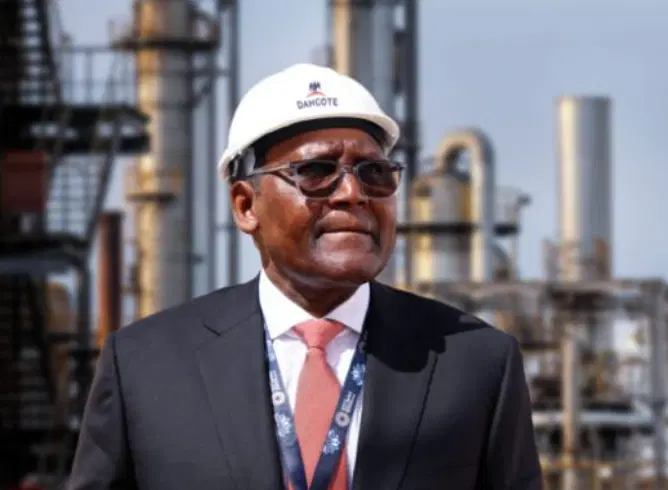
Dangote Refinery Ends Nigeria’s Era of Fuel Import Dependence, Boosts GDP, FX Earnings — EIU
The operational ramp up of the 650,000 barrels per day Dangote Petroleum Refinery & Petrochemicals is fundamentally reshaping Nigeria’s downstream oil sector, significantly reducing the country’s dependence on imported refined petroleum products and strengthening its external position, according to the Economist Intelligence Unit (EIU).
In its latest assessment on Nigeria’s fuel market and regulatory environment, the EIU said the refinery has already transformed a sector that was previously characterised by heavy reliance on imported fuel despite Nigeria being Africa’s largest crude oil producer. The report noted that the refinery met nearly 80 per cent of domestic petrol demand in April and produced enough volumes to satisfy local consumption requirements as operations approached full capacity.
The EIU described Nigeria’s downstream petroleum sector before the refinery as “long dysfunctional”, noting that the country had remained almost entirely dependent on costly imported fuel while producing nearly 1.5 million barrels of crude oil daily.
According to the report, the emergence of the refinery has reduced import dependence, improved domestic fuel availability and strengthened Nigeria’s balance of payments position through lower import demand and rising exports of refined petroleum products.
“The gradual ramp up of the 650,000 barrel/day Dangote refinery since May 2023 has transformed Nigeria’s long dysfunctional downstream sector,” the report stated. “The country’s main refineries, all state owned, had been inoperative for years and Nigeria was almost entirely reliant on costly imported fuel.”
The research and analysis division of The Economist Group, London added that the refinery’s attainment of full operational capacity and its planned expansion would further support Nigeria’s economic growth and foreign exchange earnings over the medium term.
“Meanwhile, the attainment of full capacity at, and an increase in exports from, the Dangote refinery will support real GDP growth and foreign exchange earnings in 2026 and 2027 and beyond, as a planned doubling of the plant’s output comes on stream around the end of the decade,” it added.
Industry analysts said the refinery is increasingly positioning Nigeria as an emerging refining and export hub, altering energy trade flows across Africa and reducing the vulnerability associated with fuel import dependence.
The EIU noted that the refinery’s expansion has coincided with major reforms in Nigeria’s downstream sector, including the removal of fuel subsidies and the introduction of market driven pricing mechanisms.
The report, however, said the transition from a state dominated fuel import structure to large scale domestic refining has triggered resistance from interests linked to the old import regime.
The latest tensions emerged following the decision by the Nigerian Midstream and Downstream Petroleum Regulatory Authority to relax restrictions on petrol imports despite the refinery’s growing capacity to meet domestic demand.
Dangote Industries subsequently initiated legal action, arguing that continued import approvals undermine domestic refining investments and conflict with the objectives of the Petroleum Industry Act, which seeks to encourage local refining capacity and reduce import dependence.
Analysts noted that the availability of large-scale domestic refining capacity has improved Nigeria’s energy security and reduced exposure to external supply shocks and foreign exchange volatility.
The Centre for the Promotion of Private Enterprise also cautioned against unrestrained importation of petroleum products, warning that such a policy could weaken Nigeria’s industrialisation drive and discourage investments in domestic refining.
Chief Executive Officer of CPPE, Muda Yusuf, said continued dependence on imported fuel had historically contributed to pressure on foreign reserves, exchange rate instability and fiscal leakages.
The refinery’s growing impact is also being reflected in Nigeria’s broader macroeconomic indicators. Earlier this month, S&P Global Ratings cited increased domestic refining capacity and rising hydrocarbon exports among the major factors supporting Nigeria’s sovereign credit rating upgrade – the first in 14 years.
Beyond Nigeria, analysts said the refinery is increasingly being viewed as a strategic industrial asset for Africa, where many countries remain heavily dependent on imported fuel despite rising demand for transportation, manufacturing, and power generation.
Business
BREAKING: Court Dismisses $19.6 Million Claim Against NNPCL — Rules Contract Scope Cannot Be Changed Orally

BREAKING: Court Dismisses $19.6 Million Claim Against NNPCL — Rules Contract Scope Cannot Be Changed Orally
In a landmark ruling on Friday, May 22, 2026, the Federal Capital Territory High Court in Abuja threw out a $19.6 million lawsuit filed by Alternate Dimensions Ventures Ltd against the Nigerian National Petroleum Company Limited (NNPCL), affirming a key legal principle: a written contract cannot be expanded through oral agreements or conduct.
Alternate Dimensions had sought $19,600,000 in professional fees, claiming the scope of its Direct Sale, Direct Purchase (DSDP e-pro) contract with NNPCL was orally expanded. Represented by counsel Patrick Peter, the firm argued it was entitled to the revised sum for services rendered under the alleged new terms.
But NNPCL, through its lawyer Ituah Imhanze of KENNA LP, pushed back sharply, arguing that parties are bound exclusively by the clear terms of their written agreement. Imhanze contended that without any written amendment, the claim was legally unsound, and the court agreed.
Delivering judgment, Justice Hamza Mu’azu upheld NNPCL’s defense, stating that the contract was unambiguous and that no evidence was adduced during the trial, which supported the alleged scope expansion. The court further found that NNPCL fully complied with all contractual terms and committed no breach.
Dismissing the suit as meritless, Justice Mu’azu reinforced the doctrine of sanctity of contract: any amendment to a written agreement must be express, unequivocal, and documented, not implied or verbal.
The ruling spares NNPCL from the S19.6 million claim and also a floodgate of similar potential liabilities.


- African Development Bank 2026 Annual Meetings: Governors Endorse the Four Cardinal Points and Call for Accelerated Reform of Africa’s Financial Architecture May 31, 2026
- Annual Meetings (AM) 2026: The African Development Bank Group’s Rome Process/Mattei Plan Financing Facility announces Clean Cooking Program at 2026 Annual Meetings May 31, 2026
- Economic Community of West African States (ECOWAS) has Deployed a Technical Mission to Observe the Legislative and Local Elections of May 31, 2026 in Guinea May 31, 2026
- President Herminie Attends Seychelles Football Federation (SFF) Cup Final and Presents Trophy to Bazar Brothers FC May 31, 2026
- ‘You are not alone’: World Health Organization (WHO) chief vows to stand with Democratic Republic of the Congo (DR Congo) through Ebola outbreak May 31, 2026
- United Arab Emirates (UAE) Expresses Solidarity with Kenya and Conveys Condolences over Victims of Girls’ School Dormitory Fire May 31, 2026
- Pitcher Awards Announces 2026 Winners, Marking a Landmark Year for Pan‑African Creativity May 30, 2026
- Ghana Commemorates 78th International Day of United Nations Peacekeepers May 30, 2026
- South Africa: President Ramaphosa receives second interim report of Madlanga Commission May 30, 2026
- Asmara Marathon 2026 to be held May 30, 2026
- African Development Bank 2026 Annual Meetings: Governors Endorse the Four Cardinal Points and Call for Accelerated Reform of Africa’s Financial Architecture May 31, 2026
- Annual Meetings (AM) 2026: The African Development Bank Group’s Rome Process/Mattei Plan Financing Facility announces Clean Cooking Program at 2026 Annual Meetings May 31, 2026
- Economic Community of West African States (ECOWAS) has Deployed a Technical Mission to Observe the Legislative and Local Elections of May 31, 2026 in Guinea May 31, 2026
- President Herminie Attends Seychelles Football Federation (SFF) Cup Final and Presents Trophy to Bazar Brothers FC May 31, 2026
- ‘You are not alone’: World Health Organization (WHO) chief vows to stand with Democratic Republic of the Congo (DR Congo) through Ebola outbreak May 31, 2026
- United Arab Emirates (UAE) Expresses Solidarity with Kenya and Conveys Condolences over Victims of Girls’ School Dormitory Fire May 31, 2026
- Pitcher Awards Announces 2026 Winners, Marking a Landmark Year for Pan‑African Creativity May 30, 2026
-

 news6 months ago
WHO REALLY OWNS MONIEPOINT? The $290 Million Deal That Sold Nigeria’s Top Fintech to Foreign Interests
-

 society4 weeks ago
SOCIAL MEDIA IS NOT A BATTLEFIELD COMMAND – WHY THE NIGERIAN ARMY’S ACTION AGAINST JUSTICE CRACK IS A NATIONAL SECURITY IMPERATIVE
-

 celebrity radar - gossips4 months ago
Dr. Chris Okafor Returns with Power and Fire of the Spirit -Mounts Grace Nation Altar with Fresh Anointing and Restoration Grace on February 1, 2026
-

 celebrity radar - gossips6 months ago
Prophet Kingsley Aitafo Releases 2026 Prophecy: ‘Nigeria Will Rise, but the World Must Prepare for Turbulence’
You must be logged in to post a comment Login
You must log in to post a comment.