
society
Weaponized Faith and Power: How the Unholy Alliance of Religion and Politics Is Undermining Nigeria’s Future

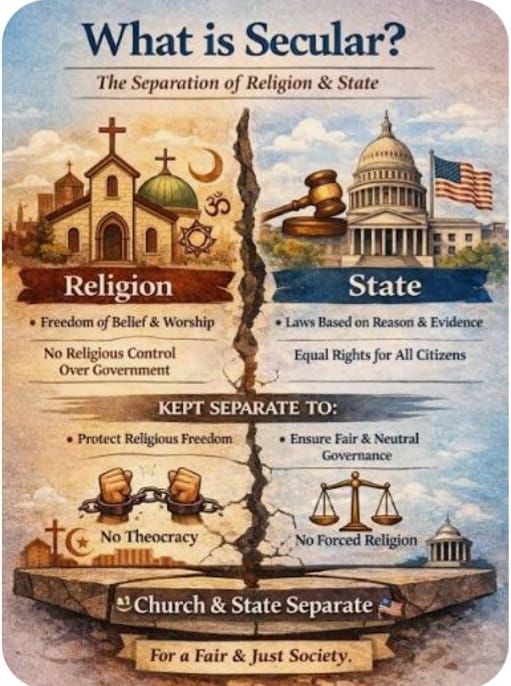
Weaponized Faith and Power: How the Unholy Alliance of Religion and Politics Is Undermining Nigeria’s Future.
By George Omagbemi Sylvester
Published by SaharaWeeklyNG.com
“Why National Survival Depends on Separating Belief from Governance.”
Nigeria stands today at a dangerous crossroads. Despite immense human and natural resources, Africa’s most populous nation continues to grapple with persistent instability, insecurity and governance failure. Among the most destructive forces fueling this decline is the toxic interplay between RELIGION and POLITICS, which is a dynamic that scholars, policymakers and ordinary citizens increasingly recognize as a central driver of Nigeria’s fragmentation and arrested development.

RELIGION, by its very nature, should offer moral guidance, social cohesion and ethical restraint. POLITICS, conversely, should concern itself with public interest, competence and the equitable management of national resources. In Nigeria, however, these two domains have become dangerously entangled. The result is not MORAL GOVERNANCE, but WEAPONIZED FAITH, DEPLOYED to DIVIDE, MANIPULATE and SHIELD INCOMPETENCE and CORRUPTION from ACCOUNTABILITY.
As political scientist Prof. Jibrin Ibrahim observes, “Religion in Nigeria has ceased to be a personal moral compass and has become a political instrument used by elites to legitimize power and silence dissent.” This instrumentalization of faith has proven catastrophic.
Ethno-Religious Polarization: Identity Over Competence. One of the most damaging consequences of religion’s intrusion into politics is the deepening of ethno-religious polarization. Electoral choices in Nigeria are frequently shaped not by policy proposals, integrity or competence, but by a candidate’s religious identity or perceived alignment with a particular ethnic bloc.
Political elites exploit this reality ruthlessly. Campaigns are framed as existential battles between “US” and “THEM,” rather than democratic contests over ideas. Mosques and churches are subtly (or sometimes openly) converted into campaign platforms. Clerics endorse candidates as “GOD’S CHOICE,” effectively sacralizing mediocrity and demonizing alternatives.

Renowned Nigerian historian Prof. Toyin Falola notes that “when politics becomes a contest of religious survival rather than public service, democracy dies quietly while fanaticism takes its place.” This identity-based mobilization erodes national cohesion and entrenches suspicion between communities that have coexisted for centuries.
Conflict, Violence and the Politics of Sacred Justification. The consequences of ethno-religious politics are not merely rhetorical; they are violently tangible. Nigeria has witnessed decades of recurring sectarian violence, particularly in the Middle Belt and northern regions, where political competition over land, resources and power is routinely cloaked in religious language.
Extremist groups such as Boko Haram have exploited religious narratives (often through gross misinterpretation) to justify mass violence, abductions and attacks on civilians. While Boko Haram is not representative of Islam, its emergence and persistence were facilitated by political neglect, elite manipulation and the failure of the state to uphold justice and social welfare.
Security analyst Dr. Elizabeth Donnelly rightly argues that “religious extremism does not grow in a vacuum; it thrives where governance collapses and identity becomes the last refuge of the excluded.” In Nigeria, religion has too often been used to excuse state failure rather than confront it.

Governance Failure and the Sanctification of Corruption. Perhaps the most insidious impact of religion-politics entanglement is its role in sustaining poor governance and corruption. When leaders are defended on the basis of shared faith rather than performance, accountability collapses.
The notorious “NATIONAL CAKE” mentality (where public office is viewed as an opportunity for personal and ethnic enrichment) thrives in an environment where religious loyalty overrides civic responsibility. Corrupt officials are frequently shielded by religious narratives that frame criticism as persecution or sacrilege.
Economist Prof. Pat Utomi has repeatedly warned that “a society that confuses religious loyalty with civic duty cannot build institutions; it can only build excuses.” This culture of impunity has weakened Nigeria’s institutions, hollowed out public services and normalized elite theft.
Constitutional Contradictions and the Crisis of Secularity. Nigeria’s Constitution clearly affirms the country as a secular state, yet this principle has been repeatedly undermined. The expansion of Sharia law in some northern states has generated intense legal and constitutional controversy, particularly among religious minorities who perceive it as institutionalized exclusion.
Legal scholar Prof. Yemi Osinbajo (SAN) once emphasized that “secularism does not mean hostility to religion; it means fairness to all religions.” When religious law is elevated above national law, the principle of equal citizenship is compromised and national unity is strained.
These contradictions have fueled resentment, legal uncertainty and political tension whereby further weakening the fragile social contract between the Nigerian state and its citizens.
Economic Stagnation and Developmental Sabotage. The developmental cost of religiously fueled instability is immense. Persistent insecurity deters foreign investment, disrupts agriculture, displaces millions and cripples education systems. Schools are shut, farmlands abandoned and professionals flee the country in search of stability, which is a phenomenon widely described as brain drain.
According to development economist Jeffrey Sachs, “no country can achieve sustainable development where insecurity and identity-based politics dominate public life.” Nigeria’s struggle to diversify its economy, attract long-term investment and build human capital is inseparable from its failure to neutralize religion as a political weapon.

Paths Toward Renewal: Reclaiming the Republic. Despite these grim realities, Nigeria’s situation is not beyond repair. Scholars and reform advocates consistently point to several pathways toward national renewal.
First, the supremacy of secular governance and the rule of law must be non-negotiable. Religious freedom must be protected, but religious laws must never override constitutional rights or national legislation.
Second, education, dialogue and tolerance are critical. Civic education that emphasizes shared citizenship over sectarian identity can dismantle the fear-based narratives exploited by elites. Interfaith dialogue, when sincere and sustained, can reduce tensions and counter extremist misinterpretations.
Third, Nigeria urgently needs responsible, courageous leadership, though leaders who value competence over creed, justice over loyalty and national interest over personal gain.
Finally, active citizen engagement remains the most powerful antidote. Civil society, youth movements, independent media and principled religious leaders must continue to demand accountability and resist manipulation.
As political philosopher Hannah Arendt warned, “the most radical revolutionary will become a conservative the day after the revolution.” Nigerians must therefore remain vigilant, ensuring that change is institutional not merely rhetorical.
A Final Reflection: Choosing Wisdom Over Weaponized Faith. Nigeria’s diversity is not its curse; its mismanagement is. Religion, when detached from political manipulation, can enrich moral life and social solidarity. Politics, when freed from sectarian exploitation, can serve the common good.
The survival of the Nigerian project depends on a collective decision to choose wisdom over fanaticism, citizenship over identity and accountability over blind loyalty. Until religion is returned to the realm of personal belief (and politics reclaimed as a tool for service) Nigeria will continue to bleed from self-inflicted wounds.
The task ahead is difficult, but unavoidable. A nation that refuses to confront the dangers of weaponized faith risks losing not only its future, but its soul.





society
GEN CHRISTOPHER GWABIN MUSA SUPPORT INITIATIVE EXTENDS WARM BIRTHDAY FELICITATIONS TO PRESIDENT TINUBU ON 74TH BIRTHDAY
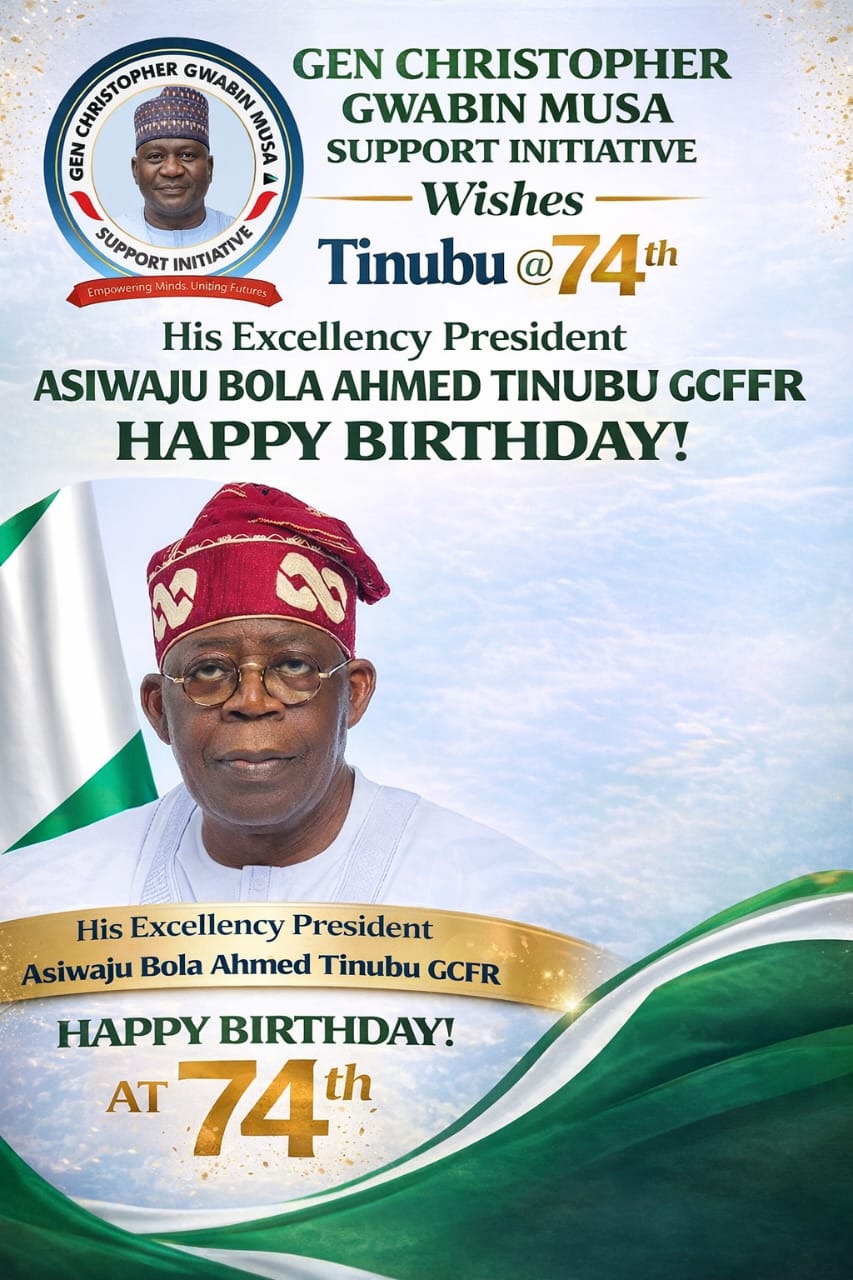
GEN CHRISTOPHER GWABIN MUSA SUPPORT INITIATIVE EXTENDS WARM BIRTHDAY FELICITATIONS TO PRESIDENT TINUBU ON 74TH BIRTHDAY
The Gen Christopher Gwabin Musa Support Initiative has extended heartfelt congratulations to His Excellency President Asiwaju Bola Ahmed Tinubu, GCFR, on the occasion of his 74th birthday.
In a statement released to the press, the Initiative conveyed warm wishes for the President’s personal well-being and for his continued leadership of the nation. The statement, signed by the Convener, Ibrahim Dahiru Danfulani, Sadaukin Garkuwan Keffi/Betara Biu, expressed hope that the coming year would bring the President “renewed strength and more wisdom in guiding the nation.”
The statement further noted that the Grand Patron of the Initiative, His Excellency Gen Christopher Gwabin Musa, OFR, Minister of Defence of the Federal Republic of Nigeria, joined in celebrating the milestone. It added, “Wishing Your Excellency continued good health, vitality, and determination as you lead the country towards greater unity and progress.”
The message underscores support for President Tinubu’s administration and its national objectives, marking the birthday as an occasion to reaffirm commitment to the nation’s unity and advancement under his stewardship.
society
Dominion City to Host Global Camp Meeting, “2 Nights of Glory” 2026 in Lagos, Enugu …Calls for Moral Renewal
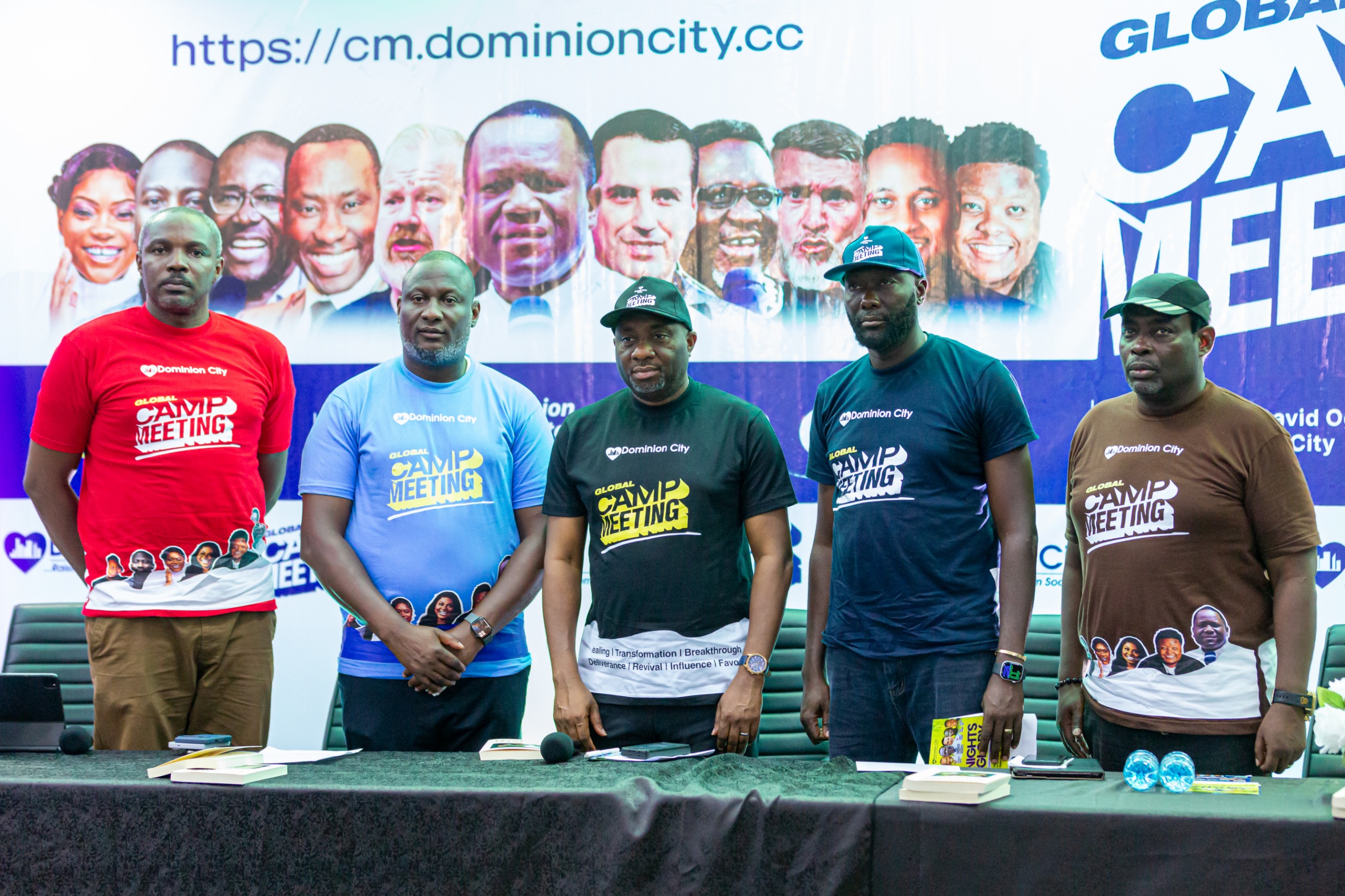
*Dominion City to Host Global Camp Meeting, “2 Nights of Glory” 2026 in Lagos, Enugu
…Calls for Moral Renewal
Lagos – Dominion City has announced plans to host its annual Global Camp Meeting alongside a special “2 Nights of Glory” gathering in April 2026, with events scheduled to be held simultaneously in Lagos and Enugu.
The week-long programme is expected to draw tens of thousands of participants onsite and millions of virtual attendees from across the globe.
The Global Camp Meeting will run from Wednesday, April 1 to Monday, April 6, featuring daily sessions at 8:00 a.m. and 5:00 p.m. The “2 Nights of Glory” is slated for Friday, April 3 and Saturday, April 4 at the Golden Heart Place, Km 22 Lekki-Epe Expressway, beside Lagos Business School, Ajah, Lagos.
Organised by Dominion City, a global church focused on raising transformational leaders, the conference will centre on revival, spiritual renewal, and practical teachings. This year’s theme, “Redigging the Wells of Our Fathers,” underscores a call to return to foundational values and principles.
Speaking ahead of the event, Nobbert Onaga, President, Golden Heart Foundation and Senior Pastor, DC Lagos & Europe, emphasised the need for moral reawakening as a pathway to national transformation. He described the Church as “the pillar and foundation of truth,” noting that the conference aims to confront moral decline and restore core values within society.
“We are going back to foundational truths that established the Church. These truths will help repair societal damage and reposition the Church as a source of hope and light,” Onaga said.
Also speaking, Shola Olapade, Senior Pastor of Dominion City Headquarters, highlighted the Church’s role in addressing ethical and cultural challenges, particularly among young people. He added that the programme would go beyond spiritual teachings to include sessions on artificial intelligence, innovation, business, media, arts, and career development.
“We are equipping people not just spiritually, but with relevant 21st-century skills to thrive in today’s world,” Olapade noted.
The conference will feature teachings and ministrations from a lineup of international ministers, including Dr. David Ogbueli, Dr. Charles Ndifon, Andres Bisonni, Pastor Randy Mitchell, Apostle Ikechukwu Peter Nnajiofor, Dr. Ferdinand Nweke, Apostle Ben Hanyani Ndobe, Evangelist Dan Scott, and Dr. Chiefo Ejiofobiri.
Music ministrations will also be led by notable gospel artists such as Grace Idowu, Rhema Onuoha, Once More Six, David Nkennor, Anthony Kani, and GUC.
Organisers disclosed that over 30,000 participants are expected to attend in person, with free transportation provided from designated locations across Lagos to ease access. In addition, free medical services will be offered daily, building on previous outreaches that benefited over 1,700 people.
To ensure safety and order, more than 200 traffic marshals will be deployed in collaboration with relevant authorities.
Beyond its spiritual impact, organisers project that the event will stimulate local economic activity across hospitality, transportation, and retail sectors.
The Global Camp Meeting remains a key platform for spiritual impartation, leadership development, and societal transformation, aligning with Dominion City’s mission to equip believers to influence their communities positively.
Participation is open to the public, with registration available online for both physical and virtual attendance. //END.//
*PHOTO CAPTIONS:*
L-R: Dr. Godwin Efobi, Head, Medical Team, Dominion City Headquarters (DCHQ); Pastor Shola Olapade, Senior Pastor, DCHQ; Pastor Nobbert Onaga, President, Golden Heart Foundation and Senior Pastor, DC Lagos & Europe; Pastor Chuks Anochie, Head of Security and Traffic Control, Dominion City Headquarters (DCHQ), Camp Meeting 2026; Pastor Josh Tim Vaduchi, Head of Event & Programmes, DCHQ, during the press briefing of the forthcoming Global Camp Meeting, held the weekend of 2026 at the Dominion City Headquarters (DCHQ), Lagos.
L-R: Pastor Chuks Anochie, Head of Security and Traffic Control, Dominion City Headquarters (DCHQ), Camp Meeting 2026; Pastor Shola Olapade, Senior Pastor, DCHQ; Pastor Nobbert Onaga, President, Golden Heart Foundation and Senior Pastor, DC Lagos & Europe; Dr. Godwin Efobi, Head, Medical Team, DCHQ; and Pastor Josh Tim Vaduchi, Head of Event & Programmes, during the press briefing of the forthcoming Global Camp Meeting, held over the weekend in 2026 at the Dominion City Headquarters (DCHQ), Lagos.
society
Oloworo of Oworosoki Kingdom, Oba Babatunde Saliu, Felicitates President Bola Ahmed Tinubu at 74
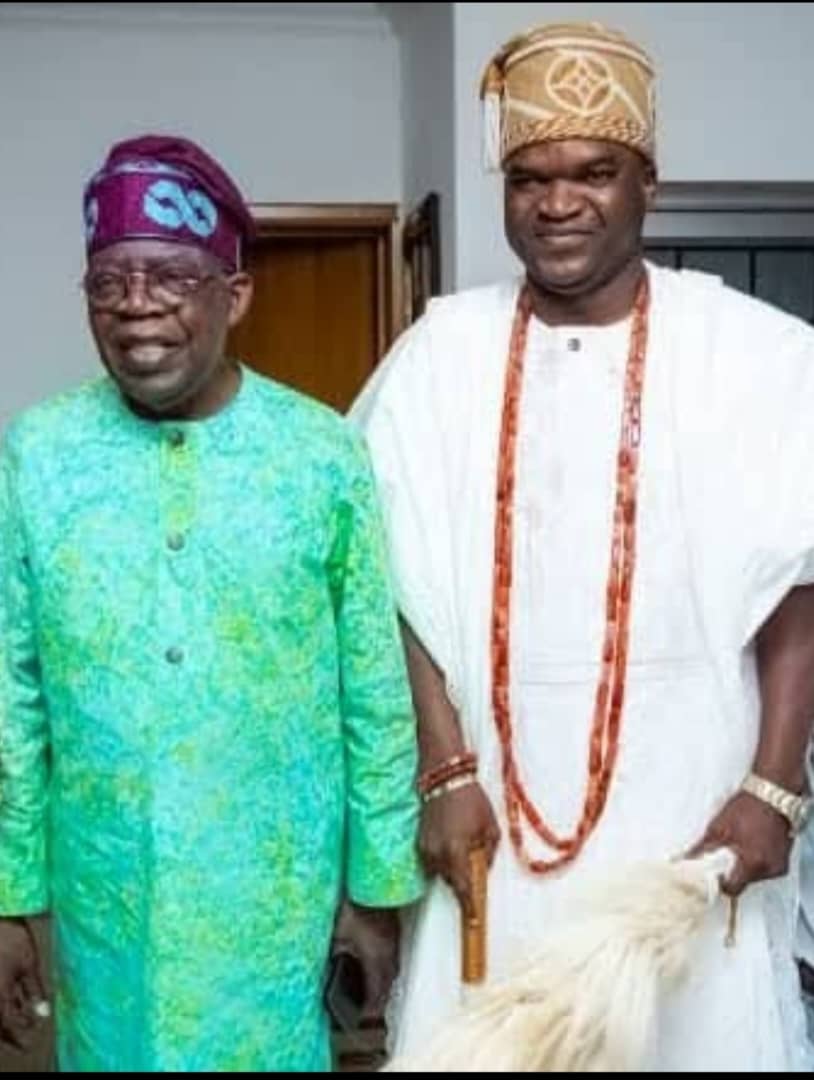
Oloworo of Oworosoki Kingdom, Oba Babatunde Saliu, Felicitates President Bola Ahmed Tinubu at 74
By Adeyemi Obadimu
The Oloworo of Oworosoki Kingdom, His Royal Majesty, Oba Babatunde Saliu, Elebo II, has extended warm felicitations to the President of the Federal Republic of Nigeria, Bola Ahmed Tinubu, GCFR, on the occasion of his 74th birthday.
In a goodwill message issued from his palace, the revered monarch described President Tinubu as a visionary statesman, a courageous reformer, and an indefatigable democrat whose lifelong commitment to nation-building continues to shape Nigeria’s progress.
Oba Babatunde Saliu praised the President’s unwavering dedication to public service, noting that his leadership has ushered in a new phase of economic reform, infrastructural renewal, and institutional strengthening across the country.
According to the monarch, the President’s Renewed Hope Agenda has begun yielding tangible relief and renewed confidence among citizens, reflecting his determination to reposition Nigeria for sustainable growth and prosperity.
“President Bola Ahmed Tinubu has demonstrated exceptional resilience, strategic foresight, and a deep love for Nigeria. His administration’s bold initiatives are laying the foundation for long-term national transformation. At 74, he remains steadfast in his resolve to build a stronger, more united, and economically vibrant nation,” the monarch stated.
Oba Babatunde further commended the President’s legacy of leadership, describing him as a bridge-builder, a mentor to many leaders, and a symbol of democratic stability. He acknowledged the President’s decades of sacrifice and contribution to the advancement of democracy in Nigeria.
On behalf of the Oworosoki Kingdom, the royal father prayed for divine wisdom, sound health, and renewed strength for the President to successfully complete the noble reforms and developmental strides he has embarked upon for the benefit of all Nigerians.
“As Your Excellency marks 74 remarkable years, we pray that Almighty God grants you long life, continued wisdom, and the fortitude to steer our great nation toward greater heights. May your days be filled with strength and grace as you continue to serve Nigeria with distinction,” Oba Babatunde Saliu added.
President Bola Ahmed Tinubu clocks 74 as a leader whose enduring influence, bold reforms, and steadfast patriotism remain central to Nigeria’s ongoing journey of national renewal.


-

 society6 months ago
Religion: Africa’s Oldest Weapon of Enslavement and the Forgotten Truth
-

 news4 months ago
WHO REALLY OWNS MONIEPOINT? The $290 Million Deal That Sold Nigeria’s Top Fintech to Foreign Interests
-

 society6 months ago
“You Are Never Without Help” – Pastor Gebhardt Berndt Inspires Hope Through Empower Church (Video)
-

 celebrity radar - gossips2 months ago
Dr. Chris Okafor Returns with Power and Fire of the Spirit -Mounts Grace Nation Altar with Fresh Anointing and Restoration Grace on February 1, 2026