
society
WHAT MORE DOES MALAMI WANT FROM NIGERIA?


*WHAT MORE DOES MALAMI WANT FROM NIGERIA?
By Ali Isah
Mallam Abubakar Malami is not a happy man, he has never been happy. He is always moody, and irritating. He lacks a senile moment.
The reasons are not farfetched, they are certainly not from anything external, but basically from his internal self inflicted self-centered conflicts, a self-induced intention malady, which comes with very irritating symptoms.

Most time those suffering from this incurable affliction are always against himself.
For a man who came into office with nothing and as nothing but rose, not by any ding of personal positive efforts, but became powerful through deceit and satanic mechanization during the Buhari government,Mallam Malami has long overstayed as a freeman, he should be under lock and key by now.
This is so because at that time, Mallam Malami carried out the supervision of so many poor, illfated reforms which not only further impoverished the residents of the country, but ended off making nothing good, but only enough to make history as not just the worst AGF but the most undignified after Michael Aondoakaa.
A crafty and self delusional person, who has been serially caught in his own pit and guile, and obviously in the net of his personal mischief, he ran head on into a stronger, more formidable force, in his last attempt, the peoples’ force.
His last outing to Kebbi was not too good, he failed, a self distraught.
His strategic intention was to overwhelm the people in a show of arbitrary force and unwarranted violence, through the use of bandits and criminal elements, he wanted to physically torment the peace of the people, and compromise their safety, and that of their properties. He wanted to tell his co-travelers in ADC that he controls a stronger and more formidable warchest, he misled himself into thinking that he is in charge.
If his scheme had succeeded, he would, like a chimpanzee, beat his chest in self approval, and tell the world that he is prepared to deploy the cannon of death at any opposition during the 2027 election.
Alas! He lost out to the superior force of the people of Kebbi State. He has tried to decorate and coverup what has happened with lies; his usual character, playing the victim, in an attempted damage assessment but the rest is history. The truth is already in public domain.
He thought he has the monopoly of physical and political violence and hate, he was mistaken, the people and the law are always ahead.
So, he could not believe what confronted him, and his mischievous, poorly mobilized miscreants and urchins. The people were resolute against him.
They spoke unanimously and strongly. They felt that, that was one violence too many. They were agreed that no single person, not even a Mallam Abubakar Malami, has the monopoly of vices and violence.
They came out in their numbers to tell him that never again should Mallam Malami attempt to ride on the sensibilities and goodwill of the people of Kebbi State. It was a clear message that, ‘Enough is Enough.’
The language was his but the singer was different, a more dynamic, sagacious, people-oriented crowd of patriotic and passionate nation builders, determined and willing to make the needful sacrifice to entrench good governance and ensure the delivery of the dividends of democracy as against the manipulation of a self seeking individual, whom Mallam Malami represents.
Indeed, Malami has had it up to the peoples’ throat, the have lost confidence in him and his corrupt selfish leadership.
This, to them is a Renaissance, a people come together under shared value and new narratives. They recalled that it was Mallam Malami that was a voice of imbalance in previous years, when instead of attracting developments and the dividends of democracy in his hay days to his people consistently embarked on divisive politics and only embroiled himself in endless controversies, which obviously did not align with the greater good, but was always ingratiating his personal interest, and ego.
The question has always been, ‘ What are the intentions of Mallam Abubakar Malami? Is he and will he ever be genuinely interested in serving Nigeria or is he driven by his primordial selfish ambition?
This posers are important considering Mallam Malami’s antecedents.
For one, Mallam Malami throughout his romance with power never prioritized the welfare of even his immediate constituency; the people of Kebbi State, neither did he ever pretend to address their pressing challenges.
Malami has never demonstrated leadership, statesmanship, nor the desire to see a stable, and prosperous future for the country. So what is new now?
Mallam Malami diverted the loot that was recovered, and also stopped those cases that are against his allies, including individuals such as, a former Senate President Bukola Saraki, and his contemporary the ex-Aviation Minister Stella Oduah.
A highly unprofessional and biased individual, Mallam Malami is presently encumbered about with several corruption and abuse of office cases, which are before the Independent Corrupt Practices and other Related Offence Commission (ICPC).
Malami was involved in the questionable deal of $496 million settlement with Global Steel Company Limited and National Iron Ore Mining Company Commission.
It is this same sudden redeemer, that made an illegitimate payment of $418 million to consultants who claimed to have facilitated Paris Club Refunds to States.
Malami it was that also unpatriotically and selfishly misled the Federal Government of Nigeria into paying a compensation of $200 million to Sunrise Power over the Mambilla Power Project, despite lacking Presidential clearance.
A questionable character, who is unfit for any public office, Mallam Malami stock in trade is to consistently abuse his office, as it was with the undue interference into several corrupt cases, and various attempts in many cases to enter a nolle prosqui case for many of them.
He was involved in several underhand dealings and clear cases of favouritism.
A man without qualms, he lacks respect for state institutions, law and order and any form of rules, blatantly breaching Covid-19 Protocols by vicariously and tacitly sponsoring and allowing the wedding of his son during the Covid-19 era, because he believe in the misuse of power.
A highly confused and corrupt mind, he played leading role in the attempted reinstatement of Abdulrasheed Maina, the former disgraced and dismissed Chairman of the Pension Reform Task Team.
It is unfortunate that this is the character that is on this new voyage of misguided self discovery.
Again we are compelled to ask, what does he want from Nigeria again?
Mallam Abubakar Malami should allow the people of Kebbi, and indeed all Nigerians, to have their peace. He lacks the moral integrity, transparency, and accountability, especially considering his various involvement in corruption and misuse and abuse of office, to the extent that even the NJC passed a lack of confidence on his performance as a public officer.
There is nothing in Government House for him to find.
Isah wrote this piece from Birnin Kebbi, Kebbi State.




NASRE: Building A Safety Net For Nigeria’s Journalists
At a time when Nigeria’s media industry is strained by economic uncertainty, job instability, and shrinking newsroom resources, the Nigerian Association of Social and Resourceful Editors (NASRE) is redefining professional solidarity. More than a network of editors, it is emerging as a critical support system for journalists navigating an increasingly precarious landscape.
Founded on the principles of welfare, solidarity, and professional growth, NASRE has positioned itself as a responsive and forward-looking body within the media ecosystem. While many professional associations remain focused on advocacy and training, NASRE distinguishes itself by combining these roles with direct and practical support for journalists and their families.
At the core of its mission is a clear proposition that no journalist should be abandoned in times of need. Through financial assistance, targeted outreach, and sustained engagement, the association has supported members facing hardship, as well as widows and families of deceased practitioners. These largely understated interventions have steadily earned NASRE credibility and respect across the industry.
The organisation’s approach reflects a keen awareness of the pressures confronting media professionals, including irregular pay, job insecurity, and limited institutional backing. In such an environment, NASRE’s welfare initiatives are not merely charitable, they are essential.
Beyond welfare, the association is investing in professional resilience. Through collaboration, networking, and knowledge-sharing platforms, it is equipping editors and practitioners to remain competitive in a rapidly evolving digital media space, where adaptability is no longer optional.
Headquartered in Lagos, NASRE continues to broaden its reach, attracting a growing membership united by the need for a more responsive and supportive professional community. Its expansion signals a shift in expectations within the industry, away from symbolic affiliations towards institutions that deliver measurable value.
For many observers, NASRE represents a necessary evolution, a professional body anchored not just in ideals, but in impact. By combining empathy with structure, it offers a model of what media associations can become in challenging times.
As the industry continues to evolve, organisations like NASRE may prove indispensable. In a profession devoted to telling society’s stories, it is ensuring that the storytellers themselves are not left behind.
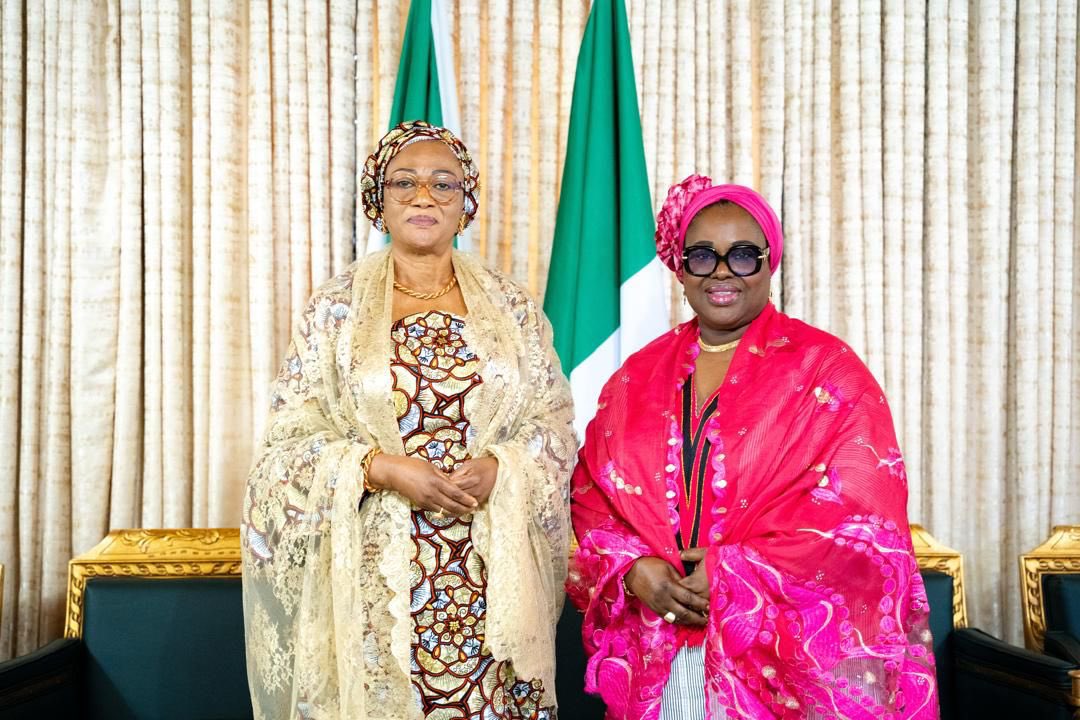
Oluremi Tinubu Hosts Wife of New IGP, Talks Welfare, Empowerment for Police Families
The First Lady of the Federal Republic of Nigeria, Senator Oluremi Tinubu, today welcomed Mrs. Mutiat Disu, wife of the Inspector General of Police, at the State House in Abuja.

During the meeting, the First Lady encouraged Mrs. Disu to continue championing the welfare and wellbeing of police officers’ families, especially through impactful support for their wives.
Speaking after the meeting, Mrs. Mutiat Disu shared her excitement about partnering with the First Lady’s Renewed Hope Initiative (RHI), noting that she is ready to leverage its programs to empower police officers’ wives across the country.
Mrs. Disu, who also serves as the National President of the Police Officers’ Wives Association (POWA), described the meeting as insightful and inspiring. She emphasized her commitment to using RHI platforms to improve healthcare, welfare, and economic empowerment for POWA members nationwide.
“The purpose of this visit is to tap into her wealth of experience and explore how POWA can benefit from her programs,” she said.
She added that her engagement with the First Lady has already provided valuable direction, especially in areas of social intervention and healthcare support for police families.
“I’m ready to work closely with Mama to ensure our women benefit fully, especially since RHI focuses on uplifting women, and POWA is largely made up of women.”
Mrs. Disu assumed leadership of POWA following the appointment of Tunji Disu as Inspector General of Police on February 24, 2026, succeeding Kayode Egbetokun.
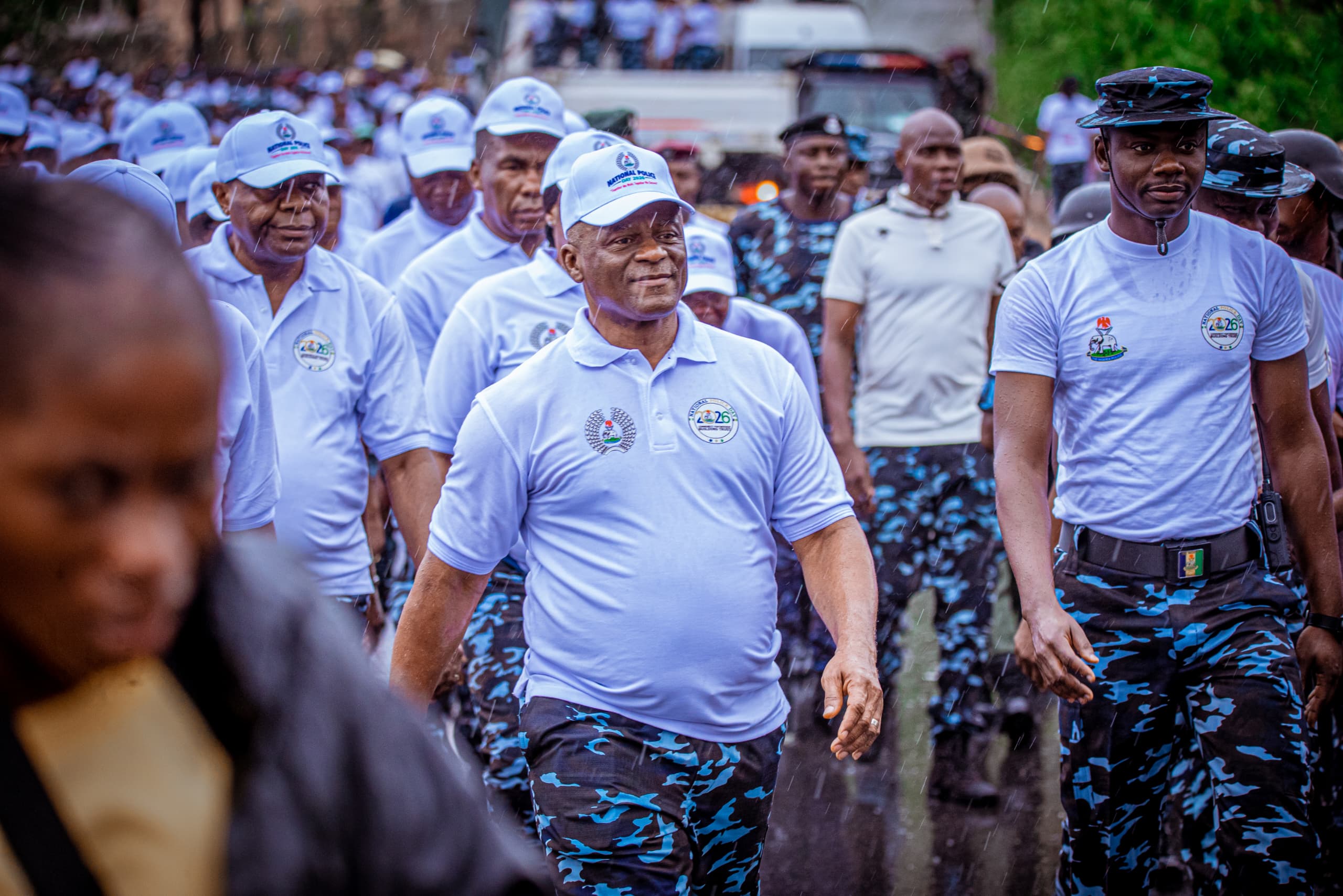
Police Day 2026: IGP Disu Leads Nationwide Walkathon To Strengthen Community Trust
The Inspector-General of Police, Olatunji Disu, on Tuesday led the management team, alongside officers and personnel of the Nigeria Police Force, in a nationwide walkathon to commemorate the 2026 National Police Day.
The event, held across state capitals and the Federal Capital Territory, formed part of activities marking Day Two of the annual celebration, themed “Community Partnership: Building Trust.”
The symbolic exercise, which drew participation from both police personnel and members of the public, was aimed at showcasing unity, discipline, and a renewed commitment to community policing and public safety.
According to the Force leadership, the walkathon underscores the Nigeria Police Force’s resolve to strengthen public trust, deepen engagement with citizens, and enhance collaboration in tackling security challenges across the country.
Participants described the initiative as a practical step toward bridging the gap between law enforcement and the communities they serve, while also promoting physical fitness and mental well-being among officers and civilians alike.
With the theme reflecting a shared responsibility for safety, the Police reiterated that sustainable security can only be achieved through active partnership with the public.
The event concluded with a renewed call for collective action under the banner: “Together We Walk, Together We Secure,” emphasizing unity of purpose in building a safer and more secure society for all Nigerians.


-

 society6 months ago
Religion: Africa’s Oldest Weapon of Enslavement and the Forgotten Truth
-

 news4 months ago
WHO REALLY OWNS MONIEPOINT? The $290 Million Deal That Sold Nigeria’s Top Fintech to Foreign Interests
-

 society6 months ago
“You Are Never Without Help” – Pastor Gebhardt Berndt Inspires Hope Through Empower Church (Video)
-

 celebrity radar - gossips2 months ago
Dr. Chris Okafor Returns with Power and Fire of the Spirit -Mounts Grace Nation Altar with Fresh Anointing and Restoration Grace on February 1, 2026