
Uncategorized
When Faith Becomes Fury: The Arrest That Exposed a Deadly Rift in Spiritual Leadership

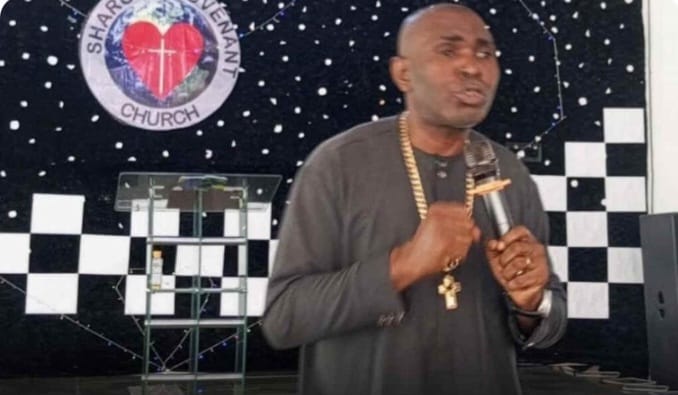
When Faith Becomes Fury: The Arrest That Exposed a Deadly Rift in Spiritual Leadership
— A Report by George Omagbemi Sylvester
“How a Cleric’s Alleged Plot to Hire Cult Killers for a Rival Prophet Reveals Deeper Cracks in Religious Authority and Social Order.”
In a nation where faith can elevate leaders to positions of profound influence, a disturbing law enforcement action has exposed the darkest potential of spiritual rivalry. Recently in Bayelsa State, security operatives intervened to prevent an assassination rooted not in political ambition, but in the toxic collision between religious authority and violent underground networks. What unfolded is more than a sensational crime story. It is a stark indictment of leadership devoid of moral compass, a chilling warning about the weaponisation of faith for personal gain and a societal challenge that demands sober reflection and decisive action.

Operatives from the Special Weapons and Tactics Unit of the Bayelsa State Police Command arrested Pastor Elijah Oro, a clergyman originally from Delta State. Authorities allege that Oro contracted a young man embedded in a notorious criminal brotherhood. (known as the Greenlanders confraternity) to carry out a deadly mission against a rival prophet. The pastor and the alleged hitman were taken into custody after credible intelligence led police to foil what they believe was an imminent assassination attempt.
According to official statements, the clandestine plan stemmed from a dispute over church membership and property, a conflict that escalated beyond factional disagreement into a plot to extinguish a human life. Police spokespersons revealed that the suspect recruited to carry out the attack confessed membership in the Greenlanders confraternity upon arrest at the intended victim’s premises.
The very idea that a man of God could be accused of orchestrating murder to settle a spiritual rivalry is jarring. It challenges the fundamental expectation that religious leadership embodies peace, justice, and selfless service. As Dr. Mercy Adediran, a scholar of theology and ethics, explains, “Religious leadership carries with it an obligation to model higher moral character. Faith communities thrive when leaders prioritize reconciliation, not retribution. When those leaders abdicate moral responsibility, the entire fabric of trust unravels.” Adediran’s observation resonates far beyond the immediate case; it points to a systemic vulnerability where spiritual authority meets raw human ambition.
In many societies, faith leaders are entrusted with the spiritual wellbeing of entire communities. They are expected to counsel parishioners in matters of conscience, to guide the vulnerable toward ethical choices, and to wield influence responsibly. When leaders violate that trust (particularly through violence) the consequences ripple far beyond the courtroom. “Leadership is not merely a platform for personal influence,” notes Professor Kunle Oladipo, a sociologist specialising in religious movements. “It is a public trust. When that trust is weaponised for personal disputes, the damage to societal cohesion can be profound and long-lasting.”
This latest arrest is not an isolated anomaly. Across regions where criminal cults and confraternities have taken root, authorities continue to grapple with the unpredictable intersections of underground violence and mainstream society. In Bayelsa, recent history has included episodes of cult-related violence that left communities shaken. These clashes underline how easily organised criminal networks can entangle with broader community life, especially where economic hardship and youth unemployment leave gaps that illicit groups exploit.
Experts emphasise that the problem is not inherent to religious institutions, but arises when the moral authority invested in those institutions is misused. “The tragic irony,” states Dr. Adediran, “is that religious communities have the potential to be powerful agents for conflict resolution. Though when leaders themselves become embroiled in violence, it erodes the very foundation upon which faith stands.”
Law enforcement officials have underscored their commitment to protecting lives and preventing further escalation. Following the arrests, they urged the public to continue providing credible information that can aid in preserving peace and thwarting threats to public safety. The ongoing investigation seeks to clarify whether the alleged plot was an isolated attempt or part of a wider pattern involving third parties.
Beyond law enforcement, this incident raises vital questions about accountability within religious communities. How do congregations hold their leaders responsible when allegations of misconduct surface? What structures exist to ensure transparency in church governance and in the resolution of conflicts that arise within and between congregations? Since violence and criminality contradict the core teachings of mercy, compassion and stewardship that undergird most religious traditions, addressing such questions is not merely administrative; it is essential to preserving the moral legitimacy of spiritual leadership.
Prominent commentators in religious ethics remind us that power without accountability is a breeding ground for corruption. As Professor Oladipo points out, “Whenever influence is concentrated without appropriate checks, the risk of abuse escalates. Faith leaders are no exception. If anything, they require stronger ethical scrutiny precisely because of the profound impact they have on individuals’ lives and societal values.”

For everyday citizens (especially those who dedicate their lives to worship and community service) this story can be deeply unsettling. It forces a reckoning with uncomfortable truths about human nature, organisational structures, and the seductive lure of power. Yet it also offers an opportunity for collective reflection and reform. Civil society organisations, interfaith coalitions, and religious councils play indispensable roles in championing ethical standards and condemning violence unequivocally, regardless of the social status of those accused.
Religious institutions capable of self-critique and internal accountability can turn even this dark moment into a catalyst for renewal. “Reformation begins where there is courage to acknowledge faults,” says Dr. Adediran. “Communities must demand integrity from their leaders. Silence in the face of wrongdoing, especially by those claiming spiritual authority, only enables further harm.”
As the legal process unfolds, the accused remain subjects of ongoing police investigation. In the court of public opinion and within the court of conscience, the allegations have already sparked intense debate about the moral responsibilities of those who claim to speak for the divine.
This case stands as a sobering reminder: when spiritual leadership is co-opted for personal vendettas or political influence, the consequences can tear at the core of communal trust. When faith is misused to cloak violent intent, the very foundations of moral authority are undermined. Yet, in confronting these failings head-on, society affirms a deeper commitment to justice, compassion and the right to life, values that transcend the boundaries of creed and culture.
In a world rife with conflict and competition, religious leaders must be held to the highest ethical standards precisely because their influence shapes the hearts and minds of many. When that influence turns violent, it diminishes all of us. The arrest in Bayelsa should provoke not only legal scrutiny but also profound introspection on how communities select, empower and hold accountable those who claim to lead them spiritually.
What happened here is more than a crime story. It is a mirror reflecting the stakes of moral leadership in any society claiming to value the sanctity of life, the rule of law and the dignity of every human being.






FOPCHEN Calls for Dialogue as Court Fixes May 28 for Continuation
OTA, OGUN STATE — Proceedings in a widely followed legal case resumed on March 24, 2026, at the High Court of Ogun State, Ota Division, ending with a fresh adjournment as the court fixed May 28, 2026, for continuation.
During the session, legal representatives for all parties restated their positions and addressed preliminary matters, laying the groundwork for more substantive arguments at the next hearing. Observers noted that the case continues to attract significant public attention due to its perceived implications for law, culture, and societal values.
The Foundation for the Protection of Cultural Heritage in Nigeria (FOPCHEN) used the occasion to reiterate its call for constructive national dialogue. The group emphasized that while the judicial process must be respected, broader societal engagement remains essential.
According to the organization, issues relating to values, responsibility, and cultural identity should not be confined solely to courtroom deliberations but should involve active participation from various sectors of society.
Legal analysts present at the proceedings described the matter as one with far-reaching implications, noting that arguments advanced in court could shape future interpretations surrounding sensitive cultural and moral questions.
The presiding judge subsequently adjourned the case to May 28, granting all parties time to refine their submissions and respond to issues raised during the hearing.
As anticipation builds ahead of the next court date, Nigerians across different sectors continue to monitor developments closely, keen to see how the judiciary navigates the delicate balance between constitutional rights and cultural expectations.
Uncategorized
CRG: Politicians Must Stop Witch-Hunting, Focus on Nation Building — Says NYSC Cleared Deputy Speaker Since 2023
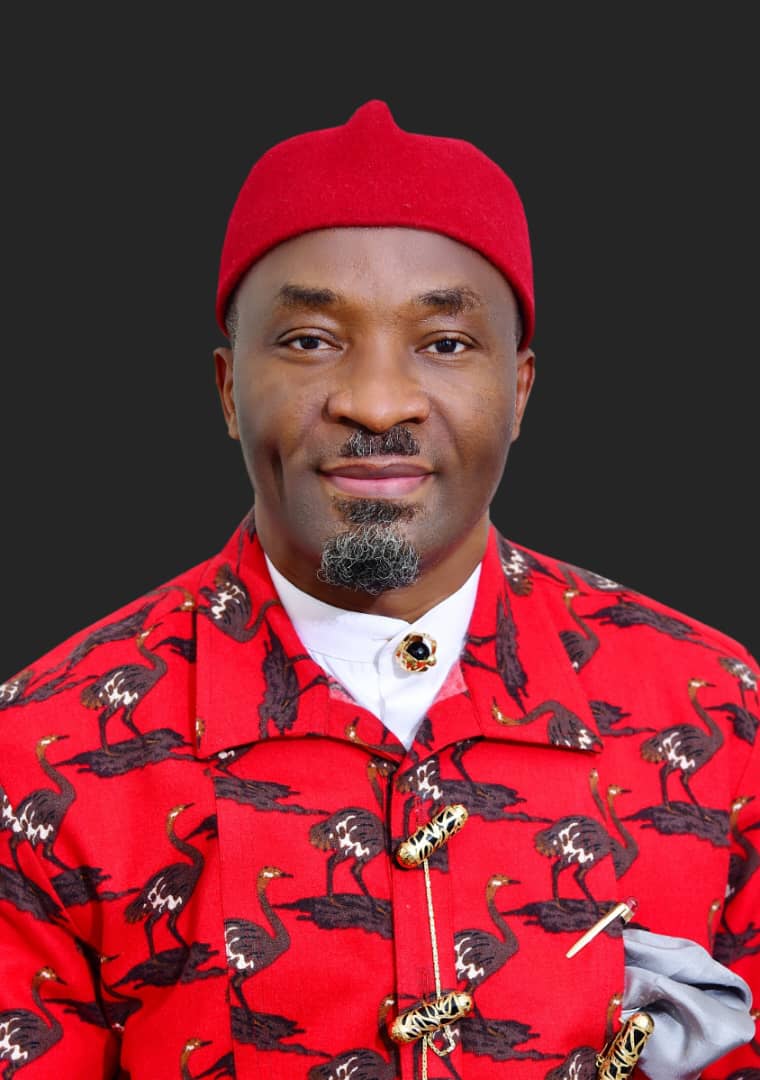
CRG: Politicians Must Stop Witch-Hunting, Focus on Nation Building — Says NYSC Cleared Deputy Speaker Since 2023
By: Boye Ola
The Centre for Responsible Governance (CRG) has called on political actors and interest groups to desist from what it described as needless witch-hunting of the Deputy Speaker of the House of Representatives, Benjamin Okezie Kalu, following renewed controversies surrounding his National Youth Service Corps records.
The organisation noted that the clarification by the National Youth Service Corps (NYSC) regarding the matter is not a recent development, as a formal verification letter had already been issued as far back as May 23, 2023.
The letter, referenced NYSC/CCD/VER/10/5.1/VOL1/02, had already addressed and cleared the questions surrounding the Deputy Speaker’s NYSC records.
Reacting to the renewed debate, the spokesman of the Centre,
Obande George, said it was troubling that issues which had already been clarified by a competent national institution were being resurrected for political purposes.
According to him, the time has come for political actors to move away from destructive engagements and concentrate on building the nation.
“It is important to note that the NYSC had already issued a verification letter dated May 23, 2023 addressing the matter.
Reopening issues that have already been clarified by a competent authority suggests that some individuals are more interested in political witch-hunting than in national progress,” George said.
The CRG stressed that democracy thrives when institutions are respected and their determinations are accepted in good faith rather than constantly questioned for political advantage.

George also commended the Deputy Speaker for demonstrating maturity and composure throughout the controversy, despite what he described as sustained provocations.
“Honourable Benjamin Kalu has shown remarkable calm and maturity in the face of intense public scrutiny and political provocation.
Instead of engaging in unnecessary public confrontation, he allowed institutions to speak through their records.”
The Centre warned that Nigeria’s political culture must evolve beyond constant character attacks and sensational allegations, which often distract public officials from their responsibilities.
According to the organisation, the country’s development requires constructive engagement among political actors rather than continuous attempts to discredit opponents.
“Nigeria cannot move forward if political energy is constantly spent on digging up allegations and amplifying rumours. Our leaders and political actors must redirect their focus to governance, policy and nation building.”
CRG therefore urged Nigerians to rely on verified information from credible institutions and avoid spreading speculative claims that could damage reputations or destabilise public discourse.
The organisation reiterated that respect for due process and institutional integrity remains essential for strengthening Nigeria’s democracy.

@The Centre for Responsible Governance, Email: [email protected], Instagram: crgngo6, Twitter: crgng06, Threads: crgngo6
Uncategorized
IWD 2026: Ajadi Celebrates Women, Urges Them To Seek More Elective Positions In Future Elections

IWD 2026: Ajadi Celebrates Women, Urges Them To Seek More Elective Positions In Future Elections
A Leading People’s Democratic Party, (PDP) Governorship Aspirant in Oyo State, Ambassador Olufemi Ajadi Oguntoyinbo has felicitates with women in the country on the occasion of this year’s International Women’s Day.
The international Women’s Day is celebrated on 8 March, commemorating women’s fight for equality and liberation along with the women right’s movement. It gives focus to issues such as gender equality and reproductive rights. International Women’s Day originated from labour movements in Europe and North America during the early 20th century.
In a statement issued on Sunday to commemorate this year’s edition of the International Women’s Day, Ajadi said the role of the women in nation building cannot be over emphasised.
He recalled the role played by prominent Nigerian women like Mrs Funmilayo Ransome- Kuti, Margaret Ekpo and Wuraola Esan towards the liberalization and the growth of the country and urges women to follow their footsteps by not only participate in the political process but seek more elective positions.
He urges the political leaders to encourage and give more chances to women for them to contest and occupy elective positions in the country.
Ajadi also called for more respect for women, saying they are definitely behind whatever success recorded by the menfolk.
He said domestic violence against women should be stopped, saying they deserves respect for their role in moulding the future leaders.
According to the statement, “I celebrate and congratulate our women on this year’s occasion of International Women’s Day. We cannot underestimate the role played by our women both at home, in the social circle and in politics. They deserve more respect.
“I equally called on them not only to be a passive participants in politics but to determine to seek more elected positions in future elections. They should aspire more from the position of dancing and singing at campaigns to seek more elective positions. The ratio of men to women in elective positions in the country is embarrassing. Women should stand up and fight for more elective positions.
“I also use the occasion of this year’s Women’s Day to appeal to Nigerians to stop domestic violence against the women. If we treat our women well, our country will witness unprecedented developments”.


-

 society7 months ago
Religion: Africa’s Oldest Weapon of Enslavement and the Forgotten Truth
-

 news4 months ago
WHO REALLY OWNS MONIEPOINT? The $290 Million Deal That Sold Nigeria’s Top Fintech to Foreign Interests
-

 society7 months ago
“You Are Never Without Help” – Pastor Gebhardt Berndt Inspires Hope Through Empower Church (Video)
-

 celebrity radar - gossips2 months ago
Dr. Chris Okafor Returns with Power and Fire of the Spirit -Mounts Grace Nation Altar with Fresh Anointing and Restoration Grace on February 1, 2026