
society
When Gaddafi Challenged the World Order: 2009 UN Speech, Veto Power and the Quest for Global Justice

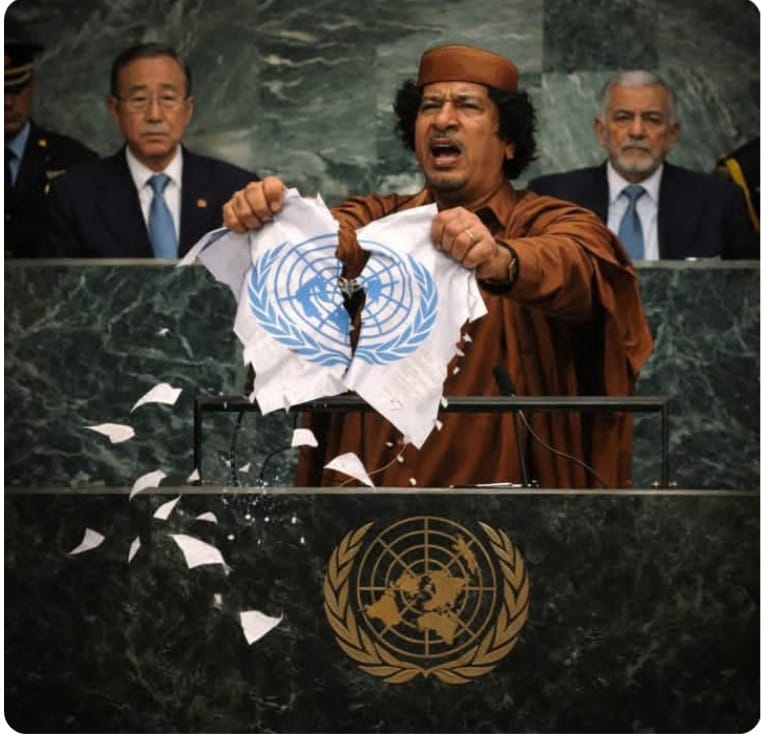
When Gaddafi Challenged the World Order: 2009 UN Speech, Veto Power and the Quest for Global Justice
By George Omagbemi Sylvester
“Gaddafi’s 2009 UN Address Exposed Security Council Inequities and Sparked a Continuing Debate on Veto Power and Global Justice.”
Muammar Gaddafi, the then‑leader of Libya and President of the African Union, delivered one of the most extraordinary speeches in the history of the United Nations General Assembly on 23 September 2009 at the UN headquarters in New York City. Originally allotted just 15 minutes, Gaddafi’s address stretched to nearly 100 minutes and became infamous for its confrontational tone toward the UN Security Council’s structure and global power imbalances.

Gaddafi’s central message was a fierce critique of the permanent members of the Security Council (the United States, Britain, France, Russia and China) and their veto powers. He questioned whether an institution founded on principles of equality and peace could truly function when a handful of powerful states could unilaterally block action on urgent global crises. “The veto is against the charter, we do not accept it and we do not acknowledge it. Veto power should be annulled,” he declared in his address.
He held up a simple paperback copy of the UN Charter, reading sections aloud in front of diplomats, kings, presidents and delegates, and at times even tossing it aside to dramatize his point that the rules of international law mean little when selectively applied.
What Gaddafi Argued: Inequality at the Heart of the UN
Gaddafi’s speech was not merely rhetorical theatre; it was an unfiltered expression of frustration shared by many countries of the Global South, who view the UN’s highest decision‑making body as outdated and unrepresentative of global realities. According to his speech, the Security Council “did not provide us with security but with terror and sanctions,” a stinging indictment of how powerful nations have wielded war, intervention and punitive measures with little accountability.

Scholars and analysts have since weighed in on the structural issues Gaddafi raised, even if they disagree with his broader worldview. Professor Andrzej Polus, a political economist at the University of Wrocław, notes that the Security Council’s composition “reflects the situation of 1945 when it was created,” a geopolitical reality vastly different from the world of today. He explains that although many African countries gained independence in the 1960s, “Africa remains excluded from real influence within this structure”; a point that echoes elements of Gaddafi’s critique, even if not his rhetoric.
The Veto Debate: Scholarly Voices on a Flawed Mechanism
The heart of the controversy lies in the veto power, a unique privilege that allows any of the five permanent members to block substantive decisions, even if all other members vote in favour. Critics argue this mechanism creates a persistent “veto‑dilemma,” where the Council’s ability to act decisively on humanitarian crises (genocide, war crimes or severe conflict) is often stymied by narrow national interests. A legal study from the University of Cape Town highlights that even reforming the veto itself can be blocked by the veto, revealing a deep structural paradox that undermines effectiveness and human rights protection.
Scholars like those cited in a comprehensive review of Security Council dynamics spanning 1990–2022 conclude that “veto usage consistently delays or weakens responses”, especially in crisis‑related resolutions, exposing the tension between great power interests and collective security. Such research underscores that while the veto system was originally conceived as a safeguard for peace among major powers, in practice it has often paralyzed action and diminished the Council’s legitimacy.
Another academic analysis argues that the veto has “evolved from a collective safeguard into a political instrument” that obstructs accountability and inhibits effective humanitarian responses. The author suggests alternative mechanisms like a “Veto Accountability Index” and measures to restrict veto use in atrocity contexts to mitigate these effects; reforms that would preserve the broader structure while addressing some of its most damaging consequences.
Critics and Reformers: Beyond Gaddafi’s Rhetoric
Although scholars may agree on the need to reform the Security Council’s structure, they caution that simply abolishing the veto is no silver bullet. Achieving meaningful reform requires collective diplomatic consensus among the very powers reluctant to yield influence; a daunting political challenge. As one expert study notes, even legal mechanisms to regulate veto power are tangled in procedural hurdles that can themselves be blocked under current rules.
In the United Nations General Assembly debates of recent years, multiple member states have urged limiting or suspending veto use, especially in cases of genocide, war crimes, and crimes against humanity. Delegates emphasise that “the veto should not serve as a weapon of hatred and war” and that without structural change, the Council’s legitimacy and broader reputation will continue to erode amidst ongoing global conflicts.
Why It Still Matters: The Legacy of 2009
Gaddafi’s speech was polarising, with some contemporary commentators dismissing it as rambling or opportunistic. Yet the core elements of his critique (the inequality embedded in global decision‑making, the power disparities between rich and poor nations, and the need for a more representative international order) remain central to scholarly and diplomatic dialogues today.
Professor Polus’s reminder that the current system was designed in a geopolitical context that no longer exists captures the essence of this debate. Many countries, particularly in Africa, Asia, and Latin America, continue to advocate for expanded representation or fundamental restructuring, whether through increasing the number of permanent seats or creating new models of weighted voting that reflect 21st‑century power distributions.
Critics of the veto, like institutional reform advocates and academic analysts, caution that while Gaddafi’s dramatic performance was controversial, his underlying question (Can international peace and equality be achieved if a few states can single‑handedly block action?) remains a central challenge confronting the UN.
Truth, Power and the Future of Global Governance
More than a decade later, the riffs between rhetoric and reform persist. Gaddafi’s 2009 address remains a symbolic flashpoint; not because it reshaped the United Nations overnight, but because it brought into stark relief the tensions between the ideals enshrined in the UN Charter and the realpolitik of international power.
For many scholars and diplomats today, the road to a more equitable United Nations is neither straightforward nor simple. But the debate over veto power (whether it should be retained, limited, or reformed) continues to shape discussions on international justice, collective security, and the legitimacy of global governance in an increasingly interconnected world.





society
Queen Amb Dr. Nwamaka Cordelia Anyatonwu Appointed Minister of Humanitarian, Culture, and Kingdom Affairs, United Kingdom of Atlantis
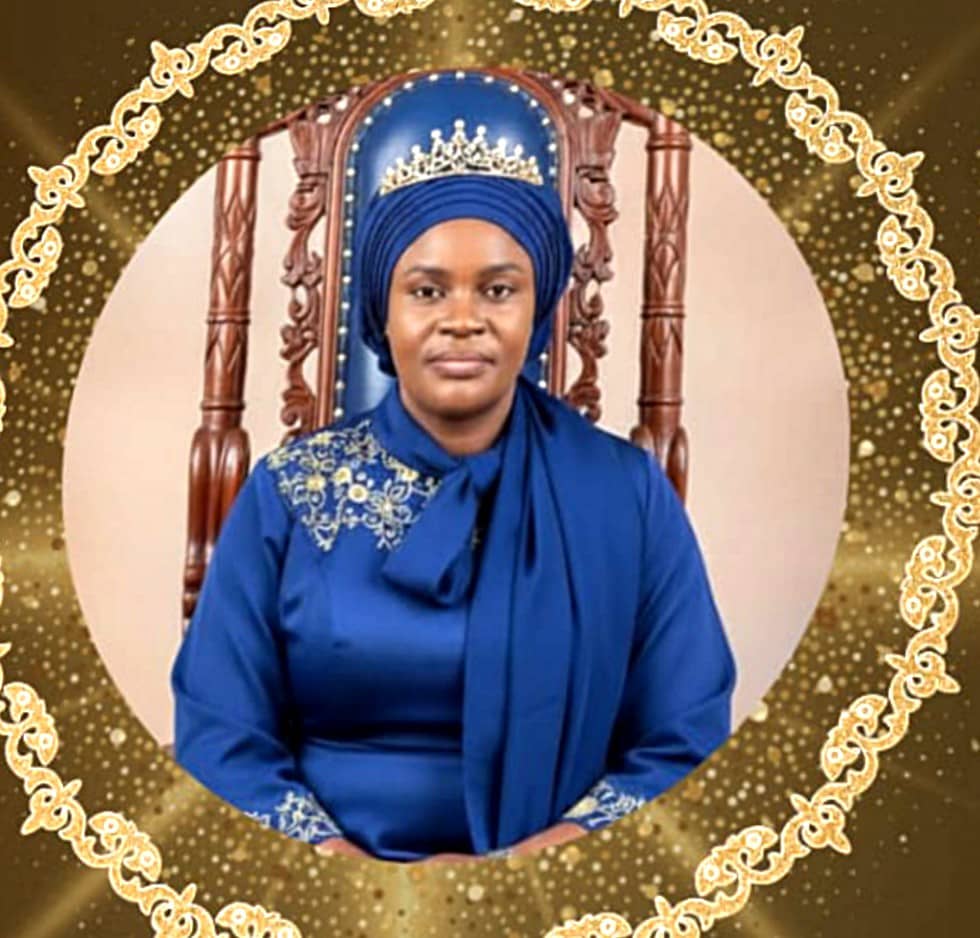
*Queen Amb Dr. Nwamaka Cordelia Anyatonwu Appointed Minister of Humanitarian, Culture, and Kingdom Affairs, United Kingdom of Atlantis
Her Majesty Queen Amb Dr. Nwamaka Cordelia Anyatonwu, Queen of the Aches Empire under the jurisdiction of the United Kingdom of Atlantis (UKA), has been appointed as the Minister of Humanitarian, Culture, and Kingdom Affairs, effective immediately.
This appointment comes as the UKA takes decisive steps to strengthen its humanitarian efforts and protect its citizens from unauthorized activities. In light of recent developments, the UKA has issued an official public disclaimer cautioning citizens, followers, and the general public about the activities of individuals promoting and operating a coin or platform not officially recognized by the Atlantian Gold Coin (ATC). This follows the hijacking of the 5 billion humanitarian project, a move that has been met with concern and condemnation from the international community.
As the newly appointed Minister, Queen Amb Dr. Anyatonwu has announced that all matters pertaining to the 5 billion humanitarian project in UKA should be directed to her office. This includes the newly captured NGOs, which are now required to report to the Office of Humanitarian Affairs, ensuring transparency and accountability in the management of humanitarian resources.
“We are committed to transparency and accountability in our humanitarian efforts,” said Queen Amb Dr. Anyatonwu. “We urge all stakeholders to work with us to ensure the success of our initiatives and protect our citizens from unauthorized activities. We will not tolerate any form of exploitation or mismanagement of humanitarian funds, and we will take all necessary measures to ensure that those responsible are held accountable.”
The UKA has assured its citizens and the international community that it is taking all necessary measures to recover the hijacked funds and bring the perpetrators to justice. The appointment of Queen Amb Dr. Anyatonwu is seen as a significant step towards achieving this goal and ensuring that humanitarian efforts are aligned with the UKA’s values and principles.
For more information. Please contact the Office of the Minister of Humanitarian, Culture and Kingdom Affairs.
*About the United Kingdom of Atlantis*
The United Kingdom of Atlantis is a sovereign nation committed to promoting peace, prosperity, and humanitarian values. The UKA is dedicated to working with international partners to address global challenges and improve the lives of its citizens and people around the world.
NASRE: Building A Safety Net For Nigeria’s Journalists
At a time when Nigeria’s media industry is strained by economic uncertainty, job instability, and shrinking newsroom resources, the Nigerian Association of Social and Resourceful Editors (NASRE) is redefining professional solidarity. More than a network of editors, it is emerging as a critical support system for journalists navigating an increasingly precarious landscape.
Founded on the principles of welfare, solidarity, and professional growth, NASRE has positioned itself as a responsive and forward-looking body within the media ecosystem. While many professional associations remain focused on advocacy and training, NASRE distinguishes itself by combining these roles with direct and practical support for journalists and their families.
At the core of its mission is a clear proposition that no journalist should be abandoned in times of need. Through financial assistance, targeted outreach, and sustained engagement, the association has supported members facing hardship, as well as widows and families of deceased practitioners. These largely understated interventions have steadily earned NASRE credibility and respect across the industry.
The organisation’s approach reflects a keen awareness of the pressures confronting media professionals, including irregular pay, job insecurity, and limited institutional backing. In such an environment, NASRE’s welfare initiatives are not merely charitable, they are essential.
Beyond welfare, the association is investing in professional resilience. Through collaboration, networking, and knowledge-sharing platforms, it is equipping editors and practitioners to remain competitive in a rapidly evolving digital media space, where adaptability is no longer optional.
Headquartered in Lagos, NASRE continues to broaden its reach, attracting a growing membership united by the need for a more responsive and supportive professional community. Its expansion signals a shift in expectations within the industry, away from symbolic affiliations towards institutions that deliver measurable value.
For many observers, NASRE represents a necessary evolution, a professional body anchored not just in ideals, but in impact. By combining empathy with structure, it offers a model of what media associations can become in challenging times.
As the industry continues to evolve, organisations like NASRE may prove indispensable. In a profession devoted to telling society’s stories, it is ensuring that the storytellers themselves are not left behind.
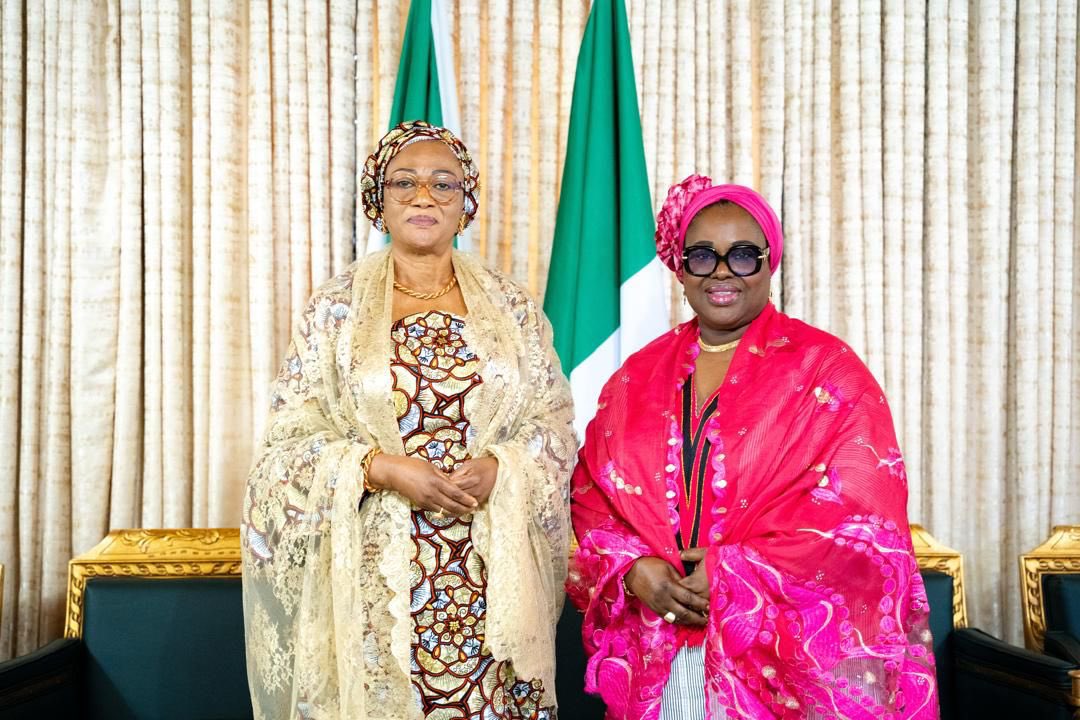
Oluremi Tinubu Hosts Wife of New IGP, Talks Welfare, Empowerment for Police Families
The First Lady of the Federal Republic of Nigeria, Senator Oluremi Tinubu, today welcomed Mrs. Mutiat Disu, wife of the Inspector General of Police, at the State House in Abuja.

During the meeting, the First Lady encouraged Mrs. Disu to continue championing the welfare and wellbeing of police officers’ families, especially through impactful support for their wives.
Speaking after the meeting, Mrs. Mutiat Disu shared her excitement about partnering with the First Lady’s Renewed Hope Initiative (RHI), noting that she is ready to leverage its programs to empower police officers’ wives across the country.
Mrs. Disu, who also serves as the National President of the Police Officers’ Wives Association (POWA), described the meeting as insightful and inspiring. She emphasized her commitment to using RHI platforms to improve healthcare, welfare, and economic empowerment for POWA members nationwide.
“The purpose of this visit is to tap into her wealth of experience and explore how POWA can benefit from her programs,” she said.
She added that her engagement with the First Lady has already provided valuable direction, especially in areas of social intervention and healthcare support for police families.
“I’m ready to work closely with Mama to ensure our women benefit fully, especially since RHI focuses on uplifting women, and POWA is largely made up of women.”
Mrs. Disu assumed leadership of POWA following the appointment of Tunji Disu as Inspector General of Police on February 24, 2026, succeeding Kayode Egbetokun.


-

 society6 months ago
Religion: Africa’s Oldest Weapon of Enslavement and the Forgotten Truth
-

 news4 months ago
WHO REALLY OWNS MONIEPOINT? The $290 Million Deal That Sold Nigeria’s Top Fintech to Foreign Interests
-

 society6 months ago
“You Are Never Without Help” – Pastor Gebhardt Berndt Inspires Hope Through Empower Church (Video)
-

 celebrity radar - gossips2 months ago
Dr. Chris Okafor Returns with Power and Fire of the Spirit -Mounts Grace Nation Altar with Fresh Anointing and Restoration Grace on February 1, 2026