
society
When God and Politics Become Weapons: How Religion and Partisanship Are Tearing Nigeria Apart


When God and Politics Become Weapons: How Religion and Partisanship Are Tearing Nigeria Apart
By George Omagbemi Sylvester | Published by SaharaWeeklyNG.com
“Instead of joining hands against poverty, insecurity and corruption, we sharpen knives on each other and the country pays the price.”
Nigeria is a nation of staggering possibilities and stubborn contradictions. We boast a youthful population, vast natural resources and a diaspora that outshines our reputation abroad. Yet at home we fritter away those assets on what should be the least important of all contests, who prays where and who sits on which party stool. Religion and partisan politics (two forces that could bind a plural society) have instead been weaponised, turning colleagues into enemies, constituencies into battlefields and public life into a theatre of suspicion. The result is predictable: a state weaker, a society poorer and citizens dead or displaced in numbers that shame our claim to civilisation.

Religion in Nigeria is not a neutral private comfort; it is a civic force with mass reach. Roughly half the population identifies as Muslim and half as Christian, a demography that should encourage humility, compromise and inclusive institutions. Instead, the balance has been treated as a truncheon to be wielded in elections, appointments and policy fights. When political actors make faith a litmus test for office or weaponise clergy prophecies to mobilise followers, they tear at the fragile fabric of citizenship and convert theological difference into permanent political danger. Pew’s recent work shows how religion remains central to identity in Nigeria and that fact matters for how power is contested.
The violence that follows is not theoretical. Over the past decade the country has witnessed waves of communal and sectarian brutality whose proximate causes range from climate-driven land pressures to criminal banditry, yet their lines are often drawn in religious or ethnic ink. Farmer–herder clashes, concentrated in the Middle Belt, have killed thousands and spread fear across farming communities. By 2021, more than 15,000 deaths had been linked to these clashes; local outbreaks since then, including mass attacks in Benue and other states, have shown the crisis is escalating. When disputes over grazing corridors and farmland are narrated as religious persecution, innocent farmers and herders alike are pushed into cycles of revenge.
Terrorist insurgency adds a gnawing dimension. Boko Haram and ISWAP not only killed tens of thousands and displaced millions in the northeast – they also turned religion into a cover for brutal politics. The consequences are not confined to the northeast; they ripple into national politics, inform security policy and feed identity-based suspicion across the federation. Civilians pay the heaviest price: thousands dead, millions uprooted and whole local economies hollowed out. The humanitarian cost is matched by an economic toll: insecurity destroys farms, distracts investment and raises the fiscal burden for a government already addicted to borrowing.

Politics has itself become a theatre of religious signalling. The 2023 presidential campaign, for example, exposed how fragile the country’s equilibrium is when parties abandon long-standing practices of balance for short-term electoral gain. The Muslim–Muslim ticket controversy (whether you call it tactical realpolitik or cynical disregard for plural representation) sharpened sectarian anxieties and showed how quickly trust can dissipate if inclusiveness is not defended as a principle. When political entrepreneurs calculate that religion will win them votes, they sell the nation out for partisan advantage.
This is not mere moralising: it is practical. When citizens see appointments, licences, policing, or access to relief routed through faith-based networks, trust in state institutions collapses. Governance then survives on patronage, not performance. Public resources are diverted to cronies and co-religionists; laws meant to protect the vulnerable are mangled by selective enforcement; and civic identity (the idea that every Nigerian is first a citizen) is subordinated to narrower loyalties. The consequence is political fragmentation at a time the state most requires unity to confront existential threats: poverty, inflation, climate shocks and violent non-state actors.
We can (and must) do better. The remedy begins with a hard embrace of secular citizenship: not anti-religion, but neutral public institutions that treat faith as a private domain while guaranteeing equal protection for all. This means transparent appointments, rigorous anti-corruption enforcement and the depoliticisation of security agencies. It means enforcing anti-violence laws impartially and prosecuting those who inflame religious passions for personal gain. It also means strengthening local conflict-resolution mechanisms: where grazing corridors or land rights cause friction, the state must mediate fairly and invest in alternatives (ranching, irrigation and effective land registration) instead of amplifying blame. Research from scholars like Jibrin Ibrahim has repeatedly shown that high religiosity in Nigeria coexists with weak civic practices and that addressing the structural drivers of conflict is essential for reconciliation.
Religious leaders, too, have a duty. This is not a call to silencing the pulpit; it is an appeal for courage. Wole Soyinka’s insistence that human liberty must come before sectarian barricades (and his famous rebuke that religion must not be allowed to prevent rational national thinking) is not literary flourish; it is ethical strategy. Clerics and imams must preach restraint and publicly rebuke those who weaponise faith. Where religious leaders use congregations to amplify division, they forfeit moral authority and become accomplices to national decay.

Finally, ordinary citizens must reclaim civic courage. Unity is not uniformity. It is the will to disagree without dehumanising. It is the daily practice of treating a neighbour who prays differently as deserving of decency, equal opportunity and security. Civil society, universities, the media and the private sector must amplify narratives of shared destiny over slogans of exclusion. International partners can help, but the solution must be homegrown: layered, patient and relentless.
Nigeria’s enemies are not each other; they are hunger, poor governance, climate shocks and violent actors who exploit our divisions. To fight them effectively we must stop seeing religion and party membership as identity armour and start seeing them as private commitments that do not disqualify one from the public good. If we do not, the nation will continue to fracture, not along neat ideological lines, but in human terms: widows, orphans, ruined farms and shuttered schools. That is an indictment we cannot afford.
We owe future generations a country where difference does not mean danger. The work is ugly and difficult (reforming institutions, enforcing law and recalibrating moral leadership) but it is the only honest path forward. As Soyinka warned, the moral imagination of a people determines the life they will lead. Let us choose a Nigeria that puts humanity first, and religion and politics in their proper, constructive place.





Easter: Oyo PDP Guber Aspirant, Ajadi, Greets Gov Makinde, CAN, Others
The leading Peoples Democratic Party, (PDP), Governorship Aspirant in Oyo State, Ambassador Olufemi Ajadi Oguntoyinbo has congratulated the Governor of Oyo State, Engr Seyi Makinde, the Christian Association of Nigeria, (CAN), the Pentecostal Fellowship of Nigeria, (PFN) and the entire Christians on the occasion of this year’s Easter Celebration.
Ajadi said that the Good Friday which marked the remembrance of the crucifixion of Jesus Christ and the Easter Sunday, which marks his risen from the dead, are important dates in the Christiandom.
Ajadi in a statement he personally signed on Friday to commemorate the Easter, said that he rejoiced with Christians that this year’s celebration is being witnessed in an atmosphere of peace and tranquility in the country.
He said that he particularly rejoiced with Gov Makinde saying that his exemplary leadership and good governance in Oyo State in the last seven years has shown him as a selfless person, a lover of the masses and one who cares for others.
He said that these are the traits of a good Christian, praying that God would continue to endear the governor with more wisdom and success.
He called on Christians to remember Jesus Christ’s directive that they should love their neighbours as themselves, saying that if this directive is strictly followed there would be peace in the World.
Ajadi, who is also a renowned philanthropist, called on Christians, especially the well to do, to learn the heart of helping the poor.
He said that the death and resurrection of Jesus Christ will not be in vain if Christians can abide by his directive on humility and love for one another.
Ajadi said that there is hope for Nigeria as a country despite the present harsh economy and prevalent of insecurity.
“We should take solace in the fact that God can do all things and that like He restores the lost glory and resources of the people of Zion, He will do same for Nigeria.
“Nigeria will reclaim her leading position both in Africa and among the black Nations. Let’s continue to pray for the good of our land,” Ajadi said in the statement.
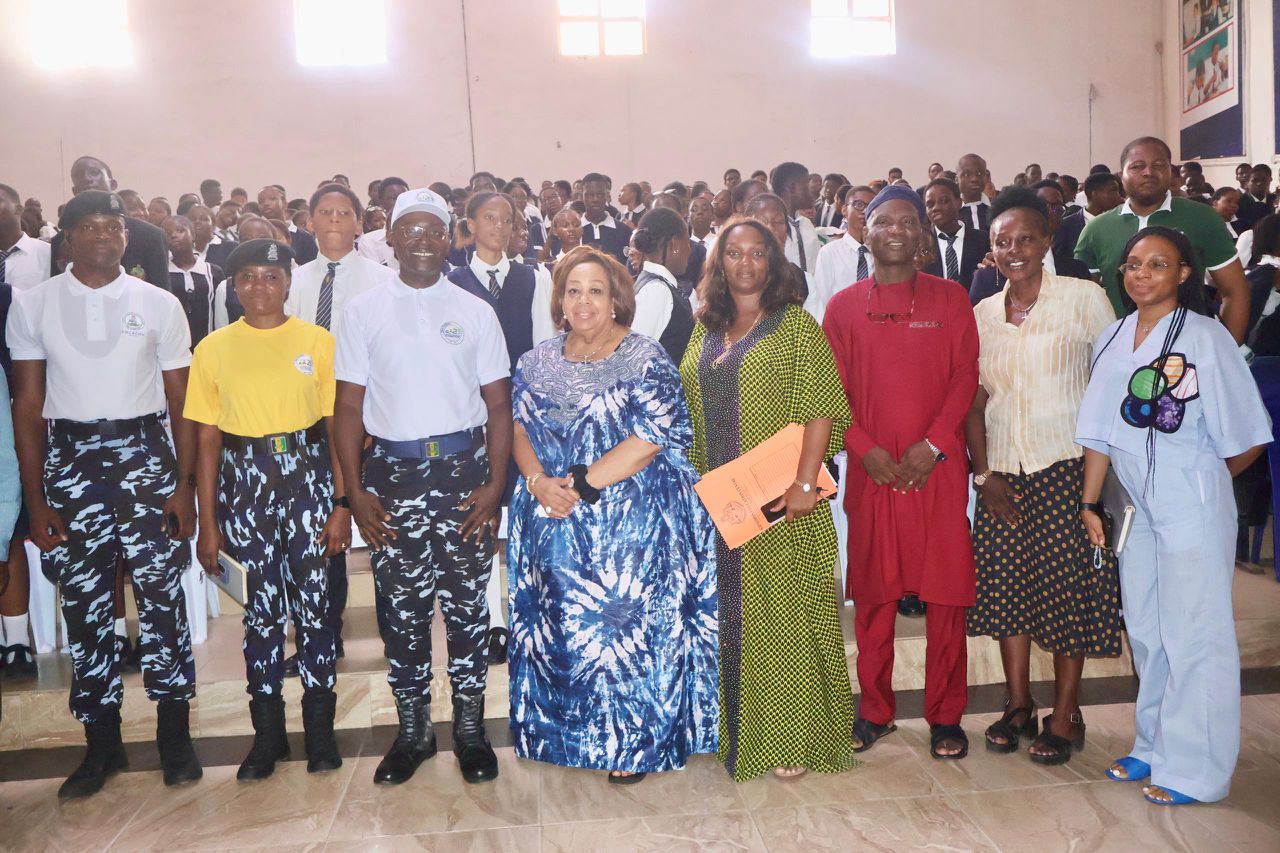
POCACOV Intensifies Sensitization on Cultism, Bullying, and Social Vices Among Students in Edo
In commemoration of the 2026 National Police Day Celebration, the Police Campaign Against Cultism and Other Vices (POCACOV), Edo State Command, has reinforced its preventive policing efforts through a targeted sensitization outreach at Igbinedion Education Centre, Benin City.
The initiative forms part of the broader activities marking this year’s National Police Day, themed “Community Partnership: Building Trust,” which emphasizes collaboration between the Nigeria Police Force and the public in fostering a safer society.
The sensitization programme witnessed the presence of key stakeholders, including the Commissioner of Police, Edo State Command, the Police Public Relations Officer, and the Edo State POCACOV Coordinator, ASP Kingsley Upeh. The team engaged students in an insightful and impactful session focused on the dangers of cultism, bullying, and other social vices prevalent among youths.
During the session, students were educated on the severe and far-reaching consequences of cult-related activities. These include violence, loss of lives, disruption of academic pursuits, and long-term damage to personal reputation and future opportunities. The speakers also highlighted how peer pressure, drug abuse, and negative social influences often serve as gateways into criminal behavior.
In an interactive segment, the Commissioner of Police stressed the legal implications of engaging in criminal acts, noting that involvement in cultism and related offences could lead to arrest, prosecution, and lifelong consequences that may hinder personal growth and career aspirations.
The issue of bullying was also extensively addressed, with emphasis on both its legal ramifications and psychological impact on victims. Students were encouraged to speak up against bullying, report incidents to school authorities or law enforcement, and support peers who may be affected.
Furthermore, the outreach underscored the importance of self-discipline, moral values, and making informed life choices. Students were urged to become ambassadors of peace within their schools and communities by rejecting violence and promoting unity and mutual respect.
The POCACOV team reiterated its commitment to continuous engagement with young people through awareness campaigns, community outreach, and strategic partnerships aimed at preventing crime before it occurs. The initiative aligns with the Nigeria Police Force’s proactive approach to policing, which prioritizes education, prevention, and community involvement.


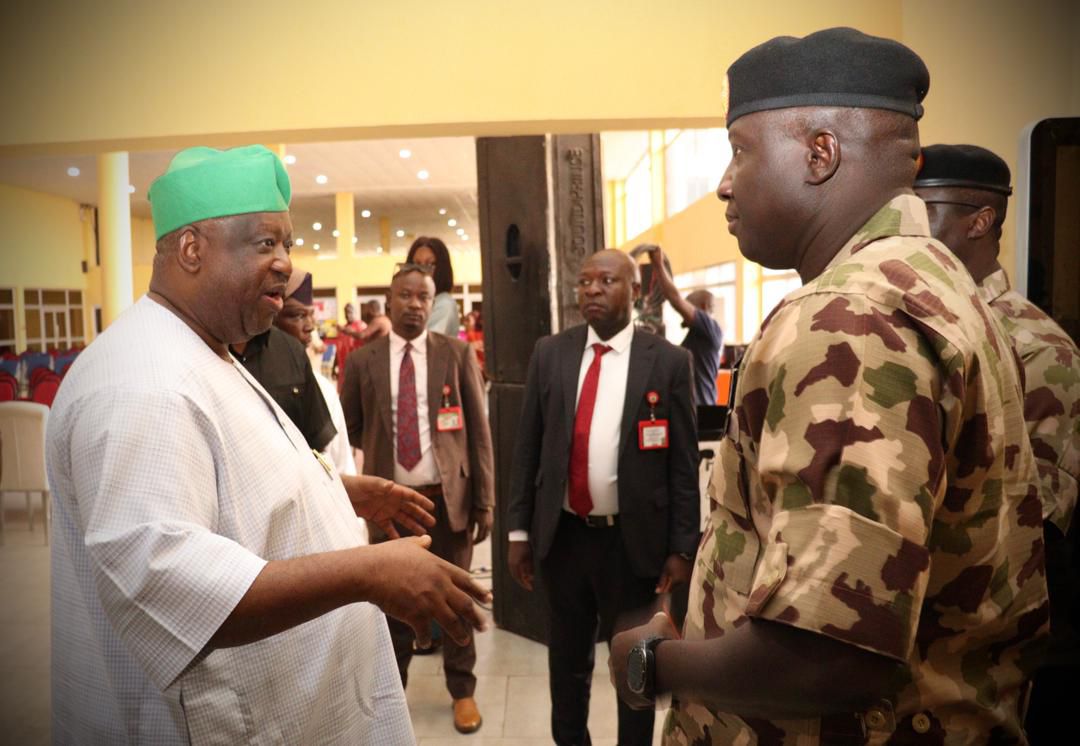
COAS Launches Nationwide Security Renewal Mission in Plateau
The Chief of Army Staff, Lieutenant General Waidi Shaibu, on Thursday led a high-level delegation of security chiefs to Plateau State, flagging off a nationwide security renewal mission aimed at strengthening civil-military cooperation and restoring lasting peace across the country.
The visit to Jos, the Plateau State capital, marks the first phase of a coordinated national effort to address persistent security challenges through joint operations, community engagement, and proactive intelligence gathering.

Governor Caleb Muftwang received the delegation, describing the initiative as a critical step toward stabilizing affected communities and reinforcing public confidence in security institutions.
Civil-Military Synergy Takes Centre Stage
At the heart of the mission is a renewed emphasis on collaboration between the military, civil authorities, and local communities. Speaking during the visit, Lt. Gen. Shaibu stressed that national security must be treated as a collective responsibility.
He urged citizens to support security agencies by remaining vigilant, sharing credible information, and complying with lawful directives, noting that effective security cannot be achieved in isolation.
Community Engagement as Confidence-Building Tool
In a departure from purely operational engagements, the Army Chief held direct consultations with community leaders and residents in Jos, reinforcing the importance of trust and dialogue in conflict resolution.
Lawmakers, including Dachung Bagos and Ladi Dangyok, commended the initiative, stating that visible engagement by top military leadership helps rebuild confidence among citizens and fosters cooperation.

Proactive Security Operations Underway
Operational updates were provided by Major General Folusho Oyinlola, who disclosed that troops under Operation Enduring Peace have intensified surveillance, intelligence-led patrols, and coordinated actions with other security agencies.
According to the Army, the approach is designed to prevent escalation of threats, safeguard lives and property, and stabilize vulnerable communities before crises emerge.
A Shift Toward Sustainable Peace
Military authorities emphasized that the Plateau visit is part of a broader, long-term strategy to transition from reactive responses to sustainable peacebuilding nationwide. The framework includes strengthening local resilience, ensuring justice, and maintaining continuous engagement with stakeholders.
Analysts view the initiative as a significant policy shift, reflecting a more inclusive security architecture that integrates community participation with military operations.
Call for National Unity
The Army leadership concluded with an appeal to Nigerians to reject divisive narratives and support ongoing efforts to promote unity and peace.
“The success of this mission depends not only on the armed forces but on the cooperation of every citizen,” the COAS stated.
The nationwide security renewal campaign is expected to extend to other regions in the coming weeks as authorities seek to consolidate gains and build a safer, more unified Nigeria.


-

 society7 months ago
Religion: Africa’s Oldest Weapon of Enslavement and the Forgotten Truth
-

 news4 months ago
WHO REALLY OWNS MONIEPOINT? The $290 Million Deal That Sold Nigeria’s Top Fintech to Foreign Interests
-

 society6 months ago
“You Are Never Without Help” – Pastor Gebhardt Berndt Inspires Hope Through Empower Church (Video)
-

 celebrity radar - gossips2 months ago
Dr. Chris Okafor Returns with Power and Fire of the Spirit -Mounts Grace Nation Altar with Fresh Anointing and Restoration Grace on February 1, 2026