
society
When History Repeats: How Nigeria’s Wealth Was Looted by Leaders Who Should Have Protected It

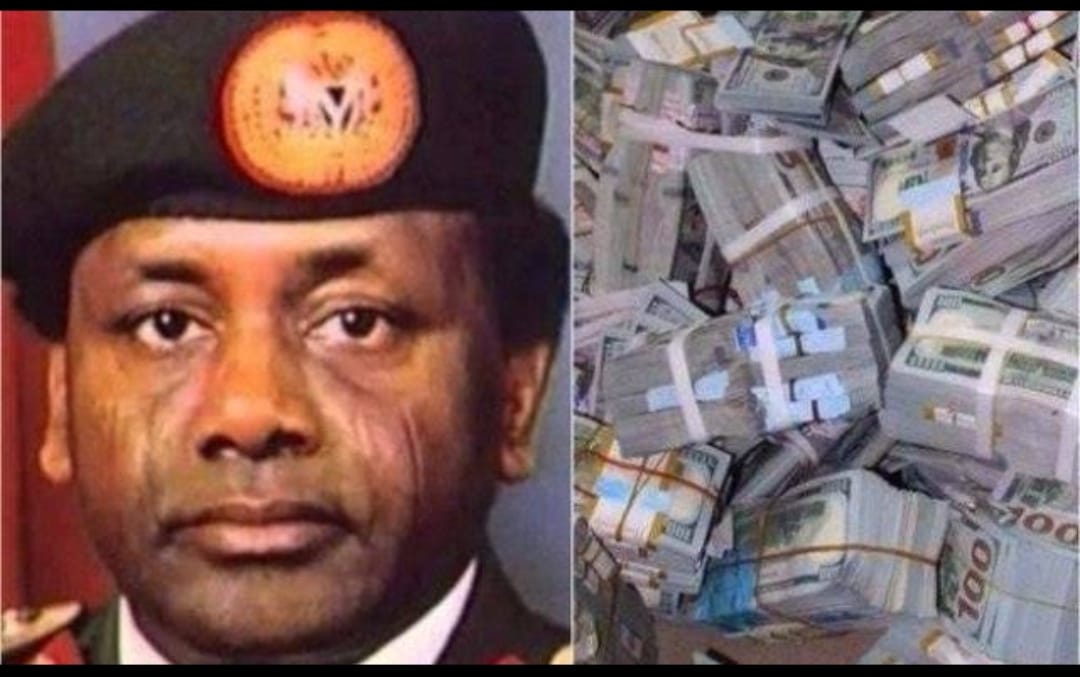
When History Repeats: How Nigeria’s Wealth Was Looted by Leaders Who Should Have Protected It.
By George Omagbemi Sylvester | Published by SaharaWeeklyNG.com
“Every government since independence has looted us; from DICTATORS to DEMOCRATS; same story, same stealing. Our oil wealth built their empires abroad, the POVERTY of MILLIONS is the WEALTH of a FEW. Nigeria’s CURSE is not OIL, it is CORRUPT LEADERS.”
Nigeria’s Endless Looting Cycle: Nigeria is a land rich in resources but poor in accountability. Oil gushes, gas flares, taxes are collected – but the benefits vanish into private bank accounts and foreign mansions. The greatest betrayal is not the lack of resources, but the deliberate theft of national wealth by those sworn to defend it. From military dictators to civilian presidents, Nigeria’s wealth has been buried in family accounts while citizens are left with BROKEN ROADS, DECAYED SCHOOLS and FRAGILE HOSPITALS.

The Looters by Name:
General Ibrahim Babangida (1985–1993)
IBB presided over Nigeria during the Gulf War oil boom of 1991. Nigeria earned $12.4 billion, but no one can account for it. Till today, Nigerians ask: “Where is the $12 billion?” Babangida’s fortune and the opulence of his Minna Hilltop mansion are symbols of a wealth gap carved by looted oil receipts.
General Sani Abacha (1993–1998)
The most infamous kleptocrat in Nigerian history. Abacha looted between $2.4 and $5 billion. Swiss, U.S. and British courts have frozen and returned billions over the years. In 2022, the U.S. repatriated another $23 million, proof that his theft still haunts us. His family treated the treasury as a personal vault.

“The Abacha loot is not history; it is an open wound still bleeding Nigeria.”
Olusegun Obasanjo (1999–2007)
Celebrated for bringing democracy, condemned for waste. Obasanjo’s $16 billion power sector scandal remains the most expensive blackout in history. His privatization program, which sold state assets like NITEL and ALSCON, was riddled with allegations of favoritism.
Goodluck Jonathan (2010–2015)
Jonathan’s presidency saw Nigeria’s highest oil revenues, yet little trickled down. Then-CBN Governor Sanusi Lamido Sanusi exposed $20 billion missing from NNPC accounts. Instead of answers, he was sacked. The notorious OPL 245 Malabu deal also belongs to this era, with over $1.1 billion diverted from national coffers to private pockets.
Diezani Alison-Madueke (2010–2015)
As Petroleum Minister, Diezani wielded immense power. Today, she faces charges of massive corruption. In 2025, the U.S. returned $52.88 million linked to her; luxury homes, cars, even a yacht. For many Nigerians, she symbolizes how a single official can treat an entire ministry as a personal empire.
Muhammadu Buhari (2015–2023)
Buhari promised to fight corruption. Instead, scandals multiplied. The N81 billion NDDC scandal, the arms procurement diversion under Sambo Dasuki and misuse of COVID-19 relief funds showed that corruption did not stop; it adapted. Buhari’s silence on many scandals raised questions about whether his “WAR ON CORRUPTION” was selective.

Bola Ahmed Tinubu (2023–Present)
Tinubu’s presidency is young, but allegations are not. From the $460,000 U.S. drug-related forfeiture in the 1990s to the controversial ₦10 billion solar panel project at Aso Rock, Tinubu faces credibility questions. While no conviction stands against him, the perception of opacity undermines his leadership.
The Real Cost of Looting.
Poverty: 87 million Nigerians live below the poverty line. That is almost half the population.
Infrastructure Gap: Nigeria needs $100 billion annually to fix roads, power and hospitals, these are money stolen many times over.
Debt Burden: External debt has soared beyond $42 billion, while stolen wealth sits in London mansions and Swiss vaults.
Erosion of Trust: Citizens see government not as a provider but as a predator. Voter apathy, tax evasion and unrest are inevitable.
“The trouble with Nigeria is simply and squarely a failure of leadership.” ~ Chinua Achebe
“Corruption is dangerous and can kill a nation.” ~ Ngozi Okonjo-Iweala
“Nations fail because extractive elites steal resources and prevent growth for the many.” ~ Daron Acemoglu
Timeline of Looted Wealth
1991: Babangida’s Gulf War oil windfall of $12.4 billion disappears.
1993–1998: Abacha loots billions; recovery continues 25 years later.
2005: Gov. Diepreye Alamieyeseigha impeached and later convicted for money laundering.
2012: Sanusi Lamido Sanusi reveals $20 billion missing oil revenue under Jonathan.
2015–2023: Buhari’s government rocked by NDDC and arms procurement scandals.
2025: U.S. returns $52.88 million linked to Diezani Alison-Madueke.
The Way Forward.
Name and Shame: No more sacred cows. Every looter must be documented in public record.
Independent Anti-Corruption Courts: Trials should not drag for decades. Swift justice must replace endless adjournments.
Ring-fence Recovered Funds: All recovered loot should be used for schools, hospitals and infrastructure, not recycled into fresh corruption.
Transparency in Oil & Gas: Every contract, license and payment must be made public.
International Cooperation: Banks in London, Zurich and Dubai must stop shielding looted Nigerian money.
Citizen Power: Nigerians must rise. CORRUPTION THRIVES NOT IN ASO ROCK ALONE, BUT IN THE SILENCE OF THOSE WHO SUFFER.
The Final Reckoning: From Abacha to Tinubu, looting has defined leadership. The cost is not abstract. It is the child who dies in a hospital without medicine, the graduate roaming the streets jobless, the farmer without electricity for irrigation, the mother walking 10 kilometers for clean water.
EVERY NAIRA STOLEN IS A DREAM DEFERRED. EVERY DOLLAR LOOTED IS A FUTURE DESTROYED.
If Nigeria is to rise, the era of burying wealth in family accounts must end. History has named the thieves. Now, the people must demand justice.





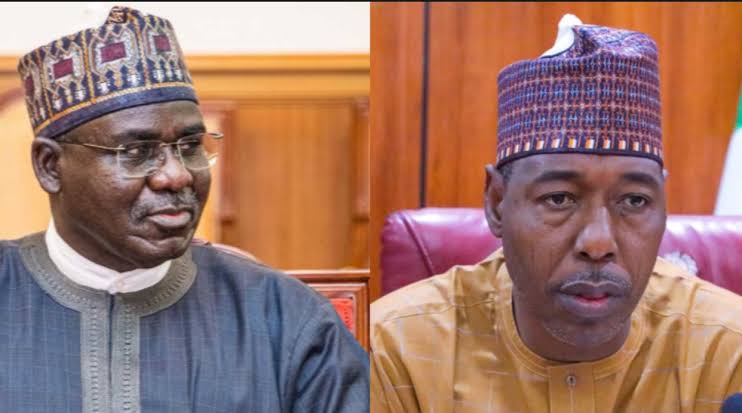
TY BURATAI HUMANITY CARE FOUNDATION COMMENDS GOVERNOR ZULUM FOR HELPING MILITARY FAMILIES
The TY Buratai Humanity Care Foundation has commended Borno State Governor Babagana Umara Zulum for his generous donation of ₦150 million to the families of three military officers who were tragically killed in recent attacks. Each family received ₦50 million as part of the state’s continued commitment to supporting fallen heroes and wounded personnel involved in counter-insurgency operations.
The commendation was contained in a statement signed by the foundation’s chairman, Ibrahim Dahiru Danfulani Sadaukin Garkuwan Keffi/Betara Biu, and made available to the press.
The foundation expressed gratitude for the governor’s compassionate gesture, which included personal visits to the families of the late Lieutenant Colonels Umar Farouq, Salihu Iliyasu, and Aliyu Saidu Paiko in Abuja, Niger, and Kano States. During the visits, Governor Zulum offered his condolences and praised the service, sacrifice, and patriotism of the fallen officers.
The foundation’s Grand Patron, His Excellency, Lieutenant General Tukur Yusufu Buratai, CFR (Rtd), personally commended the governor’s dedication to improving the lives of Borno State residents. He also extended his condolences to the families of the officers and soldiers who made the ultimate sacrifice in service to the nation.
During his visits, Governor Zulum reaffirmed his administration’s commitment to supporting bereaved families, which includes offering scholarships to the orphaned children of fallen personnel. He pledged to extend similar visits to other affected families, underscoring a compassionate approach to addressing the needs of those who have suffered in the line of duty.
society
Queen Amb Dr. Nwamaka Cordelia Anyatonwu Appointed Minister of Humanitarian, Culture, and Kingdom Affairs, United Kingdom of Atlantis
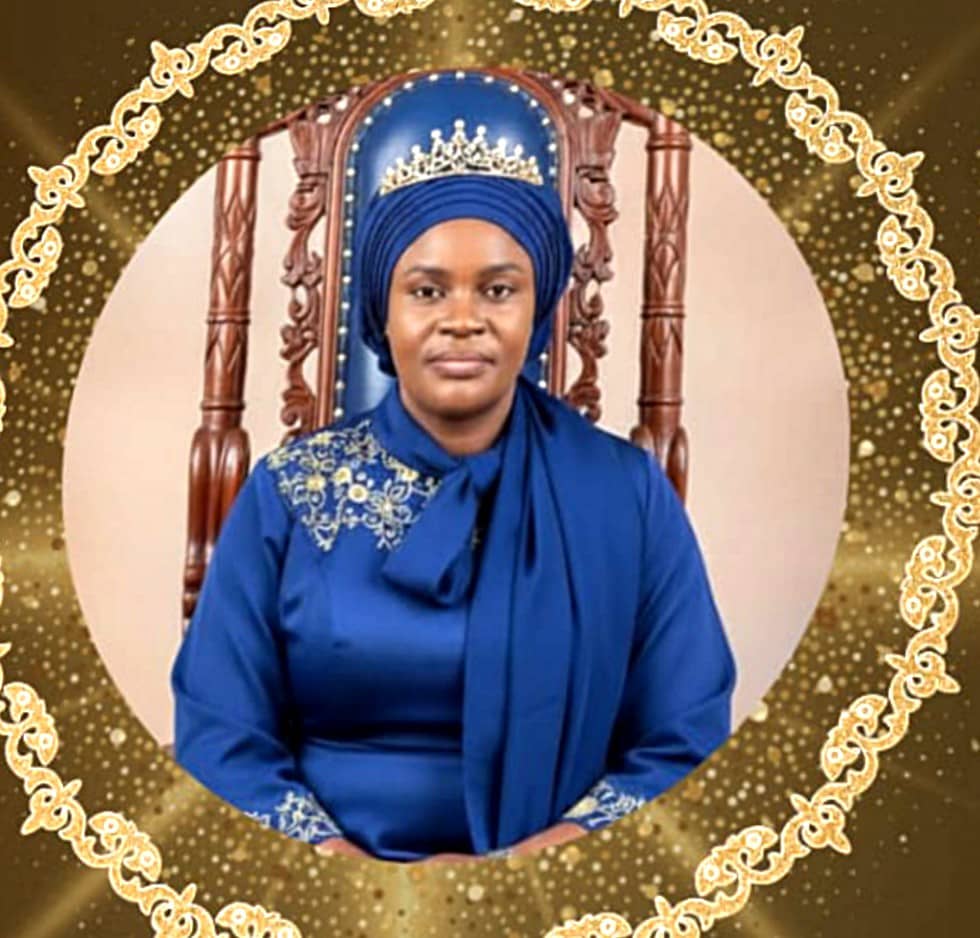
*Queen Amb Dr. Nwamaka Cordelia Anyatonwu Appointed Minister of Humanitarian, Culture, and Kingdom Affairs, United Kingdom of Atlantis
Her Majesty Queen Amb Dr. Nwamaka Cordelia Anyatonwu, Queen of the Aches Empire under the jurisdiction of the United Kingdom of Atlantis (UKA), has been appointed as the Minister of Humanitarian, Culture, and Kingdom Affairs, effective immediately.
This appointment comes as the UKA takes decisive steps to strengthen its humanitarian efforts and protect its citizens from unauthorized activities. In light of recent developments, the UKA has issued an official public disclaimer cautioning citizens, followers, and the general public about the activities of individuals promoting and operating a coin or platform not officially recognized by the Atlantian Gold Coin (ATC). This follows the hijacking of the 5 billion humanitarian project, a move that has been met with concern and condemnation from the international community.
As the newly appointed Minister, Queen Amb Dr. Anyatonwu has announced that all matters pertaining to the 5 billion humanitarian project in UKA should be directed to her office. This includes the newly captured NGOs, which are now required to report to the Office of Humanitarian Affairs, ensuring transparency and accountability in the management of humanitarian resources.
“We are committed to transparency and accountability in our humanitarian efforts,” said Queen Amb Dr. Anyatonwu. “We urge all stakeholders to work with us to ensure the success of our initiatives and protect our citizens from unauthorized activities. We will not tolerate any form of exploitation or mismanagement of humanitarian funds, and we will take all necessary measures to ensure that those responsible are held accountable.”
The UKA has assured its citizens and the international community that it is taking all necessary measures to recover the hijacked funds and bring the perpetrators to justice. The appointment of Queen Amb Dr. Anyatonwu is seen as a significant step towards achieving this goal and ensuring that humanitarian efforts are aligned with the UKA’s values and principles.
For more information. Please contact the Office of the Minister of Humanitarian, Culture and Kingdom Affairs.
*About the United Kingdom of Atlantis*
The United Kingdom of Atlantis is a sovereign nation committed to promoting peace, prosperity, and humanitarian values. The UKA is dedicated to working with international partners to address global challenges and improve the lives of its citizens and people around the world.
NASRE: Building A Safety Net For Nigeria’s Journalists
At a time when Nigeria’s media industry is strained by economic uncertainty, job instability, and shrinking newsroom resources, the Nigerian Association of Social and Resourceful Editors (NASRE) is redefining professional solidarity. More than a network of editors, it is emerging as a critical support system for journalists navigating an increasingly precarious landscape.
Founded on the principles of welfare, solidarity, and professional growth, NASRE has positioned itself as a responsive and forward-looking body within the media ecosystem. While many professional associations remain focused on advocacy and training, NASRE distinguishes itself by combining these roles with direct and practical support for journalists and their families.
At the core of its mission is a clear proposition that no journalist should be abandoned in times of need. Through financial assistance, targeted outreach, and sustained engagement, the association has supported members facing hardship, as well as widows and families of deceased practitioners. These largely understated interventions have steadily earned NASRE credibility and respect across the industry.
The organisation’s approach reflects a keen awareness of the pressures confronting media professionals, including irregular pay, job insecurity, and limited institutional backing. In such an environment, NASRE’s welfare initiatives are not merely charitable, they are essential.
Beyond welfare, the association is investing in professional resilience. Through collaboration, networking, and knowledge-sharing platforms, it is equipping editors and practitioners to remain competitive in a rapidly evolving digital media space, where adaptability is no longer optional.
Headquartered in Lagos, NASRE continues to broaden its reach, attracting a growing membership united by the need for a more responsive and supportive professional community. Its expansion signals a shift in expectations within the industry, away from symbolic affiliations towards institutions that deliver measurable value.
For many observers, NASRE represents a necessary evolution, a professional body anchored not just in ideals, but in impact. By combining empathy with structure, it offers a model of what media associations can become in challenging times.
As the industry continues to evolve, organisations like NASRE may prove indispensable. In a profession devoted to telling society’s stories, it is ensuring that the storytellers themselves are not left behind.


-

 society6 months ago
Religion: Africa’s Oldest Weapon of Enslavement and the Forgotten Truth
-

 news4 months ago
WHO REALLY OWNS MONIEPOINT? The $290 Million Deal That Sold Nigeria’s Top Fintech to Foreign Interests
-

 society6 months ago
“You Are Never Without Help” – Pastor Gebhardt Berndt Inspires Hope Through Empower Church (Video)
-

 celebrity radar - gossips2 months ago
Dr. Chris Okafor Returns with Power and Fire of the Spirit -Mounts Grace Nation Altar with Fresh Anointing and Restoration Grace on February 1, 2026