
Politics
Customs at the Crossroads: When Lawmakers Look Away and the Executive Looks Aside

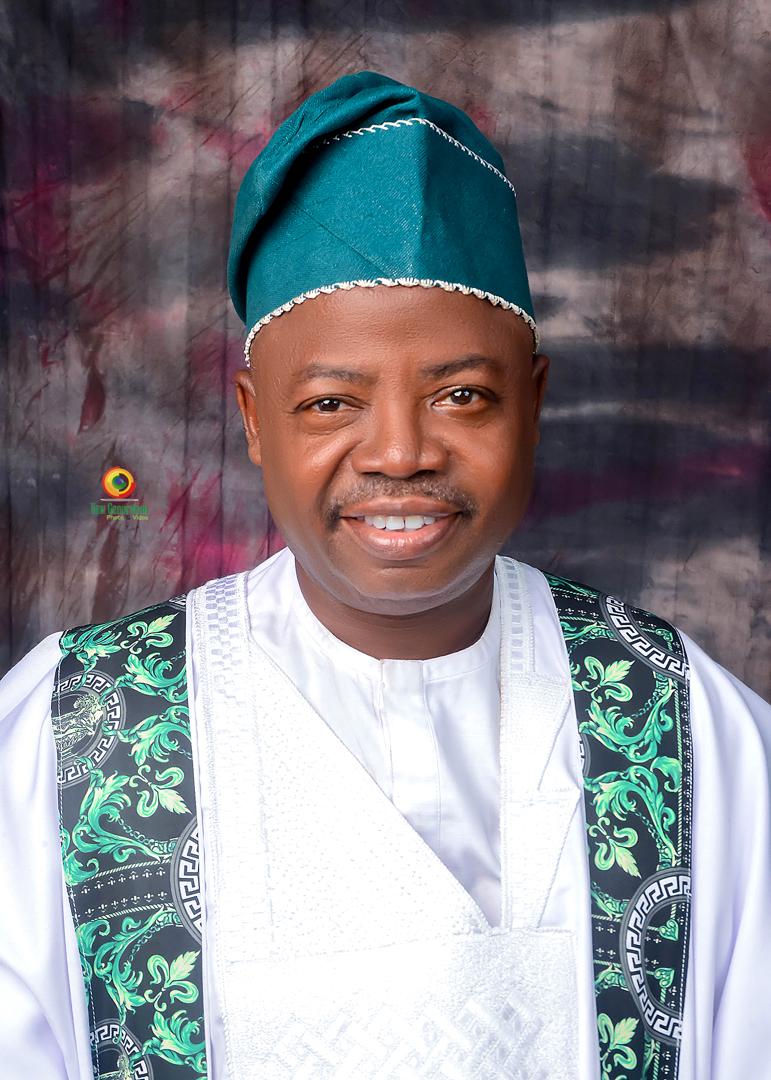
Customs at the Crossroads: When Lawmakers Look Away and the Executive Looks Aside
By Dr. Bolaji O. Akinyemi
In a democracy, legislative oversight is the scalpel that cuts through deceit, inefficiency, and corruption in public institutions. It is the people’s last institutional shield against abuse of power. But what happens when that shield becomes a shelter for the very rot it is meant to expose? And what happens when the Executive arm, whose duty is to supervise its agencies, pretends not to see?

The unfolding drama between the National Assembly and the Nigeria Customs Service (NCS) reveals more than a policy dispute. It exposes a dangerous triangle of confusion, complicity, and economic sabotage. At stake is not only the rule of law but the survival of an economy already gasping under inflation, a weak naira, and suffocating costs of living.
The House Talks Tough
In June 2025, Nigerians saw a glimpse of legislative courage when the House of Representatives Committee thundered at Customs:
> “Nigerian Customs Service, by June 30, must not collect CISS again. You are to collect only your 4% FOB assigned by the President. Even the 7% cost of collection you currently take is illegal—it was an executive fiat of the military, not democratic law. Any attempt to continue these illegal collections will be challenged in court. The ‘I’s have it.”
The voice was firm, the ruling decisive. Nigerians expected a turning point.
But the righteous thunder of the House was quickly muffled by the Senate’s softer tone, which suggested not the enforcement of the law but a readiness to bend it.
Senate: Oversight or Escape Route?
At a Senate Customs Committee session, Senator Ade Fadahunsi admitted openly that Customs has been operating illegally since June 2023. Yet rather than demand an end to illegality, he extended a lifeline to Comptroller-General Bashir Adeniyi:
> “If we come back to the same source… the two houses will sit together and see to your amendment so you will not be walking on a tight rope.”
But should Adeniyi be handed a loose rope while Nigeria’s economy hangs by a thread?
Instead of accountability, the Senate Customs Committee floated adjustments that would make life easier for Customs. The nation was given hints about fraudulent insurance and freight data, but instead of sanctions, what we saw was a search for escape routes. This is not oversight—it is overlook.
Smuggling and Excuses
The Senate Committee also lamented cross-border smuggling—Nigerian goods like cement flooding Cotonou, Togo, and Ghana at cheaper prices than in Nigeria. Senator Fadahunsi blamed the Central Bank’s 2% value deposit for encouraging the practice.
But where are the Senate’s enforcement actions—compliance checks, stiffer sanctions, cross-border coordination? None. The result is predictable: smugglers prosper, reserves bleed, and ordinary Nigerians pay more for less.
A Bloated Customs Budget
The Service’s 2024 capital allocation ballooned to ₦1.1 trillion from ₦706 billion. Instead of channeling these resources into modern trade systems, Customs is expanding empires of frivolity—such as proposing a new university despite already having training facilities in Gwagwalada and Ikeja that could easily be upgraded.
Oversight is not an afterthought; it is the legislature’s constitutional duty. To see waste and illegality and yet propose amendments that would legalise them is to turn oversight into overlook.
Customs has about 16,000 staff, yet many remain poorly trained. Rather than prioritise capacity building, the Service is busy building staff estates in odd locations. How does Modakeke—an inland town with no border post—end up with massive Customs housing projects, while strategic border towns like Badagry, Idiroko, and Saki remain neglected? Is Bashir Adeniyi Comptroller-General of Customs—or Minister of Housing?
The 4% FOB Levy: A Policy Blunder
The central controversy is the Federal Government’s plan to replace existing port charges with a new 4% Free-On-Board (FOB) levy on imports.
Nigeria is an import-dependent nation. This levy will instantly hike the costs of cars, spare parts, machinery, and raw materials—crippling industries and punishing consumers.
Already, the consequences are biting:
A 2006 Toyota Corolla now costs between ₦6–9 million.
Clearing agents who once paid ₦215,000 for license renewal must now cough out ₦4 million.
New freight forwarder licenses have jumped from ₦600,000 to ₦10 million.
Customs claims the revenue is needed for its modernisation programme, anchored on a software platform called B’Odogwu. But stakeholders describe this so-called “Odogwu” as epileptic—if not comatose. Why commit trillions to a ghost programme that will be obsolete by January 2026, when the Nigerian Revenue Service is set to take over Customs collections?
Industry Raises the Alarm
The Manufacturers Association of Nigeria (MAN) has warned that the levy will worsen inflation, disrupt supply chains, and hurt productivity.
Lucky Amiwero, President of the National Council of Managing Directors of Licensed Customs Agents, calls the levy “economically dangerous.” His reasoning is straightforward:
The 4% FOB levy is much higher than the 1% CISS it replaces.
Peer countries like Ghana maintain just 1%.
The new levy will fuel inflation, raise the landed costs of goods, and destabilise the naira.
He also revealed that the Customs Modernisation Act, which introduced the levy, was passed without Senate scrutiny or meaningful stakeholder consultation. He estimates that the levy could add ₦3–4 trillion annually to freight costs—burdens that will be transferred directly to consumers.
Who Is Behind the “Odogwu” Masquerade?
The haste to enforce this levy, despite its looming redundancy, raises disturbing questions. Who benefits from the “Odogwu” project draining trillions? Why the rush, when NRS will take over collections in a few months?
This masquerade must be unmasked.
The Price Nigerians Pay
For ordinary Nigerians, this policy translates into one thing: higher prices. Cars, manufactured goods, and spare parts are spiraling beyond reach. A nation struggling with inflation, unemployment, and a weak currency cannot afford such reckless experiments.
So, while the Senate looks away, the Executive cannot look aside.
The Executive Cannot Escape Blame.
It is easy to focus on the failings of the legislature. But we must not forget: the Customs Service is an agency of the Federal Ministry of Finance, under the direct supervision of the Honourable Minister of Finance, Mr. Wale Edun.
If Customs is breaking the law, wasting resources, or implementing anti-people policies, the buck stops at the Executive’s table. The Minister of Finance is Chairman of the Customs Board. To fold his hands while the Service operates in illegality is to abdicate responsibility.
History gives us a model. In 1999, the Minister of State for Finance, Nenadi Usman, was specifically assigned to supervise Customs and report directly to the President. Meanwhile, Ngozi Okonjo-Iweala focused on broader fiscal and economic policies. That division of responsibility improved accountability. Today, the absence of such an arrangement is feeding impunity.
President Tinubu and his Finance Minister must act decisively. Oversight without executive will is a dead letter.
A Call to Accountability
The truth is stark:
Customs has been operating illegally since June 2023 to the Senate’s own confession.
The 4% FOB levy will deepen inflation and worsen economic hardship.
The Ministry of Finance bears ultimate responsibility for Customs’ conduct.
Until importing and consuming, Nigerians demand accountability—of the Comptroller-General, the Senate, and above all, the Finance Ministry—this bleeding will continue.
Nigerians deserve better. They deserve a Customs Service that serves the nation, not a privileged few. They deserve a House that enforces its resolutions, not one that grandstands. They deserve a Senate that upholds the law, not one that bends it. And above all, they deserve an Executive that does not look aside while illegality thrives under its ministry.
Only public pressure can end this indulgence. If Nigerians keep silent, we will keep paying the price—in higher costs, weaker currency, and a sabotaged economy.
Citizens’ Charge: Silence is Not an Option
Fellow Nigerians, the Customs crisis is not a drama for the pages of newspapers—it is a burden on our pockets, our businesses, and our children’s future. Every illegal levy is a tax on the poor. Every abandoned oversight is an open invitation to corruption. Every silence from the Executive is an approval of impunity.
We cannot afford to fold our arms. Democracy gives us the power of voice, the duty of vigilance, and the right to demand accountability. Let us demand that:
The Senate and House of Representatives stop playing good cop, bad cop, and enforce the law without compromise.
The Ministry of Finance takes full responsibility for the Customs Service, supervising it in the interest of Nigerians, not vested interests.
The President intervenes now, before the Service crosses the dangerous line of turning illegality into policy.
History will not forgive a people who suffered in silence when their economy was bled by recklessness. Silence is complicity. The time to speak, to write, to petition, to protest, and to demand is now.
Customs must serve Nigeria—not sabotage it.
Dr. Bolaji O. Akinyemi is an Apostle and Nation Builder. He’s also the President of Voice of His Word Ministries and Convener Apostolic Round Table. BoT Chairman, Project Victory Call Initiative, AKA PVC Naija. He is a strategic Communicator and the CEO, Masterbuilder Communications.
Email:[email protected]
Facebook:Bolaji Akinyemi.
X:Bolaji O Akinyemi
Instagram:bolajioakinyem


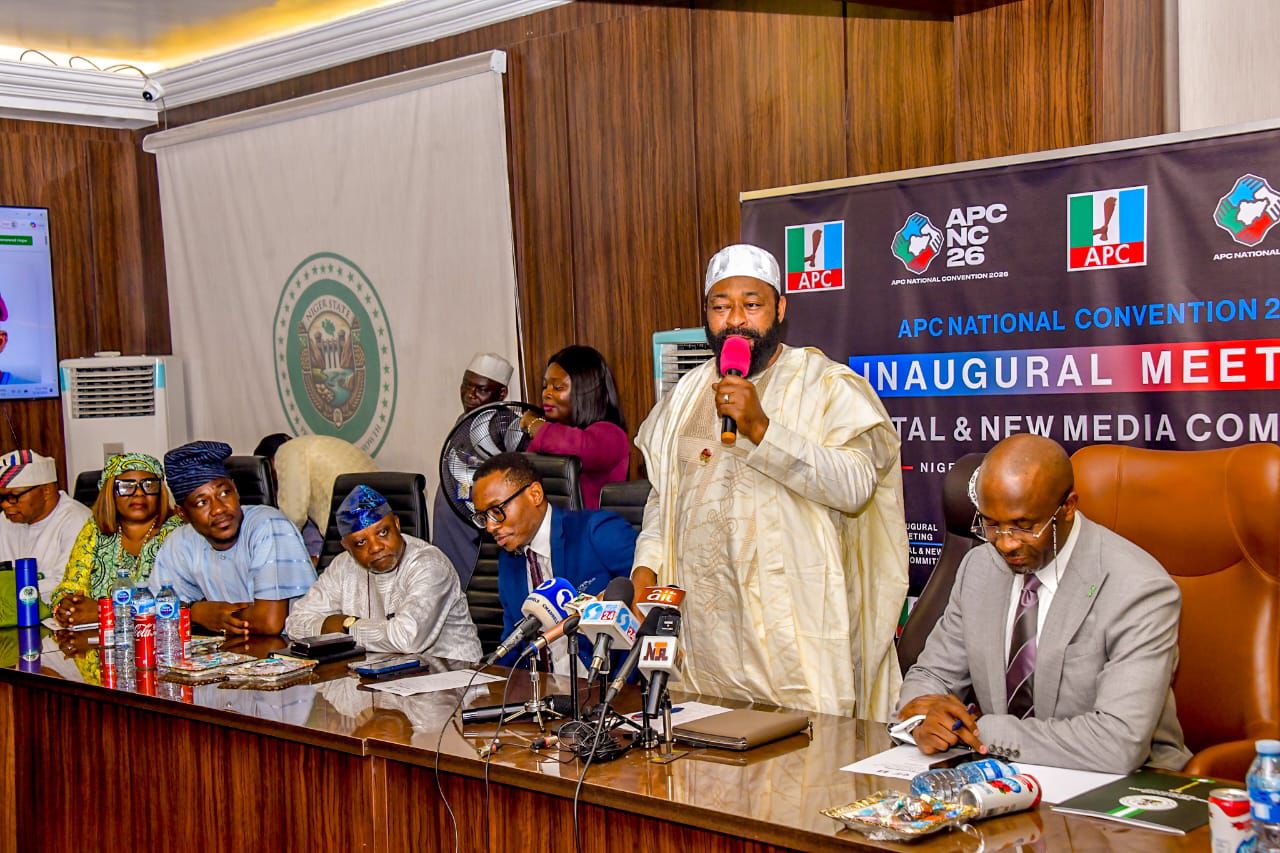
Governor Bago Inaugurates APC Digital Media Sub-Committee Ahead of National Convention.
Governor Umaru Bago has inaugurated the Digital Media Sub-Committee for the forthcoming National Convention of the All Progressives Congress (APC), scheduled to hold on March 27 and 28, 2026 in Abuja.
Chairing the sub-committee, Governor Bago tasked members with the responsibility of effectively communicating the party’s manifesto to the public.
He emphasized the need to leverage social media platforms to highlight the achievements and ongoing efforts of President Bola Ahmed Tinubu, noting that communication gaps have posed challenges that must now be decisively addressed.
The Co-Chair of the sub-committee, Hon. Benjamin Kalu, Deputy Speaker of the House of Representatives, echoed the Governor’s position, urging members to project the activities of both the party and the government to a broader audience.
He called for a deliberate and coordinated effort to showcase the party’s achievements and policy direction, stressing the importance of shaping a compelling and consistent narrative across all digital platforms.
Delivering a presentation to the committee, Otega Ogra, SSA to the President on New Media, who serves as Secretary of the sub-committee, outlined strategic focus areas to guide the team’s operations.
His presentation highlighted communication priorities and actionable steps to achieve the committee’s mandate and strengthen the party’s digital engagement.


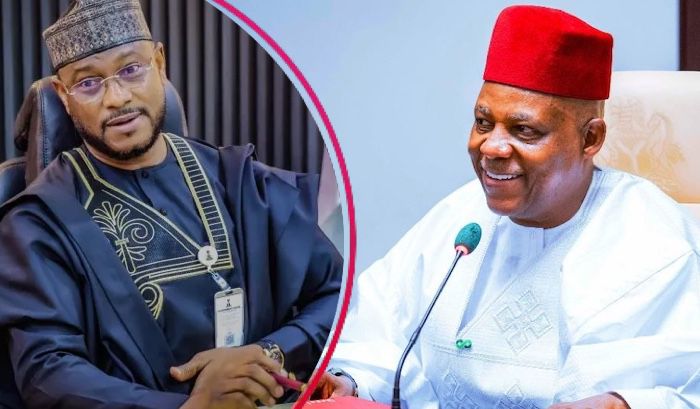
VP Shettima Set to Lead Delegation to Zamfara as Governor Dauda Lawal Formally Joins APC
The Zamfara State chapter of the All Progressives Congress (APC) has finalized plans to receive Vice President Kashim Shettima for the formal defection and reception of Governor Dauda Lawal into the ruling party, scheduled to take place on Tuesday.
State APC Chairman, Tukur Danfulani Maikatako, disclosed this during a high-level stakeholders’ meeting held in Gusau, the state capital. He noted that the Vice President would be joined by the party’s national leadership to mark what he described as a landmark political realignment in the state.
Maikatako expressed the party’s excitement over Governor Lawal’s return, recalling that Zamfara had historically been an APC stronghold and that the Governor was previously a bona fide member of the party before his earlier exit.
“We all know that Zamfara has long been one of the APC’s stronghold states, where the defected Governor was once a bona fide member. Now that he has decided to return home, having been satisfied that the APC remains his second choice after the one he left for obvious reasons,” Maikatako stated.
The Chairman called on all party faithful across the 147 wards in the state’s 14 local government areas to turn out en masse to honour the Vice President’s visit. He emphasized that the event was strategically positioned to bolster the party’s popularity and strengthen its structures ahead of the 2027 general elections.
In a strong appeal for unity, Maikatako urged members to set aside all factional tendencies, stressing that the APC remained one political family with shared goals, particularly the ambition to make Zamfara and Nigeria great again.
Echoing similar sentiments, a former state APC Chairman, Lawal M. Liman, appealed to members to cascade the message to their wards and local government areas. He reinforced the need for cohesion, noting that the party’s collective strength would be critical to achieving success in future elections.

All eyes are now on Gusau as the ruling party prepares for a high-profile political gathering expected to further consolidate its influence in Zamfara State.
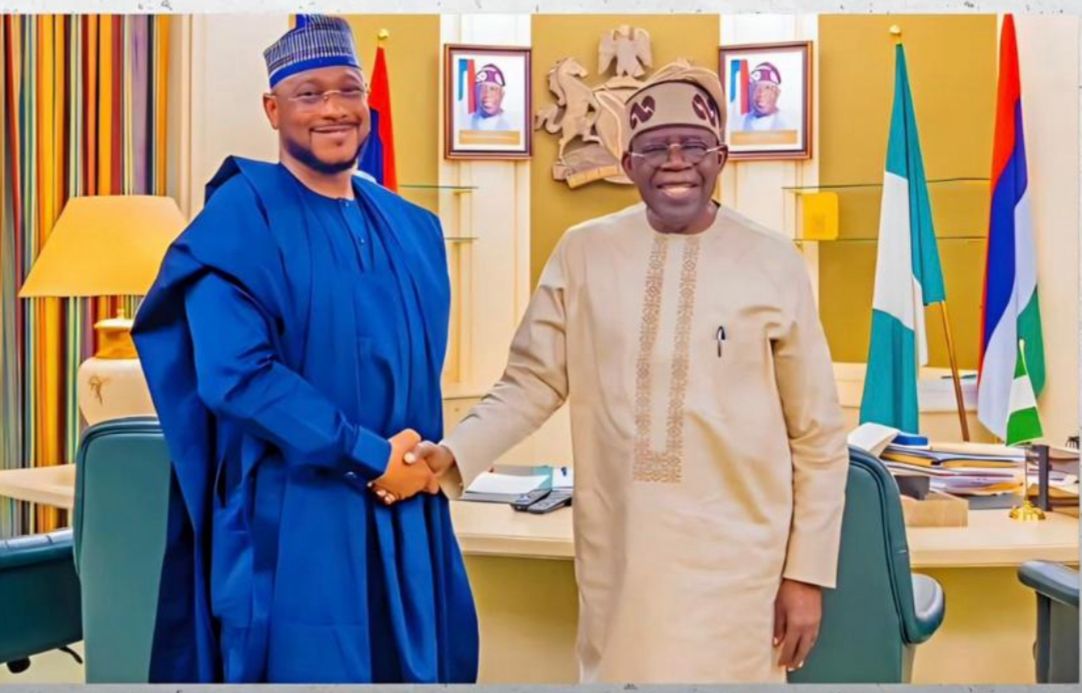
Governor Dauda Lawal Named Part of Presidential Delegation for Historic UK State Visit
Governor Dauda Lawal of Zamfara State has been named as a member of the presidential entourage that will accompany President Bola Ahmed Tinubu and First Lady Oluremi Tinubu on a historic two-day State Visit to the United Kingdom.
According to a statement from the Zamfara State Government House on Monday, the Governor will depart Abuja for the UK on Tuesday for the visit, which is scheduled to take place on March 18 and 19 at the invitation of the British Royal Family.

During the visit, King Charles III will host President Tinubu, the First Lady, and the Nigerian delegation at Windsor Castle, where they will view a special exhibition of Royal Collection items related to Nigeria. The Royal Family will also host a State Banquet in honour of the Nigerian guests on the evening of Wednesday, March 18.
The presidency has outlined that the purpose of the visit is to strengthen bilateral relations between Nigeria and the United Kingdom. President Tinubu is scheduled to hold talks with Prime Minister Keir Starmer, which are expected to lead to expanded bilateral discussions and the signing of Memorandums of Understanding covering trade, investment, defence, and cultural cooperation.
The President will also serve as the guest of honour at the Nigerian Modernism exhibition, which showcases contemporary art and culture, and will participate in a reception with Nigerian and British business leaders as well as members of the diaspora community.
The Zamfara State Government expressed confidence that Governor Lawal’s participation in the high-level delegation will provide valuable networking opportunities, opening significant prospects for investment and economic benefits for Zamfara State. The visit will also see Governor Lawal display his repertoire of knowledge on global policy and corporate governance and also pitch the Mineral and Farming rich state to potential investors during the bilateral meeting with the UK Prime Minister, Keir Starmer.


-

 society6 months ago
Religion: Africa’s Oldest Weapon of Enslavement and the Forgotten Truth
-

 news4 months ago
WHO REALLY OWNS MONIEPOINT? The $290 Million Deal That Sold Nigeria’s Top Fintech to Foreign Interests
-

 society6 months ago
“You Are Never Without Help” – Pastor Gebhardt Berndt Inspires Hope Through Empower Church (Video)
-

 celebrity radar - gossips2 months ago
Dr. Chris Okafor Returns with Power and Fire of the Spirit -Mounts Grace Nation Altar with Fresh Anointing and Restoration Grace on February 1, 2026