
celebrity radar - gossips
When Private Love Becomes Public Lesson: What Adaobi Alagwu Must Learn From Regina Daniel’s Exit Strategy


*When Private Love Becomes Public Lesson: What Adaobi Alagwu Must Learn From Regina Daniel’s Exit Strategy*
It is an open secret that disgraced baby mama and embattled mistress to Tunde Ayeni, Adaobi Alagwu, represents a generation brimming with opportunity yet prone to mistaking access for achievement and sponsorship for a life plan. She is what critics describe as the outcome of youth mistaking beauty for currency and believing time will always show indulgence. Nowhere is this lesson clearer than when her story is compared with another national marital drama: the recent spotlight on the Ned Nwoko–Regina Daniels household.
When photographs surfaced of Ned, 65, and his mother visiting his children at their boarding school without Regina in the frame, online speculators declared crisis. Rumors multiplied faster than facts, yet the couple weathered the moment with measured silence. Regina Daniels, 25, was no stranger to scrutiny; visibility has always been part of her career. Having grown in the public eye, she understands the cost of avoidable theatrics. Even when her marriage reached its quiet conclusion, she navigated the transition with maturity beyond her years. She did not crumble. She did not cling. She moved forward.
Unlike 30-year-old Adaobi—still frozen in emotional adolescence, turning Ayeni, 59, into a monthly ATM—Regina rewrote her narrative. She preserved her independence, reclaimed her career, and chose dignity over dependency. Her choices reflect a truth Adaobi has yet to grasp: luxury given is never as empowering as luxury earned. A million-naira allowance can thrill, but it quickly becomes a leash, especially when the giver grows embarrassed by scandal.
That is Adaobi’s reality today. She is tethered to a man who has repeatedly denied her, distanced himself from her, and rejected paternity of her daughter, Omarosa. Despite her age and supposed ambition, Adaobi remains a pitiable figure, deeply dependent on Ayeni’s allowances, rent-free living, and access to properties. Friends describe her as bitter and desperate, clinging to financial lifelines while her peers pursue careers, education, and grounded adult lives.
Her reliance is so entrenched that even after public humiliation—leaked intimate videos, online spats, rejection, and police entanglements—she refuses to detach. Instead, she reportedly manipulates narratives, leverages social media, and works hand-in-hand with her mother to maintain relevance in Ayeni’s world.
Now, she is back on a quest to reclaim her place as Ayeni’s mistress, despite him retrieving her bride price, issuing sworn affidavits severing ties, and insisting the relationship was a grave mistake. In those documents, Ayeni accused her of lacking moral discipline, denied fatherhood of her child, and detailed attempts to malign his name. Add the leaked nudes, WhatsApp rumors, defamation runs, and her arrest, and her predicament becomes a full circus of disgrace.
Yet the spectacle continues. Her engagement to Amadi Etinosa, which came after Ayeni repossessed her bride price, has not halted her determination to return to Ayeni’s orbit. Insiders claim she remains committed to restoring her place as his concubine—while Ayeni himself appears to be softening slightly, much to the frustration of those who hoped the drama had ended.
Adaobi’s dependence on Ayeni is not merely financial but psychological. She seems anchored by the belief that her identity is inseparable from a man who continually rebuffs her. As Ayeni distances himself, she doubles down—arranging visits, maintaining proximity, and fighting to retain privileges she should have long forfeited.
What truly damns her story is the absence of personal agency. Rather than rebuild after adversity, she has settled into the role of a kept woman—reactive, passive, and defined entirely by an older man’s generosity. While her contemporaries build careers and reputations, Adaobi’s entire existence revolves around remaining close to money, turning allowances into her only measure of self-worth. This has created a cycle of dependency, embarrassment, and wasted potential.
Adaobi, still young enough to reinvent herself, does not see the opportunity slipping away. She is fixated on the next half-million or million naira rather than the next certificate, business, or career milestone. Each month brings anxiety over allowances instead of the confidence of personal earnings. She has built no structure—financial, professional, or emotional—that can outlive Ayeni’s mood swings. She has not learned that dependency stunts growth.
Regina, on the other hand, understood this early. She cultivated relevance beyond marriage and built networks not tied to a man’s affection. When the winds shifted, she did not crumble; she adapted. Intentionality became her defining trait. Her story is a roadmap for young women: potential means nothing without direction. Monthly allowances disappear into hair, travel, emergencies, and online shopping. Investments, skills, and businesses last.
Regina used her resources as seeds, not shows. The result is a transformation that even older women respect. She never labored under the illusion that marrying wealth was a career. She embodied the modern woman who can partner with power without losing herself. And when her marital path reached its natural end, she walked forward with purpose.
Thus, the contrast between Regina and Adaobi is not age, beauty, or circumstance—it is substance. Regina always understood she had a future to protect, a name to defend, an identity to maintain. Adaobi has never demonstrated that grounding—in ambition, vision, or discipline.
Youth cannot excuse it. Regina is younger yet far more self-aware.
Ayeni himself is central to this cautionary tale. His narcissism and manipulation fuel a dynamic that survives only because Adaobi remains the perfect victim—directionless, insecure, and prepared to cling to anyone who can give her fleeting relevance. To many observers, she seems trained into dependency. Even Amadi’s unexpected willingness to engage her could not save her, because a woman without identity inevitably gravitates toward chaos.
Ned chose Regina: a woman not easily silenced or reduced. Ayeni chose Adaobi: a woman eager to obey, cling, and collapse. Regina speaks loudly because she has a voice; Adaobi is quiet because she has no center. Regina can walk away because she has her own world; Adaobi stays because she has nothing else.
Regina’s choices are instructive not because she is famous but because she chose self-determination over gossip, pity, and dependency. She designed a future in which she could never become emotionally stranded or financially helpless.
Adaobi, by contrast, is now known not for brilliance or entrepreneurial promise but for waiting on credit alerts. That reputation is bleeding her dry—eroding professional opportunity, social capital, and dignity. She is transitioning from partner to liability.
Ayeni, too, is paying a price. A man of his age and status should not be learning through public humiliation, yet he has allowed personal missteps to contaminate his professional reputation. Old allies no longer invite him to meetings. Business partners avoid association. Respect, once lost, takes longer to rebuild than money.
Even Ned Nwoko learned early that private appetites require discretion. The digital age permits no leniency. Ayeni, unfortunately, let private matters spill into public corridors where reputation is currency.
Regina’s exit from her marriage serves as a lesson. She did not wait to become stained by scandal. She controlled her narrative.
Adaobi should ask herself a simple question: If the alerts stop today, who is she? A woman without direction is a kite tied to someone else’s fist; a woman with purpose is a bird that needs no rope.
Every month that Ayeni funds her survival, he stunts her evolution. She has not asked more of life. Her existence revolves around consumption instead of creation. This is not partnership; it is dependency wrapped in luxury aesthetics.
Ayeni must also realize that men of influence live under scrutiny. Personal indulgence inevitably becomes public record. Many powerful men have watched their empires crumble due to unchecked appetites. Ayeni edges closer to that cliff.
Adaobi, on her part, must eventually understand that womanhood is more than waiting for a bank message. She could practice law, pursue further studies, start a business, build skills, explore trade, or cultivate a personal brand. She could look to Regina not as a rival but as a model. Regina embodies the truth that femininity and ambition are compatible, that youth fades but reputation endures, and that allowances are never equal to a future.
Love is beautiful, youth is beautiful—but neither are life plans. Regina learned this early. Adaobi must learn it soon. And Ayeni must understand that the world is watching, not because love is scandalous, but because reputation is fragile and relevance requires discipline.
Reinvention is still possible for both Adaobi and Ayeni—if they choose the maturity, clarity, and independence that Regina embraced.
The future belongs not to those who wait for allowance alerts, but to those who build something that outlives love itself.




celebrity radar - gossips
Adron Homes Celebrates Visionary Chairman, Aare Adetola Emmanuel King, at 51
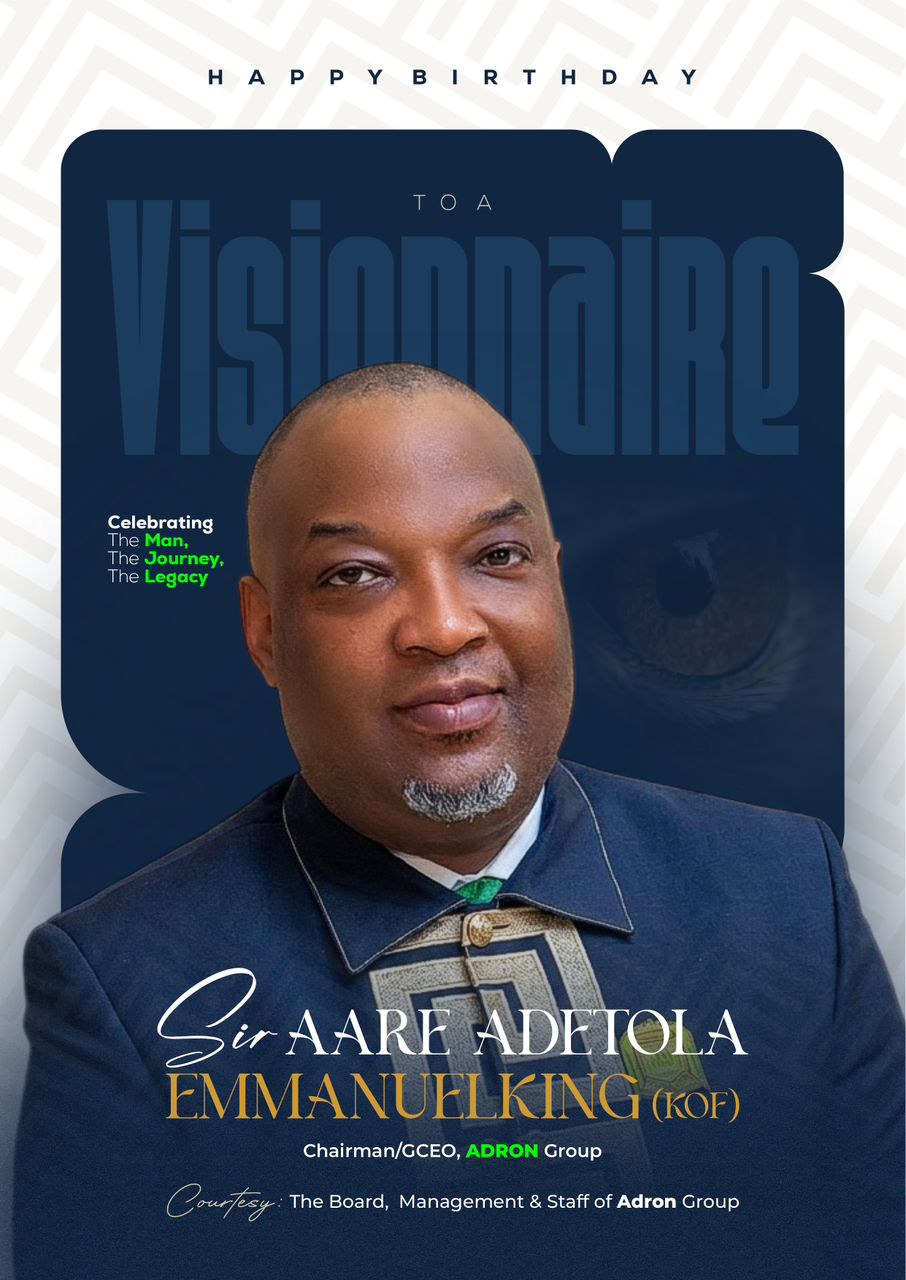
Adron Homes Celebrates Visionary Chairman, Aare Adetola Emmanuel King, at 51
The management and staff of Adron Homes and Properties Limited have joined family, friends, associates, and well-wishers across the globe to celebrate their Chairman and Chief Executive Officer, Aare Adetola EmmanuelKing, as he marks his 51st birthday.

In a statement released by the company, the milestone was described as a celebration of an exceptional leader whose vision, resilience, and entrepreneurial brilliance have not only transformed Adron Homes into a household name in Nigeria’s real estate sector but have also redefined affordable housing across the country.
Under his dynamic leadership, Adron Homes has continued to expand its footprint, delivering value-driven residential solutions while empowering thousands of Nigerians with opportunities for home ownership. His commitment to excellence, innovation, and customer satisfaction has remained the driving force behind the company’s sustained growth and industry leadership.
The statement further highlighted Aare EmmanuelKing’s passion for nation-building and community development, noting his significant contributions to job creation, youth empowerment, and the promotion of socio-economic development through real estate investments.
“As a leader, mentor, and visionary, Aare Adetola EmmanuelKing has consistently inspired a culture of excellence, integrity, and dedication within the organization. His ability to turn bold ideas into reality continues to position Adron Homes as a trailblazer in the industry,” the statement read.
The company expressed profound gratitude for his steadfast leadership and prayed for continued wisdom, strength, and sound health as he embarks on another year of impactful achievements.
As he celebrates his 51st birthday, the entire Adron Homes family proudly honours a man whose legacy continues to shape the future of real estate in Nigeria.
Happy 51st Birthday, Aare Adetola EmmanuelKing!
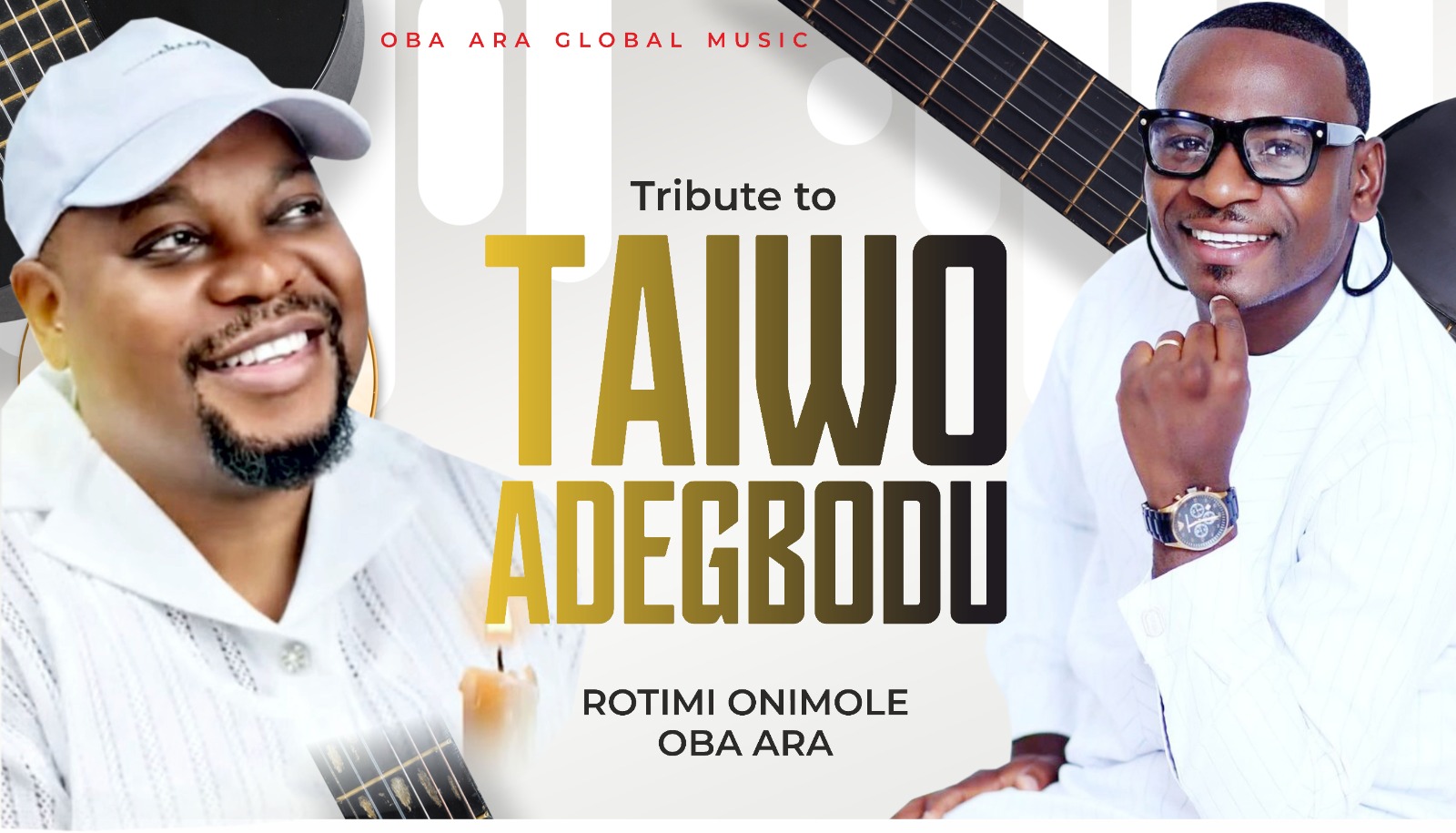
Oba Ara Releases Emotional Tribute to Late Taiwo Adegbodu
Taofik Afolabi
The gospel music community continues to grieve the painful loss of Taiwo Adegbodu, a beloved figure whose sudden departure left a deep void among fans, colleagues, and loved ones. In response to this loss, renowned gospel minister Rotimi Onimole, popularly known as Oba Ara, has released a moving tribute song that captures both the sorrow of the moment and the enduring legacy of the late singer.
Oba Ara, a proud son of Isale Eko, channels raw emotion throughout the song, using heartfelt lyrics and soul-stirring melodies to reflect on his personal connection with Taiwo Adegbodu. In the tribute, he openly expresses how deeply the news of Adegbodu’s passing shook him, describing it as a painful and unexpected loss that is difficult to come to terms with.
The song goes beyond mourning, it celebrates the life, ministry, and impact of Taiwo Adegbodu. Oba Ara highlights the late artist’s dedication to spreading the gospel through music, his inspiring voice, and the spiritual influence he had on many within and beyond Nigeria. Through powerful verses, he paints a picture of a man who lived for God and touched countless lives through his ministry.
Listeners have described the tribute as both comforting and deeply emotional, as it resonates with the collective grief of the gospel music community. It serves as a reminder that although Taiwo Adegbodu is no longer physically present, his music, message, and legacy will continue to live on.
In honoring his late colleague, Oba Ara not only pays his respects but also offers a source of healing for fans and fellow ministers, using music as a tool to process grief and celebrate a life well lived.
celebrity radar - gossips
Buratai, Fagbemi , Shagaya, Olofa, Others Eulogise Olowu Kuta’s Olori On 60th Birthday, Foundation Launch

Buratai, Fagbemi , Shagaya, Olofa, Others Eulogise Olowu Kuta’s Olori On 60th Birthday, Foundation Launch
Eminent personalities across the Nigeria stormed the TFK Event Centre, Bala Mohammed Way, Guzape, Abuja, to celebrate the 60th birthday of Olowu Kuta’s Olori, Queen Jumai Amoke and her Foundation Launch on Saturday 28, March 2026.

From former Chief of Army Staff, Lt Gen TY Buratai rtd, to the Minister of Justice and Attorney-General of the Federation, Prince Lateef Fagbemi; Olofa of Offa, HRM Oba Mufutau Gbadamosi. Even top businesswoman and socialite, Chief (Mrs) Bola Shagaya, was in attendance.


Other dignitaries were newly promoted Deputy Inspector-General of Police and former AIG Zone 2 , Lagos , Adegoke Fayoade, Major General Abdumalik, Major General Samuel Adebayo rtd (Fmr CDI);
Major General Anthony Omozoje rtd (Fmr Copp);
Alhaji Tajudeen Owoyemi (Asiwaju of Offa and CEO Radisson Hotel Nigeria;
Dr Waheed Olagunju, former managing director of Bank of Industry, Oniba of Iba, Lagos State, HRM Oba Dr Suleiman Raji ;
Justice Falola, Olu of Ile-Ogbo , Oba Adetoyese amongst many traditional rulers and captains of industry too numerous to mention.
Speaking at the occasion, the Chief Host, Olowu of Kuta, HRM Oba Dr Adekunle Oyelude Makama, CON , Tegbosun iii, who is also the husband of the celebrant commended Queen Jumai for ‘ her slender arms full of kindness’ to establish such humanitarian Foundation, ‘Amoke Children and mother in Need Foundation’ at a time Nigerians are going through economic crisis occassioned by the global meltdown.
Olowu also commended her steadfastness and love for the less privileged and downtrodden.
The monarch refrenced the task before his wife’s humanitarian gesture said her best is yet to come.
” Olori Amoke Jumai, I celebrate you. You will celebrate 70, 80, 90 and continue to shine as you continue to put a smile on people’s faces. I love you, “Olowu Kuta added.
To Lt Gen Buratai, a former army chief and former Nigerian Ambassador to Benin Republic, the reward of hard work is more work.
Buratai, who also doubles as Balogun Agba of Owu Kuta, a chieftaincy title reserved for a generalismo congratulated Queen Jumai for attaining the age of 60 in good health.
The retired army General said he’s not surprised by the turn out of eminent personalities across the country to celebrate the Olowu Kuta’s Olori because she merited it through her hospitality to all, adding that Allah the most merciful, most beneficial would accept all her act of ibadah.
The minister of Justice, Prince Fagbemi, was full of praises for Queen Jumai for deeming it fit to have a place in her heart to accommodate the needy and less privileged in ‘our society.’
Prince Fagbemi urged the guests to contribute generously to support the Foundation in order to continue to alleviate poverty and put a smile on the faces of the people.
” I congratulate you on your 60th birthday and Foundation Launch. I wish you many happy returns of the day and many more fruitful services to the country and motherland”, Prince Fagbemi added.
The celebrant, Queen Jumai who was grining from ear to ear thankfully said she was excited by the turn out and the response of the people to her foundation.
Queen Jumai, however, promised to continue to use her resources and donations received for the good of the needy and less privileged in the society.
” I want to appreciate my own Kabiesi Olofa of Offa , for his presence and im I’m using him as a point of contact to all other Kabiesis present here, the minister of justice and Attorney-General, you’re welcome, sir; Mrs Bola Shagaya, I salute your enterprise, Lt Gen Buratai, I’m grateful, sir; DIG Fayoade, Justice Falola and other dignitaries too numerous to mention, I thank you, all. To my darling husband, Kabiesi Olowu , I thank you immensely for your support. And to my family and friends, I thank you , all. E se pupo!”, she said.


-

 society7 months ago
Religion: Africa’s Oldest Weapon of Enslavement and the Forgotten Truth
-

 news4 months ago
WHO REALLY OWNS MONIEPOINT? The $290 Million Deal That Sold Nigeria’s Top Fintech to Foreign Interests
-

 society6 months ago
“You Are Never Without Help” – Pastor Gebhardt Berndt Inspires Hope Through Empower Church (Video)
-

 celebrity radar - gossips2 months ago
Dr. Chris Okafor Returns with Power and Fire of the Spirit -Mounts Grace Nation Altar with Fresh Anointing and Restoration Grace on February 1, 2026