
society
When Silence Became Policy: The Case for Rethinking Nigeria’s Unity. By George Omagbemi Sylvester

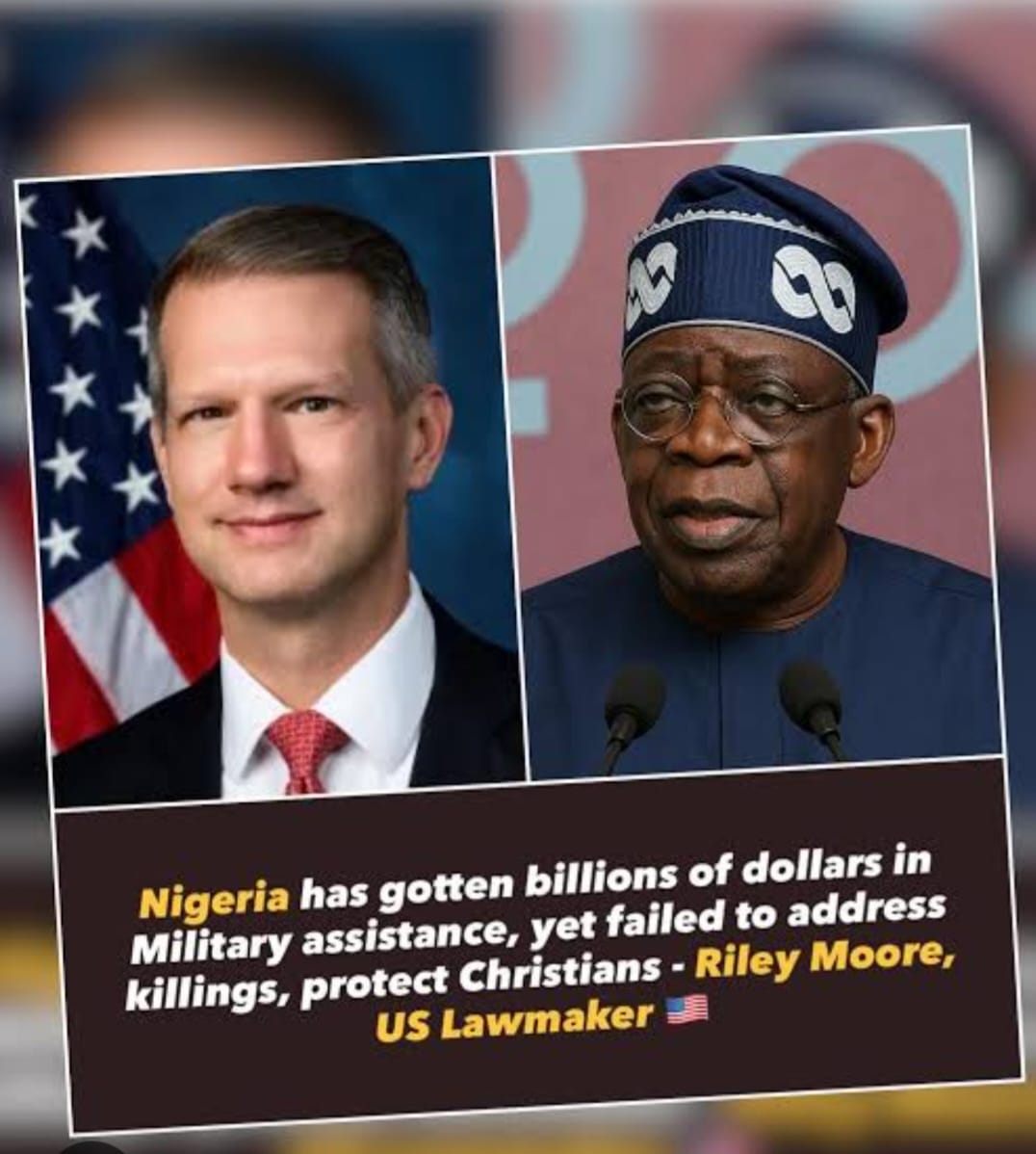
When Silence Became Policy: The Case for Rethinking Nigeria’s Unity.
By George Omagbemi Sylvester | Published by SaharaWeeklyNG.com
“From Unheard Appeals to External Proposals. A Nation at the Crossroads”
Nigeria today finds itself in a swirling vortex of political discord, moral contradiction and public skepticism. a nation where appeals for peace were too often met with indifference, where allegations of mass violence were muted by the very authorities expected to respond and where leadership remained silent amid rising tensions that threatened the country’s stability. Now, when an external actor (United States Deputy Secretary of State Railey R. Moore) suggests examining Nigeria’s political architecture and even entertains the idea of PARTITION as part of long-term stability planning, the federal government swiftly denounces such proposals and pronounces empty rallies for “unity.”
This juxtaposition (between past silence and present outrage) has left many Nigerians questioning whether unity should be a given, or whether it must be earned through consistent justice, national integrity and equitable governance.
The Silence That Echoed Across the Nation. When Nigerians appealed for genuine peace amid rising violence in various regions in the past, the responses from the authorities was often either slow, ambivalent or superficial.
In communities across the North, cries that sounded alarm bells over what some local voices described as ethnoreligious targeting went largely unaddressed at the national level. Scholars such as Wole Soyinka have warned against dismissing local security alerts simply because they are politically inconvenient. As he has written, “Indifference to local distress today becomes the broader apathy of national character tomorrow.” Yet, the lack of proactive federal engagement only reinforced public frustration.
Similarly, when high-profile figures such as Turji Bello (known for militancy in parts of northern Nigeria) were reported to be implicated in violence against civilian populations, the official response was perceived by many as too muted, too slow and too politically calibrated to serve immediate optics rather than justice. For numerous Nigerians (especially those directly affected) such omissions were far from “neutral.” They were betrayals of moral responsibility.
At the same time, mediators like Sheikh Ahmad Gumi were sent to negotiate the release of kidnapped civilians, even as families questioned why state power was not marshaled more forcefully to protect them. The optics of negotiated settlements (and of negotiated silence) left deep emotional and political scars.
When leadership remains silent in the face of mounting distress, the consequences extend beyond immediate insecurity. They erode trust, which is the foundation of any cohesive nation.
The Railey Moore Proposal: Catalyst or Controversy? Against this backdrop comes the US diplomatic suggestion put forward by Deputy Secretary of State Railey R. Moore: a call to reassess Nigeria’s national framework and entertain dialogue on structural reforms (including federal restructuring) to better reflect the aspirations and security needs of its regions.
Although, before we proceed, it is crucial to state unequivocally that no credible international actor has formally called for an immediate PARTITION of Nigeria. Instead, what Moore suggested in diplomatic engagements was intellectual consideration of structural reforms and an encouragement, not an imposition. However, national spin doctors and political opportunists seized on selective framing, pronouncing it a “CALL FOR BREAKUP” and turning it into a rallying cry for nationalistic sentiment.
In a press statement, the Nigerian government rejected the notion of division, reaffirming commitment to national unity, though yet failed to acknowledge the HISTORICAL context that has led citizens to even consider such ideas.
Political scientist Professor Kunle Adebayo has stated that “Unity imposed without justice and equitable participation becomes a brittle unity, vulnerable to fracture when tested.” This reflects a fundamental political truth. Families do not hold together simply because they share geography; they stay together because they share justice, opportunity and mutual respect.
Unity Without Justice: A Fragile Construct. Is it not hypocritical to decry external suggestions for structural assessment when internal voices have long called for reform?
Nigeria’s federal structure (born at independence and modified through military and democratic transitions) has struggled to balance the tensions between centralization and regional autonomy. The creation of states, local government divisions and revenue-sharing formulas were all intended to give voice and agency to diverse ethnic, cultural and religious groups. Yet persistent governance failures have meant that many Nigerians increasingly feel excluded.
Economist Dr. Aisha Bello once remarked, “If a nation’s unity does not translate to shared prosperity and security, it becomes a slogan rather than a lived reality.” This point cannot be understated. When regions feel marginalized in terms of security, economic development and political representation, unity becomes an abstract ideal rather than a practical foundation.
The reaction to Deputy Secretary Moore’s comments reveals this tension starkly. Government representatives denounced the idea without engaging its substantive points. They invoked national pride, yet did not seize the opportunity to explain how ongoing governance reforms would address Nigerians persistent concerns.
For many youths, activists and regional leaders even more especially those in the Middle Belt, the South-South and certain Northern communities, the reaction smacked of performative patriotism. It was unity for optics, not unity grounded in reform.
Should Nigeria “Go Its Separate Ways”? Here we must be absolutely clear: Advocating for informed structural dialogue is not advocating for dissolution of the state. The question should never be about breakup or preservation alone, but it should instead focus on how Nigerians can live together justly and productively.
The suggestion to examine federal arrangements is not unique to Nigeria. Federal states around the world (including Canada, Spain and Belgium) have undertaken constitutional reforms to reconcile diversity with unity. These are conversations of maturity not weakness.
The philosophical foundation for any serious discussion about Nigeria’s structure comes from the principle that a nation must serve all its citizens equitably or it fails its own social contract. Historical grievances, economic inequalities and security asymmetries cannot be dismissed merely with patriotic slogans.
Reform does not equal secession. Federation does not equate to fragmentation. What it means is listening to voices that feel unheard, restructuring governance to be more inclusive and ensuring that unity is not merely a concept, but a daily practice.
Global Perspectives on Internal Reform. International scholars have often reinforced this point.
Political theorist Dr. Francis Fukuyama wrote that “nations enduring internal conflicts must be willing to reform institutions to reflect the diverse needs of their people, rigid insistence on old frameworks only deepens division.” This insight affirms that reform is not external meddling. It is modern governance.
Similarly, Nigerian legal scholar Professor Itse Sagay emphasized that “the sustainability of any nation is determined less by its borders and more by the justice embedded within its constitution and institutions.” This wisdom cuts to the heart of the matter: borders may hold on a map, but justice holds a people together.
What Nigerians Should Demand Today. If the objective is a stronger, more peaceful Nigeria, then the demands must be clear:
Transparent National Dialogue: Initiate open, inclusive national debates on structural reform, not in secrecy, not on social media soundbites, but through legislated frameworks that involve citizens, experts and civil society.
Security Recalibration: Address regional security asymmetries honestly, without denial or politicization. Communities deserve protection as a basic right not a negotiable luxury.
Equitable Resource Distribution: Revise revenue allocation formulas to ensure that regions contribute to and benefit from national wealth fairly, reducing perceptions of extraction without return.
Justice for All: Strengthen the justice system to ensure that allegations of human rights abuses (regardless of perpetrator) are investigated and adjudicated fairly.
Educational and Economic Opportunities: Invest in regions that have been historically marginalized. Economic inclusion is more powerful than patriotic chants.
Final Take: Unity Through Reform, Not Denial. Nigeria’s destiny should not be held hostage by fear of conversation. Unity that denies grievances is not unity, it is suppression. Unity that embraces justice, reform and inclusion is sustainable.
The reaction to Railey Moore’s proposal illustrates a critical national moment: Nigeria can either confront its challenges with honesty and courage or it can retreat into slogans that serve no one.
As Professor Chinua Achebe once wrote, “The trouble with Nigeria is simply and squarely a failure of leadership.” Leaders must show courage by inviting dialogue not suppressing it. Citizens must demand that unity be real not rhetorical.
The real question for Nigeria today is not whether citizens should accept or reject suggestions from abroad, but whether the nation has the courage to reform itself from within.
If Nigeria truly desires unity (not just in word, but in deed) then it must be willing to face its challenges squarely, debate structural reform openly and ensure that the promise of Nigeria is a promise kept for every Nigerian.





FOPCHEN Seeks Wider Engagement As Court Defers Hearing
OTA, OGUN STATE — The High Court of Ogun State, Ota Division, on Thursday resumed hearing in the ongoing matter involving cultural and societal concerns, before adjourning proceedings till Thursday, July 2, 2026, for continuation of hearing.
At the resumed sitting on May 28, 2026, counsel representing the various parties revisited key issues in the case and made further submissions before the court.
The matter, which has continued to generate public interest across different sectors, again drew attention from legal observers and stakeholders who described the case as one with significant implications for societal values, cultural identity and constitutional interpretation.
Speaking after the proceedings, the Foundation for the Protection of Cultural Heritage in Nigeria, popularly known as FOPCHEN, renewed its appeal for dialogue and constructive engagement among Nigerians, stressing that sensitive cultural and moral issues should not be left entirely within the confines of the courtroom.
According to the group, broader conversations involving traditional institutions, civil society organisations, religious leaders and policy stakeholders remain necessary in addressing issues relating to national values and social responsibility.
Legal analysts at the court premises noted that arguments being canvassed by parties in the suit could shape future legal interpretations surrounding cultural and moral questions in the country.
Following submissions by counsel, the presiding judge adjourned the matter till Thursday, July 2, 2026, to enable parties further prepare and respond to issues raised during the hearing.
The development has continued to spark reactions among observers, with many Nigerians closely monitoring the proceedings ahead of the next hearing date.
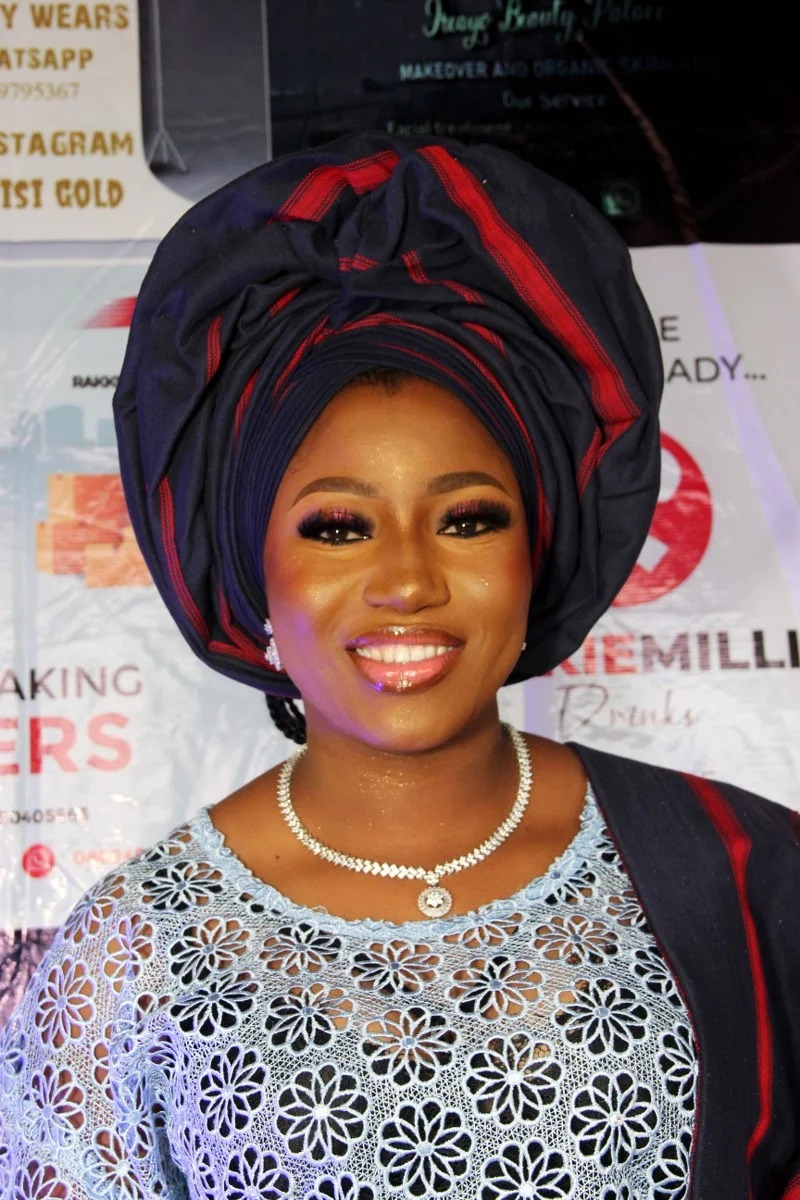
US-Based Society Lady, Fehintola-Brat Extends Eid-El-Kabir Greetings To Muslims
United States based fahionista of class, Chief (Mrs) Ayoola Fehintola-Brat has extended a warm greetings to Muslim faithful all over the world on the occasion of the 2026 Eid-El-Kabir celebration.
Fehintola-Brat who is the Balogun Egbe Obaneye Obinrin Akile Ijebu, and the Yeye Asofin of Idenaland in her message to Journalists urged Muslim to continually uphold the enduring values of sacrifice, obedience, faith, and compassion, which are central to the significance of Eid-El-Kabir festival.
A quiet philantropist whose humanitarian services has won her several laurels urged Muslims to use the spiritual occasion to pray for the peace co-existence of Nigerians regardless of religious, social and political leanings stressing that the oneness of the country should not be underplay.
In a related development, she expressed her felicitations to all sons and daughters of Ijebuland on the forthcoming Ojude Oba 2026 celebration, tasking age-groups otherwise known as Regbregbe to be more proactive in giving back to their immediate communities.
According to her, the beauty of the age-groups in Ijebuland is the need to contribute immensely to the development of the land in no small means. “This we will continue to achieve with God on our side”, she concluded.
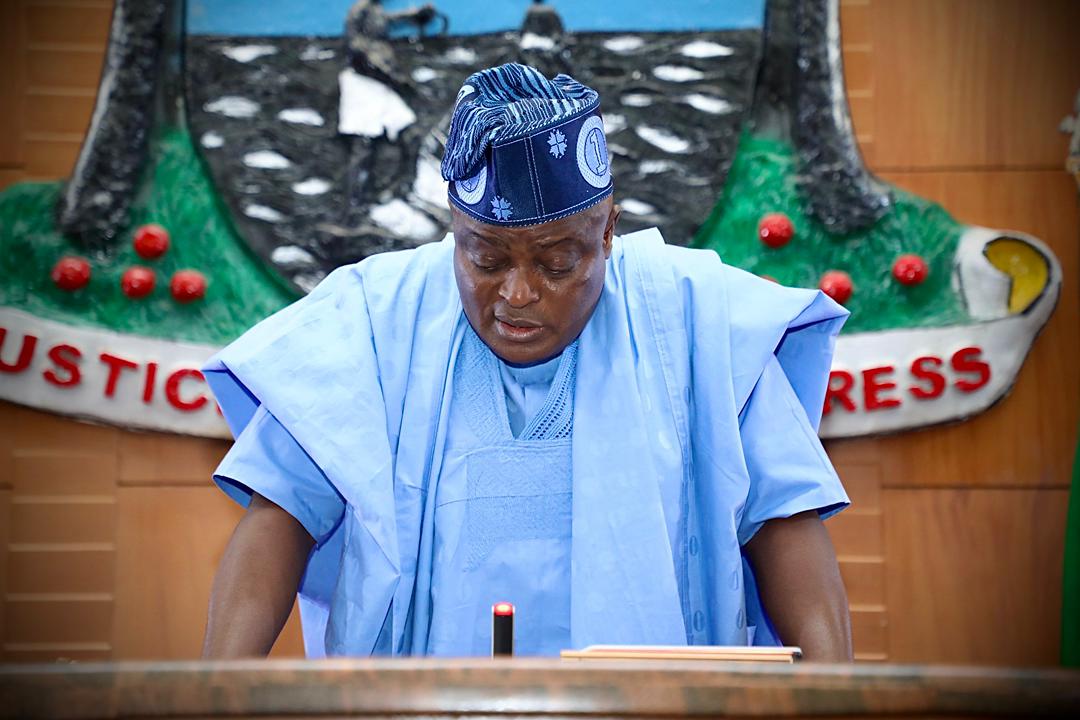
Sallah: Obasa Felicitates Muslim Ummah, Commends Nigerians for APC Primaries Turnout
The Speaker of the Lagos State House of Assembly, Rt. Hon. Mudashiru Obasa has extended warm felicitations to Muslims in Lagos State and across Nigeria on the occasion of Eid al-Adha.
In a statement released by his Chief Press Secretary, Mr. Dave Agboola, Obasa described the festival as a season of sacrifice, reflection, and gratitude, urging the faithful to continue to uphold the values of peace, unity, and love that strengthen the nation.
He noted that the celebration of Eid al-Adha is not only a spiritual milestone but also a reminder of the importance of togetherness and collective responsibility in building a stronger society.
He, likewise, emphasized that the festival provides an opportunity for Nigerians to renew their commitment to national progress and to support leadership that prioritizes development and prosperity.
Obasa, however, commended Nigerians, particularly members of the All Progressives Congress (APC), for their massive turnout during the recently concluded party primaries. He described the participation as a clear demonstration of the people’s confidence in the government of President Bola Ahmed Tinubu and their belief in the administration’s vision for a greater Nigeria.
“The APC primaries have shown the resilience of our democracy and the confidence Nigerians have in the leadership of President Bola Ahmed Tinubu and the Renewed Hope Agenda. This is a strong message that our people are ready to continue supporting policies that will drive growth and prosperity,” Obasa stated.
The Speaker further encouraged Muslims to celebrate responsibly, stressing that the joy of Eid should be accompanied by prayers for the continued peace and progress of Lagos State and Nigeria.
“As you celebrate with family and loved ones, may this season bring joy, peace, and prosperity to your homes. Let us remain united in our resolve to build a stronger nation,” he added.
On behalf of the Lagos State House of Assembly, Obasa wished all Muslims a happy and fulfilling Eid al-Adha celebration.


- Société Nationale des Pétroles du Congo (SNPC) Chief Ominga to Speak at African Energy Week (AEW) 2026 as Congo Accelerates Gas Expansion May 29, 2026
- South Africa: Deputy President Mashatile arrives in India for a Working Visit May 29, 2026
- Seychelles: President Visits Key Development Sites on Coetivy Island May 29, 2026
- Accelerating regional action to advance mental health care in Africa May 29, 2026
- President of the Republic of Seychelles Meets Young La Digue Talent Ahead of London Showcase May 29, 2026
- United Nations Economic Commission for Africa (ECA) launches regional initiative to accelerate women’s digital entrepreneurship across four African countries May 29, 2026
- Ethiopia: International community must act to safeguard press freedom ahead of national election May 29, 2026
- CORRECTION: Annual Meetings 2026 (AM2026): African Development Bank (AfDB) 2025 Trade Finance Report Highlights Resilience of African Financial Institutions After Covid-19 May 29, 2026
- Why Big Tech Could Become Nigeria’s New Gas Partner May 29, 2026
- African Energy Chamber (AEC)-Venezuela Alliance Accelerates Pathways into South-South Energy Expansion May 29, 2026
- Société Nationale des Pétroles du Congo (SNPC) Chief Ominga to Speak at African Energy Week (AEW) 2026 as Congo Accelerates Gas Expansion May 29, 2026
- South Africa: Deputy President Mashatile arrives in India for a Working Visit May 29, 2026
- Seychelles: President Visits Key Development Sites on Coetivy Island May 29, 2026
- Accelerating regional action to advance mental health care in Africa May 29, 2026
- President of the Republic of Seychelles Meets Young La Digue Talent Ahead of London Showcase May 29, 2026
- United Nations Economic Commission for Africa (ECA) launches regional initiative to accelerate women’s digital entrepreneurship across four African countries May 29, 2026
- Ethiopia: International community must act to safeguard press freedom ahead of national election May 29, 2026
-

 news6 months ago
WHO REALLY OWNS MONIEPOINT? The $290 Million Deal That Sold Nigeria’s Top Fintech to Foreign Interests
-

 society4 weeks ago
SOCIAL MEDIA IS NOT A BATTLEFIELD COMMAND – WHY THE NIGERIAN ARMY’S ACTION AGAINST JUSTICE CRACK IS A NATIONAL SECURITY IMPERATIVE
-

 celebrity radar - gossips4 months ago
Dr. Chris Okafor Returns with Power and Fire of the Spirit -Mounts Grace Nation Altar with Fresh Anointing and Restoration Grace on February 1, 2026
-

 celebrity radar - gossips6 months ago
Prophet Kingsley Aitafo Releases 2026 Prophecy: ‘Nigeria Will Rise, but the World Must Prepare for Turbulence’