
Business
WHO D-G Election: How Ethiopian Tedros’s Track Records Makes Him Best Man For The Job

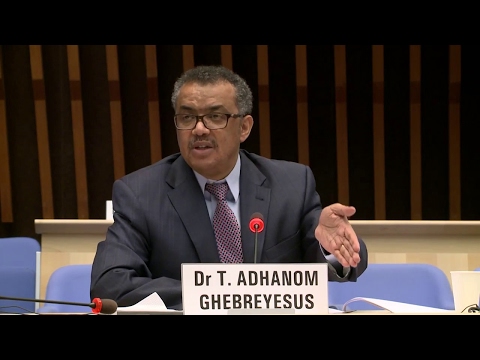

This May, at the 70th World Health Assembly, the new Director-General of the World Health Organization (WHO) will be elected by Health Ministers of Member States.
The race for the plum job couldn’t come at a more crucial time for the WHO, considering its failures during the Ebola epidemic, which hit several countries around the World. Thus, the WHO needs urgent reforms, if it is to make the impact globally. With a future pandemic inevitable, the WHO really needs needs reforms at this auspicious point in time.
It could be recalled that Names of candidates for the next Director-General nominated by Member States were announced on 23 September 2016.
In October 2016, Member States and candidates were given the opportunity to interact in a password-protected web forum hosted on the WHO website.
On 1–2 November 2016, a live forum was held, at which candidates presented their vision to WHO Member States and were also able to answer questions on their candidacy. The candidates’ forum was webcast on the WHO website in all official languages.
Then In January 2017, WHO’s Executive Board drew up a short list of 5 candidates. Executive Board members then interviewed these candidates and up to 3 of them are to go forward to the World Health Assembly this May 2017. The man who emerges new Director-General, will take office on 1 July 2017.
THE CANDIDATES
There are three candidates left in the race to lead the WHO.
They are Dr. Sania Nishtar, a Pakistani National. Nishtar has a unique combination of experience as minister, civil society trailblazer, leader in multilateral institutions, physician scientist, thought leader, and founder of institutions.
Another candidate is Dr. David Nabarro from the Great Britain. Nabarro has extensive experience in the field of international public health. He is a fine international civil servant.
But by convention the five permanent members of the United Nations Security Council, of which Britain is one do not supply the heads of such agencies as the WHO.
It’s expedient to state that Health Ministers of Member States must now look the way of Dr. Tedros Adhanom Ghebreyesus, an Ethiopian National, born March 3, 1965.
Reason being that if elected, Dr. Tedros would be the first African and first Health Practitioner to head the WHO. This is no mean feat, therefore the world must throw their weight behind this cerebral man who has the potential and the ability truly to transform the WHO. By doing so, there would be massive improvement to the health of billions of people around the world.
The new WHO leader needs to have demonstrated clear success in building up access to healthcare in poor countries.
Proven leadership in reforming important global agencies will be helpful and, crucially, the new leader will need political skills to bring together very different interest groups so that real change can be achieved.
Without much ado, Tedros possess the track record that the WHO needs at this critical point in time, having distinguished himself over three decades as a performing leader who has saved and improved lives in Africa and around the world.
HIS NOTABLE ROLES AND QUALIFICATION
It is apt to state that Dr. Tedros has over the last three decades of his professional career in public health held the several portfolios and performed key roles at different points towards improving the lives of Africans and people around the globe. Among them include:
* Minister of Foreign Affairs, Ethiopia
* Minister of Health, Ethiopia
* Chair, Global Fund to Fights AIDS, Tuberculosis and Malaria Board
* Chair, Roll Back Malaria Partnership Board
* Co-Chair, Partnership for Maternal, Newborn and Child Health Board
* Ph.D. in Community Health, Master of Science in Immunology of Infectious Diseases
* Globally recognised expert and author on health issues, including health workforce strengthening, emergency responses to epidemics, and malaria
PROFILING TEDROS ADHANOM GHEBREYESUS
Tedros Adhanom Ghebreyesus has a distinguished health leadership, political and diplomatic career, spanning almost 30 years. He is currently the Minister, Special Advisor to the Prime Minister of the Federal Democratic Republic of Ethiopia and also serves as a Member of Parliament.
Prior to his current appointment, he served as Minister of Foreign Affairs from November 2012 – November 2016. Dr. Tedros has dedicated most of his career to leadership and service within Ethiopia’s Ministry of Health, where his outstanding contributions led to his appointment as Minister of Health in October 2005.
As Health Minister, Dr. Tedros spearheaded a comprehensive agenda of reform which resulted in a dramatic transformation of Ethiopia’s health system in a span of just seven years. By investing in critical health infrastructure, building the health workforce and initiating pioneering financing mechanisms, he helped expand health care access to tens of millions of Ethiopians, achieving ambitious health targets, and setting Ethiopia on a path to sustain and expand this success.
Today, Ethiopia stands as a global model for effective health system reform and governance and as an inspirational story of successful African-led development.
Dr. Tedros’ specific achievements in health leadership and diplomacy at both the national and international levels are highlighted below:
1. Improving health outcomes for millions of Ethiopians through a comprehensive sector-wide reform agenda
2. Expanding Access to Universal Health Care: When Dr. Tedros was appointed Minister of Health, there were only 600 health centers to serve Ethiopia’s entire population of 76 million. Dr. Tedros’ initiatives led to the construction of more than 3,500 health centers and 16,000 health posts—dramatically expanding access to basic health care and helping Ethiopia achieve its target of reducing child mortality by two-thirds between 1990 and 2015.
During the same period, new HIV infections also fell by 90%, malaria-related mortality by 75% and mortality from tuberculosis by 64%.
3. Putting Women and Girls First: Establishing the Revolutionary Health Extension Programme (HEP): Foundational to Ethiopia’s dramatic expansion of access to health care and achievement of its ambitious targets, was the flagship HEP.
Dr. Tedros recognized that millions of Ethiopian women either had no access to health services or were choosing not to seek care, largely because few of the limited health workers available were women.
His response was the roll-out of HEP, which trained and deployed 38,000 health workers—the vast majority of them women. HEP revolutionized health service delivery throughout the country by fostering more assertive care-seeking behavior among women, on behalf of themselves and their families.
By linking leaders at the global, national, regional, and district levels with women’s groups in every village across the country, Dr. Tedros leveraged the HEP platform to realize his overarching vision of building a sustainable health system with women at its core. Today, Ethiopia’s HEP model of community-based health service delivery is being replicated in more than a dozen countries.
4. Reforming Health Financing: Under Dr. Tedros’ leadership, the MOH developed innovative health financing mechanisms, including a community and social health insurance scheme that promoted cost- sharing between care seekers, donors and the Ethiopian Government and resulted in increases in both revenue and demand for health services.
5. Building Human Resource Capacity: At the beginning of Dr. Tedros’ service as Minister of Health, there were only three medical schools in Ethiopia, and just one physician for every 30,000 people.
In partnership with the Ministry of Education, Dr. Tedros devised and led the successful implementation of a wide-ranging national strategy for investing in Ethiopia’s health care work force. The dramatic returns on these strategic investments include:
• An almost seven-fold increase in the overall number of health professionals in the country, from 16,500 to 115,000, with every district in the country having at least one appropriately staffed and operational health center.
• A significant, affordable and sustainable growth in the number of medical schools in Ethiopia, from just three—training 120 doctors annually—in 2005, to 33 medical schools training 3,000 doctors today – achieved by leveraging the infrastructure of Ethiopia’s existing hospitals.
• Initiation of a three-year master’s programme that trained and deployed more than 9,000 non- physician clinicians to perform emergency gynecological and obstetric operations, thereby accelerating reductions in maternal and newborn deaths during child birth.
• A significant increase in the country’s disease surveillance capacities, through the establishment of a master’s programme for field epidemiologists and laboratory technicians.
• Initiation of the country’s first master’s level training programme for hospital administrators, and establishment of hospital governing boards to oversee the efficiency and effectiveness of operations, resulting in significant improvements to the management and governance of hospitals and overall patient satisfaction.
6. Improving Pharmaceutical Services and Access to Life-saving Medicines: Recognizing the urgent need to address Ethiopia’s inadequate pharmaceutical services and recurrent stock-outs of essential medicines, Dr. Tedros helped to establish Ethiopia’s Pharmaceutical Supply Fund Agency, instituting transparent and accountable business processes and ensuring the availability of a reliable supply of affordable, quality- assured medicines to all Ethiopians.
7. Transforming the Health Management Information System: Dr Tedros was also instrumental in the transformation of Ethiopia’s inadequate health information system and poor health data collection and use capacities. Under his leadership, the Ministry of Health developed an integrated health information management system which resulted in significant improvements in data collection, monitoring and evaluation. The new system has had the greatest impact at the local level – right at the source of data collection—resulting in more effective use of data for improving service delivery and programme implementation.
8. Promoting Country Ownership and Donor Coordination: Ethiopia’s health system was for years largely beholden to the funding priorities of various development partners. Earmarked funds were designated only for vertical single-disease programmes, neglecting other pressing needs in the health system.
To address this, Dr. Tedros helped institute the pooled MDG Health Fund and the One Plan, One Budget, One Report country-driven roadmap for improving harmonization within the Ethiopian health sector. These efforts enhanced country ownership and resulted in increased donor harmonization and alignment in planning, financing and programming to address key health system strengthening priorities.
This country coordination across the health sector complements similar alignment initiatives in other sectors. Ethiopia, which hosts 27 UN agencies, implements the UN Delivering as One model to coordinate UN programmes at the national level for higher impact. Ethiopia has been closely working with the UN funds, programmes and agencies in the implementation of the six pillars of the Growth and Transformation Plan.
LEADING INTERNATIONAL HEALTH INITIATIVES
Dr. Tedros has also served in prominent leadership roles in a number of major global health organizations and partnerships, leaving an indelible mark on international efforts to tackle the most pressing global health challenges.
His leadership of these governing bodies built upon his track record of success in achieving important health reforms and strengthening country ownership and partner coordination at the country- level. His specific accomplishments in global health governance are set out below:
1. Leading Comprehensive Reform at the Global Fund: In July 2009, the Board of the Global Fund to Fight AIDS, Tuberculosis and Malaria (Global Fund) elected Dr. Tedros as its new Chair for a period of two years, in recognition of his sound understanding of the Global Fund’s unique business model and successful experience in leveraging Global Fund support in reforming Ethiopia’s health system, while adhering to its rigorous performance-based funding metrics.
As Board Chair, his leadership skills were immediately put to the test. At the time of his election, the Global Fund faced an escalating funding shortfall—with estimates as high as US$ 3 billion—threatening to slow tremendous advancements in 140 countries since 2002. Building on his track record of successful system reforms, Dr. Tedros guided the Board to systematically address these challenges in order to ensure the continued success of the organization.
Under his leadership, the Board initiated a comprehensive reform agenda aimed at improving the Global Fund’s financing model with a focus on value-for-money and efficiency; enhancing performance and impact; strengthening national health systems; instituting robust financial management and oversight mechanisms; and promoting the transparency of Global Fund operations and governance. He also succeeded in securing significantly increased financial commitments from the European Commission and other major donors.
2. Elevating Malaria on the Global Development Agenda: Since its founding in 1998 by UN agencies involved in the fight against malaria, the Roll Back Malaria (RBM) Partnership has been a powerful coalition-builder in coordinating action against this deadly disease.
In 2007, Dr. Tedros was appointed as Chair of the RBM Board in recognition of his accomplishments in advancing malaria research, his understanding of the challenges faced by malaria endemic countries, and his success in tackling malaria in Ethiopia as Minister of Health. In 2008, Dr. Tedros worked with Board members to develop the Global Malaria Action Plan— the first comprehensive blueprint for global malaria control and elimination.
Under his leadership, the Board voted to expand its reach beyond African countries to include Asia and Latin America with a view to achieving malaria elimination goals. Throughout his two-year term as RBM Board Chair, he prioritized support for countries in developing successful proposals to the Global Fund and helped mobilize a record US $3 billion to support malaria programmes around the world.
3. Championing Country Ownership at UNAIDS: From 2009 to 2010, Dr. Tedros chaired the Programme Coordinating Board (PCB) for the Joint United Nations Programme on HIV/AIDS (UNAIDS). The PCB serves as the governing body for UNAIDS and its efforts to coordinate global action on the HIV/AIDS epidemic.
Joining the PCB while still serving as Ethiopia’s Minister of Health, Dr. Tedros played a key role in advocating for greater country ownership as a means to accelerating the fight against HIV/AIDS and intensifying the work of UNAIDS in health systems strengthening and HIV prevention. He also oversaw the Implementation of recommendations of the second Independent Evaluation of UNAIDS, which includes the development of a new mission statement to guide its work.
4. Elevating Maternal, Newborn and Child Health on the Global Agenda: From 2005 to 2009, Dr. Tedros served as Co-chair of the Partnership for Maternal, Newborn & Child Health, an alliance of more than 700 organizations in 75 countries. Reflecting his commitment to women and children’s health, Dr. Tedros oversaw the development of a three-year strategic framework that helped raise the profile of maternal, newborn and child health issues at the global and country levels, mobilize more resources, harmonize and scale-up coverage rates for essential interventions and improve leadership and governance.
Dr. Tedros’ global leadership also includes service on the Boards of GAVI, the Vaccine Alliance; the Stop TB Partnership; and the Institute for Health Metrics and Evaluation. In 2007, he served as first Vice-President of the Sixtieth World Health Assembly.
In 2009, he represented Ethiopia as the Chair of the Fourth Conference of Ministers of Health of the African Union (AU) and also served as a member of the High-Level Task Force for Innovative Financing for Health Systems, co-chaired by World Bank President Robert Zoellick and former UK Prime Minister Gordon Brown.
From 2012 -2014, Dr. Tedros served on the Advisory Board for the Ministerial Leadership in Health Program at Harvard University, a joint program between the T.H. Chan School of Public Health and the John F. Kennedy School of Government which provides leadership development for 10-12 serving health and finance ministers from Africa, Southeast Asia, and Latin America annually. In June 2013, Dr. Tedros chaired AIDS Watch Africa in Abuja, Nigeria.
CHAMPIONING HEALTH DIPLOMACY
As Minister of Foreign Affairs, Dr. applied his proven diplomatic and negotiation skills to continue championing global health priorities in bilateral and multilateral forums. He has also been a leader in a paradigm shift in Africa’s political and socio-economic governance and development in order to realize the continent’s long-term agendas:
1. Financing the Sustainable Development Goals: In July 2015, he led the organization of the landmark Third International Conference on Financing for Development, held in Addis Ababa, which convened high-level policy makers from across the world to develop and agree on a new framework for financing the ambitious post-2015 development agenda.
Dr. Tedros contributed as a key consensus builder in view of the divergent and opposing views among delegations. The conference ended successfully with the adoption by 193 UN Member States, of the Addis Ababa Action Agenda.
The agreement marked an historic milestone in forging a global partnership to advance economic prosperity while protecting the environment, and provides countries with a strong foundation for financing their efforts to achieve the Sustainable Development Goals, including health.
Under his leadership, Ethiopia drafted and sponsored a resolution at the 24th African Union Summit in January 2015, which led to the establishment of the African Communicable Diseases Centers with a view to build continental capacity in health research, early detection and avail rapid response to epidemic outbreaks.
2. Responding to Epidemics: In 2014, Dr. Tedros was instrumental in the establishment of the African Union response to the Ebola epidemic in West Africa.
He supported the African Union’s Executive Council decision affirming that travel bans to Ebola affected African countries should be in line with WHO guidelines. Working with the Ministry of Health, Ethiopia sent nearly 200 health workers as part of the African Union team during the Ebola outbreak in West Africa.
3. Strengthening regional social and economic integration: Dr. Tedros became Chair of the Executive Council of the Foreign Ministers of the African Union in 2013. He oversaw the successful celebration the 50th Anniversary of the African Union, which was held in Addis Ababa. He emphasized the need for Africa to focus on issues of economic emancipation, peace and stability, the acceleration of rapid economic growth, governance and democratization.
During his tenure, the AU adopted its First Ten Year Implementation Plan for Agenda 2063 – a roadmap for achieving a prosperous Africa based on inclusive growth and sustainable growth, which has placed health as its centrepiece. In December 2015, he oversaw a successful negotiation with Djibouti towards full economic integration while he led Ethiopia join the Northern Corridor Integration Projects, East African body that strives to stimulate regional integration through hard and soft infrastructure.
4. Fostering regional peace and security: As Chair of Executive Council of Intergovernmental Authority on Development since 2008, Dr. Tedros helped Ethiopia enjoy unprecedented level of cooperation with its neighbours and countries of the region through astute diplomacy.
Dr. Tedros’ skills in negotiation and conflict resolution have also helped resolve regional disputes, such as the agreement between the Federal Government of Somalia and Jubaland Political Actors, which was critical to improving the delivery of the Juba Agreement and provided an important model for regional state formation and upcoming election in Somalia. He also left indelible mark in Nile diplomacy as the country’s top diplomat in the successful negotiation between Ethiopia, Egypt and Sudan over Ethiopia’s Grand Ethiopian Renaissance Dam and the signing of the Declaration of Principles Agreement.
EDUCATION, RESEARCH AND SCHOLARSHIP
Dr. Tedros holds a Doctorate of Philosophy (PhD) in Community Health from the University of Nottingham and a Master of Science (MSc) in Immunology of Infectious Diseases from the University of London (UK).
In 2014, he co-edited the widely acclaimed book “The Labor Market for Health Workers in Africa: A New Look at the Crisis,” which challenged established views on the migration of doctors from Africa.
A globally recognized malaria researcher, Dr. Tedros has contributed to knowledge about malaria, including successful approaches to its prevention and control.
In 1999, he was recognized as the Young Investigator of the Year by the American Society of Tropical Medicine and Hygiene for his community-based research on malaria incidence among children living near dams in northern Ethiopia published in the British Medical Journal. He has published numerous articles in prominent scientific journals on a range of global health topics.
RECOGNITION AND AWARDS
2016: The Decoration of the Order of Serbian Flag – the highest honor that can be bestowed upon a person by the Serbian Presidency.
2015: New African Magazine (UK) Recognition: ‘One of the 100 Most Influential Africans’ (December 2015)
2012: Honorary Fellowship from the London School of Hygiene and Tropical Medicine – the highest honor bestowed by the School to recognize exceptional distinction in international health or tropical
medicine.
2012: Wired Magazine (UK) Recognition: ‘One of 50 People Who will Change the World’ (January 2012)
2011: Jimmy and Rosalynn Carter Humanitarian Award – becoming the first non-American recipient of this award which recognizes individuals for their significant contributions to improve the health of humankind.
SELECTED PUBLICATIONS
2016: Co-author. “Pro–poor pathway towards universal health coverage: lessons from Ethiopia.” Journal of Global Health.
2014: Author, “True Partnership: Working Together to Strengthen Health Systems in Ethiopia” The Work Continues: A Collection of Essays. Clinton Presidential Center.
2014: Author, “The Nile is Symbol of Cooperation and Collaboration.” Global Dialogue Review.
2014: Co-Author, “Time Series Analysis of Trends in Malaria Cases and Deaths at Hospitals and the Effect of Antimalarial Interventions, 2001–2011, Ethiopia.” PLoS ONE.
2013: Co-editor, “The Labor Market for Health Workers in Africa: A New Look at the Crisis.” World Bank Group.
2012: Co-Author, “What Will it Take to Eliminate Preventable Maternal Deaths?” The Lancet.
2012: Author, “In Support of the US Centers for Disease Control and Prevention.” The Lancet.
2011: Co-Author, “Game Changers: Why did the Scale-Up of HIV Treatment Work Despite Weak Health Systems?” Journal of Acquired Immune Deficiency Syndromes.
2011: Co-Author, “Managing Health Partnerships at the Country Level.” Innovative Health Partnerships: The Diplomacy of Diversity. World Scientific.
2010: Co-Author, “Shrinking the Malaria Map: progress and prospects.” The Lancet
2010: Author, “The Global Fund: replenishment and redefinition in 2010.” The Lancet
2010: Author, “Achieving the health MDGs: country ownership in four steps.” The Lancet
2010: Lead Author, “Tuberculosis and HIV: time for an intensified response.” The Lancet
2010: Co-Author, “Rapid Increase in Ownership and use of Long-Lasting Insecticidal Nets and Decrease in Prevalence of Malaria in Three Regional States of Ethiopia (2006-2007).” Journal of Tropical Medicine.
2008: Co-Author, “Responding to the challenge to end Malaria deaths in Africa.” The Lancet.
2008: Co-Author, “Malaria: Efforts Starting to show Widespread Results.” Nature.
2007: Co-Author, “Understanding Barriers to Emergency Care in Low-Income Countries: View from the Front Line.” Prehospital and Disaster Medicine.
2005: Co-Author, “Making the World’s Children Count.” The Lancet.
2005: Co-Author, “Can Source Reduction of Mosquito Larval Habitat Reduce Malaria Transmission in Tigray, Ethiopia?” Tropical Medicine and International Health.
2002: Lead Author, “Schistosome Transmission, Water-Resource Development and Altitude in Northern Ethiopia.” Annals of Tropical Medicine and Parasitology.
2000: Lead Author, “Household Risk Factors for Malaria among Children in the Ethiopian Highlands.” Transactions of the Royal Society of Tropical Medicine and Hygiene.
2000: Lead Author, “The Community-Based Malaria Control Programme in Tigray, Northern Ethiopia. A Review of Programme Set-Up, Activities, Outcomes and Impact.” Parassitologia.
1999: Lead Author, “Incidence of malaria among children living near dams in northern Ethiopia: community based incidence survey.” British Medical Journal.
1999: Lead Author, “Community-Based Malaria Control in Tigray, Northern Ethiopia.” Parassitologia.
1998: Lead Author, “Malaria, Schistosomiasis, and Intestinal Helminths in Relation to Microdams in Tigray, Northern Ethiopia.” Parassitologia.
1996: Lead Author, “Community Participation in Malaria Control in Tigray Region Ethiopia.” Acta Tropica 61.2 (1996)





Fidelity Bank grows gross earnings by 38% to N434.95b in Q1
Fidelity Bank Plc recorded 37.9 per cent growth in gross earnings to N434.95 billion in first quarter 2026 as the international commercial bank continued to expand its core banking market share.
Interim report and accounts of Fidelity Bank for the three months ended March 31, 2026 released at the Nigerian Exchange (NGX) showed that gross earnings rose from N315.42 billion in first quarter 20025 to N434.95 billion in first quarter 2026, representing an increase of 37.9 per cent.
The top-line performance was driven by impressive growth in the bank’s core business operations with interest incomes rising by 22.8 per cent to N314.48 billion in first quarter 2026 as against N256.10 billion in first quarter 2025.
With net interest income at N180.97 billion, the bank closed the period with profit before tax of N92.48 billion. After taxes, net profit stood at N74.47 billion for the three-month period. Earnings per share remained high at N5.69, underlining the capacity of the bank to reward its shareholders.
The balance sheet of the bank also emerged stronger. Total assets crossed the N11 trillion mark to N11.35 trillion by March 2026 compared with N10.46 trillion recorded in December 2025. Customers’ deposits increased from N6.89 trillion to N7.38 trillion. Total equity rode on the back of earnings growth to a 27.5 per cent increase from N1.09 trillion in December 2025 to N1.39 trillion by March 2026.
The first quarter 2026 results further consolidated the strong earnings outlook of the bank, which had successfully completed its recapitalisation amidst impressive earnings performance in 2025.
Fidelity Bank had recorded double-digit growths in interest and non-interest incomes as well as key balance sheet items during the year ended December 31, 2025.
The audited report showed that gross earnings rose from N1.04 trillion in 2024 to N1.52 trillion in 2025, an increase of 45.6 per cent. Interest and similar incomes had grown by 38.7 per cent from N803.1 billion in 2024 to N1.11 trillion in 2025. Fees and commission incomes also rose by 44.7 per cent from N78.4 billion to N113.4 billion. The bank recorded net profit after tax of N242.4 billion in 2025.
The bank’s balance sheet emerged stronger with total assets rising by 18.6 per cent to N10.46 trillion in 2025 as against N8.82 trillion in 2024. Customer deposits increased by 16.1 per cent from N5.94 trillion to N6.89 trillion, reflecting continued franchise strength and an improved funding profile. Net loans and advances meanwhile declined by 2.4 per cent to N4.28 trillion in 2025 as against N4.39 trillion in 2024, attributable to customers paying down on their mature obligations.
The bank had in 2025 strengthened its capital position, with eligible capital rising to N561 billion, above the regulatory minimum of N500 billion for banks with international authorisation. In addition, capital adequacy had remained robust, with Capital Adequacy Ratio of 30.94 per cent by December 2025 as against 23.47 per cent by December 2024.
Managing Director, Fidelity Bank Plc, Dr. Nneka Onyeali-Ikpe, said the first quarter 2026 results reinforced the bank’s strong and resilient business model.
She noted that with the remarkable success of its recapitalisation programme and continuing expansion, Fidelity Bank has entered a new era of growth and impressive returns.
“We are on a stronger footing and confident that we will set new growth records that are reflective of our legacy and the future we are working on,” Onyeali-Ikpe said.
Business
Dangote Refinery Ends Nigeria’s Era of Fuel Import Dependence, Boosts GDP, FX Earnings — EIU
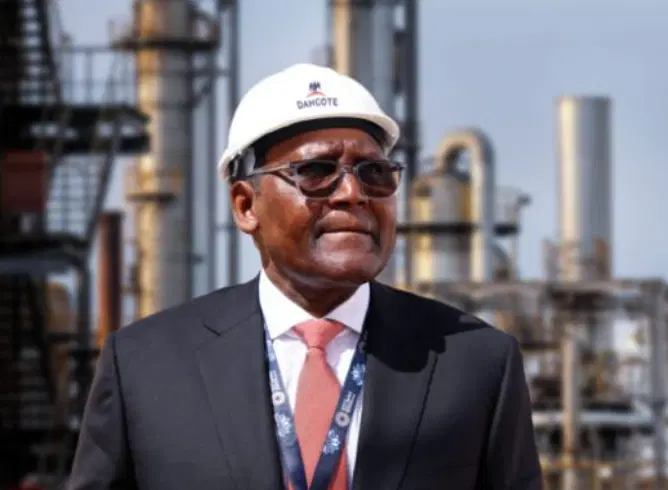
Dangote Refinery Ends Nigeria’s Era of Fuel Import Dependence, Boosts GDP, FX Earnings — EIU
The operational ramp up of the 650,000 barrels per day Dangote Petroleum Refinery & Petrochemicals is fundamentally reshaping Nigeria’s downstream oil sector, significantly reducing the country’s dependence on imported refined petroleum products and strengthening its external position, according to the Economist Intelligence Unit (EIU).
In its latest assessment on Nigeria’s fuel market and regulatory environment, the EIU said the refinery has already transformed a sector that was previously characterised by heavy reliance on imported fuel despite Nigeria being Africa’s largest crude oil producer. The report noted that the refinery met nearly 80 per cent of domestic petrol demand in April and produced enough volumes to satisfy local consumption requirements as operations approached full capacity.
The EIU described Nigeria’s downstream petroleum sector before the refinery as “long dysfunctional”, noting that the country had remained almost entirely dependent on costly imported fuel while producing nearly 1.5 million barrels of crude oil daily.
According to the report, the emergence of the refinery has reduced import dependence, improved domestic fuel availability and strengthened Nigeria’s balance of payments position through lower import demand and rising exports of refined petroleum products.
“The gradual ramp up of the 650,000 barrel/day Dangote refinery since May 2023 has transformed Nigeria’s long dysfunctional downstream sector,” the report stated. “The country’s main refineries, all state owned, had been inoperative for years and Nigeria was almost entirely reliant on costly imported fuel.”
The research and analysis division of The Economist Group, London added that the refinery’s attainment of full operational capacity and its planned expansion would further support Nigeria’s economic growth and foreign exchange earnings over the medium term.
“Meanwhile, the attainment of full capacity at, and an increase in exports from, the Dangote refinery will support real GDP growth and foreign exchange earnings in 2026 and 2027 and beyond, as a planned doubling of the plant’s output comes on stream around the end of the decade,” it added.
Industry analysts said the refinery is increasingly positioning Nigeria as an emerging refining and export hub, altering energy trade flows across Africa and reducing the vulnerability associated with fuel import dependence.
The EIU noted that the refinery’s expansion has coincided with major reforms in Nigeria’s downstream sector, including the removal of fuel subsidies and the introduction of market driven pricing mechanisms.
The report, however, said the transition from a state dominated fuel import structure to large scale domestic refining has triggered resistance from interests linked to the old import regime.
The latest tensions emerged following the decision by the Nigerian Midstream and Downstream Petroleum Regulatory Authority to relax restrictions on petrol imports despite the refinery’s growing capacity to meet domestic demand.
Dangote Industries subsequently initiated legal action, arguing that continued import approvals undermine domestic refining investments and conflict with the objectives of the Petroleum Industry Act, which seeks to encourage local refining capacity and reduce import dependence.
Analysts noted that the availability of large-scale domestic refining capacity has improved Nigeria’s energy security and reduced exposure to external supply shocks and foreign exchange volatility.
The Centre for the Promotion of Private Enterprise also cautioned against unrestrained importation of petroleum products, warning that such a policy could weaken Nigeria’s industrialisation drive and discourage investments in domestic refining.
Chief Executive Officer of CPPE, Muda Yusuf, said continued dependence on imported fuel had historically contributed to pressure on foreign reserves, exchange rate instability and fiscal leakages.
The refinery’s growing impact is also being reflected in Nigeria’s broader macroeconomic indicators. Earlier this month, S&P Global Ratings cited increased domestic refining capacity and rising hydrocarbon exports among the major factors supporting Nigeria’s sovereign credit rating upgrade – the first in 14 years.
Beyond Nigeria, analysts said the refinery is increasingly being viewed as a strategic industrial asset for Africa, where many countries remain heavily dependent on imported fuel despite rising demand for transportation, manufacturing, and power generation.
Business
BREAKING: Court Dismisses $19.6 Million Claim Against NNPCL — Rules Contract Scope Cannot Be Changed Orally
BREAKING: Court Dismisses $19.6 Million Claim Against NNPCL — Rules Contract Scope Cannot Be Changed Orally
In a landmark ruling on Friday, May 22, 2026, the Federal Capital Territory High Court in Abuja threw out a $19.6 million lawsuit filed by Alternate Dimensions Ventures Ltd against the Nigerian National Petroleum Company Limited (NNPCL), affirming a key legal principle: a written contract cannot be expanded through oral agreements or conduct.
Alternate Dimensions had sought $19,600,000 in professional fees, claiming the scope of its Direct Sale, Direct Purchase (DSDP e-pro) contract with NNPCL was orally expanded. Represented by counsel Patrick Peter, the firm argued it was entitled to the revised sum for services rendered under the alleged new terms.
But NNPCL, through its lawyer Ituah Imhanze of KENNA LP, pushed back sharply, arguing that parties are bound exclusively by the clear terms of their written agreement. Imhanze contended that without any written amendment, the claim was legally unsound, and the court agreed.
Delivering judgment, Justice Hamza Mu’azu upheld NNPCL’s defense, stating that the contract was unambiguous and that no evidence was adduced during the trial, which supported the alleged scope expansion. The court further found that NNPCL fully complied with all contractual terms and committed no breach.
Dismissing the suit as meritless, Justice Mu’azu reinforced the doctrine of sanctity of contract: any amendment to a written agreement must be express, unequivocal, and documented, not implied or verbal.
The ruling spares NNPCL from the S19.6 million claim and also a floodgate of similar potential liabilities.


- When women farm better, Eswatini eats better June 3, 2026
- Togo Hosts the 8th Annual Forum of National Volunteer Agencies in the Economic Community of West African States (ECOWAS) Region June 3, 2026
- Indigenous Peoples gravely vulnerable to Ebola epidemic, warn United Nations (UN) independent experts June 3, 2026
- Meeting between Parliamentary Vice-Minister ONISHI and His Excellency (H.E.) Mr. Cosgrow, Principal Minister and Minister for Agriculture, Fisheries and Blue Economy of Seychelles June 3, 2026
- Eritrea: Construction of Elementary School in Gogni Sub-Zone June 3, 2026
- African Union Commission (AUC) Chairperson His Excellency (H.E.) Mahmoud Ali Youssouf highlighted thePermanent Representatives’ Committee (PRC) critical role in advancing the Union’s agenda and laying the groundwork for the forthcoming Mid-Year Coordination Meeting (MYCM) June 3, 2026
- Eritrea: Eighth Grade National Examination Commences June 3, 2026
- Many Africans see justice system as unequal, costly, and slow, Afrobarometer survey reveals June 3, 2026
- Prof. Benedict Oramah to Chair Finance Summit as African Energy Week (AEW) 2026 Prepares for Major Deal Flow June 3, 2026
- The Islamic Development Bank (IsDB) Group Affiliates to Host the 14th Private Sector Forum in Baku, Azerbaijan (16-19 June 2026) June 3, 2026
- When women farm better, Eswatini eats better June 3, 2026
- Togo Hosts the 8th Annual Forum of National Volunteer Agencies in the Economic Community of West African States (ECOWAS) Region June 3, 2026
- Indigenous Peoples gravely vulnerable to Ebola epidemic, warn United Nations (UN) independent experts June 3, 2026
- Meeting between Parliamentary Vice-Minister ONISHI and His Excellency (H.E.) Mr. Cosgrow, Principal Minister and Minister for Agriculture, Fisheries and Blue Economy of Seychelles June 3, 2026
- Eritrea: Construction of Elementary School in Gogni Sub-Zone June 3, 2026
- African Union Commission (AUC) Chairperson His Excellency (H.E.) Mahmoud Ali Youssouf highlighted thePermanent Representatives’ Committee (PRC) critical role in advancing the Union’s agenda and laying the groundwork for the forthcoming Mid-Year Coordination Meeting (MYCM) June 3, 2026
- Eritrea: Eighth Grade National Examination Commences June 3, 2026
-

 news6 months ago
WHO REALLY OWNS MONIEPOINT? The $290 Million Deal That Sold Nigeria’s Top Fintech to Foreign Interests
-

 society1 month ago
SOCIAL MEDIA IS NOT A BATTLEFIELD COMMAND – WHY THE NIGERIAN ARMY’S ACTION AGAINST JUSTICE CRACK IS A NATIONAL SECURITY IMPERATIVE
-

 celebrity radar - gossips4 months ago
Dr. Chris Okafor Returns with Power and Fire of the Spirit -Mounts Grace Nation Altar with Fresh Anointing and Restoration Grace on February 1, 2026
-

 celebrity radar - gossips6 months ago
Prophet Kingsley Aitafo Releases 2026 Prophecy: ‘Nigeria Will Rise, but the World Must Prepare for Turbulence’
You must be logged in to post a comment Login
You must log in to post a comment.