
Politics
Why We Remain D-Colonised: The British Built Institutions, Nigerians Built Excuses & Blames

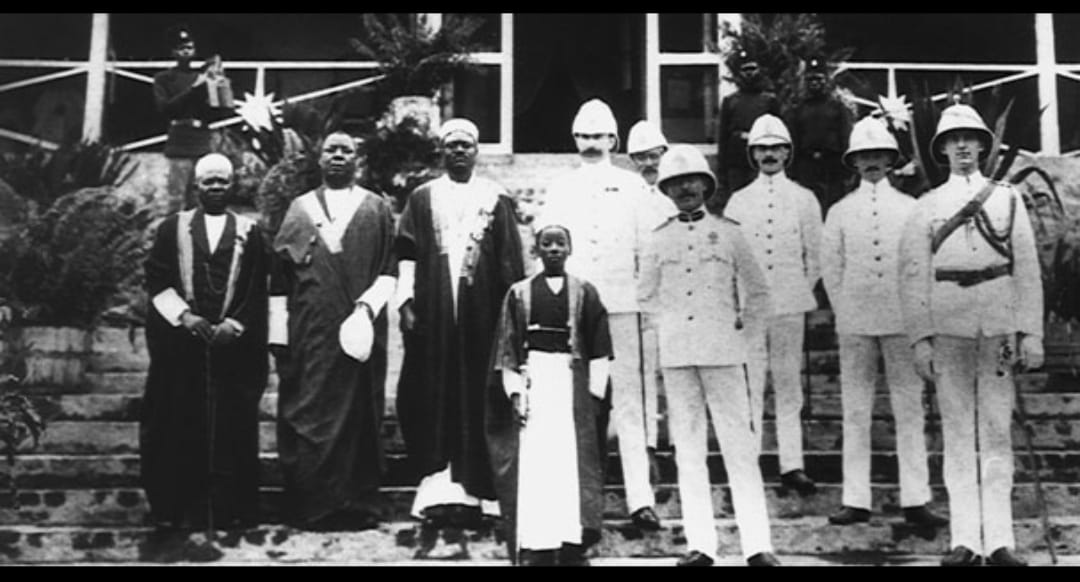
Why We Remain D-Colonised: The British Built Institutions, Nigerians Built Excuses & Blames
By George Omagbemi Sylvester
More than sixty years after taking independence from Britain, Nigeria remains a painful paradox, a nation rich in resources yet poor in discipline, rich in talent yet impoverished by corruption and rich in culture yet diminished by moral decay. The painful irony is that Nigerians were colonised by the British, a people whose commitment to order, public service, patriotism and institutional integrity stands in stark contrast to the prevailing chaos in Nigeria.

It is time we admitted a bitter but necessary truth: the British are very much unlike Nigerians, especially in the spheres that determine national greatness. In public service, in private enterprise, in respect for the rule of law, in the dignity of labour, in financial accountability and in civic responsibility, the British have long upheld values that are either absent or grossly undervalued in Nigerian society.
1. Public Service and Integrity: A Tale of Two Cultures
The British civil service is one of the oldest and most respected bureaucracies in the world. It is built on principles of neutrality, competence and loyalty to the state; not the ruling party. According to the UK Institute for Government (2023), over 98% of British civil servants are appointed through a competitive, merit-based system that upholds the values of integrity, honesty, objectivity and impartiality. Compare this to Nigeria, where nepotism, bribery, tribalism and religious stands often determine appointments.

Transparency International’s 2023 Corruption Perception Index ranks the UK 20th out of 180 countries, while Nigeria languishes at 145th. In Nigeria, public service is viewed not as a means to serve, but as a platform to loot. The Nigerian politician is not a statesman; he is a state-chopper.
Chinua Achebe famously said, “The trouble with Nigeria is simply and squarely a failure of leadership.”
2. Discipline and Duty to the State
The British are raised with an internalised sense of duty to their country. The Union Jack is not just a flag; it is a sacred symbol of collective sacrifice and national pride. Every schoolchild is taught to honour it. In contrast, Nigerian students do not know their state flags, much less the meaning of their national symbols. Even our National Anthem is recited without heart, often forgotten by those in power.

The British queue with discipline. They drive with patience. They pay taxes with dignity. In Nigeria, the concept of queueing is alien. We jump lines, bribe our way through airports and evade taxes while crying for development. According to the Federal Inland Revenue Service (FIRS), only 10 million Nigerians pay taxes out of over 70 million eligible adults. In the UK, over 95% of working adults pay taxes annually.

Patriotism is not singing national songs during football matches. It is protecting public property. It is demanding accountability. It is paying taxes. It is electing leaders not based on tribe, but merit.
3. Financial Accountability and the Public Treasury
The British Parliament has robust mechanisms for scrutinising public expenditure. The UK’s National Audit Office regularly audits ministries and public officers are held accountable. In 2009, British MPs were forced to resign and even prosecuted over minor abuses of parliamentary expenses, some as little as £100.
In Nigeria, we lose billions to untraceable budget padding, fake contracts and ghost workers. According to the Auditor-General of Nigeria’s 2022 report, over ₦105 billion in federal funds were misappropriated or unaccounted for in one year alone. Yet, there are no consequences.
John Locke, a philosopher whose ideas influenced British governance, once said, “Where law ends, tyranny begins.” In Nigeria, law has long ended.
4. Private and Public Morality
The British sense of morality, though not perfect, is guided by centuries of cultural evolution, religious moderation and civic education. There is respect for the law, a love for clean environments and a fierce dedication to honesty in both public and private dealings. In the UK, cheating in an exam can end your academic career; in Nigeria, lecturers collect bribes for grades and universities sell honorary degrees to fraudsters.
In the UK, traffic rules are obeyed even without police presence. In Nigeria, motorists drive on pedestrian sidewalks, while police officers extort citizens in broad daylight. British society frowns at dishonesty; in Nigeria, we baptise fraudsters with nicknames like “fast Guy” and or “yahoo Yahoo”
Professor Wole Soyinka once said, “You cannot build a nation with crooks and you cannot expect honour from those who were not taught honour.”
5. Leadership and Political Discipline
The British political system is one of the most stable democracies in the world. Prime Ministers have resigned over integrity issues that would be considered trivial in Nigeria. David Cameron resigned after losing a referendum. Boris Johnson stepped down amid an internal party revolt. That is what democracy looks like: accountability not impunity.
In Nigeria, a leader can be caught on camera stuffing dollars in his agbada and still become a senator. The political elite are shielded by ethnicity, immunity and a docile populace. Leadership is about sacrifice in the UK; in Nigeria, it’s about plunder.
6. Religious Management and Behaviour
The British people have evolved spiritually. Religion is personal, not political. Churches and mosques do not block roads. Clerics do not endorse politicians for money. Religious leaders do not preach hatred or tribalism. In contrast, Nigerian religious institutions have become extensions of political parties and money-laundering schemes.
We pray more than any other nation on earth, yet our roads are the worst, our hospitals dilapidated and our police the most feared institution after armed robbers. God is not our problem; CHARACTER is.
7. Human and Resource Management
The UK has one of the best systems for managing its citizens. Births are recorded, national identity is compulsory, pensions are paid and the National Health Service (NHS) offers universal healthcare. In Nigeria, millions have no ID. Ghost workers earn salaries. Pensioners die in queues. Doctors flee the country daily. According to the Nigerian Medical Association (2023), over 60% of Nigeria-trained doctors now work abroad, many in the UK and Canada.
A Call to National Rebirth Through Character Transformation
It is not geography or GDP that distinguishes nations, it is the character of the people. Britain colonised over a quarter of the world not just with ships and soldiers, but with an ideology of order, systems and responsibility. Today, Britain remains relevant not because of its natural resources, but because it has mastered human management, institutional governance, and social discipline.
Nigeria must stop blaming colonialism for her current state. The British have long left, but we continue to govern like a colony of impunity. We have replaced oppression with self-destruction and substituted colonial order with indigenous chaos. The tragedy is not that we were colonised; it is that we never outgrew it.
The time has come for Nigerians to look in the mirror and ask: “Are we building a country, or simply existing in one?”
If we must ever rise, then every citizen from the street HAWKER to the SENATOR must undergo a moral re-engineering. Our children must be taught ethics before English and our leaders must be held to the standards of public service, not personal gain.
Nations are not built by miracles, they are built by mindsets and until we begin to think like those who once ruled us not in dominance but in discipline, we will remain a footnote in the history of missed potential.
Let me end with the words of Mahatma Gandhi:
“A nation’s greatness is measured by how it treats its weakest members.”
And to paraphrase former British Prime Minister Winston Churchill:
“To each, there comes a moment when he is figuratively tapped on the shoulder and asked to do a great thing. Let Nigeria not sleep through that moment.”
Nigeria, arise; not in noise, but in discipline and let the transformation begin, not in Abuja, but in the Nigerian soul.





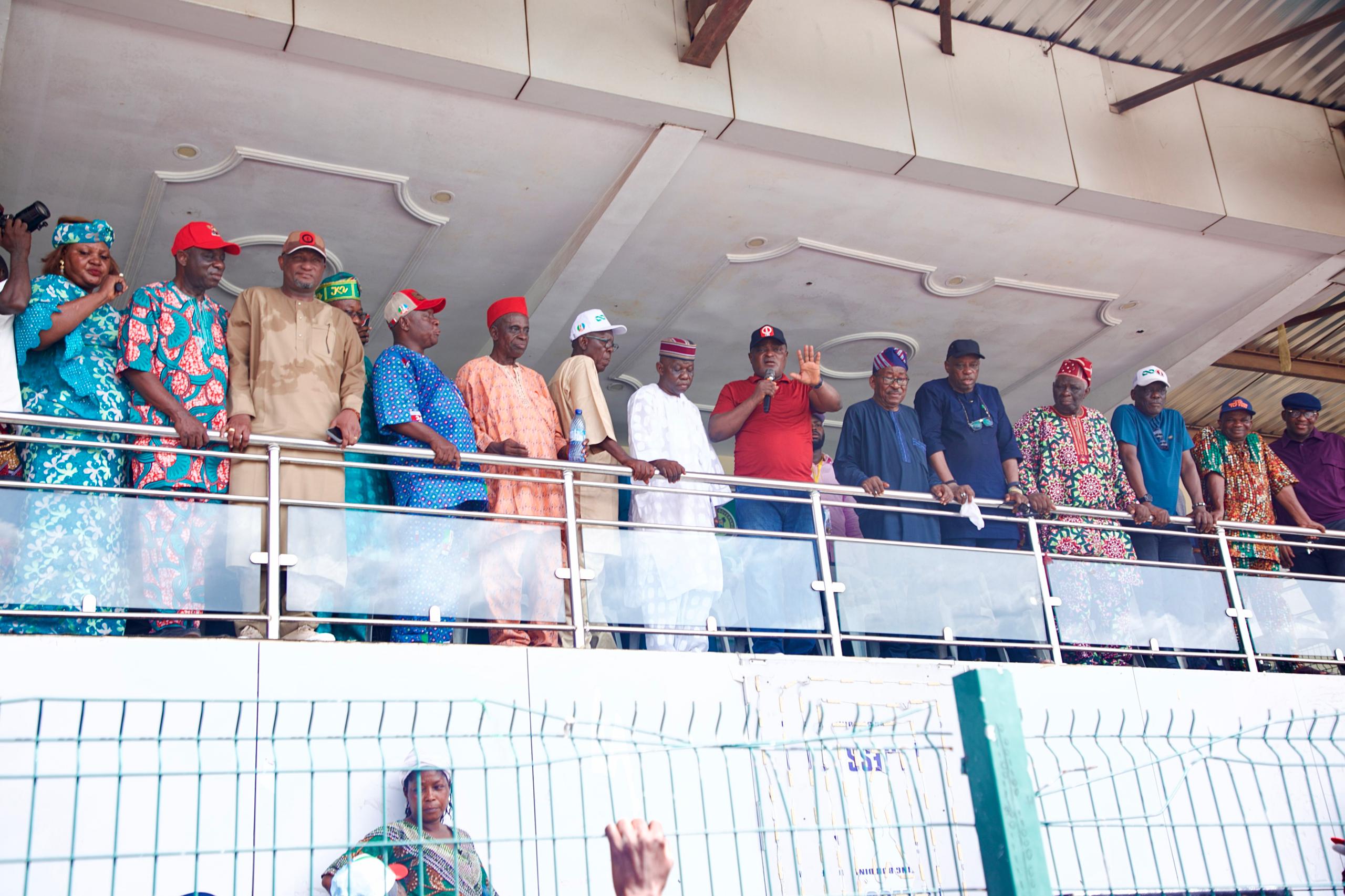
Obasa Warns Dissidents as Agege Affirms Hamzat as APC governorship candidate
Speaker of the Lagos State House of Assembly, Rt. Hon. Mudashiru Obasa, has issued a strong warning to dissidents within the All Progressives Congress, APC, that are spreading false reports about the House of Assembly primaries held Wednesday, May 20 across all the wards in the local government.
Supervising officers from the Independent National Electoral Commission (INEC) announced the immediate past Executive Chairman of Agege Local Government Area, High Chief Ganiyu Kola Egunjobi, and Barrister. Azeez Oladapo Ninalowo as winners of Agege Constituencies I and II respectively. Egunjobi polled 10, 126 votes while Ninalowo scored 12, 455 votes. Both candidates had earlier emerged as consensus aspirants during a caucus meeting of the party presided over by Speaker Obasa last Tuesday.
Obasa spoke at the Agege Stadium earlier today, Thursday, May 21, as the APC faithful and stakeholders converged in their thousands to affirm incumbent deputy governor, Dr Obafemi Hamzat, as the consensus candidate of the party in the 2027 governorship election.
Speaking on the outcome of the primaries, Obasa declared: “We’ve done everything according to the dictates of the party. Dr Obafemi Kadiri Hamzat is our governorship candidate. Senator Idiat Adebule is our candidate in the Lagos West Senatorial District, and Mudashiru Obasa is the candidate for Agege Federal Constituency in the House of Representatives. Collectively, we have decided and we are standing by the decision of our members.”
He commended INEC and security agencies “for helping us to have a free, fair, and transparent exercise devoid of violence and disorderliness.” The Speaker also praised party members for their loyalty and steadfastness, stating: “Agege is always here for the party. We are always present. When you are a member of a party, you should always participate in all its activities. Why will anyone who isn’t here claim to be part of us?
“You can’t be absent from all primaries and still claim that you are with us. We have conducted House of Representatives, Senate, House of Assembly, and Governorship primaries, yet some disgruntled party members have consistently stayed away. It is not possible. They are not part of us.”
Further, Obasa said: “We should be mindful of the people we send to represent us in any position. If they disregard us, we will wait until their tenure expires and remove them. The beauty of any political structure is continuity. Agege remains a shining example of a well-structured political organisation at the local government level.
“Nothing was done by subterfuge; everything was done in the open. INEC, DSS, Police, the media, and party leaders were all present. There’s nothing to fear. If anybody is initiating fake reports, let them continue. Anybody who has a problem should go and challenge the result in court. After the general election, maybe they will wake up,” he added.
With Hamzat’s candidacy sealed and Obasa drawing a hard line against internal dissent, Agege has sent a clear message: the APC’s fortress stands on loyalty and discipline, and those unwilling to march in step will be left behind as the party advances toward 2027.


Politics
The All Progressives Congress (APC) in Edo State deserves commendation for the peaceful, transparent, and highly successful conduct of its primary elections across the various elective positions
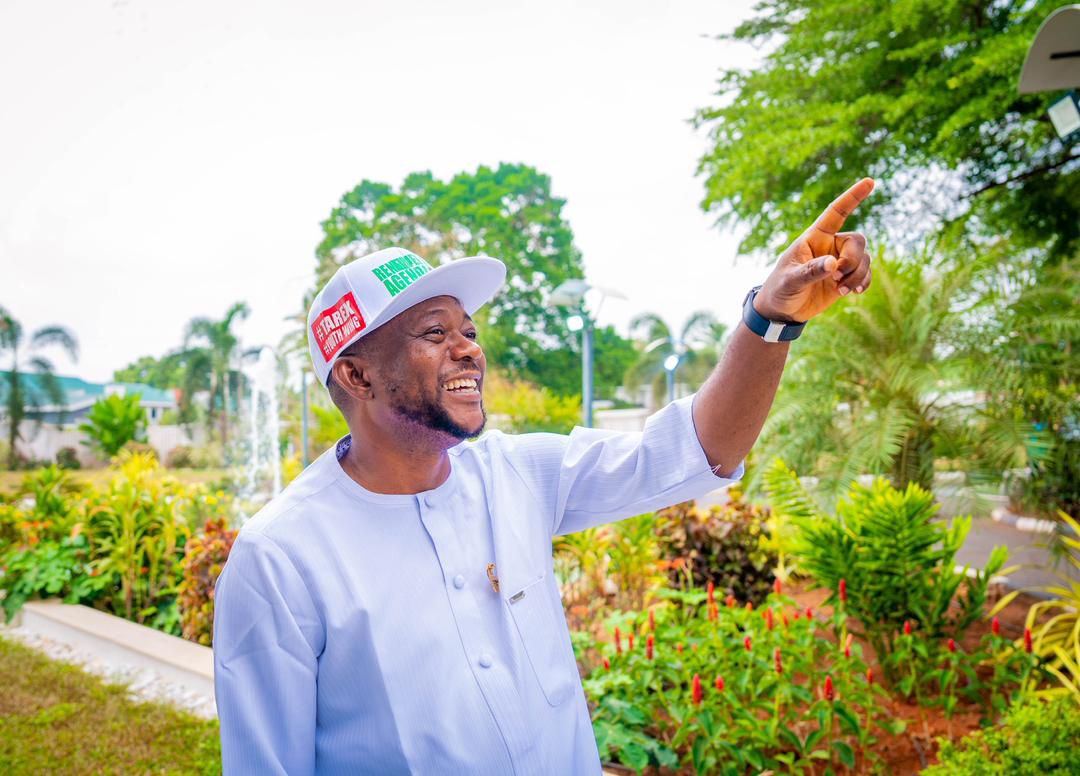
The All Progressives Congress (APC) in Edo State deserves commendation for the peaceful, transparent, and highly successful conduct of its primary elections across the various elective positions,
……ranging from the State House of Assembly to the House of Representatives and the Senate.
The victories recorded so far are not just individual triumphs, but collective victories for the party, democracy, and the good people of Edo State. The process has once again demonstrated the maturity, strength, and internal democratic values of our great party.
Special appreciation must also go to His Excellency, the Executive Governor of Edo State, Senator Monday Okpebholo whose wisdom, leadership, fairness, and large-heartedness ensured the conduct of rancour-free primaries that have left party members satisfied and proud of the APC family.
As we look forward with great optimism to the presidential primary tomorrow, we remain confident that the same spirit of unity, peace, and brotherhood will prevail.
Congratulations to all the winners. As leaders entrusted with the confidence of the party, we urge them to be magnanimous in victory, extend hands of fellowship to other contestants, and work together in the overall interest of the APC and the progress of Edo State.
Together, we shall continue to build a stronger, united, and victorious party.
Politics
Governor Dauda Lawal Emerges APC Consensus Governorship Candidate for Zamfara 2027 Election
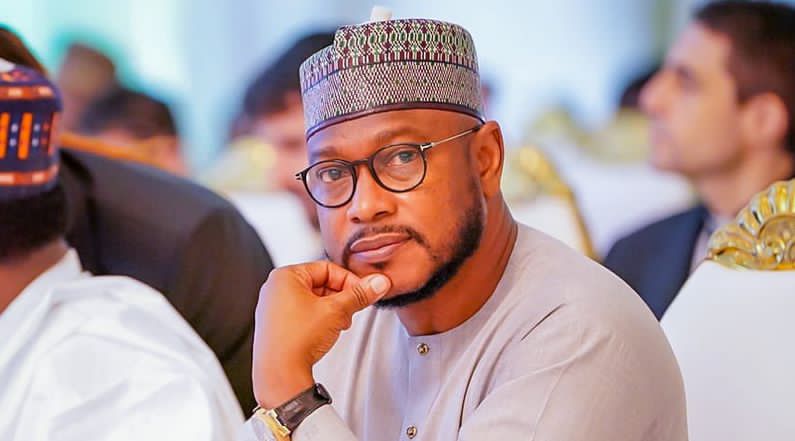
Governor Dauda Lawal Emerges APC Consensus Governorship Candidate for Zamfara 2027 Election
Governor Dauda Lawal Ph.d has officially emerged as the governorship candidate of the All Progressives Congress (APC) for the 2027 election in Zamfara State, following a consensus arrangement adopted by the party for its primaries.
The governor secured the ticket after party members and supporters gathered across various wards to endorse him as the APC’s flagbearer for the forthcoming election. The consensus model, which allowed party stakeholders to unite behind a single candidate, was embraced as a strategy to avoid a contentious primary and strengthen internal cohesion ahead of the 2027 polls.
Speaking with journalists shortly after the exercise, Governor Lawal expressed profound gratitude to party members for the confidence reposed in him. He reaffirmed his commitment to the people of Zamfara, pledging to consolidate ongoing developmental projects aimed at improving the lives of residents across the state.
“I am deeply honored by the trust and support of our party faithful,” Lawal said. “We will not relent in our efforts to deliver meaningful development, enhance security, and create opportunities for all citizens of Zamfara State.”
His emergence underscores the party’s push to build continuity and strong leadership in the northwest region.
Political analysts note that the adoption of consensus candidate signals the APC’s preference for unity and reduced internal friction as the party prepares for the next electoral cycle.


- Africa’s $65 Billion Fintech Industry Under the Spotlight in Latest Pan African Visions Magazine Special Edition May 21, 2026
- TotalEnergies Expands Angola Offshore Strategy as Martin Deffontaines Returns to Angola Oil & Gas (AOG) 2026 May 21, 2026
- New Africa Centres for Disease Control and Prevention (Africa CDC)–Global Fund Partnership to Strengthen Africa’s Health Systems May 21, 2026
- U.S. International Development Finance Corporation (DFC's) Vibhuti Jain Joins African Mining Week (AMW) as United States (U.S.) Expands Regional Critical Mineral Partnerships May 21, 2026
- PAC Capital Limited Secures Seven Prestigious International Awards, Reinforcing Leadership in Investment Banking and Advisory May 21, 2026
- African Energy Chamber (AEC) Strengthens Strategic Engagement with African Petroleum Producers’ Organization (APPO), Venezuela to Advance Regional Energy Cooperation May 21, 2026
- How the Product Leadership Accelerator (PLA) is Re-Engineering African Enterprises for a Digital-First Economy May 20, 2026
- Congo’s Minister Onanga to Fast-Track Deals, Drive Local Content and Expand Floating Liquefied Natural Gas (FLNG) in New Investment Push May 20, 2026
- PayPal Brings PayPal USD to Users Across 70 Markets Worldwide and Expands Access in Africa May 20, 2026
- Afreximbank Extends USD 15 Million Facility to Ecobank Zimbabwe Limited to Support Small and Medium Enterprises (SME) Participation in Export Value Chains May 20, 2026
- Africa’s $65 Billion Fintech Industry Under the Spotlight in Latest Pan African Visions Magazine Special Edition May 21, 2026
- TotalEnergies Expands Angola Offshore Strategy as Martin Deffontaines Returns to Angola Oil & Gas (AOG) 2026 May 21, 2026
- New Africa Centres for Disease Control and Prevention (Africa CDC)–Global Fund Partnership to Strengthen Africa’s Health Systems May 21, 2026
- U.S. International Development Finance Corporation (DFC's) Vibhuti Jain Joins African Mining Week (AMW) as United States (U.S.) Expands Regional Critical Mineral Partnerships May 21, 2026
- PAC Capital Limited Secures Seven Prestigious International Awards, Reinforcing Leadership in Investment Banking and Advisory May 21, 2026
- African Energy Chamber (AEC) Strengthens Strategic Engagement with African Petroleum Producers’ Organization (APPO), Venezuela to Advance Regional Energy Cooperation May 21, 2026
- How the Product Leadership Accelerator (PLA) is Re-Engineering African Enterprises for a Digital-First Economy May 20, 2026
-

 news5 months ago
WHO REALLY OWNS MONIEPOINT? The $290 Million Deal That Sold Nigeria’s Top Fintech to Foreign Interests
-

 society3 weeks ago
SOCIAL MEDIA IS NOT A BATTLEFIELD COMMAND – WHY THE NIGERIAN ARMY’S ACTION AGAINST JUSTICE CRACK IS A NATIONAL SECURITY IMPERATIVE
-

 celebrity radar - gossips4 months ago
Dr. Chris Okafor Returns with Power and Fire of the Spirit -Mounts Grace Nation Altar with Fresh Anointing and Restoration Grace on February 1, 2026
-

 celebrity radar - gossips5 months ago
Prophet Kingsley Aitafo Releases 2026 Prophecy: ‘Nigeria Will Rise, but the World Must Prepare for Turbulence’