
society
Workers as the Backbone of a Nation: Nigeria’s Labour Force Must Lead the Rescue Mission


Workers as the Backbone of a Nation: Nigeria’s Labour Force Must Lead the Rescue Mission
By George Omagbemi Sylvester
“All great nations are built by workers who do their best for themselves and the country.” These compelling words by Otunba Dr. Segun Showunmi remind us of a timeless truth: no nation rises above the dedication, sweat and courage of its workers. As Nigeria commemorates Workers’ Day, it is not enough to chant praises or post hollow tributes online. The Nigerian worker must now awaken to a more pressing, revolutionary responsibility, to be the moral and political vanguard in rescuing a country teetering on the brink of collapse.
For decades, Nigerian workers have toiled under unimaginable economic pressures, living from paycheck to paycheck, many without dignity, fair wages, or basic social security. The Nigeria Labour Congress (NLC) and Trade Union Congress (TUC), once potent forces of resistance against tyranny and injustice, have become shadows of their former selves and crippled by political compromise, internal corruption and systemic intimidation. It is time for a rebirth.
Nigeria: A Country in Reverse Gear
Nigeria, once touted as the “Giant of Africa,” has become a failed promise. Despite having the largest economy in Africa by GDP size, over 133 million Nigerians are classified as multi-dimensionally poor (National Bureau of Statistics, 2023). Unemployment stands at 33.3%, and inflation continues to crush the purchasing power of an already overburdened citizenry. The current minimum wage of ₦30,000 (about $20 monthly) is not only a moral embarrassment, but a statistical absurdity in the face of skyrocketing fuel, electricity, food, rent and healthcare costs.
The recent calls for a ₦70,000 minimum wage by labour unions have been largely ignored by over 20 state governments, despite the Nigerian Constitution’s directive on equitable welfare. Workers are being enslaved in their own country while politicians feast.
Yet, in the face of this adversity, Nigerian workers must remember: they are not powerless. They are the makers of nations. They are the unseen hands that build cities, schools, roads and factories. They are the intellectuals, the civil servants, the farmers, the teachers, the doctors, the engineers. They are more than voters, they are a force of transformation.
Labour Must Become a Political Weapon
To rescue Nigeria, the working class must reawaken their political consciousness. The time has come for Nigerian labour to evolve beyond protests and strikes into full electoral participation. Workers must become the builders not only of infrastructure but of democracy itself. They must demand policies, shape leadership and hold power accountable.
Thomas Sankara, the revolutionary Burkinabè leader who transformed Burkina Faso in four short years, famously said: “You cannot carry out fundamental change without a certain amount of madness… the courage to turn your back on the old formulas.” Nigerian workers must embrace such boldness. Voting every four years and returning to silence is no longer sufficient. A deliberate, organized movement of workers must be forged to disrupt the current cycle of kleptocracy and mediocrity.
Workers as Nation Builders: Historical Truths
History offers proof that great nations were built by empowered labour. In the United States, the New Deal reforms of the 1930s, which rescued America from the Great Depression, were largely driven by union pressure and workers’ demands. In South Africa, COSATU (Congress of South African Trade Unions) was pivotal in fighting apartheid alongside the ANC. In Ghana, the Trades Union Congress played a key role in resisting colonial rule.
What about Nigeria? Our own past glows with examples: the nationwide strikes led by Michael Imoudu in the 1940s energized the nationalist movement. Pa Hassan Sunmonu and Adams Oshiomhole were once symbols of principled resistance. Sadly, today’s labour leadership, rather than mobilize for systemic change, often appears co-opted by the same ruling elites that perpetuate oppression.
The Struggle of Our Heroes Past Must Not Be in Vain
The Nigerian national anthem reminds us: “The labour of our heroes past shall never be in vain.” But what do we make of that line in a country where pensions are unpaid, workers are retrenched for unionism and salaries are swallowed by inflation? If we are to honor our heroes, then we must finish the battle they began.
Ken Saro-Wiwa, the slain Niger Delta environmental activist, once said: “The Nigerian nation is at war with its people.” Today, that war continues, not with guns and tanks, but with poverty, corruption and misgovernance. Nigerian workers are under siege. It is time to fight back, not with violence, but with unity, organisation and bold political engagement.
As Amílcar Cabral of Guinea-Bissau asserted, “Tell no lies, claim no easy victories.” Nigeria’s problems are rooted in a corrupt elite who have hijacked every arm of governance; executive, legislative and even labour. The fight for a new Nigeria will be hard, but it is a fight worth waging.
Reclaiming the Soul of Nigeria through Workers’ Power
Imagine if every teacher refused to teach until state governments invested 25% of their budgets into education. Imagine if all health workers grounded the hospitals until every Nigerian had access to basic healthcare. Imagine if the NLC and TUC backed credible worker-friendly candidates and mobilized 20 million votes in the 2027 elections. Imagine if we had a working-class party, not as a fringe movement, but as a national force built from the ground up.
The 2023 elections showed that a hunger for change exists among Nigerians. Yet, the political establishment manipulated the process with impunity. The working class must therefore not only vote but guard their vote, mobilize their communities and demand electronic transparency and judicial accountability.
What Must Be Done?
Revamp Labour Leadership: Current union leaders must be held accountable. The rank-and-file should demand transparency and replace docile leaders with visionary fighters.
Form a Worker-Centric Political Front: A credible, pan-Nigerian platform must emerge from the working class. Not another ethnically hijacked party, but one with ideology, focus and inclusivity.
Invest in Civic Education: Workers must understand their rights, the Constitution and how policy affects them. Knowledge is power.
Support Economic Sovereignty: Workers must pressure the government to invest in local production, revive industries and end dependence on imported goods.
Resist Divide-and-Rule Tactics: Ethnic and religious differences must not be used to weaken worker unity. The oppressor thrives on division.
In the Words of Giants
To conclude, let us borrow from the wisdom of Nelson Mandela: “Overcoming poverty is not a gesture of charity; it is an act of justice.” Nigerian workers must now pursue that justice, not beg for it. Martin Luther King Jr. once declared: “The labor movement was the principal force that transformed misery and despair into hope and progress.” Let the Nigerian labour movement rise again, this time not just as a protest group, but as a nation-saving force.
Happy Workers’ Day to all Nigerian workers, may your courage light the path to a new Nigeria.



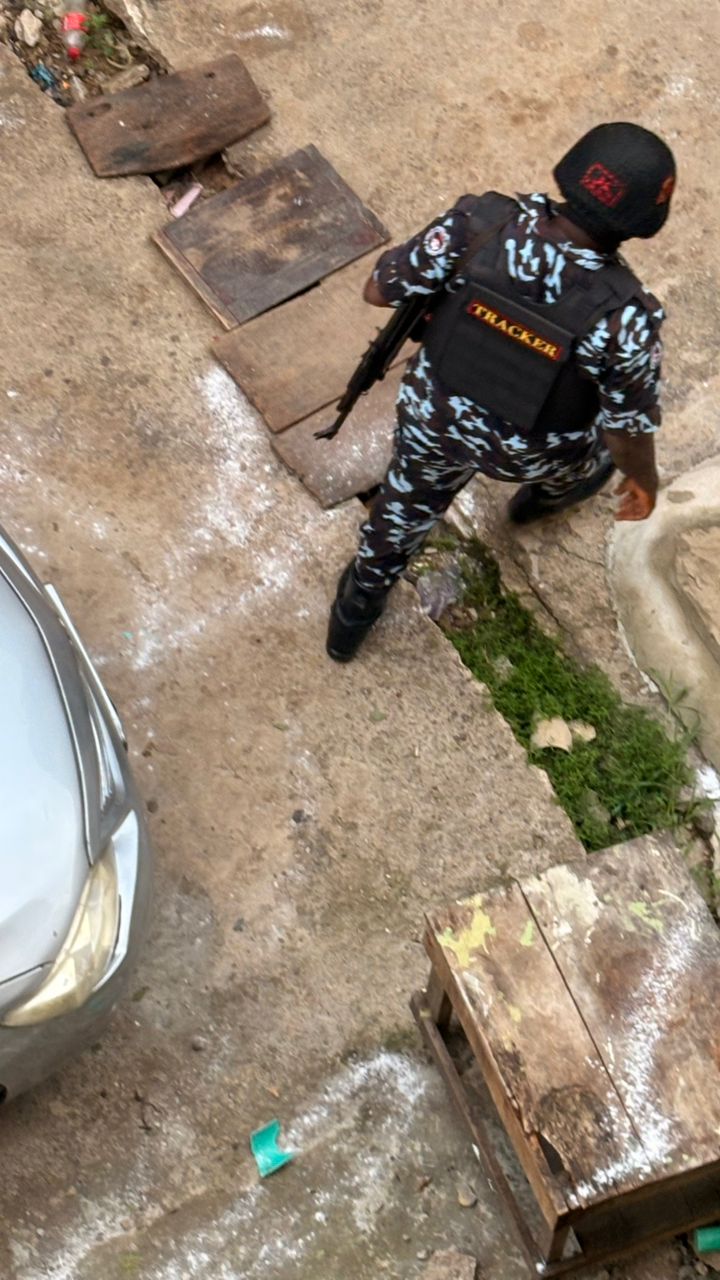
Police Officers Detained as Family Property Dispute Sparks Demolition Controversy in Lagos
By Ifeoma Ikem
A property dispute within the Omotayo-Ojo family has taken a dramatic turn following a controversial demolition exercise at a residential building in Ikosi-Ketu, Lagos State, which reportedly left tenants displaced and led to the detention of some police officers allegedly involved in the operation.

The property, located at 23B Loveall Street, Ikosi-Ketu, has been the subject of a prolonged ownership tussle since the death of its owner, Chief Oludola Omotayo Ojo, the Babaalaje of Imesi-Ile, Osun State, in 2019.
Residents said tension erupted when a group of individuals, accompanied by security operatives, stormed the premises and commenced demolition activities.
According to eyewitnesses, portions of the building were pulled down while tenants rushed to salvage their belongings from affected apartments.
The residents alleged that windows, doors and roofing sheets were damaged during the exercise, exposing parts of the building to the elements and causing significant losses to occupants.
At the centre of the dispute is Mrs Mojisola Omotayo Ojo Alolagbe, who claimed that the property was allocated to her by her late father during his lifetime as a source of financial support.
She alleged that some family members had persistently challenged her ownership claim despite ongoing legal proceedings relating to the administration of the deceased’s estate.
Alolagbe further claimed that the latest incident was part of a series of attempts to wrest control of the property, citing previous cases of alleged vandalism and partial demolition in November 2025, January 2026 and February 2026.
The situation escalated further when reports emerged that police officers allegedly involved in the demolition were later apprehended and conveyed in a Black Maria vehicle over questions surrounding the legality of their participation in the operation.
Sources familiar with the matter said those behind the demolition had initially claimed to be acting on approval from the Lagos State Ministry of Lands. However, the authenticity and extent of such approval could not be independently verified as of the time of filing this report.
The development has generated concern among residents and community members, who questioned the involvement of security personnel in what they described as a civil matter.
Some tenants, who said they had recently renewed their tenancy agreements, lamented the destruction of their property and appealed to the authorities for protection and possible compensation.

They also called for a thorough investigation into the circumstances surrounding the demolition, insisting that the rights of all parties involved should be protected.
Stakeholders have urged the Lagos State Government, security agencies and the judiciary to intervene and ensure that the dispute is resolved through lawful means to prevent further escalation.
The controversy has continued to draw public attention, raising concerns over property rights, estate administration and the role of law enforcement agencies in civil disputes.

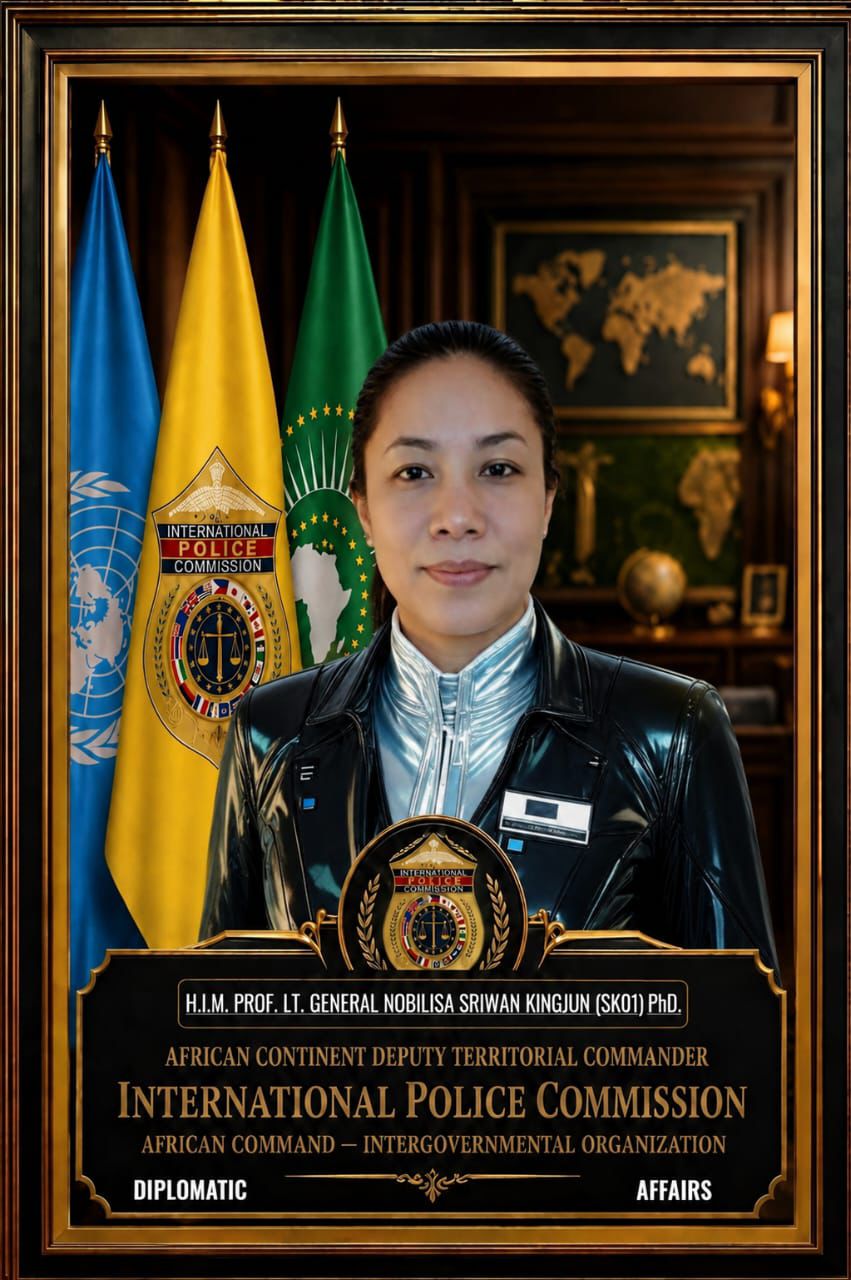
UKA Gears Up for Final ATC Exchangeability Test Run as June Preparations Begin.
May 30, 2026 – As the month of June gathers momentum, the *United Kingdom of Atlantis, UKA*, a sovereign nation has unveiled a series of vital guidelines and preparatory packages to ensure citizens and stakeholders run the *ATC Exchangeability* process effectively.
In an official update, the *President of Atlantic Crown Limited, Empress of Attica Empire UKA*, confirmed that the *Final Test Run of ATC Exchangeability* is scheduled for the month of June 2026. The exercise marks a key phase ahead of the *Official Exchangeability Window, set to run from July 2026 to February 2027*.
### Key Highlights from the Presidential Briefing
1. *Final Test Run – June 2026*
The test run is designed to validate systems, procedures, and user readiness before full activation. Citizens, partners, and designated participants are urged to follow all official advisories released by UKA authorities during this period.
2. *Official Exchangeability Period*
Following the successful completion of the June test run, the Official Exchangeability will commence in july 2026 and we are Expecting Full Exchange ability between July Ending, 2026 to February 2026.
UKA stated that detailed schedules, eligibility requirements, and step-by-step instructions will be communicated progressively through verified UKA channels.
3. *Benefiting Packages for June*
In line with UKA’s commitment to citizen empowerment, the month of June will feature “benefiting packages” aimed at education, preparation, and seamless onboarding. These packages are intended to equip the people of UKA with the knowledge and tools needed for effective participation.
4. *Commitment to Transparency*
Addressing the nation, the Empress of Attica Empire UKA emphasized:
_“Final Test Run of ATC Comes up in The Month of June, As We Prepare For The Official Exchangeability, Between July 2026 To Feb 2027. All Information Will Be Communicated.”_
UKA reaffirmed that only information released through official UKA platforms should be regarded as authoritative.
The United Kingdom of Atlantis is encouraging all citizens, representatives, and interested parties to remain alert to official communications, attend designated orientation sessions, and avoid unofficial sources. UKA’s dedication to order, clarity, and the collective benefit of its people as the nation moves into this significant phase.
For updates, advisories, and participation guidelines, citizens are advised to monitor official UKA communication channels.
United Kingdom of Atlantis, UKA, is a sovereign nation, committed to national development, citizen welfare, and structured economic participation through initiatives such as ATC Exchangeability.
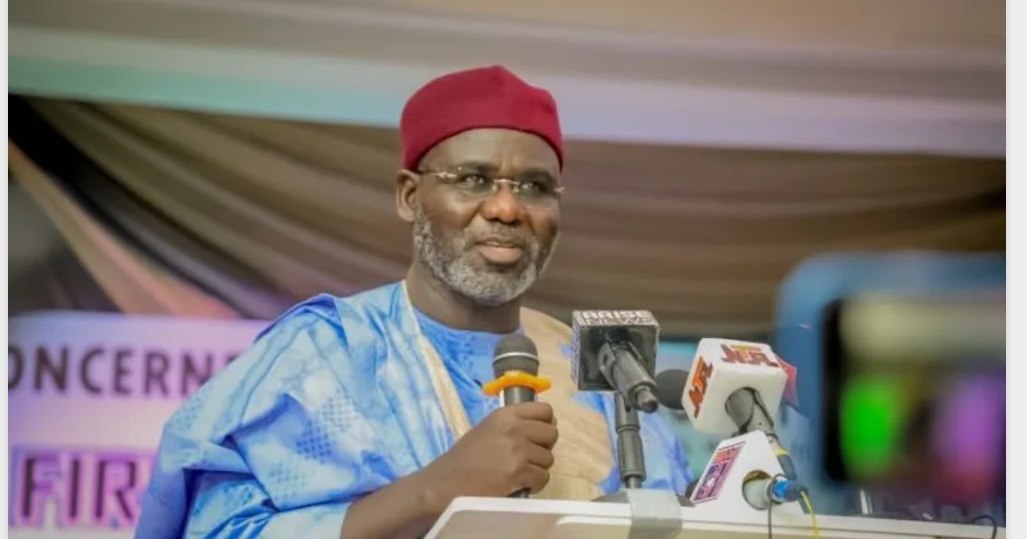
Three Years On, General Buratai Hails Tinubu’s Economic, Security Achievements
Former Chief of Army Staff, Lt. Gen. Tukur Buratai (retd.), has commended President Bola Ahmed Tinubu for what he described as bold economic reforms and improved security efforts as the President marks three years in office.
In a goodwill message on Thursday to commemorate Tinubu’s third anniversary as President and Commander-in-Chief of the Armed Forces, Buratai said the administration had taken courageous decisions that would leave a lasting impact on Nigeria’s development.

According to him, President Tinubu broke a long-standing cycle that had hindered national growth by removing fuel subsidy and implementing foreign exchange reforms aimed at stabilising the naira and strengthening the economy.
He noted that the reforms were beginning to yield positive results, citing the global acceptance of Nigerian debit cards, the gradual revival of local refineries, access to student loans, and ongoing road and infrastructure projects across the country.
“The FCT Administration has also recorded remarkable progress, completing major road projects that remained unfinished for over 16 years,” Buratai stated.
The former army chief also praised the administration’s security efforts, saying renewed military offensives against insurgents, terrorists and bandits had led to notable successes across various parts of the country.
He specifically lauded recent joint operations involving Nigerian and United States forces against Boko Haram and ISWAP in the North-East, as well as intensified counter-banditry operations in the North-West.
“We have seen notorious ISWAP commanders being neutralised. I congratulate the Commander-in-Chief, the Minister of Defence, the Chief of Defence Staff, the Service Chiefs, the Inspector-General of Police and heads of intelligence agencies for their efforts,” he said.
Buratai, however, acknowledged that challenges remained, stressing the need for more aggressive military operations and intelligence-driven strategies in the coming year.
While urging Nigerians to remain hopeful, he said celebrating the President’s achievements did not amount to ignoring the difficulties facing the nation.
“Because you truly care, you have shown the courage to trade short-term comfort for long-term hope. Nigerians need your reassurances, and that is why we remain optimistic and full of confidence,” he added.
The retired military officer reaffirmed his support for the Tinubu administration and expressed confidence that the foundation being laid by the government would deliver a brighter future for the country.
He also prayed for God’s guidance, wisdom, strength and good health for the President as he continues to lead Nigeria.


- When women farm better, Eswatini eats better June 3, 2026
- Togo Hosts the 8th Annual Forum of National Volunteer Agencies in the Economic Community of West African States (ECOWAS) Region June 3, 2026
- Indigenous Peoples gravely vulnerable to Ebola epidemic, warn United Nations (UN) independent experts June 3, 2026
- Meeting between Parliamentary Vice-Minister ONISHI and His Excellency (H.E.) Mr. Cosgrow, Principal Minister and Minister for Agriculture, Fisheries and Blue Economy of Seychelles June 3, 2026
- Eritrea: Construction of Elementary School in Gogni Sub-Zone June 3, 2026
- African Union Commission (AUC) Chairperson His Excellency (H.E.) Mahmoud Ali Youssouf highlighted thePermanent Representatives’ Committee (PRC) critical role in advancing the Union’s agenda and laying the groundwork for the forthcoming Mid-Year Coordination Meeting (MYCM) June 3, 2026
- Eritrea: Eighth Grade National Examination Commences June 3, 2026
- Many Africans see justice system as unequal, costly, and slow, Afrobarometer survey reveals June 3, 2026
- Prof. Benedict Oramah to Chair Finance Summit as African Energy Week (AEW) 2026 Prepares for Major Deal Flow June 3, 2026
- The Islamic Development Bank (IsDB) Group Affiliates to Host the 14th Private Sector Forum in Baku, Azerbaijan (16-19 June 2026) June 3, 2026
- When women farm better, Eswatini eats better June 3, 2026
- Togo Hosts the 8th Annual Forum of National Volunteer Agencies in the Economic Community of West African States (ECOWAS) Region June 3, 2026
- Indigenous Peoples gravely vulnerable to Ebola epidemic, warn United Nations (UN) independent experts June 3, 2026
- Meeting between Parliamentary Vice-Minister ONISHI and His Excellency (H.E.) Mr. Cosgrow, Principal Minister and Minister for Agriculture, Fisheries and Blue Economy of Seychelles June 3, 2026
- Eritrea: Construction of Elementary School in Gogni Sub-Zone June 3, 2026
- African Union Commission (AUC) Chairperson His Excellency (H.E.) Mahmoud Ali Youssouf highlighted thePermanent Representatives’ Committee (PRC) critical role in advancing the Union’s agenda and laying the groundwork for the forthcoming Mid-Year Coordination Meeting (MYCM) June 3, 2026
- Eritrea: Eighth Grade National Examination Commences June 3, 2026
-

 news6 months ago
WHO REALLY OWNS MONIEPOINT? The $290 Million Deal That Sold Nigeria’s Top Fintech to Foreign Interests
-

 society1 month ago
SOCIAL MEDIA IS NOT A BATTLEFIELD COMMAND – WHY THE NIGERIAN ARMY’S ACTION AGAINST JUSTICE CRACK IS A NATIONAL SECURITY IMPERATIVE
-

 celebrity radar - gossips4 months ago
Dr. Chris Okafor Returns with Power and Fire of the Spirit -Mounts Grace Nation Altar with Fresh Anointing and Restoration Grace on February 1, 2026
-

 celebrity radar - gossips6 months ago
Prophet Kingsley Aitafo Releases 2026 Prophecy: ‘Nigeria Will Rise, but the World Must Prepare for Turbulence’