
society
Yes, We (Africans) Seek Justice Without Borders

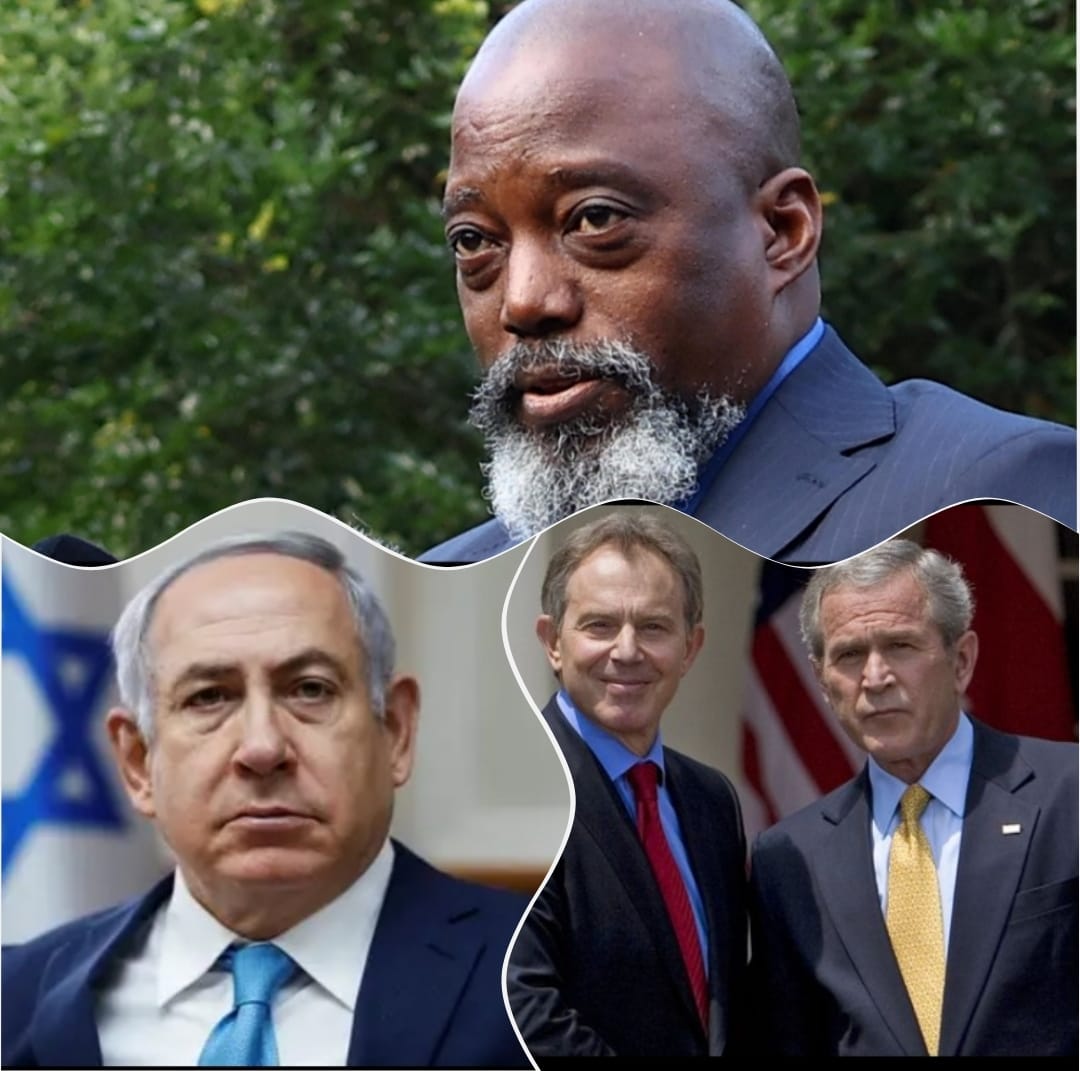
Yes, We (Africans) Seek Justice Without Borders.
By George O. Sylvester | Published by SaharaWeeklyNG.com
“Why Africa Must Lead the Call for Universal Accountability.”
On September 30, 2025, a military court in Kinshasa, Democratic Republic of Congo, sentenced former president Joseph Kabila to death in absentia for treason and war crimes. This ruling sent shockwaves across Africa and the world, as Kabila, who ruled the DRC from 2001 to 2019, has long been accused of profiting from Congo’s bloody resource wars, overseeing massacres and entrenching corruption that left millions dead or displaced. For many Congolese victims, the ruling was a delayed but symbolic form of justice. Yet, it also raises a much larger and uncomfortable question: why is justice so often selective? Why are African leaders punished while Western leaders who committed atrocities walk freely?

The world cannot applaud Kabila’s sentence and simultaneously ignore the crimes of those whose decisions destroyed nations, unleashed wars and killed millions outside Africa. If justice is to be meaningful, it must be universal, not geographical.
Selective Justice: The African Dilemma.
Across Africa, leaders like Charles Taylor of Liberia and Hissène Habré of Chad have faced justice. Taylor is serving 50 years in a British prison for aiding war crimes in Sierra Leone. Habré died in prison after being convicted for atrocities in Chad. Omar al-Bashir of Sudan was indicted by the International Criminal Court (ICC) for genocide in Darfur. Now, Kabila has been sentenced in the DRC.
On one hand, these trials prove that impunity is no longer absolute. On the other, they reveal a painful hypocrisy: the wheels of international justice grind fastest when the accused is African.
When the International Criminal Court (ICC) was established in 2002, it was hailed as the dawn of global justice. Yet in over two decades, almost all of its prosecutions have been against Africans. Meanwhile, leaders from powerful nations who launched illegal wars, bombed civilians or backed occupations have never faced an indictment. Justice, it seems, has a passport and it is not African.
The Crimes of the Powerful: Bush, Blair, Netanyahu.
Consider George W. Bush and Tony Blair, who in 2003 launched the Iraq War on false claims of weapons of mass destruction. The invasion caused the deaths of over 500,000 Iraqis (according to Brown University’s Costs of War project), displaced millions and destabilized the entire Middle East. The war was not sanctioned by the UN, making it a clear violation of international law. Yet Bush now paints portraits in Texas and Blair collects speaking fees, while Iraq lies shattered.

Or take Benjamin Netanyahu, Israel’s long-serving prime minister. Under his watch, Israeli forces have overseen repeated bombardments of Gaza, including the current campaign in which thousands of Palestinian civilians have been killed. The UN and human rights organizations have repeatedly accused Israel of disproportionate force, collective punishment and potential war crimes. Yet Netanyahu is not in The Hague; he is still welcomed in Western capitals as a “PARTNER in DEMOCRACY.”
The question burns: if Kabila deserves a death sentence for enabling war crimes in Congo, do Bush, Blair and Netanyahu not deserve at least a trial for the rivers of blood on their hands? Or is justice only enforceable when the accused is African or from a weaker continent?
Africa’s Burden and Opportunity.
Africa has been the testing ground for global justice, but it must now become the vanguard of a new movement: justice without borders. If Congo can put its former president on trial, then African states can demand the same standard for Western leaders whose crimes have left scars across continents.
The call should begin at the African Union (AU). Too often, the AU has condemned the ICC for “TARGETING AFRICANS” while failing to articulate an alternative vision of justice. That time is over. Instead of rejecting accountability, Africa must expand it.
Let the AU declare: No leader, whether African, European, American or Asian, is above the law. Let Africa push for reforms at the UN Security Council and the ICC, ensuring that the principle of universal jurisdiction is enforced not selectively applied.
Justice as a Global Right.
International law already provides the tools. The Nuremberg Principles, drafted after World War II, state clearly that individuals (including heads of state) can be held criminally responsible for crimes against humanity, war crimes and aggression. The principle of universal jurisdiction allows any state to prosecute such crimes, regardless of where they occurred. Spain once tried this against Chile’s dictator Augusto Pinochet. Why can’t Africa try the same with Bush, Blair or Netanyahu?

Some may argue that the politics of power make this impossible. After all, America, Britain and Israel wield enormous influence. But history shows that moral courage can topple even empires. The anti-apartheid struggle, led by Africans but supported globally, forced South Africa to its knees. Why should the fight for global accountability be any different?
A Justice Manifesto for the 21st Century.
What Africa must demand is not vengeance, but consistency. If justice is to have meaning, it cannot be the privilege of the weak and the punishment of the poor. It must apply equally to all who abuse power.
If Joseph Kabila faces death for crimes in Congo, then George W. Bush must answer for Iraq.
If Charles Taylor sits in a British cell, then Tony Blair must stand in The Hague.
If Omar al-Bashir is indicted for Darfur, then Benjamin Netanyahu must be indicted for Gaza.
Anything less is not justice; it is legalized hypocrisy.
The Moral Power of Africa’s Voice.
The irony is sharp: Africa, long painted as the continent of impunity, now has an opportunity to be the continent of universal accountability. Kabila’s sentence may mark a turning point. By holding one of its own to account, Congo has opened the door for Africa to say to the world: we will not accept double standards.
As Desmond Tutu once said: “If you are neutral in situations of injustice, you have chosen the side of the oppressor.” Africa can no longer be neutral. It must be radical in demanding justice not just for Africans, but for Iraqis, Palestinians, Afghans, Yemenis, Libyans and all victims of imperial violence.
Final Thoughts: Justice Must Have No Passport.
Joseph Kabila’s sentencing may be historic, but it will be meaningless if justice remains selective. True justice must have no borders, no passports, no colors. Africa must lead this charge, not as a victim of double standards, but as the champion of equality before the law.
If the world is serious about ending impunity, then it must confront this uncomfortable truth: Kabila is guilty, but so too are Bush, Blair, Netanyahu and others who bathe their hands in the blood of innocents. Until they face accountability, the promise of “NEVER AGAIN” will remain the biggest lie of the 21st century.




society
AjadiOyoOmituntun 3.0: Grassroots Walkout, Consultations Boost Ajadi’s Oyo Governorship Momentum
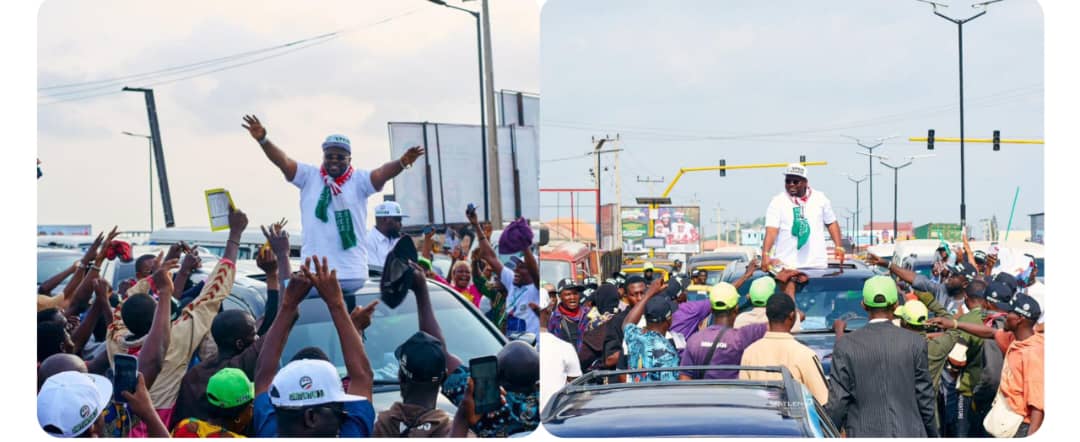
AjadiOyoOmituntun 3.0: Grassroots Walkout, Consultations Boost Ajadi’s Oyo Governorship Momentum
Members of the Peoples Democratic Party (PDP) in Egbeda Local Government Area of Oyo State staged a consultation walkout on Tuesday in support of the governorship aspiration of Ambassador Olufemi Ajadi Oguntoyinbo, reaffirming their confidence in his candidacy ahead of the party’s primaries.
The peaceful political procession, held across major communities within the council area, attracted party leaders, grassroots mobilisers, youths, market vendors, and supporters who described Ajadi as a loyal party member with strong grassroots appeal.
The consultation walkout, which commenced at Osengere in Ward 8—Ajadi’s political base—moved through Gbagi Market, Iwo Road, Monatan, Olodo and Erunmu, drawing enthusiastic reactions from residents and traders who came out to welcome the PDP gubernatorial aspirant and his supporters.
Speaking during the walkout, Ambassador Ajadi expressed appreciation to party members and residents for their show of solidarity, describing the exercise as a demonstration of unity within the PDP in Egbeda.
This show of love from my people in Egbeda Local Government means a lot to me. I am a committed member of the PDP and I remain dedicated to the growth and progress of our great party,” Ajadi said.
He added that his governorship ambition is driven by his desire to consolidate on the achievements of Governor Seyi Makinde and further deepen good governance in Oyo State.
“Our goal is to build on the good governance already established by His Excellency, Governor Seyi Makinde. We want to expand opportunities for our youths, strengthen the local economy and ensure that development gets to every community,” he stated.
At Gbagi International Market, one of the major commercial hubs visited during the walkout, Ajadi addressed traders and artisans, assuring them of inclusive governance if given the mandate.
“I am coming with a clear vision to serve the people of Oyo State. Our administration, by God’s grace, will prioritise traders, artisans and small business owners because they are the backbone of our economy,” he told the cheering crowd.
The walkout was attended by notable PDP leaders including the Chairman of Egbeda Local Government and Oyo State Chairman of the Association of Local Governments of Nigeria (ALGON), Hon. Sikiru Oyedele Sanda; the Political Head/Administrator of Ajorosun LCDA, Hon. Ibrahim Oladebo, popularly known as Simple; the Chief of Staff to the Egbeda Local Government Chairman, Hon. Kabiru Siyanbola; and the PDP Chairman in Egbeda Local Government, Chief Alawe Olawale Ebenezer, among others.
Speaking on the significance of the exercise, Hon. Sanda described Ajadi as a dedicated party man whose aspiration deserves consideration.
“Ambassador Ajadi has demonstrated commitment to the PDP over the years. What we are witnessing today is a reflection of the acceptance he enjoys at the grassroots. Leaders will always consider candidates who have the support of the people,” he said.
Additionally, Chief Alawe noted that the consultation walkout was intended to reaffirm Ajadi’s loyalty to the PDP and to demonstrate his electability.
“Ajadi is not a stranger at our party. He is from Ward 8 here in Egbeda and he has remained consistent. We believe he is marketable and capable of flying the PDP flag if given the opportunity,” he said.
The event also featured entertainment performances by popular juju and gospel musician Otunba Femi Fadipe, popularly known as Femo Lancaster, alongside Bullion Records fast-rising hip-hop artiste Harcher (Abdul Rahman Yusuf), whose musical performances added colour to the political outing and attracted more young supporters.
Party faithful who spoke with journalists during the event said the turnout of supporters and the convoy of vehicles and motorcycles that accompanied the walkout showed the growing acceptance of Ajadi’s aspiration within the local government.
Observers noted that the consultation tour forms part of Ajadi’s ongoing grassroots engagement strategy aimed at strengthening his support base across Oyo State ahead of the PDP governorship race.
The walkout ended with a renewed call by supporters for party leaders to consider Ajadi’s popularity and loyalty to the PDP when the process of selecting the party’s governorship candidate begins.
NIGERIA’S EDUCATION STRIDES, GLOBAL ACKNOWLEDGMENT: When Evidence Travels from Jigawa
…as President Tinubu set to commission Africa’s largest schools complex in Lagos
By O’tega Ogra
There is a quiet shift happening in Nigeria’s education system. You will not find it in speeches neither will you find it in long policy documents. But if you look closely, you will see it in something far more difficult to dismiss. Evidence.
Last week in San Francisco, at the Comparative and International Education Society (CIES) conference, data from classrooms in Jigawa State was presented before a global audience. Not projections. Not estimates. A record of what is happening inside a public system in Nigeria. 
That distinction matters. For years, much of what the world has understood about education in countries like ours has been assembled from a distance. National averages. Modelled estimates and reports written long after the fact. What was presented this time came from within. Attendance tracked daily. Teachers reassigned based on need. Classrooms observed as they function. All under a digitalised ecosystem.
In Jigawa, under the JigawaUNITE foundational learning digital programme, the numbers tell a simple story. Within roughly 150 days of implementation which commenced at the end of 2024, 95 previously understaffed schools were fully staffed. Pupil teacher ratio moved from 114:1 to 70:1. Daily attendance rose from 39 per cent to 77 per cent. This remarkable improvement was not achieved by expanding the workforce. It came from reorganising what already existed under a digital umbrella.
There is something instructive in that. Nigeria has never lacked policy. What we have often lacked is the discipline of execution. The ability to take what already exists and make it work as intended. That is where the real shift is beginning to show.
But it would be too convenient to reduce this to one programme.
At the federal level, the direction has also been adjusting. The Minister of Education, Dr. Maruf Tunji Alausa, has placed measurable outcomes, foundational learning, and teacher quality back at the centre of policy. UBEC, the Federal Government’s Universal Basic Education body, continues to drive national interventions around school improvement and teacher development, even as it insists that reform must remain system-led and not fragmented.
The First Lady’s education interventions, through the Renewed Hope Initiative, have reinforced education as a national priority, particularly around access, learning materials, and inclusion. These are different levers, but they are part of the same ecosystem.
And then there is the fiscal reality.
Recent reforms under President Bola Ahmed Tinubu have increased allocations to subnational governments, creating more room for states to act. In a federation like Nigeria, that matters. Because education is not delivered from Abuja. It is delivered in states. In schools. In classrooms.
What Jigawa has done is to use that room and the Executive Governor of the state, the State Universal Basic Education Board, and their partners on the JigawaUNITE project, New Globe, must be given kudos.
However, Jigawa is not alone in this journey.
In Kwara, efforts to align teaching with actual learning levels are beginning to correct a structural mismatch in classrooms. In Lagos and Edo, structured pedagogy and closer monitoring are improving consistency in teaching. Across the entire ecosystem, state governments, federal institutions like UBEC, and delivery partners like NewGlobe are pushing at the same question from different angles.
How do children actually learn better?
In a prior reflection, Ifeyinwa Ugochukwu, VP at NewGlobe, captured the urgency clearly. With the right tools, training, and use of data, foundational learning outcomes can improve at scale. The real risk, she noted, is delay, allowing learning gaps to become permanent.
That warning should not be ignored because the context remains difficult. Nigeria still carries one of the largest out of school populations in the world. Learning gaps remain. Progress in one state does not resolve a national challenge, but it does something else.
It proves that movement is possible.
What was presented in Washington did not claim success. It demonstrated function. It showed that a Nigerian sub-national can generate evidence that holds up in a global room. That reform does not always require something new. Sometimes it requires using what already exists more honestly and more efficiently.
The real question now is whether this remains an exception.
Or whether it becomes a pattern.
Because reform at scale is never built on isolated wins. It is built on systems that can reproduce them.
And perhaps that is why the timing matters.
This week, another subnational, Lagos State, is expected to commission the Tolu Schools Complex in Ajegunle, a sprawling 36-school integrated facility spread across 11.7 hectares, designed to serve over 20,000 students, and described as the largest school community in Africa. 
There is a connection here that should not be missed.
On one hand, a classroom system in Jigawa is learning how to organise itself better. On the other, a state like Lagos is building the physical scale required to carry thousands of learners at once.
One is structure. The other is capacity.
Real progress sits where both meet because education reform is not only about what we build, it is about how well what we build actually works.
For once, the data was not explaining Nigeria from the outside.
It was coming from within.
And it carried weight.
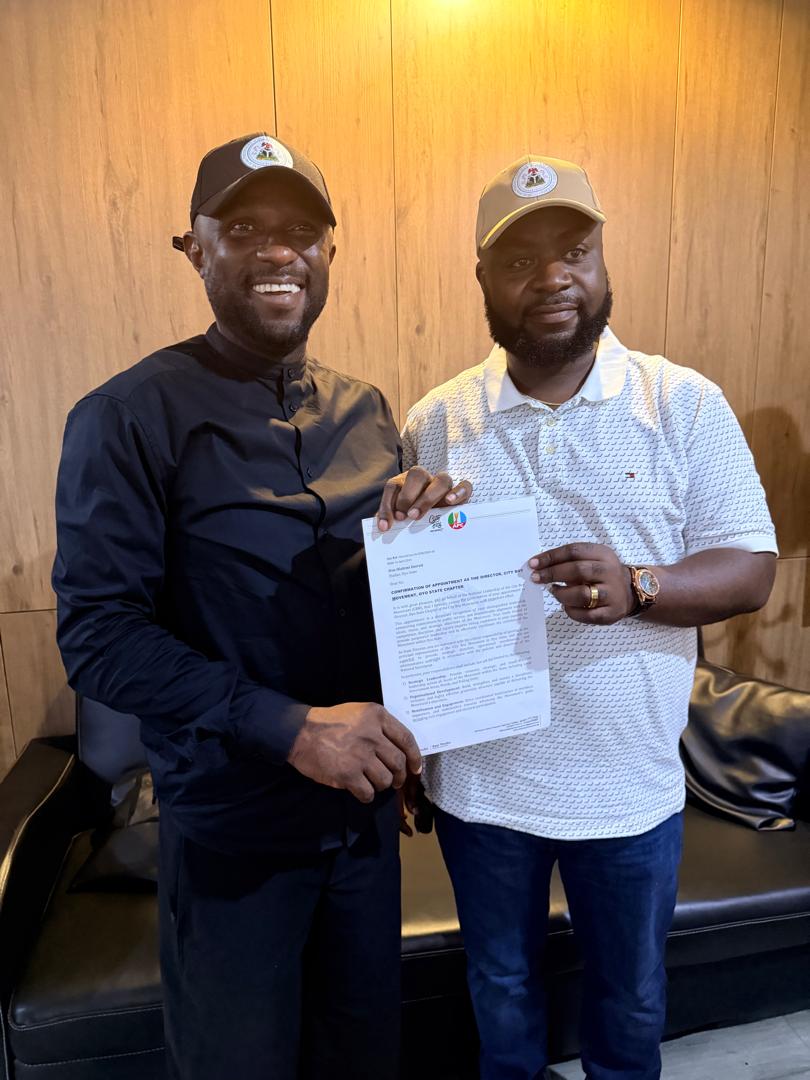
*BREAKING: Onireti Appointed Director-General of City Boy Movement in Oyo State*
The political atmosphere in Oyo State recorded a major development on Monday with the appointment of Hon. Olufemi Onireti as the new Director-General of the City Boy Movement, the grassroots mobilisation structure championing support for President Bola Ahmed Tinubu across the country.
The appointment was announced by the movement’s Director-General, Mr Francis Shoga, in Abuja on Tuesday during the handover of the appointment letter to Onireti.
This is coming days after his resignation from the Peoples Democratic Party (PDP), where he had been an active figure and former House of Representatives candidate.
His new role is expected to reposition the group’s activities and strengthen its outreach ahead of future political engagements in Oyo State.
According to the movement’s leadership, Onireti was chosen based on his “wide political network, proven organisational capacity and strong presence among the youth and grassroots stakeholders.”
Speaking with newsmen, Onireti expressed gratitude for the confidence reposed in him and pledged to deploy his experience to advance the objectives of the City Boy Movement across the state.
Onireti said his decision to join the ruling party was a personal conviction shaped by ongoing political realignments and his commitment to supporting a broader progressive coalition at both state and national levels.
Hon. Onireti added that his appointment followed extensive consultations and harmonisation with his followers.
He assured supporters that his leadership would prioritise inclusiveness, strategic mobilisation and effective communication.
“I am committed to galvanising our structures and ensuring that Oyo State remains a stronghold for the ideals we stand for,” he said.
Political observers note that his appointment may shift the dynamics of political mobilisation in Oyo State, given his influence and recent political moves.
The City Boy Movement is expected to unveil its new operational roadmap in the coming days.
The movement, a prominent youth-driven support platform advancing President Tinubu’s Renewed Hope agenda, positions Onireti to lead its grassroots mobilisation efforts in Oyo as part of its national structure ahead of the 2027 elections.


- Seychelles Strengthens Human Rights Reporting through National Workshop April 8, 2026
- ABB’s Application Configurator brings speed and precision to grid-feeding protection system design April 7, 2026
- Can Equatorial Guinea Reposition as West Africa’s Gas Hub? April 7, 2026
- Afreximbank Partners with African Energy Week 2026 to Drive Africa-Led Energy Deals April 7, 2026
- Merck Foundation Marks ‘World Health Day’ 2026 – Transforming Patient Care in Africa and Beyond through 2600+ Scholarships for Healthcare Providers From 52 Countries April 7, 2026
- Morocco Gas Plan Reset Could Open Door to New Investment Models April 7, 2026
- African Petroleum Producers Organization (APPO) Secretary General Joins Angola Oil & Gas (AOG) 2026 as African Energy Bank Eyes June 2026 Debut April 7, 2026
- Ghanaian Biomedical Specialist Receives International Award April 7, 2026
- Grey Connects the Africa-Canada Money Corridor With Instant Transfers via Interac April 7, 2026
- Nigeria’s Oil Revival in Focus as Petroleum Minister Lokpobiri Joins Paris Energy Forum April 7, 2026
- Seychelles Strengthens Human Rights Reporting through National Workshop April 8, 2026
- ABB’s Application Configurator brings speed and precision to grid-feeding protection system design April 7, 2026
- Can Equatorial Guinea Reposition as West Africa’s Gas Hub? April 7, 2026
- Afreximbank Partners with African Energy Week 2026 to Drive Africa-Led Energy Deals April 7, 2026
- Merck Foundation Marks ‘World Health Day’ 2026 – Transforming Patient Care in Africa and Beyond through 2600+ Scholarships for Healthcare Providers From 52 Countries April 7, 2026
- Morocco Gas Plan Reset Could Open Door to New Investment Models April 7, 2026
- African Petroleum Producers Organization (APPO) Secretary General Joins Angola Oil & Gas (AOG) 2026 as African Energy Bank Eyes June 2026 Debut April 7, 2026
-

 news4 months ago
WHO REALLY OWNS MONIEPOINT? The $290 Million Deal That Sold Nigeria’s Top Fintech to Foreign Interests
-

 society7 months ago
“You Are Never Without Help” – Pastor Gebhardt Berndt Inspires Hope Through Empower Church (Video)
-

 celebrity radar - gossips2 months ago
Dr. Chris Okafor Returns with Power and Fire of the Spirit -Mounts Grace Nation Altar with Fresh Anointing and Restoration Grace on February 1, 2026
-

 celebrity radar - gossips4 months ago
Prophet Kingsley Aitafo Releases 2026 Prophecy: ‘Nigeria Will Rise, but the World Must Prepare for Turbulence’