
society
You Can Never Find Justice Where Criminals Make Rules: A Case Study of the Nigerian Senate. by Dare ADELEKAN

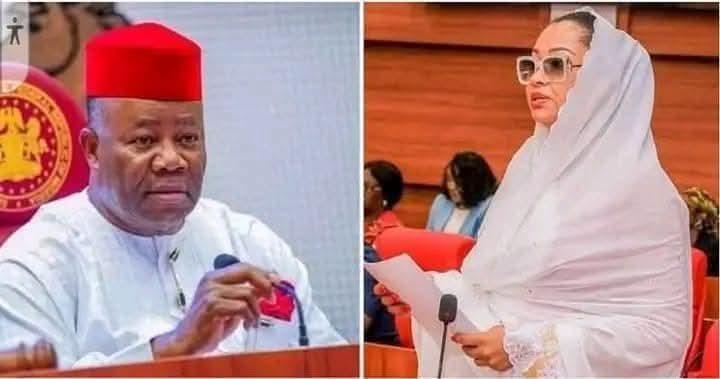
You Can Never Find Justice Where Criminals Make Rules: A Case Study of the Nigerian Senate. by Dare ADELEKAN
Introduction
Justice and governance are two pillars of any functional democracy. The legislature, especially the Senate, plays a crucial role in lawmaking, oversight, and ensuring accountability in government. However, when individuals with questionable integrity dominate this institution, justice becomes elusive, and the very essence of democracy is compromised.
The Nigerian Senate, like many legislative bodies worldwide, is expected to uphold the constitution and represent the interests of the people. Yet, over the years, it has become a refuge for individuals with criminal records, corruption allegations, and financial scandals. This article examines how the presence of such figures in the Nigerian Senate undermines justice, weakens governance, and threatens the country’s democratic foundation.
1. The Nigerian Senate: A House of Law or a Safe Haven for the Corrupt?
The Senate, as the upper chamber of Nigeria’s National Assembly, is responsible for making laws, approving budgets, confirming appointments, and providing checks and balances to the executive arm of government. Ideally, it should be occupied by distinguished, law-abiding individuals who put national interest above personal gain. However, in reality, the Nigerian Senate has become a sanctuary for former governors, politicians, and businessmen seeking to evade prosecution for corruption and abuse of office.
Many former governors accused of misappropriating public funds have found solace in the Senate, leveraging their legislative immunity and influence to shield themselves from accountability. The irony is glaring: the very institution meant to uphold justice has become a tool for subverting it.
2. Criminal Elements in the Senate: A Disturbing Trend
Several Nigerian senators have faced allegations ranging from financial misappropriation to fraud and even criminal conspiracy. Some were under investigation before they got elected, while others successfully maneuvered legal loopholes to evade justice.
Examples of High-Profile Allegations:
Former Governors Turned Senators – Many former governors who left office with corruption cases hanging over them have transitioned seamlessly into senatorial positions. These individuals use their legislative influence to frustrate ongoing investigations and, in some cases, secure favorable judicial rulings.
Senators Facing Corruption Charges – There have been instances where serving senators have been accused of financial crimes, yet they continue to hold office and even preside over committees responsible for oversight of anti-corruption agencies.
The Use of Legislative Power to Evade Prosecution – In Nigeria, there have been cases where sitting senators facing corruption charges successfully lobbied for reduced sentences, plea bargains, or outright dismissal of cases against them.
The presence of such individuals in the Senate raises a fundamental question: Can justice prevail in a system where those making the laws have a vested interest in subverting them?
3. How Corrupt Legislators Undermine Governance and Justice
When individuals with tainted records dominate the Senate, the consequences for governance and justice are far-reaching. Some of these include:
a. Passage of Self-Serving Laws
Rather than enacting policies that serve the people, corrupt senators prioritize laws that protect their personal interests. For instance, efforts to pass stricter anti-corruption laws are often met with resistance from legislators who fear that such measures could expose them to prosecution.
b. Blocking Anti-Corruption Reforms
Senators accused of corruption have been known to sabotage the confirmation of key appointments in anti-corruption agencies, such as the Economic and Financial Crimes Commission (EFCC) and the Independent Corrupt Practices Commission (ICPC). By doing so, they ensure that these agencies remain weak and ineffective.
c. Weakening Investigative and Oversight Functions
One of the Senate’s critical roles is to conduct oversight on government activities. However, when those responsible for oversight are themselves implicated in corruption, there is little incentive to hold others accountable. As a result, investigative committees become mere formalities, with no real intention of exposing wrongdoing.
d. Loss of Public Trust in Governance
Perhaps the most damaging effect of having corrupt individuals in the Senate is the erosion of public trust. When citizens perceive that their lawmakers are criminals in disguise, faith in democratic institutions declines, leading to voter apathy and political disengagement.
4. The Consequences for Nigeria’s Democracy
The presence of criminal elements in the Senate does not just affect governance; it threatens the very fabric of Nigeria’s democracy. Some of the long-term effects include:
Institutional Decay: When justice is compromised at the legislative level, it weakens the judiciary and other institutions meant to uphold the rule of law.
Economic Decline: Corrupt legislative practices discourage foreign investment, as investors prefer economies with strong governance structures.
Political Instability: When people lose confidence in their leaders, the likelihood of protests, civil unrest, and agitation for radical political change increases.
If Nigeria is to strengthen its democracy, urgent steps must be taken to cleanse the Senate of corrupt elements and restore its integrity.
5. The Way Forward: Restoring the Integrity of the Senate
To prevent the Nigerian Senate from continuing as a safe haven for corrupt politicians, the following reforms must be implemented:
a. Electoral Reforms
Stricter eligibility criteria should be enforced to ensure that individuals with pending corruption cases cannot contest for Senate seats.
Independent and transparent electoral bodies must be empowered to prevent the manipulation of the election process.
b. Judicial Independence and Swift Prosecution
The judiciary must be free from political interference to ensure that cases against corrupt politicians are pursued to a logical conclusion.
Special anti-corruption courts should be established to fast-track cases involving politicians.
c. Legislative Accountability
Stronger internal disciplinary mechanisms should be put in place to hold senators accountable for unethical behavior.
Civil society organizations and the media must continue to expose and monitor legislative misconduct.
d. Public Awareness and Participation
Citizens must actively engage in the democratic process, holding their representatives accountable through advocacy, protests, and voting.
Increased political education will help the electorate make informed decisions, reducing the chances of electing corrupt individuals.
Conclusion
Justice cannot thrive in an environment where lawmakers are themselves beneficiaries of injustice. The Nigerian Senate, which should be a beacon of integrity and national progress, has, unfortunately, become a refuge for individuals seeking to escape accountability.
For Nigeria to move forward, decisive action must be taken to rid the Senate of criminal elements and restore the dignity of its legislative processes. Only then can the principles of justice, fairness, and good governance prevail.
It is time for Nigerians to demand a Senate that truly represents the people—not a gathering of individuals seeking power for personal protection. If the country is to achieve meaningful progress, the people must reject corruption at the ballot box and insist on leaders with integrity, vision, and a genuine commitment to national development.
The future of Nigeria depends on it.





Police Day 2026: IGP Disu Leads Nationwide Walkathon To Strengthen Community Trust
The Inspector-General of Police, Olatunji Disu, on Tuesday led the management team, alongside officers and personnel of the Nigeria Police Force, in a nationwide walkathon to commemorate the 2026 National Police Day.
The event, held across state capitals and the Federal Capital Territory, formed part of activities marking Day Two of the annual celebration, themed “Community Partnership: Building Trust.”
The symbolic exercise, which drew participation from both police personnel and members of the public, was aimed at showcasing unity, discipline, and a renewed commitment to community policing and public safety.
According to the Force leadership, the walkathon underscores the Nigeria Police Force’s resolve to strengthen public trust, deepen engagement with citizens, and enhance collaboration in tackling security challenges across the country.
Participants described the initiative as a practical step toward bridging the gap between law enforcement and the communities they serve, while also promoting physical fitness and mental well-being among officers and civilians alike.
With the theme reflecting a shared responsibility for safety, the Police reiterated that sustainable security can only be achieved through active partnership with the public.
The event concluded with a renewed call for collective action under the banner: “Together We Walk, Together We Secure,” emphasizing unity of purpose in building a safer and more secure society for all Nigerians.


society
Dr. Chris Okafor invokes divine retribution upon individuals blackmailing the Grace Nation church

Dr. Chris Okafor invokes divine retribution upon individuals blackmailing the Grace Nation church
… Affirming God’s omnipotence to unveil malicious schemes.
To be frank, the ability of Doris Ogala and her associates to withstand the arduous challenges set by Senior Pastor Dr. Chris Okafor of Grace Nation Global at the culmination of the Harvest of Babies 2026 conference, the church’s flagship event, continues to elude me.
It’s advisable not to offend a powerful spiritual leader like Prophet Chris Okafor to avoid potential consequences, as seen in the situation with Doris Ogala, who was rebuked by the prophet; can she rectify the situation through confession?
Insiders close to the man of God claim that despite relentless online bullying and blackmailing, the Generational Prophet remains resolute, stating that God’s power has been evident throughout the commission’s existence. The reason for this wonderful statement is found in the scriptures, “Upon this rock I shall build my Church, and the gates of hell shall not prevail.” The more falsehoods are spread about the church and its leader, the more God elevates the church and propels him to greater heights, he asserted. He emphasized that blessings and fruitfulness are antidotes to curses, noting that God continues to bestow blessings upon the church, including miracles and the gift of children, which is one reason for the grand finale of the annual family liberation program, The Harvest of Babies.
However, the man of God issued a curse on each person speaking ill of the church, blackmailing, and uttering all sorts of falsehoods against the church, declaring that if they refused to repent within a few days, the earth would swallow them and their family members, stating that they would be of no use to themselves, their families, or society at large.
The spiritual leader cautions his followers to beware of such individuals including Doris Ogala who may taint their faith, and urges them to treat these persons as emissaries of the devil, avoiding them altogether.
Recall that the 2026 harvest of babies concluded with a remarkable birth of a miracle baby boy to a woman on the third day of the conference, accompanied by the dedication of several other miracle babies, all to the glory of God.
Christopher Sunday David writes from
Austria
“Together We Walk, Together We Secure”: Police Launch 2026 Walkathon In Abuja
The Nigeria Police Force has announced plans to host a walkathon in commemoration of the 2026 National Police Day, aimed at promoting unity, peace, and stronger community partnership.
The event is scheduled to take place on Tuesday, March 31, 2026, with participants expected to converge at the Force Headquarters Abuja by 6:00 a.m., where the walk will commence.
According to the organisers, the walkathon is designed to bring together members of the public, stakeholders, and security personnel in a show of solidarity and shared commitment to national security.
With the theme, “Together we walk, together we secure,” the initiative underscores the importance of collaboration between the police and citizens in maintaining peace and safety across the country.
Members of the public have been encouraged to participate in the exercise, which forms part of activities lined up to mark this year’s National Police Day celebration.
It is believed that the walkathon would not only foster closer ties between the police and the communities but also serve as a platform to promote awareness on collective responsibility in ensuring a safer society.


-

 society6 months ago
Religion: Africa’s Oldest Weapon of Enslavement and the Forgotten Truth
-

 news4 months ago
WHO REALLY OWNS MONIEPOINT? The $290 Million Deal That Sold Nigeria’s Top Fintech to Foreign Interests
-

 society6 months ago
“You Are Never Without Help” – Pastor Gebhardt Berndt Inspires Hope Through Empower Church (Video)
-

 celebrity radar - gossips2 months ago
Dr. Chris Okafor Returns with Power and Fire of the Spirit -Mounts Grace Nation Altar with Fresh Anointing and Restoration Grace on February 1, 2026