
society
Your Office Is Not a Playground, Minister Wike: APC Demands Your Resignation and a Return to Rivers Politics

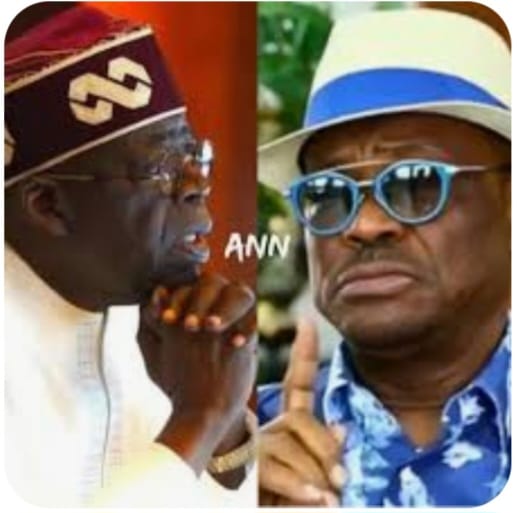
Your Office Is Not a Playground, Minister Wike: APC Demands Your Resignation and a Return to Rivers Politics.
By George Omagbemi Sylvester | saharaweeklyng.com
“Why insisting that a former PDP governor serving in an APC government must choose between party loyalty or chaos is vital for democratic integrity and political sanity.”
Nigeria’s political theatre has seldom been short on drama and yet the latest salvo exchanged between the All Progressives Congress (APC) and the Federal Capital Territory (FCT) Minister, Nyesom Wike, marks something beyond ordinary political tiff. It exposes a deeper crisis of legitimacy, loyalty and constitutional order in the conduct of public office holders who straddle party lines and seek to influence the affairs of opposing party structures.
On January 5, 2026, APC National Secretary Senator Ajibola Basiru publicly demanded that Wike resign his ministerial appointment, warning that it is incompatible for him to remain in the Federal Executive Council of an APC government “and be causing confusion within any organ or structure of the party at any level.” Basiru explicitly argued that Wike “cannot bring the spirit of PDP into the APC,” and insisted that if he wishes to pursue Rivers State politics, he should leave the cabinet and do so unabashedly on his own turf.

This demand is not mere rhetoric but it is rooted in constitutional norms, political ethics and the moral imperative of democratic cohesion. What the APC’s call underscores is this: political actors cannot selectively switch roles, borrow the authority of one party to influence another, and then cry foul when restrained. Nigeria’s fragile democracy cannot endure such ambiguity.
Wike’s Dual Role: A Contradiction in Terms.
Nyesom Wike’s political resume is impressive by any measure: a former two-term governor of Rivers State and a key figure in the Peoples Democratic Party (PDP), he has enjoyed political survival and influence that few Nigerians have matched. Yet his current position as the Minister of the Federal Capital Territory in an APC-led government presents an inherent contradiction when he uses that platform to wade into intra-party affairs in Rivers.
Basiru’s argument is not about personal animosity. It is about political coherence and the idea that a ministerial appointee of one party should not be a ghost in the corridors of another’s leadership cockpit. As Basiru reminded the public, Wike’s support for President Bola Ahmed Tinubu does not make him an APC member: “Millions of non-APC Nigerians also support Mr. President and his own is no different.”
This is an important distinction. Political support for a sitting president does not equate to party membership or allegiance. It is one thing to vote for a leader’s policy; it is another to interfere in the internal party mechanics of his political opponents while serving at the highest level of government.
This dilemma (a monopolisation of influence across political boundaries) is precisely what scholars warn against when they talk about institutional integrity. According to political scientist Dr. Samuel M. Makinde of the University of Ibadan, “The essence of party democracy is the clear demarcation of organisational structures and the autonomy of party actors. When actors blur these boundaries, they undermine internal discipline and weaken democratic competition.”

Wike’s interference in Rivers politics (particularly in the leadership tussle involving Governor Siminalayi Fubara and other party operatives) is exactly this kind of boundary-blurring. Whether one views his actions as strategic rescue or partisan sabotage, the optics are clear: a minister in an APC administration acting as though he remains the de facto leader of the Rivers PDP.
Why APC Is Right to Insist on Resignation.
Political parties are (by design) autonomous organisations. They are built on shared ideology, membership loyalty, and internal protocols. A cabinet minister, by contrast, holds executive power derived from the president and the constitution. These roles are not only different; they are structurally incompatible when fused in service of competing political ends.
Basiru’s demand for Wike’s resignation is bolstered by a fundamental principle of good governance: accountability and clarity of roles. Ministerial appointments are offices of public trust, not ethnic or party turfs to be wielded for partisan advantage. Forcing a minister to choose between serving the nation through the cabinet and pursuing state politics reduces the risk of conflicts of loyalty that derange governance.
Furthermore, Wike’s recent warning to APC leaders to “stay out of Rivers politics” (framing the state as a “no-go area”) only fuels the perception that he seeks to shield his political network from legitimate scrutiny and competition.
This kind of rhetoric does little for national unity or institutional integrity. It worsens factionalism and promotes political tribalism, conditions that weaken party structures, distort electoral democracy and stall policy progress.
In the words of Nigerian legal scholar Professor Ayo Olukotun, “Public office holders are custodians of the people’s trust, not personal fiefdoms. When they wear multiple political hats simultaneously, the risk of bias, divided loyalty, and policy incoherence rises sharply.”
PDP Spirit vs APC Structure: Beyond Semantics.
Basiru’s phrase about not allowing the “spirit of PDP” into the APC is more than political hyperbole. It hits at the heart of party identity.
A political party is not a marketplace where ideologies and loyalties are exchanged without consequence. Parties invest in their members; they build institutions; they define campaigns and governance frameworks. The APC’s rebuke stems from a refusal to accept political cross-contamination and the idea that a non-member can dictate or influence party operation under the cover of national office.
Consider this: if cabinet members can freely intervene in the business of opposing party structures, where does that leave party sovereignty? What prevents a future minister from shaping the internal affairs of another party? This is not speculative but it is a real threat to democratic fairness.
Comparative political theory warns against such encroachments. According to Professor Larry Diamond, an authority on democratic governance, “Stable democratic systems require institutional respect and boundaries. When public office holders engage in partisan manipulations beyond their mandate, it erodes confidence in both the state and party systems.”
Checks, Balances and Democratic Sanity.
Wike’s critics (including Basiru) argue that his presence in the cabinet undermines the APC’s efforts to consolidate party operations in the South-South and, by extension, Nigeria’s broader political stability. In practical terms, this shapes voter confidence, electoral strategy, and governance outcomes.
Nigeria, after all, has experienced the worst deficit of trust in institutions in decades. The ruling party cannot afford to allow perceptions of internal sabotage, or characterise legitimate partisan admonition as “interference.” Nor can a national government look on while a minister uses his office to influence sub-national party struggles.
As constitutional law expert Professor Babatunde Fagbayi succinctly puts it, “A minister wears the cloak of the nation, not of factional politics. When that cloak is used to mask partisan advantage, it betrays the public trust.”
The Road Ahead: A Moment of Reckoning for Wike.
The APC’s demand is not a personal vendetta. It is a clarion call for clarity, accountability and democratic fidelity. Nyesom Wike, as a seasoned political veteran, must recognise that his influence does not extend beyond the constitutional and ethical boundaries of the office he occupies.
If Wike genuinely seeks to contribute to Rivers politics (whether to protect his legacy, shape the 2027 contest, or unify factions) the honourable path is clear: resign his ministerial post and engage freely as a politician. Anything less is a recipe for continued conflict, fractured party structures, and further erosion of democratic norms.
When political actors refuse to choose between public office and partisan advantage, Nigeria’s democracy becomes weaker not stronger. And in a nation that has fought hard for the rule of law and institutional integrity, that is a risk too great to tolerate.






Police Officers Detained as Family Property Dispute Sparks Demolition Controversy in Lagos
By Ifeoma Ikem
A property dispute within the Omotayo-Ojo family has taken a dramatic turn following a controversial demolition exercise at a residential building in Ikosi-Ketu, Lagos State, which reportedly left tenants displaced and led to the detention of some police officers allegedly involved in the operation.

The property, located at 23B Loveall Street, Ikosi-Ketu, has been the subject of a prolonged ownership tussle since the death of its owner, Chief Oludola Omotayo Ojo, the Babaalaje of Imesi-Ile, Osun State, in 2019.
Residents said tension erupted when a group of individuals, accompanied by security operatives, stormed the premises and commenced demolition activities.
According to eyewitnesses, portions of the building were pulled down while tenants rushed to salvage their belongings from affected apartments.
The residents alleged that windows, doors and roofing sheets were damaged during the exercise, exposing parts of the building to the elements and causing significant losses to occupants.
At the centre of the dispute is Mrs Mojisola Omotayo Ojo Alolagbe, who claimed that the property was allocated to her by her late father during his lifetime as a source of financial support.
She alleged that some family members had persistently challenged her ownership claim despite ongoing legal proceedings relating to the administration of the deceased’s estate.
Alolagbe further claimed that the latest incident was part of a series of attempts to wrest control of the property, citing previous cases of alleged vandalism and partial demolition in November 2025, January 2026 and February 2026.
The situation escalated further when reports emerged that police officers allegedly involved in the demolition were later apprehended and conveyed in a Black Maria vehicle over questions surrounding the legality of their participation in the operation.
Sources familiar with the matter said those behind the demolition had initially claimed to be acting on approval from the Lagos State Ministry of Lands. However, the authenticity and extent of such approval could not be independently verified as of the time of filing this report.
The development has generated concern among residents and community members, who questioned the involvement of security personnel in what they described as a civil matter.
Some tenants, who said they had recently renewed their tenancy agreements, lamented the destruction of their property and appealed to the authorities for protection and possible compensation.

They also called for a thorough investigation into the circumstances surrounding the demolition, insisting that the rights of all parties involved should be protected.
Stakeholders have urged the Lagos State Government, security agencies and the judiciary to intervene and ensure that the dispute is resolved through lawful means to prevent further escalation.
The controversy has continued to draw public attention, raising concerns over property rights, estate administration and the role of law enforcement agencies in civil disputes.

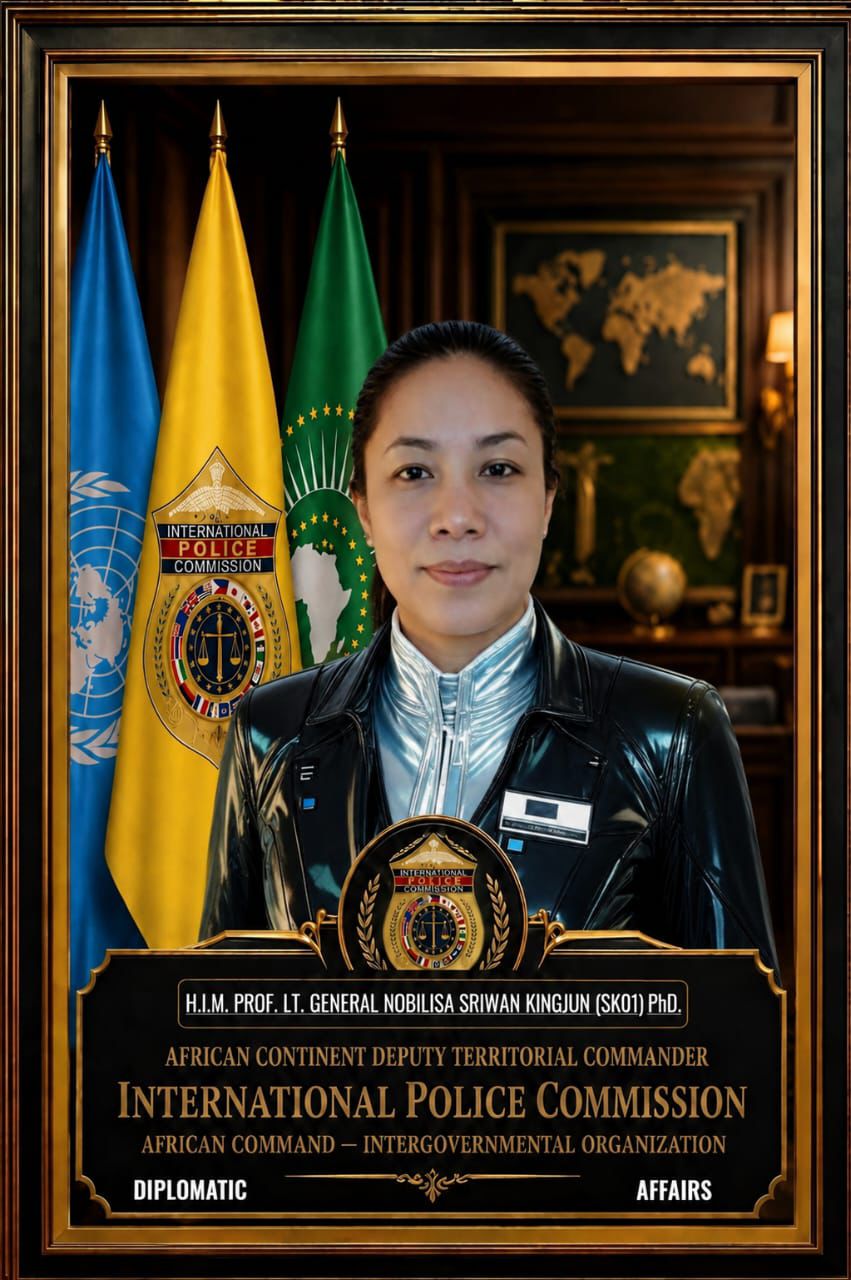
UKA Gears Up for Final ATC Exchangeability Test Run as June Preparations Begin.
May 30, 2026 – As the month of June gathers momentum, the *United Kingdom of Atlantis, UKA*, a sovereign nation has unveiled a series of vital guidelines and preparatory packages to ensure citizens and stakeholders run the *ATC Exchangeability* process effectively.
In an official update, the *President of Atlantic Crown Limited, Empress of Attica Empire UKA*, confirmed that the *Final Test Run of ATC Exchangeability* is scheduled for the month of June 2026. The exercise marks a key phase ahead of the *Official Exchangeability Window, set to run from July 2026 to February 2027*.
### Key Highlights from the Presidential Briefing
1. *Final Test Run – June 2026*
The test run is designed to validate systems, procedures, and user readiness before full activation. Citizens, partners, and designated participants are urged to follow all official advisories released by UKA authorities during this period.
2. *Official Exchangeability Period*
Following the successful completion of the June test run, the Official Exchangeability will commence in july 2026 and we are Expecting Full Exchange ability between July Ending, 2026 to February 2026.
UKA stated that detailed schedules, eligibility requirements, and step-by-step instructions will be communicated progressively through verified UKA channels.
3. *Benefiting Packages for June*
In line with UKA’s commitment to citizen empowerment, the month of June will feature “benefiting packages” aimed at education, preparation, and seamless onboarding. These packages are intended to equip the people of UKA with the knowledge and tools needed for effective participation.
4. *Commitment to Transparency*
Addressing the nation, the Empress of Attica Empire UKA emphasized:
_“Final Test Run of ATC Comes up in The Month of June, As We Prepare For The Official Exchangeability, Between July 2026 To Feb 2027. All Information Will Be Communicated.”_
UKA reaffirmed that only information released through official UKA platforms should be regarded as authoritative.
The United Kingdom of Atlantis is encouraging all citizens, representatives, and interested parties to remain alert to official communications, attend designated orientation sessions, and avoid unofficial sources. UKA’s dedication to order, clarity, and the collective benefit of its people as the nation moves into this significant phase.
For updates, advisories, and participation guidelines, citizens are advised to monitor official UKA communication channels.
United Kingdom of Atlantis, UKA, is a sovereign nation, committed to national development, citizen welfare, and structured economic participation through initiatives such as ATC Exchangeability.
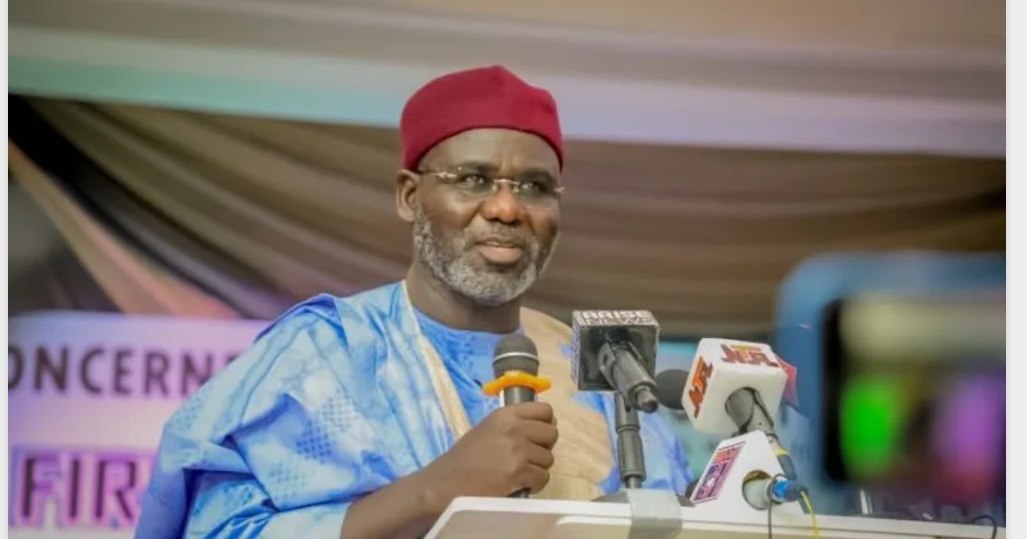
Three Years On, General Buratai Hails Tinubu’s Economic, Security Achievements
Former Chief of Army Staff, Lt. Gen. Tukur Buratai (retd.), has commended President Bola Ahmed Tinubu for what he described as bold economic reforms and improved security efforts as the President marks three years in office.
In a goodwill message on Thursday to commemorate Tinubu’s third anniversary as President and Commander-in-Chief of the Armed Forces, Buratai said the administration had taken courageous decisions that would leave a lasting impact on Nigeria’s development.

According to him, President Tinubu broke a long-standing cycle that had hindered national growth by removing fuel subsidy and implementing foreign exchange reforms aimed at stabilising the naira and strengthening the economy.
He noted that the reforms were beginning to yield positive results, citing the global acceptance of Nigerian debit cards, the gradual revival of local refineries, access to student loans, and ongoing road and infrastructure projects across the country.
“The FCT Administration has also recorded remarkable progress, completing major road projects that remained unfinished for over 16 years,” Buratai stated.
The former army chief also praised the administration’s security efforts, saying renewed military offensives against insurgents, terrorists and bandits had led to notable successes across various parts of the country.
He specifically lauded recent joint operations involving Nigerian and United States forces against Boko Haram and ISWAP in the North-East, as well as intensified counter-banditry operations in the North-West.
“We have seen notorious ISWAP commanders being neutralised. I congratulate the Commander-in-Chief, the Minister of Defence, the Chief of Defence Staff, the Service Chiefs, the Inspector-General of Police and heads of intelligence agencies for their efforts,” he said.
Buratai, however, acknowledged that challenges remained, stressing the need for more aggressive military operations and intelligence-driven strategies in the coming year.
While urging Nigerians to remain hopeful, he said celebrating the President’s achievements did not amount to ignoring the difficulties facing the nation.
“Because you truly care, you have shown the courage to trade short-term comfort for long-term hope. Nigerians need your reassurances, and that is why we remain optimistic and full of confidence,” he added.
The retired military officer reaffirmed his support for the Tinubu administration and expressed confidence that the foundation being laid by the government would deliver a brighter future for the country.
He also prayed for God’s guidance, wisdom, strength and good health for the President as he continues to lead Nigeria.


- CANAL+ lists on the Johannesburg Stock Exchange (JSE), strengthening the Group’s dual-continental approach and reinforcing South Africa’s (SA) role as a gateway to global capital and African growth June 3, 2026
- African Mining Week (AMW) Country Focus to Spotlight Liberia’s Iron Ore, Gold and Critical Minerals Prospects June 3, 2026
- Venezuela to Host Its Largest-Ever International Energy Investment Summit June 3, 2026
- Canada–Africa Business Conference Preparations Advance Following Canadian Secretary of State’s High-Level Visit to Nigeria June 3, 2026
- Uganda: Parliament concludes vetting of ministers June 2, 2026
- Fund for Export Development in Africa (FEDA) Board Appoints Mr. Emmanuel Assiak as Chief Executive Officer June 2, 2026
- Ecobank Group Launches World First Nature Bond Mobilising Global Capital to Protect Africa’s Natural Ecosystems June 2, 2026
- Merck Foundation Chief Executive Officer (CEO) Dr. Rasha Kelej together with Kenya First Lady support the education of 47 Kenyan Schoolgirls by providing Annual Scholarships till they Graduate June 2, 2026
- Annual Meetings 2026: Governors Back the Bank’s Platform Solutions to Transform Aviation and Health Systems in Africa June 2, 2026
- ThinkMarkets launches ChelseaAI, bringing live CFD trading into Artificial Intelligence (AI) assistants June 2, 2026
- CANAL+ lists on the Johannesburg Stock Exchange (JSE), strengthening the Group’s dual-continental approach and reinforcing South Africa’s (SA) role as a gateway to global capital and African growth June 3, 2026
- African Mining Week (AMW) Country Focus to Spotlight Liberia’s Iron Ore, Gold and Critical Minerals Prospects June 3, 2026
- Venezuela to Host Its Largest-Ever International Energy Investment Summit June 3, 2026
- Canada–Africa Business Conference Preparations Advance Following Canadian Secretary of State’s High-Level Visit to Nigeria June 3, 2026
- Uganda: Parliament concludes vetting of ministers June 2, 2026
- Fund for Export Development in Africa (FEDA) Board Appoints Mr. Emmanuel Assiak as Chief Executive Officer June 2, 2026
- Ecobank Group Launches World First Nature Bond Mobilising Global Capital to Protect Africa’s Natural Ecosystems June 2, 2026
-

 news6 months ago
WHO REALLY OWNS MONIEPOINT? The $290 Million Deal That Sold Nigeria’s Top Fintech to Foreign Interests
-

 society1 month ago
SOCIAL MEDIA IS NOT A BATTLEFIELD COMMAND – WHY THE NIGERIAN ARMY’S ACTION AGAINST JUSTICE CRACK IS A NATIONAL SECURITY IMPERATIVE
-

 celebrity radar - gossips4 months ago
Dr. Chris Okafor Returns with Power and Fire of the Spirit -Mounts Grace Nation Altar with Fresh Anointing and Restoration Grace on February 1, 2026
-

 celebrity radar - gossips6 months ago
Prophet Kingsley Aitafo Releases 2026 Prophecy: ‘Nigeria Will Rise, but the World Must Prepare for Turbulence’