
society
THE GREAT LAND SCANDAL: Wike Under Fire for Alleged Illegal Allocation of Abuja’s Green Spaces

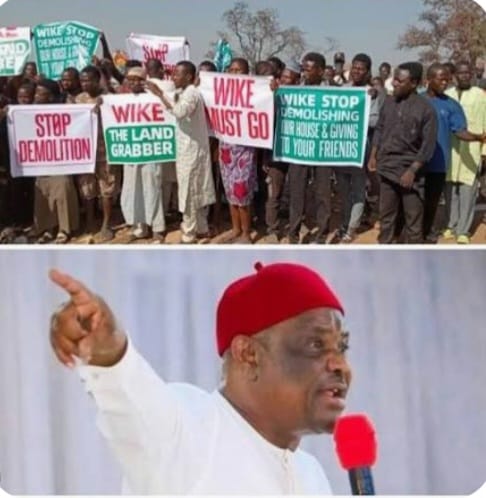
THE GREAT LAND SCANDAL: Wike Under Fire for Alleged Illegal Allocation of Abuja’s Green Spaces
By George Omagbemi Sylvester | Published by SaharaWeeklyNG
“How the Federal Capital’s Urban Integrity Faces an Existential Threat.”
In the heart of Africa’s most politically symbolic city, Abuja, a storm has erupted (not fueled by ideology or electoral dispute) but by an alleged betrayal of urban planning principles, environmental sustainability and public trust. At the centre of this convulsion stands Barrister Ezenwo Nyesom Wike, Nigeria’s Minister of the Federal Capital Territory (FCT), accused by a leading human rights lawyer of illegally allocating protected green areas to developers for luxury residential construction. The controversy has ignited fresh debate about governance, environmental law and the future of Nigeria’s capital city.
The flashpoint was a designated green area in Maitama Extension, one of Abuja’s most prestigious residential districts. This zone was reserved in Abuja’s Master Plan as a green buffer, designed to support stormwater runoff, preserve natural ecology and act as a safety valve against flooding in the rainy season. Yet, according to human rights lawyer and activist Deji Adeyanju, this sacred urban reserve has now been fenced off and construction of upscale duplexes is proceeding unabated on it.

Adeyanju’s allegation is not trivial rhetoric, it is a direct challenge to the sacred covenant between an administration and the public it serves. In his public statement, he described the development as an “outright distortion of the Abuja Master Plan,” warning that it “places private profit above public safety and environmental sustainability.” His imagery was striking: a natural drainage channel turned makeshift access road, a warning sign of impending environmental peril.
Urban Planning vs. Commercial Gain.
The Abuja Master Plan, established as a binding framework for land use and development, includes provisions for green areas precisely to manage stormwater, reduce urban heat islands, conserve biodiversity and serve as public recreational space. Urban planning experts stress that these zones are not just aesthetic features, but functional infrastructure critical to city resilience. When green buffers are compromised, cities face more severe flooding, infrastructure strain and public health risks.
One respected urbanist, speaking on condition of anonymity due to the political sensitivity of the matter, noted:
“Green spaces in planned cities are equivalent to lungs in a human body; deprive a city of its green lungs and you invite systemic failure alongside environmentally and socially.”
Though specific environmental impact assessments for the Maitama Extension project have not been made public, observers note that the area’s natural drainage channels historically diverted heavy rainfall runoff. Interfering with these features could worsen flooding in already vulnerable neighbourhoods.
Allegations, Public Outrage and Official Response.

Adeyanju’s critique exploded on social media and was amplified by civil society groups already sceptical of the FCT Administration’s land policies. Many fear that this is not an isolated issue but a symptom of a broader pattern of land governance that favours powerful interests at the expense of public rights.
In response, the FCT Minister’s spokesperson, Lere Olayinka, defended the administration’s authority over land use decisions. He stated that land designation is not static and can be altered if legally approved, including by the Minister himself. Olayinka argued that reclassifying land use (even from green zone to residential) is permissible under certain conditions and should not be immediately interpreted as illegal.
This response highlights a crucial legal question: What constitutes lawful change of land use in Abuja? The Federal Capital Territory Act and urban planning statutes require that land use alterations must comply with the Master Plan and be transparently processed through appropriate planning authorities. Without full disclosure of approvals, critics argue, any claimed authority to repurpose green areas must be vigorously scrutinised.
Civil Society and Calls for Transparency.
The controversy has drawn more than one voice. A coalition of civic and housing advocacy organisations (including the Housing Development Advocacy Network) has publicly admonished the FCT administration for what they describe as “a dangerous erosion of Abuja’s green infrastructure.” According to the network, parks, gardens and buffer zones originally reserved as the capital’s lungs are being eroded through indiscriminate allocations for commercial or residential developments.
“The loss of green spaces,” the HDAN argued, “threatens not only ecological balance but also the lived quality of citizens and investors alike.” In their view, sustainable development must balance growth with preservation and not sacrifice one at the altar of short-term gain.
Another prominent civil society campaign, carrying the hashtag #StopWikeLandGrab, has called for mass action and independent investigation into alleged cronies benefiting from controversial land deals in the FCT. While some of the more expansive claims (such as massive tracts of land being allocated to family members) have been contested and remain subject to verification, they nonetheless reflect deep public mistrust in the administration’s land management practices.
A transparency advocate from Abuja, Dr. Chibuzo Okeke, offered a stark criticism that resonates with many residents:
“When land intended for the public good becomes a vehicle for private accumulation without clear accountability, it signals a crisis of governance. Abuja belongs to the people not to a selected few.”

Environmental Risks and Urban Futures.
Environmental scientists warn that tampering with natural drainage systems, as alleged in the Maitama case where a canal is reportedly being converted into an access road, could have severe consequences. In cities with similar climates and topographies, the loss of natural channels has been linked with increased frequency and severity of flood events, soil erosion and infrastructure failures.
Professor Amina Suleiman, a climatologist at a Nigerian university, underscores the severity:
“Urban expansion must respect natural hydrology. When you disrupt waterways for development without compensatory engineering or rigorous planning, you court ecological failure.”
In a city like Abuja, which experiences intense seasonal rainfall, the stakes are high. Without green buffers and functioning natural drainage, residents could face heightened flood risk, not just in Maitama, but in neighbouring districts cascading downhill.
Governance, Law and the Public Interest.
The Wike controversy underscores a broader struggle over how public assets are managed, who gets to decide their use, and how transparent those decisions must be. Nigeria’s Constitution and related land laws mandate that public officials act in the public interest and uphold principles of accountability and fairness. When these tenets appear compromised, citizen confidence in governance erodes.
Legal experts suggest that, if substantiated, the allocation of green areas for luxury residential development without demonstrated compliance with planning and environmental safeguards could constitute a breach of administrative law. However, they also note that such matters often hinge on procedural proof, documented approvals, environmental impact assessments and transparent decision-making records.
A Moment of National Reflection.
At its core, the Maitama green area dispute is not merely a local planning controversy, but it is a national litmus test. Nigeria is grappling with rapid urbanisation, environmental vulnerabilities and governance challenges. How these are managed will determine not only the future of Abuja but also signal the country’s commitment to sustainable development and the rule of law.
For now, public outcry continues, civic organisations press for independent investigations, and residents watch with concern as this drama unfolds in the corridors of power.
Yet one truth stands: urban land is not just a commodity, it is a public trust. And any erosion of that principle risks more than controversy; it threatens the environmental sustainability and social fabric of the capital city itself.





FOPCHEN Seeks Wider Engagement As Court Defers Hearing
OTA, OGUN STATE — The High Court of Ogun State, Ota Division, on Thursday resumed hearing in the ongoing matter involving cultural and societal concerns, before adjourning proceedings till Thursday, July 2, 2026, for continuation of hearing.
At the resumed sitting on May 28, 2026, counsel representing the various parties revisited key issues in the case and made further submissions before the court.
The matter, which has continued to generate public interest across different sectors, again drew attention from legal observers and stakeholders who described the case as one with significant implications for societal values, cultural identity and constitutional interpretation.
Speaking after the proceedings, the Foundation for the Protection of Cultural Heritage in Nigeria, popularly known as FOPCHEN, renewed its appeal for dialogue and constructive engagement among Nigerians, stressing that sensitive cultural and moral issues should not be left entirely within the confines of the courtroom.
According to the group, broader conversations involving traditional institutions, civil society organisations, religious leaders and policy stakeholders remain necessary in addressing issues relating to national values and social responsibility.
Legal analysts at the court premises noted that arguments being canvassed by parties in the suit could shape future legal interpretations surrounding cultural and moral questions in the country.
Following submissions by counsel, the presiding judge adjourned the matter till Thursday, July 2, 2026, to enable parties further prepare and respond to issues raised during the hearing.
The development has continued to spark reactions among observers, with many Nigerians closely monitoring the proceedings ahead of the next hearing date.

US-Based Society Lady, Fehintola-Brat Extends Eid-El-Kabir Greetings To Muslims
United States based fahionista of class, Chief (Mrs) Ayoola Fehintola-Brat has extended a warm greetings to Muslim faithful all over the world on the occasion of the 2026 Eid-El-Kabir celebration.
Fehintola-Brat who is the Balogun Egbe Obaneye Obinrin Akile Ijebu, and the Yeye Asofin of Idenaland in her message to Journalists urged Muslim to continually uphold the enduring values of sacrifice, obedience, faith, and compassion, which are central to the significance of Eid-El-Kabir festival.
A quiet philantropist whose humanitarian services has won her several laurels urged Muslims to use the spiritual occasion to pray for the peace co-existence of Nigerians regardless of religious, social and political leanings stressing that the oneness of the country should not be underplay.
In a related development, she expressed her felicitations to all sons and daughters of Ijebuland on the forthcoming Ojude Oba 2026 celebration, tasking age-groups otherwise known as Regbregbe to be more proactive in giving back to their immediate communities.
According to her, the beauty of the age-groups in Ijebuland is the need to contribute immensely to the development of the land in no small means. “This we will continue to achieve with God on our side”, she concluded.
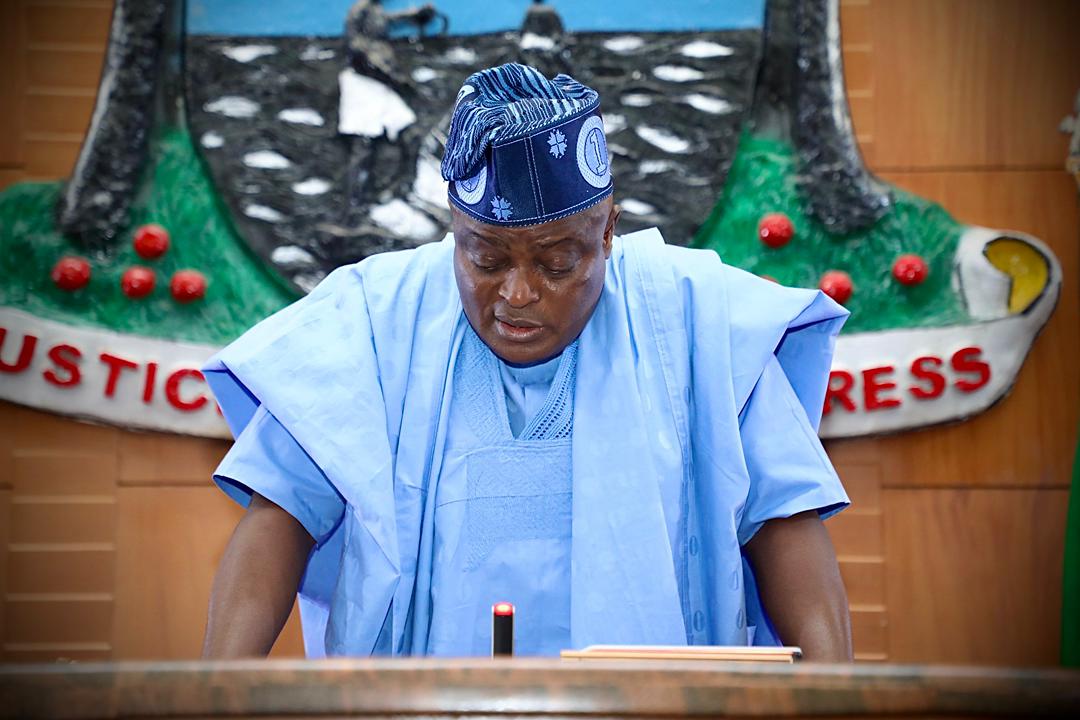
Sallah: Obasa Felicitates Muslim Ummah, Commends Nigerians for APC Primaries Turnout
The Speaker of the Lagos State House of Assembly, Rt. Hon. Mudashiru Obasa has extended warm felicitations to Muslims in Lagos State and across Nigeria on the occasion of Eid al-Adha.
In a statement released by his Chief Press Secretary, Mr. Dave Agboola, Obasa described the festival as a season of sacrifice, reflection, and gratitude, urging the faithful to continue to uphold the values of peace, unity, and love that strengthen the nation.
He noted that the celebration of Eid al-Adha is not only a spiritual milestone but also a reminder of the importance of togetherness and collective responsibility in building a stronger society.
He, likewise, emphasized that the festival provides an opportunity for Nigerians to renew their commitment to national progress and to support leadership that prioritizes development and prosperity.
Obasa, however, commended Nigerians, particularly members of the All Progressives Congress (APC), for their massive turnout during the recently concluded party primaries. He described the participation as a clear demonstration of the people’s confidence in the government of President Bola Ahmed Tinubu and their belief in the administration’s vision for a greater Nigeria.
“The APC primaries have shown the resilience of our democracy and the confidence Nigerians have in the leadership of President Bola Ahmed Tinubu and the Renewed Hope Agenda. This is a strong message that our people are ready to continue supporting policies that will drive growth and prosperity,” Obasa stated.
The Speaker further encouraged Muslims to celebrate responsibly, stressing that the joy of Eid should be accompanied by prayers for the continued peace and progress of Lagos State and Nigeria.
“As you celebrate with family and loved ones, may this season bring joy, peace, and prosperity to your homes. Let us remain united in our resolve to build a stronger nation,” he added.
On behalf of the Lagos State House of Assembly, Obasa wished all Muslims a happy and fulfilling Eid al-Adha celebration.


- Société Nationale des Pétroles du Congo (SNPC) Chief Ominga to Speak at African Energy Week (AEW) 2026 as Congo Accelerates Gas Expansion May 29, 2026
- South Africa: Deputy President Mashatile arrives in India for a Working Visit May 29, 2026
- Seychelles: President Visits Key Development Sites on Coetivy Island May 29, 2026
- Accelerating regional action to advance mental health care in Africa May 29, 2026
- President of the Republic of Seychelles Meets Young La Digue Talent Ahead of London Showcase May 29, 2026
- United Nations Economic Commission for Africa (ECA) launches regional initiative to accelerate women’s digital entrepreneurship across four African countries May 29, 2026
- Ethiopia: International community must act to safeguard press freedom ahead of national election May 29, 2026
- CORRECTION: Annual Meetings 2026 (AM2026): African Development Bank (AfDB) 2025 Trade Finance Report Highlights Resilience of African Financial Institutions After Covid-19 May 29, 2026
- Why Big Tech Could Become Nigeria’s New Gas Partner May 29, 2026
- African Energy Chamber (AEC)-Venezuela Alliance Accelerates Pathways into South-South Energy Expansion May 29, 2026
- Société Nationale des Pétroles du Congo (SNPC) Chief Ominga to Speak at African Energy Week (AEW) 2026 as Congo Accelerates Gas Expansion May 29, 2026
- South Africa: Deputy President Mashatile arrives in India for a Working Visit May 29, 2026
- Seychelles: President Visits Key Development Sites on Coetivy Island May 29, 2026
- Accelerating regional action to advance mental health care in Africa May 29, 2026
- President of the Republic of Seychelles Meets Young La Digue Talent Ahead of London Showcase May 29, 2026
- United Nations Economic Commission for Africa (ECA) launches regional initiative to accelerate women’s digital entrepreneurship across four African countries May 29, 2026
- Ethiopia: International community must act to safeguard press freedom ahead of national election May 29, 2026
-

 news6 months ago
WHO REALLY OWNS MONIEPOINT? The $290 Million Deal That Sold Nigeria’s Top Fintech to Foreign Interests
-

 society4 weeks ago
SOCIAL MEDIA IS NOT A BATTLEFIELD COMMAND – WHY THE NIGERIAN ARMY’S ACTION AGAINST JUSTICE CRACK IS A NATIONAL SECURITY IMPERATIVE
-

 celebrity radar - gossips4 months ago
Dr. Chris Okafor Returns with Power and Fire of the Spirit -Mounts Grace Nation Altar with Fresh Anointing and Restoration Grace on February 1, 2026
-

 celebrity radar - gossips6 months ago
Prophet Kingsley Aitafo Releases 2026 Prophecy: ‘Nigeria Will Rise, but the World Must Prepare for Turbulence’